Death in Berlin by M.M. Kaye

Death in Berlin Almost exactly a year ago I read Death in Kashmir, the first in M.M. Kaye’s series of mystery novels. I loved it – in fact, it was one of my favourite books of the year – and last week I decided it was time to try another of her Death in… novels. I chose Death in Berlin because it’s the second in the series (although the books all have different settings and characters and all stand alone).

Death in Berlin, published in 1955, is set in a Berlin struggling to recover from the devastating effects of World War II. The city is divided into zones – American, British, French and Russian – and there are ruined buildings and piles of rubble everywhere. At the beginning of the novel we meet Miranda Brand, who is on her way to Berlin with her cousin Robert and his wife Stella. Robert, an army officer, is taking up a new post there and Miranda has decided to come along for a month’s holiday, keen to have a chance to see post-war Germany. During the journey to Berlin, they and a group of other military families listen to Brigadier Brindley tell a story involving a set of diamonds stolen by the Nazis during the war – a story which has special significance for Miranda. Later that night, the Brigadier is found dead in his train compartment and when a murder investigation begins, Miranda discovers that she herself could be a suspect.

This novel has many of the same elements as Death in Kashmir – a young heroine in danger far from home, a romance with a man she’s not sure she can trust, an eerie and atmospheric setting – but this book didn’t impress me as much as the first one. It doesn’t have the stunning opening chapter that Death in Kashmir has and the characters feel less developed, to the point where I had trouble telling some of them apart. I also thought there was a lack of chemistry between Miranda and her love interest, whom I found very bland.

What I did like was the portrayal of a ruined Berlin in the aftermath of war. M.M. Kaye herself spent some time in Berlin when her husband’s regiment was stationed there, so she could draw on her own knowledge of the city while writing this novel. While it isn’t the exotic setting that 1940s Kashmir is, it does provide a great backdrop for a story of murder and mystery. Kaye really excels at creating a sense of unease and writing spine-tingling descriptions of what it feels like to be alone and vulnerable in dark, lonely surroundings – to be the only person awake in the sleeper carriage of an overnight train or to be sitting downstairs in a large, empty house and hear noises coming from upstairs.

I didn’t guess the solution to the mystery, but I did have my suspicions about various characters. I don’t think it would have been possible to work out everything, though, because a lot of information is withheld from us until the final chapters of the book. This information is provided by one of the characters who, in one very long scene near the end, sums everything up for Miranda and the reader. This is something that works well in an Agatha Christie novel, but feels a bit unnatural here.

While I didn’t like this book as much as Death in Kashmir, it hasn’t put me off wanting to read the rest of the Death in… mysteries. Death in Cyprus will probably be the next one I read, but I also have a copy of Kaye’s historical novel, Shadow of the Moon, which I’m looking forward to reading (and should really have read before now as The Far Pavilions is one of my favourite books).

Have you read any of the Death in… books? Which do you think is the best?

My commonplace book: January 2016

commonplace book
Definition:
noun
a notebook in which quotations, poems, remarks, etc, that catch the owner’s attention are entered

Collins English Dictionary

~

A summary of this month’s reading, in words and pictures.

~

I hated the mountains and the hills, the rivers and the rain. I hated the sunsets of whatever colour, I hated its beauty and its magic and the secret I would never know. I hated its indifference and the cruelty which was part of its loveliness. Above all I hated her. For she belonged to the magic and the loveliness. She had left me thirsty and all my life would be thirst and longing for what I had lost before I found it.

Wide Sargasso Sea by Jean Rhys (1966)

~

Roger had learned from Mr. Gray that this particular kind of rhododendron was called Ponticum, so the secret hiding-place was called Ponticum House. It was used for all sorts of activities and gradually it was furnished with odds and ends of furniture.

Amberwell by D.E. Stevenson (1955)

~

There was the rub: that Julia, who could get intimate with a trapeze artist after five minutes’ conversation – who was intimate with a salesman after buying a pair of shoes – had talked for an hour to her own daughter, about the girl’s own father and lover, without the least intimacy at all.

“I’m a fool,” thought Julia, again. “It’s just because she’s such a perfect lady. And what I need is a good sleep.”

The Nutmeg Tree by Margery Sharp (1937)

~

So fine was the morning except for a streak of wind here and there that the sea and sky looked all one fabric, as if sails were stuck high up in the sky, or the clouds had dropped down into the sea. A steamer far out at sea had drawn in the air a great scroll of smoke which stayed there curving and circling decoratively, as if the air were a fine gauze which held things and kept them softly in its mesh, only gently swaying them this way and that.

To the Lighthouse by Virginia Woolf (1927)

~

Come, Joanna. I can wait no longer.

There it was, Henry’s declaration, as clear as my reflection in my mirror. Neither, I decided, could I wait.

I sent for my uncle of Burgundy. I had an urgent negotiation to undertake.

The Queen’s Choice by Anne O’Brien (2016)

~

Meantime, all around me is violence and robbery, coarse delight and savage pain, reckless joke and hopeless death. Is it any wonder that I cannot sink with these, that I cannot so forget my soul, as to live the life of brutes, and die the death more horrible because it dreams of waking? There is none to lead me forward, there is none to teach me right; young as I am, I live beneath a curse that lasts for ever.

Lorna Doone by R.D. Blackmore (1869)

~

“It is the women who lay clothes to dry on the rooftops of Troy,” I continued. “It is the fishermen who catch the silver fish in the bay,” I gestured out over the plain towards the sea, sparkling blue in the sunlight, “and sell them on the stalls of the marketplace. It is the princes who live in the palaces on the windy heights of the city, and the slaves who draw water from the wells. This, my king – this is Troy. And if we act now, we may still be able to save our city before it is too late.”

For the Most Beautiful by Emily Hauser (2016)

~

The desolation struck me like a blow, fresh and painful, as if all this destruction had been newly made yesterday, and as if this were my first sight of it. It was grief, I think, nothing more or less. I knew it was absurd. But I had noticed this reaction in others as well as in myself: that we mourned for our ravaged city as if for a mother.

The Ashes of London by Andrew Taylor (2016) – Review to follow

~

“And you cannot move at all in Time, you cannot get away from the present moment.”

“My dear sir, that is just where you are wrong. That is just where the whole world has gone wrong. We are always getting away from the present moment. Our mental existences, which are immaterial and have no dimensions, are passing along the Time-Dimension with a uniform velocity from the cradle to the grave. Just as we should travel down if we began our existence fifty miles above the earth’s surface.”

The Time Machine by H.G. Wells (1895)

~

Favourite books this month: Lorna Doone and Amberwell

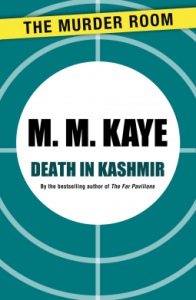
Death in Kashmir by M. M. Kaye

Death in Kashmir I have always thought of M. M. Kaye as an author of historical novels (such as the wonderful Far Pavilions) and although I was vaguely aware that she had also written a series of mystery novels, I had never really thought about reading them. Now that I’ve read the first one, Death in Kashmir, I will certainly be reading the others. What a great book this is!

Death in Kashmir was first published in 1953, but set a few years earlier in 1947, just as India is about to gain independence from Britain. Our heroine, Sarah Parrish, is attending what will probably be the final meeting of the Ski Club of India at Gulmarg, a resort in the mountains of Kashmir. Sarah is hoping for an enjoyable, relaxing holiday but the first sign of trouble ahead comes when another skier has a fatal accident on the slopes. Another death soon follows the first, but this time, the victim – a young woman called Janet Rushton – was able to share an important secret with Sarah before she died.

Sarah is now certain that neither death was accidental but all she wants is to leave Gulmarg and its secrets behind her and have nothing more to do with the whole business. When the skiing party breaks up she visits her aunt in Peshawar and tries to forget what she has learned. Soon, though, her promise to Janet pulls her back to Kashmir where she finds herself caught up in the mission her friend was working on before her death – and this time, Sarah’s own life could be in danger.

I loved this book from the very beginning. It’s so important that a first chapter pulls you straight into the story and this one did, right from the opening line – “Afterwards Sarah could never be quite sure whether it was the moonlight or that soft, furtive sound that had awakened her”. The rest of the story was equally engrossing: a perfect mixture of mystery, suspense, romance and espionage.

The descriptions of Kashmir are stunning. The first part of the book is set in winter on the snow-covered mountain trails of Gulmarg and later the action moves to the Dal Lake in the summer resort of Srinagar where Sarah takes over the lease on a houseboat that once belonged to Janet. Both of these locations are described beautifully, but Kaye also chooses just the right words and images to create a genuinely eerie and unsettling atmosphere. I found myself literally holding my breath as Sarah wondered who was standing outside the ski lodge in the dark, as she watched an unknown figure disappearing up a staircase and as she listened to footsteps on the boards of her houseboat in the night.

What makes Sarah’s situation even more dangerous is that she’s sure the enemy must be one of the group of skiers who were gathered at Gulmarg – the same group who are all now spending the summer in Srinagar. Who should she trust? The hostile Helen Warrender who makes no secret of her dislike for Sarah? The jovial, good-natured Hugo and his long-suffering wife, Fudge? Timid Meril Forbes and her domineering aunt? Or the handsome, polo-playing Captain Charles Mallory? When the villain was eventually revealed it didn’t come as a complete surprise – but I have to admit I had suspected almost everybody at some point, so one of my guesses was bound to be right!

The book is also interesting from the historical viewpoint, being set just before the end of the British Raj and the transfer of powers back to India. Through the stories of Sarah and the rest of the British community in Kashmir, I thought Kaye had perfectly captured the mood of a group of people who knew that their way of life was about to change forever.

I’m now looking forward to reading the other five Death In… mysteries. I just need to decide which one to read next!

Remember These? Books beginning with F and G

Before I started blogging I used to keep a list of the books I read in an A-Z notebook – the title, the author and a rating out of 5, but no other information. I did this from the mid-1990s to around the year 2000, but sadly kept no records after that until October 2009 when I started my blog.

I still have the notebook and a few years ago I began writing a series of blog posts highlighting some of the books listed under each letter, but only got as far as E before getting distracted and forgetting to do the rest. I did enjoy working on those posts, so I have decided to continue and try to get all the way to Z this time – and yes, I do have a book listed under Z!

So, without further ado, here is a selection of the books that appeared on the ‘F’ and ‘G’ pages of my notebook. I originally gave the books ratings out of 5 and the additional symbol * means that I particularly loved the book while X means I didn’t finish it. Although I’ve included my original ratings here, these do not necessarily reflect what I would feel about the books if I read them again today!

Books beginning with F and G:

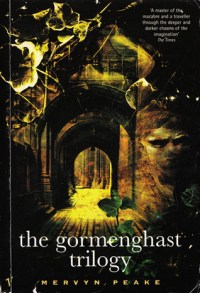
Gormenghast The Gormenghast Trilogy by Mervyn Peake 5/5*
I remember buying this book after watching the BBC adaptation in 2000. My edition includes all three novels in the trilogy – I didn’t like the third one, Titus Alone, but loved the first two, Titus Groan and Gormenghast.

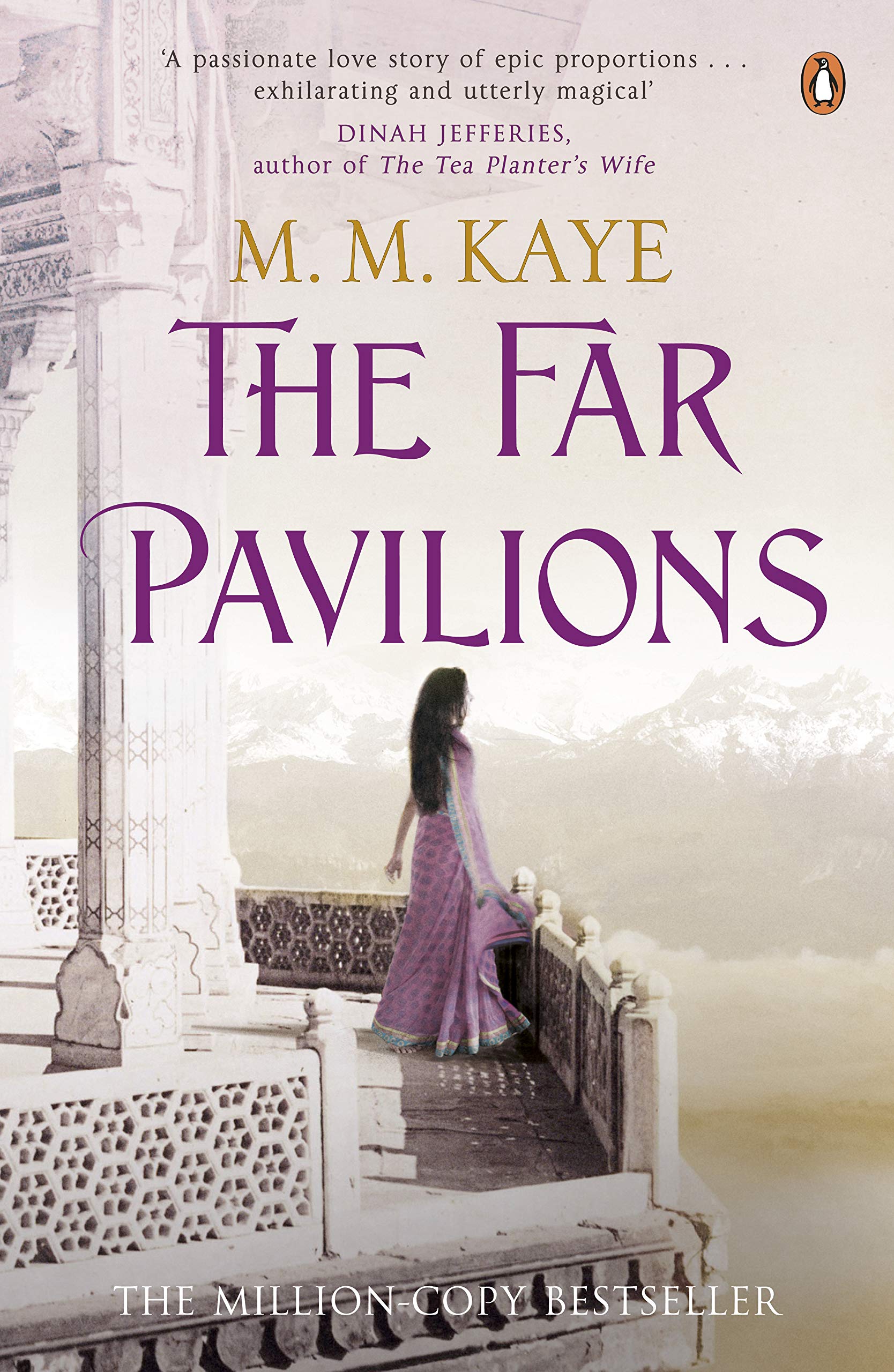
The Far Pavilions by M.M. Kaye 5/5*
This wonderful novel set in India is one of my favourite historical fiction novels. I loved it the first time I read it and when I re-read it in 2010 I was pleased to find that it was still as good as I remembered.

Gone with the Wind by Margaret Mitchell 5/5*
I have read Gone with the Wind several times and don’t know if this particular entry refers to my first read or a later re-read. It’s another favourite, though, so it would get 5/5 from me every time.

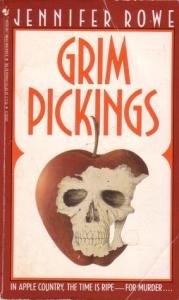
Grim Pickings Grim Pickings by Jennifer Rowe 5/5
This was a great Agatha Christie-style mystery novel set in Australia and revolving around a murder that takes place in an old woman’s orchard where her family have gathered to pick apples. I think it was part of a series, but I never read any of the others.

The Ghost of Thomas Kempe by Penelope Lively 3/5
This is one of Penelope Lively’s children’s books. I can remember what the front cover of my copy looked like (and I think I still have it somewhere) but the story has faded from my mind. I would like to read it again as I think I might appreciate it more now than I did the first time.

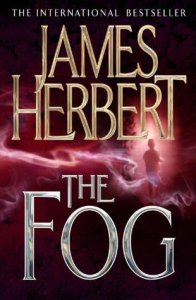
The Fog The Fog by James Herbert 3/5
I very rarely read horror novels these days but I used to read a lot of them. I enjoyed this one, about a mysterious fog that spreads across Britain, altering the minds of everyone who comes into contact with it.

Freezing by Penelope Evans 3/5
I have no memories at all of reading this book. According to Goodreads, it’s a crime novel about a photographer who works in a mortuary and tries to find the identity of a drowning victim who is brought into the morgue one day. It sounds a bit gruesome but I must have enjoyed it enough to give it a 3/5 rating.

First Impression by Margot Dalton 3/5
I can’t remember this one either. It’s another crime novel, this time about a detective trying to solve a missing child case.

Fog Heart The Ghost Road by Pat Barker 2/5
If you’d asked me whether I’d read anything by Pat Barker I would have said no, but obviously I did read this one. I think I’ll have to read it again as I can’t remember anything about it and I suspect it deserves more than 2/5! It’s the third in the Regeneration trilogy and I don’t have any record of reading the previous two, so maybe that was the problem.

Fog Heart by Thomas Tessier 2/5
The story of two couples who are drawn together when they attend a séance and meet a young medium called Oona. I do vaguely remember reading this book, but I wasn’t very impressed by it.

The Ghosts of Candleford by Mike Jeffries 2/5
Neither the title nor the author sound familiar to me but Amazon tells me that this is a ‘classic tale of the supernatural’. Seeing how many books I’ve read and then completely forgotten about has confirmed for me (if I needed to have it confirmed) that starting a book blog was an excellent idea!

Have you read any of these books? Can you shed any light on the more obscure ones?

I’ll be back soon with another selection, but if you missed my earlier Remember These? posts you can see them here.

Book Drum: My profile of The Far Pavilions

Earlier in the year I mentioned that I was taking part in a tournament hosted by the Book Drum website. The idea of Book Drum is to bring books to life with pictures, music, videos and maps. To enter the tournament, members were required to choose a favourite title from a list of approved books and submit a profile of that book.

The book I decided to profile was The Far Pavilions by M.M. Kaye, which I read and reviewed on my blog in February. It was an interesting and fun experience, although I did occasionally regret my choice of book as it has over 950 pages and the profile took forever to complete!

Each profile consists of six sections: Review, Summary, Setting, Author, Glossary – and Bookmarks, which form the largest part of the profile and expand on individual quotes, phrases and references from the book.

Although I didn’t win the tournament, Book Drum have gradually been publishing all of the completed profiles. My profile of The Far Pavilions was published last night and is being featured on the front page of the Book Drum site until Sunday.

Review: The Far Pavilions by M. M. Kaye

The term ‘sweeping epic’ is used so often it’s become a cliché, but it’s actually an accurate description of The Far Pavilions. M. M. Kaye takes us on a journey across 19th century India and Afghanistan, during which we witness some of the major turning points in the history of those two countries.

Ashton Pelham-Martyn is born in India, the son of British professor Hilary Pelham-Martyn and his wife Isobel. When both of his parents die within a few years of each other, the four year-old Ash is brought up by Sita, the wife of his father’s Hindu groom, unaware that he is not actually Indian. Several years later, after Sita’s death, Ash learns the truth about his birth and is sent to school in England. Eventually he returns to India to serve in the British army, but finds that his loyalties are torn between his Indian friends and the members of his regiment. The Far Pavilions is the story of Ash’s struggle to find his identity.

At the heart of the story is a forbidden romance between Ash and the Hindu princess, Anjuli. However, that’s only one aspect of the book. Non-romance fans will enjoy the action and adventure, descriptions of military life or simply learning more about 19th century British-ruled India. Most of the battles and other historical events mentioned in the book did actually take place and several of the characters, such as Walter Hamilton and Louis Cavagnari, were real historical figures – you may find it interesting to do some research as you read.

Of all the historical fiction books I’ve read, this is one of the most detailed and well researched. Whilst reading this book I’ve learned a huge amount about 19th century British India, from the names of mountains and rivers, details of battles and mutinies, facts about Hindu and Islamic culture, right down to the various types of flora and fauna. We encounter a large number of Indian words and phrases (most are explained either directly in the text or in the glossary at the back of the book) which feels natural and adds to the authenticity of the story. M. M. Kaye spent a lot of time living in India which explains how she was able to write so convincingly about the country and its people. It’s also interesting that although the author was British, she uses various characters in the novel to explore conflicting opinions on whether British rule was a good or a bad thing for India.

At more than 950 pages it does sometimes feel as if the book will never end, but that’s not necessarily a bad thing because it’s one of those books that pulls you into the story so much that you don’t really want to reach the last page and leave behind the characters you’ve spent so much time with. However, the main storyline comes to a natural end at around page 700 and the book could easily have finished at this point in my opinion. The final 200 or so pages deal with the Second Anglo-Afghan War which is still interesting to read about but could have been the subject of a separate book.

The Far Pavilions is one of my all-time favourite historical fiction novels.

Highly Recommended

Fiendish Fridays #3: Biju Ram

Fiendish Fridays is hosted here at She Reads Novels, profiling some of our favourite literary villains. You can see a complete list of previous Fiends and suggest one of your own here.

This week’s Fiend comes from one of my current reads – The Far Pavilions.

#3 – Friday 5 February 2010: Biju Ram

Name: Biju Ram (also known as Bichchhu-ji – the scorpion)

Appears in: The Far Pavilions by M.M. Kaye

Who is he? Although he is officially an attendant of Lalji, the young heir to the throne of Gulkote, it is believed that Biju Ram is working for Lalji’s stepmother, the scheming Janoo-Rani.

What is he like? He wears a single diamond earring in one ear and has a distinctive giggling laugh.

What makes him a Friday Fiend? He has been an enemy of our hero, Ashton, for many years. As a child Ash was the target of his practical jokes and cruel comments. Biju Ram is also involved in two assassination plots (I won’t tell you if they were successful or not) and probably responsible for at least one murder.

Redeeming features: None. We see Biju Ram only from Ash’s point of view and Ash sees only the bad side of his character.