My Commonplace Book: October 2016

A summary of last month’s reading, in words and pictures.

commonplace book
Definition:
noun
a notebook in which quotations, poems, remarks, etc, that catch the owner’s attention are entered

Collins English Dictionary

~

“Most people only want a quiet life,” I said. “Even those of us who were once radicals.” I smiled wryly at Roger. He nodded in acknowledgement.

“Fanatics on both sides,” old Ryprose said gloomily. “And all we poor ordinary folk in the middle. Sometimes I fear they will bring death to us all.”

Revelation by CJ Sansom (2008)

~
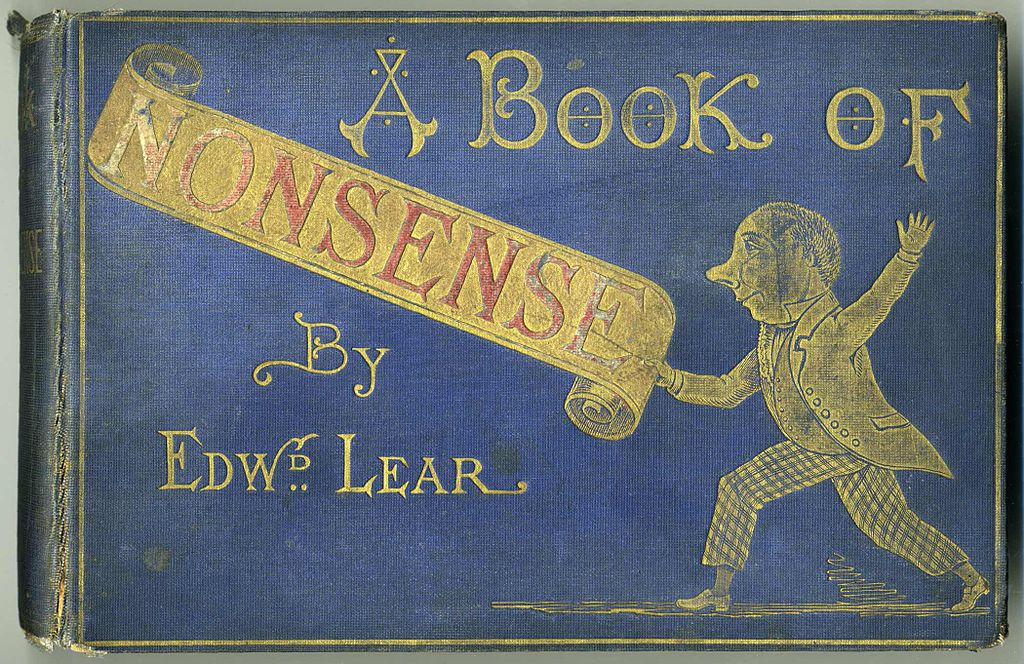
edward-lear-book-of-nonsense

“Books,” the driver resumed. “I’m a great reader. I am. Not poetry. Love stories and murder books. I joined one o’ them” – he heaved a long sigh; with vast effort his mind laboured and brought forth – “circulatin’ libraries”. He brooded darkly. “But I’m sick of it now. I’ve read all that’s any good in it.”

The Moving Toyshop by Edmund Crispin (1946)

~

“We shall wait upon tomorrow,” he said.

“But – what if tomorrow is worse than today?”

“Then we shall wait upon the day after tomorrow.”

“And so forth?” I asked.

“And so forth,” Dogger said.

The Dead in Their Vaulted Arches by Alan Bradley (2014)

~

In his masterwork, The Landscape of Criminal Investigation, Atticus Pünd had written: ‘One can think of the truth as eine vertiefung – a sort of deep valley which may not be visible from a distance but which will come upon you quite suddenly. There are many ways to arrive there. A line of questioning that turns out to be irrelevant still has the power to bring you nearer to your goal. There are no wasted journeys in the detection of a crime.’

Magpie Murders by Anthony Horowitz (2016)

~

“But seriously Poirot, what a hobby! Compare that to -” his voice sank to an appreciative purr – “an easy chair in front of a wood fire in a long low room lined with books – must be a long room – not a square one. Books all round one. A glass of port – and a book open in your hand. Time rolls back as you read.”

The Labours of Hercules by Agatha Christie (1947)

~

robert-cecil

“Watch and wait,” says Burghley. “You have a valuable nugget of information, but that is all it is at this stage. Watch the lady; watch and wait.” Cecil is reminded of being fleeced by a card trickster once, who had said the very same thing – watch the lady. He lost all the gold buttons from his doublet. That was a lesson learned.

Watch the Lady by Elizabeth Fremantle (2015)

~

Sometimes I would like to cry. I close my eyes. Why weren’t we designed so that we can close our ears as well? (Perhaps because we would never open them.) Is there some way that I could accelerate my evolution and develop earlids?

Behind the Scenes at the Museum by Kate Atkinson (1995)

~

Why the Egyptian, Arabic, Abyssinian, Choctaw? Well, what tongue does the wind talk? What nationality is a storm? What country do rains come from? What color is lightning? Where does thunder go when it dies?

Something Wicked This Way Comes by Ray Bradbury (1962)

~
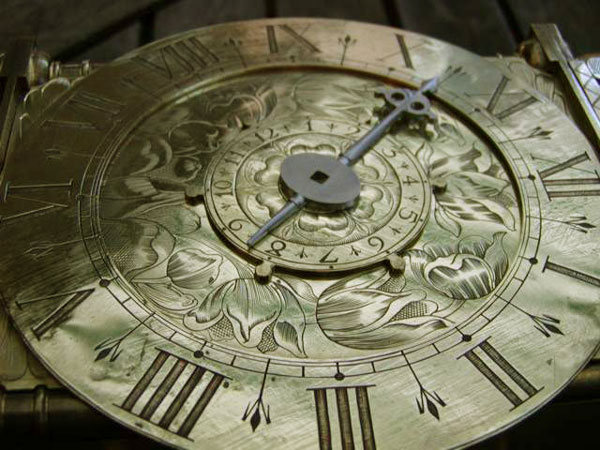
lantern-clock

And as the seconds and minutes moved on, I pondered Man’s efforts at the representation or ‘capture’ of Time, and I thought how, for Clockmakers like Hollers, the very Commodity with which they were trying to work was a heartless and capricious Enemy, who stole from them all the while and never rested.

Merivel: A Man of His Time by Rose Tremain (2013)

~

A Gothic gate, richly ornamented with fret-work, which opened into the main body of the edifice, but which was now obstructed with brush-wood, remained entire. Above the vast and magnificent portal of this gate arose a window of the same order, whose pointed arches still exhibited fragments of stained glass, once the pride of monkish devotion. La Motte, thinking it possible it might yet shelter some human being, advanced to the gate and lifted a mossy knocker. The hollow sounds rung through the emptiness of the place. After waiting a few minutes, he forced back the gate, which was heavy with iron work, and creaked harshly on its hinges…

The Romance of the Forest by Ann Radcliffe (1791)

~

I could not possibly go home, I reflected, and add as a serious contribution to the study of women and fiction that women have less hair on their bodies than men, or that the age of puberty among the South Sea Islanders is nine — or is it ninety? — even the handwriting had become in its distraction indecipherable. It was disgraceful to have nothing more weighty or respectable to show after a whole morning’s work.

A Room of One’s Own by Virginia Woolf (1929)

~

sappho

Not everyone can write as legibly as I; Father made me spend hours at my tablets, saying that my poems must be written down by me as I myself have composed them, so they will not be distorted in later years by other singers. “For you have great gifts from the Muses,” he said. “I would not have them lost to the world that comes after.”

Burning Sappho by Martha Rofheart (1974)

~

“I ain’t in the habit of picking other folks’ roses without leave,” said she.

As Rebecca spoke she started violently and lost sight of her resentment, for something singular happened. Suddenly the rosebush was agitated violently as if by a gust of wind, yet it was a remarkably still day. Not a leaf of the hydrangea standing on the terrace close to the rose trembled.

“What on earth -” began Rebecca; then she stopped with a gasp at the sight of the other woman’s face. Although a face, it gave somehow the impression of a desperately clutched hand of secrecy.

Small and Spooky edited by M.R. Nelson (2016)

~

Time was not something then we thought of as an item that possessed an ending, but something that would go on forever, all rested and stopped in that moment. Hard to say what I mean by that. You look back at all the endless years when you never had that thought. I am doing that now as I write these words in Tennessee. I am thinking of the days without end of my life.

Days Without End by Sebastian Barry (2016)

~

“You don’t think there’ll really be a war, do you?” she asked anxiously, as her work was for the maimed wrecks of men left by the 1914-18 war – and I could understand her horror of another. But when I looked at the Green Cat I was not sure and I did not reply.

A Chelsea Concerto by Frances Faviell (1959)

~

Favourite books read in October: Revelation, The Moving Toyshop and Magpie Murders
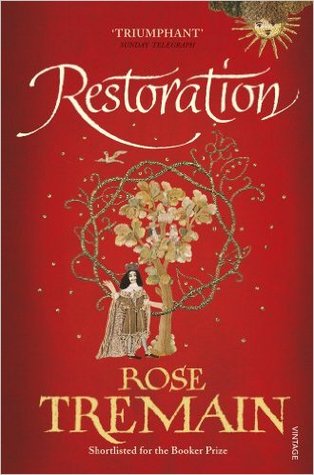
Restoration by Rose Tremain

Restoration Rose Tremain is a new author for me, but I’ve been meaning to try one of her books for a long time. Her 1989 novel Restoration seemed like my sort of book and knowing that I need to read the sequel, Merivel: A Man of His Time, for my Walter Scott Prize project gave me the motivation to pick it up and start reading. It also counts towards my Ten from the TBR project, which has been sadly neglected this year!

Restoration is set in 17th century England in the years following the restoration of the monarchy; the title refers not just to the time period but also to the personal restoration of a man’s self-respect and his place in the world. That man is Robert Merivel, a glovemaker’s son and trained physician who, near the beginning of the novel, obtains a position at the court of Charles II as surgeon to the king’s spaniels. Merivel is quickly swept away by the fun and frivolity of the court, making himself popular by playing the fool and entertaining the king.

It’s not long, however, before the king comes to Merivel with a request for help. Charles requires a husband for one of his mistresses, Celia Clemence – someone who will be a husband in name only, giving Celia a form of respectability while the king continues his affair with her. Merivel agrees to marry her and at first is delighted with the country estate in Norfolk which he is given as part of the deal. Everything is going well until Celia comes to join him there and Merivel discovers that he is falling in love with his wife…something he has been strictly forbidden to do.

Restoration is narrated by Robert Merivel himself and I found him both a fascinating and a frustrating character, more anti-hero than hero. Irresponsible and immature, you get the impression he is stumbling through life from one disaster to another, with no clear purpose in sight – and yet, despite his flaws and his failures, you can’t help feeling for him as he falls out of favour with the king. While I can’t say that I actually liked Merivel, he is an engaging narrator and his story is told with such an appealing mixture of humour and sensitivity that I was captivated by him and hoped that he would find a way to restore his fortunes.

Rose Tremain’s lively writing style perfectly suits the time period in which the novel is set. I always enjoy reading about the 1660s and I liked the contrast here between the descriptions of Merivel’s life as a country gentleman, his adventures at court and his time practising medicine in London. Merivel is in London during the Plague and the Great Fire, which are both vividly recreated. However, there is a long section in the middle of the book set in an asylum run by Merivel’s Quaker friend, Pearce, and I found my attention starting to wander during these chapters. I could see the importance of this section to the plot and to Merivel’s personal development, but I struggled to feel any interest in the new characters we meet at the asylum and I thought the whole episode went on for far too long.

Overall, though, I was impressed with this book and with my first experience of Rose Tremain’s writing. I’ll be interested to see how Robert’s story continues in Merivel, which I’m hoping to start soon.

My Commonplace Book: September 2016

A summary of last month’s reading, in words and pictures.

commonplace book
Definition:
noun
a notebook in which quotations, poems, remarks, etc, that catch the owner’s attention are entered

Collins English Dictionary

~

york-minster

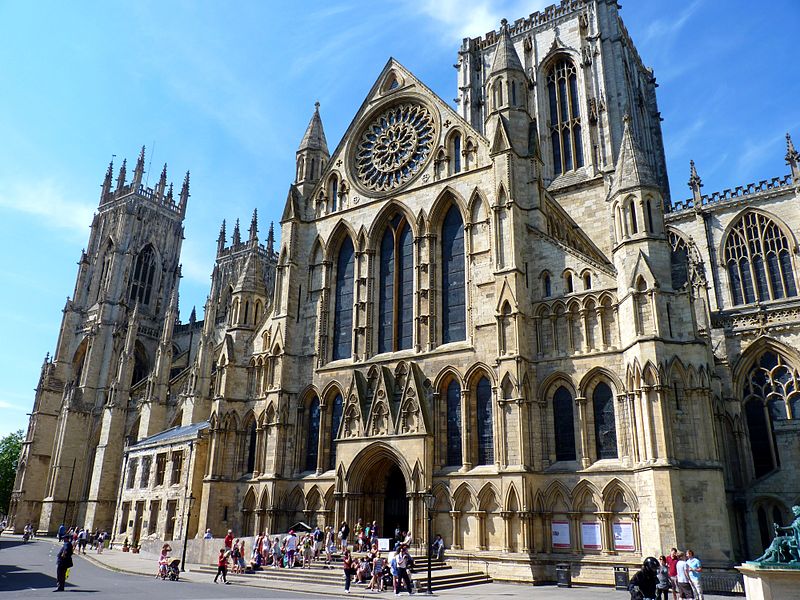
Another high wall appeared ahead of us; York seemed a city of walls. Behind it the Minster loomed. Ahead was a large open space crowded with market stalls under brightly striped awnings that flapped in the cool damp breeze. Heavy-skirted goodwives argued with stallholders while artisans in the bright livery of their guilds looked down their noses at the stalls’ contents, and dogs and ragged children dived for scraps. I saw most of the people had patched clothes and worn-looking clogs. Watchmen in livery bearing the city arms stood about, observing the crowds.

Sovereign by CJ Sansom (2006)

~

But whereas the planets are serene in their separateness, knowing any collision with one another likely to destroy them and return them to dust, Fogg remarks that he, along with very many of his race, finds his Separateness the most entirely sad fact of his existence and is every moment hopeful of colliding with someone who will obscure it from his mind.

Restoration by Rose Tremain (1989)

~

elizabeth-of-york

“Do you like history?” he enquired.

“Oh, yes.” She turned eagerly to him, forgetting momentarily the splendour of the pageant. “It is about people, you see. The deeds they performed. The way they thought.”

Elizabeth the Beloved by Maureen Peters (1972)

~

Writing is a kind of magic. One person sits in a room alone and makes marks on a page that represent the images in her mind. Another person looks at those marks, weeks or months or a hundred years later, and similar images appear in that person’s mind. Magic. Plays and choreography hold yet another level of magic and meaning: the marks on the page leap to action in another person’s body, to be seen by thousands of others. The ability to weave that kind of magic paid well in Las Vegas.

The Hawley Book of the Dead by Chrysler Szarlan (2014)

~

He was a good husband. He had comforted her when she’d sobbed violently against his plump chest, then rested dry-eyed against it and tried not to remember all the things she no longer knew about her son. How tall was he now? Had the colour of his hair changed? Did he still wake sometimes in the middle of the night unable to breathe? Did he still like to find beetles in the cracks in a stone wall, or to look for hidden things beneath a rock?
Did he remember her at all?

Rebellion by Livi Michael (2015)

~

king-david

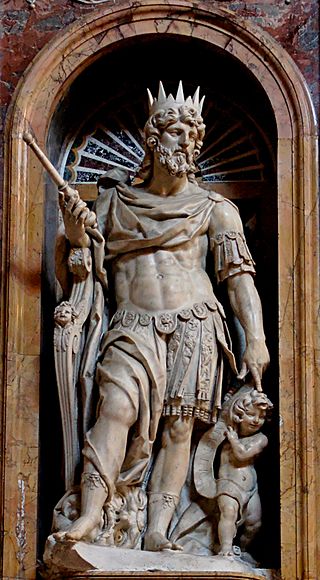
But the stories that grow up around a king are strong vines with a fierce grip. They pull life from whatever surfaces they cling to, while the roots, maybe, wither and rot until you cannot find the place from which the seed of the vine has truly sprung.

The Secret Chord by Geraldine Brooks (2015)

~

Three telephones kept ringing like demented things, and by post, telegram, wireless, and personal appearance the information poured in. Nine-tenths of it quite useless, but all of it requiring a hearing: some of it requiring much investigation before its uselessness became apparent. Grant looked at the massed pile of reports, and his self-control deserted him for a little.

A Shilling for Candles by Josephine Tey (1936)

~

“It is the only thing I know of to his advantage,” Judith said. “I will admit him to be an excellent whip. But for the rest I find him a mere fop, a creature of affectations, tricked out in modish clothes, thinking snuff to be of more moment than events of real importance. He is proud, he can be insolent. There is a reserve, a lack of openness—I must not say any more: I shall put myself in a rage, and that will not do.”

Regency Buck by Georgette Heyer (1935)

~

courbette

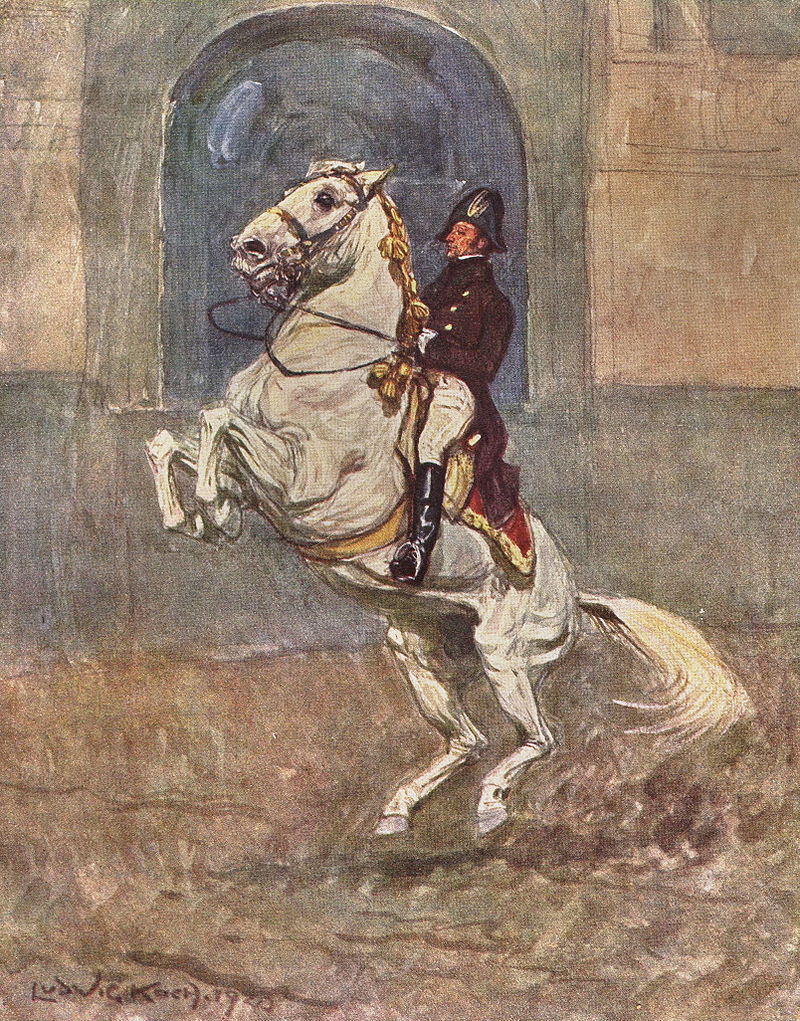
I heard the fanfare and recognised it; it was the entrance of Annalisa and her white stallion. The trumpets cut through the air, silver, clear and commanding. Old Piebald stopped grazing and lifted his head, with his ears cocked as one imagines a war horse might at the smell of battle and the trumpets. Then the music changed, sweet, lilting and golden, as the orchestra stole into the waltz from The Rosenkavalier.

Airs Above the Ground by Mary Stewart (1965)

~

In books there were people who were always agreeable or tender, and delighted to do things that made one happy, and who did not show their kindness by finding fault. The world outside the books was not a happy one, Maggie felt; it seemed to be a world where people behaved the best to those they did not pretend to love, and that did not belong to them.

The Mill on the Floss by George Eliot (1860)

~

“I might be wrong, but I fancy that however much a girl may admire, or envy, the heroine of some romance, who finds herself in the most extraordinary situations; and however much she may picture herself in those situations, she knows it is nothing more than a child’s game of make-believe, and that she would not, in fact, behave at all like her heroine.”

Black Sheep by Georgette Heyer (1966)

~

nondescript

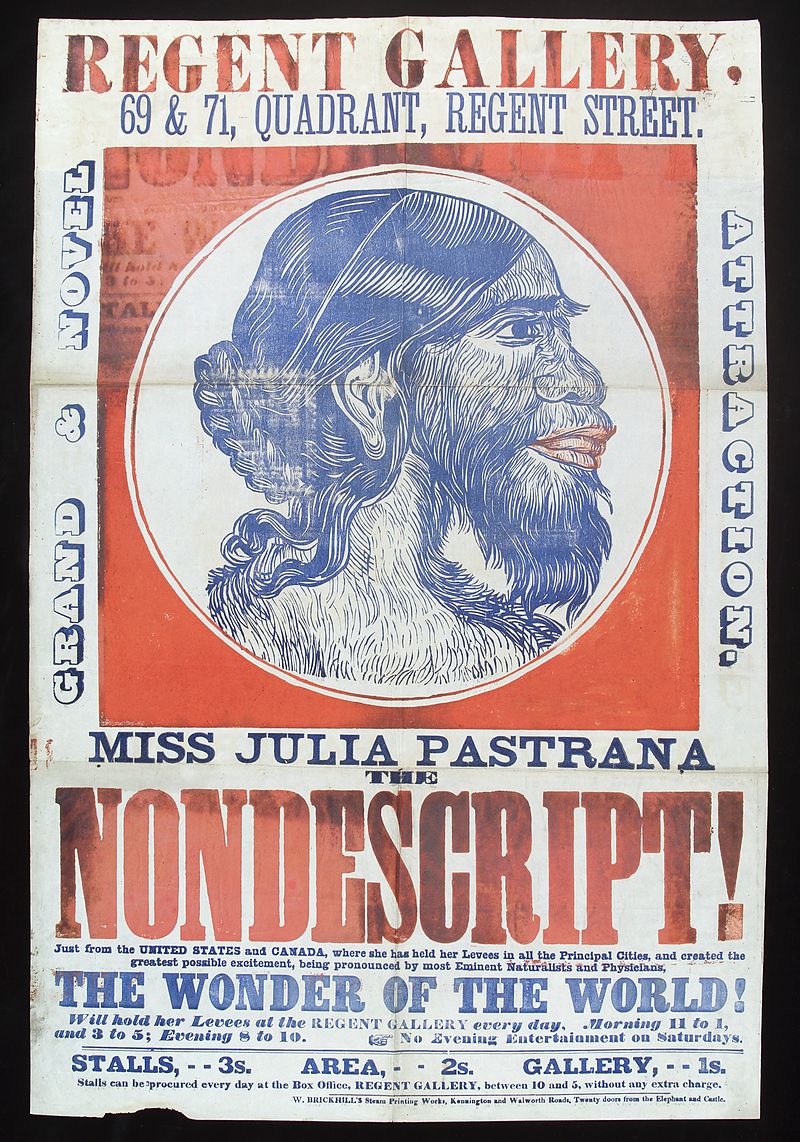
“You’re not shy, Julia,” he said. “It’s what I noticed first about you. How calmly you faced the world with that stupendous, utterly unnatural face of yours, and of course – you know the spirit in which I say that, it’s merely a stated fact – I knew then you were a natural. No no, there’s no doubt in my mind, no doubt at all, but that you’ll thrive.”

Orphans of the Carnival by Carol Birch (2016)

~

It happens this way sometimes, we can discover truths about ourselves in a moment, sometimes in the midst of drama, sometimes quietly. A sunset wind can be blowing off the sea, we might be alone in bed on a winter night, or grieving by a grave among leaves. We are drunk at a tavern, dealing with desperate pain, waiting to confront enemies on a battlefield. We are bearing a child, falling in love, reading by candlelight, watching the sun rise, a star set, we are dying…

But there is something else to all of this, because of how the world is for us, how we are within it. Something can be true of our deepest nature and the running tide of days and years might let it reach the shore, be made real there — or not.

Children of Earth and Sky by Guy Gavriel Kay (2016)

~

Favourite books read in September: Sovereign, Airs Above the Ground and Black Sheep