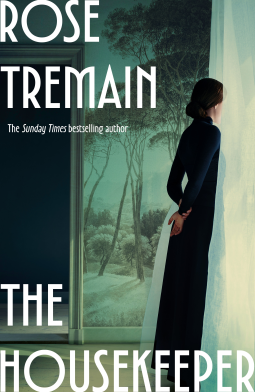
The Housekeeper by Rose Tremain

Daphne du Maurier’s Rebecca is one of my favourite books, so I was intrigued when I saw that it was the inspiration for Rose Tremain’s new novel, The Housekeeper. I’ve had mixed experiences with Tremain’s books in the past, but I knew I would have to try this one.

The Housekeeper is set in the 1930s at Manderville Hall, a large country house in Cornwall. Lilianne Maria Danowski has been housekeeper there for several years, having left Poland with her father as a young girl. Danni, as she is known – or sometimes Mrs D – is happy with her job and fond of her employer, Lord Grenville-Whithers, an elderly widower. However, the old man is starting to think about the future and as he has no heir of his own, he invites his niece Adelaide to come and stay, with the intention of leaving the house to her. Adelaide is an unpleasant, overbearing woman and Danni knows she will have to tread carefully around her, particularly as she’s currently in a relationship that could cost her her job if discovered…

Danni’s lover is the author Daphne du Maurier, who has come to research her new novel and has been given permission to use Lord Grenville-Whithers’ boathouse to do her writing. The two women are immediately drawn to each other; for Danni it’s a passionate love affair and she assumes Daphne feels the same, but when Daphne’s new novel is published, Danni is left feeling hurt and betrayed by what she reads.

Lilianne Maria Danowski was not a real person; she’s a fictional character invented by Rose Tremain, but if you’ve read Rebecca you’ll be able to see the parallels with Mrs Danvers, the housekeeper at Manderley, referred to by Rebecca as Danny. Tremain imagines that Danowski was du Maurier’s inspiration for Mrs Danvers and explores how she may have felt at seeing an unflattering portrayal of herself in a book. If you haven’t read Rebecca you’re probably wondering if you need to do so before reading The Housekeeper. My answer would be no, it’s not essential, but it would definitely be a good idea as then you would be able to spot all the little echoes of Rebecca that Tremain weaves into the story.

The Housekeeper is a beautifully written novel, but I did have a few problems with it. I felt that Danni and Daphne’s relationship began very suddenly with no real build and I just didn’t feel very convinced by it. I know quite a lot about Daphne du Maurier’s history and background, having read her autobiography Myself When Young, as well as Jane Dunn’s biography Daphne du Maurier and Her Sisters, and the impression I got from those books is that she was a complex person – shy, private and reclusive, which could make her come across as distant or aloof, but also loyal and affectionate towards her close friends. There’s not much of that complexity in Tremain’s novel; her Daphne is cold, manipulative and selfish, caring more about her reputation than Danni’s feelings.

Although I didn’t care for the portrayal of Daphne, I did like Danni. I loved the little glimpses we get of her childhood growing up as a Jewish girl in Radom, Poland, and I would have liked more of that. I also enjoyed the sections of the book set after Danni’s relationship with Daphne ends and she sets up her own business as a seamstress; there’s an interesting little subplot here involving a girl for whom Danni is asked to make a wedding dress, and another featuring two other former servants from Manderville Hall.

Apparently The Housekeeper, which began as a short story several years ago, is already being adapted for film and will star Caitriona Balfe and Emma Laird as Danni and Daphne, Anthony Hopkins as Lord Grenville-Whithers and Helena Bonham Carter as Adelaide.

Thanks to Chatto & Windus for providing a copy of this book for review via NetGalley.
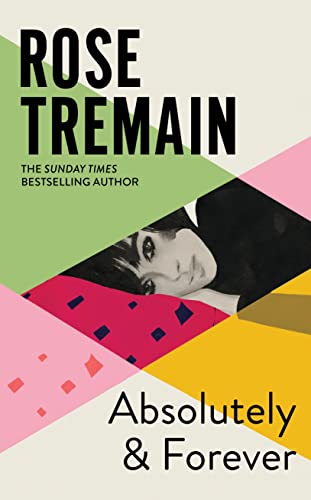
Absolutely and Forever by Rose Tremain

I’ve had mixed experiences with Rose Tremain’s books, enjoying some and struggling with others. Absolutely and Forever was shortlisted for last year’s Walter Scott Prize for Historical Fiction and as it’s a personal project of mine to try to read all of the shortlisted titles, I decided to read this one despite it not sounding particularly appealing to me. It’s a short book (under 200 pages), so at least it wouldn’t be too big a commitment if I didn’t like it.

Here’s how the book begins:

When I was fifteen, I told my mother that I was in love with a boy called Simon Hurst and she said to me, ‘Nobody falls in love at your age, Marianne. What they get are “crushes” on people. You’ve just manufactured a little crush on Simon’.

What Marianne Clifford has manufactured, however, is more than just a little crush. It’s an obsession. She knows she’s going to love Simon Hurst ‘absolutely and forever’ and at first it seems that he feels the same way about her – but when he leaves for Paris to study at the Sorbonne and never returns, Marianne’s heart is broken. As the years go by, Marianne tries to move on and build her own life, but she can never quite let go of her love for Simon and the dreams she once had.

The book is set in the 1950s and 1960s and Marianne narrates the story of her life during and after her relationship with Simon. A lot happens to her over the years – she attends secretarial college in London, has several jobs, gets married and makes new friends – but all the time she’s pining for Simon, which holds her back from finding happiness and contentment. It’s understandable that she would be upset for a while, but when she continues to grieve for years and years afterwards, it quickly becomes frustrating, particularly as it’s so one-sided and Simon clearly doesn’t care as much as she does. But Marianne herself is naïve, innocent and childlike, never really seeing the world as other people see it, so it’s maybe not surprising that she reacts the way she does. Although she grows from a teenager into an adult over the course of the book, she doesn’t develop very much as a person and the Marianne at the end is not a lot different from the Marianne at the beginning.

Although I didn’t dislike Marianne and found her story quite sad, it was Hugo, the man she marries, who had my sympathy. Hugo is completely devoted to Marianne and she does like him very much, but her feelings for Simon prevent her from loving anybody else. At least Marianne is lucky enough to have a close female friend in Petronella, a sensible, practical Scottish woman she’s known since their school days, and Petronella does her best to help her move on with her life, but ultimately she can’t control whether Marianne chooses to take her advice.

The time period the story covers is the period when Rose Tremain herself was a teenager and young adult and I’m sure she’ll have drawn on some of her own personal memories and experiences of that era. Having read her memoir, Rosie: Scenes from a Vanished Life, however, this novel seems to be only partly autobiographical – Marianne’s life follows a different course from Rose’s own, but there are also some similarities, such as Marianne’s desire to be an author (for much of the book she’s working on a novel narrated by an Argentinian horse).

As I’ve mentioned, Absolutely and Forever appeared on the Walter Scott Prize shortlist in 2024, but it didn’t win and I think I can see why. Although I found it quite an easy, enjoyable read (despite Marianne being a bit irritating), sometimes the more readable books aren’t the ones that win prizes and this one doesn’t really tackle important or topical issues like the others on the list. I have the final shortlisted title, The New Life by Tom Crewe, to read soon.

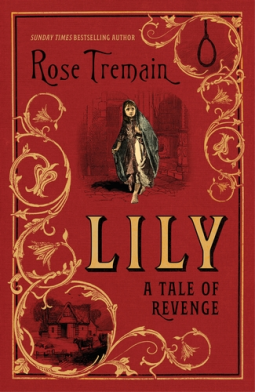
Lily by Rose Tremain

From the opening pages of Rose Tremain’s new novel, we know that Lily Mortimer is a murderer and that she expects to hang for what she has done. What we don’t know is who the victim was and what drove a young woman like Lily to commit such a terrible crime. To find the answers we have to go back in time, to a cold winter’s night in 1850 when policeman Sam Trench finds a baby abandoned by the gates of a London park. Sam takes her to the London Foundling Hospital where she is given the name Lily and sent to live with a foster family in the countryside. This is only a temporary arrangement – children are expected to return to the Hospital once they reach the age of six – but Lily’s foster parents, Nellie and Perkin Buck, grow to love the little girl and they are all heartbroken when the time comes for them to separate.

Back at the Foundling Hospital, Lily feels trapped and unhappy; she and the other children are badly treated by the women who are employed to take care of them and Lily herself seems to be singled out for the worst punishments. As the years go by, Lily becomes an adult and starts work as a wigmaker at Belle Prettywood’s Wig Emporium – but even though she has left the orphanage behind, she is still haunted by the events of her childhood.

After being disappointed by Rose Tremain’s last book, Islands of Mercy, I found this a much more compelling read. It took me a while to get into it as the timeline jumped around so much at the beginning, constantly moving from Lily’s present to her past and back again, which felt disjointed and confusing – and the absence of chapter breaks didn’t help – but eventually things settled down and I was drawn into the story. There are shades of Jane Eyre, particularly in the parts of the book that deal with Lily’s relationship with another orphan, Bridget, and I was also reminded of Stacey Halls’ The Foundling, another novel set partly in the London Foundling Hospital (although this book has a very different plot).

The Hospital – also known as Coram, after its founder Thomas Coram – is vividly described and comes to life as a grim, forbidding place where the abandoned children are made to pay for the ‘sins of their mothers’. Although Lily is occasionally shown some kindness by people such as her benefactress Lady Elizabeth Mortimer, most of the treatment she receives at Coram is harsh and cruel. It seemed such a shame to me that the children weren’t allowed to stay with foster families who loved and wanted them, although I understood that the idea of returning them to the Hospital was so that they could learn the skills that would equip them for life in Victorian society.

This is a bleak novel, but also quite a moving one and despite knowing that Lily considered herself a criminal, I had a lot of sympathy for her from the beginning and hoped that her story would have a happier ending than the one she was expecting. I would recommend Lily not just to Rose Tremain’s existing fans, but also to anyone looking for a dark Victorian tale to immerse themselves in this winter.

Thanks to Vintage for providing a copy of this book for review via NetGalley.
Book 49/50 read for the 2021 Historical Fiction Reading Challenge.

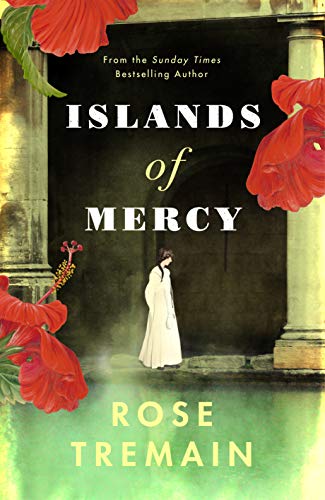
Islands of Mercy by Rose Tremain

I’ve found this a difficult book to write about because, although it is undoubtedly very well written and has a lot of the elements I would usually find interesting, for some reason I just didn’t like it very much and have struggled to explain why. It was particularly disappointing as I’ve enjoyed the other Rose Tremain books I’ve read – Restoration, Merivel and The Gustav Sonata – so I had high hopes for this one too.

Anyway, Islands of Mercy begins in 1865 in Bath, ‘a place where very many rich people assembled, to take the waters, or simply to take their leisure’. Jane Adeane is the twenty-four-year-old daughter of a renowned Bath surgeon and works with him as a nurse, gaining a reputation for herself as The Angel of the Baths. She has caught the eye of her father’s fellow doctor and business partner, Dr Valentine Ross, but his attentions are unwelcome to her and she decides to go to London for a while to stay with her Aunt Emmeline, an artist. Here she meets one of Emmeline’s friends, the beautiful Julietta Sims, and feels an instant attraction to her. Soon, Jane finds that she is falling in love with Julietta, and when she returns to Bath she must decide whether she wants the security that marriage to Dr Ross could give her or whether she would prefer to be free to pursue her relationship with Julietta.

Jane’s story alternates with that of Sir Ralph Savage, an eccentric Englishman who lives on the island of Borneo with his servant and lover, Leon, and calls himself ‘the Rajah of the South Sadong Territories’. Leon is an ambitious and resourceful young man who is always coming up with new money-making schemes, but he is also a jealous man and is not at all happy when Edmund Ross, a naturalist who has come to Borneo in search of new species, arrives on Sir Ralph’s estate.

Edmund is the younger brother of Valentine Ross and this provides a link between the two storylines – however, it is a very weak link and for most of the novel they seem like two completely different, unconnected stories. Borneo is certainly a fascinating and unusual setting, but I didn’t have any interest in Sir Ralph and Leon and felt that their chapters could probably have been left out entirely as they added very little to the overall plot of the novel. This made the whole experience of reading this book feel disjointed and every time the narrative switched to Borneo I couldn’t wait for it to return to Bath again.

Although I found Jane’s chapters much more compelling, I was disappointed by the character arc Valentine Ross goes through; I did have some sympathy for him at first after Jane’s initial rejection of him, but he quickly becomes so unpleasant and controlling that he feels like a stereotypical villain rather than a believably flawed character. I didn’t doubt Jane’s love for Julietta, so I don’t really think it was necessary to make Valentine so needlessly cruel and selfish – in fact, I think it would have been more interesting if Jane had faced a choice between the woman she loved and a man whom she at least liked.

There is a third thread to the novel that I haven’t mentioned yet and this follows the story of Clorinda Morrissey, a woman from Dublin who opens a tea shop in Bath, where she gets to know Jane and her father. Clorinda was the one character in the book I really liked and would have been happy to visit for a cup of tea and a cake! I wished we had spent more time with her rather than some of the other less engaging characters.

I will continue to read Rose Tremain’s books as it’s only this one so far that I haven’t enjoyed. Luckily there are plenty of her earlier novels left for me to explore.

Book 2/50 read for the Historical Fiction Reading Challenge.

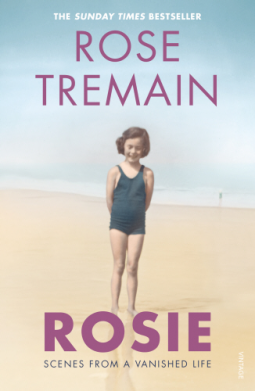
Rosie: Scenes from a Vanished Life by Rose Tremain

I don’t think I’ve read enough of Rose Tremain’s books to really describe myself as a fan or as any kind of expert on her work, but I’ve enjoyed the little I’ve read by her – Restoration and Merivel, her two novels set in 17th century England and France, and The Gustav Sonata, set in Switzerland before, during and after the Second World War – so I decided to give her recent memoir, Rosie, a try.

Judging purely by the cover and the subtitle Scenes from a Vanished Life, I was expecting something light, charming and nostalgic, but the reality was very different and the book left me feeling quite sad. It’s a slim book covering only the first eighteen years of the author’s life and I think it’s fair to say that Rose – or Rosie, as she was known when she was younger – didn’t have the happiest start to life. Born into an upper-middle-class family, with all the privilege and opportunity that comes with that, the one thing Rosie lacks is parental love. She is ten years old when her playwright father, Keith, leaves her mother, Jane, for a younger woman. Jane quickly remarries and sends Rosie and her sister, Jo, to boarding school, an incident Tremain thinks of as ‘The Great Casting Away’ and which she describes with both resentment and an attempt to understand:

When we were safely away in our cold dormitories at Crofton Grange, she and her friends could forget all about their children’s future. Instead, they could go to plays, go to films, go to restaurants, get drunk at lunchtime, flirt, shop, swear, take taxis, waste money, go dancing, have sex, and wander through London in the dawn light, laughing, determined to forget the war that had stolen their youth and so many of the people they’d loved.

The child Rosie is often hurt and confused by her mother’s actions, and not much has changed by the time she reaches adulthood; when her first play is broadcast on BBC radio in 1976, Jane says she is too busy to listen as she is going out to lunch that day. Rosie does acknowledge, however, that her mother’s lack of affection for her could be partly due to her own upbringing. Many of Rosie’s childhood memories revolve around holidays spent at her maternal grandparents’ home, Linkenholt Manor, but it quickly becomes clear that it is the house that holds a special place in her heart and not her grandparents themselves. Mabel and Roland Dudley, Jane’s parents, are depicted as cold, stern people who have struggled to move on from the loss of their two sons and see their daughter as a poor substitute; their granddaughters interest them even less. I found this so sad because my own childhood relationship with my grandparents was completely different – warm and loving and full of fun. The only love Rosie seems to receive comes from her nanny, Vera Sturt, and I was glad that she had at least one person who cared about her, although even this relationship was lost when she was sent away to boarding school.

As the title of the book suggests, the world of Tremain’s childhood is a world that has now largely vanished. Her account of her school days, of beliefs and attitudes and of society in general could only have been written by someone growing up in the 1950s and belonging to a certain class. As Rosie becomes a young adult and sets her sights on attending Oxford University, she sees her dreams shattered yet again when her mother insists on sending her to a Swiss ‘finishing school’ instead. Jane doesn’t see the need for her daughter to continue her education when all a woman needs to do to succeed in life is to find a rich husband.

Despite her privileged background then, Tremain still had obstacles to overcome as she grew from Rosie into Rose and embarked on her writing career. Because her memoir ends before the publication of her first book, she doesn’t spend a lot of time discussing her writing, but she does give us a few insights into how incidents, people and places from her early life later found their way into her novels. I’m sure this would have meant more to me if I had read more of her work! The book ends very abruptly, which was disappointing as I would have liked to have continued to follow Rose through her adult years. Still, it was interesting getting to know the young Rosie and her world. I will have to read more of her books soon; if there are any you would recommend please let me know.

Thanks to Vintage Publishing for providing a copy of this book for review via NetGalley.

The Gustav Sonata by Rose Tremain

“So you see,” she said, “you have to be like Switzerland. Do you understand me? You have to hold yourself together and be courageous, stay separate and strong. Then, you will have the right kind of life.”

Switzerland is well known for its neutrality during the Second World War but, as we see in Rose Tremain’s The Gustav Sonata, even remaining neutral didn’t mean that Switzerland and its people completely escaped the effects of war. The Gustav Sonata explores some of these effects, as well as looking, on a more personal level, at other meanings of neutrality and of courage, separateness and strength.

The novel is divided into three parts, presumably to resemble the movements of a sonata. The first is set just after the war, in 1947, and introduces us to Gustav Perle, a five-year-old boy who lives in the fictional Swiss town of Matzlingen with his mother, Emilie. Gustav’s best friend at kindergarten is Anton Zwiebel, but when he brings Anton home one day, he is confused by Emilie’s reaction. It’s obvious that she disapproves of Anton, but why? Is it because he is Jewish – and if so, what is her problem with Jews? These questions won’t be answered until later in the book, but in the meantime we continue to follow Gustav and Anton throughout their childhoods and into their teens.

As Gustav spends more and more time with the Zwiebel family, he becomes aware of how different Anton’s life is from his own; he senses that Anton’s parents really seem to care about their son’s future, unlike his own mother who can be so cold and distant. Anton, however, is having trouble of his own – as a talented musician he dreams of a career as a concert pianist, but his ambitions look set to be threatened by his debilitating stage fright.

In the second section of the book, we go back in time to the 1930s and the early days of Emilie’s relationship with Gustav’s father, Erich Perle. At last we can begin to understand Emilie’s behaviour and the reasons for her animosity towards Anton’s family. Finally, for the third part of the novel, we return to the stories of Gustav and Anton, who are now middle-aged men, and we find out what has been happening to them in the intervening years. I don’t always like books which jump around in time like this, as they can sometimes seem disjointed, but Rose Tremain handles the structure very well. My only slight criticism is that I thought the Gustav and Anton we meet in part three feel too similar to the Gustav and Anton from part one – I found both characters convincing as children but not so convincing as adults.

I particularly enjoyed the wartime section in the middle of the book, dealing with the relationship between Emilie and Erich and showing how a decision made by the Swiss government changed both of their lives. As I’ve said, the neutral stance taken by Switzerland during the war is only one type of neutrality examined in this novel – there’s also the neutrality of one person towards another (‘staying separate and strong’) and the question of how far it is possible to remain neutral when faced with a moral dilemma which requires a choice to be made. I’m sure we can all think of times in our own lives when doing nothing was as bad or worse than doing something!

This is the third Rose Tremain novel I’ve read, the others being Restoration and its sequel Merivel. I found the writing style and overall tone of this one very different from the other two, which reflects the very different subject and setting. The Gustav Sonata is one of the shortlisted titles for this year’s Walter Scott Prize for Historical Fiction. Of the books I’ve read from the list so far, this isn’t my favourite, but I did enjoy it and won’t be at all disappointed if it wins.

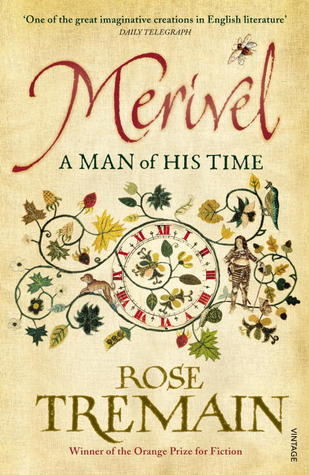
Merivel: A Man of His Time by Rose Tremain

merivel I wasn’t planning to read Merivel so soon after finishing Rose Tremain’s Restoration, but when I saw a copy on the library shelf a few days later, I couldn’t resist bringing it home so I could catch up with Robert Merivel again and see how he was getting on. I didn’t expect this book to be as good as Restoration, as sequels written many years later often aren’t, so I was surprised to find that I actually preferred this one. Looking at other reviews, I can see that I’m in the minority with that opinion, but I think the reason I liked this book better was because I liked Merivel himself better.

At the beginning of Merivel, our narrator, Robert Merivel, is back at his Norfolk estate of Bidnold, where he returned at the end of Restoration. It’s 1683 and sixteen years have gone by since we last saw him; he’s now a middle-aged man, very aware that time is slipping away and bringing changes to himself and the people around him. His faithful servant, Will, is getting old and is struggling to carry out his duties, while his little girl, Margaret, is now a young lady and planning to spend Christmas in Cornwall with friends. Facing the prospect of being left at home alone, Merivel decides to make the most of the time remaining to him and sets off to Versailles – with a letter of introduction from his friend, King Charles II – in the hope of finding some excitement and intellectual stimulation.

Unfortunately, Versailles fails to live up to Merivel’s expectations; he finds little to admire at the French court and it’s not long before he’s on his way home to England. Apart from a brief romance with an attractive botanist, Louise, and an invitation to visit her at her father’s estate in Switzerland, the only thing Merivel has to show for his time in France is a large bear called Clarendon whom he has rescued from captivity and brought back to Norfolk. On arriving at Bidnold, however, Merivel discovers that he has more to worry about than Louise and his bear: his daughter, Margaret, is seriously ill and requires all of his skills as a physician if she is to survive.

Although there are some humorous scenes in this book, I found this quite a sad and sombre novel, especially in comparison to the liveliness of Restoration. The passing of time is a major theme (it’s no coincidence that Merivel shares lodgings in France with a clockmaker) and there’s always a sense that things are coming to an end, that Will, Merivel – and even the King – won’t live forever. Merivel is not so much searching for his place in the world as he was in the previous book, but trying to understand himself and come to terms with his own nature. He still gets things wrong sometimes, he still makes some poor decisions, and has a tendency to neglect the things that are most important, but he also has a good heart and I found him completely endearing! I remember thinking he was a very frustrating character in Restoration, but in this book I had more patience with him because I could see that he was doing his best.

Merivel is a book with many layers, giving the reader a lot to think about. Even the headings of the four sections – The Great Enormity, The Great Captivity, The Great Consolation and The Great Transition – have a significance which is worth considering. But this is also a very entertaining novel. The pace is quite leisurely, but there’s always something happening: a duel, an encounter with highwaymen, an illness, or a visit from the King. The mood of the late 17th century is captured beautifully; Tremain even gives some of the nouns capital letters to enhance the feeling of authenticity, something which I thought might be irritating at first but which, after a few pages, I decided I liked.

The ending, when it came, was not entirely unexpected, but I was still a bit surprised because I think a lot of authors would have chosen to end Merivel’s story in a different, happier way. Considering the themes of this novel, though, I thought it was the perfect conclusion. I loved revisiting Merivel’s world and I would definitely recommend this book to anyone who has read and enjoyed Restoration. It could probably be read as a standalone but I think you’ll get more out of it if you’ve been following Merivel’s story from the beginning.

This book also counts towards my Reading the Walter Scott Prize project. It was shortlisted in 2013.