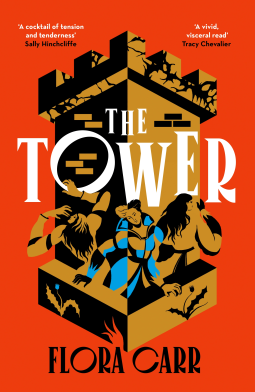
The Tower by Flora Carr

It’s 1567 and three women are being rowed across a Scottish loch towards Lochleven Castle. Two of them are maids – one is a Frenchwoman, Marie de Courcelles, known as ‘Cuckoo’, and the other is Jane, a Scot. The third woman is Mary, Queen of Scots, who is being imprisoned in the castle following her surrender at the Battle of Carberry Hill.

Although Mary doesn’t know it when she enters the castle, she will remain there for almost a year. It seems that no help is forthcoming from Mary’s fellow queen, Elizabeth I of England, or from Margaret Erskine, the castle châtelaine, who places her daughter-in-law in Mary’s chamber as a spy. Eventually, Mary’s spirits are lifted by the arrival of her good friend, Mary Seton, who joins the three of them in captivity, but Jane and Cuckoo are not so thrilled by this addition to their number and Seton’s presence quickly changes the balance of power inside the tower. Together they begin to form a plan of escape, but which of them will be prepared to risk the most to save their queen?

I’ve read other books about Mary, Queen of Scots, both fiction and non-fiction, but this one is different because it focuses on just this one specific period in Mary’s life. The narrow scope of both the span of time covered and the physical setting – the confines of one tower in a remote castle on an island accessible only by boat – give the story a tense, claustrophobic feel. We do get some backstory in the form of flashbacks, otherwise the four women have to wait for news from the outside world to reach them in their confinement.

For the reasons I’ve mentioned, this is a slow paced novel, with not a lot of action, and it mainly concentrates on exploring the relationships between Mary and her three companions. The different personalities of Cuckoo, Jane and Mary Seton come across strongly and these different personalities affect the way each woman responds to being imprisoned. However, I didn’t really like any of the characters, which was a problem when so much of the book revolves around their internal thoughts and feelings. I also felt that the author was projecting modern views and attitudes onto these 16th century women, which was a bigger problem for me.

The story does become much more compelling towards the end, when Mary prepares to put her escape plan into motion, and despite my criticisms, I do think the book is still worth reading for the insights into this short but important episode in Mary’s life.

Thanks to Random House UK for providing a copy of this book for review via NetGalley.

Book 10/50 for the Historical Fiction Reading Challenge 2024

The Spendthrift and the Swallow by Ambrose Parry

I loved the first four novels in Ambrose Parry’s Raven and Fisher mystery series and although there doesn’t currently seem to be any news of a fifth, I was pleased to come across this digital short story available free for Kindle. It fits into the series chronologically between the third and fourth books but if you come to it late, as I did, it doesn’t matter at all as it works as a standalone story.

Ambrose Parry is a pseudonym used by the crime author Chris Brookmyre and his wife Dr Marisa Haetzman, a consultant anaesthetist. Marisa’s knowledge is crucial to the series, which is set against the backdrop of the medical world of 19th century Edinburgh. Our two main characters are Dr Will Raven, assistant to the renowned Scottish obstetrician Dr James Simpson, and Sarah Fisher, who also assists at Simpson’s clinic but is struggling to find a way to achieve her own dream of becoming a doctor. Each book in the series features a mystery to be solved, as well as details of Victorian medical procedures and treatments.

The Spendthrift and the Swallow is only 52 pages long, including a preview for Voices of the Dead, and can easily be read in about twenty minutes. The story is set in January 1853 and we follow Will and Sarah as they investigate the death of one of Dr Simpson’s patients, Cora Carlton, the wife of an entrepreneur. The circumstances of Cora’s sudden death could raise questions over the doctor’s medical abilities, so Will and Sarah hope to uncover the truth quickly enough to save his reputation. Meanwhile, Simpson has begun experimenting with the increasingly popular science of mesmerism and places a loud and difficult patient under hypnosis with startling results. I was interested to read in the author’s note at the end of the book that both of these incidents were based on real historical cases.

If you’re new to the Raven and Fisher books, reading this story first wouldn’t be a problem as it doesn’t really spoil anything from the main series and it’s a satisfying mystery in its own right. However, it’s too short for any character development or any background information to help you understand the relationship between Sarah and Will and what has happened to them up to this point. My recommendation is to start with the first full-length novel, The Way of all Flesh. For existing Parry readers, though, this is an entertaining little book and provides an introduction to the mesmerism storyline that will play such a big part in Voices of the Dead.

Book 3/50 for the Historical Fiction Reading Challenge 2024

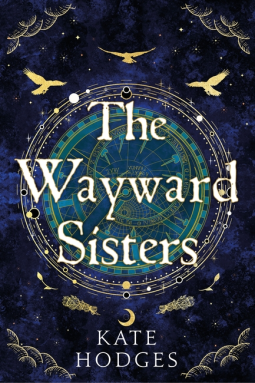
The Wayward Sisters by Kate Hodges

It’s 1769 and Nancy Lockaby is on her way to Inverness where she has been invited to stay with the renowned Shakespearean scholar, Caleb Malles, to help him with his research. Nancy is a keen astronomer who has been developing a theory of her late mother’s involving an astronomical phenomenon known as ‘the Fold’ – a theory that has provoked the scorn and derision of her male colleagues at the Greenwich Observatory. Nancy isn’t sure what her role will be in Caleb’s work as she has little interest in literature, but she welcomes the opportunity to get away from the hostile atmosphere of the Observatory for a while and start a new life in Scotland.

Arriving at the large, crumbling Blackthistle House with her maid, Cora, on a cold, snowy night, Nancy is immediately unsettled by the atmosphere. Why are there lights flashing in the window of a turret? Who are the three strange women she sees in the darkness as her carriage approaches the house? Once she settles in, however, she becomes fascinated by Caleb Malles and his passion for Shakespeare’s Macbeth. She also gets to know the three women she glimpsed in the dark and finds them less threatening as she learns more of their backgrounds. But is it true that they have lived for many centuries and possess special powers? And what is Caleb’s real reason for bringing Nancy to Blackthistle House?

The Wayward Sisters is Kate Hodges’ first novel, having previously written several non-fiction books. You never really know what to expect when trying a new author and I had mixed feelings about this book, but generally more positive than negative. The first half is slow, but has a wonderfully eerie, Gothic atmosphere as Hodges sets the scene and introduces the characters. There’s a particularly memorable scene where Nancy encounters some sinister crows during a snowstorm! I had expected elements of Macbeth to be more deeply woven into the plot, but they really aren’t, apart from the presence of the three women, who clearly represent Shakespeare’s three witches, the Weird (or Wayward) Sisters. The witches have more nuance here than in the play, with each being given a detailed backstory of her own.

Kate Hodges writes very well and there are some nice descriptions to bring the Scottish setting to life, although I was surprised that the recent Jacobite Rebellions were barely mentioned as they must surely have still been having an impact on the lives of the Highlanders in the 1760s. Nancy is an interesting heroine; astronomy is an area of science where women could and did make an impact in the 18th century (the most famous female astronomer of that period was probably Caroline Herschel, the first woman to discover a comet) although it was obviously still a male-dominated field and difficult for women to be taken seriously. However, Nancy’s theories regarding the Fold begin to take the story into the realms of science fiction, particularly when the witches get involved and we discover Caleb’s motives for enlisting the services of an astronomer.

I think I would have enjoyed this book more if it had continued as the atmospheric historical fiction novel it seemed to be at first, rather than the more fantastical story it became. There’s a lot to like about The Wayward Sisters, but it wasn’t really the right book for me.

Thanks to Hodder & Stoughton for providing a copy of this book for review via NetGalley.

This is book 45/50 for the 2023 Historical Fiction Reading Challenge.

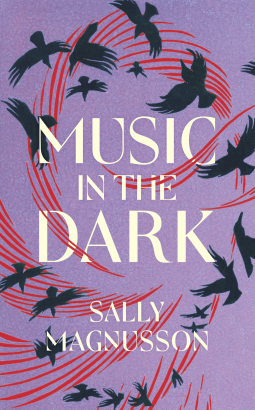
Music in the Dark by Sally Magnusson

This is the third novel by Scottish author Sally Magnusson and although I had a few problems with her first two – The Sealwoman’s Gift, the story of an Icelandic woman sold into slavery in Algeria, and The Ninth Child, about the construction of the Loch Katrine Waterworks – I still wanted to read this one because it sounded so interesting.

It begins in 1884 in a tenement in Rutherglen, a town near Glasgow, where the widowed Jamesina Bain is taking in a new lodger. The lodger is a man, newly arrived from America, where he has lived for many years. At first he has no idea who the Widow Bain is, but as he and Jamesina spend more time together, they discover that they have a shared past – they both lived through the forced eviction of Greenyards in Strathcarron.

The eviction was part of the Highland Clearances, the period when landowners in Scotland removed tenants from their estates so the land could be used for more profitable purposes – which, in the case of Greenyards, meant sheep farming. The clearances of Greenyards in 1854 and nearby Glencalvie a few years earlier, were particularly shocking, for reasons I won’t go into here as the novel will probably have more impact if you don’t already know what happened.

Sally Magnusson doesn’t delve too deeply into the politics surrounding the clearances or the reasons behind them – although Jamesina and her friends believe it was due to the Celtic people being considered inferior – and she acknowledges in her author’s note that it’s a very complex subject. Instead, she concentrates on exploring the long-term effects of the clearances, physically, emotionally and mentally, on the evicted people.

The novel is written from the perspectives of both Jamesina and her lodger, moving between the two as well as jumping backwards and forwards in time between 1884 and 1854. This structure is ultimately quite rewarding as things do eventually fall into place and we come to understand what happened during the Greenyards eviction and the sequence of events that sent Jamesina to Rutherglen and her lodger to America. However, it also means that the first half of the novel is slightly confusing and lacks focus, something that isn’t helped by the style in which Jamesina’s sections are written – often descending into a jumble of thoughts, word association and stream of consciousness. There was a reason for that style, which I understood later on, but it didn’t make this an easy book for me to get into.

I found this book very evocative of time and place, whether I was reading about Jamesina’s childhood in Greenyards or her life in the Rutherglen tenement, taking in laundry to earn a living and sleeping in the ‘kitchen bed’ to keep the bedroom available for lodgers. Magnusson also incorporates lots of other interesting issues, such as the healing power of music, the devastating impact of dementia and the joys of education. I found it very sad that the adult Jamesina, who had been such a bright child and was being taught Latin by the local minister, questions the point in being educated if you’re only going to be leading a life of drudgery.

I have deliberately not provided the name of Jamesina’s lodger, as we don’t immediately know who he is or how he fits into her life and I thought I would leave you to make that discovery for yourself. This is a fascinating novel in many ways and I did enjoy it once I got past the halfway point, which is why I don’t like abandoning books too early!

Thanks to John Murray Press for providing a copy of this book for review via NetGalley.

This is book 17/50 read for the 2023 Historical Fiction Reading Challenge.

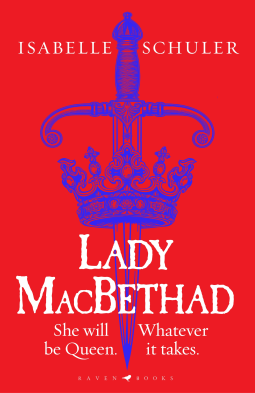
Lady MacBethad by Isabelle Schuler

The character of Lady Macbeth is known to many of us through Shakespeare’s play, but who was she really? What kind of person was she and what were the events that led to her marriage to Macbeth and the beginning of the story we think we know? These are the questions Isabelle Schuler attempts to answer in her new novel, Lady MacBethad.

The book is set in the first half of the 11th century and is narrated by Gruoch, the woman who will become Lady Macbeth. With royal blood in her veins, Gruoch has grown up listening to her Picti grandmother’s prophecies that one day she will be Queen of Alba. When she is betrothed to Duncan, heir to the throne, it seems that the prophecy is going to come true and although she is sorry to leave behind her family and her close childhood friend MacBethad, she heads for Scone to join Duncan’s court. However, she is unprepared for the hostility of Duncan’s mother, Bethoc, the scheming of her pagan friend, Ardith, and the arrival of another young woman, Suthen of Northumberland, who also catches Duncan’s eye.

When a dramatic turn of events leads to her having to flee Scone before the marriage can take place, Gruoch falls into the hands of Mael Colum of Moray and his brother, Gillecomghain. Her chances of becoming queen seem out of reach again, but Gruoch refuses to give up on her dream.

Lady MacBethad ends before Shakespeare’s Macbeth begins, so is not a retelling of the play but more of a prequel to it. Also, the characters in Schuler’s novel are based on the real historical figures rather than on Shakespeare’s interpretation of them, which of course can’t be taken as being particularly accurate! I was pleased to find that she tries to use language appropriate to the period and authentic medieval Gaelic naming, such as MacBethad mac Findlaich rather than the anglicised Macbeth. This was a relief after reading Joanna Courtney’s Blood Queen a few years ago, which renamed Gruoch as Cora and Gillecomghain as Gillespie, just in case the original names were too difficult for modern readers.

Schuler works some quotes from Shakespeare into the conversations between her characters – “Look like the innocent flower, but be the serpent beneath it” is advice given to Gruoch by her grandmother, for example – but no knowledge of the play is necessary to be able to understand and enjoy this book. It can be read as a straightforward work of historical fiction, bringing to life a fascinating and complex period of Scotland’s (or Alba’s) history. It explores the conflict between Christianity and the old pagan beliefs, the fading culture of the Picts and the warring factions trying to gain control of the throne.

Gruoch (or Groa, as her pagan friends call her) is portrayed as ambitious, determined and driven by her desire to become queen no matter what. Yet her narrative voice feels slightly too young and immature for me to find her completely convincing. I think having read Dorothy Dunnett’s wonderful King Hereafter, it was just too difficult for me to put Dunnett’s Groa out of my mind and fully embrace a different version of the character.

The way the book ends sets things up perfectly for a sequel, maybe incorporating some of the more familiar events of Macbeth. I wonder whether there will be one or whether Isabelle Schuler is moving on to other subjects now.

Thanks to Raven Books for providing a copy of this book for review via NetGalley.

This is book 7/50 read for the 2023 Historical Fiction Reading Challenge.

The Bookseller of Inverness by S G MacLean

The Scottish author SG MacLean is best known for her Seeker series and before that, the Alexander Seaton series originally published under the name Shona MacLean. I haven’t read any of those books (although I do own The Redemption of Alexander Seaton), but when I saw that her new novel, The Bookseller of Inverness, was a standalone, it seemed like a good place to start.

Set in Scotland in the aftermath of the 1745 Jacobite Rising, the ‘bookseller’ of the title is Iain MacGillivray, a survivor of the Battle of Culloden. Six years have now passed since he was wounded on the battlefield and although he escaped with his life, his face has been left badly scarred. Still traumatised by the death of his cousin Lachlan, Iain has been living quietly since the failed rising, selling books and running a small public library in Inverness. One day, Iain notices a stranger searching through the shelves, opening and closing books; he won’t tell Iain what he is looking for and only leaves when the shop is shut for the night.

The next morning, Iain opens up the shop again to find the stranger dead on the floor, his throat cut and beside him a sword with a white cockade on the hilt – the symbol of the Jacobites. The murder coincides with the reappearance of Iain’s father Hector, a prominent Jacobite who fled Scotland years earlier but still hasn’t given up hope of seeing a Stuart king on the throne once more. When more murders follow, Iain and Hector begin to search for a missing book containing the names of traitors to the Jacobite cause – a book they believe could hold the key to finding the killer.

Although the search for the book and the murderer drives the plot forward, I didn’t think the mystery was a particularly strong one. I was more interested in the historical detail, the descriptions of everyday life in 18th century Inverness and the insights into the mood, politics and changing loyalties in the years following Culloden. I’ve read about the Jacobites many times before and would prefer authors to explore other periods of Scottish history, but MacLean’s enthusiasm for this subject and setting shine through and her very detailed author’s note shows that a huge amount of research went into the writing of this novel. I’m glad I already had some knowledge of this period, though, as I think I might have found the twists and turns of the story a bit difficult to follow otherwise. MacLean also incorporates some subplots that touch on wider topics such as the slave trade and indentured servitude.

Most of the characters in the book are fictional, although many of them, as I discovered from the author’s note, are based on the lives and experiences of real people. One historical figure who plays an important part in the story without actually appearing in it is Simon Fraser, Lord Lovat – known as the ‘Old Fox’ – who readers of Diana Gabaldon’s Outlander series will remember as Jamie Fraser’s grandfather. Iain MacGillivray himself is an engaging character with an interesting past; I enjoyed getting to know him and reading about the work he and his assistants put into collecting, restoring and selling – or lending – books to the people of Inverness.

I’m pleased to have finally read something by MacLean. The Redemption of Alexander Seaton will be next!

Thanks to Quercus Books for providing a copy of this book for review via NetGalley.

This is book 50/50 read for the Historical Fiction Reading Challenge 2022.

Summerhills by D.E. Stevenson

Summerhills, first published in 1956, is the second book in D.E. Stevenson’s Ayrton family trilogy which began with Amberwell. I knew it had been a few years since I read the first book but was shocked to find that it was actually more than six years! I was worried that I’d left it so long I would struggle to get back into the story, but that turned out to not be a problem; although I could barely remember what happened in Amberwell, Stevenson provides enough of a recap in the opening chapters that I could easily pick up all the threads again.

The book begins with Roger Ayrton, now an officer in the Army, returning to his family home in Scotland for a visit. The house, Amberwell, is where Roger and his brothers and sisters grew up before the outbreak of World War II and it still holds a special place in his heart. Some of the family have moved on, but Amberwell is still home to Roger’s stepmother and his younger sister Nell, who has been taking care of his son, Stephen, since his wife’s death. Stephen is now eight years old and Roger thinks it’s time he was sent away to school, but Nell objects, wanting him to stay close to home. As there are no suitable schools near Amberwell, Roger comes up with what he thinks is the perfect plan – he’ll open a school of his own!

At first it seems that the creation of the school – which becomes known as Summerhills – is going to be the main focus of the book, but the plot soon branches off into several different directions. Roger finds himself unexpectedly falling in love, as does Nell, while his youngest sister, Anne, whose first marriage ended unhappily is trying to move on from her traumatic past and has become housekeeper to an elderly neighbour. A new cook arrives at Amberwell, adding a touch of humour to the story, and there’s also a new governess, Georgina Glassford, who enjoys running and is always looking for someone to time her mile. Although most of the main characters in the book are very likeable, I did find their treatment of Georgina very unkind, particularly as their dislike of her seems to be based on the fact that she wears trousers and gets up early to exercise.

I enjoyed the glimpse of life in post-war Scotland – even though the lifestyles of the Ayrton family seem largely unchanged thanks to Roger receiving a large inheritance on his wife’s death, all around them other once-wealthy families are having to sell their country houses as they can no longer afford to maintain them or pay for servants. This is how Roger manages to acquire a large house to convert into a school (of course there’s no question of an Ayrton boy being sent to an ordinary day school – it must be a boarding school – and there’s no mention of the girls being allowed to go either). At least he does promise to charge reduced fees so that less fortunate boys can attend and gives the job of headmaster to his friend Arnold Maddon (one of my favourite characters), who has lost a foot during the war and has been struggling to find work.

I would have liked Anne’s storyline to have had a proper conclusion – it was left very open-ended – and I was sorry that we saw very little of the other Ayrton sister, Connie, and nothing at all of their brother Tom, who has become a doctor. There’s also a strange subplot in the middle of the book where Roger goes to Rome in search of Aunt Beatrice; I couldn’t really see the point of this as it didn’t have much relevance to the rest of the novel. Still, Stevenson’s writing style is so readable that even pointless episodes like this are quite enjoyable. There is a third novel, Still Glides the Stream, which is described as the final book in the Ayrton trilogy, but seems to be about a completely different family. Have any of you read that one?

This is book 5/20 from my 20 Books of Summer list.