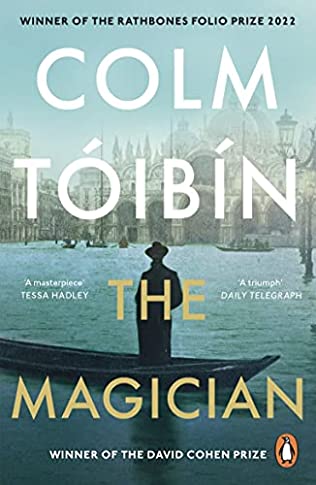
 The Magician is probably a book I would never have chosen to read if it hadn’t appeared on first the longlist then the shortlist for this year’s Walter Scott Prize for Historical Fiction. I’ve read and enjoyed other books by Colm Tóibín: Brooklyn, about a young Irish immigrant in 1950s New York and House of Names, a retelling of the Oresteia. This one, though, a fictional biography of the author Thomas Mann, sounded less appealing to me, particularly as I’ve read very little of Mann’s work (only Death in Venice and Other Stories) and wasn’t sure if I was really interested in reading about his life. There was only one way to find out…
The Magician begins with Thomas Mann’s childhood in the German city of Lübeck towards the end of the 19th century, then takes us through his entire adult life as he marries, has children, becomes a successful author and leaves Germany for first Switzerland and then the US, where the family will live for several years. The childhood chapters help us to see what shapes Thomas into the man he will later become. His father dies in 1891, leaving Thomas and his siblings with their mother, a Brazilian woman who doesn’t quite conform to the expectations of their quiet, staid community in Lübeck, so they move to Munich where Thomas meets and marries Katia Pringsheim, the daughter of a Jewish mathematician.
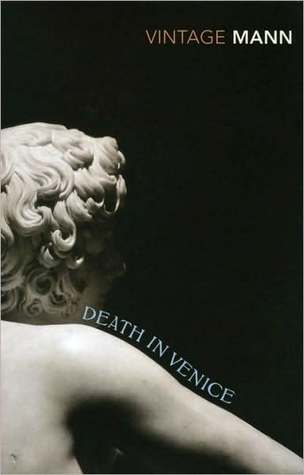
A lot of time is devoted to Mann’s relationship with Katia and the six children they have together, but also to his sexual desires for young men, something Katia must have been aware of but seems to have ignored. Some of Mann’s repressed feelings for these men find their way into his writing, such as in Death in Venice where the middle-aged von Aschenbach becomes infatuated with the beautiful young Tadzio. Katia herself also inspires her husband’s work; her stay in a Swiss sanatorium after becoming ill in 1911 forms the basis of The Magic Mountain, a book I haven’t read. No knowledge of Mann’s work is required, but when I came across references like that, I did feel that if I’d been more familiar with his books it would have added something extra to the experience of reading The Magician.
The novel also explores Mann’s relationship with his older brother, Heinrich, another writer, and later in the book, the focus switches more and more to Thomas and Katia’s children, giving us a glimpse of what Thomas was like as a father – but only a glimpse, because Thomas remains a remote and distant figure throughout the novel. I felt that he never fully came to life and although I did learn a lot about him, there was no warmth and I wasn’t able to connect with him on an emotional level. I think a non-fiction book on Mann would probably have worked better for me.
However, as well as telling the story of Thomas Mann’s life, Tóibín also tells the story of the first half of the 20th century; not much time is spent on World War I, but I did find it interesting to see World War II unfold from the perspective of the Manns, a family who leave Germany for their own safety and become part of the German émigré community in Los Angeles. Although it takes Thomas a while to come to terms with what is happening in his home country, once he does he becomes a public critic of the Nazi regime. He also worries about the future of his own books and the loss of the freedom to write material that everybody is able to read:
He contemplated the idea that someday in the near future his books would be withdrawn in Germany, and it frightened him. He thought back to Buddenbrooks and The Magic Mountain, the books for which he was most famous, and realized that they would have been paler books, less confident, less intense, had he known when he was writing them that no German would be permitted to read them.
The Magician is a book that I admired, but not one that I loved. I’ll continue to read other books by Tóibín, but I think I prefer the way he writes about fictional characters rather than real ones.

This is book 40/50 read for the Historical Fiction Reading Challenge 2022.
 She Reads Novels