Shadow of Night by Deborah Harkness

Shadow of Night This is the second book in the All Souls Trilogy by Deborah Harkness. I read the first, A Discovery of Witches, earlier this year and the third, The Book of Life, has just been published, which is what made me decide to pick up the middle book last week.

Shadow of Night follows witch Diana Bishop and vampire Matthew Clairmont as they travel back in time to the year 1590 with two goals in mind. The first is to hunt down Ashmole 782, an elusive manuscript which they hope will provide important information on the origins of their species – witches, vampires and daemons (known collectively as ‘creatures’). The second is to find another witch who can help Diana to understand and control her magical powers. Another benefit of leaving the present day behind is that Matthew and Diana will be able to escape the clutches of the other witches, vampires and daemons who have also been trying to get their hands on Ashmole 782.

Arriving in Elizabethan England, Diana discovers that Matthew is one of a group of writers, artists and scientists known as the School of Night, whose other members include Sir Walter Raleigh and Christopher (Kit) Marlowe. Reunited with his old friends again, Matthew also resumes one of his other occupations – spying for Elizabeth I. Meanwhile, Diana’s mission to find a witch willing to train her in the use of magic proves more difficult than expected in a time when public fear and suspicion of witches is increasing. Discovering that life in the past is no less complicated than it was in the present, Diana’s and Matthew’s adventures take them first into the heart of Elizabethan London, then to Matthew’s family estate at Sept-Tours in France and to the court of Rudolf II in Prague.

This book should have been perfect for me as I usually enjoy both historical fiction and time travel, but I think I actually preferred A Discovery of Witches. There were some parts of this book that I loved, but for such a long novel (nearly 600 pages) I found the pace very slow and uneven. It seemed that most of the book’s major developments all took place in the final 50-100 pages.

There are a lot of characters to keep track of in Shadow of Night and the character list at the back of the book was very useful. Diana and Matthew meet a huge number of real historical figures as they travel between London, Sept-Tours and Prague, but while some of these were very intriguing, such as the Rabbi Judah Loew who created the Golem of Prague, many of them had little or no relevance to the story. I couldn’t help thinking that they had been included just for the sake of it; I would rather have had fewer characters so that we could spend more time getting to know each one. I also really disliked the portrayal of Kit Marlowe in the book. I’m sure the real Marlowe would have been a fascinating character to write about in his own right; making him a daemon (a very spiteful, petulant daemon) added nothing to the story.

Matthew began to stretch my belief to its limits. Not only does he belong to the School of Night, he is also a member of at least one other secret organisation and an order of chivalry, a spy for Elizabeth I and a close personal friend of numerous famous historical figures from all over Europe. You may think that as I’m happy to accept that he’s a vampire I should be able to accept the rest of it too, but it all felt too convenient and just not believable in the context of the story. I do like Diana, partly because as she’s the narrator the reader naturally feels closer to her, but I would still like to see her take the lead more often when it comes to decision-making.

The time travel aspect of the book didn’t quite make sense to me either – it seemed that as Matthew was returning to an earlier period in his own life, he simply replaced his previous self for a while, but I’m not sure what was supposed to have happened to the 16th century Matthew in the meantime or what would happen when he came back. Time travel is always confusing, though, so I tried not to think about it too much! I did like the way each section of the book ended with a chapter set in the present day, showing how Matthew and Diana’s actions in the past affect the future. This also gave us a chance to briefly catch up with characters from the previous book such as Diana’s aunts, Sarah and Emily, and Matthew’s mother, Ysabeau.

Although I didn’t find this book as enjoyable as A Discovery of Witches, I think it maybe suffered from being the middle book in a trilogy. I will still be reading The Book of Life and hoping I don’t have any of the problems I had with this one!

Thanks to Headline for providing a copy of this book for review.

The River of No Return by Bee Ridgway

The River of No Return If you met Nick Davenant you would probably think he was a normal, unremarkable young man, enjoying life in 2013 as the owner of a dairy farm in Vermont, whose biggest worry is a visit from the cheese inspector. But once, Nick Davenant was Lord Nicholas Falcott, Marquess of Blackdown, an English aristocrat who fought in the Napoleonic Wars.

With an enemy soldier about to kill him on a Spanish battlefield one fateful day in 1812, Nick jumps forward almost two hundred years into the future and finds himself waking up in the twenty-first century. Here he learns that he is now a member of ‘the Guild’, a secret society of time travellers like himself. With the help of the Guild, Nick is able to adapt to modern life and accepts that there can be “no return”. Then one day Nick receives a letter from the Guild summoning him to London, where he is informed that they are going to break their own rules and send him back to his own time on a very special mission…

Back in the nineteenth century again, Nick meets his old friend, Julia Percy, who lives at nearby Dar Castle. In Nick’s absence Julia’s grandfather, the fifth Earl of Darchester, has died and her greedy, brutal cousin Eamon has become the new Earl. Grandfather had a very unusual ability: he could manipulate time, and Julia appears to have inherited this special gift. And when she discovers that Eamon is searching for the Talisman, an object he believes will give him the power to control time, Julia decides not to tell anybody about her secret talent.

I’ve always enjoyed books with a time travel element and The River of No Return is one of the most original and imaginative I’ve read for a long time. This is a time travel novel where the manipulation of time forms a big part of the plot – jumping forwards in time, jumping backwards in time, freezing time, speeding time up and slowing time down. However, after Nick’s initial jump into the future and then back again, which all takes place during the first third of the novel, we don’t actually see much movement between the centuries. The majority of the story is set in Regency England, a world where people travel by horse and carriage, where girls look forward to going to London for the Season, and where the Corn Bill is being debated in Parliament. As a fan of historical fiction who enjoys reading about the Regency period, I was very happy about this and in fact, it wasn’t until Nick left the modern day behind and returned to the past that I really found myself being pulled into the story.

The book did feel a bit too long and I thought there were too many lengthy conversations about the mechanisms of time travel, but overall, after a slow start, I thought this was a great debut novel – not purely science fiction, fantasy, romance or historical fiction, but a mixture of all four. The ending felt very abrupt and left me wanting to know more, so I hope Bee Ridgway is planning a sequel. I would happily read more of Nick and Julia’s adventures.

I received a copy of this book from the publisher via Netgalley for review.

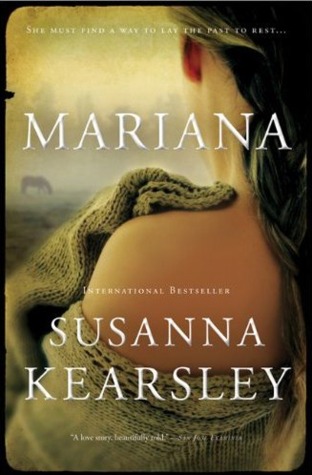
Mariana by Susanna Kearsley

From the moment Julia Beckett first sees Greywethers as a five-year-old, she knows there’s something special about the lonely farmhouse, but it’s not until she’s an adult and a successful illustrator of children’s books that she gets the chance to buy it. As she settles into her new home, Julia gets to know her new neighbours, including the gardener Iain Sumner, Geoffrey de Mornay, the owner of nearby Crofton Hall (which is said to be haunted), and Freda Hutherson, who somehow seems to know a lot about Julia without being told.

Soon Julia’s life becomes mysteriously linked with the life of Mariana Farr, a young woman who lived at Greywethers with her uncle in the 17th century. As Julia spends more and more time in the 1600s she grows increasingly obsessed with Mariana’s story and starts finding it difficult to keep the past separate from the present.

There are some books that feel like they could almost have been written specifically for me and Mariana is one of them – it had all the things I love in a book and I really have nothing negative to say about it. The time period for the historical sections is one that I always find interesting to read about (the Restoration era, the plague and the aftermath of the English Civil War), the characters are easy to like and the relationships between them feel believable, and I also loved the atmosphere – although this is not actually a ghost story, it does have quite a ghostly, haunting feel.

I’ve mentioned before that novels with dual time frames don’t often work for me as I usually find myself enjoying the historical storyline more than the modern day one. That was not a problem with this book because the events that took place in the two time periods were very closely connected and the transitions between the two were so smooth I hardly noticed when one changed to the other. The other Susanna Kearsley book I’ve read, The Rose Garden, has a time travel element too but in Mariana a different method is used and the way Julia moves between the centuries really felt convincing.

The ending was unexpected and really surprised me because I certainly hadn’t guessed what was going to happen. It was maybe a bit abrupt and left a few things unresolved, but I liked it. Susanna Kearsley’s writing reminds me of two other authors whose novels I love – Daphne du Maurier and Mary Stewart. Having enjoyed this one and The Rose Garden so much I’m looking forward to reading more of her books.

I received a copy of Mariana through Netgalley

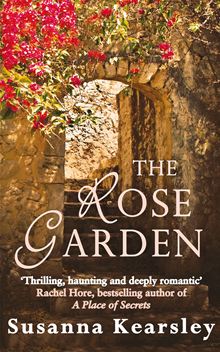
The Rose Garden by Susanna Kearsley

Following the death of her sister Katrina, Eva Ward leaves her home in Los Angeles and travels to England to scatter Katrina’s ashes. Eva knows that of everywhere in the world the place that held the most special memories for her sister was Cornwall, where the two of them had spent many happy days visiting Trelowarth, the home of their childhood friends, the Halletts. As well as scattering the ashes, Eva is looking forward to spending time with Mark and Susan Hallett again and helping them think of ways to attract tourists to the new tea room at Trelowarth. What she hasn’t expected is to find herself slipping back and forth in time between the present day and the eighteenth century, a world of Jacobites, smugglers – and a man called Daniel Butler.

I had never read anything by Susanna Kearsley until now, but she was one of those authors I was sure I would like – and now that I’ve read The Rose Garden I’m pleased to have been proved right! I love novels where time travel forms part of the plot and it’s always interesting to see the different methods authors come up with to explain how and why it happens. In this book I thought the author handled the transitions between past and present very well, in a way that reminded me of Daphne du Maurier’s The House on the Strand (which is also set in Cornwall). I also couldn’t help thinking of Diana Gabaldon’s time travel novels, due to the idea of a modern day woman finding herself in the eighteenth century and in the middle of a Jacobite rebellion. But it wouldn’t be fair to describe The Rose Garden as a copy of any other novel because it’s different enough from anything else that I’ve read to be a great book in its own right.

Eva meets some interesting characters in both time periods, though the most memorable are probably the ones she gets to know in the eighteenth century: Daniel Butler, his brother Jack, and their Irish friend, Fergal. It would have been nice to have seen more of Eva’s conversations with Daniel and Fergal though, as this would have helped make their characters feel more fully developed. And in the present day, I would have liked to have spent more time with Claire (Mark and Susan’s stepmother). I suppose there was a limit to how much the author could include, but I did feel there was the potential for this book to be even better than it already was.

I also loved the Cornish setting – it provided the perfect backdrop for both the historical and contemporary periods of the story. I enjoyed reading about Eva’s adventures in both periods and because the two threads of the story were woven together so closely I found them equally interesting. And later in the book the plot took a turn that I hadn’t expected, which was a nice surprise.

I’m sure I’ll be reading more books by Susanna Kearsley soon – I just need to decide which one to try next!

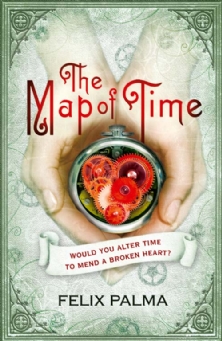
The Map of Time by Felix Palma

The Map of Time, translated from the original Spanish, is an interesting mixture of historical fiction, science fiction and romance. The book appealed to me as soon as I read the synopsis and saw that it was set in Victorian London, involved time travel and featured several real historical figures including Jack the Ripper, Joseph Merrick (The Elephant Man) and the authors H.G. Wells, Henry James and Bram Stoker. It sounded fascinating and it was, though there were a few aspects of the book that didn’t work for me at all. I thought it was too long and ambitious and tried to do too much.

The starting point for the story is 1896, shortly after the publication of H.G. Wells’ novel, The Time Machine, which captured the imaginations of his readers and convinced them that time travel could become a reality. One of the people hoping to travel through time is Andrew Harrington whose lover, Marie Kelly, was killed by Jack the Ripper eight years ago. Andrew believes that if he could go back to the night of the murder it might be possible to save Marie’s life – so he decides to approach Wells and ask his advice.

Wells also becomes involved in the life of Claire Haggerty, a young woman who has trouble conforming to Victorian society and longs to escape to the year 2000 where the ‘brave Captain Derek Shackleton’ is thought to have saved the world from destruction by evil automatons. But is it really possible for Andrew and Claire to travel through time or is time travel something that only exists in fiction?

I’ve read a lot of novels that involve time travel as a part of the plot, and while all of them obviously require the reader to suspend disbelief, some of them manage to make it seem more plausible than others. There are a number of theories put forward in The Map of Time and it all started to become very confusing, but for anyone with an interest in the intricacies of time travel, parallel worlds, paradoxes (is it possible to meet a future version of yourself, for example?) and the effects our actions have on history, you should find it interesting.

The biggest problem I had with this book was that the pacing and structure of the story didn’t feel quite right to me. The book is divided into three very distinct sections: the first deals with the Andrew Harrington story, the second follows Claire Haggerty and the third concentrates on H.G. Wells himself. This had the effect of making the book feel almost like three separate books in one and it took me a while at the start of each section to get used to the new characters and completely different direction of the plot. Then there’s the omniscient narrator who intrudes into the story at times in a mock-Victorian style. This can work well in original Victorian classics, but here I thought it felt forced and unnatural and it ended up annoying me.

I realise I’m making it sound as if I didn’t enjoy this book at all, but that’s not true. There were parts that I found fascinating and times when I couldn’t put the book down. I thought the quality of the writing was good overall and I probably wouldn’t have guessed it was a translation. But for a book which sounded so exciting and original, it didn’t quite live up to my expectations.

The House on the Strand by Daphne du Maurier

Dick Young is at a turning point in his life. He has recently left his job at a London publishing firm and needs to decide what he wants from his future. He’s been offered another job in New York and his American wife Vita wants him to accept it, but Dick’s not so sure. When his friend Professor Magnus Lane invites him to stay at his farmhouse in Cornwall for the summer, he agrees, looking forward to a few days of peace before Vita and his two stepsons join him. But when Dick arrives at Kilmarth, Magnus convinces him to take part in a secret experiment: he has developed a new drug which allows the user to travel back in time – and he wants Dick to test it for him…

Choosing to begin 2011 with a book by one of my favourite authors was the right decision. The House on the Strand is a strange and unusual book which blends historical fiction, science fiction, time travel and psychology. I loved it! In fact, it might even make my best of 2011 list at the end of the year. Although Rebecca is still my favourite Daphne du Maurier book, this one ties with The Scapegoat as my second favourite. It actually has a very similar mood and feel to The Scapegoat even though the plots of the two books are entirely different. Both books have a male narrator and both have themes of identity and escaping from reality.

I enjoy reading about time travel and this book took a slightly different approach to the question of time travel than any other book I’ve read. Rather than physically going back in time, it’s only Dick’s mind that travels while his body stays in the present – and as you can imagine, this has some disastrous and embarrassing results. The 14th century world that Dick witnesses when under the influence of the drug seems completely vivid and real to him, yet he’s unable to interact with any of the people he meets. He feels a special connection with Roger Kylmerth, steward to the Champernoune family, and also with the beautiful Isolda Carminowe. As Dick’s fascination with Roger and Isolda grows, he spends more and more time in the past and becomes increasingly dependent on the drug.

Du Maurier wrote this book in the late 1960s when psychedelic drugs such as LSD were at the height of their popularity and the drug which Magnus invents seems to be very similar to what I’ve read about LSD. As Dick becomes psychologically addicted to the drug, he gradually grows more distant and withdrawn and his relationships with his family start to suffer. His life in the present is portrayed as dull and boring in comparison to the vivid events of the 14th century and when seen through Dick’s eyes, Vita and her two sons are unlikeable and obnoxious. To me though, they were normal, reasonable people who were trying to make sense of their husband and stepfather’s bizarre behaviour.

Despite my own interest in history and historical fiction, I didn’t find the 14th century subplot particularly compelling. The story wasn’t very strong and there were too many characters with similar names who all seemed to be married to their cousins, which made it very difficult to keep all the relationships straight. I was constantly turning to the family tree at the front of the book and still couldn’t remember who was who. My advice to anyone reading The House on the Strand would be not to worry too much about following the 14th century story. By far the most interesting part of the book is the part which takes place in the present.

There were only one or two other negative points. First of all, I was disappointed that we didn’t get to know Magnus better, as I thought he was potentially the most interesting character in the book. Secondly, du Maurier made a point of describing the landscape and the locations of the various 14th century farmsteads and manor houses in great detail. I know this was supposed to show us how the appearance of the landscape had changed over the centuries (which is quite important to the plot), but I found it confusing and even by referring to the map at the front of the book, I couldn’t seem to build a picture in my mind of what the area looked like. Apart from these minor complaints though, I loved this book.

I’ve now read around half of du Maurier’s books. The good news is that I still have the other half to look forward to!

Review: The Christmas Mystery by Jostein Gaarder

“They were going to Bethlehem, to Bethlehem- because that’s where the Christ-child was born.”

The Christmas Mystery begins in Norway on 30th November when a boy named Joachim discovers a hand-made Advent calendar in a book shop. The next day, when Joachim opens the first door, he finds a tiny piece of paper telling the story of a little girl called Elisabet who spots a lamb in a department store. The lamb begins to run away, but Elisabet is determined to stroke it and chases after it. The lamb leads her outside and into the woods where she meets the angel Ephiriel, who explains to her that she is now part of a very special pilgrimage to Bethlehem – not only will they be travelling across land, they will also be travelling back through time to the day when Jesus was born.

As Elisabet, Ephiriel and the lamb move closer to Bethlehem and further back in time, they are joined by an assortment of other Biblical characters including shepherds and Wise Men. A little more of their story is revealed every day through the pieces of paper hidden in Joachim’s advent calendar, but as the tale of Elisabet’s journey unfolds, Joachim and his parents become involved in another mystery: the mystery of John, the mysterious flower-seller who made the magic Advent calendar and the real-life Elisabet who disappeared on Christmas Eve in 1948.

The book is divided into 24 chapters, with each chapter representing one door on the Advent calendar. If you have children, the structure of the book would make it perfect for reading aloud, one chapter per day in the weeks leading up to Christmas. This is not really a ‘children’s book’ though – it’s one of those books that can be enjoyed on different levels by people of all ages. As with all of Jostein Gaarder’s books the story introduces us to a large number of philosophical ideas. We also learn some interesting historical and geographical facts about the countries Elisabet passes through on her way to Bethlehem.
Although this is not as good as some of Gaarder’s other books such as Sophie’s World or The Solitaire Mystery, it has to be one of the most unusual and imaginative Christmas stories I’ve ever read.

Genre: General Fiction/Pages: 247/Publisher: Phoenix – Translated by Elizabeth Rokkan & Illustrated by Rosemary Wells/Year: 1996/Source: Bought new