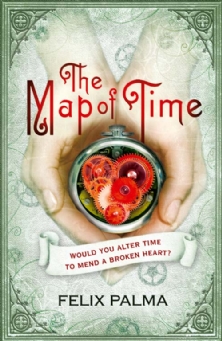
The Map of Time by Felix Palma

The Map of Time, translated from the original Spanish, is an interesting mixture of historical fiction, science fiction and romance. The book appealed to me as soon as I read the synopsis and saw that it was set in Victorian London, involved time travel and featured several real historical figures including Jack the Ripper, Joseph Merrick (The Elephant Man) and the authors H.G. Wells, Henry James and Bram Stoker. It sounded fascinating and it was, though there were a few aspects of the book that didn’t work for me at all. I thought it was too long and ambitious and tried to do too much.

The starting point for the story is 1896, shortly after the publication of H.G. Wells’ novel, The Time Machine, which captured the imaginations of his readers and convinced them that time travel could become a reality. One of the people hoping to travel through time is Andrew Harrington whose lover, Marie Kelly, was killed by Jack the Ripper eight years ago. Andrew believes that if he could go back to the night of the murder it might be possible to save Marie’s life – so he decides to approach Wells and ask his advice.

Wells also becomes involved in the life of Claire Haggerty, a young woman who has trouble conforming to Victorian society and longs to escape to the year 2000 where the ‘brave Captain Derek Shackleton’ is thought to have saved the world from destruction by evil automatons. But is it really possible for Andrew and Claire to travel through time or is time travel something that only exists in fiction?

I’ve read a lot of novels that involve time travel as a part of the plot, and while all of them obviously require the reader to suspend disbelief, some of them manage to make it seem more plausible than others. There are a number of theories put forward in The Map of Time and it all started to become very confusing, but for anyone with an interest in the intricacies of time travel, parallel worlds, paradoxes (is it possible to meet a future version of yourself, for example?) and the effects our actions have on history, you should find it interesting.

The biggest problem I had with this book was that the pacing and structure of the story didn’t feel quite right to me. The book is divided into three very distinct sections: the first deals with the Andrew Harrington story, the second follows Claire Haggerty and the third concentrates on H.G. Wells himself. This had the effect of making the book feel almost like three separate books in one and it took me a while at the start of each section to get used to the new characters and completely different direction of the plot. Then there’s the omniscient narrator who intrudes into the story at times in a mock-Victorian style. This can work well in original Victorian classics, but here I thought it felt forced and unnatural and it ended up annoying me.

I realise I’m making it sound as if I didn’t enjoy this book at all, but that’s not true. There were parts that I found fascinating and times when I couldn’t put the book down. I thought the quality of the writing was good overall and I probably wouldn’t have guessed it was a translation. But for a book which sounded so exciting and original, it didn’t quite live up to my expectations.

Baba Yaga Laid an Egg by Dubravka Ugresic

Baba Yaga Laid an Egg is part of the Myths series by Canongate Books, in which authors retell traditional myths from around the world in a new and original way. This book by Croatian author Dubravka Ugresic takes a fresh and unusual approach to the Slavic myth of Baba Yaga.

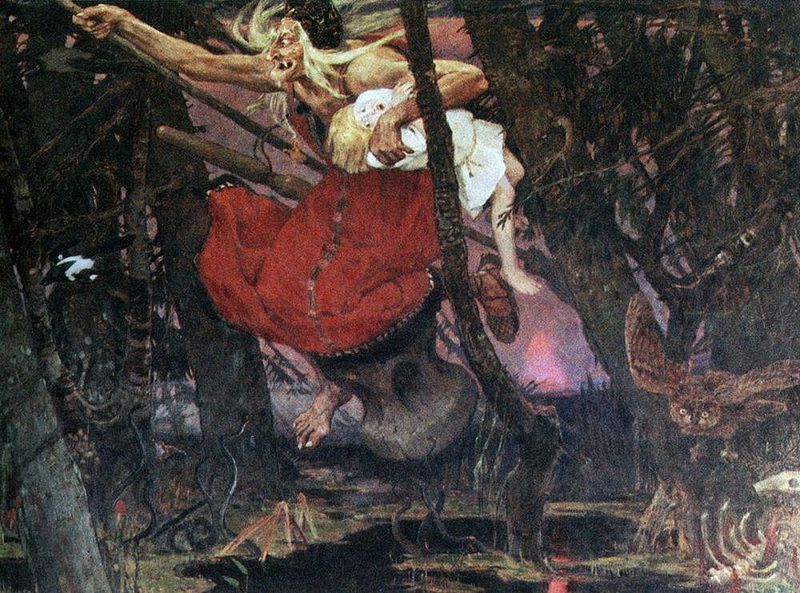
Baba Yaga (shown here in a painting by Viktor Vasnetsov – picture from Wikipedia in public domain) is usually portrayed as a hag or witch who lives in a log cabin mounted on a pair of chicken legs. She uses a giant mortar and pestle to fly through the air, kidnapping and threatening to eat small children. Although she has a terrifying appearance, Baba Yaga is also said to possess great wisdom and will sometimes give help and advice to anyone brave enough to ask.

Rather than simply reiterating this myth, Ugresic relates the myth to the lives of modern women and explores a large number of topics including ageing, feminism, love and loneliness. The book does not follow the format of a conventional novel and is divided into three separate and seemingly unconnected stories.

In the first story, the narrator travels to Varna in Bulgaria, the childhood home of her mother who is now old and ill. In the second story, we meet Beba, Pupa and Kukla, three old women who are staying together at a spa in the Czech Republic. But what is the connection between these two stories and what do they have to do with Baba Yaga? I have to admit, by this point I was starting to feel slightly confused. Yes, I had learned a lot about growing old, but how did all of these things relate to the myth of Baba Yaga? Luckily, I found the answers to my questions in the third and final section of the book.

Part 3 is presented as if a folklore expert was responding to a request for information about Baba Yaga and had been asked to explain the meaning of the first two sections. This part of the book was fascinating but began to feel like a very, very long encyclopedia entry. I previously knew almost nothing about Baba Yaga though, so it was good to learn something about the myth. I was also pleased at how well this final section pulled all the threads of the book together and helped me understand the significance of everything I had just been reading.

This book should appeal to anyone who has ever worried about growing old or anyone with an interest in mythology as it relates to feminism. I can’t honestly say that I loved this book or even that I particularly enjoyed it, but it was a very interesting concept and I’m glad I decided to give it a try.

Has anyone read any of the other Canongate Myths books. Are they similar to this one?

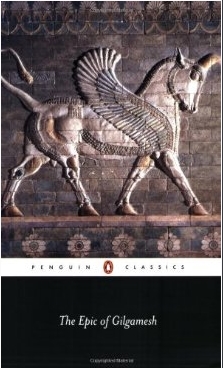
The Epic of Gilgamesh

When I signed up for the Really Old Classics Challenge I had no idea what to read, as I’m completely new to ‘really old classics’. I finally picked The Epic of Gilgamesh, which proved to be the perfect choice because I loved it!

The Epic of Gilgamesh is one of the earliest known pieces of literature in the world. It was written on a set of clay tablets from ancient Mesopotamia which were discovered by the archaeologist Hormuzd Rassam in the 19th century and are thought to date from around 2000 BC. It’s fascinating to think that something written so long ago has survived and is still being read today.

The epic tells the story of Gilgamesh, a powerful Sumerian king who is feared by his subjects. The gods respond to the pleas of the people by sending a wild man called Enkidu to be Gilgamesh’s equal. The first half of the epic shows how Gilgamesh and Enkidu form a close friendship and have some great adventures together, including a journey into a cedar forest to slay the monster Humbaba. Later, when Enkidu dies, the devastated Gilgamesh sets out in search of the secrets of immortality.

There have been several different translations of The Epic of Gilgamesh but the one I read was the Penguin Classics version translated by Andrew George. I’m not sure how this would compare to the other translations that are available (this is in verse form and I know that some of the others are in prose, for example); I might try reading a different one at some point in the future to find out.

The story is very repetitive with some verses being repeated two or three times in quick succession, with only a few words being changed each time. I actually really liked this structure, as it produced an almost hypnotic effect, as well as helping to emphasise the points that were being made. I was surprised at how easy it was to read and understand, despite some missing words and disjointed sentences (the Epic of Gilgamesh does not exist in its entirety – the various translators have had to piece it together from the surviving fragments of text). Some parts of the story feel very familiar, such as when Gilgamesh, during his quest for immortality, meets Utnapishtim who tells him about a great flood. This is obviously very similar to the biblical story of Noah.

There are lots of references to Sumerian gods and place names, which I am not familiar with at all, but the book has a lot of helpful extras including a glossary, character list and map. There’s also an introduction which helps to explain the historical context of the epic and describes how the tablets were discovered.

The Epic of Gilgamesh is relatively short in comparison to many other ‘really old classics’, but despite its shortness, it gives us a lot to think about. One thing we can learn from the epic is that although the world has changed in many ways over the last four thousand years, there are some things that are still the same: for example, friendship, love, grief at losing a loved one, fear of death, and every other human emotion you can think of.

Recommended

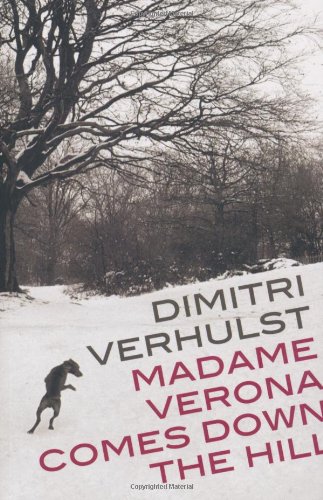
Review: Madame Verona Comes Down The Hill by Dimitri Verhulst

I’ve read good reviews of this book and really wanted to like it, but I just couldn’t. Although it’s very short (only 145 pages) it took me almost a week to finish it because I found it difficult to get interested in the story.

The book is set in the tiny and remote village of Oucwegne, a place that is slowly dying due to the lack of girls being born in recent generations. Madame Verona and her musician husband Monsieur Potter live in an isolated house at the top of a steep hill overlooking the village. As they get older, it becomes more and more difficult to walk up and down the hill. When Monsieur Potter hangs himself from a tree after being diagnosed with cancer, he leaves his wife enough firewood to last another twenty years. During those twenty years, Madame Verona lives alone with only an assortment of stray dogs for company, waiting for a luthier (cello-maker) to build her a cello using the wood of the tree from which her husband hanged himself. Eventually she places the last log on the fire and, as the title suggests, comes down the hill, knowing she won’t have the strength to go back up ever again.

The problem I had with the book is that there’s very little action, there’s no suspense as we know what’s going to happen right from the beginning, and there’s almost no dialogue. However, this is more to do with my own personal reading preferences rather than a criticism of the book itself – it’s not supposed to be a thriller after all. Most of the 145 pages are devoted to a string of humorous anecdotes describing life in an isolated village where only six people attend church, the men are obsessed with playing games of table football and a cow was once elected mayor. Most of the characters Verhulst describes are portrayed as eccentric and not particularly likeable. It’s easy to see why Madame Verona was in no hurry to rejoin the community, preferring to stay on the hill with her memories of her husband. The final few chapters, though, were poignant and moving and will be understood by anyone who has lost someone they love.

This book has been translated from the original Dutch, but even in translation Dimitri Verhulst’s writing is poetic and thought-provoking. If you can appreciate the beautiful writing for its own sake and are happy to read a book where nothing really happens, then you would probably enjoy Madame Verona. I would be prepared to try more of Verhulst’s books because he does have a very nice style, but this one just didn’t appeal to me.

Genre: General Fiction/Pages: 145/Publisher: Portobello Books (translated by David Colmer)/Year: 2009/Source: Won a copy in contest

Review: The Christmas Mystery by Jostein Gaarder

“They were going to Bethlehem, to Bethlehem- because that’s where the Christ-child was born.”

The Christmas Mystery begins in Norway on 30th November when a boy named Joachim discovers a hand-made Advent calendar in a book shop. The next day, when Joachim opens the first door, he finds a tiny piece of paper telling the story of a little girl called Elisabet who spots a lamb in a department store. The lamb begins to run away, but Elisabet is determined to stroke it and chases after it. The lamb leads her outside and into the woods where she meets the angel Ephiriel, who explains to her that she is now part of a very special pilgrimage to Bethlehem – not only will they be travelling across land, they will also be travelling back through time to the day when Jesus was born.

As Elisabet, Ephiriel and the lamb move closer to Bethlehem and further back in time, they are joined by an assortment of other Biblical characters including shepherds and Wise Men. A little more of their story is revealed every day through the pieces of paper hidden in Joachim’s advent calendar, but as the tale of Elisabet’s journey unfolds, Joachim and his parents become involved in another mystery: the mystery of John, the mysterious flower-seller who made the magic Advent calendar and the real-life Elisabet who disappeared on Christmas Eve in 1948.

The book is divided into 24 chapters, with each chapter representing one door on the Advent calendar. If you have children, the structure of the book would make it perfect for reading aloud, one chapter per day in the weeks leading up to Christmas. This is not really a ‘children’s book’ though – it’s one of those books that can be enjoyed on different levels by people of all ages. As with all of Jostein Gaarder’s books the story introduces us to a large number of philosophical ideas. We also learn some interesting historical and geographical facts about the countries Elisabet passes through on her way to Bethlehem.
Although this is not as good as some of Gaarder’s other books such as Sophie’s World or The Solitaire Mystery, it has to be one of the most unusual and imaginative Christmas stories I’ve ever read.

Genre: General Fiction/Pages: 247/Publisher: Phoenix – Translated by Elizabeth Rokkan & Illustrated by Rosemary Wells/Year: 1996/Source: Bought new

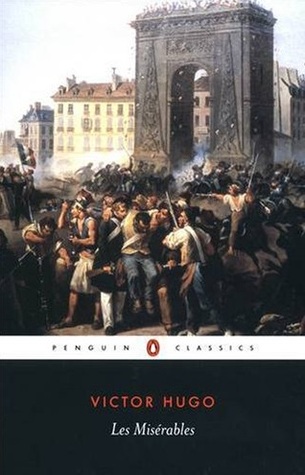
Review: Les Miserables by Victor Hugo


“…there comes a point moreover, where the unfortunate and the infamous are grouped together, merged in a single, fateful word. They are les miserables – the outcasts, the underdogs. And who is to blame? Is it not the most fallen who have most need of charity?”

How do you begin to review a book like this one? Les Miserables is one of the longest books I’ve ever read (and I’ve read a lot of long books) and as someone with very little knowledge of French history, it was also one of the most challenging. Of course, I could have bought an abridged version but I make a point of never doing this as I prefer to read a book the way the author intended.

If you’re unfamilar with the plot, here is a brief summary:

Jean Valjean has just been released from prison after nineteen years (he had been sentenced to five years for stealing a loaf of bread to feed his starving family, and then a further fourteen years for making several attempts to escape). As an ex-convict arriving in the town of Digne, Valjean finds himself rejected by everybody he approaches until the kindly Bishop Myriel takes him in and gives him shelter for the night. However, Valjean repays him by stealing his silverware. When the police catch him and take him back to the bishop’s home, the bishop tells them they’ve made a mistake – he had given the silverware to Valjean as a gift. He then tells Valjean to “never forget that you have promised me to use this silver to become an honest man”. The bishop’s simple gesture of kindness has a profound effect on Valjean, filling him with the determination to be a better person.

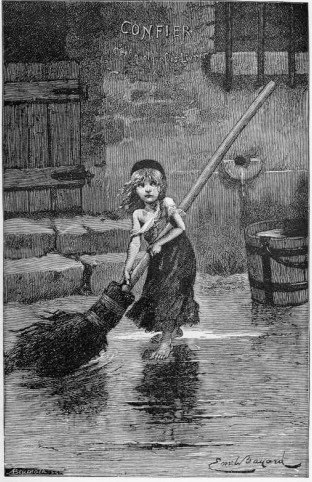
After establishing himself as a successful factory owner and becoming mayor of Montreuil-sur-Mer, Valjean promises a dying woman that he will take care of her daughter, Cosette. The rest of the book follows Valjean’s attempts to escape the investigations of Inspector Javert and to build a new life for himself and Cosette. Along the way we meet a gang of criminals, a group of revolutionary students, and a greedy innkeeper called Thenardier.

Most of the characters are very well developed and Hugo spends a considerable amount of time introducing us to them. In fact, he spends the first 50 pages of the book describing the personality of the Bishop of Digne. This is not vital to the plot and could quite easily have been shortened to just a few pages, yet it helps the reader understand why Jean Valjean was so touched by the bishop’s kindness and compassion and why it was a life changing experience for him. However, I didn’t find the characters of Marius and Cosette very interesting, despite their central roles in the book – I thought some of the secondary characters were much stronger, such as the street urchin Gavroche and the Thenardiers’ eldest daughter Eponine.

I did find my attention wandering in places because of all the lengthy digressions on the Battle of Waterloo, life in a convent, the July Revolution of 1830, the Paris sewer system etc (thankfully my edition took a couple of these out and placed at the end in an appendix). Although these pages are often interesting and informative and contain some beautiful writing, they have very little direct relevance to the plot and interrupt the flow of the story. However, this is really the only negative thing I can say about the book. It’s worth persevering through all the social commentary, politics and history to get to the actual story itself – and the wonderful, moving, thought-provoking, suspenseful story is why I loved Les Miserables.

Highly Recommended

Genre: Classic/Pages: 1232/Publisher: Penguin Classics – translated by Norman Denny/Year: 1862/Source: My own copy bought new