The Cardinal by Alison Weir

In a market crowded with Tudor fiction, it’s difficult to find something new and different. This novel about Cardinal Wolsey – although maybe not the only one to be written about him – at least gives us the perspective of a prominent Tudor figure other than Henry VIII and his six wives. As with Hilary Mantel’s Thomas Cromwell novels, the focus is on politics, the forging and breaking of alliances with foreign powers, rivalries within the King’s inner circle and, above all, the rise and fall of a clever, ambitious man. We are also given some insight into Wolsey’s personal life as he is forced to choose between his career and the woman he loves.

The Cardinal covers Thomas Wolsey’s entire life, beginning with his childhood in Suffolk. Thomas – or Tom as he is known throughout the book – is the son of a yeoman farmer who also owns an inn and a butcher’s shop. However, Tom proves to be academically gifted from an early age, so instead of going into one of the family businesses he is sent to study at Oxford. At only eleven years old, he is much younger than the other students and is expected to have a bright future. Nobody could have predicted just how bright, as after making the decision to enter the church, Tom catches the eye of several influential patrons and rapidly gains wealth and power, becoming a trusted friend and adviser of first Henry VII, then Henry VIII.

Wolsey’s positions include Lord Chancellor, Bishop of York, cardinal and papal legate, and he begins to construct for himself a magnificent palace, Hampton Court. Needless to say, he quickly incurs the jealousy and resentment of other courtiers and Weir shows us how he systematically goes about bringing down his enemies and ensuring that he remains closer to the King than anyone else. Eventually he meets his match in Anne Boleyn, who has reasons of her own to dislike him. Anne is very much the villain in this book, which seems to be the case in most of Weir’s Tudor novels, probably due to the perspectives from which they’re written. Anne Boleyn, a King’s Obsession gives a more nuanced portrayal.

I loved the first half of the book, dealing with Wolsey’s early life and career, as there was a lot of material here that I had never read about in much detail before. I was also interested in the character of Joan Larke, the woman with whom Tom falls in love just as he’s beginning his rise to power. His position in the church makes it impossible for them to live together openly and he is forced to watch as she marries another man, unable to acknowledge the children he has had with her. I couldn’t feel too sorry for him, though, because he could have given up his career for her and chose not to. My sympathies were more with Joan (who would probably make a good subject for a novel in her own right, even if a lot would have to be invented as factual information on her seems quite limited).

The second half of the book is mainly devoted to Henry VIII’s Great Matter – his attempts to divorce Katherine of Aragon so that he can marry Anne Boleyn. Having already read about this several times in Weir’s other novels, from the perspectives of Katherine, Anne, Henry and Mary I, I didn’t really feel the need to read about it again so this part of the book dragged a little bit for me. Apart from that, I did enjoy The Cardinal and its portrayal of Thomas Wolsey. I’ll be interested to see which Tudor figure Alison Weir writes about next – or whether she’ll move away from that period and do something different.

Thanks to Headline Review for providing a copy of this book for review via NetGalley.
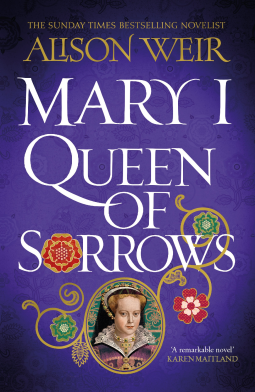
Mary I: Queen of Sorrows by Alison Weir

This is the third novel in Alison Weir’s Tudor Rose trilogy, following Elizabeth of York: The Last White Rose and Henry VIII: The Heart and the Crown. You definitely don’t need to have read the previous two books before starting this one, although if you’re not very familiar with Tudor history it would probably be helpful to read them in order.

The novel begins in 1525, introducing us to nine-year-old Mary who has recently become betrothed to Charles V, Holy Roman Emperor and King of Spain. As the daughter of Henry VIII and his Spanish wife, Katherine of Aragon, a marriage between Mary and Charles would cement England’s alliance with Spain. Mary’s future looks bright, but things don’t go as planned and it’s not long before her whole life is thrown into turmoil. First, Charles decides he doesn’t want to wait for Mary to grow up and takes another bride, one who is richer and old enough to give him children. Then, Mary’s father becomes obsessed with the idea of marrying Anne Boleyn and casts Mary’s mother aside.

It would be difficult not to sympathise with the young Mary as she is put under pressure to betray her mother and denounce her Catholic faith, gains and loses one stepmother after another and, with the arrival of a younger half-sister and half-brother, becomes uncertain of her place in the succession. However, I did find these early sections of the book quite repetitive as having read all of Weir’s Six Tudor Queens series, as well as her novel on Henry VIII, I felt that there wasn’t much here that was new to me. The second half of the book interested me more as it moved on to Mary’s own reign as Queen, her marriage to Philip of Spain and her ‘phantom pregnancies’, and, of course, the persecution of Protestants that famously gained her the nickname ‘Bloody Mary’.

On finishing the book and reading the author’s note at the end, I was interested to find that Alison Weir herself felt that she and Mary shared some childhood experiences, such as the separation of their parents and dislike of the new woman in their father’s life; this probably explains why the chapters dealing with Mary’s early years are written with such sympathy and understanding. Later in the novel, however, Mary becomes a much more difficult character to like as she ignores advice and public opinion, makes some poor decisions, and those who don’t share her Catholic faith burn at the stake. Weir states that she found it hard to make the adult Mary sympathetic when the historical evidence tells us otherwise.

As I wouldn’t want anyone to accidentally buy the same book twice, be aware that the US title of this book is The Passionate Tudor: A Novel of Queen Mary I. Alison Weir’s next novel, coming in 2025, stays in the Tudor period and is about the rise and fall of Cardinal Wolsey. I’ve never read a book written from Wolsey’s perspective before, so that should be interesting.

Thanks to Headline for providing a copy of this book for review via NetGalley.

Book 43/50 for the Historical Fiction Reading Challenge 2024

Henry VIII: The Heart and the Crown by Alison Weir

Henry VIII: The Heart and the Crown is the second book in Alison Weir’s new Tudor Rose trilogy: three novels exploring the lives of Elizabeth of York, Henry VIII and Mary I, three generations of the Tudor family. It also works as a companion to her earlier Six Tudor Queens series, which told the stories of Henry’s six wives.

This novel is quite unusual because it’s the first I’ve read by Weir to be written from a male perspective. So many of today’s historical fiction authors are choosing to focus on historical women, particularly those who have been forgotten or neglected, I feel that famous male figures like Henry VIII are currently less ‘fashionable’ subjects. As there’s also been so much written about him in the past, I wondered whether this book would have anything new to offer.

The novel takes us through Henry’s life in chronological order, beginning with his childhood and his unexpected change in status after the death of his older brother and then moving on to look at his six marriages, the religious changes that took place during his reign and all the political intrigue of the Tudor court. His relationships with advisers such as Cardinal Wolsey, Thomas More and Thomas Cromwell – and his court jester, Will Somers – are covered, as well as his rivalry with King Francis I of France and finally his declining health and his death in 1547.

I remember mentioning in some of my Six Tudor Queens reviews that Weir’s depiction of Henry was surprisingly positive throughout that series. All six of his wives are shown to have some genuine love and affection for him and his cruel actions are usually excused as being the fault of somebody else. She portrays him in a similar way in this book, showing how easily he is manipulated by people around him and trying to make him a more sympathetic character than you would usually expect, while not ignoring his obvious flaws – his jealousy, insecurity and hot temper. Weir does a particularly good job of showing how important it was to Henry to have a legitimate heir to carry on the Tudor dynasty founded by his father and the panic that he felt every time he suffered an illness or accident, knowing that if he died he would be leaving the future of his kingdom at risk.

Another unusual thing about this book is that I somehow found it both too long and too short at the same time! I read it on my Kindle, but the paper version has over 600 pages, so it’s a big book and not one that can be read very quickly. On the other hand, the six novels in the Six Tudor Queens series were all nearly as long and this single book on Henry has to cover a lot of the same information, so I felt that it didn’t really have the same level of depth, particularly where Henry’s later wives were concerned. About half of the book is devoted to Henry’s marriage to Katherine of Aragon and the ‘Great Matter’ that arises when he attempts to have the marriage annulled so he can marry Anne Boleyn. This means his relationships with his other four wives are squeezed into the remainder of the book, along with major events like the sinking of the Mary Rose, which is covered in just a few paragraphs.

Overall, I found this an interesting read, if a bit dry at times, but I don’t really feel that I learned anything new from it – and, as I’ve said, a lot of the material is repeated from the earlier six novels. If you don’t have much knowledge of Henry VIII and the Tudors, though, I think this would be a good alternative to non-fiction to start you on your journey and introduce you to this period of history. Be aware that the US title of this book is The King’s Pleasure: A Novel of Henry VIII – I don’t want anyone to buy the same book twice!

Thanks to Headline Review for providing a copy of this book for review via NetGalley.

This is book 39/50 for the 2023 Historical Fiction Reading Challenge.

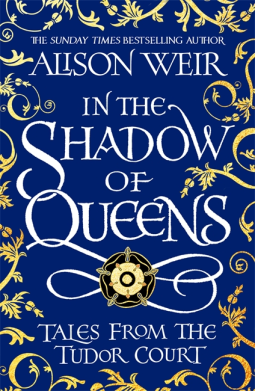
In the Shadow of Queens: Tales from the Tudor Court by Alison Weir

This is a collection of thirteen short stories and novellas written by Alison Weir over the last few years to accompany her Six Tudor Queens series of novels. The stories were released as individual ebooks one by one as they were written, but are now available all together in one volume.

I have read all six of the full-length novels in the Six Tudor Queens series, each one exploring the life of one of the wives of Henry VIII. These short stories fill in the gaps between the novels, providing more insights or looking at things from a different perspective. They are arranged in roughly chronological order, starting before Henry’s marriage to Katherine of Aragon and ending after the death of Katherine Parr. I had already read one of them – The Tower is Full of Ghosts Today, about a Tower of London tour guide with a strange resemblance to Anne Boleyn – but the rest were all new to me.

Several of the stories are written from the perspectives of members of the Tudor dynasty whose voices weren’t heard in the main series. Arthur: Prince of the Roses, about Henry VIII’s ill-fated elder brother Arthur Tudor, The Unhappiest Lady in Christendom, narrated by the future Mary I, and The Princess of Scotland, about Henry’s niece Margaret Douglas, all fall into this category. Others provide more background and depth to the stories of the six wives themselves – for example The Chateau of Briis: A Lesson in Love explores Anne Boleyn’s years at the French court as maid of honour to Queen Claude and her potential link with a tower at Briis-sous-Forges called the Donjon Anne Boleyn.

The stories that were of most interest to me were the ones that follow characters on the periphery of the Tudor court or those who are living ‘in the shadow of queens’, as the title suggests. I particularly enjoyed reading about the court painter Susannah Horenbout, sent to Cleves to investigate the background of a potential bride for the King, and Lady Rochford, wife of George Boleyn, who was instrumental in the downfalls of both Anne Boleyn and Katherine Howard. Naturally, given the time period and subject matter, some of the stories are quite sad, involving executions, imprisonments, betrayals and infant deaths. If you’re of a squeamish disposition, be aware that the final story, In This New Sepulchre, describes in graphic detail the shocking desecration of Katharine Parr’s tomb and corpse.

My favourite story in the collection was probably The Curse of the Hungerfords, which introduces us to Agnes Cotell, the second wife of Sir Edward Hungerford, who becomes involved in a 16th century murder case. Her narrative alternates with that of Anne Bassett, whom many people believed would become one of Henry VIII’s wives, although obviously that never happened. Weir keeps us waiting to see how the lives of these two women are connected and I thought this could easily have been developed into a longer novel, which would have allowed for more depth and detail.

I haven’t discussed all of the thirteen stories here, but I hope I’ve given you a good idea of what the book contains. I would have been disappointed if I’d paid for some of these stories individually in the e-short format, but as a collection I found this a worthwhile read. If you’ve read some or all of the Six Tudor Queens series it works well as a companion volume, but it’s not essential to have read any of those books before reading this one. Alison Weir’s next novel, Henry VIII: The Heart and the Crown, will be published in 2023, but in the meantime I have her latest non-fiction book, Queens of the Age of Chivalry, to read.

Thanks to Headline for providing a copy of this book for review via NetGalley.
This is book 52 read for the Historical Fiction Reading Challenge 2022.

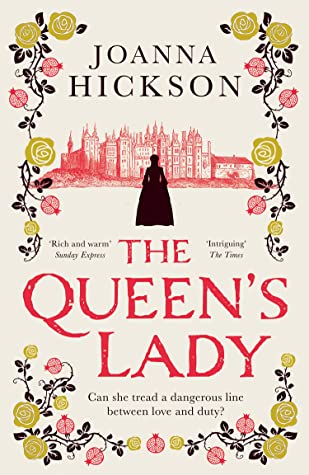
The Queen’s Lady by Joanna Hickson

Joanna Hickson’s new novel is a sequel to 2020’s The Lady of the Ravens and continues the story of Joan Vaux, lady-in-waiting to Elizabeth of York, wife of Henry VII. The ravens that formed such an important part of the first book appear less often here, but Joan still has a strong affinity for them and still believes firmly in the legend that should the ravens ever abandon the Tower of London, the kingdom will fall.

Joan’s position at court means that she witnesses – and is sometimes personally involved in – some of the key events of this period of history. The novel begins in 1502 with the death of Prince Arthur shortly after his marriage to Katharine of Aragon and it is up to Joan to try to comfort his grieving mother, Queen Elizabeth. When Elizabeth herself dies just a year later, Joan’s place at the Tudor court becomes more insecure, particularly when her husband Sir Richard Guildford is imprisoned on suspicion of treason. Eventually, with a new king on the throne – the young Henry VIII – Joan and her family begin to rise to royal favour again, but there’s more drama ahead both for Joan and for the Tudors.

I enjoyed The Lady of the Ravens, but I think this is the stronger of the two books. Although Joan was a real person, she’s one that I knew absolutely nothing about before reading these two novels and I found it fascinating to read about familiar events and people from a completely new perspective. I was particularly interested in the sections where Joan accompanies the two Tudor princesses – Margaret and Mary – to their respective marriages with the King of Scotland and King of France. The fact that Joan is chosen to carry out these important duties is proof of her high standing with the royal family and yet, at various times throughout the novel, we see how quickly this can change and how the King and Queen hold the fates of everyone around them in their hands.

As well as retelling the story of the end of Henry VII’s reign and the beginning of Henry VIII’s, the novel also explores Joan’s personal life: her marriage to Sir Richard Guildford and how she copes during the period of his imprisonment; her often difficult relationship with her son, Hal, who has been raised as a companion to Henry VIII; and her feelings for Anthony Poyntz, a much younger man who had once been like a son to her but is now becoming something more. As Joan is not a well-known historical figure, I had no idea how her story would play out, so was able to enjoy watching it unfold without knowing what was going to happen next.

I think this is my favourite of Joanna Hickson’s books (I’ve read them all apart from one, The Tudor Bride, the second of her two novels about Catherine of Valois). I’ll be interested to see which historical woman she chooses to write about next.

Thanks to HarperCollins for providing a copy of this book for review via NetGalley.
This is book 7/50 for the Historical Fiction Reading Challenge 2022.

Six Tudor Queens: Katharine Parr, the Sixth Wife by Alison Weir

This is the final book in Alison Weir’s Six Tudor Queens series retelling, in fictional form, the stories of the wives of Henry VIII. Katharine Parr, the subject of this sixth novel, has never interested me as much as some of the other wives, yet this book has turned out to be my favourite of the series, not just for what we learn about Katharine herself, but also for the depiction of the political and religious situation in England during the later stages of Henry’s reign.

I have read other novels about Katharine Parr, such as Elizabeth Fremantle’s Queen’s Gambit and Philippa Gregory’s The Taming of the Queen (interestingly, every author seems to choose a different spelling of her name!), but none of them go into as much depth and concentrate almost solely on her time as Henry’s wife and her relationship with Thomas Seymour. This book starts at the beginning, with Katharine’s childhood, and then takes us through her entire life, devoting plenty of time to her earlier two marriages, first to the young Edward Burgh and then to John Neville, Lord Latimer. I particularly enjoyed the section of the book where Katharine is married to Latimer; although it’s not a passionate romance, Katharine comes to love and trust her husband and they have a happy nine years together despite the religious turmoil going on around them (the uprising known as the Pilgrimage of Grace takes place during this period and provides one of the most exciting episodes in the novel).

Although Lord Latimer remains faithful to the Catholic Church, Katharine becomes a supporter of religious reform. When Latimer dies in 1543 and the King, having recently had his fifth wife beheaded, asks her to marry him, Katharine reluctantly accepts, knowing that turning down his proposal would be very unwise and hoping that her influence at court can further the cause of the reformers. Over time she becomes quite fond of Henry, engaging in lively debates with him on the subject of religion, but there is always an undercurrent of danger and Katharine knows that if she is to avoid the fate of her predecessors, she can’t allow her sympathies for the new Protestant religion to become too obvious. Somehow, Katharine manages to survive and outlive the King, free at last to marry Thomas Seymour, the man she really loves…but their time together is tragically short and marred by Seymour’s inappropriate behaviour with the young Princess Elizabeth.

I loved reading about Katharine’s life before she became Queen, as so much of this was new to me – and unlike the book on Anne of Cleves, where Weir admits that she invented a lot of Anne’s story, this one seems to be more grounded in historical fact. Once the novel moves on to her marriages to Henry VIII and Thomas Seymour, I was on more familiar ground and found these sections slightly less interesting to read – particularly as I have never liked Thomas Seymour and wished I could reach into the pages of the book and stop Katharine from marrying him!

Something that has intrigued me throughout this series is the way in which Alison Weir has chosen to portray Henry VIII. She shows him in a much more positive light than usual, to the point where she almost seems to be absolving him of any responsibility for his actions, putting the blame on the people around him instead – Thomas Cromwell, Bishop Gardiner, even some of his victims such as poor Katheryn Howard. On the one hand, it’s interesting to see a more nuanced depiction of Henry, but on the other I’m not convinced that his wives would all have viewed him as favourably as these books suggest!

Katharine Parr herself is portrayed as an intelligent, well-educated and compassionate woman; her previous marriages and experience of life have given her a maturity and common sense that some of Henry’s other wives lacked. She makes an effort to befriend her stepchildren and plays an important part in persuading Henry to restore his daughters Elizabeth and Mary to the line of succession. She gains the King’s trust and is named regent while he is away on a military campaign, as well as becoming the first queen to have books published in English under her own name. Katharine’s life is maybe not as dramatic as some of the other wives’, but because I liked her so much I was able to become fully invested in her story.

Now that this series has come to an end, Alison Weir is moving further back in time with her next novel to tell the story of Henry VIII’s mother, Elizabeth of York, in The Last White Rose.

Thanks to Headline for providing a copy of this book for review via NetGalley.

Book 41/50 read for the 2021 Historical Fiction Reading Challenge.

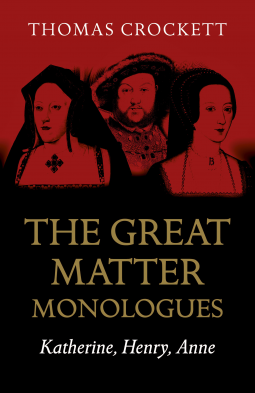
The Great Matter Monologues by Thomas Crockett

So many novels have been written dealing with ‘the King’s Great Matter’ – Henry VIII’s struggle to divorce Katherine of Aragon and marry Anne Boleyn – that it must be getting very difficult for authors to find new and interesting ways to approach the subject. Thomas Crockett’s solution is to tell the story in the form of alternating monologues written from the perspectives of Henry, Katherine and Anne in an attempt to create a theatrical feel, as if the three main players were standing on a stage sharing their thoughts directly with the audience.

If you’ve read about this period before, there’s nothing very new here; for the most part, the plot follows the known historical facts, except where it’s necessary for the author to make personal choices on how to interpret certain points – for example, the question of whether Katherine’s earlier marriage to Henry’s brother, Prince Arthur, had been consummated (this was the basis for Henry’s claim that his own marriage to Katherine should be declared invalid). The appeal of the book, for me, was not so much what it was about but the way in which it was written, taking us into the minds of Katherine and Anne – and also Henry, as most of the other Tudor novels I’ve read have focused on the women and not really given Henry a chance to tell his side of the story.

Despite them sharing their private thoughts and emotions with us, I didn’t find any of the three narrators at all likeable. It’s certainly easiest to have sympathy for Katherine as she was treated so badly by Henry, blamed for their failure to produce a son and cast off to live the rest of her life under increasingly poor and unhealthy conditions as she is put under pressure to agree to the divorce. However, as she spends most of this period in the confines of the damp, cold castles to which she has been banished, not much actually happens to Katherine over the course of the novel and I felt that her monologues became very repetitive.

Anne Boleyn’s voice and story are stronger and more engaging as she talks about her struggle to be accepted as Henry’s queen and her own failure to give birth to a male heir, before falling out of favour in her turn. She is very much the villain of the book, though, which is often the case in Tudor novels and I would have preferred something more nuanced rather than yet another portrayal of Anne as ruthless, spiteful and consumed by hatred for Katherine and her daughter, Mary. As for Henry, it’s difficult to have much sympathy for him, knowing how he treated his wives, but I did feel his frustration over how long the Great Matter was taking to be resolved and his worries for the future of the kingdom should he die before the succession was secured.

The novel goes into a huge amount of detail regarding every aspect of the Great Matter and although the short, rapidly switching monologues made it tempting to keep saying ‘just one more chapter’, I didn’t find it a particularly quick or easy read. As part of the stream-of-consciousness style of writing, there’s an absence of punctuation to indicate when someone is speaking and that made it difficult to follow the dialogue at times. Still, overall I enjoyed reading this book and appreciate Thomas Crockett’s attempt to do something a little bit different. Although I’m not really a fan of audiobooks, I do think this particular novel would work well in audio format, with different narrators expressing the unique voices and personalities of the three characters.

In case it has escaped anyone’s notice, Hilary Mantel’s The Mirror and the Light will be published later this week, and I know some readers have been re-reading Wolf Hall and Bring Up the Bodies in preparation. I decided not to do that, but The Great Matter Monologues, in which Thomas Cromwell plays an important part, covers the same period of history, so this was the perfect time to read this book!

Thanks to John Hunt Publishing for providing a copy of this book for review via NetGalley.