Vanity Fair by William Makepeace Thackeray

Vanity Fair With my love of Victorian novels, I’m not sure why it has taken me so long to decide to read Vanity Fair. I think, without really knowing anything about it, I thought it sounded dry and hard going; Lisa’s review changed my mind and I added it to my Classics Club list, but I was still slow to actually pick it up and start reading. I finally got round to it this month and am pleased to say that although there were certainly times when I found the book dry and times when I found it hard going, overall I enjoyed it.

The first thing I found on beginning Vanity Fair is that Thackeray, like Anthony Trollope and other Victorian authors, likes to talk directly to the reader, commenting on his characters and giving praise or criticism where necessary:

“And, as we bring our characters forward, I will ask leave, as a man and a brother, not only to introduce them, but occasionally to step down from the platform, and talk about them: if they are good and kindly, to love them and shake them by the hand: if they are silly, to laugh at them confidentially in the reader’s sleeve: if they are wicked and heartless, to abuse them in the strongest terms which politeness admits of.”

He never lets us forget that we are reading a novel and that the characters are puppets under the author’s control – but at the same time, I found them all very real and human. There are a few examples in Vanity Fair of people being ‘good and kindly’, but many more of them being silly and heartless. In a book subtitled “A Novel Without a Hero” (which is debatable), it’s not surprising that the characters are flawed and imperfect. The most flawed of all is Becky Sharp, ruthless schemer and ambitious social-climber. From the moment Becky throws her dictionary through the carriage window as she drives out of the school gates to go and make her own way in the world, I knew she was going to be an interesting character!

Becky’s friend, Amelia Sedley, is her exact opposite: quiet and gentle, sweet and obliging…and from a wealthy family. I liked Amelia – although she could be infuriating – but there’s no doubt that it’s Becky who makes things happen and keeps the story moving forward. Early in the novel, she sets her sights on marrying Jos Sedley, Amelia’s brother, and when this plan fails, it becomes clear that there is nothing Becky won’t do to get what she wants and to advance another step up the social ladder.

This is not just Becky’s story, though. Vanity Fair has a very large cast of characters, drawn from a variety of backgrounds: noblemen and army officers, merchants and servants. Most of them belong to, or are in some way connected with, the novel’s three central families – the Sedleys, the Osbornes and the Crawleys – and with plenty of subplots involving these three families, the story quickly becomes quite complex. Like many novels of the time, Vanity Fair was originally published as a serial and as a result feels longer than it maybe needed to be, but everything that happens has its place in the plot, as Thackeray explains:

“…my readers must hope for no such romance, only a homely story, and must be content with a chapter about Vauxhall, which is so short that it scarce deserves to be called a chapter at all. And yet it is a chapter, and a very important one too. Are not there little chapters in everybody’s life that seem to be nothing and yet affect all the rest of the history?”

‘Vauxhall’, of course, is a reference to the famous London pleasure gardens so popular during the Regency – and this will be a good place for me to mention that despite being a Victorian novel first published in 1847-48, Vanity Fair is actually set several decades earlier, in the Regency period. The Napoleonic Wars are always in the background, with some of the characters being present at the Battle of Waterloo.

This hasn’t become a favourite classic – I thought at first that it might, but in the end there were too many moments when I felt the story was starting to drag and too many times when I found my attention starting to wander. I did like it, though, and am glad I hadn’t put off reading it any longer!

Phineas Redux by Anthony Trollope

This is the fourth book in Trollope’s Palliser series and continues the story begun in the second book, Phineas Finn. It would have been possible to move straight from one Phineas novel to the other, but in between the two there is The Eustace Diamonds, which I’m glad I read first as several characters and storylines from that book are picked up again in this one.

*Spoiler warning – If you have not yet read Phineas Finn, be aware that the rest of this post will contain spoilers.*

Phineas Redux At the beginning of the novel we learn that Phineas is now living alone in Dublin, his wife having died in childbirth. Phineas is leading a comfortable but uneventful life and misses the excitement of his former political career in London, so when an opportunity arises for him to return to England and stand for parliament again, he jumps at the chance. Soon Phineas is back in the House of Commons having won a seat as the member for Tankerville, but he almost immediately finds himself caught up in the controversy surrounding plans for the disestablishment of the Church.

The return of Phineas Finn to parliament also means that both he and the reader are reunited with old friends from earlier in the series. These include Plantagenet Palliser, now Duke of Omnium following the death of his elderly uncle, and his wife, Lady Glencora, the new Duchess. Madame Max Goesler, who had been a companion to the old Duke, is still part of Glencora’s circle and is pleased to be able to resume her friendship with Phineas. Meanwhile, Lady Laura Kennedy, the woman Phineas once hoped to marry, has left her husband, but Phineas knows that even though she is passionately in love with him, his own feelings have now changed.

There’s so much going on in Phineas Redux; now that we are four books into the series, the cast of characters is widening all the time. As well as all of the characters I’ve already mentioned, I was pleased to catch up with Lord Chiltern and Violet Effingham and to find that they are now a happily married couple. A young woman called Adelaide Palliser is staying with the Chilterns and one of the novel’s subplots centres around her as she attracts the attentions of two very different men – Gerard Maule and Ned Spooner. And a few characters from The Eustace Diamonds appear again too, including Lizzie Eustace, Lord Fawn and Mr Emilius.

I enjoyed meeting all of these people again and being back in the world of Phineas and the Pallisers, but it took a while for me to become fully drawn into this particular novel. There are some long political passages in the first half of the book, and some fox-hunting chapters too, which I struggled to get through. Then, somewhere in the middle of the novel, a murder takes place and from this point on I thought things became much more interesting. The murder is that of Mr Bonteen, a political rival of Phineas’s, and all the evidence seems to point to Phineas as the culprit.

Now, Anthony Trollope is no Agatha Christie, and we know from the beginning who really committed the crime, but the murder and the trial which follows allows Trollope to develop the relationships between Phineas and each of the other characters, some of whom have no doubts that Phineas is innocent and some who aren’t so sure. Phineas finds that his strongest support comes from the women in his life. Lady Laura wants to help, but is limited as to what she can actually do, and eventually becomes aware that while Phineas values her friendship, the offer he once made her is unlikely to be repeated. Laura’s story is a sad one, in contrast with Madame Max Goesler’s, who goes to great lengths to try to clear Phineas’s name and proves herself to be a true friend. And I love the warm-hearted Duchess and her enthusiasm for the causes she believes in.

After a slow start I enjoyed Phineas Redux and am looking forward to reading the final two Palliser novels. Next will be The Prime Minister!

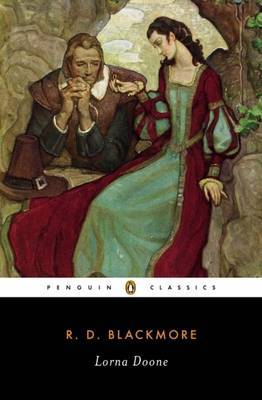
Lorna Doone by R.D. Blackmore

A clan of murderous outlaws, a dashing highwayman, stolen jewels, family feuds, political intrigue, lots of beautiful scenery and a tender love story: R.D. Blackmore’s 1869 classic, Lorna Doone: A Romance of Exmoor, has all of these things and more. Set in the south west of England in the seventeenth century, it tells the story of John Ridd, a yeoman farmer, and his love for the beautiful Lorna Doone.

Lorna Doone John is twelve years old when his father is attacked and killed by a gang of Doones, a once noble family who fell out of favour at court and fled to an isolated Exmoor valley where they have since been leading wild and lawless lives. Being a child, there is no immediate action John can take, so he puts his desire for revenge aside and settles back into life at Plover’s Barrows farm with his mother and two younger sisters, Annie and Lizzie.

At fourteen, John has his first encounter with the eight-year-old Lorna after climbing a hill behind a steep waterfall and unexpectedly finding himself in the Doone Valley. Several years later they meet again as adults and fall in love, but there are many obstacles which must be overcome before they can have any chance of happiness. First there are John’s own feelings towards the Doones, and the fact that as granddaughter of Sir Ensor Doone, head of the family, Lorna’s social status is much higher than that of a humble farmer like John. To complicate things further, the brutal and violent Carver Doone intends to marry Lorna himself and will let nothing stand in his way.

I could tell from the beginning that I was going to enjoy Lorna Doone. It’s just the sort of classic I love! I suppose this could technically be classed as a re-read as I did own an abridged version of the book as a child, but I can barely remember reading it and huge chunks of the original must have been missing anyway (the full, unabridged version has more than 700 pages). I can only regret that it has taken me so long to decide to try it again as an adult.

Lorna Doone takes place during the final years of the reign of Charles II, the Monmouth Rebellion of 1685 and the Bloody Assizes which followed. If you don’t know much about this period of history it might be worth briefly reading up on it first, to gain an understanding of the novel’s historical context, but don’t worry – it’s easy enough to follow the story of John and Lorna even without this knowledge. As our narrator, John is the character we get to know best, following him as he grows from a child into a man. His narrative voice is honest, down-to-earth and often humorous. Lorna, though, is a typical Victorian heroine – beautiful, delicate, gentle, passive, and with a tendency to faint and swoon. I didn’t dislike her, but I preferred John’s two sisters: Annie, who has a romance of her own with the highwayman Tom Faggus (who is based on a real person, and whose horse, Winnie, is a great character in her own right), and the intelligent, sharp-tongued Lizzie.

There are lots of other characters, of course, all of whom play an important role in the story. These include Reuben Huckaback and his granddaughter, Ruth, who wants John to marry her; Lorna’s maid Gwenny Carfax, daughter of a Cornish miner; Counsellor Doone, the clever, scheming father of Carver; and Jeremy Stickles, the King’s messenger, who provides a link with London and the court. I should warn you that some of the characters speak in a strong dialect (for example, “there be a dale of faighting avore thee. Best wai to begin gude taime laike. Wull the geatman latt me in, to zee as thee hast vair plai, lad?”) but this is restricted mainly to one or two of the Ridds’ servants – as in many Victorian novels, dialect is used as an indication of class.

Blackmore devotes a lot of time to telling us about daily life at Plover’s Barrows and the things that are important to John and to his family, such as bringing in the harvest, fishing for loaches in the river and surviving a bad winter. I couldn’t help being reminded of Thomas Hardy – another author with a lot of affection for the countryside and country life. Doing a bit of research online, I was interested to discover that Hardy had read Lorna Doone in 1875 and wrote a letter to Blackmore, mentioning “the kindred sentiment between us in so many things”. Lorna Doone is set in Somerset and Devon and there are lots of vivid descriptions of the beautiful landscapes. I particularly loved reading about John Ridd’s adventures in the secluded, hidden valley of the Doones; every time he enters it in search of Lorna, whether through the waterfall or the forbidding Doone Gate, it’s almost as if the reader is being pulled into another world.

I thoroughly enjoyed reading Lorna Doone and now I’m curious as to why it seems to be the only one of Blackmore’s many novels that has stood the test of time and is still in print. His others are available as ebooks and on Project Gutenberg, but before I investigate further I would love to know if any of you have read them and if so, did you find them worth reading?

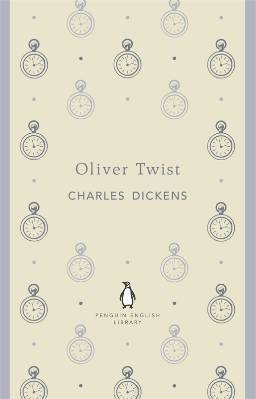
Oliver Twist by Charles Dickens

Oliver Twist I know it’s the middle of January, but I still have a few books that I read towards the end of 2015 to write about – and Oliver Twist is one of them. I’ve been trying to read at least one Dickens novel a year and having started 2015 with David Copperfield I decided to end it with another of his books. Of the two, I much preferred David Copperfield, but I did still enjoy Oliver Twist. As I’ve mentioned before, I find it difficult to think of anything new to say about books that are so well known and widely studied, so I’m just posting some general impressions of the novel here rather than attempting any sort of analysis.

I think most people, even without reading the book, probably have a basic idea of what it is about: an orphan boy who is raised in a workhouse in Victorian London – where he famously says, “Please, sir, I want some more” – and who later becomes involved with a gang of thieves and pickpockets. Maybe you have seen one of the many films, adaptations and musicals and so will know a little bit more, but the only way to discover the whole of Oliver’s story in the way Charles Dickens intended is to read the book!

This is the first time I have read Oliver Twist in its entirety and I was surprised by how much of it was completely unfamiliar to me. I had either forgotten or was unaware of whole chunks of the plot and of the roles played by characters such as Rose Maylie, Noah Claypole and Monks, so I was in the unusual position of reading a story that I both knew and didn’t know!

While this hasn’t become a favourite, I found Oliver Twist an enjoyable, entertaining read (one of the easiest to read and to follow of all the Dickens novels I’ve read so far) and as you would expect from Dickens, the pages are populated with colourful, larger than life characters, from Mr Bumble the beadle and the brutal Bill Sikes to the Artful Dodger and the villainous Fagin. The characters are mostly either ‘very good’ or ‘very bad’. Nancy, Bill Sikes’ lover, is the only one I found significantly more complex and she makes an interesting contrast with the novel’s other main female character, the pure, gentle Rose Maylie.

This is one of the earliest of Dickens’ major works, first published as a serial from 1837-1839, and it’s a relatively short novel by his standards (there are over 500 pages in the edition I read, but in comparison with books like Our Mutual Friend and Bleak House that’s not long at all). The amount of social commentary in the book is also particularly heavy; it was written just a few years after the Poor Law Amendment Act was passed by parliament in 1834, stating that relief for the poor would only be provided within the workhouse. The idea was that conditions inside the workhouse would be so harsh and unpleasant that only those people desperately in need of help would consider entering one. Telling Oliver’s story gave Dickens a chance to express his own views on the Poor Laws and related issues such as poverty and child labour.

Oliver Twist was the final novel by Dickens on my list for the Classics Club, but I will continue to work my way through his other books, as I have about half of them still to read. I think either Dombey and Son or Little Dorrit might be next.

Jane Eyre by Charlotte Brontë (re-read)

Jane Eyre was the book chosen for me in the Classics Spin in December. When I discovered that this was the one I’d be reading, I was delighted – it’s a book I love and which I hadn’t read for a long time. I immediately pulled my copy off the shelf to start my re-read and from the familiar opening line – “There was no possibility of taking a walk that day” – I was drawn into the story once more. The gothic atmosphere of the novel made it a perfect read for dark December nights and I finished it just before Christmas.

Jane Eyre I think I was probably eleven or twelve years old when I had my first encounter with Jane but on that first read I didn’t get past the Lowood School section at the beginning and more than ten years passed before I decided to try again. My second attempt was much more successful; being older and better able to appreciate the story and the quality of the writing, I read the whole book and loved it. This most recent read was my third. I was curious to see whether I would feel differently about it now, after another long gap, but although I did notice things this time that I don’t think I picked up on last time, my overall opinion of the book is unchanged.

Jane Eyre, for those who don’t know the story, is an orphan raised in the home of an aunt and three cousins who make it obvious that they don’t like her and don’t want her there. At the age of ten, Jane is sent to a charity-run boarding school for girls, another harsh and unwelcoming environment. However, Jane is able to take two positive things away from her time at school – a brief but much-valued friendship with Helen Burns, and the education which later enables her to find a position as governess to Adele, the young ward of Mr Rochester of Thornfield Hall. Jane soon begins to fall in love with her employer but when she discovers that he is hiding a dark secret, it seems that her chance of happiness has been destroyed.

*Spoiler warning: I will find it difficult to discuss the book any further without spoilers, so if you haven’t read Jane Eyre yet, I would advise skipping to the end of this post.*

I loved the experience of reading Jane Eyre again. Although much of the story was familiar to me from my previous reads and many of the scenes had stayed in my mind – including Jane’s imprisonment in the red room at Gateshead Hall, the tragic death of Helen Burns, Rochester disguising himself as a gypsy woman and the revelation of Bertha’s existence – there were other parts that I had forgotten and that I enjoyed discovering again.

I also loved being reacquainted with the characters. I know there are a lot of people who have problems with Mr Rochester and I can understand why – apart from his treatment of Bertha, there’s the fact that he lies to Jane and that he’s prepared to enter into a bigamous marriage with her, but despite this I have always liked him as a character. Jane is not my favourite literary heroine (although I do admire her for her honesty, integrity, inner strength and sense of right and wrong) and Mr Rochester is not my favourite hero but they both feel so real and I can believe in their relationship and their love for one another – a love that I think they both desperately needed.

Of course, there’s much more to Jane Eyre than just the romance. There’s also some social commentary, with the descriptions of conditions at Lowood School and with the exploration of class, gender and religion. It’s an interesting read from a feminist perspective, portraying Jane’s search for independence and depicting the options open to a woman faced with making her own way in life in the early Victorian period. Having read about the lives of Charlotte and the rest of the Brontë family (something I hadn’t done when I first read this book) I can see how autobiographical some parts of the story are.

My least favourite section of the book is still the part where Jane leaves Thornfield Hall during the night and is taken in by St. John Rivers and his sisters. I remembered intensely disliking St. John on my last read, but I wasn’t sure whether that was because of the character himself or just because I was impatient for Jane and Rochester to be reunited. However, I didn’t like St. John any better this time round. I find him cold and controlling – Jane herself describes his nature as “austere and despotic” – and he doesn’t seem to care at all about Jane’s own opinions and wishes. Even though I had read the book before, I was still relieved when Jane rejects him!

*End of spoilers*

I thoroughly enjoyed my re-read of Jane Eyre, if I haven’t already made that clear! I’ve heard it said that people can either love Jane Eyre or Wuthering Heights, but not both – well, I do love both, but I have always preferred Wuthering Heights. I’m planning to re-read it soon too and it will be interesting to see if I still do like it more.

Since finishing Jane Eyre a couple of weeks ago, I have now read the prequel Wide Sargasso Sea by Jean Rhys for the first time and will be posting my thoughts on that one soon. Then I have a copy of Lyndsay Faye’s new Jane Eyre-inspired novel, Jane Steele, which I’m looking forward to reading – and I also still need to read my only remaining unread Brontë novel, Shirley. It seems I’m having a very Brontë themed start to the new year!

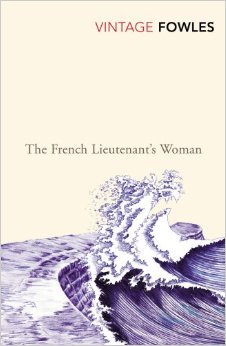
The French Lieutenant’s Woman by John Fowles

The French Lieutenants Woman I feel I’ve been making a lot of progress with my Classics Club list recently. I have just finished two books from the list – one by Thomas Mann and another by Robert Louis Stevenson – but before I tell you about either of those, I wanted to post my thoughts on a book I read almost a month ago. It has taken me a while to motivate myself to write about The French Lieutenant’s Woman because I wasn’t quite sure what I wanted to say. I didn’t dislike it but I certainly didn’t enjoy it as much as I hoped I would or as I feel I should have done.

The story is set in the 1860s in the English coastal town of Lyme Regis (which Jane Austen readers will know as the place where Louisa Musgrove fell down the steps in Persuasion). Sarah Woodruff, the ‘woman’ of the title, spends her days standing alone on The Cobb, the town’s harbour wall, staring out to sea. Nicknamed ‘Tragedy’ by the people of Lyme, Sarah is considered to be a disgraced woman following a brief relationship with a French naval officer who abandoned her and married another woman on his return to France.

Charles Smithson, who is staying in the town with his fiancée Ernestina Freeman, encounters Sarah while out walking one day and is intrigued when he is told about her background. The more he learns about Sarah, the more fascinated he becomes, but as he is still engaged to Ernestina, he will soon be faced with making some important decisions.

The French Lieutenant’s Woman is an unusual novel and I can definitely understand its appeal. Published in 1969 but set in 1867, there are times when it feels almost like an authentic Victorian novel and others when the author intrudes into the story to make an observation from a very contemporary perspective. In John Fowles’ own words:

“You are not trying to write something one of the Victorian novelists forgot to write; but perhaps something one of them failed to write. And: Remember the etymology of the word. A novel is something new. It must have relevance to the writer’s now – so don’t ever pretend you live in 1867; or make sure the reader knows it’s a pretence.”

This novel, then, is a mixture of old and new. It’s a book about the Victorian period – the culture, the science and literature, the conventions of society – as well as a book set in the Victorian period. The author (or the narrator – it’s difficult to distinguish between the two) plays an important role in the story, giving us his opinions of the characters and their actions, and even appearing as a character himself later in the novel. And this, I think, is probably why I had a problem with the book. It doesn’t bother me at all when a Victorian author stops to talk directly to the reader – Anthony Trollope in particular uses that technique a lot and it always seems very natural to me – but when a modern author does it, I don’t think it ever feels quite the same.

In addition to the narrative style, Fowles also incorporates other experimental or postmodern elements. The most intriguing of these, I thought, was his use of alternate endings. He gives us three to choose from: one traditional ‘happy ending’, another which offers some hope, and a third which isn’t very happy at all. By the time I had reached this stage of the novel, I had accepted that I wasn’t going to be drawn into the story emotionally and had no real preference as to how the story should end, so I found it interesting to read all of the endings and think about which might have been the most likely.

I don’t want to sound too negative about this book. I loved the early chapters, particularly the memorable opening scenes where we see for the first time the lonely figure of Sarah gazing out to sea, and I also enjoyed the subplot involving Charles’ servant, Sam, and Mary, Ernestina’s aunt’s maid. I’m sure The French Lieutenant’s Woman must be a fascinating book to study at university or to discuss with a group, but when I’m reading for pleasure I prefer a novel that I can lose myself in, rather than one like this where I am constantly being pulled out of the story. Despite this, I did like John Fowles’ writing and would be happy to try more of his books, but maybe someone who has read them can let me know if they are all like this one?

The Return of the Native by Thomas Hardy

The Return of the Native Egdon Heath, part of Hardy’s fictional Wessex, is a wild and haunting place, steeped in history and superstition. Many of the people who live and work there love the heath and appreciate its beauty, but there are some – including Eustacia Vye – who find the loneliness oppressive. Eustacia, who lives with her grandfather in an isolated cottage on the heath, is desperately looking for a way to escape and believes she has found it in Clym Yeobright.

Clym is the returning native of the title, home for Christmas from Paris where he has been working as a diamond merchant. Clym, who dislikes the diamond trade, is planning to stay at home and become a schoolmaster, but Eustacia sets her sights on marrying him in the hope that she can persuade him to take her back to Paris. After all, there is nothing to keep her on Egdon Heath now that her former lover, the innkeeper Damon Wildeve, has married Clym’s cousin, Thomasin.

Clym’s mother, Mrs Yeobright, is opposed to the idea of both marriages – her son’s with Eustacia and her niece’s with Wildeve – but although she reluctantly accepts Thomasin’s decision, a series of misunderstandings and disagreements damages her relationship with Clym and this will have tragic consequences.

I have mentioned five of the novel’s six main characters so far: the sixth is Diggory Venn, a reddleman (a seller of red ochre, which farmers use to mark their sheep). Diggory is in love with Thomasin and remains quietly devoted to her even after she marries Wildeve. The lives of these six people will draw closer together, with the actions of each one impacting on all of the others. For some, there will be a happy ending, but for others there will be only unhappiness and tragedy.

The Return of the Native was Thomas Hardy’s sixth published novel and first appeared as a serial in 1878. I’ve read almost half of his novels now and always enjoy my visits to Wessex and my glimpses of rural life in the 19th century. This book has a very memorable and atmospheric setting, with the heath itself being at the centre of the story. The way in which the lives of the characters are shaped by the heath is one of the driving forces of the plot, particularly as Clym and Eustacia have such different feelings about it:

Take all the varying hates felt by Eustacia Vye towards the heath, and translate them into loves, and you have the heart of Clym.

A common theme in Hardy’s novels is the progress of the industrial revolution and nostalgia for a way of life that, even in Hardy’s day, was rapidly disappearing. An example of this in The Return of the Native is the character of Diggory Venn, the reddleman, whose skin and clothes are stained with the red dye that he sells.

The traveller with the cart was a reddleman — a person whose vocation it was to supply farmers with redding for their sheep. He was one of a class rapidly becoming extinct in Wessex, filling at present in the rural world the place which, during the last century, the dodo occupied in the world of animals. He is a curious, interesting, and nearly perished link between obsolete forms of life and those which generally prevail.

We also meet some of the local people who live on Egdon Heath – many of whom work as furze (gorse) cutters. These characters provide some moments of comedy and also allow Hardy to explore some of the superstitions, customs and traditions of the region (one of the most memorable scenes occurs near the beginning of the book when dozens of bonfires are lit all around the heath).

As I mentioned above, not all of the characters in the novel are rewarded with a happy ending – but this is something you have to be prepared for with Hardy. The story does finish on a more positive note, although it was interesting to read the footnote at the end explaining that the ending was originally going to be slightly less positive and was changed during the serialisation of the novel.

I loved The Return of the Native, though not as much as some of the other Hardy novels I’ve read. I have one more to read on my Classics Club listThe Woodlanders – which I’m looking forward to reading.