Tipping the Velvet by Sarah Waters

Over the last few years I’ve been slowly working through Sarah Waters’ novels, beginning with Affinity, then moving on to Fingersmith, The Little Stranger and The Night Watch, all of which I’ve enjoyed. Her debut novel, Tipping the Velvet, was the only one I still hadn’t read so I was pleased to have the chance to read it as part of the Virago Book Club.

Tipping the Velvet is narrated by Nancy Astley, an eighteen-year-old girl who lives with her parents and sister in Whitstable, an English seaside town famous for its oysters. During the day Nancy works hard in her family’s oyster parlour but she also has a passion for the music hall and enjoys visiting the Canterbury Palace of Varieties to watch the dancers, acrobats and magicians. Nancy’s life changes forever one night in 1888 when she sees a new act at the Palace: a female singer, Kitty Butler, who dresses as a boy. Nancy is fascinated and decides Kitty is the ‘most marvellous girl’ she’s ever seen. She returns night after night to watch her performances, until eventually Kitty notices her.

The two become friends and travel to London together where Nancy joins Kitty on stage as part of her act and is transformed from Nancy Astley, oyster girl, into Nan King, music hall star. As the days go by, Nan finds her feelings for Kitty developing into love and at first it seems that Kitty might feel the same way about her. But soon Nan’s happiness is destroyed and having lost everything she sets out to start a new life, doing whatever she needs to do to survive.

As in her two later novels also set in the 19th century (Fingersmith and Affinity), Sarah Waters has created a wonderfully vivid and believable Victorian world, from the descriptions of the music halls – the songs, the costumes, the colourful characters – to the slang used on the streets of London and the portrayal of the Victorian gay and lesbian scenes. As a fan of historical fiction, every time I read one of Waters’ novels I’m impressed by the way she always includes enough historical detail to perfectly evoke the atmosphere of the period she is writing about (whether it’s the 1890s or the 1940s), while still keeping the focus on the story and the characters.

Tipping the Velvet describes a side of Victorian society that you would be unlikely to read about in the contemporary fiction of the period and explores themes such as sexuality, gender, lesbianism and prostitution. I should probably warn you that the sex scenes are very explicit – and there are a lot of them (a few too many for me, though I’m probably just a prude!) Having said that, these scenes never feel gratuitous; they are an important part of Nan’s story and add to our picture of who she is and what her life is like. Although she can sometimes be frustrating, Nan is an engaging narrator and her emotions are very real – we follow her through all her highs and lows, we experience her joy at falling in love and we feel her pain when her heart is broken. I didn’t always agree with the choices she made but I could admire her ability to completely rebuild her life over and over again in the hope of finally finding the true love and happiness she deserves.

I have now read all five of Sarah Waters’ novels and although I did enjoy this one, I think it suffered from being read last. As a debut novel it is mature and well-written and does compare well to her later work, but the others had plots that were more interesting to me personally which is why this one is probably my least favourite.

Tipping the Velvet is the latest Virago Book Club choice. I received a copy from Virago for review.

The Seance by John Harwood

When Constance Langton’s little sister Alma dies, she takes her grieving mother to a séance. She has her doubts as to whether it’s really possible to summon spirits, but she hopes it might offer her mother some comfort. Unfortunately though, Constance’s decision has tragic consequences that she couldn’t have foreseen. Alone in the world, Constance is contacted by solicitor John Montague and learns of an inheritance connecting her with Wraxford Hall, a crumbling manor house surrounded by gloomy woods. The dark secrets of the Hall’s sinister past are revealed to the reader through the narratives of Constance, Montague and another young woman, Eleanor Unwin, whose fate also becomes linked with the house. It’s not surprising that Constance is advised to “sell the Hall unseen; burn it to the ground and plough the earth with salt if you will; but never live there…”

The Séance is a wonderfully atmospheric gothic mystery set in Victorian England. The book was published in 2008 but has everything you’d expect to find in a Victorian ghost story or sensation novel: a derelict mansion said to be haunted, bad weather (complete with thick fog, heavy rain, howling winds and dramatic thunderstorms), wills and inheritances, dangerous scientific experiments, mesmerism, spiritualism, mysterious disappearances, ghostly apparitions and family secrets. There’s even a haunted suit of armour! The story is told in the form of the various characters’ narratives, letters and journal entries – a style reminiscent of The Woman in White by Wilkie Collins, for example. I would be very surprised if Collins is not one of John Harwood’s influences, but there are shades of other Victorian gothic/sensation fiction writers too. Harwood’s writing is not as flowery and descriptive as a typical Victorian author but at the same time he perfectly captures the mood and tone of a piece of 19th century writing.

The plot does start to become very complicated – much more complicated than it needed to be, in my opinion – but it does keep the reader guessing and wondering what the next plot twist will be. The villain was very easy to identify though! The changing viewpoints were handled well, and the author chose the right points to end one character’s narrative and move onto the next – although there was such a long gap between Constance’s two narratives that by the time I came to the second one I’d almost forgotten about her. This made Constance feel slightly disconnected from the other two narrators and she didn’t seem such a vital part of the novel as Montague and Eleanor. I also thought the voices of the different narrators could have been more distinctive (this is an area where Wilkie Collins really excels but where so many other authors seem to have difficulties). But although the characters could have been stronger, the real heart of the novel is the house, Wraxford Hall, which is almost a character in itself.

About thirty yards from the house I stumbled over the remnant of a low stone wall, where I settled myself with my tablet and pencils. The air was still and cold; somewhere in the distance a fox barked, but no answering cry arose from the blackness opposite. Minute by minute, the clearing brightened; the Hall seemed to be inching its way upward out of darkness. As the moon rose higher, the proportions of the house appeared to alter until it loomed above me like a precipice. I reached down for my tablet and, as I straightened, saw a light spring up in the window immediately above the main entrance

The Séance is the second book I’ve read by John Harwood; the first was The Ghost Writer, which I read almost exactly a year ago. Of the two, I enjoyed The Ghost Writer more (I loved the ghost stories in that one) but both are very creepy, very gothic and perfect books to read at this time of year.

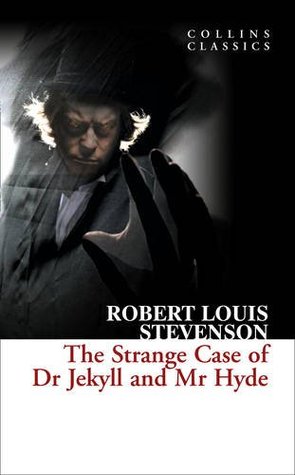
The Strange Case of Dr Jekyll and Mr Hyde by Robert Louis Stevenson

The problem with reading The Strange Case of Dr Jekyll and Mr Hyde in the 21st century is that most of us probably already know what the story involves. Even without having read it or seen any of the film versions, everyone knows what is meant by a ‘Jekyll and Hyde personality’. And this completely takes away the suspense and air of mystery that the story relies on so heavily. I’m sure the original Victorian readership would have found the connection between Dr Jekyll and Mr Hyde much more shocking! So is there still any point in reading it? Yes, I thought there was, because although I knew what the ultimate revelation would be, I didn’t know all the details of the plot or how the conclusion would be reached.

We first see Dr Henry Jekyll and Edward Hyde through the eyes of Jekyll’s friend and lawyer, Mr Utterson, who becomes concerned when he discovers that Jekyll has made a new will leaving everything to Mr Hyde. All Mr Utterson knows about Hyde is that he’s a sinister and brutal man responsible for some cruel and unprovoked acts of violence. The first half of the book follows the lawyer’s attempts to learn more about Hyde and his relationship with Jekyll. It’s only as we approach the end of the story that we hear from Dr Jekyll himself, in the form of a letter addressed to Mr Utterson, and the truth is finally revealed.

The story is cleverly structured so that if you had no idea what was coming, you would be kept wondering, knowing only as much as Mr Utterson knows, and it’s disappointing that for most modern readers the surprise has been spoiled. The part of the story I found the most interesting was the final chapter, after the secret has been uncovered and Jekyll gives his own explanation of what happened and his views on the good and the evil aspects of human nature. We can really feel his desperation as his own dark side grows stronger and things begin to spiral out of his control.

The edition I read contained just the novella The Strange Case of Dr Jekyll and Mr Hyde; other editions include a selection of other Stevenson short stories. Jekyll and Hyde on its own was only 88 pages long and if I’d realised how short it was I would have made time to read it earlier. This was one of my choices for RIP VII, and I would recommend it to other RIP participants who would like to read an important piece of classic Victorian fiction without committing to a full-length novel. I can’t say that I loved it and it’s not something I would want to read again, but I’m glad I’ve read it once and can see why it has become a part of popular culture.

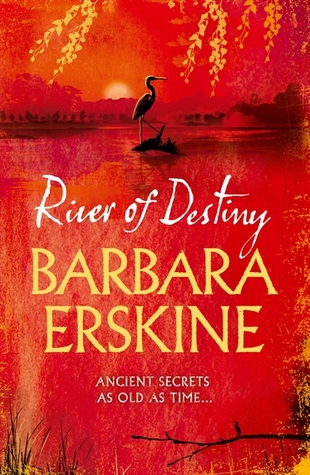
River of Destiny by Barbara Erskine

This is the first Barbara Erskine novel I’ve read. Knowing how popular she is and that I usually enjoy the type of books she writes – books that combine history and the supernatural – I’ve been meaning to try one for a long time but have never actually got around to it until now.

River of Destiny is set in three different time periods, one contemporary and two historical. The contemporary story follows Zoe and Ken Lloyd, who have moved away from London and bought a converted barn in Suffolk near the River Deben where Ken can indulge in his hobby, sailing. Zoe is not very happy with the move as she does not share Ken’s passion for boats and has had to leave behind a job she enjoyed. To make things worse, she is starting to sense ghostly presences in and around their new home. Gradually Zoe begins to learn that some of these paranormal occurrences could be echoes of The Old Barn’s eventful past.

In the novel’s two historical storylines we learn more about the events of the past which are haunting Zoe in the present day. The first of these is set in the Victorian period and tells the story of Dan, a blacksmith who finds himself a target of the scheming Lady Emily Crosby. Dan’s involvement with Emily will have tragic consequences. The third storyline is set in Anglo-Saxon England in the year 865 where we meet another smith, Eric, and his wife Edith. Amid the threat of a Viking invasion, Eric has been asked to forge a special sword for his lord, which he calls Destiny Maker – but it seems that the sword will not be given the chance to fulfil its destiny.

These three stories all take place in the same area of Suffolk, although in different periods, and are linked by sightings of a ghostly Viking ship sailing up the River Deben through a thick mist. Of the three storylines the one I found the most compelling was the contemporary one, which I thought had the most interesting group of characters: the mysterious Leo who lives alone in The Old Forge, Rosemary Formby who is on a mission to prove that walkers should have the right to cross a farmer’s field, and twelve year-old Jade whose family own one of the other barn conversions, The Summer Barn, and who is determined to cause trouble for Zoe and Leo. It surprised me that the present day story was my favourite, as with my love of historical fiction I usually prefer the historical parts of multiple time-frame novels!

I enjoyed the first few chapters of the book and was anticipating a great read, but as I got further into the story I started to lose interest. I think the problem was that I just didn’t like the way the novel was structured. The time shifts were a bit too frequent and abrupt for me and I also thought the story was told using too many different perspectives. Sometimes each section would only be two or three pages long – or even less – which meant I kept being pulled out of the flow of the story just as I was starting to get interested in it. I’m sure I would have enjoyed this book a lot more if I’d been able to get fully immersed in one storyline and one set of characters before moving on to the next.

So, I was left with mixed feelings about River of Destiny and I’m not sure if I really want to read any of Barbara Erskine’s other novels. If you’re a fan maybe you can convince me to give her another chance?

Sylvia’s Lovers by Elizabeth Gaskell

Sylvia’s Lovers is set in the final years of the eighteenth century in the small town of Monkshaven on the Yorkshire coast. During this period Britain and France were at war and the men of Monkshaven lived in fear of the press-gangs who regularly captured sailors from the town and forced them into action against France. Against this backdrop we meet Sylvia Robson, the beautiful young daughter of a farmer from nearby Haytersbank, and the two very different men who hope to marry her. One of these is Sylvia’s cousin, Philip Hepburn, a serious, reliable man who works in a draper’s shop; the other is the much more exciting and charismatic Charley Kinraid, a ‘specksioneer’ (chief harpooner) on a whaling ship. When Philip discovers that Kinraid is a rival for Sylvia’s love, he makes a decision that will eventually have tragic consequences for everyone involved.

Elizabeth Gaskell said this was the saddest book she ever wrote and I can definitely understand why she would have said that! Apart from the central storyline involving Sylvia, Philip and Kinraid, there are other characters with their own tragic stories to be told. Hester Rose, for example, who works with Philip in Foster’s shop and has been secretly in love with him for years without ever daring to say so. And Daniel Robson, Sylvia’s father, a former whaler who decides to take action to stop any more of the town’s young men being pressed into the navy.

Monkshaven is a fictional town but was based closely on the real North Yorkshire town of Whitby. A few weeks ago I posted a visual tour of Monkshaven – I hope the photos and quotes I included help to convey some of the atmosphere Gaskell created in her descriptions of the town. My own familiarity with Whitby (I’ve been there many times over the years) made it easy for me to picture the scenes. When we were told of a funeral procession slowly winding its way up the steps to the church on the cliff or the crowds gathering to watch a whaling ship coming in, I could see the images clearly in my mind.

Sylvia’s Lovers took a long time to read (it was 500 pages and felt even longer, partly because I had to concentrate on understanding the dialogue – I should probably warn you that this book does contain a lot of Yorkshire dialect) but the setting, the historical background and the characters kept me interested. Sylvia frustrated me at the beginning because she was so silly and immature, uneducated and unwilling to learn; by the end of the book though, she had changed a lot and I found myself starting to like her. I had sympathy for Philip, both before and after he made his terrible mistake, and I loved Hester Rose. Kinraid was the only character who never felt fully developed but I think that was maybe intentional.

This book reminded me of Tess of the d’Urbervilles by Thomas Hardy, with all the descriptions of scenery, the local dialect, the focus on rural working-class life and the overwhelming mood of sadness and misery. As one tragedy followed another through the second half of the book, it started to seem that there were going to be no happy endings for any of the characters. I can honestly say this was one of the most depressing books I’ve read and on a few occasions towards the end I wondered why I was still reading it. The answer to that is because I find Gaskell’s writing so beautiful and moving and because she had really made me care what happened to Sylvia, Philip, Hester and the others. This is only the second Gaskell novel I’ve read; the first was North and South which is a much more popular book, but I think I liked this one more despite it being so heartbreaking.

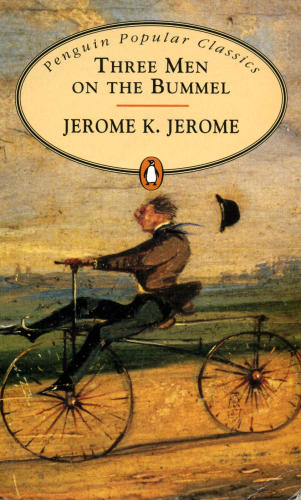
Three Men on the Bummel by Jerome K. Jerome

Last year I read Jerome K. Jerome’s Three Men in a Boat (To Say Nothing of the Dog) which was one of my favourite books of 2011 and one of the funniest books I’ve ever read. Three Men on the Bummel is the sequel, less well known but still worth reading. It’s set a few years after Three Men in a Boat but it’s not really necessary to read them in the correct order. In this book we join our old friends J, Harris and George again (this time without Montmorency the dog) on a bicycle tour across Germany’s Black Forest. There’s not much of a plot – like the first book, the whole story really just consists of a series of mishaps and disasters, funny anecdotes told by the three friends, descriptions of the places they visit, and some philosophical musings and observations from our narrator, J.

The humour in this book is very much the same as in the first and some of the stories are very similar too (if you remember reading about Uncle Podger in Three Men in a Boat, for example, there are more Uncle Podger stories here). But I did start to lose interest a little bit towards the end of the book and I couldn’t help feeling that maybe Jerome had used up most of his better ideas in the previous book. There’s nothing here that has stuck in my mind the way the pineapple incident or the Hampton Court maze did, to give just two examples. But there are still some moments that stand out: George being accused of embarking on a life of crime after getting on a train with the wrong ticket, the three of them being lost on a hillside arguing over which way was north, Harris and his encounter with a man watering the road, George’s experiment with a phrase book, and a few others. My favourite was the trick J and Harris play on George, leading him to believe a statue is following him around the town, appearing in four different places at once.

“Why, that thing,” said George; “look at it! There is the same
horse with half a tail, standing on its hind legs; the same man
without his hat; the same–”

Harris said: “You are talking now about the statue we saw in the
Ringplatz.”

“No, I’m not,” replied George; “I’m talking about the statue over
there.”

“What statue?” said Harris.

George looked at Harris; but Harris is a man who might, with care,
have been a fair amateur actor. His face merely expressed friendly
sorrow, mingled with alarm. Next, George turned his gaze on me. I
endeavoured, so far as lay with me, to copy Harris’s expression,
adding to it on my own account a touch of reproof.

“Will you have a cab?” I said as kindly as I could to George.
“I’ll run and get one.”

The German setting in my opinion didn’t work as well as a backdrop for the novel as the River Thames did in Three Men in a Boat but it does give Jerome an opportunity to have fun with British and German stereotypes (though in a gentle way, I thought) and the misunderstandings that could arise from differences in language and culture. He spends a lot of time discussing different attitudes to law and order for example:

Nowhere, and under no circumstances, may you at any time in Germany walk on the grass…The very dogs respect German grass; no German dog would dream of putting a paw on it. If you see a dog scampering across the grass in Germany, you may know for certain that it is the dog of some unholy foreigner. In England, when we want to keep dogs out of places, we put up wire netting, six feet high, supported by buttresses, and defended on the top by spikes. In Germany, they put a notice-board in the middle of the place, “Hunden verboten,” and a dog that has German blood in its veins looks at that notice-board and walks away.

Overall this wasn’t quite as funny as Three Men in a Boat and I can see why it’s not as popular, but I still enjoyed reading it. Both books were written in the late Victorian period (this one was published in 1900) but I would recommend them even to people who don’t usually like Victorian fiction as they do have quite a modern feel and a lot of the humour is still relevant today.

Oh, and if you’re wondering what the word ‘bummel’ means, it is explained but you’ll have to wait until the end of the book to find out!

Great Expectations by Charles Dickens

Despite my love of Victorian literature, Charles Dickens has never appealed to me as much as other 19th century writers and until recently the only Dickens novel I had actually read was A Christmas Carol. A couple of years ago I decided to give him another chance and although I still don’t think Dickens will ever be one of my favourite Victorians, I’m pleased to say that my opinion of his work is rapidly improving with every book of his I read!

Great Expectations is narrated by Pip, a young orphan who is brought up by his sister and her husband, Joe Gargery, a blacksmith. Near the beginning of the book two important incidents occur: first Pip meets an escaped convict in the graveyard near his home, and then soon after this he is invited to visit the eccentric Miss Havisham who lives at Satis House. When Pip unexpectedly receives a large sum of money he moves to London to become a gentleman and leaves his old friends behind. But who is the mysterious benefactor and will Pip’s ‘great expectations’ really change his life for the better?

I won’t go into the plot in any more detail for two reasons: firstly, because I suspect many of you will already be familiar with the story even if you haven’t read the book, and also because I wouldn’t want to spoil any of the surprises and plot twists the novel contains. But as well as the wonderful plot, Great Expectations is also full of strong and memorable characters. Miss Havisham, hidden away in her ruined mansion wearing her wedding dress, is probably the one most people will think of when they think of this book, but from the convict Abel Magwitch and Pip’s best friend Herbert Pocket to the lawyer Mr Jaggers and Miss Havisham’s adopted daughter Estella, the book is full of unforgettable characters. I posted a few weeks ago about one of my favourites, Joe Gargery, and how sad it is to see the way Pip’s relationship with Joe changes after he is given his great expectations.

If you’ve never read any Dickens before, I think this might be a good place to start. I’ve read four of his other novels (A Christmas Carol, Bleak House, Our Mutual Friend and The Mystery of Edwin Drood) and in comparison to some of those, I thought this one was much easier to read and understand. And I loved all the observations on life and human nature that Dickens scatters throughout his writing, like this:

“That was a memorable day to me, for it made great changes in me. But, it is the same with any life. Imagine one selected day struck out of it, and think how different its course would have been. Pause you who read this, and think for a moment of the long chain of iron or gold, of thorns or flowers, that would never have bound you, but for the formation of the first link on one memorable day.”

Or this:

“So, throughout life, our worst weaknesses and meannesses are usually committed for the sake of the people whom we most despise.”

Now I just need to decide which of Dickens’ books I should try next. I have three of his novels on my list for the Classics Club: David Copperfield, A Tale of Two Cities and Oliver Twist. Have you read any of those or is there another one you would recommend?