The Children’s Book by A.S. Byatt

Since The Children’s Book was published in 2009 I’ve picked it up a few times but have been put off by the length (over 600 pages of small print in the paperback edition) and also by the very mixed reviews. It seems that people have either loved this book or have found it almost impossible to get through. After I read my first A.S. Byatt book, Possession, earlier this year and found it easier to read than I had expected, I decided it was time I stopped feeling intimidated and tried this one too. I enjoyed it but now that I’ve read it I can understand why it might be a love it/hate it type of book. If you’re not interested in the historical and cultural events of the Victorian and Edwardian periods, if you don’t like reading fairy tales, if you prefer books with more action and less description, then this may not be the right book for you. It’s such a complex novel with so many layers I would find it impossible to write a summary of the plot, but I’ll do my best to give you an idea of what the book is about.

In The Children’s Book, Byatt tells the story of the Wellwood family and their friends and neighbours in the context of the larger social changes taking place in the world around them. As you can probably tell, despite the title, this is not a book for children. However, many of the characters are children at the beginning of the book and we watch them grow up over the years and begin to follow their own paths in life. As the children become adults they make some surprising discoveries and find that nothing is quite as it seems.

The book begins in the late Victorian period and ends just after World War I, so all kinds of important historical moments and events are covered, from the Exposition Universelle de Paris to the death of Queen Victoria and the Boer War. Some of the characters become involved with groups and movements such as the Fabians, anarchists and Suffragettes. There are also lots of descriptions of the Arts and Crafts movement, pottery and ceramics, puppet shows, summer crafts camps, making lanterns etc. And from the world of literature there are references to authors including Oscar Wilde, the Brothers Grimm, J.M. Barrie and Kenneth Grahame.

One of the main characters, Olive Wellwood, is a famous writer of fairy tales and she creates a special book for each of her children, Tom, Dorothy, Phyllis, Hedda and Florian. Inside each child’s book is a personalised story Olive has written for them. We are given the chance to read extracts from some of these stories and this was one of my favourite aspects of the novel. I know not everyone will be as enthusiastic about the fairy tales as I was, but I did really enjoy them.

In addition to the Wellwood family, there are literally dozens of other characters, each of them with an interesting story of his or her own. As the book progresses the relationships between the various characters become very complex and intricately linked. Considering the length and scope of the book, I think having a character list to refer to would have been very useful! Of all the characters in the novel, I think Dorothy Wellwood was my favourite. I was interested in her attempts to study medicine and become a doctor, something very rare and difficult for a woman at the beginning of the 20th century. In Dorothy and a couple of the other young female characters who also consider going to university, we see how women often felt that they had to make a choice between marriage and a career and couldn’t have both.

Something I probably haven’t made clear yet is how dark and moving this book is at times with its portrayal of the loss of childhood innocence and with the number of devastating family secrets that are revealed. A.S. Byatt has said that she wanted to explore the effects of writing children’s books on an author’s real children, and one of the saddest parts of the novel for me was the storyline involving Olive Wellwood’s eldest son, Tom. I won’t tell you what happens to him but I thought it was heartbreaking.

The only thing that disappointed me slightly was that towards the end it seemed as if Byatt was trying to squeeze as much as possible into the final pages of the novel. After the slow, steady pace of the rest of the book, I thought the ending was very rushed and the story seemed to disappear under an overwhelming amount of historical facts and dates. Apart from that, I loved this book.

Have you read The Children’s Book? What did you think of it?

Uncle Silas by Sheridan Le Fanu

Until now my only previous experience of the 19th century Irish author Joseph Sheridan Le Fanu was the short story, Laura Silver Bell, which I read for Mel U’s Irish Short Story Week in March. I was keen to see what I would think of one of Le Fanu’s full-length novels and decided to read Uncle Silas for the R.I.P challenge.

Uncle Silas is an 1864 novel which seems to incorporate almost every aspect of the Victorian sensation/gothic novel you can think of: gloomy, eerie mansions, graveyards, laudanum addiction, an evil governess, locked rooms and locked cabinets, poison, family secrets. I had high hopes for the book as it sounded like exactly the type of classic I usually enjoy, and after a slow start it didn’t disappoint.

Our heroine (and the narrator of the story) is Maud Ruthyn who lives with her father at Knowl, their family estate. Maud is fascinated by a portrait of her Uncle Silas which hangs on one of the walls inside the house – she has never met her uncle before and is intrigued by hints of scandal in his past. When Mr Ruthyn decides to find a governess for his daughter, the sinister Madame de la Rougierre comes to live at Knowl and a chain of events begins which will finally bring Maud into contact with her mysterious Uncle Silas.

And that’s really all I can tell you about the plot without beginning to give too much away! I had managed to avoid reading any big spoilers so I never had any idea what was coming next, and I think that was the best way to approach this book.

It did take me a while to really get into the story. It was fun and entertaining from the beginning and I was never actually bored with it, but it seemed to take such a long time before anything really happened. It wasn’t until about one hundred and fifty pages into the book that the pace began to pick up and then I could appreciate why Le Fanu had taken his time building the suspense and slowly creating a mood of menace and foreboding. It was a very atmospheric and creepy story (particularly any scene featuring Madame de la Rougierre, who must be one of the most horrible, grotesque villains in literature), though I didn’t find it as scary as I had expected to.

Maud may not be the strongest of female characters but she felt real and believable to me. Although she could be brave when she needed to be, she was young and naïve and I felt genuinely worried for her as she found herself becoming increasingly isolated, not sure who she could and couldn’t trust. And for me, this was where the story could be described as frightening: the complete lack of control Maud had over her own destiny and the way she was forced to depend on people who may not have had her best interests at heart.

If you enjoyed The Woman in White by Wilkie Collins then I think there’s a good chance you’ll like this book too. It doesn’t have as many surprising twists and turns as The Woman in White but it is a similar type of book, though with a much darker and more gothic feel. I think it’s a shame Le Fanu isn’t as widely read as other Victorian authors, as his work is definitely worth reading. I hope you’ll decide to give this book a try if you haven’t already.

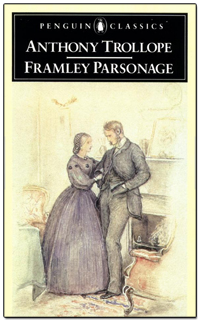
Framley Parsonage by Anthony Trollope

Framley Parsonage is the fourth novel in Anthony Trollope’s Chronicles of Barsetshire series. I’ve been slowly working my way through these books during the last year and in my opinion this one is neither the best nor the worst of the four I’ve read so far.

A common question asked by people new to Trollope is whether this series needs to be read in the correct order. Well, I don’t think it’s necessary at all and I’m sure this book could be enjoyed as a first introduction to Trollope, but personally I would recommend beginning with The Warden and reading each book in the series in turn. Framley Parsonage draws together a lot of characters from the first three books, including the Grantly and Proudie families from Barchester Towers and the Thornes and Greshams from Doctor Thorne, as well as some that I hadn’t expected to meet again, including one of my personal favourites, Miss Dunstable. I’m glad I chose to read the series in order because it’s nice to be able to recognise references to people, places and events and to feel that I’m getting to know the whole Barsetshire community.

Framley Parsonage consists of two main storylines. In the first, we follow Mark Robarts, the vicar of Framley. Mark became vicar at a younger age than would normally be expected, due to the influence of his friend, Lord Lufton, and his mother, Lady Lufton of Framley Court. He is still very ambitious and to Lady Lufton’s dismay he begins to mix with unscrupulous politicians whom he believes can help him further his career. When one of these politicians, Nathaniel Sowerby, persuades him to sign his name to a note for five hundred pounds, Mark finds himself getting deeper and deeper into debt – which is not the way a respectable clergyman should behave!

The second storyline involves Mark’s sister, Lucy Robarts, who comes to live at Framley Parsonage following the death of their father. Lucy falls in love with Lord Lufton, who soon proposes to her. However, Lucy is aware that Lord Lufton’s mother does not consider her a suitable wife for her son, so she vows not to marry him until she wins Lady Lufton’s approval – even though it means sacrificing her own happiness.

I found this book harder to get into than the previous three that I’ve read – it seemed to have a very slow start and didn’t really pick up until the character of Lucy Robarts made her first appearance. But as with all Trollope’s novels, once I did get into the story I became completely absorbed in the moral dramas and dilemmas taking place. Based on the first three Barsetshire books, I had a strong suspicion that all of Mark’s and Lucy’s problems would be resolved by the end, and yet this didn’t stop me from enjoying the book and wondering exactly how those problems would be resolved. As usual, Trollope’s characters feel completely believable with understandable motives and emotions. We can have sympathy with Mark Robarts because he is not a bad person – just young and naïve. And even when a character is cast as one of the villains of the book, such as Mr Sowerby, Trollope still asks us to remember that they do have some good qualities.

Although Anthony Trollope is not my favourite Victorian author (that would be either Wilkie Collins or Thomas Hardy) he does have a wonderful warm and observant writing style all of his own and if you haven’t tried one of his books yet then I highly recommend spending some time in Barsetshire soon.

The Observations by Jane Harris

After I read (and loved) Gillespie and I, I knew I would have to find a copy of the first book by Jane Harris, The Observations, as soon as possible. Luckily my library had a copy so I didn’t have to wait too long to read it! I found this book just as entertaining and enjoyable as Gillespie and I, which puts Jane Harris firmly on my list of favourite authors.

The Observations is set in Scotland during the 19th century. Bessy Buckley, a young Irish girl, is on the run from her troubled past when she arrives at the estate of Castle Haivers near the village of Snatter. The lady of the house, Arabella Reid, offers her a job as maid and Bessy jumps at the chance. But Bessy is puzzled by the series of bizarre tasks which Arabella orders her to perform – and when she discovers that a previous maid, Nora, may have died under suspicious circumstances, it becomes obvious that things at Castle Haivers are not quite what they seem.

The Observations is a long book but was so gripping I read it in half the time it would normally take me to read a book of similar length. What makes this novel so different from all the others I’ve read set in the Victorian era is Bessy Buckley herself. Bessy is a fabulous character and narrator: funny and witty, poorly educated but bright and intelligent, tough and outspoken yet sensitive and warm hearted. When you first begin to read you might come across some unusual language and slang, not to mention some unconventional grammar and punctuation, but don’t worry about that – it’s all part of Bessy’s unique voice and her narration was a delight to read. The only thing that irritated me slightly was seeing numbers written as figures rather than words (1/2 instead of ‘half’, for example).

The relationship between Bessy and her mistress forms a big part of the story, but there are a few other interesting sub-plots, as well as the story of Bessy’s own childhood which emerges slowly throughout the book. There are shades of other Victorian novels, as well as some elements of the gothic novel and the ghost story, but the overall result is something completely original. The one criticism I have is that, after a very strong start, the story seems to lose momentum in the second half and the ending was slightly disappointing in comparison to the rest of the book.

Finally, I want to say how impressed I am that Jane Harris could take two such different narrators as Bessy Buckley and Harriet Baxter (from Gillespie and I), who are complete opposites in almost every way imaginable, and make them both so convincing! That’s a sign of a talented author in my opinion.

Possession by A.S. Byatt

Possession is a literary mystery which follows two academics, Roland Michell and Maud Bailey, who are studying the lives of two fictional Victorian poets, Randolph Henry Ash and Christabel LaMotte respectively. When they discover new evidence that suggests the two poets knew each other and may even have been lovers, Roland and Maud begin working together to uncover the truth. Woven into the story are letters, poems, fairy tales and journal entries, all of which feel like authentic Victorian documents. The significance of these is not always immediately obvious but as Maud and Roland continue to find new clues regarding Ash and LaMotte, things slowly begin to make sense.

Possession is one of those books I feel I should have read long before now but never have, partly because I was afraid it might be too clever and intellectual for me. Now that I’ve finally read it I’m glad I got over my fear of it and decided to give it a try, because it wasn’t quite as difficult to read as I thought it would be and in fact was a very rewarding and enjoyable read. I did find it hard to get into at first and almost gave up a few times throughout the first 200 pages, but somewhere in the middle of the book I found myself becoming completely absorbed in the story and didn’t want to put it down.

I’m not a lover of poetry and was tempted to skip some of the longer poems, but although I did try to read them all I know I didn’t pick up on all the little references and metaphors they contained. I would need to read the whole book again to pick up on everything I missed the first time, but I found it such a challenge to read once I don’t think I’ll want to read it again, at least not in the near future.

I enjoyed following Maud and Roland on their physical journey, first around the North Yorkshire coast and then to Brittany, retracing the steps of Ash and LaMotte. This book made me wish I was also on the trail of an important literary mystery – I think it would be fascinating. It’s intriguing to think that an important part of someone’s life can become lost in the mists of time, and when rediscovered can completely change the way we think about them and their work.

As the book progressed, I had a better understanding of what the title ‘possession’ could mean and the various ways in which it could be interpreted. There’s the obvious interpretation of two people in love, but there’s also an intellectual possession – the possession of information, secrets and ideas. Then there are the physical possessions of the letters and writings, and the dispute over who should actually ‘possess’ them. There’s possession in a spiritual, ghostly sense. And the way we become possessed with the desire for knowledge and the wish to ‘possess’ our subject.

There are so many layers to this book that I would need to write a post twice as long as this one to be able to mention everything. There’s feminist symbolism, natural history, legends and mythology, the Victorian fascination with seances and spiritualists. And in addition to all this, Byatt creates an entire history for both Randolph Henry Ash and Christabel LaMotte, to the extent where they feel as if they could really have existed, as if they were real Victorian poets. I can’t imagine how much work must go into writing a novel like this; it’s very, very impressive and I can understand why it won the Booker Prize in 1990.

The Somnambulist by Essie Fox

With my love of all things Victorian I had high hopes for this book, the debut novel by Essie Fox, and I wasn’t disappointed. The Somnambulist is a beautifully written story with memorable characters, an intricate plot and a distinctly gothic feel.

Phoebe Turner is a seventeen-year-old girl who lives in the East End of London. Her mother, Maud, a member of the Hallelujah Army, has done her best to keep Phoebe from sin and to protect her from what she considers to be the bad influence of her sister, Cissy. Phoebe, though, adores her glamorous Aunt Cissy and she is left devastated by her sudden death early in the novel.

Maud is struggling with the loss of Cissy’s income and when the wealthy Nathaniel Samuels offers Phoebe a position as companion to his wife, it seems this could be the solution to their financial problems. And so Phoebe leaves London behind and travels to Dinwood Court, the Samuels’ mansion in Herefordshire, where she begins to uncover some dark family secrets…

Essie Fox is the author of the Virtual Victorian blog and one thing that is very apparent in The Somnambulist is her knowledge and love of the Victorian period. It was interesting to read the author’s note at the back of the book in which she gives us some of the historical fact behind the fiction and lets us know which of the people and places mentioned in the novel are ones that really existed. I was impressed by the amount of period detail and the vivid descriptions which really brought the settings to life, particularly Wilton’s Music Hall and the magnificent Dinwood Court, two contrasting but equally well-drawn locations. The characters, too, are colourful and vibrant and Phoebe herself is a complex character who grows and develops as a person over the course of the novel.

I guessed one of the book’s big secrets almost from the beginning (a sign that I’ve read too many books of this type, maybe!) but that didn’t matter at all because I enjoyed watching Phoebe as she slowly pieced the parts of her history together. There were other surprises and twists that I didn’t see coming and overall I thought the story was very cleverly plotted. I also loved the sleepwalking theme which is indicated in the title and gently woven throughout the book with references to the Millais painting, The Somnambulist, which is widely believed to have been inspired by either the Wilkie Collins novel The Woman in White or the Bellini opera La Sonnambula. The story itself is often ghostly and dream-like and Phoebe’s world is a place where nothing is exactly as it seems.

The Somnambulist is an impressive debut novel and I’ll certainly look out for any future books from Essie Fox.

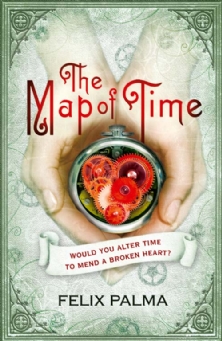
The Map of Time by Felix Palma

The Map of Time, translated from the original Spanish, is an interesting mixture of historical fiction, science fiction and romance. The book appealed to me as soon as I read the synopsis and saw that it was set in Victorian London, involved time travel and featured several real historical figures including Jack the Ripper, Joseph Merrick (The Elephant Man) and the authors H.G. Wells, Henry James and Bram Stoker. It sounded fascinating and it was, though there were a few aspects of the book that didn’t work for me at all. I thought it was too long and ambitious and tried to do too much.

The starting point for the story is 1896, shortly after the publication of H.G. Wells’ novel, The Time Machine, which captured the imaginations of his readers and convinced them that time travel could become a reality. One of the people hoping to travel through time is Andrew Harrington whose lover, Marie Kelly, was killed by Jack the Ripper eight years ago. Andrew believes that if he could go back to the night of the murder it might be possible to save Marie’s life – so he decides to approach Wells and ask his advice.

Wells also becomes involved in the life of Claire Haggerty, a young woman who has trouble conforming to Victorian society and longs to escape to the year 2000 where the ‘brave Captain Derek Shackleton’ is thought to have saved the world from destruction by evil automatons. But is it really possible for Andrew and Claire to travel through time or is time travel something that only exists in fiction?

I’ve read a lot of novels that involve time travel as a part of the plot, and while all of them obviously require the reader to suspend disbelief, some of them manage to make it seem more plausible than others. There are a number of theories put forward in The Map of Time and it all started to become very confusing, but for anyone with an interest in the intricacies of time travel, parallel worlds, paradoxes (is it possible to meet a future version of yourself, for example?) and the effects our actions have on history, you should find it interesting.

The biggest problem I had with this book was that the pacing and structure of the story didn’t feel quite right to me. The book is divided into three very distinct sections: the first deals with the Andrew Harrington story, the second follows Claire Haggerty and the third concentrates on H.G. Wells himself. This had the effect of making the book feel almost like three separate books in one and it took me a while at the start of each section to get used to the new characters and completely different direction of the plot. Then there’s the omniscient narrator who intrudes into the story at times in a mock-Victorian style. This can work well in original Victorian classics, but here I thought it felt forced and unnatural and it ended up annoying me.

I realise I’m making it sound as if I didn’t enjoy this book at all, but that’s not true. There were parts that I found fascinating and times when I couldn’t put the book down. I thought the quality of the writing was good overall and I probably wouldn’t have guessed it was a translation. But for a book which sounded so exciting and original, it didn’t quite live up to my expectations.