2016 Walter Scott Prize longlist announced

As some of you may know, I am in the process of slowly working my way through all the shortlisted titles for the Walter Scott Prize for Historical Fiction since it began in 2010. Historical fiction is my favourite genre and I have so far found the books nominated for this prize to be of a consistently high quality.

You can learn more about the prize on the Walter Scott Prize website and you can follow my progress through the shortlists on this page. Kay of What Me Read has already joined me in this project and if anyone else would like to do the same, you’re more than welcome.

Anyway, the reason I’m posting this today is that this year’s longlist has just been announced – with the shortlist to follow in March and the winner in June. I’m not currently planning to attempt to read the entire longlist, which includes thirteen books, but I would like to dip into the list from time to time and read at least some of them.

The thirteen books are as follows:

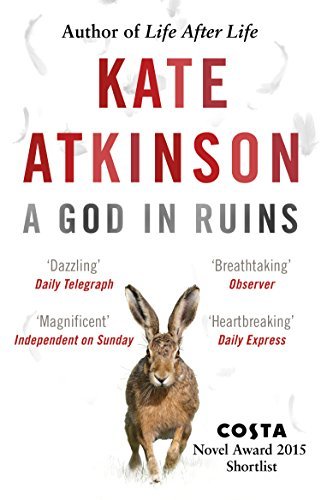
A God in Ruins A God in Ruins by Kate Atkinson
Sweet Caress by William Boyd
A Petrol Scented Spring by Ajay Close
A Place Called Winter by Patrick Gale
Dictator by Robert Harris
Devastation Road by Jason Hewitt
Death and Mr Pickwick by Stephen Jarvis
Mrs Engels by Gavin McCrea
End Games in Bordeaux by Allan Massie
Tightrope by Simon Mawer
Signs For Lost Children by Sarah Moss
Curtain Call by Anthony Quinn
Salt Creek by Lucy Treloar

The only one I have read so far is A God in Ruins, but I do have Dictator on hold at the library and can’t wait to read it. I have heard good things about Sweet Caress – and Death and Mr Pickwick sounds interesting, although I’m not sure if I should wait until I’ve read The Pickwick Papers first. Most of the others are new to me, so I have some investigating to do!

Have you read any of these books?

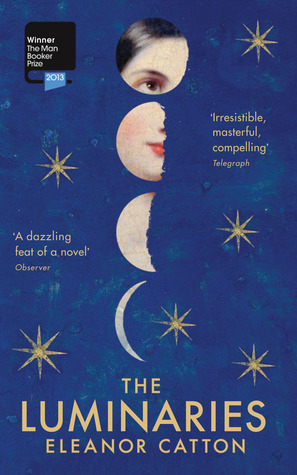
The Luminaries by Eleanor Catton

The Luminaries This is the novel that won the Booker Prize in 2013 but despite the hype surrounding it at the time and the fact that it did sound like a book I would enjoy, I have been putting off reading it, mainly because of its length. As well as the Booker Prize, though, it was also nominated for the Walter Scott Prize in 2014 and as I’m slowly working through the shortlists for that particular prize, I decided it was time I read it.

The Luminaries is set in the New Zealand town of Hokitika during the Gold Rush of the 1860s. The story revolves around several strange occurrences which all take place on the same night in January 1866: Emery Staines, one of the town’s richest men disappears without trace; prostitute Anna Wetherell collapses in the street in what is thought to be a suicide attempt; and the reclusive Crosbie Wells is found dead in his own home, surrounded by a large quantity of hidden gold. These things may not seem to be connected at first, but of course they are – as is everything else that happens throughout the 800 pages of this very clever and complex novel.

The first and by far the longest section of the book begins with the arrival of Scottish lawyer, Walter Moody, who is hoping to make his fortune on the goldfields. On his first evening in Hokitika he walks into the Crown Hotel to find that he has interrupted a meeting between twelve men who have gathered to try to make sense of what has been happening. These twelve men are all linked in some way with Emery, Anna, Crosbie or all three – and as Walter listens to their stories he too is drawn into the mystery.

In the sections of the novel that follow – each one half the length of the one before – we move forwards and then backwards in time learning more about each of the main characters and the events leading up to the night of 14th January 1866.

The decreasing length of the chapters corresponds with a waning moon (hinted at by the images on the front cover), one of many astrological elements Eleanor Catton has incorporated into the novel. The character list at the front of the book lists the twelve men who meet in the hotel under the heading ‘Stellar’ and each one is associated with a sign of the Zodiac, while the other characters are listed as ‘Planetary’. Each of the twelve sections of the book begins with an astrological chart and within each section the individual chapters have astrological titles. This was intriguing at first but as I don’t have a lot of interest in astrology it didn’t mean much to me and I quickly gave up trying to interpret it and concentrated on following the story instead.

I have seen lots of comparisons between The Luminaries and the Victorian sensation novels of Wilkie Collins, one of my favourite authors, but I’m not sure if I really agree with that comparison. The book does include lots of elements of the sensation novel (hidden treasure, opium addiction, double identities, séances, forgeries and family secrets) but Eleanor Catton’s writing, in my opinion, lacks the flair and humour of Wilkie Collins’ and the gift for creating strong, unforgettable characters. Apart from one or two, the twelve men of the Crown felt interchangeable and I had to keep looking back at the character list to remind myself which was which. The other eight were slightly stronger (they were the Planetary characters and the ones who tended to drive the story forward) but of these, Anna Wetherell was the only one I really came to care about.

I did enjoy reading The Luminaries, though, and can definitely see why it has been so successful. I was very impressed by the intricate plotting with facts and secrets being slowly unveiled and connections between the characters gradually revealed. I also loved the setting; I have read very few novels set in New Zealand and I certainly haven’t read any set in a New Zealand gold mining town in the 1860s! Because Hokitika is a real place, I could find lots of pictures online which really helped to bring the setting to life. The length of the book wasn’t a problem for me either; the pages seemed to go by much more quickly than I’d expected them to – especially in the second half, where the chapters become shorter and the pace becomes faster.

I know there were a lot of things happening in The Luminaries that I didn’t completely understand (especially all of the allusions to astrology) and lots of little details that I missed. I would probably have to read the book again to be able to fully appreciate it, but for now I’m happy just to have read it once and to have enjoyed it!

Historical Musings #3: Perceptions of the genre

Historical Musings Before I introduce this month’s Historical Musings topic, this is probably a good time to mention that the winner of the Walter Scott Prize for Historical Fiction was announced yesterday. The winner is The Ten Thousand Things by John Spurling, a novel set in 14th century China, which I haven’t read but am looking forward to as I love reading about Chinese history. As you may know, I am slowly working my way through all the titles shortlisted for the Walter Scott Prize since it began in 2010. You can follow my progress here. Kay of What Me Read is doing the same and I hope other readers will consider joining us! I have found the winners and shortlisted books that I’ve read so far to be of a consistently high quality, which leads nicely into this month’s discussion topic…

Can a novel be both historical and literary?

My answer, unsurprisingly, is yes, of course it can…but for a lot of people, the answer doesn’t seem to be as simple as that. Here are some examples of the sort of comments I often see and hear when people talk about historical fiction:

* I don’t read historical fiction but I enjoyed this book and consider it to be literary fiction anyway.

* To describe this as a historical novel is doing a disservice to the author’s writing skills.

* This is very well written and explores some interesting themes, but it’s historical fiction so it’s hardly literature, is it?

* I’m not interested in historical fiction, but this is more of a literary novel set in the past so I was happy to read it.

* This was surprisingly good; it went beyond any expectations I had for historical fiction.

I respect other people’s points of view, of course, but I do think it’s disappointing that so many people have such a low opinion of a genre I love. I read a wide range of historical fiction and while I think the lighter ones can often be perfectly enjoyable and entertaining, I can think of many authors who have successfully managed to write novels that are historical and could also be considered to have literary merit: Hilary Mantel, Umberto Eco, Dorothy Dunnett, Patrick O’Brian, A.S. Byatt, Amitav Ghosh and countless others. Charles Dickens, George Eliot and Victor Hugo have all written historical fiction too; are their novels not literature?

This makes me wonder why historical fiction is sometimes viewed in a negative way. Is it because people have had bad experiences in the past? I know there are some badly written, poorly researched historical novels out there, but you could say the same about any genre (and there are also plenty of books classed as literary fiction that haven’t impressed me at all). Or is it that people sometimes associate the term ‘historical fiction’ with a certain type of book that doesn’t appeal to them – family sagas, maybe, or books with a lot of battle scenes, or romances with women in pretty dresses on the cover – and aren’t aware of how large the genre is and how many different sub-genres it encompasses?

It does seem that there are some readers who will avoid a book because it’s described as ‘historical fiction’ but who will happily read that same book if the term ‘literary fiction’ is used instead. As someone who never gives a lot of thought to genre labels and has always read whatever I want to read regardless of how other people might perceive it, I find this a bit difficult to understand. The Historical Novel Society website has an excellent article on this subject written by Sarah Johnson in 2002. I think the reputation of historical fiction has improved since then and so has its popularity, but she still makes some interesting points.

What are your thoughts on this? Do you have low expectations of certain genres or certain types of book? Is there a difference between a well-written ‘historical fiction novel’ and a ‘literary novel set in the past’?

I would also like to know if anyone has read John Spurling’s The Ten Thousand Things – and if so, what did you think of it?
The 2015 Walter Scott Prize longlist

I was interested to see that the longlist for the Walter Scott Prize for Historical Fiction was announced today. I’ve been following this prize for the last few years and this is the first time the longlist has been made public. The judges have selected fifteen books, with the shortlist to be announced in March and the winner in June.

You can learn more about the prize on the Walter Scott Prize website.

The fifteen books on the longlist are:

The Zone of Interest by Martin Amis
The Temporary Gentleman by Sebastian Barry
The Miniaturist by Jessie Burton
The Lie by Helen Dunmore
Viper Wine by Hermione Eyre
In the Wolf’s Mouth by Adam Foulds
Mr Mac and Me by Esther Freud
Arctic Summer by Damon Galgut
Wake by Anna Hope
The Wake by Paul Kingsnorth
The Undertaking by Audrey Magee
A God in Every Stone by Kamila Shamsie
The Architect’s Apprentice by Elif Shafak
The Ten Thousand Things by John Spurling
The Paying Guests by Sarah Waters

I have read four of these books – The Temporary Gentleman, The Miniaturist, The Lie and Mr Mac and Me – and have linked to my reviews above so that you can see what I thought of them.

Anna Hope’s Wake is a book I would like to read at some point. I remember hearing a lot about it when it was published last year, but I didn’t read it as I wasn’t in the mood for a First World War novel at that time. I’m sure I’ll read The Paying Guests eventually too as I’ve enjoyed all of Sarah Waters’ previous novels, but I haven’t been in any hurry after seeing some very mixed reviews. The Wake by Paul Kingsnorth first came to my attention when it was longlisted for the Booker Prize last year – having looked at the first few pages I decided the unusual writing style didn’t appeal to me. Maybe I should give it a chance after all?

All of the other titles on the list are new to me, so I’ve had to do some investigating! Viper Wine sounds very intriguing and so does The Architect’s Apprentice.

Have you read any of these books? Are there any that you think I need to try?