Kingmaker: Winter Pilgrims by Toby Clements

Winter Pilgrims On a cold winter’s morning in 1460, a band of armed horsemen approach the Priory of St Mary near Lincoln. One of the monks, Thomas Everingham, is outside the priory walls that morning, having been sent out to kill a fox that has been caught in a trap, and when he notices that the soldiers are about to attack two nuns (one of whom is Sister Katherine, a young woman who has spent most of her life in the priory) he decides to intervene. In the scuffle that follows, Thomas seriously injures one of the men, who happens to be the son of the nobleman Sir Giles Riven. With the furious Sir Giles seeking revenge, Thomas and Katherine (disguised as a boy called Kit) are forced to flee the priory.

After living for so many years in their isolated religious community, Thomas and Katherine have little knowledge of the world beyond and are surprised to find that England is in the midst of war. Henry VI is still on the throne but is under threat from the Duke of York and Earl of Warwick, whose armies are gathering in Calais in preparation for the next stage of what will become known as the Wars of the Roses.

With the help of pardoner Robert Daud, who leaves them a bag containing a mysterious book, Thomas and Katherine reach Calais and join the company of two of Warwick’s men, Sir John Fakenham and his son, Richard. Here Thomas learns to use a bow and Katherine increases her knowledge of healing, skills they will need when they return to England to face their enemy, Sir Giles Riven, and to play their part in the bloody battles of Northampton and Towton.

Although this book has already received lots of glowing reviews, I’ll admit that I had my doubts about it before I started reading. I thought it might be too similar to Conn Iggulden’s Wars of the Roses novel, Stormbird, which I read last year and struggled with. Luckily, while there were some similarities and I suspect that most people who did love Stormbird will love this book too, I did enjoy this one quite a bit more.

This is one of my favourite historical periods but I never get bored with reading about it; each book I pick up offers something new and adds to my knowledge of the subject. This novel is slightly different from most of the others I’ve read that are set during the Wars of the Roses, because instead of concentrating on the kings and queens, the rich noblemen and powerful battle commanders, the focus here is always on the ordinary people – people like Thomas, Katherine and their friends who have no involvement in politics and decision-making, but are risking their lives for York or for Lancaster.

I was interested to learn that Toby Clements had attended re-enactments and living history camps and even tried using a longbow, all as part of his research for this novel. The research has really paid off because his writing has a feel of authenticity that is sometimes lacking in other books. I could almost imagine that I really was standing in the middle of a muddy battlefield with arrows flying around me, walking through a smelly, bustling market place or watching Katherine performing surgery without the benefits of modern medicine. There’s certainly nothing glamorous about this story!

I only have two minor complaints about the book – and both are entirely a matter of personal taste. First, it is written in present tense which is something I almost always find slightly irritating. It seems to be an increasingly common choice of authors these days and is becoming difficult to avoid, but I still don’t like it and find past tense much easier to read. Clements also devotes more time to the battles (and fights, brawls, archery sessions etc) than I would have liked, but although I didn’t particularly enjoy reading these scenes I can appreciate that they were written very well, especially the Battle of Towton. As I said, though, other readers will not necessarily have a problem with either of these things.

Kingmaker: Winter Pilgrims is the first in a series. At the moment I’m undecided as to whether I want to continue with the second book, but I did end up enjoying this one for the different perspective it offered on a period I love.

I received a copy of this book from the publisher for review via NetGalley
A Dangerous Inheritance by Alison Weir

A Dangerous Inheritance The disappearance of the ‘Princes in the Tower’ (twelve-year-old Edward V of England and his younger brother Richard, Duke of York) remains a mystery to this day. Some believe that they were murdered by their uncle, Richard III, some suspect Henry VII or the Duke of Buckingham, and others prefer to think that one or both of the Princes managed to escape. My fascination with this mystery leads me to want to read everything I can find about it, even books like this one, written by an author whose views on the subject are entirely different from mine.

Alison Weir is an author of both historical fiction and non-fiction and A Dangerous Inheritance is one of her works of fiction. I had enjoyed a previous novel of hers, Innocent Traitor, which told the story of Lady Jane Grey, so I thought I would try this one despite knowing that Weir does not like Richard III at all and I was unlikely to agree with any conclusions she might come to.

Actually, this novel is only partly about Richard and the Princes; at least half of the book is set eighty years later and follows the story of Katherine Grey, the younger sister of the ‘nine-day queen’, Lady Jane Grey. After Jane’s very brief reign as Queen of England comes to an end when she is deposed by Mary I and beheaded, Katherine herself moves one step closer to the throne. To her disappointment, Mary is followed by Elizabeth I, who refuses to acknowledge Katherine as her heir and treats her badly. When Katherine marries the man she loves against Elizabeth’s wishes, she finds herself imprisoned in the Tower of London.

Katherine Grey’s story alternates with the story of another Katherine – Katherine Plantagenet (referred to as Kate to avoid confusion), an illegitimate daughter of Richard III. Kate loves her father and refuses to believe that he had any involvement in the disappearance of the two young princes. After Richard is defeated at Bosworth in 1485 and Henry Tudor takes his place on the throne, Kate’s loyalty to her father and her determination to clear his name could be considered treason. Several generations later, Katherine Grey discovers some letters written by Kate, learns of Kate’s connection with the princes and decides to continue investigating the mystery from within the Tower.

On the subject of the princes, I do find it fascinating that different authors and historians can begin with the same facts and come to entirely different conclusions! As nothing has ever been proven either way regarding the disappearance of the princes and the other controversies surrounding Richard III, I’m happy for it to remain a mystery. Having read quite a lot on the subject over the last few years, I personally find the pro-Richard viewpoint much more convincing than the anti-Richard one, but I can accept that we’ll probably never know the truth and that everyone is entitled to their own opinion.

For Alison Weir, although she states in her author’s note that she likes to keep an open mind, there is clearly no mystery: Richard was guilty of everything. As I was familiar with her views before beginning the book, I suppose I shouldn’t really complain! I was disappointed, though, that the main source Katherine uses in her investigations appears to be Thomas More (who was only seven years old at the time of Bosworth, is thought to have relied upon Richard’s enemy, Archbishop Morton, as his own primary source, and wrote his histories during the Tudor period, when it was obviously to his advantage to please the Tudor monarchs by discrediting their predecessors). However, as Weir explains in the author’s note, she could only use sources that would have been available to Katherine in the mid 16th century.

I did like the fact that this was a dual time period novel where both time periods were historical, rather than one being set in the present day, though I did sometimes feel that I was reading two separate stories that didn’t really belong in the same book. Apart from the fact that both main characters were Katherines and both suffered from being close to the throne, there was very little to link the two. It’s only in the final 100 pages of this 500-page book that Katherine Grey begins to investigate the mystery of the princes and parallels start to be drawn between the two storylines – some of them of a paranormal nature, which you may or may not appreciate!

Of the two, I enjoyed the Katherine Grey storyline the most. I found Katherine a much more engaging character, which is probably not surprising as she narrates in the first person while Kate doesn’t. Also, there is almost no historical information available on Kate Plantagenet, which meant that her sections of the book were largely fictional. I couldn’t help feeling that Katherine Grey’s life story would have been interesting enough to form the basis of a whole novel on its own without the addition of a second, imaginary storyline and without squeezing the Princes in the Tower into the same book as well.

Have you read anything about the Princes in the Tower? Who do you think was responsible for their disappearance?

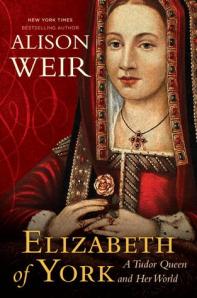
Elizabeth of York: A Tudor Queen and Her World by Alison Weir

Elizabeth of York Elizabeth of York’s story is a fascinating one. As the eldest daughter of King Edward IV and Elizabeth Woodville (the alternate spelling of Wydeville is used in this book), Elizabeth lived during one of the most turbulent periods of English history, the Wars of the Roses. She was the sister of the two young princes who it is believed may have been murdered in the Tower of London, she married the first Tudor king, Henry VII, who defeated her uncle Richard III at the Battle of Bosworth, and she was also mother to another king, Henry VIII. Despite all of this, Elizabeth is not usually given as much attention as other figures of the period. This new biography, Elizabeth of York: A Tudor Queen and Her World, explores Elizabeth’s life and her historical significance.

Alison Weir is an author of both historical fiction and non-fiction. Although I have read one of her novels, Innocent Traitor, this is the first of her biographies I’ve read and I was very impressed. The book is written in a style that I found engaging and easy to read but it’s also a very thorough, long and detailed account of Elizabeth’s life. An incredible amount of research must have gone into the writing of this book and it contains an absolute wealth of information…I read it on my Kindle and was constantly bookmarking interesting facts and passages.

As well as taking us, in chronological order, through Elizabeth’s entire life from her birth to her death and its aftermath, we are also given lots of details on the social history of the period and what life was like for people who lived during that time: what they ate and drank, the clothes they wore, and the way children were treated and expected to behave. There are lists of dishes served at banquets, descriptions of the duties of ladies-in-waiting and even an appendix giving a full description of every known portrait of Elizabeth. Sometimes there’s too much detail (I didn’t really feel the need to know the names of the nurses of each of Elizabeth’s younger sisters, for example, and the lists of her privy purse expenses and all the gifts she bought and received were a bit overwhelming) but it all helps to build up a full and vivid picture of Elizabeth’s world.

Less is known about Elizabeth than other Tudor figures, so there are times when the focus of the book switches to important political events, conspiracies and other things taking place in the wider world, rather than on Elizabeth herself. The only drawback here is that with so few primary sources remaining to give us information on Elizabeth’s life, Weir can only assume what Elizabeth may have thought or how she felt. This is not really the author’s fault but it would have been interesting to know Elizabeth’s true thoughts on some of these issues, such as the pretenders to the throne who appeared during Henry VII’s reign claiming to be Elizabeth’s lost brothers.

Much as I enjoyed this book, I did have a problem with the portrayal of Richard III. I was aware before I started reading that Alison Weir has a negative opinion of Richard and believes him guilty of all the crimes that he has been accused of, but I still thought there was too much speculation and personal bias in her discussions of him. In the absence of any real evidence, we are told that ‘maybe Elizabeth hated him’ and ‘maybe Cecily was furious with him’, for example. These are not really historical facts, are they? The opinions of other authors and historians who take a more sympathetic view of Richard are dismissed as ‘wishful theories evolved by revisionists’. Anyway, this is just a small criticism of what is otherwise a wonderfully entertaining and informative book. For anyone interested in learning more about this important but often forgotten Tudor queen and her world, I would highly recommend reading Elizabeth of York. It really is a fascinating period of history and Elizabeth deserves to be remembered!

I received a copy of this book for review via Netgalley.

Wars of the Roses: Stormbird by Conn Iggulden

Stormbird Despite my love of historical fiction, there is one very popular and successful historical fiction author I’ve been avoiding and that is Conn Iggulden. The reason I had been wary of trying one of his books is that they seemed to be marketed towards readers who enjoy books filled with non-stop action and battle scenes rather than the type of historical fiction I prefer, but when I had the opportunity to read Stormbird, the first in Iggulden’s new Wars of the Roses series, I decided to give him a chance and see what I had been missing out on.

Stormbird is set during the reign of Henry VI at the beginning of the series of fifteenth century conflicts which became known as the Wars of the Roses. Unlike his father – Henry V, the hero of Agincourt – Henry VI is a quiet, gentle man unable to give England the strong leadership it needs. He relies on men such as his spymaster, Derry Brewer (a fictional character), and William de la Pole, the Duke of Suffolk, to help him rule the country. In an attempt to keep peace with France, Suffolk negotiates a marriage between Henry and Margaret of Anjou, the French king’s niece, but as part of the deal the English must surrender some of their territories in France. Not surprisingly, this decision is very unpopular with the English public – and with another claimant to the throne, Richard, Duke of York, as one of his opponents, Henry’s crown could be under threat…

The Wars of the Roses is a time period I particularly enjoy reading about and am starting to have quite a good knowledge of, but my reading usually tends to focus on the later part of the period – the reigns of Edward IV and Richard III – so I liked the fact that this book, being the first in a series, concentrates on the earlier years and some of the people and events that I’m less familiar with (I enjoyed the sections of the book that followed Margaret of Anjou’s story, for example, though unfortunately we saw less and less of her as the book progressed). It’s really not necessary to know anything about the Wars of the Roses before starting this novel, though, and there are plenty of maps, family trees and character lists at the front of the book if you need some help.

My interest in the time period, however, was not enough for me to feel fully engaged with this novel and towards the end I was tempted to start skimming through the final chapters. As I suspected, this is a book aimed more at readers who prefer a very plot-driven novel with lots of fighting and descriptions of weapons and military tactics. It’s not badly written and I can definitely understand the appeal, but I was disappointed by the lack of period feel and strong, well-developed characters. In a book with such a lot of characters it’s important for each of them to be unique and memorable, but sadly there were only one or two here who really came to life for me and even with those few I found it difficult to form any kind of emotional connection. This was disappointing as there are so many fascinating historical figures associated with this period and I had been curious to see how Iggulden would portray them.

I didn’t like this book enough to want to continue with the next one in the series, but I’m sure it will be an enjoyable read for Iggulden’s fans and for readers whose tastes in historical fiction are not the same as mine. It did remind me, if I needed reminding, of how much I love reading about the Wars of the Roses and what an intriguing, turbulent period of history it was.

I received a copy of this book for review via Netgalley

The Master of Bruges by Terence Morgan

The Master of Bruges The Master of Bruges is presented as the fictional memoirs of the 15th century artist, Hans Memling. In December 1464, following the death of his master, the Flemish painter Rogier van der Weyden, Hans travels to Bruges where he works at the Burgundian court, painting portraits of the nobility. As an artist, Memling is naturally a very observant, perceptive person and can offer the reader some insights into both the politics of the period and the lives and personalities of the people he meets in Bruges.

One night two strangers calling themselves ‘Ned and Dick Plant’ come to seek refuge at Memling’s house and Hans finds himself drawn into the drama and intrigues of the Wars of the Roses, the conflict between England’s House of York and House of Lancaster. And when several years later he is invited to England and renews his acquaintance with Ned and Dick, he becomes caught up in one of history’s greatest mysteries: the disappearance of Edward IV’s sons, the Princes in the Tower, who many people believe were murdered by their uncle, Richard III.

Before reading this book I had heard of Hans Memling but was not familiar with his work. The only one of his paintings I knew anything about was his triptych The Last Judgment, which featured a portrait of the banker Tommaso Portinari being weighed in St Michael’s scales, and was captured by the Danzig pirate Pauel Benecke as it was being shipped to Italy. The only reason I was aware of this anecdote was because it formed a minor plot point in Dorothy Dunnett’s House of Niccolo series (specifically, in To Lie with Lions and Caprice and Rondo). Luckily, many of Memling’s paintings can be seen online and I can guarantee that you’ll want to look at them as you read. There are also some short chapters interspersed throughout the novel in which Hans shares with us his views regarding artistic technique, perspective, focus, colours, and some of the tricks artists use to please their sitters, and I enjoyed reading these. As well as being fascinating to read, these chapters are relevant to the story as Memling’s descriptions of his techniques are either directly or indirectly linked to aspects of the plot.

I thought the first part of the novel, which details Hans’ early days as an artist, worked very well but not the second part, after he travels to England. I was interested in learning about Hans and his portraits and I was also interested in the Richard III story – it was the way the two were combined that didn’t work for me. Despite the Wars of the Roses being one of my areas of interest in historical fiction, I think I would have liked this book more if it had continued to tell the story of Memling’s life in Bruges rather than changing focus halfway through to concentrate on the mystery of the Princes in the Tower.

I don’t expect historical novelists to always stick rigidly to the facts, otherwise they would be writing non-fiction rather than fiction, but this particular book stretches credibility too much for me. I appreciated the author’s note at the end of the book, but I wished it had given more information on exactly which aspects of the story were based on fact and which were fictional. As far as I can tell there is no evidence to suggest that Hans Memling ever came to England or had any involvement with the Plantagenets. I also found it hard to believe Morgan’s theories regarding what happened to the two princes (especially a plan of Edward IV’s to have them declared illegitimate), though they were certainly very imaginative ideas. I was happy enough with the characterisation of Richard III, though – he is one of my favourite historical figures and I am definitely of the opinion that he has been unfairly treated by history, so it was good to see him portrayed in a more positive light in this book.

Because of the problems I’ve noted above, I can’t say that I loved The Master of Bruges, but I’m glad I kept reading to the end as there were some big surprises within the final chapters. I think as long as readers are aware that this book does not always give an entirely historically accurate account of the period and that it sometimes takes a more speculative approach to what might possibly have happened, it can be enjoyed as something refreshingly different and fun.

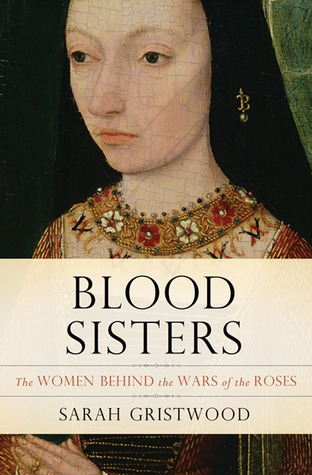
Blood Sisters: The Women Behind the Wars of the Roses by Sarah Gristwood

Blood Sisters Blood Sisters is a non-fiction book which looks at the lives of seven women who all played an important part in the period of history known as The Wars of the Roses or the Cousins’ War – the conflict between the House of York and the House of Lancaster, two branches of the English royal family. These seven women are listed below:

* Margaret of Anjou (Marguerite), Queen to Henry VI

* Cecily Neville, the mother of two Kings of England: Edward IV and Richard III

* Elizabeth Woodville, Queen to Edward IV and mother of the ‘Princes in the Tower’.

* Margaret of Burgundy, sister of Edward IV and Richard III and wife to the Duke of Burgundy.

* Anne Neville, wife of Richard III and daughter of the Earl of Warwick (the Kingmaker)

* Margaret Beaufort, mother of Henry Tudor (the future Henry VII).

* Elizabeth of York, Edward IV’s daughter and Henry VII’s wife.

Notice that I’ve defined these seven women by their relationships to the men, the Kings, and it would have been almost impossible not to do that, as their connections to the Plantagenet and Tudor Kings of England are the reasons they are still remembered today. But in this book, Sarah Gristwood shows that each of them also had an interesting story of her own and was historically important in her own right. Rather than devoting one section of the book to each woman and telling their stories separately, she weaves them together which makes sense considering that some of the women were related and several of them did meet or interact with the others in some way.

While Blood Sisters was very compelling and readable non-fiction, I have to admit I didn’t learn much that I didn’t already know about most of the women. The lives of Elizabeth Woodville and Margaret Beaufort were covered in another book I’ve read, The Women of the Cousins’ War, and a lot of the same information appears here too – though I suppose there’s a limit to how much information is actually available. Of the seven featured in this book, Margaret of Burgundy was the one I previously knew the least about and so I was particularly interested in reading about her.

As well as telling us about the major historical events of the period, Gristwood also gives us a lot of information to help us understand what daily life was like for these women: for example, records of household accounts, and descriptions of clothes worn at coronations or pageants and the dishes served at banquets. I also enjoyed reading about the disappearance of the Princes in the Tower and I appreciate the fact that Gristwood presented some of the different theories and possibilities rather than just blaming Richard III! A lot of attention is also given to the stories of the various Yorkist pretenders to the throne who caused so many problems for Henry VII during his reign, especially Perkin Warbeck, who claimed to be the younger son of Edward IV.

It’s frustrating that so much of the information we have about this period comes from the work of Thomas More and others who were writing during the Tudor period and so were likely to be biased, but Gristwood does take care to point out when something may not be completely accurate and when we need to use some caution. She explains which of her sources may have been unreliable or may have had their own reasons for wanting to portray a person or event in a certain way.

I would recommend Blood Sisters to anyone interested in learning more about this period from a female perspective and it’s also an ideal book for readers like myself who don’t often read non-fiction but want to build on the knowledge they’ve already gained through reading historical fiction.

I received a copy of this book for review via Netgalley

Truth is the daughter of time…

Richard III
I couldn’t let today pass without mentioning the exciting news that was announced this morning: A skeleton discovered by archaeologists in Leicester has been identified as Richard III, the last Plantagenet king of England who was killed at the Battle of Bosworth in 1485.

As followers of my blog will probably know, Richard III is one of my favourite historical figures and the Wars of the Roses is one of the periods of history I’m most interested in, so I’ve been anxiously awaiting this announcement for months! For those of you in the UK there’s a documentary on Channel 4 tonight at 9pm, The King in the Car Park, which will reveal the details of the archaeological dig and the scientific tests that were carried out on the skeleton. And in honour of today’s news, I have put together a list of the books (both fiction and non-fiction) that I’ve read over the last few years on the subject of Richard III or the Wars of the Roses in general.

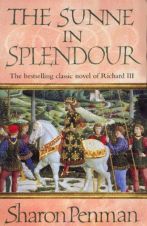
The Sunne in Splendour

The Sunne in Splendour by Sharon Penman

This is one of my favourite historical fiction novels and the best book I’ve read on Richard III. Don’t let the length put you off! Penman does a great job of making a complicated period of history easy to understand as she tells the story of Richard’s life from childhood to his tragic death.

The Daughter of Time

The Daughter of Time by Josephine Tey

Published in the 1950s, this is the story of Inspector Alan Grant who in hospital with a broken leg and decides to investigate Richard III and his alleged crimes from his hospital bed. Reading everything he can find about Richard and the disappearances of the Princes in the Tower, Grant begins to discover that historical sources can’t always be trusted and that history is written by the victors.

Treason

Treason by Meredith Whitford

Like The Sunne in Splendour, this novel also covers Richard III’s life but from the perspective of his cousin Martin Robsart, a fictitious character. I loved this book – it was well-researched, the characters were believable and I could even follow the battle scenes!

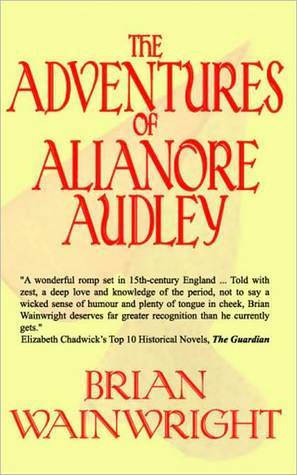
The Adventures of Alianore Audley

The Adventures of Alianore Audley by Brian Wainwright

A parody of the historical novel, this book takes a humorous look at the Wars of the Roses through the eyes of 15th century ‘damosel’, spy and knight’s lady Alianore Audley. Some familiarity with the period is needed to fully understand all the jokes and get the most out of this book.

Review: The White Queen by Philippa Gregory

The Cousins’ War series by Philippa Gregory

I wasn’t a fan of Philippa Gregory’s Tudor court novels but have been following her Cousins’ War series from the beginning because I find this period of history so much more interesting. There are four books in the series so far and each one focuses on a different female historical figure: The White Queen (Elizabeth Woodville), The Red Queen (Margaret Beaufort), The Lady of the Rivers (Jacquetta of Luxembourg) and The Kingmaker’s Daughter (Anne Neville).

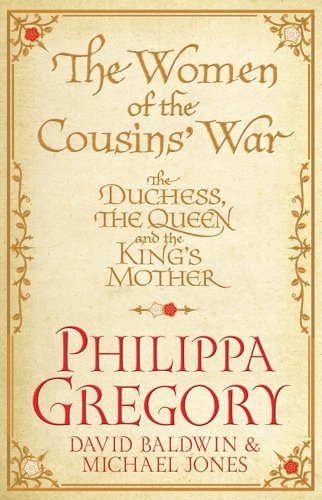
The Women of the Cousins War

The Women of the Cousins’ War: The Duchess, the Queen and the King’s Mother

A non-fiction companion book to the Cousins’ War series mentioned above. The book contains three essays – one by Philippa Gregory on Jacquetta of Luxembourg, another by David Baldwin on Elizabeth Woodville and the final one by Michael Jones on Margaret Beaufort.

Blood Sisters

Blood Sisters by Sarah Gristwood

I read this book in January and will be posting my review soon. Like The Women of the Cousins’ War this is another non-fiction book that looks at the period from a female perspective.

A Secret Alchemy

A Secret Alchemy by Emma Darwin

A present day historian, Una Pryor, researches the lives of Elizabeth Woodville, wife of King Edward IV, and her brother Anthony, and begins to investigate the mystery of the Princes in the Tower. No review link for this one as I found it difficult to get into and didn’t finish reading it.

This is far from being a comprehensive list as this is a relatively new interest of mine and I have only featured here the titles I’ve read or have attempted to read – there are a lot of other books on the Wars of the Roses and Richard III that I’m looking forward to reading.

Please feel free to recommend your favourites!