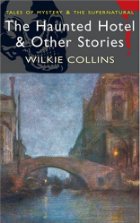
Review: The Haunted Hotel & Other Stories by Wilkie Collins

Time for one more review before the RIP challenge ends!

Having read so many of Wilkie Collins’ books and loving them all, I’m starting to worry now whenever I pick up one that I haven’t read yet, in case that’s going to be the one that disappoints me. Luckily it wasn’t this one! This collection published by Wordsworth Editions includes the novella The Haunted Hotel and eight other short stories, all with a ghostly, spooky or supernatural theme.

Part ghost story and part gothic mystery, The Haunted Hotel begins in London but soon moves to Venice, an atmospheric setting complete with dark canals and ancient palaces. At the heart of the story is the mysterious Countess Narona, who marries Lord Montbarry after he breaks off his engagement to Agnes Lockwood. When Montbarry dies in Venice soon after insuring his life for ten thousand pounds, rumours abound that the Countess may have had something to do with his death.

While I enjoyed The Haunted Hotel, I wouldn’t class it among Collins’ best work and the shortness of the story means the characters aren’t as well developed. I did love the second half of the story in which the palace where Montbarry died is converted into a hotel. There’s a very creepy sequence of events where each member of the Montbarry family who stays in the hotel feels a ghostly influence that manifests itself in a different way to each person.

You can buy The Haunted Hotel on its own, but I recommend looking for this edition because the additional short stories are well worth reading too. In every story, Collins gradually builds the suspense and draws the reader into the story. One of my favourites was Miss Jeromette and the Clergyman, a short ghost story in which the ghostly happenings are accompanied by mysterious clouds of white fog. I loved the way even though the story was quite predictable, it was still a pageturner. The same can be said about Nine O’Clock, in which a man condemned to death during the French Revolution tells his friend about a family curse. We know almost from the beginning what will happen, but the story still manages to be suspenseful.

Another favourite was A Terribly Strange Bed, an Edgar Allan Poe-like tale which creates a feeling of claustrophobia and terror as the narrator finds himself trapped in a room with a very unusual bed. Another story on a similar theme is The Dead Hand, in which a man attempts to find a room at an inn for the night, but finds that everywhere is full. When he’s eventually offered a bed in a double room, he makes a surprising discovery about the stranger who’s occupying the other bed.

I also enjoyed the final story in the book, The Devil’s Spectacles, which is about a man who is given a pair of spectacles that allow him to see the true thoughts and feelings of anyone he looks at.

I don’t generally like reading short story collections straight through from beginning to end, but I didn’t have a problem with this book. There are only eight stories (plus The Haunted Hotel) and most of them are less than twenty pages long. This was a perfect book to read in the week before Halloween.

Review: Poor Miss Finch by Wilkie Collins

You are here invited to read the story of an Event which occurred in an out-of-the-way corner of England, some years since.
The persons principally concerned in the Event are: – a blind girl; two (twin) brothers; a skilled surgeon; and a curious foreign woman. I am the curious foreign woman. And I take it on myself – for reasons which will presently appear – to tell the story.

Having read all four of Wilkie Collins’ best known books in my pre-blogging days (The Woman in White, Armadale, No Name and The Moonstone), I am now exploring his less popular novels. I recently reviewed Basil and A Rogue’s Life, two of his earlier books from the 1850s. This one, Poor Miss Finch, was published in 1872 and unlike most of the books that preceded it, is not really a ‘sensation novel’, although it does have certain sensational elements (mysterious strangers, theft, assault, letters being intercepted, mistaken identities etc). What it is is an interesting study into what it’s like to be blind since infancy and the emotions a person experiences on learning that there may be a chance of regaining their sight.

The story is told by a Frenchwoman called Madame Pratolungo, the widow of a South American political activist, who has just arrived in the village of Dimchurch in England to take up a position as companion to Lucilla Finch. Lucilla has been blind since she was a child and her blindness has led to a strange phenomenon – she has developed an irrational fear of darkness and dark colours. Even knowing that someone is wearing a dark purple dress, for example, sends her into a panic.

Oscar Dubourg and his twin brother Nugent are newcomers to Dimchurch. Soon after their arrival, Oscar suffers a fit and learns that he has epilepsy. In the 19th century a common cure for epilepsy was to take nitrate of silver. Unfortunately, a side effect of nitrate of silver consumption is that the skin turns blue. When Oscar and Lucilla fall in love, Oscar feels secure in the knowledge that Lucilla will never be able to see him and need never be told that his face is dark blue. However, when Nugent introduces them to the German oculist Herr Grosse, it appears that there could still be hope for Lucilla after all.

This book handles the topic of blindness in a sensitive and intriguing way. It’s obvious that Collins had done a lot of research into the subject and the results are fascinating. He discusses the theory that when a person is blind their other senses improve to compensate for their lack of sight and he weighs up the advantages and disadvantages there would be if this person then regained their sight. I had never even thought about some of the aspects of blindness that are mentioned in the book. For example, there’s an interesting moment when Madame Pratolungo realises why Lucilla shows little regard for normal Victorian conventions and proprieties.

What did it mean?
It meant that here was one strange side shown to me of the terrible affliction that darkened her life. It meant that modesty is essentially the growth of our own consciousness of the eyes of others judging us – and that blindness is never bashful, for the one simple reason that blindness cannot see.

The characters, as usual, are wonderful – most of them anyway. I didn’t find Lucilla very likeable (she has a tendency to throw foot-stamping tantrums when she doesn’t get her own way) but I loved Madame Pratolungo – she was such an amusing and engaging narrator!

I cast all feminine restraints to the winds. I sat down with my legs anyhow, like a man. I rammed my hands into the pockets of my dressing-gown. Did I cry? A word in your ear – and let it go no farther. I swore.

We also meet Reverend Finch, Lucilla’s father, who chooses to recite Hamlet at the most inappropriate moments, and his wife, Mrs Finch, who is ‘never completely dressed; never completely dry; always with a baby in one hand and a novel in the other’. With Lucilla’s little half-sister Jicks’, Collins even makes a three year old girl into an unusual and memorable character:

This amazing apparition advanced into the middle of the room, holding hugged under one arm a ragged and disreputable-looking doll; stared hard, first at Oscar, then at me; advanced to my knees; laid the disreputable doll on my lap; and, pointing to a vacant chair at my side, claimed the rights of hospitality in these words:
“Jicks will sit down.”

Although I thought parts of the plot felt contrived, the story did become very gripping towards the end. This was an interesting and thought provoking read, and if you have enjoyed any other Wilkie Collins books, then I suspect you might enjoy this one too.

Recommended

Review: A Rogue’s Life by Wilkie Collins

Frank Softly is a Rogue. Refusing to follow in his father’s footsteps and become a doctor, he has tried out a number of different careers since leaving school – and failed at them all. However, he remains optimistic and sees each failure as an opportunity to make a fresh start. Even when he is sent to a debtors’ prison he simply asks himself, “What of that? Who am I that I should object to being in prison, when so many of the royal personages and illustrious characters of history have been there before me?”

While working as a forger of old paintings, Frank meets Alicia Dulcifer in an art gallery and immediately falls in love. Unfortunately even this relationship seems likely to fail, because Alicia is the daughter of the sinister Dr. Dulcifer – a man who lives in a house with bars on the windows, never receives visitors and conducts mysterious experiments in his laboratory. Frank becomes determined to discover Dr. Dulcifer’s secret, at all costs.

As in many Victorian novels, there’s also an inheritance involved: Frank’s sister Annabella will only receive her three thousand pounds if Frank outlives their grandmother Lady Malkinshaw. This leads to some amusing situations as Annabella’s greedy husband desperately tries to prevent Frank from dying!

This was one of Wilkie Collins’ first books to be published (in 1856) and I could tell it was the work of a young, inexperienced writer – the plot was less developed than in his later books and the characters (apart from the Rogue himself) were less memorable. However, his enthusiasm shines through on every page, making this a fun, light-hearted read – but with plenty of suspense and excitement too. Although Frank Softly is dishonest, irresponsible, reckless – and definitely a rogue – he tells his story with so much humour and energy that you can’t help liking him.

Rather changeable this life of mine, was it not? Before I was twenty-five years of age, I had tried doctoring, caricaturing, portrait-painting, old picture-making, and Institution-managing…Surely, Shakespeare must have had me prophetically in his eye, when he wrote about ‘one man in his time playing many parts’. What a character I should have made for him, if he had only been alive now!

While I don’t think I would recommend this as a first introduction to his work, if you have enjoyed any of Collins’ other books there’s no reason why you shouldn’t enjoy this one too. And the short length of this book – only 150 pages – makes it a quick, fast-paced read, so anyone who has had trouble getting into one of his longer novels may find this one easier to read.

I’m going to leave you with Wilkie’s own thoughts on this novel, taken from the author’s preface:

The Rogue may surely claim two merits, at least, in the eyes of the new generation – he is never serious for two moments together; and ‘he doesn’t take long to read’.

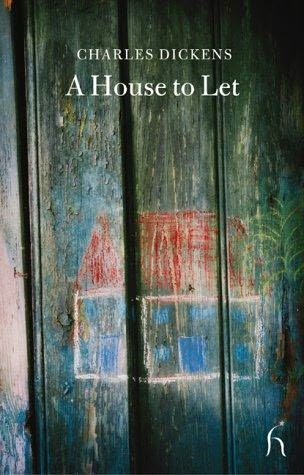
Review: A House to Let by Charles Dickens, Wilkie Collins, Elizabeth Gaskell and Adelaide Anne Procter

A House to Let, at less than 100 pages, is a collaboration between four 19th century authors which originally appeared as the Christmas edition of Charles Dickens’ weekly magazine, Household Words, in 1858.

The book is divided into six sections; the first, Over the Way, and the sixth, Let at Last, are joint efforts by Charles Dickens and Wilkie Collins, and provide the framework for the story. The other four sections are individual contributions from Elizabeth Gaskell, Charles Dickens, Adelaide Anne Procter and Wilkie Collins, in that order.

Over the Way introduces us to Sophonisba, an elderly woman who has never married but has two men vying for her attentions – one is her old admirer Jabez Jarber; the other is her servant, Trottle. When Sophonisba’s doctor advises a change of air and scene, she leaves her home in Tunbridge Wells and moves into new lodgings in London, where she immediately becomes obsessed with the house opposite – a house which has been vacant for many years and is permanently ‘to let’. Determined to discover why the house has remained empty for so long – and convinced she has seen an eye staring out from one of the windows – she asks Jarber and Trottle to investigate.

Over the Way and Let at Last are credited to both Dickens and Collins, but there’s no way to tell exactly which parts were contributed by which writer. The other four chapters, though, are each written in the distinctive style of their respective authors and each tell the story of a previous occupant of the house to let.

The chapter I liked the least was actually the one written solely by Dickens, Going Into Society. The story of a showman and a circus dwarf called Mr Chops, it was just too weird for me and was also quite difficult to read as it was written in dialect. It’s probably significant that I found the two Dickens/Collins collaborations much easier to read than this solo effort, as I’ve always thought Collins was a lot more readable than Dickens.

Three Evenings in the House, the contribution by Adelaide Anne Procter, whose work I was previously unfamiliar with, is in the form of a narrative poem. I’m not a big lover of poetry but luckily for me this was only thirteen pages long and quite easy to understand. Other than providing some variety though, I don’t think this chapter really added much to the story.

The Manchester Marriage
by Elizabeth Gaskell stands out as an excellent piece of writing: a tragic story of Alice Wilson, who is widowed when her husband is lost at sea. After marrying again, she and her new husband move into the house to let where further tragedy awaits them. This is good enough to work as a stand-alone short story (and according to the Biographical Notes, it was actually published separately in its own right). This and the Wilkie Collins contribution, Trottle’s Report, were my favourite chapters. Trottle’s Report is a typical Collins story, with unusual, quirky characters, a mysterious secret, and a slightly dark and gothic feel.

After exploring the histories of the various tenants of the house, the mystery is finally solved in the final chapter, Let at Last, which neatly ties up all the loose ends of the story.

If you like any of these four authors or Victorian fiction in general, then A House to Let is definitely worth reading. It also provides a good introduction to Dickens, Collins, Procter and Gaskell without having to commit yourself to one of their longer works.

Classics/Pages: 97/Publisher: Hesperus Press/Year: 2004 (originally published 1858)/Source: Library book

Review: Basil by Wilkie Collins

In 19th century literature, a man can approach a girl’s father, ask for permission to marry her and be given that permission, all without the girl having any say in the matter whatsoever. Sometimes the potential husband has only actually spoken to the girl once or twice; sometimes not at all – and they certainly haven’t had time to get to know each other properly. Basil by Wilkie Collins is a good example of why these arrangements were often doomed to failure and caused unhappiness both for the husband and the wife.

Our narrator, the Basil of the title, is the son of a rich gentleman who is proud of his family’s ancient background and despises anyone of a lower social standing. When Basil meets Margaret Sherwin on a London omnibus he falls in love at first sight and becomes determined to marry her. Unfortunately Margaret is the daughter of a linen-draper, the class of person Basil’s father disapproves of most of all, so he decides not to tell his family about her just yet.

Mr Sherwin agrees to Basil marrying Margaret – but he insists that the wedding must take place immediately and that Basil must then keep the marriage secret for a whole year, not even seeing his wife unless Mr or Mrs Sherwin are present. This unusual suggestion should have told Basil that something suspicious was going on but he’s so blinded by love that he doesn’t care – until it’s too late…

Basil was one of Collins’ earliest novels and it shows, as it’s just not as good as his more famous books such as The Woman in White. The story took such a long time to really get started, with Basil introducing us to the members of his family, giving us every tiny detail of their appearance, personality and background. The second half of the book was much more enjoyable, filled with action, suspense and all the elements of a typical sensation novel including death, betrayal and adultery (Victorian readers apparently found the adultery scenes particularly shocking). There are lots of thunderstorms, people fainting and swooning, fights in the street, and everything you would expect from a Victorian melodrama.

All of Collins’ books are filled with strong, memorable characters and this was no exception. There’s Basil’s lively, carefree brother Ralph, his gentle, kind hearted sister Clara, the poor, frail Mrs Sherwin and the sinister Mr Mannion. However, I thought the overall writing style of this book was slightly different to what I’ve been used to in his later books – although I can’t put my finger on exactly what the difference was. This is not a must-read book but if you like the sensation novel genre, you’ll probably enjoy this one.

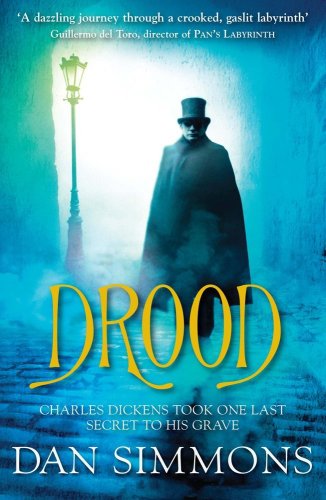
Review: Drood by Dan Simmons

I think I liked the idea of this book more than the book itself. A gothic mystery/horror story set in Victorian London, featuring Charles Dickens and narrated by Wilkie Collins sounded like exactly the kind of book I would enjoy. Unfortunately it didn’t quite live up to its fascinating premise and I was left with mixed feelings about it.

Drood is told in the form of a memoir written by Wilkie Collins (a close friend and collaborator of Charles Dickens, as well as being the author of The Woman in White, The Moonstone and many other novels and plays) and addressed to an unknown reader in the future – that is, to us.

The story begins with the Staplehurst Rail Disaster of 1865, when the train on which Charles Dickens is travelling crashes, sending most of the carriages plummeting over a viaduct into the riverbed below. Luckily Dickens is in one of the few carriages that doesn’t fall. As he helps to rescue people from the wreckage, he encounters a mysterious figure dressed in a black cape who introduces himself only as ‘Drood’. In the days following the train crash, Dickens becomes obsessed with finding Drood and discovering his true identity. With the reluctant help of Wilkie Collins, Dickens begins a search for Drood which leads them through the dark alleys and underground catacombs of London.

Interspersed with the Drood storyline are long passages in which we learn about the family life and living arrangements of both Dickens and Collins, how much they earned for their various novels, their walking tour of Cumberland in 1857, the details of Wilkie’s laudanum addiction, the story of the Swiss chalet given to Dickens by his friend Charles Fechter, Dickens’ interest in mesmerism and every other piece of biographical information you could possibly want to know. Simmons also incorporates some genuine historical letters and quotes which adds some authenticity to the book. I can see why some readers might find this boring, but I enjoyed these sections – I thought the descriptions of Dickens’ reading tours were particularly fascinating.

Simmons has attempted to imitate Wilkie Collins’ narrative style (including the Victorian habit of talking directly to the reader) but I felt that he didn’t get it quite right. He also uses a lot of words and phrases that just sound either too modern or too American to me (the real Collins or Dickens would have walked on the pavement rather than the sidewalk, for example). This is only a small complaint though, as overall, Dear Reader, I thought his style was quite convincing.

I do like the way the book takes us through the process of researching and writing The Moonstone. However, some important plot points are given away so if you haven’t already read The Moonstone and think you might want to, then I would suggest you read it before you begin Drood. It might also be a good idea to read The Mystery of Edwin Drood first (I didn’t and kept wishing I had). Another thing I liked about the book was the way Simmons deliberately tries to confuse and mislead the reader – at several points in the novel we are made to wonder whether something we’ve just read is real or an illusion.

This journey through the cemeteries, opium dens and underground sewers of London is a good atmospheric read for a cold dark night, but I was slightly disappointed by it and despite reading all 775 pages I still can’t decide whether I enjoyed it or not! However, it will almost certainly leave you wanting to learn more about Dickens and Collins and their works, which can only be a good thing. If you like this type of book I would also recommend The Quincunx by Charles Palliser – another book set in Victorian England and written in a 19th century style.

Before I come to the end of this review I would just like to say a few words in defence of poor Wilkie Collins, who happens to be one of my favourite authors. Simmons clearly doesn’t rate Wilkie as a writer (I saw an interview where he described him as ‘mediocre’) and in Drood, the character is portrayed as a not very talented, second-rate author who is consumed with jealousy of the more successful Dickens and becomes increasingly bitter and unlikeable as the book goes on. I admit I’m biased because I’ve absolutely loved every Wilkie Collins book I’ve read; he was a much better writer than Drood suggests and definitely not mediocre, at least in my opinion!

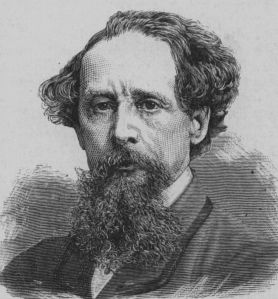
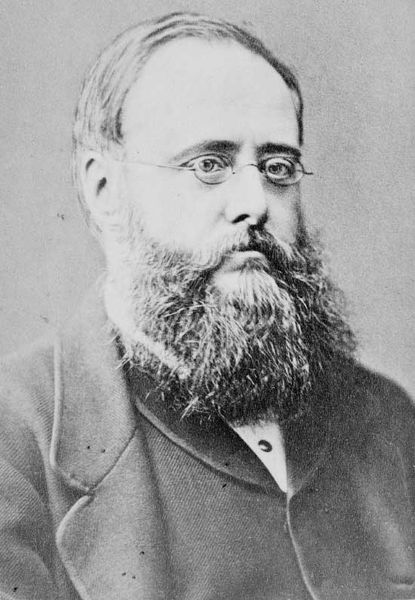
*Pictures of Charles Dickens (top) and Wilkie Collins (bottom) both in the public domain

Genre: Historical Fiction/Horror/Pages: 775/Publisher: Quercus Fiction/Year: 2009/Source: My own copy bought new

Fiendish Fridays #1: Count Fosco

Fiendish Fridays is hosted here at She Reads Novels, profiling some of our favourite literary villains. You can see a complete list of previous Fiends and suggest one of your own here.

#1 – Friday 22 January 2010: Count Fosco

Name: Count Isodor Ottavio Baldassare Fosco

Appears in: The Woman in White by Wilkie Collins

Who is he? Count Fosco is an Italian friend of Sir Percival Glyde, a baronet who marries Laura Fairlie.

What is he like? He’s old and very fat with a fondness for wearing brightly coloured waistcoats and playing the concertina. Doesn’t sound like a typical villain, does he?

What makes him a Friday Fiend? Although Sir Percival is the nastier of the two and initially appears the more villainous, it quickly becomes obvious that Fosco is more dangerous due to his intelligence, charm and ability to fool people (even Laura’s half-sister Marian Halcombe originally admits to liking him, though her opinion changes drastically later on). Fosco is the brains behind the scheme to steal Laura’s identity and gain her inheritance.

Redeeming features: He shows tenderness towards his pet mice and birds, and admiration for Marian Halcombe (although this unfortunately doesn’t stop him trying to destroy her sister’s life!)