The Fox Wife by Yangsze Choo

The famous scholar Ji Yun, who was obsessed with foxes, said: Humans and things are different species, and foxes lie between humans and things; darkness and light take different paths, and foxes lie in between darkness and light.

Like Yangsze Choo’s previous two novels, The Ghost Bride and The Night Tiger, The Fox Wife is a fascinating blend of history, fantasy and folklore. It takes as its premise the idea that fox spirits, who play a large role in Chinese and Japanese mythology, really exist and can take on the appearance of human beings.

Beginning in Manchuria in the winter of 1908, one thread of the novel follows Bao, an elderly private detective who has been called in to investigate the death of a young woman. The woman’s body was found frozen in the doorway of a restaurant and people are already starting to whisper that she was lured to her death by foxes. Ever since he visited a shrine to a fox god as a child, Bao has been blessed, or maybe cursed, with the ability to detect truth from lies. Now, he hopes he can use that gift to find out what happened to the woman found dead in the cold.

In chapters that alternate with Bao’s, we meet Snow, or Ah San, a white fox spirit who is searching for the man she blames for the death of her daughter two years earlier. Snow has taken the form of a human woman and joined the household of a Chinese medicine seller. In her position as maid, she is able to accompany the family on a trip to Japan where she hopes for an opportunity to take her revenge.

At first, the two threads of the novel are very separate; Bao’s story is written in the third person and focuses on his investigations, with some flashbacks to his childhood; Snow’s narrative is in first person, giving it a more intimate feel. Eventually, their paths begin to converge, producing some interesting plot twists and revelations. We also find that there’s not just one fox in this story, but who are the others and what is their relationship with Snow? It takes a long time for everything to unfold and for a while in the middle of the book I thought it was starting to drag, but the pace does pick up again towards the end.

My knowledge of Chinese folklore is sadly very limited, so I enjoyed learning more about the significance of fox spirits, their characteristics and powers, and some of the myths and folktales that have been told about them. With the novel being set partly in Japan as well as in China, we also see how similar myths and legends about foxes cross over into Japanese culture. It’s all very fascinating, and whenever my attention was starting to wane due to the slow, meandering plot, there would be another passage about foxes that would grab my interest again.

I had mixed feelings about The Fox Wife, then, but I’m pleased to have had the opportunity to learn something new! It’s definitely worth considering this one – and Yangsze Choo’s others – if you have any interest in Chinese myth.

Thanks to Quercus Books for providing a copy of this book for review via NetGalley.

Book 6/50 for the Historical Fiction Reading Challenge 2024
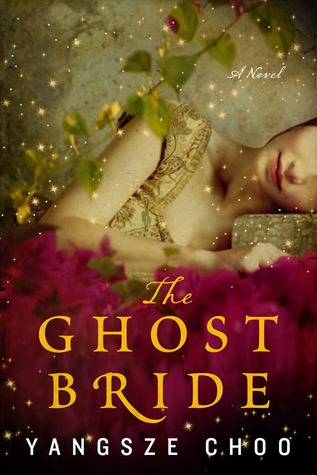
The Ghost Bride by Yangsze Choo

I originally intended to read The Ghost Bride for this year’s RIP challenge but ran out of time. I then thought it might be suitable for Chris and Lizzie’s Witch Week earlier this month (it seemed to fit their theme of Polychromancy – fantasy/sci-fi by authors from diverse backgrounds) but I didn’t finish it in time for that either. Never mind – I’ve read it now and enjoyed it, although it wasn’t really what I’d expected. Having previously read Yangsze Choo’s other novel, The Night Tiger, a story steeped in Chinese and Malaysian folklore but with only a small amount of magical realism, I had thought this book would be similar. However, I discovered that this one has a much stronger fantasy element.

The Ghost Bride is narrated by seventeen-year-old Li Lan, a young Chinese woman who lives with her opium-addicted father and her beloved amah (nursemaid) in 1890s Malacca, a city in what was then known as Malaya. The time has come for Li Lan to marry, but her father has fallen into financial difficulties and her options are limited. When she receives an offer from the wealthy Lim family to become the wife of their son, Lim Tian Ching, this should have been a wonderful opportunity for Li Lan, but instead she is horrified – because Lim Tian Ching is dead. This arrangement would provide financial security and comfort for Li Lan, but it would mean living the rest of her life as a widow.

Li Lan vows to resist the attempts of the Lim family to turn her into a ‘ghost bride’, but Lim Tian Ching has other ideas and begins to visit her in her dreams every night, claiming that he was murdered by his cousin, Tian Bai. Li Lan wants nothing to do with the whole situation, but when her soul becomes separated from her body during an illness, she finds herself thrust into the afterlife. In this world populated with ghosts and spirits, she must try to discover the truth about Lim Tian Ching’s death if she wants to have any chance of returning to her body and living in peace.

As you can probably tell, this is a book with a very strange plot – I’ve never read anything quite like it! It’s definitely not my usual sort of read and as I’ve said, I was expecting something more like The Night Tiger – historical fiction with just a little bit of fantasy. Instead, I found I was reading a book set almost entirely in the Chinese underworld, complete with dragons and ‘ox-headed demons’. It was interesting, though, and Yangsze Choo’s worldbuilding is excellent. I was fascinated by the way she incorporates the Chinese custom of burning ‘funeral money’ as offerings for the dead into the plot, with the paper money burnt in the real world corresponding to the appearance of paper houses, paper animals and even puppet-like paper servants in the afterlife.

Although a lot of time is spent on describing the bureaucracy of the world in which Li Lan finds herself, the court cases that take place in the Plains of the Dead and the ways in which the souls of the recently deceased are judged, the focus is always on Li Lan’s personal story and the people she meets in the underworld who can help her with her task. There’s even a touch of romance, although Li Lan’s love interest is certainly not Lim Tian Ching, whom she despises from the beginning. I won’t tell you who he is, but he ended up being my favourite character.

I felt that this book was longer than it really needed to be and some of Li Lan’s adventures in the Plains of the Dead were too drawn out, but overall I found The Ghost Bride an unusual and intriguing novel which has left me wanting to know more about the Chinese afterlife!

The Night Tiger by Yangsze Choo

First of all, this is a quick note to say that I am moving house this week so won’t have much time for blogging for a while – there are just so many other things that need to be done! I have prepared and scheduled some posts in advance, so you probably won’t notice any difference, but I might be slow to respond to comments or to catch up with commenting on your blogs. I’m hoping to get settled in quickly so that things can get back to normal, but meanwhile here is my review of one of last month’s reads, The Night Tiger.

***

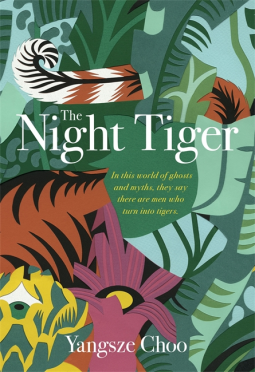
The Night Tiger was a surprise. I had been drawn to it mainly by the colourful cover and the fact that it was set in Malaya (now part of Malaysia), a country I know very little about, but I didn’t really expect to like it very much. I hadn’t read Yangsze Choo’s first novel, The Ghost Bride, because the subject didn’t appeal to me, and it sounded as though this book, like that one, would have a very strong magical realism element – and I’m not much of a fan of magical realism. Well, I was wrong about that; although there are times when the story does veer towards the fantastical, most of it is concerned with simply describing the folklore and superstitions of the Chinese people of Malaya and asking us to accept that some of these things may actually be real.

The story is set in the 1930s and is told from two different perspectives. First there’s Ren, an eleven year-old houseboy whose master, Dr MacFarlane, has recently died. While on his deathbed, the doctor asked Ren to carry out a very special task for him: to find his severed finger and bury it in his grave beside his dead body. This must be done within forty-nine days, otherwise Dr MacFarlane’s soul will be condemned to roam the earth forever. In need of new employment, Ren enters the service of another doctor, William Acton, then begins his quest to locate the missing finger.

Our other main character is Ji Lin, a dressmaker’s apprentice who has been secretly working in a dance hall in Ipoh to earn the money to pay off her mother’s gambling debts. While dancing with a salesman one night, she sees a little glass bottle fall from his pocket and, catching it before it hits the ground, she finds that it contains a shrivelled finger. This gruesome discovery leads Ji Lin to cross paths with Ren and when they each begin to have recurring dreams involving a train journey, it seems that their lives are becoming intertwined in other ways as well.

I enjoyed The Night Tiger much more than I thought I would. The setting is fascinating, of course; I have read two other books set in Malaya (The Garden of Evening Mists by Tan Twan Eng and The Separation by Dinah Jefferies) but they are very different types of books and don’t explore Chinese and Malaysian myths and legends the way this one does. The folklore surrounding the legend of the weretiger was particularly intriguing; there are hints that one could be responsible for the unexplained deaths that have been occurring around the town, and we can either believe that this is true or we can just believe that the characters in the story believe it is true, if that makes sense!

Both main viewpoint characters are easy to like; I felt closer to Ji Lin, because her story is told in the first person whereas Ren’s is told in the third, but I did love Ren too. He often seems very mature for his age – probably because he has been forced to grow up quickly due to his personal circumstances – but at other times he behaves more like the child he still is.

I’m still not sure whether I want to read The Ghost Bride, but I will look out for Yangsze Choo’s next book and see if it appeals.

Thanks to Quercus Books for providing a copy of this book for review via NetGalley.