Goodbye to January

January

It’s been such a long time since I last posted an end-of-month reading summary! I didn’t bother with them last year or the year before, but now I’ve decided that I miss having a place to reflect on what I’ve read, am reading and am about to read.
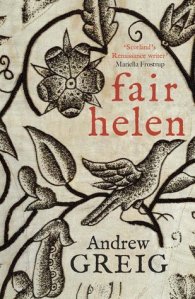
Fair Helen January has been a good month for me in terms of number of books read, as the cold weather and dark nights mean more time spent inside reading. At a quick glance, my month has been dominated by historical fiction (I’ve made a great start to the Historical Fiction challenge) but the books I’ve read within that genre have been quite diverse. Two of them were for my Reading the Walter Scott Prize project, coincidentally both by Andrews. Andrew Greig’s Fair Helen was a beautifully written novel set in Scotland and based on a Border Ballad, while Andrew Miller’s Pure was the story of the destruction of a Parisian cemetery in the 18th century.

I also read The King’s Curse by Philippa Gregory which I found to be one of the best of her Cousins’ War series. It’s actually more of a Tudor novel than a ‘cousins’ war’ one, but that’s fine as it got me into the mood for the BBC’s excellent new adaptation of Wolf Hall. Has anyone else been watching it? What do you think?

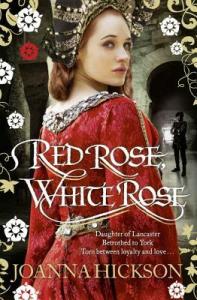
Going back to the early days of the cousins’ war, or Wars of the Roses as we more commonly call it these days, I read Red Rose, White Rose by Joanna Hickson. I’d been hesitant about reading it as I wasn’t particularly impressed by her earlier novel, The Agincourt Bride, but I was pleasantly surprised by how good this one was.

I was pleased to finally read two books I’ve been meaning to read for years: The Book Thief by Markus Zusak and The Crimson Petal and the White by Michel Faber. I loved the latter but was slightly disappointed with the former – the story was great but I didn’t like the writing style.
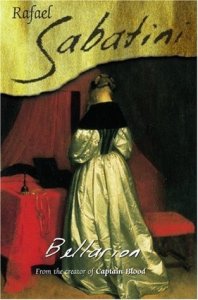
BellarionI read two books from my Classics Club list in January as well. The first was Bellarion by Rafael Sabatini, which I enjoyed – not surprisingly, as Sabatini is quickly becoming a favourite author. The other was one of the Charles Dickens novels on my list, David Copperfield. I’ve just finished, so my thoughts will be coming soon.

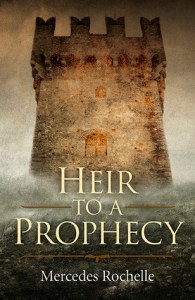
After reading Kate Atkinson’s Case Histories just before the New Year, I couldn’t wait to read the next in the series, so went straight on to One Good Turn. I loved it and am looking forward to reading the rest of the Jackson Brodie series. I also read The Glassblower of Murano by Marina Fiorato, a dual timeline novel set in Venice. And I reviewed Mercedes Rochelle’s Shakespeare-inspired Heir to a Prophecy for Issue 4 of Shiny New Books.

Mary of CarisbrookeI’ve been making an effort to write about every book I read within a few days of finishing, but I haven’t quite managed it. As well as David Copperfield, there are a few others that I finished towards the end of the month and haven’t had time to review yet. First there was Mary of Carisbrooke, a novel set on the Isle of Wight during the English Civil War, the first book I’ve read by Margaret Campbell Barnes. Then I read Georgette Heyer’s The Quiet Gentleman, which I think might be one of my favourite Heyer novels so far. And finally, I read one of Sarah Dunant’s Italian Renaissance novels, The Birth of Venus, and a historical mystery by Andrew Taylor called The Silent Boy. I’ll be posting my thoughts on all of these books as soon as I can!

Also in January, I brought back my Remember These series, with a selection of books beginning with F and G and I added two new pages to My Journey Through TimeThe Plantagenets and The English Civil War.

As February begins I am reading The Vanishing Witch by Karen Maitland and M.M. Kaye’s Death in Kashmir. I don’t have any plans for the rest of the month as I’m enjoying just reading whatever I want to read!

What about you? Did you have a good start to the year?

The Crimson Petal and the White by Michel Faber

The Crimson Petal and the White “Watch your step. Keep your wits about you; you will need them. This city I am bringing you to is vast and intricate, and you have not been here before. You may imagine, from other stories you’ve read, that you know it well, but those stories flattered you, welcoming you as a friend, treating you as if you belonged. The truth is that you are an alien from another time and place altogether.”

With these words the unnamed narrator of The Crimson Petal and the White takes us by the hand and leads us on a journey into the depths of Victorian London where we meet a cast of fascinating, diverse characters from all levels of society. One of these is Sugar, a nineteen-year-old prostitute who is writing a novel in her spare time and is prepared to do whatever it takes to improve her situation in life. Another is William Rackham, heir to a perfumery business, who seeks out Sugar after seeing her name listed in More Sprees in London, a guide to the city’s pleasures. From their first meeting at Mrs Castaway’s brothel, a chain of events is set in motion that will change not only Sugar’s life but William’s too.

Sugar is a wonderful character and I came to love her over the course of the book. She’s intelligent, well-read and ambitious and although she sometimes makes mistakes and is not always very ‘nice’, it’s impossible not to sympathise with her and want to see her succeed. I should warn you that Sugar’s story is not a pleasant or comfortable one to read and her work as a prostitute is described in a lot of detail, often quite explicitly. However, I didn’t think it ever felt gratuitous and it all helped to build up a picture of what Sugar’s life was like and to look at the issue of prostitution in a way that 19th century authors didn’t have the freedom to do.

While Sugar is our heroine, there’s another woman who is given almost as much time in the novel – William’s beautiful wife, Agnes Rackham, who is suffering from an illness that is causing delusions, fits and irrational behaviour. We, the readers, know what is wrong with Agnes but as far as her husband is concerned, she is insane. As her story develops, Agnes becomes almost as complex and interesting a character as Sugar, though less sympathetic. Another subplot follows William’s brother, Henry, who has turned down a position in the family business to become a clergyman and has fallen in love with Emmeline Fox, a widow who works for the Rescue Society, an organisation which helps to reform prostitutes. Through the lives of all of these characters and others, Faber is able to explore many different aspects of Victorian society.

The novel is divided into five parts, with section headings ranging from The Streets to The World at Large, giving us some clues as to how Sugar’s story is going to progress. Her rise in the world is great to watch but exactly how she does it is something I’d prefer to leave future readers to discover for themselves – assuming that I’m not the last person to read this book, which is how it feels sometimes! Like The Book Thief which I finally read earlier this month, this is another book I’ve been meaning to read for years and I can’t really explain why it has taken me so long, especially as the Victorian period is one of my favourites.

I loved this book and thought it was beautifully written, but I did have one problem with it – the end. I’m sure I’m not the first person and won’t be the last to have been disappointed by the ending. After reading more than 800 pages, I was hoping for more resolution to the story. I know there’s a book of short stories, The Apple, which is a sort of sequel but I’ve seen mixed opinions of it. If you’ve read it, please let me know if you would recommend it!

Heir to a Prophecy – A Shiny New Books review

Just a quick post to let you know that Issue 4 of Shiny New Books is out today! If you haven’t come across it yet, Shiny New Books is an online magazine for book lovers and is packed with features and reviews.

SNB

I was happy to provide a review of Mercedes Rochelle’s Macbeth-inspired historical fiction novel, Heir to a Prophecy. This is what the book is about:

Heir to a Prophecy “Thou shalt get kings, though thou be none.” In Shakespeare’s Macbeth, these are the words spoken by the three witches to Macbeth’s friend, Banquo. Soon after this, Banquo is murdered and his son, Fleance, flees Scotland and does not appear again in the play. In Heir to a Prophecy, we follow Fleance as he escapes to Wales and joins the court of the Welsh king, Gruffydd ap Llewelyn. Here he meets Gruffydd’s daughter, Nesta, and they have a child together. The name of this child is Walter and it is through him that the witches’ prophecy will eventually be fulfilled.

According to some legends, the Stewart monarchs of Scotland were descended from Fleance, although more recent research has shown that in reality Banquo and Fleance probably never even existed. However, this doesn’t make Heir to a Prophecy any less enjoyable to read. The witches’ prophecy is a starting point which the author uses to explore the history of the 11th century, mixing fact, fiction and fantasy together into one fascinating story…

You can read the rest of my review here – and don’t forget to explore the rest of the new issue!

The Glassblower of Murano by Marina Fiorato

The Glassblowers of Murano Since reading Marina Fiorato’s Beatrice and Benedick last year, I’ve wanted to try another of her books. There were three on the shelf in the library, so I had a choice to make!

Two years ago, I visited Venice for the first time and, like many tourists, took a vaporetto to the island of Murano and went into one of the famous glass factories to watch a demonstration of glass blowing. It’s not surprising, then, that I was drawn to this particular book by the title, The Glassblower of Murano.

The novel follows Nora Manin as she undertakes a journey very similar to my own, visiting Murano and entering a glass workshop. Nora is not just a tourist, though – she is planning to start a new life in Venice and is hoping to get a job blowing glass. As the descendant of one of the most famous glassblowers in Venetian history, Corradino Manin, and a talented glass artist in her own right, Nora easily convinces the factory owner to employ her. However, as Nora begins to settle into her new job she learns something about her ancestor that she would rather not have known.

Alternating with Nora’s story is the story of Corradino, set in 1681. Like all glassblowers, Corradino is closely watched by the sinister Council of Ten and forbidden to leave Venice in case he gives away his glassmaking secrets, but one day he is approached by a Frenchman who makes a very tempting offer. Whether or not Corradino does betray the secrets of the glass is something Nora needs to discover if she is to restore not only her ancestor’s reputation but her own.

I enjoyed The Glassblower of Murano. It wasn’t perfect and it did feel like a first book (this was Marina Fiorato’s debut novel and having also read her newest one, Beatrice and Benedick, I think her writing has improved a lot over the years) but it was still an interesting, entertaining read and just what I was in the mood for. I loved the setting, of course, and could feel the author’s own love for Venice shining through on every page. The descriptions of glassblowing techniques are fascinating as well; I’ve never really given any thought as to how mirrors were made, so it was interesting to read about Corradino’s methods. I did wonder whether Corradino was based on a real person, but it seems that he’s an entirely fictional character – although the author’s portrayal of the 17th century world in which he lives feels real and convincing.

Usually when a book has dual time periods, I find that I have a preference for one over the other and this was no exception – the historical storyline was my favourite – but I did find the contemporary strand quite compelling too. I was so caught up in the stories of Nora and Corradino that I was almost (but not quite) able to overlook the flaws with the book, such as the implausible coincidences, the subplots that were started but never developed, and the fact that all of the characters apart from the two main protagonists lacked depth.

I had some problems with The Glassblower of Murano, then, but I thought it was an enjoyable book overall and I’m looking forward to reading her others. Her other novel set in Venice, The Venetian Contract, sounds appealing so maybe I’ll try that one next.

Red Rose, White Rose by Joanna Hickson

Red Rose White Rose A few years ago I read Joanna Hickson’s The Agincourt Bride, the first of two novels on the life of Catherine de Valois. I didn’t enjoy it enough to want to read the sequel, The Tudor Bride, but when I saw that she had written a new novel telling the story of Cicely Neville (the mother of Edward IV and Richard III) I couldn’t wait to read it. The Wars of the Roses is one of my favourite periods of history but I haven’t read very much about Cicely and I was interested in learning more.

The novel begins in 1433 and introduces us to the seventeen-year-old Cicely Neville. As the youngest daughter of the late Earl of Westmorland, Cicely belongs to one of the richest and most powerful families in the north of England. Born at Raby Castle in County Durham, Cicely is known as ‘the Rose of Raby’ – but her brothers have also bestowed on her the less flattering nickname of ‘Proud Cis’. Cicely has never given much thought to the children of her father’s first marriage – a branch of the family who feel they have been pushed aside and disinherited – but when she is briefly held hostage by one of these relatives, Sir John Neville, she discovers just how far they will go to reclaim their lands and titles.

Restored to her own family at Raby, Cicely is married off to Richard, Duke of York, to whom she has been betrothed since she was nine. As a descendant of Edward III, Richard believes his own claim to the throne is stronger than that of the present king, Henry VI, and as his frustrations with Henry’s weak leadership increase, so do his ambitions. Soon the House of York finds itself at war with the King and the House of Lancaster, a particularly traumatic situation for Cicely, with not only her husband in danger but also her two eldest sons, Edward and Edmund, her brother Hal and her nephew, the Earl of Warwick. But even while she fears for the men in her life, Cicely is haunted by memories of another man – Sir John Neville, the man she truly loves.

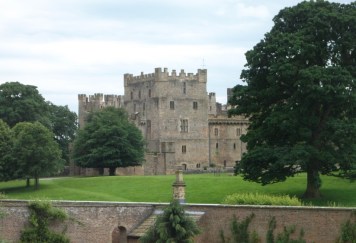
Raby Castle I enjoyed Red Rose, White Rose and thought it was a big improvement on The Agincourt Bride. It was the first half of the book that I found the most interesting, possibly because I’ve read about the Wars of the Roses, the battles and the rise of the House of York many times before, whereas Cicely’s early story was something different (even though it seemed to be largely fictional – Hickson states in her author’s note that there was no historical basis for the affair between Cicely and John Neville). I also loved the fact that these early chapters were set in the north, in an area I’m familiar with; I visited Cicely’s childhood home, Raby Castle, just two years ago so could picture it very clearly (see my photograph above).

Something I haven’t mentioned yet is that while part of the book is narrated by Cicely herself, the rest is narrated by her illegitimate half-brother, Cuthbert. Most of the characters in the novel are based on real people, but Cuthbert is not and I’m not sure that I really liked the inclusion of a fictitious storyline alternating with the historical one. I also thought the two narrative voices felt too similar and if the name of the narrator hadn’t been given in the chapter headings, I would have had difficulty distinguishing between the two. However, I did like Cuthbert as a character and he takes us to places that Cicely isn’t able to go herself, such as onto the battlefield, so he does have an important role to play in the story.

There was a good balance of war, politics, romance and adventure in this novel; there’s also a huge amount of historical detail – if you’re expecting a very light, easy read I think you may be surprised! This is a long, complex story and some concentration is needed to keep track of the relationships between the characters. I found it particularly interesting to read about Cicely’s daughter, Anne, forced into marriage against her will to her father’s ward, Harry Holland, the Duke of Exeter, and finding herself on the Lancastrian side of the conflict – as does Cicely’s sister, another Anne. The way these characters felt about their divided loyalties and how they coped with the tensions it caused within the family was portrayed very well.

Finally, while I think Red Rose, White Rose is the perfect title for a book on the Wars of the Roses, it did bother me slightly that there were so many references to the red rose being a symbol of Lancaster. According to the non-fiction I’ve read on the subject (including most recently The Hollow Crown by Dan Jones), although the red rose had possibly been associated with the House of Lancaster since the 13th century, it wasn’t commonly used as a symbol until Henry Tudor’s victory at Bosworth when he combined it with the white rose of York to form the Tudor rose. I don’t think the Lancastrian army would have been wearing red rose badges as described in the novel, but I’m happy to be corrected if I’m wrong.

Now I’m wondering who and what Joanna Hickson’s next book will be about. The way this one ended leaves plenty of scope to continue the story of the Wars of the Roses!

I received a copy of this book from NetGalley for review

Bellarion by Rafael Sabatini

Bellarion This was the book chosen for me in the Classics Club Spin last November. I was supposed to post my review by the 4th January, but Christmas, other books and life in general got in the way of finishing it on time. Well, better late than never!

Rafael Sabatini is best known as the author of Scaramouche, Captain Blood and The Sea Hawk, but he also wrote more than thirty other books including this one, Bellarion – or Bellarion the Fortunate, to give it its original title. Bellarion was published in 1926 but, like most of Sabatini’s novels, it is set much earlier – in Renaissance Italy, in fact: a world of warring city states, tyrannical dukes and beautiful princesses, of powerful condottieri and bands of mercenary soldiers, of sieges and battles, poisonings and conspiracies.

Our hero, Bellarion, is an intelligent but naïve young man who has been raised in the monastery of Cigliano and believes that there is no such thing as sin. Shocked by his heretical ideas, the abbot sends him off to university in Pavia, hoping that he will learn something about the world while he is there. Almost as soon as Bellarion leaves the abbey, he becomes the victim of a bandit pretending to be a friar. With his money and letter of introduction stolen from him, and wrongly accused of being the bandit’s accomplice, Bellarion flees to the Palace of Casale in Montferrat where the Princess Valeria agrees to protect him.

Montferrat is currently under the rule of Valeria’s uncle Theodore, who is acting as Regent until her brother, Gian Giacomo, is old enough to take his rightful place as Marquis. When Bellarion uncovers a plot by Theodore to destroy his nephew and keep the throne for himself, he becomes entangled in a complex web of conspiracy and intrigue that will lead him to the Duchy of Milan and the court of its cruel and brutal young duke, Gian Maria Visconti.

Under the command of the famous condottiero (mercenary leader), Facino Cane, Bellarion quickly rises to become one of the greatest military captains of his time, finding that brains and quick wit can make up for a lack of physical ability and clever strategies and trickery can often work where strength and force fail. Even as he becomes more and more deeply involved in the affairs of Milan, Bellarion never forgets that everything he does is for the benefit of Montferrat and his beloved Princess Valeria. Unfortunately, Valeria has completely misinterpreted his motives and is convinced that Bellarion is her enemy rather than her friend. It seems that all his efforts could be in vain…

I loved this book, as I expected to, having enjoyed two of Sabatini’s others. Scaramouche is still my favourite, but I think I preferred this one to Captain Blood, mainly because I find stories set on land easier to read than stories set at sea! You do still need to concentrate, though, to be able to untangle the complicated political situations in Milan and Montferrat, to follow the rivalries between the two factions, the Guelphs and the Ghibellines, and to keep track of who is conspiring against whom. Also, because Bellarion is building a career for himself as a military leader, there are lots of battle scenes (large scale battles rather than the more intimate one-on-one sword fighting scenes in Scaramouche). If you’re like me and are often tempted to skip long battles and discussions of military strategies, you can’t do that here – you need to read them all carefully so that you can appreciate Bellarion’s genius!

I did have mixed feelings about Bellarion himself. There’s no doubt that he’s a fascinating character; his rapid transformation from a naive, unworldly young man to a great military commander and political mastermind is great to watch. At the beginning, with his mixture of youthful enthusiasm, innocence and intelligence, he reminded me of d’Artagnan in The Three Musketeers; later, after rising from nowhere to become a trusted leader and master schemer, he reminded me not just of d’Artagnan but also Nicholas de Fleury from Dorothy Dunnett’s House of Niccolo series. (In fact, I wouldn’t be surprised if Dunnett had read this book; there’s a scene with a captured supply train that made me think of The Game of Kings.)

However, there was something about Bellarion that stopped me from really warming to him as a character. I thought he was a little bit too clever and too aware of his own cleverness. You could say the same, I suppose, about Sabatini’s other heroes, Andre-Louis Moreau and Peter Blood, but they also had flaws and vulnerabilities that made them feel more human and more believable. I never felt that I really needed to fear for Bellarion; whatever difficult situation he got himself into I had no doubt that he would come out of it unscathed. I didn’t like Valeria much either – she annoyed me with her total misreading of Bellarion’s motives and the way she always thought the worst of him. To be fair to Valeria, though, she didn’t have the knowledge that we, the reader, had!

Bellarion is a fictional character, but many of the others in the novel are based on real historical figures. Characters such as Theodore of Montferrat, Facino Cane and his wife Beatrice, Gian Maria Visconti of Milan, and Bellarion’s rival condottiero, the Count of Carmagnola, are all people who really existed – although as I don’t know much about this particular period of history I wasn’t sure how much of the story was based on fact and how much on fiction until I did some research after finishing the book!

Despite not really caring for the main characters I did enjoy this book (another Classics Spin success!) and am looking forward to reading the other Sabatini novel on my Classics Club list, The Sea Hawk.

Remember These? Books beginning with F and G

Before I started blogging I used to keep a list of the books I read in an A-Z notebook – the title, the author and a rating out of 5, but no other information. I did this from the mid-1990s to around the year 2000, but sadly kept no records after that until October 2009 when I started my blog.

I still have the notebook and a few years ago I began writing a series of blog posts highlighting some of the books listed under each letter, but only got as far as E before getting distracted and forgetting to do the rest. I did enjoy working on those posts, so I have decided to continue and try to get all the way to Z this time – and yes, I do have a book listed under Z!

So, without further ado, here is a selection of the books that appeared on the ‘F’ and ‘G’ pages of my notebook. I originally gave the books ratings out of 5 and the additional symbol * means that I particularly loved the book while X means I didn’t finish it. Although I’ve included my original ratings here, these do not necessarily reflect what I would feel about the books if I read them again today!

Books beginning with F and G:

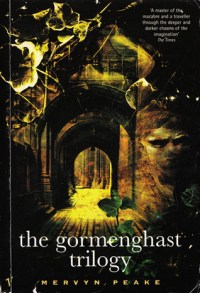
Gormenghast The Gormenghast Trilogy by Mervyn Peake 5/5*
I remember buying this book after watching the BBC adaptation in 2000. My edition includes all three novels in the trilogy – I didn’t like the third one, Titus Alone, but loved the first two, Titus Groan and Gormenghast.

The Far Pavilions by M.M. Kaye 5/5*
This wonderful novel set in India is one of my favourite historical fiction novels. I loved it the first time I read it and when I re-read it in 2010 I was pleased to find that it was still as good as I remembered.

Gone with the Wind by Margaret Mitchell 5/5*
I have read Gone with the Wind several times and don’t know if this particular entry refers to my first read or a later re-read. It’s another favourite, though, so it would get 5/5 from me every time.

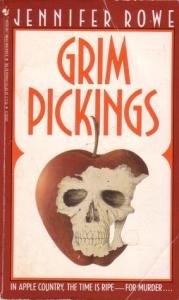
Grim Pickings Grim Pickings by Jennifer Rowe 5/5
This was a great Agatha Christie-style mystery novel set in Australia and revolving around a murder that takes place in an old woman’s orchard where her family have gathered to pick apples. I think it was part of a series, but I never read any of the others.

The Ghost of Thomas Kempe by Penelope Lively 3/5
This is one of Penelope Lively’s children’s books. I can remember what the front cover of my copy looked like (and I think I still have it somewhere) but the story has faded from my mind. I would like to read it again as I think I might appreciate it more now than I did the first time.

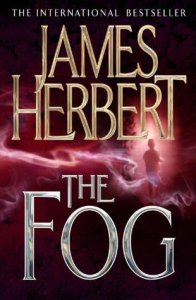
The Fog The Fog by James Herbert 3/5
I very rarely read horror novels these days but I used to read a lot of them. I enjoyed this one, about a mysterious fog that spreads across Britain, altering the minds of everyone who comes into contact with it.

Freezing by Penelope Evans 3/5
I have no memories at all of reading this book. According to Goodreads, it’s a crime novel about a photographer who works in a mortuary and tries to find the identity of a drowning victim who is brought into the morgue one day. It sounds a bit gruesome but I must have enjoyed it enough to give it a 3/5 rating.

First Impression by Margot Dalton 3/5
I can’t remember this one either. It’s another crime novel, this time about a detective trying to solve a missing child case.

Fog Heart The Ghost Road by Pat Barker 2/5
If you’d asked me whether I’d read anything by Pat Barker I would have said no, but obviously I did read this one. I think I’ll have to read it again as I can’t remember anything about it and I suspect it deserves more than 2/5! It’s the third in the Regeneration trilogy and I don’t have any record of reading the previous two, so maybe that was the problem.

Fog Heart by Thomas Tessier 2/5
The story of two couples who are drawn together when they attend a séance and meet a young medium called Oona. I do vaguely remember reading this book, but I wasn’t very impressed by it.

The Ghosts of Candleford by Mike Jeffries 2/5
Neither the title nor the author sound familiar to me but Amazon tells me that this is a ‘classic tale of the supernatural’. Seeing how many books I’ve read and then completely forgotten about has confirmed for me (if I needed to have it confirmed) that starting a book blog was an excellent idea!

Have you read any of these books? Can you shed any light on the more obscure ones?

I’ll be back soon with another selection, but if you missed my earlier Remember These? posts you can see them here.