Classics Spin #14: My list

The Classics Club

I’ve been wondering when there would be another Classics Club Spin – it seems a long time since the last one – so I was pleased to see that Spin #14 has just been announced!

Here are the rules, if you need a reminder:

* List any twenty books you have left to read from your Classics Club list.
* Number them from 1 to 20.
* On Monday the Classics Club will announce a number.
* This is the book you need to read by 1st December 2016

And here is my list:

As I only have 15 books left to read for the Classics Club, I’ve had to list some of them twice. I haven’t included East of Eden (because I’ve already committed to reading that one this autumn) or my re-read of The Count of Monte Cristo (because it’s one of my favourite books and I thought it would be nice to save it until last). Of the others, I really don’t mind which one is chosen for me!

~

1. Wuthering Heights by Emily Brontë (re-read)
2. Crime and Punishment by Fyodor Dostoevsky
3. The Man in the Iron Mask by Alexandre Dumas
4. Rebecca by Daphne du Maurier (re-read)
5. Frenchman’s Creek by Daphne du Maurier
6. Howards End by E.M. Forster
7. I, Claudius by Robert Graves
8. The Woodlanders by Thomas Hardy
9. Lost Horizon by James Hilton
10. The Red House Mystery by A.A. Milne
11. Excellent Women by Barbara Pym
12. The Leopard by Giuseppe Tomasi di Lampedusa
13. The Day of the Triffids by John Wyndham
14. The Man in the Iron Mask by Alexandre Dumas
15. Crime and Punishment by Fyodor Dostoevsky
16. Frenchman’s Creek by Daphne du Maurier
17. I, Claudius by Robert Graves
18. Wuthering Heights by Emily Brontë (re-read)
19. The Leopard by Giuseppe Tomasi di Lampedusa
20. Excellent Women by Barbara Pym

~

Which numbers do you think I should be hoping for? Are you taking part in the Spin this time?

The Hawley Book of the Dead by Chrysler Szarlan

the-hawley-book-of-the-dead The first line of The Hawley Book of the Dead is a very intriguing one: “on the day I killed my husband, the scent of lilacs startled me awake.” Immediately there are questions. Who is speaking? Why did she kill her husband? And what does the scent of lilacs have to do with anything?

I didn’t have long to wait for the first two questions, at least, to be answered. The narrator is Reve (short for Revelation) Dyer and she didn’t intend to kill her husband. She and Jeremy were happily married with three children and had worked together for years as part of a successful Las Vegas magic act known as the Amazing Maskelynes. Jeremy’s death was the result of a stunt that went wrong when someone replaced the blanks in Reve’s pistol – a stage prop – with real bullets, something which must have been done deliberately. Now Reve has been left devastated and afraid – even more so when she becomes convinced that the murderer is a man who has been on her trail since her student days, a man she knows only as ‘the Fetch’.

Deciding it’s time to start a new life as far away as possible, Reve and her three young daughters, Grace, Fai and Caleigh, move to their family’s neglected old estate in Massachusetts. Hawley Five Corners was once a thriving little town, but was abandoned long ago amid stories of unexplained disappearances and a haunted wood. It seems the perfect place to hide from the Fetch, but almost as soon as she and the girls move into an empty farmhouse in the deserted town, strange things begin to happen. When she finds a mysterious red and gold book which has been in her family for years, passed down through the generations, Reve discovers that the only way she can keep her daughters safe is to try to understand the secrets the book contains.

The Hawley Book of the Dead is the third book I’ve read for the R.I.P. XI event. It proved to be an ideal book to read at this time of year when the weather is beginning to change and the nights are starting to get longer (the characters even celebrate Halloween halfway through the novel). I’ve seen comparisons with The Night Circus, The Lost Book of Salem and A Discovery of Witches and while I can see some similarities with all of those, I thought there were plenty of original ideas here too.

I liked the way magic was handled in the novel. It’s important to the plot but doesn’t dominate the story to the exclusion of everything else. A few chapters in, we learn that the female members of the Dyer family (going back for centuries) possess magical powers of one sort or another – for example, Reve’s gift is the ability to vanish into thin air, while Caleigh’s is a fascinating one involving string games. At first I didn’t really understand the purpose of their magic but as the history of the Dyers and Hawley Five Corners was gradually revealed, it all began to make more sense. I was particularly intrigued by the Irish mythology and folklore – especially the tales of the Tuatha de Danann – which were woven into the story of Reve’s ancestors.

However, the magic was the most interesting thing about the characters. Although I liked Reve and her daughters and enjoyed the occasional scenes involving Reve’s grandmother, Nan, and her mysterious friend, Falcon Eddy, I didn’t find any of the characters very strong or memorable. I also thought the inclusion of Reve’s old boyfriend, Jolon, as a love interest was unnecessary, especially as she was still supposed to be grieving for Jeremy. These were my only disappointments with the book; otherwise, I loved the author’s descriptive writing, the entertaining story and the atmospheric setting.

The Hawley Book of the Dead was published in 2014 and according to the About the Author note at the end of the book it was intended to be the first in a quartet. I can’t find any recent news about a second novel, but I hope there’s still going to be one as I would like to know what happens next!

Top Ten Tuesday: Books on my Autumn TBR list

Top Ten Tuesday

I don’t usually like to make reading lists for myself but as there are so many books I want or need to get through in the next few months, I thought I would join in with this week’s Top Ten Tuesday (hosted by The Broke and the Bookish) and have listed ten of them below. There’s some overlap here with my RIP XI list and other personal reading projects.

~

From NetGalley – I have a lot of unread books on my NetGalley shelf which I really should read as soon as I can, but these two are published in October so I’m making them a priority.

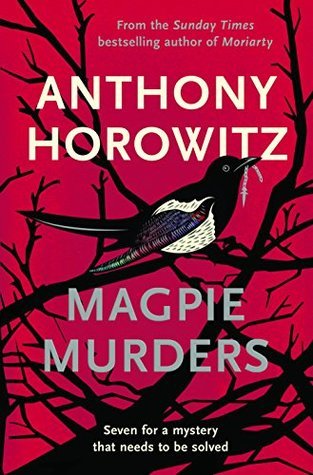
magpie-murders

1 – Magpie Murders by Anthony Horowitz

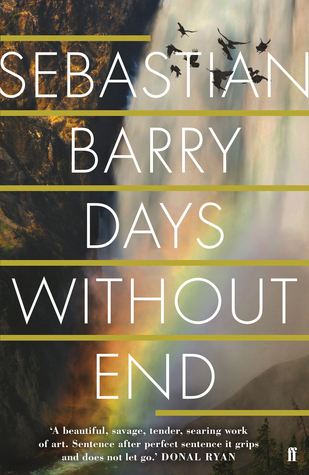
days-without-end

2 – Days Without End by Sebastian Barry

~

Review copies

the-shoguns-queen

3 – The Shogun’s Queen by Lesley Downer

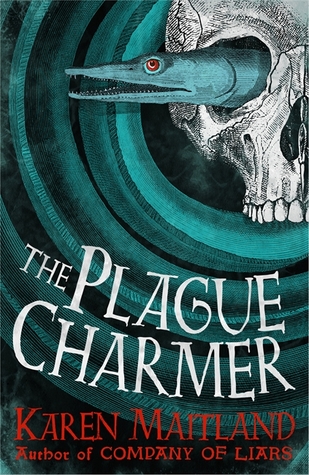
the-plague-charmer

4 – The Plague Charmer by Karen Maitland

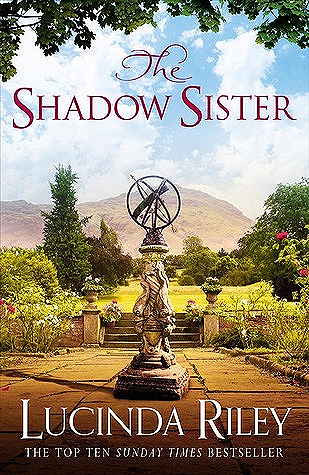
the-shadow-sister

5 – The Shadow Sister by Lucinda Riley

~

For the 1947 Club – hosted by Karen and Simon (10-16 October)

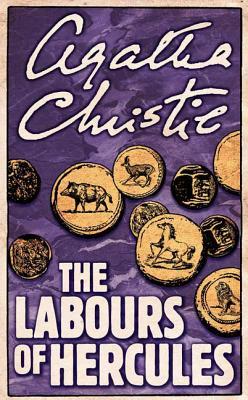
the-labours-of-hercules

6 – The Labours of Hercules by Agatha Christie

~

For Ali’s Woolfalong:

a-room-of-ones-own

7 – A Room of One’s Own by Virginia Woolf

~

For Witch Week – hosted by Lory from October 31 – November 6.

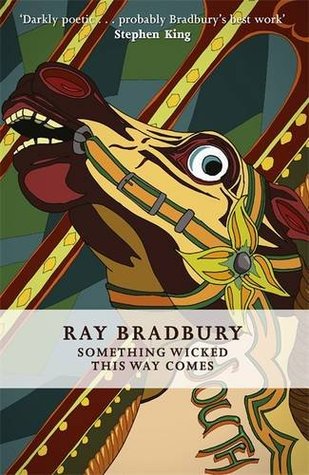
something-wicked-this-way-comes

8 – Something Wicked this Way Comes by Ray Bradbury

~

For the Classics Club – I would like to read more than one book from my Classics Club list between now and winter, but the book below is one I’ve been putting off reading and I’m hoping that including it here will give me some motivation.

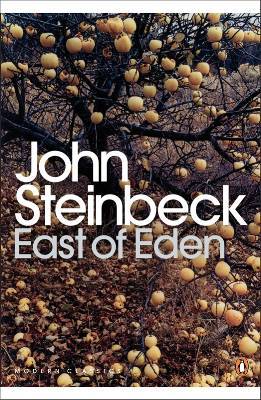
east-of-eden

9 – East of Eden by John Steinbeck

~

Because I love this author – and can’t wait to read his new book.

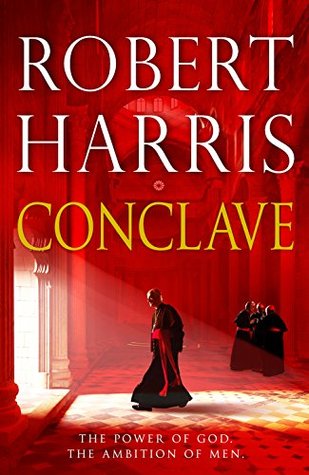
conclave

10 – Conclave by Robert Harris

~

Have you read any of these? Which books are on your autumn/fall TBR?

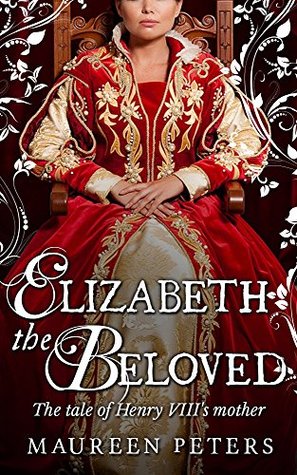
Elizabeth the Beloved by Maureen Peters

elizabeth-the-beloved “Sometimes it is an exceedingly sad thing to be a queen.” These words are spoken by Anne Neville, wife of Richard III, halfway through Maureen Peters’ Elizabeth the Beloved, but they are words which could just as easily be attributed to any number of England’s other queens, including the title character of this novel – Elizabeth of York. Born in 1466, Elizabeth was the daughter of Edward IV and Elizabeth Woodville; she later married Henry VII and became mother to another king – the future Henry VIII.

Beginning with her childhood, this novel follows Elizabeth through the years, covering some of the key moments and events of her life and her time as queen. Growing up during the final years of the Wars of the Roses, things were not always easy for Elizabeth. As the elder sister of the Princes in the Tower who disappeared and were believed to have been murdered, she then had to endure the appearance of several ‘pretenders’ claiming to be her younger brothers. One of these pretenders, Perkin Warbeck, is given a lot of attention in the second half of the book as his story becomes entwined with Elizabeth’s.

Maureen Peters was a Welsh historical novelist who, like Jean Plaidy, wrote a large number of novels covering the lives of famous historical figures. Elizabeth the Beloved was published in 1972 and is the third of her books that I’ve read – the first two were The Queenmaker and The Virgin Queen, about Bess of Hardwick and Elizabeth I respectively. I had some criticisms of those other two books and was hesitant about trying another one, but I’m glad I gave this one a chance as I thought it was better written, more interesting and much more enjoyable.

This novel is written in the third person from the viewpoints of several different characters and at first there was so much jumping around from one perspective to another that it made my head spin. After a while, though, things settled down and the narrative began to concentrate on Elizabeth herself. I liked the way Elizabeth was portrayed as a warm, caring, sensitive woman but also an intelligent one who would have liked to have played a bigger role in politics and the running of the country if she had only been given the opportunity.

I had no major problems with inaccuracy, although Peters does stick faithfully to the traditional legends surrounding the Wars of the Roses, such as the Duke of Clarence being drowned in a butt of malmsey, for which there’s no real evidence one way or the other. She also suggests that Elizabeth and her uncle, Richard III, were in love and may have been considering marrying when it became obvious that Richard’s wife, Anne, was dying. I’ve come across this theory before in other books, but as far as I know there’s not much evidence for this idea either; it seems to be based around a letter allegedly sent by Elizabeth to the Duke of Norfolk in which marriage is referred to. If you want to know more about this, I found an excellent, thorough article on the subject.

Of course, one of the reasons I love reading about this period so much is that there are so many mysteries and controversies: things like the fate of the Princes in the Tower and the nature of the relationship between Richard and Elizabeth are open to interpretation by each individual author or historian. Like the other Maureen Peters novels I’ve read, however, this is a fairly short novel and I think the author’s aim was probably to give an overview of the period suitable as an introduction for readers who have never read about Elizabeth of York before. She doesn’t go into a great amount of detail and some of the people and events which usually appear in books on the Wars of the Roses are entirely omitted here.

Although I can’t really say that I learned anything new, I found Elizabeth the Beloved a quick and entertaining read and enjoyed immersing myself in my favourite time period once again!

I received a copy of this book from the publisher via NetGalley for review.

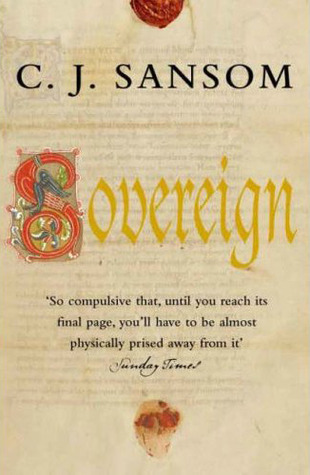
Sovereign by CJ Sansom

sovereign-cj-sansom Sovereign is the third in CJ Sansom’s Shardlake mystery series set in Tudor England and I found it every bit as good as the first two. The front cover states that it is “So compulsive that, until you reach its final page, you’ll have to be almost physically prised away from it”. Well, I wouldn’t go quite that far, but it was certainly a gripping story and while I’m not sure that it really needed to be over 600 pages long, I never found myself getting bored.

The novel opens in 1541, as Henry VIII embarks on his Progress to the North, a state visit with the aim of allowing those who rebelled during the recent Pilgrimage of Grace to make their formal apologies to the king. The royal progress is heading for York – and so are lawyer Matthew Shardlake and his assistant, Jack Barak. Officially, Shardlake will be dealing with petitions to the king made by the people of York, but he has also been given another task to carry out. An important prisoner, Sir Edward Broderick, is due to be brought from York to London, and Thomas Cranmer, Archbishop of Canterbury, has asked Shardlake to take responsibility for Broderick’s welfare as he doesn’t want the prisoner to die before he can be questioned in the Tower.

Shortly after arriving in York, the murder of a glazier leaves Shardlake in possession of a chest of documents which, if they fall into the wrong hands, could be used to destroy the king. Shardlake barely has time to look at the documents before they are stolen again, but the little bit of knowledge he has gained puts his own life at risk. To make matters worse, he and Barak stumble upon a liaison between the king’s wife, Catherine Howard, and one of her courtiers, Thomas Culpeper; it seems that danger is closing in on them from all sides.

The first Shardlake novel, Dissolution, was set in a monastery, and the next, Dark Fire, took us into the heart of Tudor London; Sansom did a wonderful job of bringing those settings to life and he does the same here with York, capturing the mood of the people in the aftermath of a failed rebellion – people whose political and religious beliefs are not necessarily in alignment with the king’s. I enjoyed reading about the preparations for the arrival of the Progress and what was involved in providing food, accommodation and other amenities for not just the king and queen, but also their entourage of hundreds of courtiers, attendants and servants.

If you haven’t read the previous two books, I don’t think it’s completely necessary as this one does work as a standalone mystery with a beginning, middle and end, but I think I would still recommend reading them in order. There are some recurring characters in the series and it would be best to get to know them from their first appearance.

Barak came into the series in the second book, Dark Fire, and his relationship with Shardlake continues to develop in this book, but it also becomes strained after he falls in love with Tamasin Reedbourne, a servant in Queen Catherine’s household. There is no woman in Shardlake’s life and it does seem that he is jealous of Barak’s relationship with Tamasin – not because he’s attracted to Tamasin himself but because he resents his friend having another attachment. Shardlake comes across as quite a lonely person, I think, which is understandable as he has spent a lifetime being shunned for having a hunched back. He suffers a lot of cruel jibes and ridicule during his time in York, including a humiliation at the hands of the king, which completes the disillusionment with Henry which has been growing in him since Dissolution.

I have barely mentioned the actual mystery yet, but I can assure you that Shardlake does have a mystery to solve in this novel. It centres around a conspiracy dating back to the days of Edward IV and Richard III and I found this element of the story interesting as it showed the extent to which information relating to the Plantagenets was suppressed and covered up by the Tudors. For me, though, the mystery was secondary to the characters and the vivid Tudor setting.

I think this was probably my favourite of the Shardlake novels so far, but I still have another three to read and am planning to continue soon with the fourth one, Revelation.

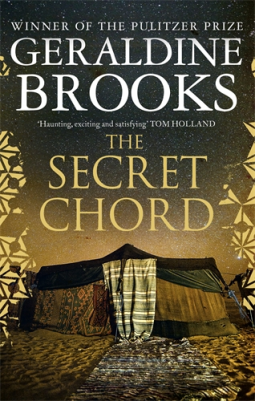
The Secret Chord by Geraldine Brooks

the-secret-chord I hadn’t read anything by Geraldine Brooks until now, but I had heard so much praise for her books that I knew I would have to try one of them eventually. I was pleased to have an opportunity to read her latest novel, The Secret Chord, even though the subject didn’t initially sound very appealing to me. It tells the story of King David from the Old Testament, and as my knowledge of Biblical kings is almost non-existent, I wasn’t at all sure what to expect from this book!

As the novel opens, David has decided that he wants the story of his life written down so that people will know what he was like, not just as a king but as a man. His friend and prophet, Natan, is given the task of writing the account, but as there’s a limit to how much Natan really knows about David, it’s necessary for him to seek the help of other people who can offer insights into David’s life and character. And so Natan sets out to speak to David’s family, including several of his wives, recording their thoughts and their memories, before taking up the story himself and remembering the dramatic circumstances of his own first encounter with the king.

Natan slowly pieces together the information he is given and a portrait of David begins to emerge: a portrait of a complex, flawed and fascinating human being. A former shepherd boy who has risen from his humble origins to become King of Israel, David’s personality is a mass of contradictions. He’s a beloved king, an accomplished musician and writer of Psalms, and loves his sons so much that he’s blind to their faults; on the other hand, he can be heartless and cruel, particularly where his first wife Mikhal is concerned, or when he sends his soldier Uriah to be killed in battle because he is lusting after Uriah’s wife, Batsheva.

As I’ve already said, before starting to read this novel I knew almost nothing about David (apart from the story of David and Goliath, which is only one small episode in David’s life) so I was able to learn a lot from The Secret Chord. Although the novel is narrated by Natan, who is himself an interesting character with his prophecies and uncontrollable visions of the future, we also hear from a wide range of other characters. Through the eyes of David’s mother, Nizevet, his brother, Shammah, and his wives Mikhal, Avigail and Batsheva, we gain a better understanding of who David really is, as well as getting to know the men and women who played significant roles in his life. Not all of this is told in strictly chronological order, but I can understand why the author chose to structure the story the way she does.

Another choice Geraldine Brooks makes is to use the Hebrew names for characters and places. I was completely unfamiliar with these and sometimes it took me a while to realise exactly who or what I was reading about. Instead of Samuel, for example, we have Shmuel; Solomon becomes Shlomo and Joab becomes Yoav, while the Philistines are the Plishtim and Bethlehem is Beit Lethem. In a way, I liked this because it helped me to think of this as an original work of historical fiction rather than a re-write of the Bible stories, but it also made the book more challenging to read than it might otherwise have been. Once I settled into the style of writing and got used to the unusual names, however, I started to really enjoy The Secret Chord. I’m sure I’ll be reading more by Geraldine Brooks.

I received a copy of this book from the publisher via NetGalley for review.

Airs Above the Ground by Mary Stewart

airs-above-the-ground This month, one of my favourite authors, Mary Stewart, would have been 100 years old and to mark the occasion I decided it was time to pick up one of the few remaining books of hers that I still hadn’t read. I chose Airs Above the Ground, a suspense novel set in Austria which was first published in 1965 – and it was a great choice because I loved it!

At the beginning of the novel, our heroine, Vanessa March, is angry and disappointed because her husband, Lewis, has insisted on going to Stockholm on a business trip just when they had been due to leave for a summer holiday in Italy. Left behind in London, Vanessa meets a friend, Carmel Lacy, for tea and is shocked when Carmel mentions that she has just seen Lewis in a newsreel about a circus fire in Austria. Convinced that there must have been some mistake, Vanessa goes to watch the news footage herself and discovers that it’s true – not only is Lewis in Austria when he’s supposed to be in Sweden, he has also been caught on film with his arm around a pretty young girl.

Conveniently, Carmel’s teenage son, Timothy, is hoping to go to Vienna to visit his father and Carmel is looking for someone to act as a chaperone. Determined to catch up with Lewis and find out what’s going on, Vanessa agrees to accompany him. On arriving in Austria, however, Tim admits that he hasn’t been completely honest about his relationship with his father and instead he ends up staying with Vanessa as she searches for Lewis. They are an unlikely pair – at seventeen, Tim doesn’t really need a chaperone, especially not one who is only twenty-four herself – but a friendship quickly forms and together the two become caught up in a mystery involving a travelling circus, a mysterious Englishman and an old piebald horse.

Airs Above the Ground is a book I’ve been looking forward to reading for a long time and I wasn’t disappointed at all. I found so many things to enjoy, first and foremost the beautifully written descriptions of the Austrian countryside, the mountains, the villages and the fictional castle of Schloss Zechstein which becomes the focus of the action for the second half of the story:

And, perched on the outermost edge of the crag, like something straight out of the fairy books of one’s childhood, was the Schloss Zechstein, a miniature castle, but a real romantic castle for all that, a place of pinnacles and turrets and curtain walls, of narrow windows and battlements and coloured shields painted on the stone. There was even a bridge; not a drawbridge, but a narrow stone bridge arching out of the forest to the castle gate, where some small torrent broke the rock-ridge and sent a thin rope of white water smoking down below the walls.

Many of Mary Stewart’s novels involve the heroine forming a bond with a lonely or neglected young boy, and while Timothy is too old to be considered a child, it was still good to watch the relationship between them develop. It’s a relationship based entirely on trust, friendship and mutual liking, with no hints of any romantic attraction at all. Of course, unlike most Stewart heroines, Vanessa is already married before the novel even begins and this does give her character a slightly different feel. Like the others, she’s a strong, intelligent and resourceful woman but she’s clearly in awe of Lewis, and although I did enjoy her interactions with her husband, it seemed that whenever he was around she tended to place too much reliance in him and lost some of that strength and resourcefulness.

I also loved Old Piebald, the horse whose master died in the circus fire and whose injured leg Vanessa treats using her veterinary skills. The scene at the end of Chapter 9 where he is grazing in a meadow with circus music playing in the distance has to be one of my favourite moments in all of Mary Stewart’s novels! Horses play an important role in the story – Tim’s real reason for coming to Austria is to get a job with Vienna’s famous Spanish Riding School and it was nice to have an opportunity to learn more about the school and its beautiful Lipizzaner stallions. The novel takes its title from the movements performed by these horses, known as the ‘airs above the ground’.

As well as all of the other things I’ve mentioned, there’s also plenty of drama, including a desperate race around the castle battlements, a car chase and a scene involving a mountain railway train. Airs Above the Ground hasn’t become one of my absolute favourite Stewart novels, but it’s definitely in my top five or six (I’ve read eleven of her suspense novels so far, plus three of her Arthurian novels). Have you read this one? And have you done anything to celebrate Mary Stewart’s centenary?