Top Ten Tuesday: Characters who share my name

This week’s Top Ten Tuesday, hosted by Jana at That Artsy Reader Girl, is a ‘Character Freebie’ (any topic of our choice that deals with book characters).

I thought it might be fun to list some characters who have the same name as me (Helen). I wondered whether I would be able to think of ten, but it turned out to be easier than I expected – in fact, I could have included more!

1. Helen Burns – Jane Eyre by Charlotte Brontë

The saintly Helen Burns was Jane’s best friend at Lowood School and although her role in the novel is short and tragic, she has a lasting influence on Jane’s life.

2. Helen Irvine – Fair Helen by Andrew Greig

Helen of Kirkconnel Lea was the heroine of a famous ballad and her story is told in this beautifully written historical fiction novel.

3. Helen of Mar – The Scottish Chiefs by Jane Porter

The daughter of the Earl of Mar, Lady Helen falls in love with Scottish hero William Wallace in Jane Porter’s 1809 novel.

4. Helen Franklin – Melmoth by Sarah Perry

This secretive Helen becomes fascinated by the story of Melmoth the Witness and discovers that the legend holds a personal significance.

5. Helen Schlegel – Howards End by E.M. Forster

The younger and more impulsive and passionate of the two Schlegel sisters in Forster’s classic novel.

6. Helen of Troy – For the Most Beautiful by Emily Hauser

I’m sure this famous Helen needs no introduction!

7. Helen Fong – China Dolls by Lisa See

One of three young women who become friends after meeting at an audition for dancers at a San Francisco nightclub in 1938.

8. DCI Helen Rowley – Sacrifice and the Lacey Flint series by Sharon Bolton

A recurring, though minor, character throughout Bolton’s Lacey Flint series (as Dana Tulloch’s partner) and also has a bigger role to play in the standalone novel Sacrifice.

9. Helen Giniver – The Night Watch by Sarah Waters

This Helen is one of several characters whose lives and relationships are explored in Sarah Waters’ World War II novel.

10. Helen Huntingdon – The Tenant of Wildfell Hall by Anne Brontë

A Brontë character started my list so another Brontë character will finish it! Written in diary format, The Tenant of Wildfell Hall describes Helen Huntingdon’s marriage to an abusive, drunken husband.

~

Can you think of any other literary Helens? Are there any fictional characters who share your own name?

Six Degrees of Separation: From Where the Wild Things Are to House of Names

It’s the first Saturday of the month which means it’s time for another Six Degrees of Separation, hosted by Kate of Books are my Favourite and Best. The idea is that Kate chooses a book to use as a starting point and then we have to link it to six other books of our choice to form a chain. A book doesn’t have to be connected to all of the others on the list – only to the one next to it in the chain.

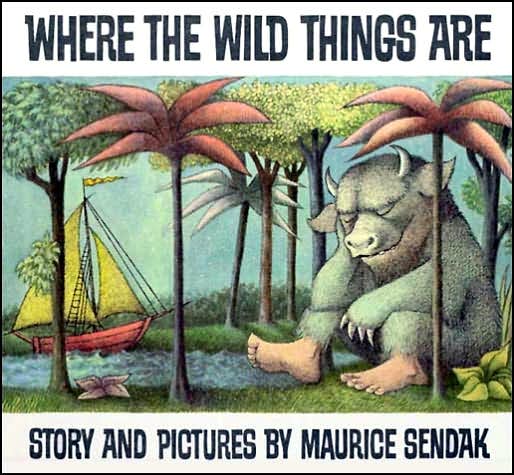
This month we are starting with a children’s classic, Where the Wild Things Are by Maurice Sendak.

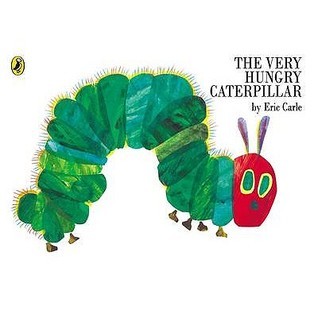
I can’t remember ever reading this book, or having it read to me, as a child. I wondered if I would be the only person to admit that, but having looked at a few other people’s chains today I’m pleased to see that it’s not just me! For my first link, I’m going to choose a children’s picture book that I do remember: The Very Hungry Caterpillar by Eric Carle. This means I’ll have to break my own rule of only including books in my chain that I’ve already reviewed on my blog.

It’s the very simplest of stories, but the illustrations, the bright colours and the holes in the pages make it very appealing to a child! I can’t think of any other books I’ve read with a caterpillar connection (although I have just started The Butterfly Room by Lucinda Riley), so I’m going to use the word ‘hungry’ as my next link instead.

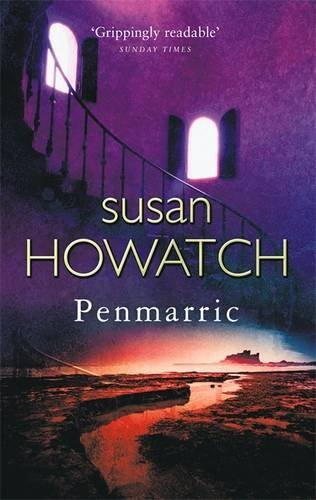
Hungry Hill by Daphne du Maurier tells the story of five generations of the Brodrick family beginning in 1820 with Copper John Brodrick, the owner of a copper mine in Ireland. The book reminded me of Penmarric by Susan Howatch, another family saga in which a mine plays an important part – in this case, a tin mine in Cornwall.

The lives of the fictional characters in Penmarric closely mirror the lives of King Henry II and Eleanor of Aquitaine and their sons. Elizabeth Chadwick wrote an excellent trilogy of novels about Eleanor, of which the first is The Summer Queen.

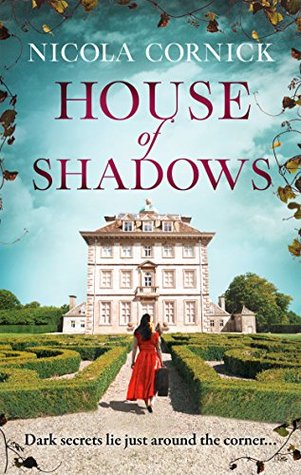
‘The Summer Queen’ makes me think of the woman who was known as ‘The Winter Queen’ – Elizabeth Stuart of Bohemia. She was given that name because her husband’s reign in Bohemia only lasted for one winter (1619 to 1620). Elizabeth is one of the characters whose story is told in Nicola Cornick’s House of Shadows, a novel set in multiple time periods.

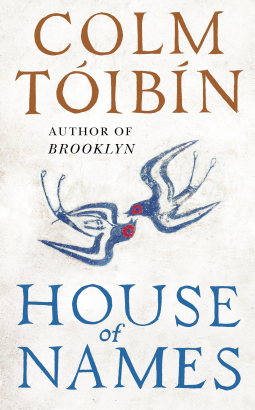
My final link is to another book with ‘House of’ in the title. I had a few options here, including House of Glass by Susan Fletcher and House of Gold by Natasha Solomons, but the one I’ve chosen to end my chain is House of Names by Colm Tóibín, which retells the tragic story of the House of Atreus from Aeschylus’ trilogy, the Oresteia.

And that’s my chain for this month. My links have included picture books, the word ‘hungry’, mining, Eleanor of Aquitaine, summer and winter, and ‘house of’ books.

In August, instead of Kate giving us the first book in the chain, we will be starting with the book we ended our chain with this month, which for me will be House of Names.

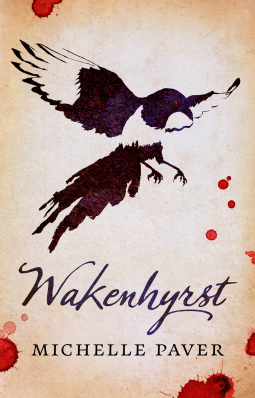
Wakenhyrst by Michelle Paver

Michelle Paver is an author I’ve been meaning to try for years, since I noticed all the hype surrounding her 2010 novel Dark Matter. For some reason I never got round to reading that book or any of her others, but I put her new one, Wakenhyrst, on my 20 Books of Summer list to ensure that I would read it.

Wakenhyrst begins in the 1960s with the elderly Maud Stearne coming under pressure from journalists to tell the story of a murder committed by her father many years earlier. Maud is the only person who knows why Edmund Stearne left the house one day in 1913, armed with an ice-pick and a geological hammer, and killed the first person he came across ‘in the most bizarre and horrible way’. Edmund spent the rest of his life in an asylum and Maud stayed on alone in the family home – the old manor house, Wake’s End, in Suffolk – never speaking about the tragedy to anyone. But now the house needs urgent repairs and Maud can’t afford to pay for them. It seems that she will have to sell her story after all.

Maud then gives her account of the events leading up to the murder, beginning by describing her lonely childhood, growing up at Wake’s End on the edge of Guthlaf’s Fen, ‘the oldest, deepest, rottenest fen ever’, with a father who is cold and domineering and a mother who is constantly pregnant (although most of the pregnancies result in stillbirths or miscarriages). Edmund, her father, is a historian and enlists Maud’s help in transcribing a book believed to be written by Alice Pyett, a medieval mystic. The book that really interests Maud, however, is her father’s secret notebook in which he records his innermost thoughts and fears. Maud already knows that Edmund is not a nice person, but even she is shocked by some of the things she reads in his journal. And when he becomes obsessed with a medieval painting of the Last Judgement, known as ‘the Doom’, she worries about her father’s mental state. Are there really evil forces at work in the fens or are they all a product of Edmund Stearne’s imagination?

I enjoyed Wakenhyrst, but it wasn’t quite what I’d expected. I think because I’d seen Dark Matter and Paver’s other recent novel, Thin Air, described as creepy ghost stories, I assumed this book would be the same, but I didn’t find it very scary at all – although I’m not necessarily complaining about that! There are plenty of Gothic elements, and the setting – a remote fenland community steeped in folklore and superstition – is certainly atmospheric, but it is not really a horror story in the usual sense. The horror in this book is more of the psychological kind, in the portrayal of a man’s descent into madness and obsession. Edmund’s notebook entries, which are interspersed throughout Maud’s narrative, become more and more disturbing and outlandish as his fears of the Doom and of demons in the fens spiral out of control.

I can’t really say that I liked Maud, but my sympathies were with her, particularly after her mother dies – weakened by too many pregnancies, or ‘groanings’ as the young Maud thinks of them (because that’s how each one ends). Maud’s life from this point becomes very isolated and unhappy, trapped in the oppressive atmosphere of Wake’s End as her father, never the most pleasant of men to begin with, gradually loses his grip on reality. The only bright spots in her life are her love for her tame bird, Chatterpie, and her relationships with Clem, the under-gardener, and Jubal Rede, the ‘wild man’ who lives in the fen.

After a slow start, I found Wakenhyrst quite an entertaining novel and I do still want to try some of Michelle Paver’s other books. I’m sure I will get round to reading Dark Matter eventually and will be interested to see how it compares.

Thanks to Head of Zeus for providing a copy of this book for review via NetGalley.

This is book 5/20 of my 20 Books of Summer.

Top Ten Tuesday: Special books from my childhood

This week’s Top Ten Tuesday, hosted by Jana at That Artsy Reader Girl, asks for our top ten childhood favourites.

There were many, many books that I loved as a child, so this is by no means a definitive top ten and if I did this again next week it could be a different list entirely. For now, though, here are ten books – in no particular order – that bring back special memories.

~

1. Watership Down by Richard Adams
I was about ten years old when I first read this book and it immediately became a favourite. I have re-read it many times since – the last time was in 2010 and I still loved it as much as ever. It’s beautifully written and certainly doesn’t deserve to be dismissed as just ‘a book about talking rabbits’; it’s about so much more than that and has a lot to offer an adult reader as well as a child.

~

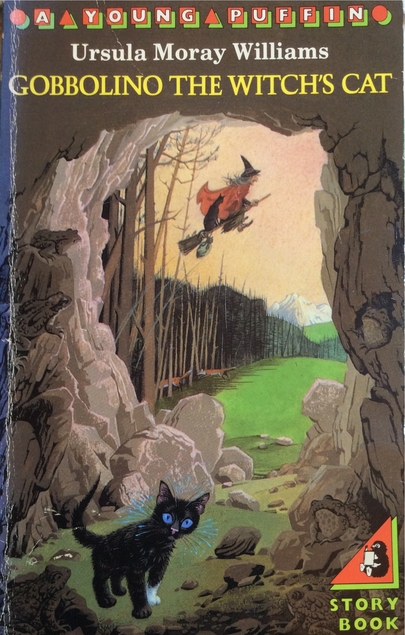
2. Gobbolino the Witch’s Cat by Ursula Moray Williams
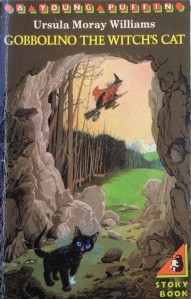
I think I was probably about seven years old when I fell in love with Gobbolino, a little cat who is rejected by his mistress, a witch, because he has blue eyes and a white paw. Dreaming of being an ordinary kitchen cat, Gobbolino sets out in search of a new owner, but finds that nobody wants to give a home to a witch’s cat. This book was published in 1942, a few years after Williams’ more famous children’s book The Adventures of the Little Wooden Horse. I loved the little wooden horse too, but his adventures never resonated with me as much as Gobbolino’s!

~

3. Black Beauty by Anna Sewell

I loved this book as a child, despite it being so sad and despite the themes of animal cruelty and suffering making me cry every time I used to read it. I had (and still have, somewhere) a gorgeous hardback edition with colour illustrations and it’s the book itself that I remember as much as the story. The image above doesn’t really do it justice!

~

4. The Secret Garden by Frances Hodgson Burnett

I had a lovely hardback edition of The Secret Garden too, although I’m not sure what happened to it (it was not the one pictured above). It’s been a very long time since I last read this book but I still remember the excitement when Mary discovers the door to the locked garden at Misselthwaite Manor. I’ll have to put it on my list for a re-read in the near future, if I can find my copy.

~

5. Ballet for Drina by Jean Estoril
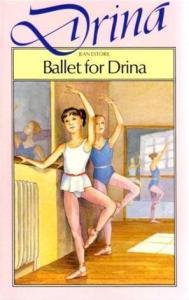
I loved books about ballet as a child, and nearly included Noel Streatfeild’s Ballet Shoes on this list, but I think I preferred the Drina series by Jean Estoril (a pseudonym of Mabel Esther Allan). The series was published in the 1950s and 60s and consisted of eleven books following the dancing career of Drina Adams. Some of the later books were stronger and more interesting, but the first, Ballet for Drina, is the one I remember most clearly.

~

6. Little Women by Louisa May Alcott
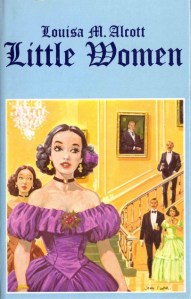
I can’t remember how old I was when I first read Little Women, but my first copy of it was an abridged version for younger children with the cover shown above. It was part of a series of classics and I also had a few of the others including Treasure Island, Robinson Crusoe, Gulliver’s Travels and Kidnapped. I didn’t like any of them as much as Little Women! My grandmother later gave me her own old copy which contained both Little Women and Good Wives and I still have that book on my shelf.

~

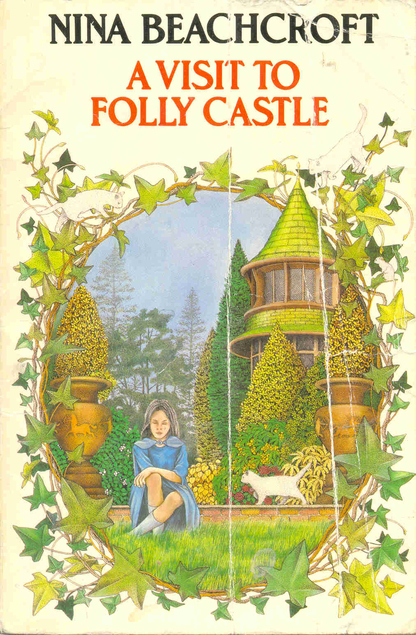
7. A Visit to Folly Castle by Nina Beachcroft
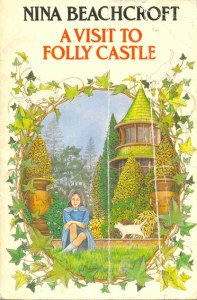
A more obscure one next. I read this several times as a child and loved it, but had forgotten both the title and the author’s name so spent hours a few months ago googling everything I could remember about the plot to try to identify it! It was a fantasy novel about a girl called Emma who finds a message in a bottle that leads her to the home of Cassandra, a lonely girl who is desperate for a friend. As Emma begins to get to know Cassandra, she discovers that there is something not quite human about her new friend’s family. Does anyone else remember this one?

~

8. Charlotte’s Web by E.B. White
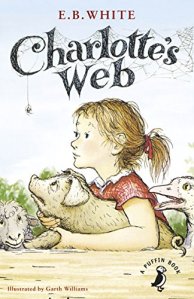
It seems that a lot of my childhood favourites involved animals! I loved this classic novel about the friendship between Wilbur the pig, Charlotte the spider and a little girl called Fern. I used to like the film too (the animated one from 1973, not the more recent live-action one).

~

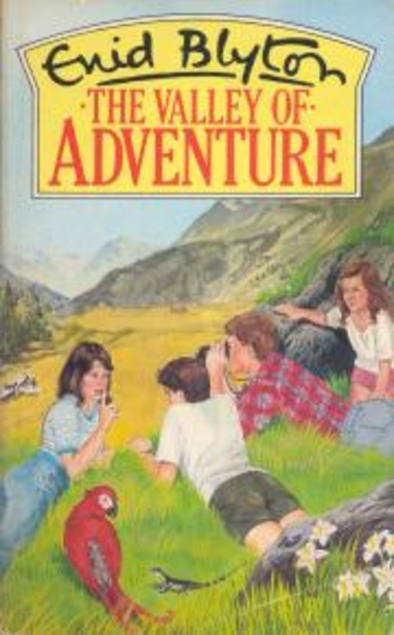
9. The Valley of Adventure by Enid Blyton

I could have included almost any Enid Blyton book here, as I read and loved so many of them. Her Malory Towers and St Clare’s school stories and The Five Find-Outers mystery series were particular favourites, but if I had to pick just one of her books it would be The Valley of Adventure. In this book, a group of children find themselves stranded in a lonely Austrian valley surrounded by mountains and waterfalls, trying to hide from a gang of criminals who are searching for hidden treasure.

~

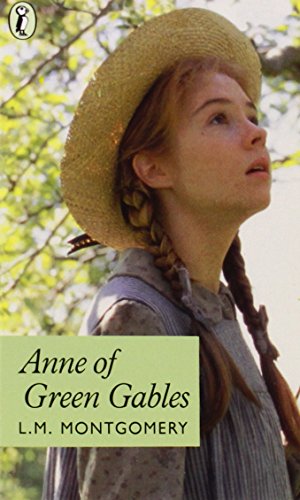
10. Anne of Green Gables by L.M. Montgomery

I was torn between several books for the final place on my list, but I finally decided on L.M. Montgomery’s classic Anne of Green Gables. I did read some of the other titles in the Anne series as well, but was less interested in the later ones. The first book was my favourite because I loved watching the development of Anne’s relationships with Matthew and Marilla.

~

Have you read any of these? Which books would be on your list?