Six Degrees of Separation: From Wolfe Island to Daphne du Maurier and Her Sisters

It’s the first Saturday of the month which means it’s time for another Six Degrees of Separation, hosted by Kate of Books are my Favourite and Best. The idea is that Kate chooses a book to use as a starting point and then we have to link it to six other books of our choice to form a chain. A book doesn’t have to be connected to all of the others on the list – only to the one next to it in the chain.
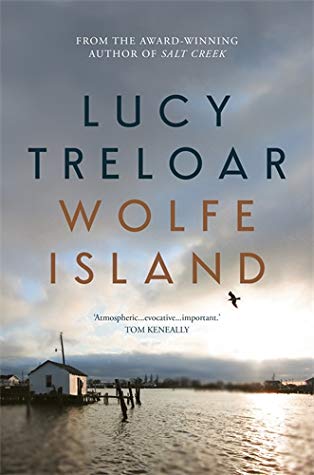
This month the book Kate has chosen as our starting point is Wolfe Island by Lucy Treloar. I haven’t read it, but this is what Goodreads tells us it’s about:

“For years Kitty Hawke has lived alone on Wolfe Island, witness to the island’s erosion and clinging to the ghosts of her past. Her work as a sculptor and her wolfdog Girl are enough. News of mainland turmoil is as distant as myth until refugees from that world arrive: her granddaughter Cat, and Luis and Alejandra, a brother and sister escaping persecution. When threats from the mainland draw closer, they are forced to flee for their lives. They travel north through winter, a journey during which Kitty must decide what she will do to protect the people she loves.”
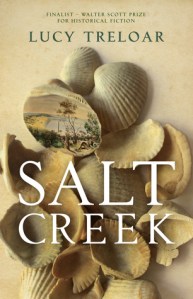
Although I haven’t read that book and I don’t think I’m particularly interested in reading it, I have read another one by Lucy Treloar – Salt Creek (1), which is set in the 19th century and tells the story of a family who move from Adelaide to the Coorong region of South Australia after falling on hard times.

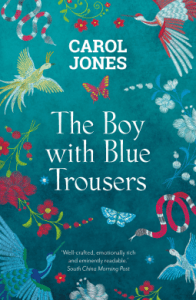
Taking South Australia as my next link, The Boy with Blue Trousers by Carol Jones (2) is a novel divided between two narratives: one following a Chinese girl who is forced to leave her home in the Pearl River Delta and travel to the goldfields of Australia; the other following an Englishwoman working as a governess in Robetown, South Australia.

Thinking of other books with ‘blue’ in the title, the first one that comes to mind is an obvious one: Nancy Bilyeau’s historical thriller The Blue (3). Set during the Seven Years War of 1756 to 1763, a Huguenot woman working at the Derby Porcelain Works becomes caught up in a race to find a rare and beautiful shade of blue.
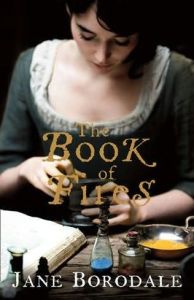
The idea of searching for a colour reminds me of The Book of Fires by Jane Borodale (4), in which a young woman becomes an apprentice to a fireworks maker and helps him to create new colours for his fireworks. The name of the young woman is Agnes and that leads me to my next book…

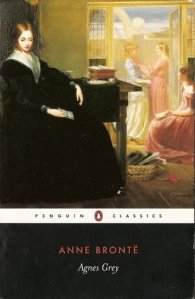
Agnes Grey (5) Anne Brontë’s semi-autobiographical novel based on her own experiences as a governess. Anne is often (very unfairly in my opinion) overshadowed by her sisters Emily and Charlotte, but I highly recommend reading her books; The Tenant of Wildfell Hall is particularly good.

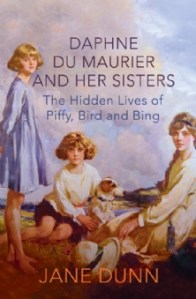
Another author in the shadow of a more famous sibling was Angela du Maurier, who when she was mistaken for Daphne would reply, ‘I’m only the sister’. This brings my chain to an end with Daphne du Maurier and Her Sisters: The Hidden Lives of Piffy, Bird and Bing by Jane Dunn (6) – a biography of Angela, Daphne and the youngest du Maurier sister, Jeanne, who was an artist.

~

And that’s my chain for this month! My links included Australia, the word ‘blue’, experiments with colours, heroines called Agnes and sisters who are authors. Next month, we are beginning with Stasiland by Anna Funder.
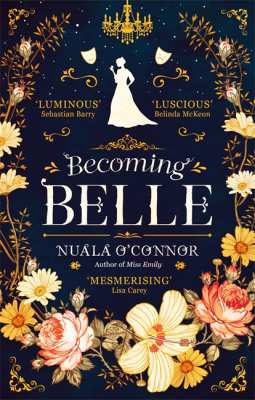
Becoming Belle by Nuala O’Connor

In Becoming Belle, Nuala O’Connor (a pseudonym of the Irish author Nuala Ní Chonchúir) brings to life a young woman whose picture hangs in the National Portrait Gallery in London but whose name is probably unfamiliar to most of us today. She is Belle Bilton, a star of the Victorian music hall who later became the Countess of Clancarty. O’Connor’s novel tells, in fictional form, the story of Belle’s rise to fame, her marriage and the scandalous court case that follows.

Born Isabel Maud Penrice Bilton, the eldest daughter of an artillery sergeant, Belle grows up in an army garrison watching her mother, an entertainer, perform for the troops. It is while taking her mother’s place on stage one night that Belle decides she also wants a career in entertainment, so at the age of nineteen she leaves the military life behind and heads for London to make her dream come true. Belle’s singing and dancing quickly causes a sensation and when she is joined by one of her younger sisters, Flo, the two form a double act that becomes the star attraction of the London theatres.

Following a performance one day in 1889, Belle meets and falls in love with William, the young Viscount Dunlo, son and heir to the Earl of Clancarty. It’s not long before she and William are standing in the Registrar’s Office in Hampstead taking their marriage vows and looking forward to spending the rest of their lives together. At twenty years old, however, William is still firmly under the thumb of his father, the Earl, who is furious when he hears of the secret wedding and makes it clear that he will do whatever it takes to separate his son from Belle.

Some books grab you from the first page, while others take much longer to settle into – and for me, Becoming Belle was one of the latter rather than the former. The account of Belle’s early life and first days on the stage didn’t interest me much and I came close to abandoning the book after a few chapters. Belle herself seemed as though she would be difficult to like – an ambitious social climber like Becky Sharp from Vanity Fair, but with little depth or substance to her character – and the focus on her sexual encounters also put me off. I’m glad I continued, though, because I thought the second half of the book, after Belle meets William, was much more compelling than the first.

I don’t want to say too much about how the story of Belle’s marriage plays out, but it involves a court case which draws in most of the characters we have met in the novel and which was widely reported in the media of the time. I managed to resist looking up the facts about the real Belle Bilton, so I didn’t know what the outcome of the court case would be, but by that stage of the book I was fully invested in Belle’s story and hoped there would be a happy ending for her. I still didn’t like her very much, but I had more sympathy for her than I’d had earlier in the novel because she’d had so much to contend with during her short time in London. However, I couldn’t really see her as a feminist heroine ‘ahead of her time’ as she is described in the book’s blurb; although I admired her for trying to get what she wanted out of life, for working hard at her chosen career and securing financial independence, she seemed too willing to give it all up to become Countess of Clancarty and too ready to forgive William for the appalling way he treats her at times.

I have no idea what the real William, Viscount Dunlo was supposed to be like, but based on the way he is portrayed in this book, I found him immature and pathetic, declaring his love for Belle while at the same time allowing his father to tear them apart. Luckily, there were plenty of other, stronger characters in the novel whom I found more appealing to read about: for example, Belle’s close friend Isidor Wertheimer, the antiques dealer, and her sister, Flo, both of whom support her through her various ordeals.

Despite struggling with the first half of this book, I ended up really enjoying Becoming Belle – although I was disappointed that we didn’t get to see more of her time at Garbally Court, the Clancarty estate in Ireland. Anyway, I went from thinking Nuala O’Connor was not an author for me to wanting to read more of her books. Miss Emily, her novel about the poet Emily Dickinson sounds like an interesting one.

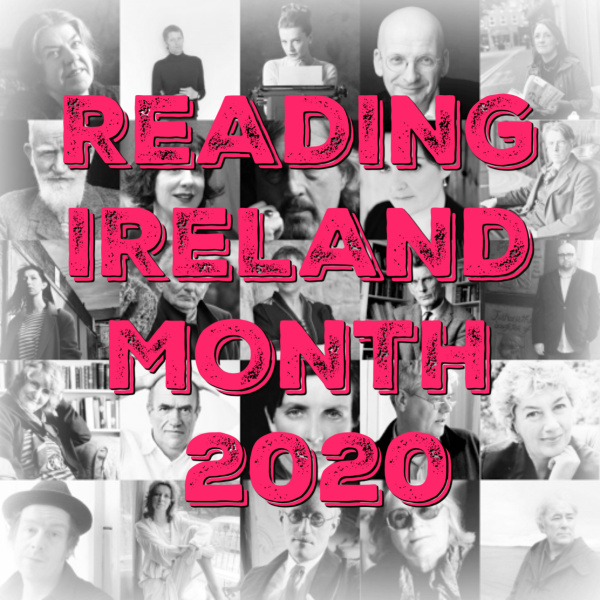
Although I read this book in February, I have waited until now to post my review because this month Cathy at 746 Books is hosting her annual Reading Ireland event. I hope to have time to write about another book by an Irish author before the end of March.

The Great Matter Monologues by Thomas Crockett

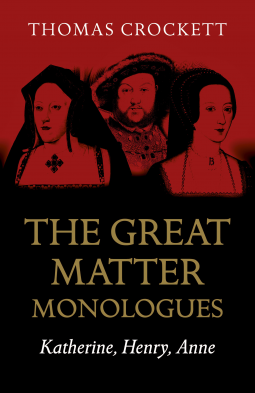
So many novels have been written dealing with ‘the King’s Great Matter’ – Henry VIII’s struggle to divorce Katherine of Aragon and marry Anne Boleyn – that it must be getting very difficult for authors to find new and interesting ways to approach the subject. Thomas Crockett’s solution is to tell the story in the form of alternating monologues written from the perspectives of Henry, Katherine and Anne in an attempt to create a theatrical feel, as if the three main players were standing on a stage sharing their thoughts directly with the audience.

If you’ve read about this period before, there’s nothing very new here; for the most part, the plot follows the known historical facts, except where it’s necessary for the author to make personal choices on how to interpret certain points – for example, the question of whether Katherine’s earlier marriage to Henry’s brother, Prince Arthur, had been consummated (this was the basis for Henry’s claim that his own marriage to Katherine should be declared invalid). The appeal of the book, for me, was not so much what it was about but the way in which it was written, taking us into the minds of Katherine and Anne – and also Henry, as most of the other Tudor novels I’ve read have focused on the women and not really given Henry a chance to tell his side of the story.

Despite them sharing their private thoughts and emotions with us, I didn’t find any of the three narrators at all likeable. It’s certainly easiest to have sympathy for Katherine as she was treated so badly by Henry, blamed for their failure to produce a son and cast off to live the rest of her life under increasingly poor and unhealthy conditions as she is put under pressure to agree to the divorce. However, as she spends most of this period in the confines of the damp, cold castles to which she has been banished, not much actually happens to Katherine over the course of the novel and I felt that her monologues became very repetitive.

Anne Boleyn’s voice and story are stronger and more engaging as she talks about her struggle to be accepted as Henry’s queen and her own failure to give birth to a male heir, before falling out of favour in her turn. She is very much the villain of the book, though, which is often the case in Tudor novels and I would have preferred something more nuanced rather than yet another portrayal of Anne as ruthless, spiteful and consumed by hatred for Katherine and her daughter, Mary. As for Henry, it’s difficult to have much sympathy for him, knowing how he treated his wives, but I did feel his frustration over how long the Great Matter was taking to be resolved and his worries for the future of the kingdom should he die before the succession was secured.

The novel goes into a huge amount of detail regarding every aspect of the Great Matter and although the short, rapidly switching monologues made it tempting to keep saying ‘just one more chapter’, I didn’t find it a particularly quick or easy read. As part of the stream-of-consciousness style of writing, there’s an absence of punctuation to indicate when someone is speaking and that made it difficult to follow the dialogue at times. Still, overall I enjoyed reading this book and appreciate Thomas Crockett’s attempt to do something a little bit different. Although I’m not really a fan of audiobooks, I do think this particular novel would work well in audio format, with different narrators expressing the unique voices and personalities of the three characters.

In case it has escaped anyone’s notice, Hilary Mantel’s The Mirror and the Light will be published later this week, and I know some readers have been re-reading Wolf Hall and Bring Up the Bodies in preparation. I decided not to do that, but The Great Matter Monologues, in which Thomas Cromwell plays an important part, covers the same period of history, so this was the perfect time to read this book!

Thanks to John Hunt Publishing for providing a copy of this book for review via NetGalley.