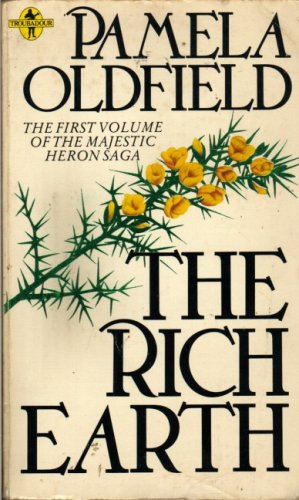
The Rich Earth by Pamela Oldfield

The Rich Earth is the first in a series of four novels following the story of one English family, the Kendals, over the course of more than a hundred years. This particular book, first published in 1980, is set during the Wars of the Roses, one of my favourite periods of history, which is what drew me to it; however, the historical setting is little more than a backdrop as the Kendals spend most of their time on their country estate in rural Devon and only have occasional involvement with the political and military conflict unfolding elsewhere.

The main protagonist of The Rich Earth is Elizabeth Sheldyke who, as the novel opens in 1468, is being married off to Daniel Heron, a much older man who has made his fortune from the tin mines for which Devon is famous. During the journey to her new home and the future that awaits her, Elizabeth briefly meets John Kendal, a young man from Yorkshire who is on his way to London where he is going to be apprenticed to a goldsmith. Time passes and Elizabeth settles into her new life at Heron Manor until, after twelve years of marriage, Daniel dies, leaving her a widow. Shortly afterwards she is reunited with John Kendal who becomes her second husband, but although she loves John, it will be a difficult relationship marred by John’s feelings of inadequacy at living off his wife’s money and by their inability to produce the child and heir they desperately want.

I wasn’t very impressed with this book at first – it seemed like too much of a romance novel with nothing else going on – but it improved as I got further into it and more characters and storylines were introduced. As I’ve said, the Kendals and their neighbours are usually quite detached from events taking place on the battlefield or at court (as far as they are concerned, it makes little difference to them which king wins the war, as either way people like themselves will be taxed to pay for it). However, later in the book, during the Cornish rebellions of 1497, our characters are drawn into the Battle of Deptford Bridge, the siege of Exeter and the invasion by the pretender to the throne, Perkin Warbeck.

The central relationship at the heart of the book – between Elizabeth and John – was difficult to read at times; Pamela Oldfield doesn’t shy away from portraying the misogyny of the period, which includes domestic abuse and cruelty. I felt that Elizabeth was much more forgiving of John’s faults than I would have been, but I suppose that’s easy enough to say from a modern point of view. On the other hand, Elizabeth does value her independence, involving herself in the running of the Heron mines and making decisions on behalf of the estate and its people.

The second book in the Heron saga is This Ravished Land. I haven’t been left feeling desperate to read it immediately, but I haven’t ruled it out either and will keep it in mind for the future.
Book 24/50 read for the 2021 Historical Fiction Reading Challenge.
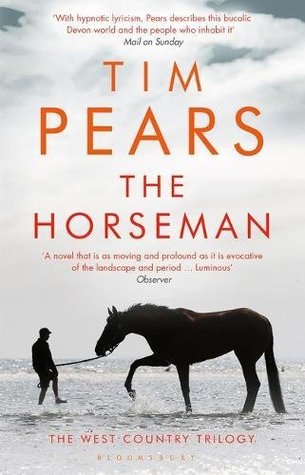
The Horseman by Tim Pears

Tim Pears’ The Horseman is the first in a trilogy of novels set in England’s West Country in the early 20th century. The final book, The Redeemed, was shortlisted for the Walter Scott Prize for Historical Fiction in 2020 and as some of you will know, working through the shortlists for that particular prize is one of my personal reading projects. As I don’t like to start a trilogy or series at the end, I decided to begin with The Horseman in the hope that I would like it enough to want to continue.

Starting in January 1911 and finishing in June 1912, the novel follows the daily life of young Leo Sercombe, the son of a carter who works on the estate of Lord Prideaux on the Devon-Somerset border. Leo has little interest in attending school, preferring to help his family with their work on the farm – and here he has gained a different kind of education: a knowledge of horses and an affinity with nature. Then one day, Leo meets Charlotte, Lord Prideaux’s daughter, and a friendship begins to form based on their shared love of horses.

There’s no doubt that The Horseman is a beautifully written novel, but I’m sorry to have to say that I didn’t enjoy it very much. I’m not necessarily the sort of reader who needs a very strong plot with lots of action on every page, but I do need at least a little bit of plot and this book didn’t seem to have any at all – just one description after another of various farming tasks. As the months go by and the seasons change we are given detailed accounts of grooming horses, gathering hay, ploughing fields, collecting eggs and anything else you can think of that takes place on a large country estate. I suppose it’s not quite true to say that absolutely nothing happens in the novel, because Leo is learning and growing all the time, but because there’s almost no conflict or drama in his life – until right at the very end of the book – I found it difficult to connect with him in any way.

Other reviews of this book are overwhelmingly positive and I can see why, as it’s a lovely, gentle portrayal of a rural community in a time gone forever; unfortunately, it just wasn’t the right book for me. This now leaves me with a dilemma as I had been expecting to go on to read the rest of the trilogy for my Walter Scott Prize project. Am I likely to enjoy the other two books any more than this one? I suspect not, so I might have to leave the 2020 shortlist incomplete.

Book 23/50 read for the 2021 Historical Fiction Reading Challenge.

Ariadne by Jennifer Saint

There have been several novels published recently retelling Greek myths from a feminine perspective; this is another – and one that I really enjoyed. As the title suggests, it’s the story of Ariadne, the daughter of King Minos and Queen Pasiphaë of Crete, but it’s also the story of another woman, her younger sister Phaedra.

As two princesses of Crete, Ariadne and Phaedra grow up in the comfort of the palace at Knossos, but their brother Asterion is not so lucky. Born half man and half bull, he has become known as the Minotaur and banished to the underground labyrinth designed by Daedalus. Each year fourteen young men and women arrive from Athens to be sacrificed to the Minotaur – until the year when Theseus, Prince of Athens, is one of the fourteen and Ariadne falls in love. Swept away by the prince’s good looks and courage, Ariadne decides to help him kill the Minotaur and escape from the labyrinth, but this means betraying her family and the people of Crete.

If you have any knowledge of Greek mythology, you probably already know all of this, but I think Ariadne’s adventures after she is forced to flee Crete with Theseus are less well known, so I won’t go into too much detail here. The Minotaur story only occupies the first few chapters of the novel, with much more time spent describing what happens after that, and it was fascinating to read about Ariadne’s relationship with the god Dionysus on the island of Naxos, as well as the fate of Phaedra, left behind to deal with the aftermath of her sister’s betrayal.

Jennifer Saint has a lot to say in this novel about heroes and hero worship, particularly in her depiction of Theseus (very much the villain of the book and certainly not the Theseus we meet in Mary Renault’s The King Must Die) and of the cult of Dionysus and his female followers, the maenads. She touches on why people feel the need to put their faith in heroes and what happens when their eyes are opened to the truth, as well as exploring the differences between mortals and gods, the position of women in Ancient Greek society and how, in Greek mythology, the gods usually make the women pay the price for the acts of men.

When I first began to read, I hadn’t expected part of the novel to be written from Phaedra’s perspective, but I think using her as a viewpoint character as well as Ariadne adds more scope to the story and makes it even more interesting than it would otherwise have been. However, I thought Phaedra’s storyline suffered near the end from the weak characterisation of Hippolytus, who plays such an important role in her later life. The conclusion of Ariadne’s story is slightly disappointing too; it felt rushed and didn’t have quite the impact it should have had. Still, I enjoyed this book, particularly the first half, and I think it compares well to Circe by Madeline Miller.

Thanks to Headline for providing a copy of this book for review via NetGalley.

Six Degrees of Separation: From Beezus and Ramona to The Duke’s Children

It’s the first Saturday of the month which means it’s time for another Six Degrees of Separation, hosted by Kate of Books are my Favourite and Best. The idea is that Kate chooses a book to use as a starting point and then we have to link it to six other books of our choice to form a chain. A book doesn’t have to be connected to all of the others on the list – only to the one next to it in the chain.

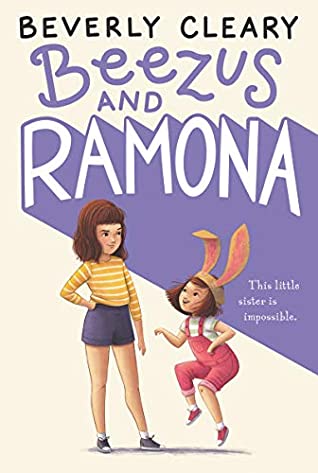
Having a little sister like four-year-old Ramona isn’t always easy for Beezus Quimby. With a wild imagination, disregard for order, and an appetite for chaos, Ramona makes it hard for Beezus to be the responsible older sister she knows she ought to be…especially when Ramona threatens to ruin Beezus’s birthday party. Newbery Medal winner Beverly Cleary delivers a humorous tale of the ups and downs of sisterhood. Both the younger and older siblings of the family will enjoy this book.

This month we are starting with Beezus and Ramona by Beverly Cleary, who sadly died in March this year. This book was the first in her Ramona Quimby series for children and was published in 1955. I read some of the Ramona books as a child and although I can’t remember anything about them now, I know I used to enjoy them!

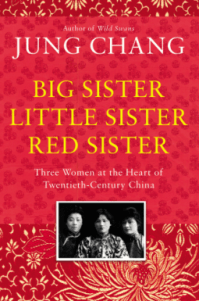
I’m sure I won’t be the only Six Degrees participant to use books about sisters as my first link this month, but as there are so many to choose from I’m hoping that nobody else will have linked to this one: Big Sister, Little Sister, Red Sister by Jung Chang (1). This is a biography of the three Soong sisters, all of whom played an important role in 20th century Chinese politics. Ei-ling or ‘big sister’ became one of China’s richest women through her marriage to the banker HH Kung, ‘little sister’ May-ling was First Lady of the Republic of China, and ‘red sister’ Ching-ling was a supporter of the Communist Party and the wife of revolutionary leader Sun Yat-sen.

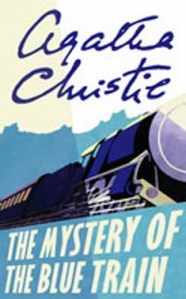
I’m sure I have used books with ‘red’ in the title in a previous chain, so I’m going to link now to a book with a different colour in the title. There were lots of options here, but I’ve gone with blue and The Mystery of the Blue Train by Agatha Christie (2). This is a Poirot novel in which an heiress is murdered for her jewels during a train journey through France. I don’t think it’s one of Christie’s stronger novels (and in fact it was apparently her own least favourite), but it’s still quite enjoyable.

This makes me think of another novel set on a train, The Wheel Spins by Ethel Lina White (3), the book on which Alfred Hitchcock’s The Lady Vanishes was based. There are a lot of differences between the book and the film but they share the same basic plot: a young woman makes a new friend during a train journey who later disappears, only for the rest of the passengers to deny that she ever existed.

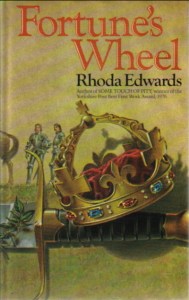
The idea of a wheel spinning leads me to Fortune’s Wheel (4), one of Rhoda Edwards’ two novels about Richard III. This book covers the earlier part of Richard’s life, taking us through the reign of his elder brother, Edward IV, and ending with Richard’s marriage to Anne Neville in 1472. I enjoyed it, but thought the second novel, Some Touch of Pity, was much better.

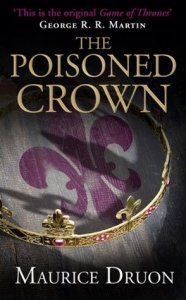
There’s a picture of a crown on the cover of Fortune’s Wheel and also on the cover of The Poisoned Crown by Maurice Druon (5). First published in French in 1956, this is the third book in the Accursed Kings series telling the story of Philip IV of France and his descendants, a line of kings “cursed to the thirteenth generation” by the Grand Master of the Knights Templar, whom Philip sent to burn at the stake. George R.R. Martin has described this series as the inspiration for his A Game of Thrones.

I haven’t finished The Accursed Kings yet; there are seven books in the series and so far I have only read the first five of them. It’s not the only series I’ve started and haven’t finished – I still need to read the final book in Anthony Trollope’s Palliser series, The Duke’s Children (6). I nearly always love Trollope but the length of his books sometimes puts me off. This one is on my Classics Club list, so I’m hoping to get to it soon.

And that’s my chain for this month! My links have included: sisters, colours, trains and wheels, pictures of crowns and an unfinished series.

In June we are starting with The Bass Rock by Evie Wyld. Will you be joining us?