It’s the first Saturday of the month which means it’s time for another Six Degrees of Separation, hosted by Kate of Books are my Favourite and Best. The idea is that Kate chooses a book to use as a starting point and then we have to link it to six other books of our choice to form a chain. A book doesn’t have to be connected to all of the others on the list – only to the one next to it in the chain.
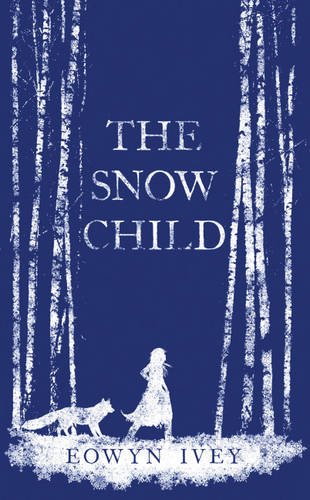
This month we’re starting with The Snow Child by Eowyn Ivey. I read this when it was first published and found it a beautiful, magical story – a perfect winter read.
A bewitching tale of heartbreak and hope set in 1920s Alaska, Eowyn Ivey’s THE SNOW CHILD was a top ten bestseller in hardback and paperback, and went on to be a Finalist for the Pulitzer Prize.
Alaska, the 1920s. Jack and Mabel have staked everything on a fresh start in a remote homestead, but the wilderness is a stark place, and Mabel is haunted by the baby she lost many years before. When a little girl appears mysteriously on their land, each is filled with wonder, but also foreboding: is she what she seems, and can they find room in their hearts for her?
Written with the clarity and vividness of the Russian fairy tale from which it takes its inspiration, The Snow Child is an instant classic.
~

Despite having read the first book, which often makes things easier, I struggled to get started this month. I tried linking The Snow Child to other books based on Russian fairy tales, to other books set in winter and to books with snow in the title, but in each case I only got two or three links along the chain before getting stuck. Eventually, I decided to start with a link to another book with ‘child’ in the title: A Word Child by Iris Murdoch (1). I really enjoyed this story of Hilary Burde, a London office worker who thinks he has arranged everything in his life just as he wants it, until a face from the past arrives and throws everything into disarray.
The Hilary in A Word Child is a man; a female character who shares the same name is Hilary Craven in Destination Unknown by Agatha Christie (2). This is one of Christie’s standalone thrillers and is set in Morocco, first in Casablanca and Fez and then in the High Atlas Mountains. Hilary finds herself agreeing to impersonate a dying woman so that she can go in search of the woman’s husband, a scientist who has disappeared without trace. I found this book entertaining but too far fetched and bizarre to be a favourite Christie.
The Country of Others by Leïla Slimani (3) is also set in Morocco. The book was written in French and is available in an English translation by Sam Taylor. It tells the story of Mathilde, a young woman from France who marries a Moroccan soldier at the end of WWII and goes to live with him in Meknes. The book describes how she struggles to settle into her new home and tries to find a place for herself in this ‘country of others’.
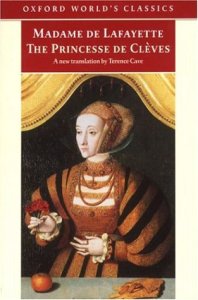

I seem to have read a lot of books translated into English from French – probably more than from any other language. One of these is The Princess of Cleves, or La Princesse de Clèves to give it its French title. This classic novel was first published anonymously (and translated anonymously too) in 1678, but was later believed to be the work of Madame de Lafayette. It’s set at the royal court of Henri II and is said to be one of the earliest psychological novels.
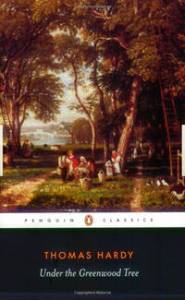
Thomas Hardy’s Under the Greenwood Tree (5) was also originally published anonymously. Set in the small village of Mellstock in Wessex, it follows the romance between Dick Dewy and Fancy Day and is a beautiful portrayal of rural life as one season turns into the next. This is an unusually cheerful, uplifting book for Hardy; I often recommend it to people who find him too bleak and depressing!
From under one tree to under another! I think I’ve used Murder Under the Christmas Tree (6) in a previous Six Degrees chain, but it’s too good a link not to use again here. Edited by Cecily Gayford, this is a collection of Christmas-themed short stories from classic and modern crime authors, ranging from Dorothy L. Sayers and John Dickson Carr to Val McDermid and Ian Rankin.
~
And that’s my chain for this month! My links have included: ‘child’ titles, the name Hilary, Morocco, French translations, books published anonymously and ‘under the tree’.
In January we’ll be starting with Beach Read by Emily Henry. Will you join us?
 She Reads Novels