It’s the first Saturday of the month, which means it’s time for another Six Degrees of Separation, hosted by Kate of Books are my Favourite and Best. The idea is that Kate chooses a book to use as a starting point and then we have to link it to six other books of our choice to form a chain. A book doesn’t have to be connected to all of the others on the list – only to the one next to it in the chain.
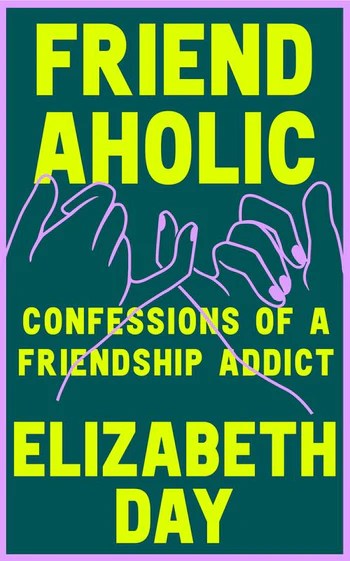
This month we’re starting with Friendaholic by Elizabeth Day. It’s not a book that I’ve read, but here’s what it’s about:
As a society, there is a tendency to elevate romantic love. But what about friendships? Aren’t they just as – if not more – important? So why is it hard to find the right words to express what these uniquely complex bonds mean to us? In Friendaholic: Confessions of a Friendship Addict, Elizabeth Day embarks on a journey to answer these questions.


I’m starting my chain by linking to a novel about complex friendships: China Dolls by Lisa See (1). It’s set in the 1930s and 40s and follows the stories of three young women – two Chinese and one Japanese – who meet while auditioning as dancers at a San Francisco nightclub. The three quickly become friends, until they are torn apart by secrets, betrayals and the events of World War II. I remember being both fascinated and confused by the friendship angle, as all three women repeatedly talk about how close they are while behaving more as if they hate each other!
Another book with the word ‘China’ in the title (but a different kind of china) is Bone China by Laura Purcell (2), a Gothic novel set in the 19th century on the coast of Cornwall. Our narrator, Hester Why, has just arrived from London to take up a new position as nurse to Louise Pinecroft, a woman who barely speaks or moves and sits all day in a room surrounded by china cups and plates. I found it an atmospheric book, let down slightly by a weak ending.
A subplot in Bone China involves a doctor carrying out some experiments to try to find a cure for consumption (tuberculosis). In The Lady of the Camellias by Alexandre Dumas fils (3) – the book that inspired Verdi’s opera La traviata – we know from the start that Marguerite Gautier is going to die of consumption. The novel tells the story of her time as a Parisian courtesan who uses bouquets of red and white camellias to send messages to her lovers. I read it in an English translation by Liesl Schillinger.
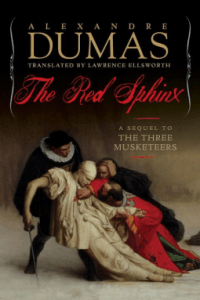


I did enjoy The Lady of the Camellias, but I prefer the work of Dumas’ father, the more famous Alexandre Dumas père. The Count of Monte Cristo, The Three Musketeers series and The Black Tulip are my favourites, but The Red Sphinx (4) is the one I’m including in my chain because it’s much less well known and deserves some attention! It’s a Musketeers sequel, although d’Artagnan and the other Musketeers don’t actually appear in it at all. I described it in my review as a story of ‘dashing young heroes and beautiful heroines; duels, battles and sieges; spies and smugglers; secret messages, clever disguises, letters written in code – and political and romantic intrigue in abundance.’
My next link is to another book with a colour in the title – not red this time, but green. It’s The Land of Green Ginger by Winifred Holtby (5), the story of a missionary’s daughter, Joanna Burton, who is born in South Africa but raised by her aunts in a small rural community in England. I prefer Holtby’s other books, but this one does have a lot of interesting elements, looking at the aftermath of the First World War, the contrast between post-war life in Britain and other parts of Europe, and attitudes towards immigrants.
The Land of Green Ginger was published in 1927. Another book also published in the same year was To the Lighthouse by Virginia Woolf (6). Although it’s one of Woolf’s best known books, it’s actually my least favourite of the four I’ve read by her so far, mainly because I’m not a fan of the stream of consciousness writing style. I can understand why other people love it, but it wasn’t for me.
~
And that’s my chain for June. My links have included friendships, the word China, tuberculosis, father and son authors, colours in titles and books published in 1927.
In July we’ll be starting with the winner of the International Booker Prize, Time Shelter by Georgi Gospodinov and translated by Angela Rodel.
 She Reads Novels
China Dolls is a new to me title but it does seem interesting. Green Ginger is on my TBR and I hope to get to it some day, as are Purcell’s books though not this one. Enjoyable and interesting chain once again!
Thanks! I’ve enjoyed all of the Lisa See books I’ve read, although China Dolls isn’t my favourite.
Will look out for her.
I don’t recall who translated my copy of The Lady of the Camellias, but I reviewed it recently on my blog. By the way, I only read on Woolf and I will NOT read more – I also don’t care for the stream of conscience format.
I’ve enjoyed the other Woolf books I’ve read (Orlando, Flush and A Room of One’s Own) a lot more than To the Lighthouse, but she’s not a favourite author.
Funny, I have read other books by most of these authors but not these. I have had my eyes out for Laura Purcell for while, probably because of you!
My mother is also a big fan of Dumas père and really liked a book called The Black Count: Glory, Revolution, Betrayal, and the Real Count of Monte Cristo
by Tom Reiss. I thought about suggesting it for my book group but they don’t love nonfiction.
I’ve had The Black Count on my TBR for years and keep forgetting about it. I’m glad to hear your mother liked it – thanks for the reminder!
Not just liked, she was obsessed! You know that feeling when you are so excited about a book that you have to talk about it to everyone you encounter . . .
I have read See’s The Island of Sea Women which seems as if it was more successful than China Dolls. I’m ashamed not to have read anything else from your choices: when I was younger, I had quite a Winifred Holtby moment, and inn view of your comments, I might plug this gap in my reading of her work.
Yes, I think The Island of Sea Women was a better book, but China Dolls is still worth reading. You can’t go wrong with Winifred Holtby either!