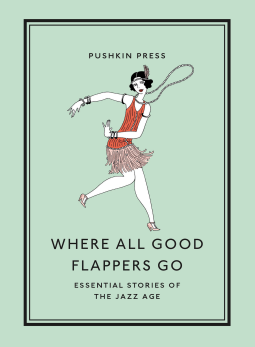
 I’ve never considered myself to be a fan of Jazz Age fiction – but, to be fair, I’ve read very little of it, other than a few F. Scott Fitzgerald novels. When I saw that Pushkin Press had put together this collection of Jazz Age short stories, I thought it would be a good opportunity to branch out and try some new authors from that era.
This edition begins with an introduction discussing the changes following WWI that led to the birth of the ‘flapper’ as women pursued social and sexual equality, then a short 1925 essay by Zelda Fitzgerald, What Became of the Flappers?. In this essay, Fitzgerald attempts to give her own definition of what a flapper is, before revealing what she believes will happen to them in the end:
The best flapper is reticent emotionally and courageous morally. You always know what she thinks, but she does all her feeling alone. These are two characteristics which will bring social intercourse to a more charming and sophisticated level. I believe in the flapper as an artist in her particular field, the art of being – being young, being lovely, being an object.
The essay is followed by twelve short stories, most of which were originally published in various periodicals between 1920 and 1932. Apart from F. Scott Fitzgerald, all of the other authors were new to me; I had at least heard of a few of them, such as Zora Neale Hurston, Anita Loos and Dorothy Parker, but was unfamiliar with the rest. The Fitzgerald story is Bernice Bobs Her Hair, which stands out as one of the best in the book, but I expect a lot of people will have read that one so I’m going to focus on some of the less well known stories instead.
My favourite story is probably Night Club by Katharine Brush, which describes a typical night at a New York club through the eyes of Mrs Brady, who works there as a maid. Mrs Brady’s job involves looking after a dressing room, where young women come to reapply their make-up throughout the evening, therefore she gets to hear a lot of scandalous gossip involving affairs and proposals. In the world of the flapper, however, these dramas have become so commonplace that Mrs Brady is more interested in the ‘real life’ stories in her magazine!
Another I particularly enjoyed is Dawn Powell’s Not the Marrying Kind, about Aileen, who is not the kind of girl men want to marry – unlike Joan who has always known she will marry and has a ‘hope chest’ of linen ready and waiting for her special day. Then there’s Gertrude Schalk’s The Chicago Kid, in which a chorus girl at the Yellow Parrot cabaret elopes with a millionaire, which inspires Flora, a black girl from Chicago to set out to do the same. I liked the twist at the end of this one!
Despite all dealing with the common theme of the flapper lifestyle, the stories in this collection are quite diverse and include contributions by male authors and black authors, so we see things from a range of different perspectives. Rudolph Fisher’s Common Meter describes a battle-of-the-bands contest between two jazz band leaders trying to win the affections of a beautiful woman, while Viña Delmar’s Thou Shalt Not Killjoy is written in the style of a Biblical parody. I can’t claim to have enjoyed all of the stories – Dorothy Parker’s The Mantle of Whistler, a story written mostly in dialogue as a satire on the flirtatious language used by the flappers, was particularly disappointing, considering she is one of the more famous authors in the collection.
Stories by Dana Ames, John Watts and Guy Gilpatric make up the rest of the book and although, as I’ve said, I found this collection a real mixed bag, it’s always good to try something different and it was an entertaining read overall.
Thanks to Pushkin Press for providing a copy of this book for review via NetGalley.
 She Reads Novels
This sounds rather good—I’m always put off by the phrase “Jazz Age” because I find F. Scott Fitzgerald and his mythology tiresome, but I like the sound of the Rudolph Fisher, Gertrude Schalk, and Katharine Brush especially.
I thought some of the stories by lesser known authors were better than the more popular ones. Those three were all great!
Love the sound of this one – I’m a fan of Fitzgerald but would love to read more widely across the era!
This would be the perfect place to start. It’s a great mixture of stories and authors and I would be interested in reading more by some of them now!
One to look out for – thanks.
I enjoyed it, despite not liking all of the stories.
This sounds more interesting than I might have thought it would. I don’t really even like Fitzgerald except The Great Gatsby, especially since I’ve learned how much of his work was stolen from Zelda!
I don’t like Fitzgerald much either and haven’t felt very tempted to explore other Jazz Age authors until now.
Maybe I need to explore a little more.
There’s a Dawn Powell story in this one? fun! I l love her books. 😀
I hadn’t heard of Dawn Powell until I read this book, but I really enjoyed her story. I’ll have to look out for more of her work.
I’m tempted because of the Rudolf Fisher story – I loved his two novels! These collections always tend to be a bit mixed but they’re a good way of finding new authors to explore.
I hadn’t come across Rudolph Fisher before reading this story. I’ll have to try one of his novels!
Oh, this really sounds charming! I’m always fascinated by stories of the jazz age (I’ve read nearly all Fitzgerald’s short stories, and loved most of them). But reading from some others would be splendid!
If you like Jazz Age fiction I’m sure you would enjoy this collection! The Fitzgerald story is a good one, but some of the other stories are great too.
This sounds like a fantastic collection, I have definitely read that Fitzgerald story before. Thanks for highlighting this collection .
I was sure I had already read the Fitzgerald story but didn’t recognise it once I started! Most of the other stories were very enjoyable as well.
Thanks, Helen, definitely one I’d like to read.
If you’re interested in that period of literature, it’s definitely worth reading.