Nonfiction November: Week 5 – New to my TBR

The host for week 5 of Nonfiction November is Deb of Readerbuzz and here is this week’s topic:

It’s been a month full of amazing nonfiction books! Which ones have made it onto your TBR? Be sure to link back to the original blogger who posted about that book!

Here are some of the books I’ve seen other bloggers mention during Nonfiction November that I would be interested in reading:

Moonlight Express: Around the World by Night Train by Monisha Rajesh
(Frances at Volatile Rune)

An account of the author’s travels by sleeper train.

Monsterland by Nicholas Jubber
(Shelleyrae at Book’d Out)

A book exploring myths and legends about monsters.

The Notebook: A History of Thinking on Paper by Roland Allen
(Heather at Based on a True Story)

A history of the humble notebook.

Islands of Abandonment by Cal Flyn
(Margaret at BooksPlease)

A book exploring some of the world’s most abandoned places.

Raising Hare by Chloe Dalton
(Deb at Readerbuzz)

An account of raising an abandoned baby hare.
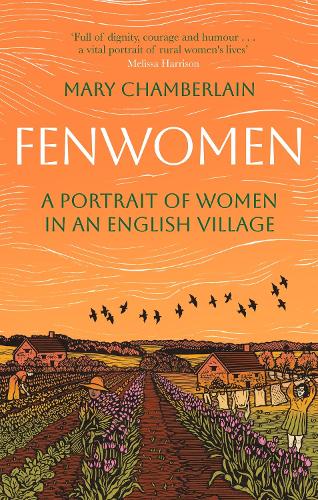
Fenwomen by Mary Chamberlain
(Kay at What? Me Read?)

A group of women look back at their lives in a village in the Cambridgeshire Fens.
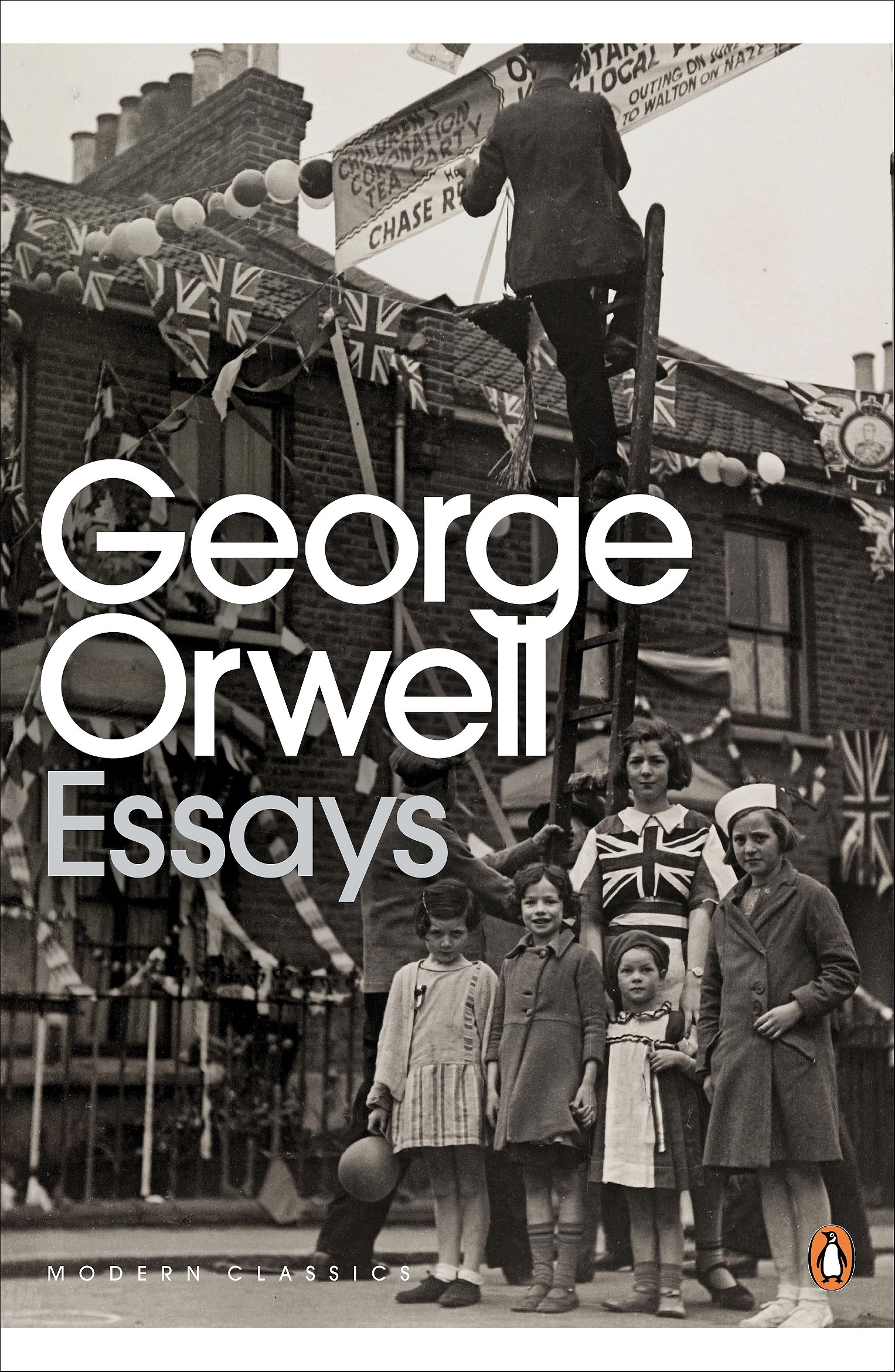
Essays by George Orwell
(Elle at Elle Thinks)

A collection of Orwell’s essays on a variety of subjects.
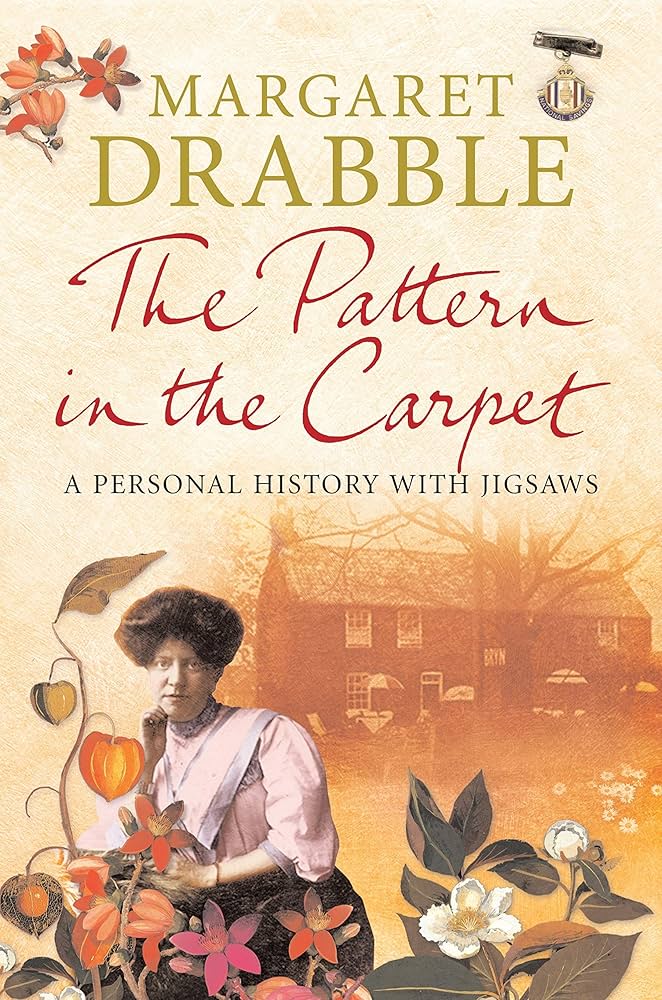
The Pattern in the Carpet by Margaret Drabble
(Margaret at BooksPlease)

A history of the jigsaw and Drabble’s own memories of completing jigsaws with her aunt as a child.
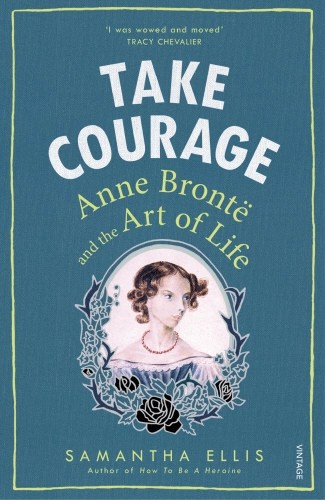
Take Courage by Samantha Ellis
(Cathy at What Cathy Read Next)

A look at the life and work of Anne Brontë.

~

Have you read any of these? What have you added to your TBR during Nonfiction November?

Nonfiction November: Week 4 – Diverse Perspectives

The host for week 4 of Nonfiction November is Rebekah of She Seeks Nonfiction and here is this week’s topic:

Nonfiction books are one of the best tools for seeing the world through someone else’s eyes. They allow us to get an idea of the experiences of people of all different ages, races, genders, abilities, religions, socioeconomic backgrounds, or even just people with different opinions than ours. Is there a book you read this year from a diverse author, or a book that opened your eyes to a perspective that you hadn’t considered? How did it challenge you to think differently?

I’ve only read seven nonfiction books this year and sadly only one of them includes diverse perspectives – so that’s the book I’m going to focus on here. It’s A History of England in 25 Poems by Catherine Clarke. In this book, Clarke selects twenty-five poems and uses them to explore England’s history, culture and identity, taking us from the 8th century right through to the modern day. As you would expect, many of the poems, particularly the older ones, are written by white Englishmen, but Clarke has also included some written by women and people of other nationalities and backgrounds. Here are some that stood out:

To the Right Honourable William, Earl of Dartmouth by Phillis Wheatley (1773)

Phillis Wheatley was the first African American woman to have her poems published. She was born in West Africa, where she was sold into slavery and bought by the Wheatley family of Boston. She was later emancipated after her first book of poetry was published. In 1773, the Earl of Dartmouth had recently been appointed secretary of state for the colonies and Phillis wrote him this poem to express her hope that he would be supportive of freedom and justice.

Hurricane Hits England by Grace Nichols (1996)

Grace Nichols is a Guyanese poet who moved to Britain in 1977. This poem is about the Great Storm of 1987, which she experienced while living in England, and how it brought back childhood memories of hurricanes in the Caribbean, helping her to form a connection between life in her new country and her homeland.

England’s Glory by Fleur Adock (1986)

Fleur Adcock spent most of her adult life in England but was born in New Zealand. In this poem, she looks at England’s north-south divide and explores cultural differences and stereotypes in a humorous way, using two different brands of matches to represent the characteristics of northerners and southerners.

Crumble-Hall by Mary Leapor (1751)

Mary Leapor is an English poet who, unusually for her time period, came from a working class background and worked as a kitchen maid. She died from measles at the age of just twenty-four but two volumes of her poetry were published posthumously. Crumble-Hall is a satire on the 18th century country house poem, written from a servant’s perspective.

~

Do you know any of these poems? And have you read any nonfiction this year that is written by a diverse author or includes unusual perspectives?

Nonfiction November: Week 3 – Book Pairings

I’m taking part in Nonfiction November this month and this week’s topic is one I always enjoy: book pairings! Our host for Week 3 is Liz of Adventures in Reading, Running and Working from Home and here is the prompt:

This week, pair up a nonfiction book with a fiction title. Maybe it’s a historical novel and the real history in a nonfiction version, or a memoir and a novel, or a fiction book you’ve read and you would like recommendations for background reading. Or maybe it’s just two books you feel have a link, whatever they might be. You can be as creative as you like!

For my nonfiction book, I’ve chosen Come, Tell Me How You Live by Agatha Christie, which I read earlier this year. It’s her memoir describing her trips to Syria in the 1930s accompanying her archaeologist husband, Max Mallowan, on digs. I can think of three fiction books that would make good pairs, so I have listed all three below.

Murder in Mesopotamia by Agatha Christie is the most obvious choice. It’s a Poirot mystery published in 1936 and is set on the site of an archaeological dig near Hassanieh, Iraq. Apparently Christie drew on her own experiences of visiting an excavation at Ur and she based some of the characters on people she and Max knew.

Crocodile on the Sandbank by Elizabeth Peters is the first in the Amelia Peabody mystery series and also features a narrator who participates in archaeological digs, this time in 19th century Egypt. I’ve enjoyed the first three books in the series and am looking forward to the next one.

The Gabriel Hounds by Mary Stewart isn’t about archaeology, but it is set in Syria – and also in Lebanon, where our narrator, Christy, goes to visit her eccentric Great-Aunt Harriet, a character based on the real-life adventurer and explorer Lady Hester Stanhope. I love Mary Stewart’s books and this is a very entertaining one!

~

Have you read any of these? Can you think of other novels about archaeology or set in Syria?

Nonfiction November: Week 2 – Choosing Nonfiction

This week’s prompt for Nonfiction November is hosted by Frances of Volatile Rune – and here it is:

There are many topics to choose from when looking for a nonfiction book. For example: Biography, Autobiography, Memoir, Travel, Health, Politics, History, Religion and Spirituality, Science, Art, Medicine, Gardening, Food, Business, Education, Music. Maybe use this week to challenge yourself to pick a genre you wouldn’t normally read? Or stick to what you usually like is also fine. If you are a nonfiction genre newbie, did your choice encourage you to read more?

I’m not very adventurous when it comes to nonfiction and tend to stick to the same few topics most of the time:

History e.g. The Brothers York by Thomas Penn; Powers and Thrones by Dan Jones

Memoir e.g. The Oaken Heart by Margery Allingham; A Chelsea Concerto by Frances Faviell

Biography e.g. Samuel Pepys: The Unequalled Self by Claire Tomalin; The Real Enid Blyton by Nadia Cohen

True crime e.g. The Wicked Boy by Kate Summerscale; Murder by the Book by Claire Harman

I don’t often read any nonfiction that falls outside of these categories, but I’m always open to trying new things and I think participating in Nonfiction November is a good way to find books on other topics that I might enjoy.

So what have I decided to read during Nonfiction November this year? First, I’m trying to finish The Eagle and the Hart by Helen Castor, a very long book that I’ve been reading for a few months but keep putting aside to read other things. It’s about the relationship between Richard II and Henry IV…so yes, another history book! I’ve also just started reading 100 Books to Live By by Joseph Piercy, which I have from NetGalley. I don’t seem to read much nonfiction about books and literature and I have no idea why!

~

How do you choose which nonfiction books to read? Do you stick to the same topics or do you like to challenge yourself to read something different?

My Year in Novellas – #NovNov25

Novellas in November 2025 (hosted by Cathy of 746 Books and Rebecca of Bookish Beck) officially started yesterday and we’re invited to begin by posting a “My Year in Novellas” retrospective looking at any novellas we have read since last year’s NovNov. When I looked back over the year, I was surprised to see how few novellas I’d actually read in the past twelve months – only seven. I’ve listed them below with links to my reviews.

For the purposes of this event, anything under 200 pages can be classed as a novella.

Fire by John Boyne (163 pages) – This is the third novel in Boyne’s Elements Quartet and is narrated by a surgeon who works with burn victims. I’m hoping to read the final book, Air, this month.

Mischief by Charlotte Armstrong (144 pages) – A tense and suspenseful noir thriller about a psychopathic babysitter.

The Ghost of Madison Avenue by Nancy Bilyeau (120 pages) – Perfect for Christmas, this is a ghost story set in and around the Morgan Library on New York’s Madison Avenue.

Woman in Blue by Douglas Bruton (144 pages) – I loved this book about a man who finds himself drawn to Vermeer’s Woman in Blue Reading a Letter and the story of the 17th century woman depicted in the painting.

Ice by Anna Kavan (194 pages) – A strange and fascinating dystopian story in which the narrator pursues a pale, white-haired girl around a world rapidly becoming engulfed by ice.

Clear by Carys Davies (160 pages) – A beautifully written novella set in Scotland during the Highland Clearances.

The Stepdaughter by Caroline Blackwood (128 pages) – A dark psychological thriller about a woman who develops an obsessive hatred for her young stepdaughter.

~

Do you like reading novellas? Have you read any good ones during the last year?

Nonfiction November: Week 1 – My Year in Nonfiction

I’m taking part in Nonfiction November which starts today and is hosted by Heather of Based on a True Story, Frances of Volatile Rune, Liz of Adventures in Reading, Running and Working from Home, Rebekah of She Seeks Nonfiction and Deb of Readerbuzz.

This week, Heather has posted the following questions for us to answer:

Week 1 – Your Year in Nonfiction:

What books have you read?
What were your favorites?
Is there a topic you want to read about more?
What are you hoping to get out of participating in Nonfiction November?
I’m not someone who reads a huge amount of nonfiction, but this year I’ve read more of it than usual – seven books so far and I am in the middle of an eighth. Here are the links to my reviews:

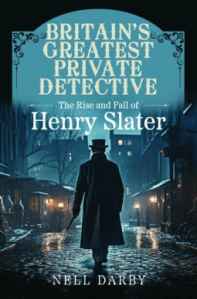
1. Britain’s Greatest Private Detective by Nell Darby
2. That Dark Spring by Susannah Stapleton
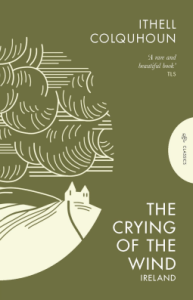
3. The Crying of the Wind: Ireland by Ithell Colquhoun
4. Come, Tell Me How You Live by Agatha Christie
5. Masquerade Balls in Regency Britain by Anne Glover
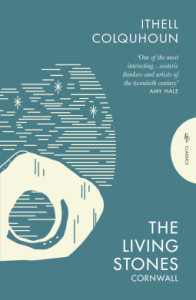
6. The Living Stones: Cornwall by Ithell Colquhoun
7. A History of England in 25 Poems by Catherine Clarke

These are all either history, true crime, memoirs or travel books, which isn’t very surprising as these are the topics I tend to always be drawn to when it comes to nonfiction. Of these seven books, my favourites are Christie’s Come, Tell Me How You Live, her account of accompanying her archaeologist husband on digs in Syria in the 1930s, and A History of England in 25 Poems, which I found fascinating (and much more of a history book than a poetry anthology).

I’m hoping that taking part in Nonfiction November will encourage me to read more nonfiction and find some new books and authors to add to my nonfiction TBR (which is much, much smaller than my fiction TBR).

Do you like to read nonfiction? Will you be joining in with Nonfiction November this year?

#1925Club – My Top 10 Reads from 10 Years of Clubs!

As part of 1925 Club (hosted this week by Karen and Simon), we’re invited to join in the celebrations marking the 10th anniversary of the clubs. Yes, beginning in 2015 with 1924 Club, the club reading weeks have now been held twice annually for ten years! I’ve taken part in all of them and have discovered lots of great books, as well as being inspired to try some new authors for the first time. Having looked back at all the titles I read for the various club years, I have picked out ten favourites to highlight below. The books are listed in order of publication year.

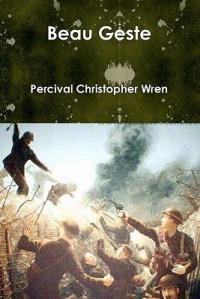
1. Beau Geste by P.C. Wren (1924 Club)
Part adventure novel, part mystery, this was the book I read for Simon and Karen’s first club ten years ago and it was a great choice.

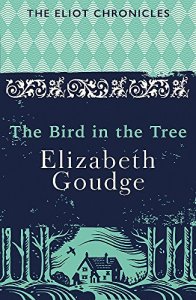
2. The Bird in the Tree by Elizabeth Goudge (1940 Club) – I really enjoyed this first book in a trilogy following the lives of Lucilla Eliot and her children and grandchildren. I must read the second book soon!

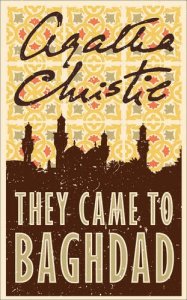
3. They Came to Baghdad by Agatha Christie (1951 Club)
This is one of Christie’s standalone thrillers (no Poirot or Miss Marple here). It’s great fun and has a very engaging heroine in Victoria Jones.

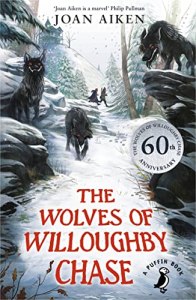
4. The Wolves of Willoughby Chase by Joan Aiken (1962 Club)
I missed out on reading Joan Aiken’s Wolves Chronicles as a child, so I took the opportunity to read this one for 1962 Club!

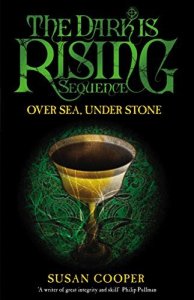
5. Over Sea, Under Stone by Susan Cooper (1965 Club)
The first in Cooper’s The Dark is Rising series and another children’s book that I came to as an adult and loved.

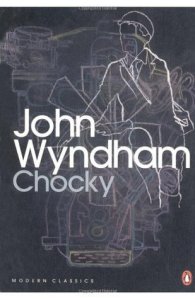
6. Chocky by John Wyndham (1968 Club)
As someone who doesn’t read much science fiction, I didn’t expect to love this novel about a boy with a very unusual imaginary friend, but I found it fascinating!

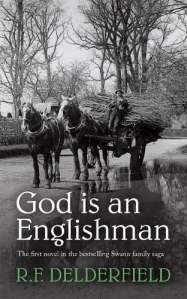
7. God is an Englishman by RF Delderfield (1970 Club)
This is the first book in Delderfield’s Swann Saga about a family who establish a haulage business in Victorian Britain. I will definitely be reading the next book at some point.

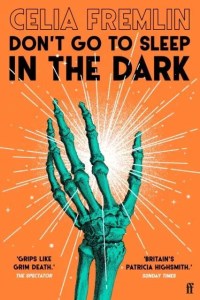
8. Don’t Go to Sleep in the Dark by Celia Fremlin (1970 Club)
A wonderful collection of thirteen dark, unsettling stories in which Fremlin creates tension from domestic settings and everyday situations.

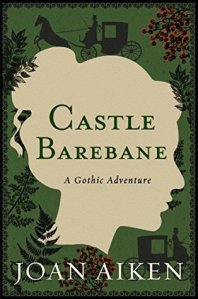
9. Castle Barebane by Joan Aiken (1976 Club)
Another Aiken book, this time a very entertaining adult Gothic novel set in 19th century Scotland.

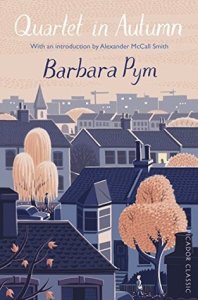
10. Quartet in Autumn by Barbara Pym (1977 Club) – A surprisingly dark and poigant Pym novel, about four lonely people who share an office. It has stayed with me because of the sadness I felt for the characters.

Some honourable mentions:

Live Alone and Like It by Marjorie Hillis (1936 Club)
The So Blue Marble by Dorothy B. Hughes (1940 Club)
Earth and High Heaven by Gwethalyn Graham (1944 Club)
The Eagle of the Ninth by Rosemary Sutcliff (1954 Club)
A Morbid Taste for Bones by Ellis Peters (1977 Club)

~

Have you read any of these? If you join in with the clubs, what are the best books you’ve read for them?