Historical Musings #18: Castles!

Historical Musings One of my current reads is Rebellion by Livi Michael, the second in a trilogy of novels set during the Wars of the Roses. A few chapters in, I came across the sentence “My Lord of Warwick lies at the castle of Warkworth and he rides daily to all these castles to oversee the sieges”. With my interest in history, you won’t be surprised to hear that I enjoy visiting castles! Warkworth Castle is one of my ‘local’ castles (less than an hour’s drive away) and I have visited it more than once, the first time as a ten-year-old on a school trip. As someone who reads a lot of historical fiction, castles feature regularly in my reading but I haven’t been to most of them so it’s always nice to see a mention of one that I am familiar with.
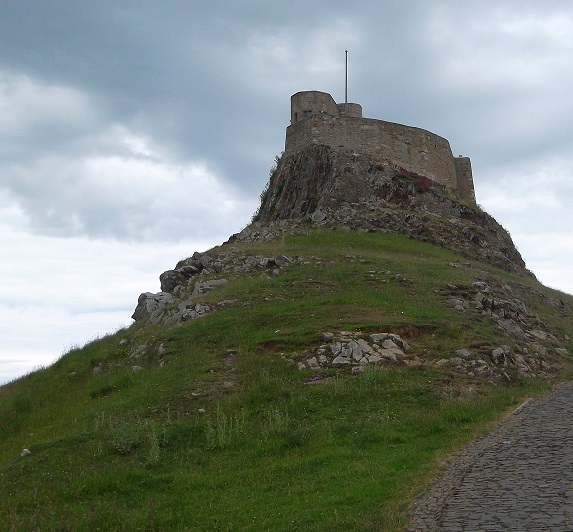
Lindisfarne Castle

Lindisfarne Castle

Like Warkworth Castle, most of the other castles I have visited are in Northumberland. Bamburgh Castle is surely the most dramatic; as you drive along the coast, you just seem to turn a corner and there it is, almost on top of you. Lindisfarne Castle is atmospheric too, due to its location perched on a hill on Holy Island. Then there’s Chillingham Castle, famous for its ghosts, and Alnwick Castle, still the home of the Dukes of Northumberland and better known to Harry Potter fans as Hogwarts. I’ve also been to Belsay Castle (for an English Heritage ‘Knights Tournament’) and to Newcastle Castle – yes, there’s a castle in Newcastle upon Tyne!
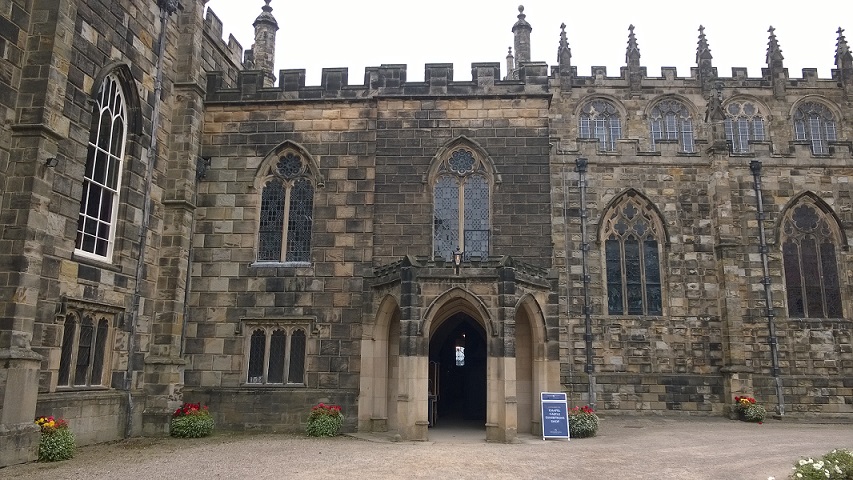
Auckland Castle

Auckland Castle

In Cumbria, I enjoyed visiting Carlisle Castle (being close to the border with Scotland it has apparently been under siege more times than any other castle in England) and Muncaster Castle in remote Ravenglass, of which my abiding memory is not so much the castle itself as the Hawk and Owl Centre and the birds of prey display in the castle grounds. In County Durham, among others, there’s Auckland Castle, which was the seat of the Bishops of Durham. I can also highly recommend Raby Castle, with its coach house, deer park and walled gardens (this is the castle I have used in my ‘Historical Musings’ image which is displayed at the top of this post).

I’ve been to Edinburgh Castle and have seen Cardiff Castle from the outside, but I sadly haven’t managed to visit any of the other castles in Scotland and Wales yet, which is something I would like to change. I’m hoping someone can tell me which ones I should put at the top of my list! There are still many, many more castles for me to see in England too, as apart from Leeds Castle in Kent and the Tower of London, most of my castle-visiting so far has been restricted to the north. And of course, there are castles all over Europe and beyond just waiting to be explored as well.

Hazlewood Castle

Hazlewood Castle

A few years ago I had the opportunity to stay for two nights at Hazlewood Castle in North Yorkshire, which is now a hotel but also has an interesting history and overlooks the site of the Battle of Towton. The bedrooms are accessed through a secret passage behind a bookcase in the library (you can see the door handle in my picture).

Visiting a castle today, as a twenty-first century tourist, it can be difficult to imagine what it would have been like to actually live or work in the castle when it was newly built. Apart from the castles like Alnwick which are still inhabited, and the ones which have been kept largely intact and furnished by private owners, many of the others have fallen into ruin and are now not much more than empty shells. Historical fiction can breathe new life into these ancient buildings and help us to picture what they were like when they were still in use.

At the beginning of Diana Gabaldon’s Outlander series, her time-travelling nurse, Claire Randall, sees a ruined castle restored to its former glory:

Castle Leoch. Well, at least now I knew where I was. When I had known it, Castle Leoch was a picturesque ruin. It was considerably more picturesque now, what with the sheep huddling under the walls of the keep and the pervasive smell of raw sewage. I was beginning to accept the impossible idea that I was, most likely, somewhere in the eighteenth century.

Leoch is a fictional castle, but there are plenty of real castles which appear in historical fiction. I have already said that Warkworth Castle is mentioned in Rebellion (and so are lots of other castles), while Raby Castle was referred to in Red Rose, White Rose by Joanna Hickson, a novel about Cicely Neville, mother of Edward IV and Richard III, known as the Rose of Raby:

Dominating the upper reaches of this fertile basin was Raby Castle, the ancestral home of the Neville family – my family. Renowned as one of England’s great northern fortresses, Raby’s nine massive towers sprawled below me like the giants of legend; they loomed over the meagre mud-plastered cotts of the village beyond its moat. I had lived most of my seventeen years within those soaring walls. To my mother it was a palace, a great haven of security and splendour demonstrating infallibly the enormous wealth and power of the Nevilles, but to me it had become a prison.

Edinburgh Castle with Nor' Loch in foreground

Edinburgh Castle with the Nor’ Loch in the foreground

In The Game of Kings, Dorothy Dunnett brings Edinburgh Castle to life in one perfect sentence:

Tonight the Castle on its pinnacle was fully lit, laying constellations on the water.

Moving away from castles I have actually visited, there are far too many other examples of castles in historical fiction to list here. Castles always feature strongly in the medieval novels of Sharon Penman and Elizabeth Chadwick, for example: I remember there were some great scenes involving trebuchets in Chadwick’s To Defy a King. Mary of Carisbrooke by Margaret Campbell Barnes is the story of Charles I’s imprisonment in Carisbrooke Castle on the Isle of Wight, and in Robyn Young’s Robert the Bruce trilogy, castles are constantly being attacked or besieged. As I’ve said, there are so many castles mentioned in historical novels that I would be here forever if I wanted to talk about all of them!

My questions this month, then, are:

Have you visited any castles? Which ones? If not, would you like to? Which books have you enjoyed that are set in castles or with memorable scenes involving castles?

I have concentrated on British castles here because they are the ones I know most about, but I would love to hear about castles in other countries too!

*All pictures used in this post are my own, apart from the painting of Edinburgh Castle which is in the public domain.

Historical Musings #17: The historical mystery

Historical Musings I’ve been so badly organised recently that I had no idea what this month’s Historical Musings post would be about until yesterday, when I sat down to start reading Sovereign, the third book in CJ Sansom’s Shardlake mystery series, set in Tudor England. I enjoy reading historical mysteries for the same reasons that I enjoy reading historical fiction in general (escaping into the past, learning through fiction etc) but also because I like to see mysteries being solved through traditional methods – questioning witnesses, making observations, searching for clues – without the use of modern technology.

Sovereign I loved the first two Shardlake novels, yet it has taken me more than a year to get round to picking up this third one; the problem with historical mysteries is that they all seem to be part of a long series! I can’t think of many standalones that I’ve read; The Name of the Rose by Umberto Eco is one, The Unburied by Charles Palliser is another, and then there are some of Andrew Taylor’s books (The Anatomy of Ghosts and The American Boy) – but historical mystery series are in abundance! Although I seem to be very good at starting them, I’m not so good at remembering to continue with them.

Here are a few that I have in progress at the moment:

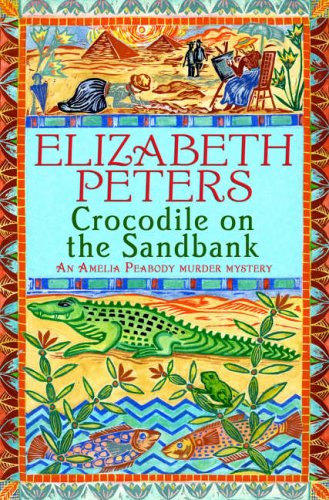
Crocodile on the Sandbank Shardlake series by CJ Sansom (Tudor) – read the first two books and currently reading the third
Sebastian St Cyr series by CS Harris (Regency) – read the first book
Amelia Peabody series by Elizabeth Peters (19th/20th century, Egypt) – read the first two books
Mary Russell series by Laurie R King (early 20th century) – read the first two books
Justin de Quincy series by Sharon Penman (medieval) – read the first book
Charles Horton series by Lloyd Shepherd (19th century) – read the first two books
Adelia Aguilar series by Ariana Franklin (medieval) – read the first book
Thomas Hawkins series by Antonia Hodgson (18th century) – read the first two books and starting the third soon

As you can see, I’ve got a lot of reading to do!

This month, then, I’d like to hear your thoughts on historical mysteries. Do you enjoy reading them? Which are your favourites?

Historical Musings #16: Exploring Europe

Historical Musings I think it’s safe to say that, if you live in the UK, the subject of Europe will have been very much in your thoughts over the last few weeks. Now, don’t worry – I have always made an effort to keep politics away from my blog, so I’m not planning to discuss the EU referendum here or to ask whether you voted Remain or Leave. However, when I sat down to choose a topic for this month’s Historical Musings post, the first thing that came to mind was Europe…and specifically, how little I’ve read about the histories of certain European countries.

Obviously, I have read a large number of historical fiction novels covering various periods of British history and quite a lot set in France and Italy. Looking back through my blog archives, I can see that I’ve read several historical novels set in Spain (including The Last Queen by CW Gortner, the story of Juana of Castile, and By Fire, By Water by Mitchell James Kaplan, set in a Jewish community in 15th century Granada) and have also been introduced to Dutch history through books like Jessie Burton’s The Miniaturist, Tracy Chevalier’s Girl with a Pearl Earring and Alexandre Dumas’ The Black Tulip.

The Wild Girl German history has featured less often in my reading – apart from books about the Second World War, I can only really think of The Wild Girl by Kate Forsyth (the story of Dortchen Wild and her relationship with the Brothers Grimm) and The Beggar King by Oliver Pötzsch (a mystery set in 17th century Bavaria). My recent read of Kristin Lavransdatter, which I wrote about last week, is the first time I’ve read about medieval Norway, and the only other book I can think of which touched on Norwegian history was Lucinda Riley’s The Storm Sister.

Far to Go I’ve read one novel set in 18th century Portugal (The Devil on her Tongue by Linda Holeman), one in 1930s and 40s Hungary (The Invisible Bridge) and one in the former Czechoslovakia (Far to Go by Alison Pick). Dorothy Dunnett’s Lymond Chronicles and House of Niccolo series have introduced me to the histories of several other European countries, including Cyprus (Race of Scorpions), Iceland (To Lie with Lions) and Malta (The Disorderly Knights). These novels, though – excellent as they are – only cover a brief time period and I’m very aware that I still have a lot to learn.

This month, then, I’m looking for some suggestions. I would love to hear about any historical fiction you’ve read set in any of the European countries I’ve already mentioned and also in any I haven’t – for example, Sweden, Denmark, Finland, the Baltic states, Austria, Greece (other than ancient history and mythology), Bulgaria, Romania/the Balkans, Poland, Switzerland to name just a few. I’ve read contemporary fiction set in some of these countries but know little to nothing of their histories and that’s something I would like to change.

Historical Musings #15: Six reasons to love historical fiction

Historical Musings This month’s post is inspired by last week’s Top Ten Tuesday topic which asked for ‘reasons to love x’, with x being a favourite book, character, author etc. Although I didn’t participate, I started thinking about the reasons I love reading historical fiction…and I have listed six of them below. I briefly mentioned some of these things in my very first Historical Musings post last year (Do you read historical fiction?) but I have expanded on them and added to them here.

1. It provides the perfect opportunity to learn about other times and places.
I haven’t formally studied history since I left school, but I’m a firm believer in voluntary, lifelong learning – and what could be more enjoyable than learning through fiction? When I read a good historical fiction novel, I am left with the feeling that not only have I been entertained by a great story, I’ve also learned something new. If a subject particularly interests me, I sometimes look for a non-fiction book so that I can add to my knowledge with some factual information, but in most cases my initial introduction to a new historical period or historical figure has been through fiction.
Which leads me on to my second reason…

2. I find it much easier to retain facts gained through reading fiction rather than non-fiction.
For some reason, no matter how hard I try and no matter how fascinating the subject, I always seem to struggle to stay interested when I’m reading non-fiction. By the time I reach the end of the book I find I’ve forgotten a lot of the information I’ve just read. I am much more likely to remember names, dates and facts if they are given to me in the form of historical fiction.

3. It’s a great way of escaping from modern life for a while.
Although I do sometimes like to read contemporary fiction, I am usually much happier reading books set in the past (both classics and historical fiction). I live in 2016, so I like my reading to take me somewhere different! Reading historical fiction can be a thoroughly immersive experience. I love books where the author has clearly gone to a lot of effort to create a complete and believable historical world – and yet the very best authors make it seem so effortless! I know it’s a cliché, but I really do like to feel as though I’ve stepped into a time machine and been transported back in time.

Whoever wishes to foresee the future must consult the past; for human events ever resemble those of preceding times. This arises from the fact that they are produced by men who ever have been, and ever shall be, animated by the same passions, and thus they necessarily have the same results. - Niccolo Machiavelli

4. Understanding the past can help us to understand the present – and maybe even the future.
Just because a novel is set in the past doesn’t mean it can’t incorporate themes which are universal and timeless. When I read Robert Harris’s Cicero trilogy recently, I was struck by the subtle parallels he drew between modern politics and the politics of the Roman Republic, while novels such as Harvest by Jim Crace and Gutenberg’s Apprentice by Alix Christie show the effects of progress and the conflict between new technology and traditional methods, things which are still relevant today.

5. There’s so much variety!
Historical mysteries, historical romances, historical adventure novels, quick and light reads, long and challenging reads, books set in Ancient Greece, books set at the Tudor court…the term ‘historical fiction’ encompasses such a wide range of different types of book that it’s always possible to find something to suit your mood.

To be ignorant of what occurred before you were born is to remain always a child. For what is the worth of human life, unless it is woven into the life of our ancestors by the records of history? - Marcus Tullius Cicero

6. I love to see how different authors portray the past and how they tackle some of history’s greatest mysteries and controversies.
Some people may wonder why I enjoy reading about the same topics over and over again. Well, no two books are exactly the same and every author has a different opinion and a different way of interpreting the same historical people and events. Only by reading as much as possible can you begin to put together a balanced picture and to feel sufficiently well informed to start forming your own views.

~

Now it’s your turn! If you also enjoy reading historical fiction, can you think of any more reasons to add to the six I’ve listed above?

Historical Musings #14: Close to home or far away

Historical Musings One of the things I love about reading historical fiction is that it gives me an opportunity to learn about times and places about which I previously knew nothing at all.

In the last few years I have read about subjects as diverse as the Narváez expedition to the New World (The Moor’s Account by Laila Lalami), the Siege of Constantinople (Master of Shadows by Neil Oliver) and the Opium Wars (the Ibis Trilogy by Amitav Ghosh). I have visited, through fiction, 17th century Mughal India (The Twentieth Wife by Indu Sundaresan), 18th century Portugal (The Devil on her Tongue by Linda Holeman) and 15th century Iceland (To Lie with Lions by Dorothy Dunnett).

Much as I enjoy reading about new places, it can also be nice to read books with a more familiar setting. As I’m English I tend to read a lot of historical fiction novels set in England but most of them focus on London and the South. Living in the North East of England, it’s not often that I come across historical fiction set in my part of the country, which is a shame as it’s an area with plenty of history to write about! Here are a few historical novels I’ve thought of that are set at least partly in Northumberland or County Durham:

Edwin High King of Britain Edwin: High King of Britain and Oswald: Return of the King by Edoardo Albert – These are the first two books in a fascinating trilogy telling the story of the 7th century kings of Northumbria.

Lion of Alnwick by Carol Wensby-Scott (and the sequels Lion Dormant and Lion Invincible, which I haven’t read yet) – Set in the 14th and 15th centuries, this trilogy follows the story of the Percy family, Earls of Northumberland in the years leading up to the Wars of the Roses.

The Lymond Chronicles by Dorothy Dunnett – This series takes us all over 16th century Europe, North Africa and beyond, but Northumberland also features in several of the books as some of the main characters live near Hexham on the fictional estate of Flaw Valleys.

The Queen’s Promise by Lyn Andrews – This is a novel about the relationship between Anne Boleyn and Henry Percy, son of the 5th Earl of Northumberland. The book focuses more on Henry than Anne, so large sections of the story are set in Northumberland.

Devil WaterRed Rose, White Rose by Joanna Hickson – Cecily Neville (mother of Edward IV and Richard III) was known as the Rose of Raby and the early chapters of this novel are set in the area surrounding Raby Castle in County Durham.

Devil Water by Anya Seton – This is the story of Charles Radcliffe, brother of the Earl of Derwentwater, who marries a Northumberland girl called Meg Snowdon. The Radcliffes were real historical figures and were involved in the Jacobite rebellion of 1715.

If anyone knows of any more examples, I would love to hear what they are.

And now it’s your turn to tell me:

Do you prefer to read books set in places you know or places you don’t know?

Can you think of any historical fiction novels set in your own town/city or part of your country? If you live somewhere like London there will be hundreds, so in that case – which is your favourite?

Historical Musings #13: The author’s note

Historical Musings

If you read historical fiction, you have probably noticed that many books in this genre include an ‘Author’s Note’ or ‘Historical Note’ at either the back or the front. You probably also have an opinion on these, whether good or bad.

In most cases, the author’s note is found at the end of the book and I think this is usually the most sensible place to put it. It means that if we don’t already know the history, we can enjoy the story without having any surprises spoiled for us and without disrupting our immersion in the lives of the characters. When the note appears at the back, the author tends to use it as an opportunity to explain where he or she has deviated away from the known historical facts and where they have had to use their imagination to fill in the gaps. I always appreciate it when an author does this, especially if it’s clear that they’ve researched the topic thoroughly and if they give good, logical reasons for the choices they’ve made in telling the story (rather than using their note as an excuse to explain away something completely implausible).

The Silvered Heart There can be other uses of the Author’s Note too: to share the author’s personal connection to the events of the story; to tell us what happened to any real historical figures after the novel ended; to make suggestions for further reading and even to provide photographs and illustrations – at the end of her novel The Silvered Heart, for example, Katherine Clements shares a picture of her heroine, Lady Katherine Ferrers.

Notes located at the front of the book are less common (although a foreword or introduction sometimes serves the same purpose) and are presumably intended to give us information that the author thinks it would be helpful to know before we start to read. In my current historical fiction read, The White Witch, Elizabeth Goudge places her Authors’ Note at the front and apologises in advance “for the many mistakes I must have unwittingly made”. Several of Dorothy Dunnett’s novels also contain an Author’s Note at the beginning, but they are very brief ones (I don’t feel the lack of detailed notes in her books, though – I think some books benefit from having them and others are fine without). Anya Seton’s Katherine, however, has a very detailed note at the front, describing how the author’s interest in Katherine Swynford and John of Gaunt began, discussing the fates of some of the characters and listing her sources – information which I personally think would have been better placed at the end.

The Iron King I have read novels where the notes are provided at the back but are also referenced directly in the text. Maurice Druon’s Accursed Kings series comes to mind here. This has the advantage of clarifying points as soon as we encounter them in the story, but it can also break the flow of our reading. Not many authors choose this format for their notes – it’s what you would usually expect to find in non-fiction – but I think it suits the style of Druon’s novels.

As well as enjoying good historical notes in my historical fiction, I also appreciate it when a book includes maps, family trees, character lists, glossaries and/or pronunciation guides. Although some of my favourite books don’t contain any of these things (and if a subject really interests me, I’m always happy to do my own research anyway), I do think their inclusion adds something to the overall reading experience. Recently I have been particularly impressed by the amount of additional information provided in Robyn Young’s Robert the Bruce trilogy.

Of course, just because an author has included notes in his or her book, it doesn’t mean that you have to read them! The best novels, in my opinion, should stand alone from supplementary material and should be able to be enjoyed for the story itself whether or not you want to read the notes.

How do you feel about Author’s Notes in historical fiction novels? Do you read them or not? Which authors do you think write the best notes?

Historical Musings #12: Essential Tudor fiction

Historical Musings Whether you’ve been reading historical fiction for years or whether you’re new to the genre, you can’t have failed to have noticed the abundance of novels set in the Tudor period. From Philippa Gregory’s The Other Boleyn Girl to Hilary Mantel’s Wolf Hall, it seems there’s a Tudor novel to suit all literary tastes and preferences. Although I’m now much more interested in the Plantagenet era, particularly the Wars of the Roses, and, increasingly, in earlier periods such as the Norman Conquest and the early medieval period, I have still read a lot of Tudor fiction over the years and I’m sure I’ll continue to do so, however much I might sometimes feel that I’ve read enough. I’m currently halfway through CJ Sansom’s Shardlake series and I also have a review copy of Alison Weir’s new book, Six Tudor Queens: Katherine of Aragon, The True Queen, so they will probably be my next Tudor reads.

Wolf HallI have listed here and here most of the Tudor books I’ve reviewed on my blog so far, including those set in the Elizabethan period (I’m planning to update these lists at some point with books read prior to blogging). However, I can’t really say that I would recommend all of them. There are some excellent Tudor novels out there but also some which are quite disappointing and with so much choice available it can be easy to find yourself reading a lot of the mediocre books while perhaps missing out on some of the better ones.

I didn’t have much time to prepare this month’s post, so I’m keeping it short and simple and will finish by asking for your thoughts.

Which Tudor novels would you consider essential reads for someone who has never read any and is wondering where to start?

Are there any books you would recommend even to someone who is getting bored with the Tudors? Any which you think approach the Tudor period in an unusual way or breathe fresh life into the subject?