Phineas Redux by Anthony Trollope

This is the fourth book in Trollope’s Palliser series and continues the story begun in the second book, Phineas Finn. It would have been possible to move straight from one Phineas novel to the other, but in between the two there is The Eustace Diamonds, which I’m glad I read first as several characters and storylines from that book are picked up again in this one.

*Spoiler warning – If you have not yet read Phineas Finn, be aware that the rest of this post will contain spoilers.*

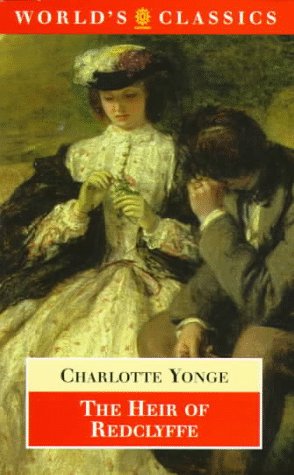
Phineas Redux At the beginning of the novel we learn that Phineas is now living alone in Dublin, his wife having died in childbirth. Phineas is leading a comfortable but uneventful life and misses the excitement of his former political career in London, so when an opportunity arises for him to return to England and stand for parliament again, he jumps at the chance. Soon Phineas is back in the House of Commons having won a seat as the member for Tankerville, but he almost immediately finds himself caught up in the controversy surrounding plans for the disestablishment of the Church.

The return of Phineas Finn to parliament also means that both he and the reader are reunited with old friends from earlier in the series. These include Plantagenet Palliser, now Duke of Omnium following the death of his elderly uncle, and his wife, Lady Glencora, the new Duchess. Madame Max Goesler, who had been a companion to the old Duke, is still part of Glencora’s circle and is pleased to be able to resume her friendship with Phineas. Meanwhile, Lady Laura Kennedy, the woman Phineas once hoped to marry, has left her husband, but Phineas knows that even though she is passionately in love with him, his own feelings have now changed.

There’s so much going on in Phineas Redux; now that we are four books into the series, the cast of characters is widening all the time. As well as all of the characters I’ve already mentioned, I was pleased to catch up with Lord Chiltern and Violet Effingham and to find that they are now a happily married couple. A young woman called Adelaide Palliser is staying with the Chilterns and one of the novel’s subplots centres around her as she attracts the attentions of two very different men – Gerard Maule and Ned Spooner. And a few characters from The Eustace Diamonds appear again too, including Lizzie Eustace, Lord Fawn and Mr Emilius.

I enjoyed meeting all of these people again and being back in the world of Phineas and the Pallisers, but it took a while for me to become fully drawn into this particular novel. There are some long political passages in the first half of the book, and some fox-hunting chapters too, which I struggled to get through. Then, somewhere in the middle of the novel, a murder takes place and from this point on I thought things became much more interesting. The murder is that of Mr Bonteen, a political rival of Phineas’s, and all the evidence seems to point to Phineas as the culprit.

Now, Anthony Trollope is no Agatha Christie, and we know from the beginning who really committed the crime, but the murder and the trial which follows allows Trollope to develop the relationships between Phineas and each of the other characters, some of whom have no doubts that Phineas is innocent and some who aren’t so sure. Phineas finds that his strongest support comes from the women in his life. Lady Laura wants to help, but is limited as to what she can actually do, and eventually becomes aware that while Phineas values her friendship, the offer he once made her is unlikely to be repeated. Laura’s story is a sad one, in contrast with Madame Max Goesler’s, who goes to great lengths to try to clear Phineas’s name and proves herself to be a true friend. And I love the warm-hearted Duchess and her enthusiasm for the causes she believes in.

After a slow start I enjoyed Phineas Redux and am looking forward to reading the final two Palliser novels. Next will be The Prime Minister!

The Road to Wigan Pier by George Orwell

“On the day when there was a full chamber-pot under the breakfast table I decided to leave. The place was beginning to depress me. It was not only the dirt, the smells, and the vile food, but the feeling of stagnant meaningless decay, of having got down into some subterranean place where people go creeping round and round, just like black beetles, in an endless muddle of slovened jobs and mean grievances.”

The Road to Wigan Pier I am working very slowly through George Orwell’s books, having read Keep the Aspidistra Flying last year and Coming Up for Air the year before, as well as 1984 and Animal Farm as a teenager (I should probably re-read those two one day). The Road to Wigan Pier is the first example of his non-fiction I have read.

Published in 1937, this book was commissioned by the publisher Victor Gollancz, who wanted Orwell to write about the living conditions of the unemployed in the north of England, particularly in the industrial towns of Lancashire and Yorkshire. Orwell spent several months in 1936 living in Wigan, Sheffield and Barnsley while he researched the book…which turned out to be not quite what Gollancz had hoped for. When it was issued by the Left Book Club, Gollancz was concerned that members would be offended by some of the ideas expressed in the book and added a foreword in which he distanced himself from Orwell’s views.

The Road to Wigan Pier is divided into two very different parts. The first half documents Orwell’s time spent in the north, staying with working class people and studying the way they lived. Orwell’s observations are honest, vivid and non-judgmental, and this is by far the most interesting section of the book. Although he was originally asked to write about the unemployed – which he does – he also writes about those who are employed but still living in poverty, and he devotes a lot of time to describing the working conditions of one sector of workers in particular: the miners. Orwell went down a coal mine himself as part of his research, in an attempt to understand what it was like, and the respect he gained for the miners is clear.

I found it fascinating to read Orwell’s descriptions of the houses he visited and stayed in: the layouts of the buildings, the furnishings and amenities (or lack of them) and the sleeping arrangements. The levels of squalor in which families with young children were living is shocking to read about. Here is one of the many examples Orwell gives of the notes he made while inspecting these houses:

1. House in Wortley Street. Two up, one down. Living-room 12 ft. by 10 ft. Sink and copper in living-room, coal hole under stairs. Sink worn almost flat and constantly overflowing. Walls not too sound. Penny in slot gas-light. House very dark and gas-light estimated at 4d. a day. Upstairs rooms are really one large room partitioned into two. Walls very bad — wall of back room cracked right through. Window frames coming to pieces and have to be stuffed with wood. Rain comes through in several places. Sewer runs under house and stinks in summer but Corporation ‘says they can’t do nowt’. Six people in house, two adults and four children, the eldest aged fifteen. Youngest but one attending hospital — tuberculosis suspected. House infested by bugs. Rent 5s. 3d., including rates.

The Penguin Classics edition I read includes a selection of photographs so you can see what these homes looked like (although, curiously, most of them are pictures of buildings in Wales and London rather than the northern towns discussed in the text). Being from the north myself I feel I should point out here that, thankfully, things have changed drastically since the 1930s! The slums were cleared long ago and towns and cities have been regenerated; some areas are still suffering from the loss of heavy industry, and poverty still exists, of course, but not on the scale or of the type Orwell describes in this book.

The second half of the book takes the form of a long essay in which Orwell talks about his own upbringing as a member of what he calls ‘the lower-upper-middle class’ and how this affected the way he felt about the unemployed and working classes (he grew up, he says, being told that working class people smell). He goes on to explain how his attitudes began to change and to discuss his theories on socialism, the class system and left-wing politics. He also takes the opportunity to criticise the views of his fellow socialists, which is what sent Victor Gollancz into a panic. While I found this part of the book much less compelling than the first (I have to confess that I found my attention wandering a few times and had to force myself to concentrate), it was still interesting to read.

Because Orwell puts so much of himself into this book, it has given me a better appreciation of what he was trying to say about class and capitalism in novels like Keep the Aspidistra Flying. I’m now looking forward to reading Down and Out in Paris and London!

Lorna Doone by R.D. Blackmore

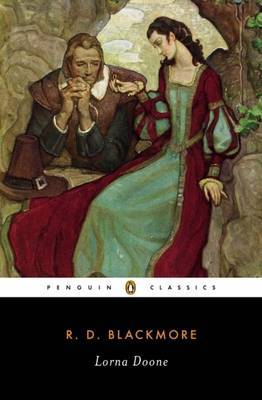
A clan of murderous outlaws, a dashing highwayman, stolen jewels, family feuds, political intrigue, lots of beautiful scenery and a tender love story: R.D. Blackmore’s 1869 classic, Lorna Doone: A Romance of Exmoor, has all of these things and more. Set in the south west of England in the seventeenth century, it tells the story of John Ridd, a yeoman farmer, and his love for the beautiful Lorna Doone.

Lorna Doone John is twelve years old when his father is attacked and killed by a gang of Doones, a once noble family who fell out of favour at court and fled to an isolated Exmoor valley where they have since been leading wild and lawless lives. Being a child, there is no immediate action John can take, so he puts his desire for revenge aside and settles back into life at Plover’s Barrows farm with his mother and two younger sisters, Annie and Lizzie.

At fourteen, John has his first encounter with the eight-year-old Lorna after climbing a hill behind a steep waterfall and unexpectedly finding himself in the Doone Valley. Several years later they meet again as adults and fall in love, but there are many obstacles which must be overcome before they can have any chance of happiness. First there are John’s own feelings towards the Doones, and the fact that as granddaughter of Sir Ensor Doone, head of the family, Lorna’s social status is much higher than that of a humble farmer like John. To complicate things further, the brutal and violent Carver Doone intends to marry Lorna himself and will let nothing stand in his way.

I could tell from the beginning that I was going to enjoy Lorna Doone. It’s just the sort of classic I love! I suppose this could technically be classed as a re-read as I did own an abridged version of the book as a child, but I can barely remember reading it and huge chunks of the original must have been missing anyway (the full, unabridged version has more than 700 pages). I can only regret that it has taken me so long to decide to try it again as an adult.

Lorna Doone takes place during the final years of the reign of Charles II, the Monmouth Rebellion of 1685 and the Bloody Assizes which followed. If you don’t know much about this period of history it might be worth briefly reading up on it first, to gain an understanding of the novel’s historical context, but don’t worry – it’s easy enough to follow the story of John and Lorna even without this knowledge. As our narrator, John is the character we get to know best, following him as he grows from a child into a man. His narrative voice is honest, down-to-earth and often humorous. Lorna, though, is a typical Victorian heroine – beautiful, delicate, gentle, passive, and with a tendency to faint and swoon. I didn’t dislike her, but I preferred John’s two sisters: Annie, who has a romance of her own with the highwayman Tom Faggus (who is based on a real person, and whose horse, Winnie, is a great character in her own right), and the intelligent, sharp-tongued Lizzie.

There are lots of other characters, of course, all of whom play an important role in the story. These include Reuben Huckaback and his granddaughter, Ruth, who wants John to marry her; Lorna’s maid Gwenny Carfax, daughter of a Cornish miner; Counsellor Doone, the clever, scheming father of Carver; and Jeremy Stickles, the King’s messenger, who provides a link with London and the court. I should warn you that some of the characters speak in a strong dialect (for example, “there be a dale of faighting avore thee. Best wai to begin gude taime laike. Wull the geatman latt me in, to zee as thee hast vair plai, lad?”) but this is restricted mainly to one or two of the Ridds’ servants – as in many Victorian novels, dialect is used as an indication of class.

Blackmore devotes a lot of time to telling us about daily life at Plover’s Barrows and the things that are important to John and to his family, such as bringing in the harvest, fishing for loaches in the river and surviving a bad winter. I couldn’t help being reminded of Thomas Hardy – another author with a lot of affection for the countryside and country life. Doing a bit of research online, I was interested to discover that Hardy had read Lorna Doone in 1875 and wrote a letter to Blackmore, mentioning “the kindred sentiment between us in so many things”. Lorna Doone is set in Somerset and Devon and there are lots of vivid descriptions of the beautiful landscapes. I particularly loved reading about John Ridd’s adventures in the secluded, hidden valley of the Doones; every time he enters it in search of Lorna, whether through the waterfall or the forbidding Doone Gate, it’s almost as if the reader is being pulled into another world.

I thoroughly enjoyed reading Lorna Doone and now I’m curious as to why it seems to be the only one of Blackmore’s many novels that has stood the test of time and is still in print. His others are available as ebooks and on Project Gutenberg, but before I investigate further I would love to know if any of you have read them and if so, did you find them worth reading?

To the Lighthouse by Virginia Woolf

Throughout 2016 Ali of Heavenali is hosting a #Woolfalong – a celebration of the work of Virginia Woolf. Every two months there’s a selection of books to choose from and the theme for January/February is ‘getting started with a famous Woolf novel – To the Lighthouse or Mrs Dalloway’. As I hadn’t read either of those books (my previous experience with Woolf has been limited to Orlando, which I enjoyed) I thought I would start with her 1927 novel, To the Lighthouse.

To the Lighthouse is divided into three parts. The first, The Window, introduces us to Mr and Mrs Ramsay, their children, and a group of friends who have all gathered for a holiday on the Isle of Skye. As the novel opens, young James Ramsay is looking forward to a journey to the nearby lighthouse the next day – but only if the weather is fine, which his father informs him is not likely to happen. We then get to know each of the other characters – including Lily Briscoe, an artist who is working on a painting of the Ramsays, and Charles Tansley, a philosophy student – and we follow them over the course of a single day.

The middle section, Time Passes, moves the story forward ten years and shows us what has happened to the Ramsay family during that period (a period which includes the First World War). The Ramsay’s summer house on the island has been standing empty and from the perspective of the housekeeper, Mrs McNab, we learn how things have changed over time. Eventually, in The Lighthouse, several of the people we met in the first section of the book decide to return to Skye and make that long-anticipated journey to the lighthouse.

This is a novel that I’m glad I’ve read, but not one that I particularly enjoyed reading. That doesn’t surprise me, though – not being a fan of the ‘stream of consciousness’ style of writing or of books with almost no plot, I knew before I started that this wouldn’t really be my kind of book, so I’m actually quite proud of myself for not only attempting to read it, but managing to finish it. There’s no doubt that it’s beautifully written (as Woolf herself is quoted as saying on the back cover of my edition, “I am making up To the Lighthouse – the sea is to be heard all through it”) but I sometimes struggled to concentrate and had to read the same page twice to be able to appreciate the beauty of the words.

I did like the way the passage of time was handled in the novel. The first and third sections are the longest; they each cover just one day (ten years apart) and the perspective constantly shifts from character to character, taking us through a stream of thoughts, emotions, memories and observations. The middle section is much shorter, forming a bridge between the two September days, and is a wonderfully poetic piece of writing.

Although I didn’t love To the Lighthouse, I did find a lot to admire. I don’t think Woolf will ever be a favourite author of mine, but I will probably dip into the #Woolfalong again later in the year, as I think I might be interested in reading Flush and A Room of One’s Own.

Oliver Twist by Charles Dickens

Oliver Twist I know it’s the middle of January, but I still have a few books that I read towards the end of 2015 to write about – and Oliver Twist is one of them. I’ve been trying to read at least one Dickens novel a year and having started 2015 with David Copperfield I decided to end it with another of his books. Of the two, I much preferred David Copperfield, but I did still enjoy Oliver Twist. As I’ve mentioned before, I find it difficult to think of anything new to say about books that are so well known and widely studied, so I’m just posting some general impressions of the novel here rather than attempting any sort of analysis.

I think most people, even without reading the book, probably have a basic idea of what it is about: an orphan boy who is raised in a workhouse in Victorian London – where he famously says, “Please, sir, I want some more” – and who later becomes involved with a gang of thieves and pickpockets. Maybe you have seen one of the many films, adaptations and musicals and so will know a little bit more, but the only way to discover the whole of Oliver’s story in the way Charles Dickens intended is to read the book!

This is the first time I have read Oliver Twist in its entirety and I was surprised by how much of it was completely unfamiliar to me. I had either forgotten or was unaware of whole chunks of the plot and of the roles played by characters such as Rose Maylie, Noah Claypole and Monks, so I was in the unusual position of reading a story that I both knew and didn’t know!

While this hasn’t become a favourite, I found Oliver Twist an enjoyable, entertaining read (one of the easiest to read and to follow of all the Dickens novels I’ve read so far) and as you would expect from Dickens, the pages are populated with colourful, larger than life characters, from Mr Bumble the beadle and the brutal Bill Sikes to the Artful Dodger and the villainous Fagin. The characters are mostly either ‘very good’ or ‘very bad’. Nancy, Bill Sikes’ lover, is the only one I found significantly more complex and she makes an interesting contrast with the novel’s other main female character, the pure, gentle Rose Maylie.

This is one of the earliest of Dickens’ major works, first published as a serial from 1837-1839, and it’s a relatively short novel by his standards (there are over 500 pages in the edition I read, but in comparison with books like Our Mutual Friend and Bleak House that’s not long at all). The amount of social commentary in the book is also particularly heavy; it was written just a few years after the Poor Law Amendment Act was passed by parliament in 1834, stating that relief for the poor would only be provided within the workhouse. The idea was that conditions inside the workhouse would be so harsh and unpleasant that only those people desperately in need of help would consider entering one. Telling Oliver’s story gave Dickens a chance to express his own views on the Poor Laws and related issues such as poverty and child labour.

Oliver Twist was the final novel by Dickens on my list for the Classics Club, but I will continue to work my way through his other books, as I have about half of them still to read. I think either Dombey and Son or Little Dorrit might be next.

Wide Sargasso Sea by Jean Rhys

Wide Sargasso Sea After finishing a re-read of Jane Eyre recently, I decided that my next read would have to be Wide Sargasso Sea by Jean Rhys, a book inspired by Charlotte Brontë’s classic novel and which I’ve seen described both as a prequel and a reimagining. I don’t read this type of book very often as I prefer to keep my feelings for the originals intact, but this one, published in 1966, is now considered a classic in itself and I wanted to find out why.

As I started writing this review it occurred to me that it would be impossible to discuss Wide Sargasso Sea in any meaningful way without giving away some of the secrets revealed in Jane Eyre and spoiling the Brontë novel for anyone who hasn’t read it yet. I will assume that if you’re reading this post you’re already familiar with Jane Eyre, so consider this your spoiler warning!

Wide Sargasso Sea is the story of Mr Rochester’s first wife, Bertha, the ‘madwoman in the attic’. In Jane Eyre, we learn that Rochester was sent by his father to Jamaica where he met the Mason family and married Bertha, a beautiful Creole heiress. Rochester explains that he was unaware of the madness running in Bertha’s family and the fact that her mother was not dead, as he had first believed, but had actually been locked away in an asylum. When Bertha’s own behaviour begins to worry Rochester, he brings her home to England and Thornfield Hall, where he has her imprisoned in an attic room under the care of a servant, Grace Poole.

Jane Eyre only shows us one side of the story: Rochester’s. In Wide Sargasso Sea, Jean Rhys gives a voice to Bertha (or Antoinette Cosway, as she is known here). The first part of the novel, narrated by Antoinette herself, describes her childhood in 1830s Jamaica, just after the Emancipation Act has ended slavery across the British Empire. Antoinette’s own father made his fortune through slavery and since his death the family have remained on their crumbling plantation, Coulibri, where as white Creoles they are isolated and shunned by the freed black slaves and their rich white neighbours alike. As the years go by and Antoinette’s mother descends into mental illness, her stepfather, Mr Mason, announces that friends from England are coming to visit…

In the middle section of the book, we switch to Rochester’s point of view (although he is not actually named in the novel, it’s clear who he is supposed to be) and he relates in his own words the story of his marriage to Antoinette, whom he renames Bertha, and his views on the deteoriation of her mental health. The final, shortest section is set at Thornfield Hall and takes us through the familiar events of Jane Eyre.

I was quite disappointed with this book, if I’m going to be completely honest. Yes, it’s beautifully written but I found the dreamlike, disjointed narrative slightly difficult to follow and while I could sympathise with Antoinette’s situation, I never felt fully engaged with her on an emotional level. I realise that the writing style was probably intended to unsettle and disorientate the reader, but I just didn’t like it. Luckily, my lack of love for this novel has not affected my memories of Jane Eyre or its characters – not even Mr Rochester, despite the negative portrayal, mainly because the character in this novel just doesn’t feel at all like Brontë’s Rochester (not even his ‘voice’ sounds the same).

Wide Sargasso Sea is a short novel (I was surprised when I discovered just how short it was) but it’s also a complex one with lots of layers, symbolism and important themes – including slavery, colonialism, mental illness, race and gender – and I can see why it’s a book that has come to be widely studied in schools and universities. I can recommend the Penguin Modern Classics ‘Annotated Edition’ as an excellent choice for students or anyone who wants to study the story and its background in more depth. There’s an introduction, notes at the end, suggestions for further reading and background information on some of the topics alluded to in the story, such as the Jamaican folk magic known as Obeah.

I did love the concept of giving Bertha/Antoinette a chance to tell her story and I wouldn’t want to put anyone else off reading this book – even though I didn’t find it very satisfying, I know there are many, many other people who have enjoyed it, so if it does sound appealing to you then I would certainly recommend giving it a try.

Jane Eyre by Charlotte Brontë (re-read)

Jane Eyre was the book chosen for me in the Classics Spin in December. When I discovered that this was the one I’d be reading, I was delighted – it’s a book I love and which I hadn’t read for a long time. I immediately pulled my copy off the shelf to start my re-read and from the familiar opening line – “There was no possibility of taking a walk that day” – I was drawn into the story once more. The gothic atmosphere of the novel made it a perfect read for dark December nights and I finished it just before Christmas.

Jane Eyre I think I was probably eleven or twelve years old when I had my first encounter with Jane but on that first read I didn’t get past the Lowood School section at the beginning and more than ten years passed before I decided to try again. My second attempt was much more successful; being older and better able to appreciate the story and the quality of the writing, I read the whole book and loved it. This most recent read was my third. I was curious to see whether I would feel differently about it now, after another long gap, but although I did notice things this time that I don’t think I picked up on last time, my overall opinion of the book is unchanged.

Jane Eyre, for those who don’t know the story, is an orphan raised in the home of an aunt and three cousins who make it obvious that they don’t like her and don’t want her there. At the age of ten, Jane is sent to a charity-run boarding school for girls, another harsh and unwelcoming environment. However, Jane is able to take two positive things away from her time at school – a brief but much-valued friendship with Helen Burns, and the education which later enables her to find a position as governess to Adele, the young ward of Mr Rochester of Thornfield Hall. Jane soon begins to fall in love with her employer but when she discovers that he is hiding a dark secret, it seems that her chance of happiness has been destroyed.

*Spoiler warning: I will find it difficult to discuss the book any further without spoilers, so if you haven’t read Jane Eyre yet, I would advise skipping to the end of this post.*

I loved the experience of reading Jane Eyre again. Although much of the story was familiar to me from my previous reads and many of the scenes had stayed in my mind – including Jane’s imprisonment in the red room at Gateshead Hall, the tragic death of Helen Burns, Rochester disguising himself as a gypsy woman and the revelation of Bertha’s existence – there were other parts that I had forgotten and that I enjoyed discovering again.

I also loved being reacquainted with the characters. I know there are a lot of people who have problems with Mr Rochester and I can understand why – apart from his treatment of Bertha, there’s the fact that he lies to Jane and that he’s prepared to enter into a bigamous marriage with her, but despite this I have always liked him as a character. Jane is not my favourite literary heroine (although I do admire her for her honesty, integrity, inner strength and sense of right and wrong) and Mr Rochester is not my favourite hero but they both feel so real and I can believe in their relationship and their love for one another – a love that I think they both desperately needed.

Of course, there’s much more to Jane Eyre than just the romance. There’s also some social commentary, with the descriptions of conditions at Lowood School and with the exploration of class, gender and religion. It’s an interesting read from a feminist perspective, portraying Jane’s search for independence and depicting the options open to a woman faced with making her own way in life in the early Victorian period. Having read about the lives of Charlotte and the rest of the Brontë family (something I hadn’t done when I first read this book) I can see how autobiographical some parts of the story are.

My least favourite section of the book is still the part where Jane leaves Thornfield Hall during the night and is taken in by St. John Rivers and his sisters. I remembered intensely disliking St. John on my last read, but I wasn’t sure whether that was because of the character himself or just because I was impatient for Jane and Rochester to be reunited. However, I didn’t like St. John any better this time round. I find him cold and controlling – Jane herself describes his nature as “austere and despotic” – and he doesn’t seem to care at all about Jane’s own opinions and wishes. Even though I had read the book before, I was still relieved when Jane rejects him!

*End of spoilers*

I thoroughly enjoyed my re-read of Jane Eyre, if I haven’t already made that clear! I’ve heard it said that people can either love Jane Eyre or Wuthering Heights, but not both – well, I do love both, but I have always preferred Wuthering Heights. I’m planning to re-read it soon too and it will be interesting to see if I still do like it more.

Since finishing Jane Eyre a couple of weeks ago, I have now read the prequel Wide Sargasso Sea by Jean Rhys for the first time and will be posting my thoughts on that one soon. Then I have a copy of Lyndsay Faye’s new Jane Eyre-inspired novel, Jane Steele, which I’m looking forward to reading – and I also still need to read my only remaining unread Brontë novel, Shirley. It seems I’m having a very Brontë themed start to the new year!