Silence by Shūsaku Endō

Translated by William Johnston

One of my resolutions for 2024 is to read more historical fiction in translation and where better to start than with a book for the Japanese Literature Challenge (hosted by Dolce Bellezza throughout January and February).

First published in Japanese in 1966 and in English in 1969, Shūsaku Endō’s Silence is set in the 17th century and tells the story of a Portuguese Jesuit priest, Sebastian Rodrigues, who travels to Japan to investigate claims that his old mentor, Father Ferreira, has committed apostasy – in other words, renounced his faith. Rodrigues and his friend Francisco Garrpe, another priest, can’t believe that their teacher would do such a thing. Certain that there must be some mistake, the two set out from Lisbon on the long journey to Japan, where they hope to learn what has really happened to Ferreira.

Rodrigues and Garrpe reach Japan in 1639 and quickly discover that the local Christian communities are being persecuted and forced to hide their religion from the authorities. Anyone the officials suspect of being a Christian is told to trample on an image of Christ, known as a fumie, and if they refuse they are imprisoned and tortured by being suspended upside down over a pit. On his arrival in Japan, Rodrigues goes into hiding with the other Christians, carrying out his missionary work and helping them to worship in secret, but he knows it’s only a matter of time before he is caught and has his own faith put to the test.

Silence is both beautifully written and beautifully translated. From beginning to end, I was completely immersed in another time and place; there’s no jarringly modern language to pull the reader out of the story and everything feels authentic and real. I was intrigued by Endō’s decision to write the novel from the perspective of Rodrigues (first in the form of letters written by the priest and then in the third person) rather than the Japanese Christians and it was interesting to see how Endō viewed his country, its people and its customs through the eyes of a stranger.

I am not a particularly religious person but you don’t need to be to be able to appreciate this novel. I was very moved by the internal struggles Rodrigues faces as he begins to question why God is remaining silent in the midst of so much torture and persecution and whether renouncing his faith, under certain circumstances, could actually be the right thing to do if it helps alleviate the suffering of others. As you can imagine, it’s quite a bleak story, but I loved it and although it’s only been a few days since I finished it, I don’t think it’s a book I’ll ever forget. I would like to try more of Endō’s work and am pleased to see that some of his other novels are also available in English translations.

I read this book for the Japanese Literature Challenge 17 and the Historical Fiction Reading Challenge.

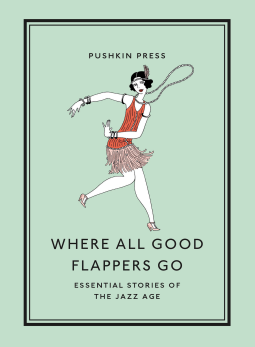
Where All Good Flappers Go: Essential Stories of the Jazz Age – edited by David M. Earle

I’ve never considered myself to be a fan of Jazz Age fiction – but, to be fair, I’ve read very little of it, other than a few F. Scott Fitzgerald novels. When I saw that Pushkin Press had put together this collection of Jazz Age short stories, I thought it would be a good opportunity to branch out and try some new authors from that era.

This edition begins with an introduction discussing the changes following WWI that led to the birth of the ‘flapper’ as women pursued social and sexual equality, then a short 1925 essay by Zelda Fitzgerald, What Became of the Flappers?. In this essay, Fitzgerald attempts to give her own definition of what a flapper is, before revealing what she believes will happen to them in the end:

The best flapper is reticent emotionally and courageous morally. You always know what she thinks, but she does all her feeling alone. These are two characteristics which will bring social intercourse to a more charming and sophisticated level. I believe in the flapper as an artist in her particular field, the art of being – being young, being lovely, being an object.

The essay is followed by twelve short stories, most of which were originally published in various periodicals between 1920 and 1932. Apart from F. Scott Fitzgerald, all of the other authors were new to me; I had at least heard of a few of them, such as Zora Neale Hurston, Anita Loos and Dorothy Parker, but was unfamiliar with the rest. The Fitzgerald story is Bernice Bobs Her Hair, which stands out as one of the best in the book, but I expect a lot of people will have read that one so I’m going to focus on some of the less well known stories instead.

My favourite story is probably Night Club by Katharine Brush, which describes a typical night at a New York club through the eyes of Mrs Brady, who works there as a maid. Mrs Brady’s job involves looking after a dressing room, where young women come to reapply their make-up throughout the evening, therefore she gets to hear a lot of scandalous gossip involving affairs and proposals. In the world of the flapper, however, these dramas have become so commonplace that Mrs Brady is more interested in the ‘real life’ stories in her magazine!

Another I particularly enjoyed is Dawn Powell’s Not the Marrying Kind, about Aileen, who is not the kind of girl men want to marry – unlike Joan who has always known she will marry and has a ‘hope chest’ of linen ready and waiting for her special day. Then there’s Gertrude Schalk’s The Chicago Kid, in which a chorus girl at the Yellow Parrot cabaret elopes with a millionaire, which inspires Flora, a black girl from Chicago to set out to do the same. I liked the twist at the end of this one!

Despite all dealing with the common theme of the flapper lifestyle, the stories in this collection are quite diverse and include contributions by male authors and black authors, so we see things from a range of different perspectives. Rudolph Fisher’s Common Meter describes a battle-of-the-bands contest between two jazz band leaders trying to win the affections of a beautiful woman, while Viña Delmar’s Thou Shalt Not Killjoy is written in the style of a Biblical parody. I can’t claim to have enjoyed all of the stories – Dorothy Parker’s The Mantle of Whistler, a story written mostly in dialogue as a satire on the flirtatious language used by the flappers, was particularly disappointing, considering she is one of the more famous authors in the collection.

Stories by Dana Ames, John Watts and Guy Gilpatric make up the rest of the book and although, as I’ve said, I found this collection a real mixed bag, it’s always good to try something different and it was an entertaining read overall.

Thanks to Pushkin Press for providing a copy of this book for review via NetGalley.
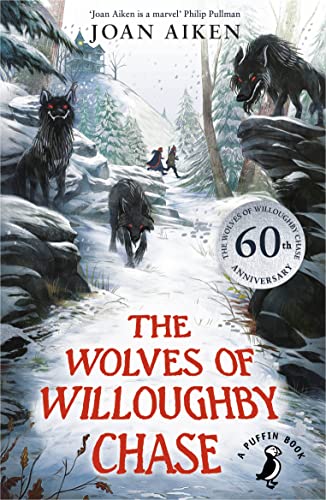
The Wolves of Willoughby Chase by Joan Aiken – #1962Club

I’ve read and enjoyed several of Joan Aiken’s adult novels over the last few years – my favourite so far is Castle Barebane – but until now I’ve never read the book for which she’s most famous, The Wolves of Willoughby Chase. It was first published in 1962, which makes it a perfect choice for this week’s 1962 Club hosted by Simon and Karen.

This is obviously a book aimed at younger readers and I’m sure I would have loved it if I’d read it as a child; however, I was pleased to find that it also has a lot to offer an adult reader. I’m definitely planning to continue with the next book in the series.

The Wolves of Willoughby Chase is set in England in an alternate history where the Stuarts are still on the throne in the 19th century. It’s 1832, early in the reign of King James III, and a tunnel between Dover and Calais has recently been completed, allowing the migration of a large number of wolves from Europe. In reality, of course, the Channel Tunnel wouldn’t open until 1994, so Joan Aiken really was ahead of her time – although obviously the idea had existed in theory for much longer! Other than the tunnel and the presence of wolves, the world described in this book doesn’t seem very different from the real world of 1832, but I’m assuming the alternate history element becomes more significant later in the series.

Being a children’s book, the story is told from the perspectives of two children – Bonnie and Sylvia Green. Sylvia, an orphan, lives in London with her elderly Aunt Jane, but at the beginning of the novel she travels north by train to Willoughby Chase to stay with her cousin Bonnie. Bonnie’s parents, Sir Willoughby and Lady Green, are going abroad for health reasons and have engaged a governess, Miss Letitia Slighcarp, to take care of the children while they are away.

Left alone with Miss Slighcarp, the girls discover that their new governess is not what she claims to be and has another motive for coming to Willoughby Chase. Soon Bonnie and Sylvia are sent off to a horrible school for orphans run by the cruel Gertrude Brisket. Hungry and miserable, they begin to plan a daring escape, but will they succeed – and if so, where will they go? Will their friend, Simon the goose-boy, be able to help them? And what exactly is Miss Slighcarp planning to do now that she is in full control of Willoughby Chase?

Now that I’ve read this book I can see why it is considered a children’s classic and has been so popular with generations of younger readers over the years. It has an exciting plot, child protagonists to relate to, kindly adult characters to love and villainous ones to hate, and an atmospheric setting with snowy, icy landscapes and packs of wolves roaming the countryside. Speaking of the wolves, they play a big part in two memorable scenes near the beginning of the book, but are barely mentioned after that as the human ‘wolves’ come to the forefront of the story instead. The influence of Victorian literature on Aiken’s writing is also very obvious, from the Dickensian names of the characters – Letitia Slighcarp, Josiah Grimshaw, Mr Gripe, Mr Wilderness – to the portrayal of Mrs Brisket’s school, surely inspired by Lowood School in Jane Eyre.

I thoroughly enjoyed this book and just wish I hadn’t come to it so late! I’m already looking forward to reading the second one in the series, Black Hearts in Battersea.

This is book 41/50 for the 2023 Historical Fiction Reading Challenge.

Strangers on a Train by Patricia Highsmith

Patricia Highsmith’s 1950 novel Strangers on a Train begins, as you might expect, with two strangers meeting on a train. One is Guy Haines, an aspiring architect who is on his way home to Metcalf, Texas to see his wife, Miriam, from whom he’s been separated for the last three years. Guy is hoping to secure a divorce from Miriam so that he can start a new life with Anne, the woman he loves. Although Miriam has so far been reluctant to agree to a divorce, she is now pregnant with another man’s child and Guy is optimistic that this will be a chance for both of them to move on.

The other stranger is Charles Bruno, a young man from a wealthy Long Island family. After falling into conversation on the train, Bruno invites Guy to come and eat with him in his private dining compartment. Guy doesn’t particularly like his new companion, but soon finds himself telling Bruno about his troubles with Miriam. In turn, Bruno confesses that he hates his father – and then makes a shocking suggestion. If Bruno were to kill Miriam on Guy’s behalf, there would be nothing to link him to the crime. Guy could then kill Bruno’s father and again there would be no motive and no connection. Two perfect murders! Horrified, Guy refuses to have anything to do with the plan and when the train reaches his destination he leaves Bruno behind, hoping he’ll never see him again. However, when Miriam is later found dead, Guy quickly begins to suspect the truth. Has Bruno gone ahead with the plan – and is he waiting for Guy to uphold his side of the bargain?

This is the first book I’ve read by Patricia Highsmith; I thought it would be a good idea to start with one of her most famous novels and this one proved to be a great choice. It reminded me very much of In a Lonely Place by Dorothy B. Hughes, another classic psychological thriller I read recently. Although I didn’t love this one quite as much, I did still enjoy it very much and found it a real page-turner, despite the fact that Highsmith often slows down the pace to concentrate on exploring the thought processes of Bruno and Guy as they each try to deal with the situation in their own way.

The novel is written from the perspectives of both men and although they are both interesting characters, Highsmith doesn’t make it easy for us to like either of them, particular the spoiled, immature and constantly drunk Bruno. We can have some sympathy for Guy at first, as he tries to resist getting involved in Bruno’s schemes, but he has his resolve gradually worn away as he comes under more and more pressure to carry out the murder and in turn becomes less likeable as the story progresses. The secondary characters are less well drawn – Anne and Miriam never fully come to life and we don’t get to know the other potential murder victim, Bruno’s father, at all, which lessens the emotional impact of the book. From a psychological point of view, however, I found this a fascinating novel.

If you’ve read any other Patricia Highsmith books, please tell me which one you think I should read next!

This is book 11/20 of my 20 Books of Summer 2023

It’s also book 41/50 from my second Classics Club list.

The New Magdalen by Wilkie Collins

Wilkie Collins is one of my favourite Victorian authors, but I feel that I haven’t featured him very often on my blog – probably because I read so many of his books pre-blog, including all of his most famous ones (and I don’t re-read very often these days). Even so, there are still some that I haven’t read yet and I was intrigued when I noticed a few years ago that The New Magdalen was being reprinted by Persephone Books, as they’re a publisher associated more with women authors (although there are a small number of Persephones by male authors as well). It has taken me a while to get round to reading it, so I decided to put it on my 20 Books of Summer list to make sure it didn’t linger on my TBR any longer.

First published in 1873, the novel opens during the Franco-Prussian War in a small cottage in France where Mercy Merrick is working as a Red Cross nurse. As the Germany army draws closer, Mercy has taken shelter in the cottage to nurse some wounded French soldiers and has been joined by another young woman, Grace Roseberry. Grace is on her way to England following the death of her father in Rome; she has spent most of her life in Canada and doesn’t know anybody in England, but she is carrying a letter of introduction from her father to a Lady Janet Roy, a wealthy woman whom she hopes will employ her as a lady’s companion. Grace shares this information with Mercy, who in turn tells Grace her own story – that she is a ‘fallen woman’ who has had a difficult past, eventually ending up in a women’s refuge before volunteering as a nurse.

As the two women talk, the cottage suddenly comes under fire from the advancing army and receives a direct hit from a shell. Grace is badly wounded and is declared dead by a French surgeon. Finding herself alone with Grace’s lifeless body, it occurs to Mercy that she could take Grace’s papers, dress herself in Grace’s clothes and present herself to Lady Janet Roy under the name Grace Roseberry. Desperate to escape from her own troubled past and start a new life, Mercy is unable to resist the temptation and goes through with the plan. It proves to be a huge success and soon Mercy is living as Lady Janet’s adopted daughter and even receives a marriage proposal. Before the marriage can take place, however, Mercy makes a shocking discovery – it seems that the real Grace Roseberry may still be alive and looking for revenge!

Wilkie Collins was known for his sensation novels, a genre that takes elements of Gothic melodrama and places them in an ordinary, often domestic setting. His books typically feature family secrets, disputed inheritances, intercepted letters, stolen jewels, mistaken identities and amazing coincidences. The New Magdalen is less sensational than some of his others, but still falls firmly into the genre so you can expect a very entertaining novel. I’ve always found Collins’ writing to be the most readable of all the Victorians and that, in addition to this being a relatively short book for a 19th century classic, makes it a gripping and surprisingly quick read.

I can see why Persephone chose to add this book to their collection as Collins does write such strong and sympathetic female characters and with Mercy’s story he highlights some of the injustices women faced in Victorian society (and in some ways still do today). I think my favourite Collins novels will always be The Woman in White and Armadale, but this is still a great book and would probably be a good introduction to his work if you didn’t want to commit to a longer one.

This is book 2/20 of my 20 Books of Summer 2023 and book 40/50 from my second Classics Club list.

Random Harvest by James Hilton

“Sometimes I have a feeling of being — if it isn’t too absurd to say such a thing — of being half somebody else. Some casual little thing — a tune or a scent or a name in a newspaper or a look of something or somebody will remind me, just for a second — and yet I haven’t time to get any grip of what it does remind me of — it’s a sort of wisp of memory that can’t be trapped before it fades away…”

After enjoying Lost Horizon and Goodbye, Mr Chips, I decided that the next James Hilton book I read would be his 1941 novel Random Harvest. I knew very little about it except that it was very popular at the time it was published and that the film starring Greer Garson and Ronald Colman is one of my mother’s favourites. I haven’t seen it, but I think reading the book first was the right decision anyway, for reasons I’ll explain later.

The novel opens in 1937 with our narrator, Mr Harrison, falling into conversation with a stranger, Charles Rainier, whom he meets on a train to London. Rainier is now a successful businessman and politician, but he confesses to Harrison that since returning from fighting in World War I twenty years ago a whole chunk of memory has been lost to him. He remembers being injured in the trenches of France in 1917 and he remembers waking up in Liverpool one day in 1919, but can recall nothing at all of what happened in between – a period of two years which are now a complete blank to him.

When the train arrives at the station, the two men go their separate ways, but their paths soon cross again and Rainier offers Harrison a job as his secretary. As they get to know each other better, Rainier tells his new friend the story of his life since that day in Liverpool and gradually his earlier memories begin to return, with surprising results.

This book wasn’t quite what I’d expected; I thought it was going to be more of a romance, but although it does have a very moving love story at its heart, there’s much more to Random Harvest than that. It can be considered an anti-war novel, with it’s theme of loss that runs through the story from beginning to end – not just the obvious loss of memory, but also lost opportunities, lost or broken relationships, lost innocence and, on a wider scale, a way of life that has been lost forever as the world moves on from one war and heads straight for another:

It all depended whether one were tired or eager after the strain. Most of us were both — tired of the war and everything connected with it, eager to push ahead into something new. We soon stopped hating the Germans, and just as soon we began to laugh at the idea of anyone caring enough about the horrid past to ask us that famous question on the recruiting posters — ‘What did you do in the Great War?’ But even the most cynical of us couldn’t see ahead to a time when the only logical answer to that question would be another one — ‘WHICH Great War?’

The book has an unusual structure, divided into five long sections with no chapter breaks and moving backwards and forwards in time, piecing together Rainier’s memories as they begin to flood back. However, it’s always easy enough to follow what’s happening. The plot never becomes confusing and the story is structured the way it is for a good reason, allowing Hilton to obscure whole episodes in Rainier’s life from the reader and also from Rainier himself until it’s the right time to reveal them. And when the final revelation comes, right at the end of the book, I was taken completely by surprise as I hadn’t seen it coming at all. Apparently the film is structured differently, with the truth obvious from the beginning instead of being saved for the end, which is why I’m so glad I’ve read the book first and could experience everything as Hilton intended it.

This is a great book, possibly even better than Lost Horizon, and I’ll definitely be looking for more by James Hilton.

This is book 39/50 read from my second Classics Club list.

The Scapegoat by Daphne du Maurier (re-read) – #DDMReadingWeek

This week HeavenAli is hosting another of her Daphne du Maurier Reading Weeks, assisted by Liz who is collecting the links this year. As you may know, du Maurier is one of my favourite authors; I have now read all of her novels and short story collections at least once and some of her non-fiction (I attempted to rank them all in this post, just for fun). For this year’s Reading Week I’ve decided to re-read her 1957 novel The Scapegoat, which is one I particularly loved when I first read it back in 2011 (here’s my original review). I’ve wanted to read it again ever since, not just because I enjoyed it so much, but also because I formed a theory about what was actually happening in the book and I was curious to see whether I would feel the same way on a second read. I’ll discuss this later in this post, but don’t worry – I’ll include a spoiler warning for those of you who haven’t read the book yet.

The novel opens in Le Mans where our narrator, John, an English academic, is on holiday. When he meets a man who looks and sounds just like him at the station, he feels an instant connection with him and after spending the evening drinking and talking, he accompanies the other man back to his hotel room. He learns that his new friend is a French count, Jean de Gué, and that they have something else in common – they are both depressed and dissatisfied with life, John because he is lonely and has no family, Jean because he has a large family, all of whom are causing him problems. As the night wears on, John falls into a drunken stupor and when he wakes up the next day his companion has disappeared, taking all of John’s clothes and possessions with him and leaving his own in their place.

When Jean’s chauffeur arrives, ready to drive him home to his château in the French countryside, John begins to protest, explaining that there has been a mistake – but then, on an impulse, he decides to take this opportunity to leave his old life behind for a while and continue to impersonate Jean de Gué. On reaching Jean’s château, John finds that nobody suspects he is an impostor and he is able to take Jean’s place within the family. He also begins to understand why Jean had said his family life was so difficult – there are all sorts of tensions and conflicts between various members of the family and to make things worse, the de Gué glassworks is facing financial ruin. It’s up to John to put things right, if he can.

I enjoyed this read of The Scapegoat as much as my first. If you take everything at face value, of course, it requires a huge suspension of disbelief. Not only do John and Jean look completely identical, so much so that not even Jean’s mother, wife or daughter guess the truth, but they also sound exactly the same (and John’s French is so fluent that nobody suspects a thing). Is this likely? Of course not, but it provides du Maurier with her starting point for this fascinating novel and it’s perfectly possible to just accept the plot for what it is and enjoy the story. After all, it’s no more ridiculous than the book that apparently inspired this one – Anthony Hope’s The Prisoner of Zenda. And as always with a du Maurier novel, you can expect beautiful descriptions, a strong sense of place and interesting, if not necessarily very likeable, characters.

*My Scapegoat theory (includes spoilers)*

When I first read this book in 2011, I found myself beginning to wonder – what if John and Jean weren’t doubles after all? What if there was only one man, with multiple personalities (now known as dissociative identity disorder)? It makes so much more sense to me that Jean, feeling that he has made a mess of his life, has created a new identity to deal with the problems he has caused for himself. At the end of the book, when everything has been resolved, he has no further need of John and although it’s not clear exactly how much Jean has learned and how he will manage his relationships and business affairs in the future, he feels that he can now cope on his own. He tells John that he has emptied John’s bank account, sold his flat and furniture in London and resigned John’s position as university lecturer – in other words, destroyed John altogether, because John never really existed and is no longer necessary.

After finishing the book on that first occasion, I remember looking at other reviews and being surprised that almost nobody else had mentioned that any of this had occurred to them too. I accepted that I must have misunderstood the whole book; however, the Daphne du Maurier website quotes a letter written by Daphne herself regarding The Scapegoat which seems to support my interpretation. Her reference to ‘that man’s nature’ doesn’t really make sense to me if there were actually two separate men in the book.

“Every one of us has his, or her, dark side. Which is to overcome the other? This is the purpose of the book. And it ends, as you know, with the problem unsolved, except that the suggestion there, when I finished it, was that the two sides of that man’s nature had to fuse together to give birth to a third, well balanced.”

On reading the book for a second time, I have been paying closer attention and looking for subtle clues and hints. There are just three main obstacles in the way of my theory. First, there’s Jean’s dog, César, who is hostile towards John and the only member of the household who seems to sense that something is wrong. However, when Jean and John meet up again at the end of the book, Jean explains that John hasn’t been whistling to César in the correct way and this is why he hasn’t been obeying his commands. Also, during a scene in a hospital, we are told that Jean is blood group O and John is blood group A – but as it’s John himself who tells us this I don’t think it can be taken as conclusive evidence of anything. The only thing I can’t manage to explain away is that when Jean calls the château to inform John that he’s coming home, it’s a servant who answers the phone and tells John that someone wants to speak to him. If it wasn’t for this one moment, I would have been nearly convinced that I was right!

I did find plenty of things to support my theory, including the fact that, when speaking to Jean’s family for the first time, John finds that the ‘tu‘ form of French comes naturally to him, although he’s never used it before; the way John muses that Jean’s ‘inner substance was part of my nature, part of my secret self’; and in particular, the whole conversation he has with Jean’s mistress, Béla, in Chapter 12.

‘You said something a while ago about taking stock of oneself,’ I said. ‘Perhaps that’s just what I’ve been doing, over a period of time, and it came to a head that evening in Le Mans. The self I knew had failed. The only way to escape responsibility for failure was to become someone else. Let another personality take charge.’

‘The other Jean de Gué,’ she said, ‘the one who’s been hidden for so long beneath the surface gaiety and charm, I’ve often wondered if he existed. If he’s going to emerge, he’d better do so now. Time’s getting on.’

What do you think?

*End of spoilers*

Overall, after finishing my second read of the book, I think probably the way everyone else has interpreted it is the correct way, but du Maurier does like to be ambiguous and I enjoyed looking below the surface and dissecting the different layers! It really is a fascinating novel and still one of my favourites by du Maurier. Now I just need to find time to revisit some of her others!