Turn of the Century Salon: The Painted Veil by W Somerset Maugham

The Painted Veil Despite the attempts of her mother to arrange a good marriage for her, Kitty Garstin is in no hurry to find a husband. She’s too busy enjoying herself at parties and dances, and it’s only when she’s still unmarried at the age of twenty-five and discovers that her younger sister has become engaged to a baronet that she begins to panic. She agrees to marry Walter Fane, a bacteriologist, and moves to Hong Kong with him. Walter is shy, clever and serious and to the pretty, frivolous Kitty, he seems very cold and aloof. Although he is in love with her, she doesn’t love him in return and soon begins an affair with the charming, charismatic Assistant Colonial Secretary, Charles Townsend.

Eventually Walter learns the truth about Kitty and Charles and confronts Kitty with an ultimatum. She can either accompany him into the interior of China where he has volunteered to deal with a cholera epidemic, or he will allow her to divorce him – but only if Charles agrees to divorce his wife and immediately marry Kitty. When Kitty goes to discuss the situation with Charles, she is cruelly disillusioned by her lover and is left with no other option than to travel to Mei-tan-fu with Walter. Kitty is convinced that Walter is taking her there in the hope that she will die, but it’s here in this remote cholera-ridden city that Kitty finally begins to grow as a person and to make some discoveries about both herself and her husband.

This book was such a surprise. I think I must have formed a preconceived idea that I wouldn’t like Somerset Maugham without ever having tried any of his books or knowing anything about him, because I really didn’t expect to love this as much as I did. I’m so pleased to find that I was wrong! The Painted Veil is one of the best books I’ve read so far this year. I found Maugham’s writing much easier to read than I had thought it might be, but also filled with beauty, poignancy and emotion.

This is quite a short novel but both main characters have a lot of depth and complexity. I disliked Kitty at first – she’s selfish, spoiled and immature – but the fact that she is so flawed and makes such terrible mistakes is what makes her so human. Kitty is changed by her experiences in Mei-tan-fu and we see her mature and gain in wisdom and insight. By the end of the book, I still didn’t like her but I had a better understanding of her and I wanted her to be happy. I had more sympathy for Walter, but because we are viewing him through Kitty’s eyes, we don’t really have a chance to see the other side of his personality that we hear about – when the nuns in the convent tell Kitty how much they admire him, for example, and how tender and loving he can be with the orphaned babies there. Kitty barely knows or understands her husband at all and when she finally begins to do so, we are made to wonder whether it’s going to be too late.

There aren’t a lot of long, descriptive passages in this book but 1920s China is still portrayed beautifully and I loved this description of Kitty watching the rooftops emerging from the mist on her first morning in Mei-tan-fu:

But suddenly from that white cloud a tall, grim, and massive bastion emerged. It seemed not merely to be made visible by the all-discovering sun but rather to rise out of nothing at the touch of a magic wand. It towered, the stronghold of a cruel and barbaric race, over the river. But the magician who built worked swiftly and now a fragment of coloured wall crowned the bastion; in a moment, out of the mist, looming vastly and touched here and there by a yellow ray of sun, there was seen a cluster of green and yellow roofs. Huge they seemed and you could make out no pattern; the order, if order there was, escaped you; wayward and extravagant, but of an unimaginable richness. This was no fortress, nor a temple, but the magic palace of some emperor of the gods where no man might enter. It was too airy, fantastic, and unsubstantial to be the work of human hands; it was the fabric of a dream.

Turn of the Century Salon - March I read The Painted Veil for Katherine’s Turn of the Century Salon. This book was published in 1925 and with its portrayal of society in 1920s colonial Hong Kong and an era when many girls were still raised with the sole aim of making a good marriage, this was an ideal choice for the Salon. If you read it I would also recommend reading Shelley’s sonnet Lift Not The Painted Veil and Oliver Goldsmith’s An Elegy on the Death of a Mad Dog.

War and Peace Readalong: February

warandpeace2013 This is my second monthly update on the readalong of War and Peace I’m participating in this year (hosted by Amy and Iris). Unlike last month, when I reported on how much I was enjoying the book and finding it difficult to put down, this month I had a very different experience.

Our goal for February was to read Book 1, Part 2. This is a very male-dominated section of the book, with none of the female characters we met in the first part (no Natasha or Sonya or Princesses Hélène or Liza). Instead we get to learn more about some of the men in the story including Prince Andrei Bolkonsky, Nikolai Rostov, Dolokhov and General Kutuzov. I found it a bit easier to keep track of the characters this month but what I struggled with instead was the fact that Part 2 is spent entirely with the Russian army, on the battlefield and in the barracks. I think my complete lack of knowledge of this period of history and Russia’s involvement in the Napoleonic Wars was a problem here, as well as the fact that I often find battle scenes and military tactics difficult to follow. Some background reading before I started this section would probably have been a good idea!

One thing that did make an impression on me was the sheer confusion and chaos of war and also the conflicts, arguments and fighting that went on in the ranks of the Russian army before they even faced the enemy. For example, there’s an episode where Nikolai’s commanding officer, Denisov, has some money stolen by a fellow soldier.

My favourite part of this month’s reading came towards the end of the section, when we rejoin Nikolai Rostov who has been wounded in battle. He can’t believe that anybody would actually want to kill him, a person everybody likes. Of course, none of that matters when you’re at war; you are simply another enemy soldier and no longer an individual.

“Who are they? Why are they running? Can it be they’re running to me? Can it be? And why? To kill me? Me, whom everybody loves so?” He remembered his mother’s love for him, his family’s, his friends’, and the enemy’s intention to kill him seemed impossible.

It’s through the thoughts of characters like Rostov that Tolstoy succeeds in showing us the harsh reality of war, in contrast to the romantic ideas the characters may have had about it at first. Prince Andrei is another character who had notions of success and heroism but after he visits the Austrian government to report on a Russian victory and discovers that it is not appreciated by the Austrians he also becomes disillusioned with war.

Finally, this is just a minor point but was anyone else irritated by the way Denisov’s speech impediment was handled? I don’t know how it is represented in other translations but in the one I’m reading (Pevear & Volokhonsky) I thought the way the guttural r’s were written was very distracting and annoying.

“They don’t even give us time to dghrink!” replied Vaska Denisov. “They dghrag the ghregiment here and there all day…”

So, this month was less enjoyable for me than last month but I will keep reading, though I’m now a bit concerned that there’s going to be too much ‘war’ in War and Peace for me. The end of Part 2 couldn’t come quickly enough, but I look forward to seeing what Part 3 will bring.

For other participants’ thoughts, see the War and Peace February Check-In.

Turn of the Century Salon: A Room with a View by E.M. Forster

Turn of the Century Salon - February
This year I am participating in a Turn of the Century Salon hosted by Katherine of November’s Autumn. The idea of this is to read books published around the turn of the century – between the late 1880s and the early 1930s. While I do seem to have read more books from this period than I initially thought, there are still a huge number of turn of the century authors whose work I haven’t explored yet and E.M. Forster was one of those that I was most looking forward to trying for the first time.

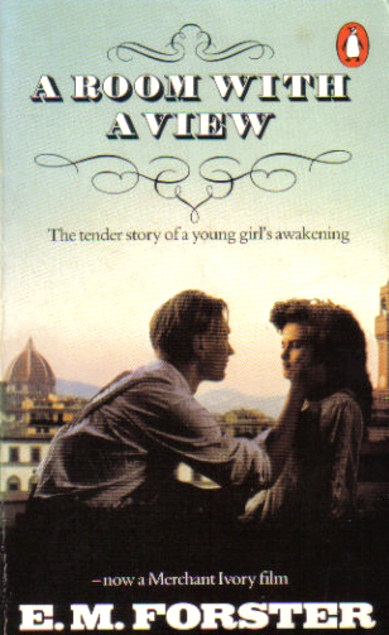
A Room with a View is the story of Lucy Honeychurch who we first meet on a trip to Italy with her cousin, Charlotte Bartlett. Lucy and Charlotte have just arrived at the Pension Bertolini in Florence and are disappointed to find that they have been given rooms with no view of the River Arno. Two of the other English guests – a Mr Emerson and his son, George – hear them complaining and immediately offer to exchange rooms, but instead of accepting their generous offer, the rules of Edwardian society mean that Charlotte is shocked and offended by what she considers their inappropriate behaviour. During the rest of their time in Florence, Charlotte and the other middle-class English tourists dismiss the Emersons as bad-mannered and socially unacceptable but Lucy has several more encounters with them and is intrigued by their different outlook on life.

A Room with a View Back in England, their paths cross again when the Emersons move into a cottage in Lucy’s village not far from the Honeychurch home, Windy Corner. Lucy is now engaged to Cecil Vyse, a cold, pretentious man she doesn’t really love, but who is considered to be a suitable husband for her. But with George Emerson living nearby Lucy must decide whether to be true to her heart even if it means breaking the social conventions of the time.

As this is the first E.M. Forster book I’ve read, I didn’t know what to expect so I was pleased to find it was much easier to read than I had been afraid it might be. I loved the wit and warmth of Forster’s writing and I enjoyed watching Lucy’s slow development from a young woman who allows other people and society in general to dictate how she should think and behave to one who finds the courage to be herself and live her life the way she wants to live it.

The beginning of the book with the portrayal of the English in Italy made me think of The Enchanted April by Elizabeth von Arnim and as for the descriptions of Italy itself, they were beautiful and vivid:

At the same moment the ground gave way, and with a cry she fell out of the wood. Light and beauty enveloped her. She had fallen on to a little open terrace, which was covered with violets from end to end.

“Courage!” cried her companion, now standing some six feet above. “Courage and love.”

She did not answer. From her feet the ground sloped sharply into view, and violets ran down in rivulets and streams and cataracts, irrigating the hillside with blue, eddying round the tree stems collecting into pools in the hollows, covering the grass with spots of azure foam. But never again were they in such profusion; this terrace was the well-head, the primal source whence beauty gushed out to water the earth.

Forster has a sense of humour as well; the dialogue is often quite funny and he puts his characters into some amusing situations. I also loved the character names and the chapter titles (especially Chapter Six – “The Reverend Arthur Beebe, the Reverend Cuthbert Eager, Mr. Emerson, Mr. George Emerson, Miss Eleanor Lavish, Miss Charlotte Bartlett, and Miss Lucy Honeychurch Drive Out in Carriages to See a View; Italians Drive Them.”)

Published in 1908, A Room with a View was a perfect book to choose for the salon as it really does epitomise turn of the century society and a gradual move away from Victorian values into a freer, less socially constrained twentieth century.

Which of E.M. Forster’s other books should I read next?

The King’s General by Daphne du Maurier

The Kings General If you asked me to name my favourite author I wouldn’t be able to give a definitive answer; there are so many that I love and I would find it hard to single one out. But one name that would always be high on my list is Daphne du Maurier. I’ve read twelve of her books now, including this one, and I can honestly say I’ve enjoyed all of them.

The King’s General is set in seventeenth century Cornwall, during the English Civil War. Our narrator is Honor Harris, whose family are Royalists fighting for the King against the Parliamentarians. Honor is eighteen years old when she meets and falls in love with Richard Grenvile but on the day before their wedding tragedy strikes and the marriage never takes place. As the years go by, Richard rises through the ranks of the army, marries another woman and has children, while Honor stays in the Harris family home and remains single.

As the war intensifies and the fighting spreads throughout Cornwall, Honor joins her sister and brother-in-law in the safety of their home, Menabilly, and here she meets Richard again for the first time in fifteen years. He has left his wife, bringing their fourteen-year-old son, Dick, with him, and is now commanding the Royalist forces as the King’s General in the West. Richard and Honor discover they still love each other as much as before and although she refuses to marry him, they begin an unusual relationship that withstands the war, betrayal and rebellion going on around them.

I wasn’t sure at first that I was going to like this book. The first chapter was very confusing – it’s narrated by an older Honor looking back on her life and reflecting on people and events that we know nothing about yet, before going back in time in the next chapter to tell her story from the beginning. But as soon as Honor and Richard had their first meeting on the battlements of Plymouth Castle I knew I needn’t have worried! After I finished the book I went back to re-read the first chapter and it did make a lot more sense.

The King’s General is historical fiction rather than the gothic suspense Daphne du Maurier is probably better known for, but there are still elements of the gothic here, mainly in the atmospheric descriptions of Menabilly with its secret tunnels, hidden chambers and mysterious noises in the night. Menabilly (the inspiration for Manderley in Rebecca) was du Maurier’s home in Cornwall and previously belonged to the Rashleighs, one of the families featured in The King’s General. It was apparently the story of a discovery at Menabilly by William Rashleigh in the 19th century that inspired the writing of this novel.

But while this book could be described as historical romance, as you might expect from du Maurier the romance between Richard and Honor is not a conventional one and neither of the two main characters is a typical romantic hero or heroine. Even people who like flawed characters (and I usually do) might have trouble with Richard as he is not a very pleasant person at all. He’s ruthless, arrogant and cruel and the way he treats his shy, nervous son Dick is particularly horrible. I couldn’t help thinking that his relationship, or lack of it, with Dick reminded me of Heathcliff’s with his son, Linton, in Wuthering Heights and of course, many of du Maurier’s books do have a strong Brontë influence. The only point in Richard’s favour is that he does seem to truly love Honor and in the scenes where they are alone we sometimes see a more human side to him. Honor herself is another strong and complex person. I didn’t always agree with the decisions she made but I admired her courage in helping to protect her family and friends throughout the war and her strength in dealing with the disaster that befell her early in the story. I deliberately haven’t told you exactly what this disaster was because if you can manage to avoid knowing before you start to read the book, it will probably have more impact!

Du Maurier had obviously put a lot of effort into her research for the novel. Although this is a fictional story, the various battles and other historical events in the book did take place as described and most of the characters were real people recorded in history, including both Richard Grenvile and Honor Harris. The Civil War (actually three separate wars between 1642 and 1651) is not a period of English history I have read much about. I know the basics that we were taught at school – that the Royalists (Cavaliers) were defeated by the Parliamentarians (Roundheads), and King Charles I was beheaded and replaced by the Lord Protector, Oliver Cromwell – but beyond that, I don’t know very much at all. That wasn’t necessarily a bad thing, because my total lack of knowledge of the Battle of Lostwithiel, for example, or the Siege of Plymouth Castle, meant that I never knew what was going to happen next.

While The King’s General doesn’t rank as one of my top three or four Daphne du Maurier novels I still loved it and am looking forward to the remaining du Maurier books I still haven’t read.

War and Peace Readalong: January

warandpeace2013
Throughout 2013 I am taking part in a readalong of Tolstoy’s War and Peace hosted by Amy of My Friend Amy and Iris of Iris on Books. Amy has posted some questions to help us discuss January’s reading.

Why are you reading War & Peace?

I read Anna Karenina years ago and enjoyed it so I’ve been meaning to read War and Peace for a long time but haven’t been able to find the motivation to actually get round to doing it. After taking part in a year-long group read of Clarissa by Samuel Richardson last year, when I saw that Amy and Iris were planning a readalong of War and Peace for 2013, I decided to join in with this one too. It seemed like a good opportunity to read another long novel and the reading schedule looked very manageable – this month we had to read Volume 1 Part 1 and I had no difficulty finishing it in time. In fact, I didn’t want to stop at the end of Part 1 and I admit to starting Part 2 before the end of January!

War and Peace What translation are you reading? Are you reading print, ebook, or audio?

I’m reading the Kindle version of the Vintage Classics edition. Opinions seem to be very divided on all of the available War and Peace translations so I wasn’t sure which one to choose. I read the Pevear and Volokhonsky translation of Mikhail Bulgakov’s The Master and Margarita a couple of years ago and was quite happy with it and as I remember disliking the Maude translation of Anna Karenina (though it didn’t affect my enjoyment of the story too much) I decided it might be best to go with P&V again.

So far, is it different than you expected or the same?

I had high hopes for this book and I’m pleased to be able to say that I’ve loved what I’ve read so far, though it does have quite a different feel to Anna Karenina. I’ve found it surprisingly easy to read, though this first section has been mainly concerned with introducing us to the characters – I suspect I might be going to struggle with the military scenes as I don’t have much knowledge of the Napoleonic Wars or the French invasion of Russia.

The only problem I’ve had is that so much of the dialogue is in French and in this edition and format the English translations are in the notes at the end of each chapter – not very convenient with the Kindle (one of the negative things I’ve found with ebooks in general is that it’s not as easy to move backwards and forwards through the text as it is with a physical book).

Do you have a favorite character?

Not yet – I don’t feel I know any of them well enough to have favourites. And there are so many of them too! I’m still having trouble keeping them all straight (and especially remembering how each of them is related to the others) but I’m sure that will become easier as I progress through the book. The characters I’ve found most memorable so far are Pierre, Count Bezukhov’s illegitimate son, and Natasha, the thirteen-year-old daughter of the Rostovs. We haven’t seen much of Natasha yet but she seems a strong, lively character and I’m looking forward to getting to know her better.

What do you see as the biggest obstacle to finishing?

The mistake I made with Clarissa last year was that I kept abandoning the book without picking it up for long periods of time which made it difficult to start reading again. I loved Clarissa while I was actually reading it, but as soon as I stopped and allowed a few weeks to pass, I lost all my enthusiasm for it. I don’t want that to happen with War and Peace so this time I really need to find a reading pace that I’m happy with. I’ll try to stick to the readalong schedule at first as it’s more fun to be reading and posting at the same time as other participants, but it could be that a different pace would suit me better. The important thing is that I continue to enjoy reading this book and don’t start to feel that it’s a chore, which is what happened with Clarissa.

I don’t really have much more to say about the book at this early stage but I’ll post another update at the end of February.

The Private Memoirs and Confessions of a Justified Sinner by James Hogg

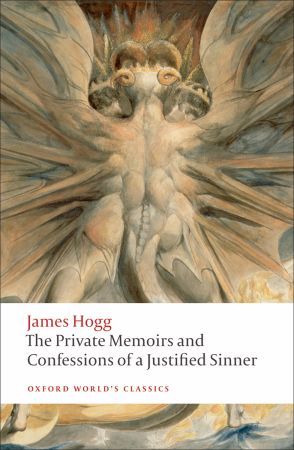
The Private Memoirs and Confessions of a Justified Sinner My sister gave me a copy of this book saying it was one of the weirdest books she’d ever read and she thought I would love it. I’m not sure what that says about my reading tastes, but she was right anyway because I did love it!

The Private Memoirs and Confessions of a Justified Sinner, published in 1824, was written by the Scottish poet and novelist James Hogg. I had never come across Hogg and his work until now and was interested to learn that he was a shepherd who taught himself to read and write and became a friend of Sir Walter Scott. This, his most famous novel, is part horror story, part murder mystery and part gothic fiction, but it also incorporates elements of religion, Scottish folklore, the supernatural and even some humour and satire.

Robert Wringhim, the ‘justified sinner’ of the title, is a young man who has been raised by his adoptive father, a Calvinist, to believe he is one of the chosen few, destined for a place in Heaven regardless of the sins he commits in life. One day he meets a mysterious stranger who calls himself Gil-Martin and who seems able to change his appearance at will. Wringhim allows the stranger to convince him that it’s his duty to “cut sinners off with the sword” and that he doesn’t need to worry about committing murder as in this case it’s the right thing to do and he is sure to be saved by God anyway. In his Private Memoirs and Confessions, he describes how he falls under the spell of the sinister Gil-Martin and how, when he begins to have doubts about his new friend, he starts to descend into madness and desperation.

Robert Wringhim’s Confession is presented as an authentic document that has been discovered under unusual circumstances a century later. It is introduced by a Narrative written by a fictitious editor which gives a supposedly factual account of Wringhim’s life and the crimes he is involved in. The Editor’s Narrative also forms the third and final section of the novel and attempts to explain how the Confession was found and what it might mean. But instead of helping to clarify the story, the Editor actually makes things more confusing and sometimes even contradicts what Wringhim has said. Neither narrative seems to be very reliable and at the end of the novel, we have to decide for ourselves what really happened. For example, it’s not clear whether Gil-Martin is a product of Wringhim’s imagination or whether he is a real person or even the Devil.

This book kept me gripped from the first page, but it was quite a challenging story to read. There was a lot of Scottish dialect and while that’s not something I usually have a problem with, many of the words used here were unfamiliar to me and I was constantly turning to the glossary at the back of the book. There were also a large number of Biblical references on almost every page and again, I found that I kept needing to refer to the notes. It wasn’t completely essential to recognise or understand all of these references, but it was important to know how the various characters were interpreting them. Finally, there are no chapter breaks – the middle section, the Confession, forms one continuous chunk of over 100 pages, making it hard to find a place to stop reading.

However, it was definitely worth having to make a bit of extra effort; this is one of the most fascinating and original classics I’ve read and I can’t believe it isn’t better known. I thought it was much better than Robert Louis Stevenson’s Dr Jekyll and Mr Hyde, which is the book it reminded me of most. I’m also surprised that, as far as I’m aware, it has never been adapted for film or television. Some parts of the novel are very visual – the atmosphere of the dark wynds and closes of Edinburgh; the description of the rainbow seen by Robert Wringhim’s brother, George; and some of the scenes where Wringhim finds himself hounded and tormented by fiends and demons. I loved this book and am very grateful to my sister for recommending it!

The Small House at Allington by Anthony Trollope

The Small House at Allington This is the fifth of Anthony Trollope’s Chronicles of Barsetshire, a series of six novels set in the fictitious county of Barsetshire. I’ve read the first four and enjoyed them all, so I knew what to expect when I picked up The Small House at Allington. I have discussed Trollope’s writing style in my posts on the previous books in this series but will repeat that if you like Victorian authors who talk directly to the reader, who create well-rounded and nuanced characters and who fill the pages of their novels with gentle humour and insightful observations on human nature, then I would highly recommend trying the Barsetshire series.

The Small House at Allington (not to be confused with the adjacent Great House, home of the Squire of Allington, Christopher Dale) is where the Squire’s widowed sister-in-law, Mary Dale, lives with her two daughters, Bell and Lily. When Lily falls in love with Adolphus Crosbie, a friend of her cousin Bernard’s, he proposes and she accepts. After discovering that the Squire is not planning to give his niece a dowry, Crosbie begins to reconsider their engagement and during a visit to Courcy Castle he becomes engaged to another woman – Lady Alexandrina de Courcy, whose family, he hopes, will help him to rise in the world. Even after learning how she has been betrayed, Lily swears that she still loves Crosbie and will never marry anyone else, but will she change her mind when she discovers that she has another admirer?

The other man in love with Lily is Johnny Eames, a junior clerk who works at the Income Tax Office in London. At the beginning of the story, Eames is a shy, awkward young man described as a ‘hobbledehoy’ (isn’t that a great word?) and is apparently based on the young Trollope himself. As Johnny begins to gain more experience of the world and grows in confidence, will he ever find the courage to escape the clutches of his landlady’s daughter Amelia and propose to Lily?

Trollope devotes such a lot of time to introducing us to his characters – giving us every detail of their appearance and personality, describing their emotions and taking us through every step of their thought processes as they struggle to deal with the various dilemmas they find themselves facing. This has the effect of making his novels very long, but it also means that his characters feel like real, believable human beings. You won’t necessarily like all of them, but there will always be a few you can understand and identify with. Adolphus Crosbie, for example, could be seen as the ‘villain’ of the book, but he is also a complex and realistic character. He knows he’s doing the wrong thing but still can’t seem to stop himself from doing it and is punished by finding himself trapped in a loveless marriage to Lady Alexandrina.

One character I could not understand or identify with was Lily Dale! It was so frustrating that even after the way Crosbie treats her she insists that she loves him and forgives him and will think of herself as a widow for the rest of her life. I don’t know how her mother and sister managed to have so much patience with her (although being patient was maybe not the best way to deal with Lily – in Trollope’s day Lily might have seemed an admirable, romantic character but to me she came across as silly and irritating). There are some great female characters in the Chronicles of Barsetshire – Miss Dunstable, Mary Thorne, Eleanor Harding – but Lily is not one of them. I thought Bell, the other Dale sister, was a much more interesting heroine, although her storyline in which the Squire tries to convince her to marry her cousin Bernard, a man she likes but doesn’t love, is given less attention than Lily’s.

We also meet a variety of other interesting characters in this book; my favourites this time were the good-natured, well-meaning Earl de Guest, his sister Lady Julia, and the inhabitants of Mrs Roper’s boarding house in London. A few of our old friends from earlier in the series are here again too; Lady Dumbello (the former Griselda Grantly) appears in an amusing sub-plot involving Plantagenet Palliser, who I’m looking forward to reading more about in the Palliser series. There’s also a very brief appearance from Mr Harding, one of my favourite characters from The Warden and Barchester Towers, and I was disappointed that we didn’t see more of him.

It’s not often that Trollope surprises me (his plots are usually so predictable he sometimes even tells us in the first chapter what is going to happen in the rest of the book) but this time he did. While some of the characters got their happy ending – or unhappy ending in some cases – for others it felt that things had been left unresolved and so the story did not end in quite the way I would have expected at the beginning.

The Small House at Allington was apparently our former Prime Minister, John Major’s, favourite book. It isn’t mine, or even my favourite of the Barsetshire novels, but despite being irritated by Lily I did still love it and thought it was an improvement on the previous one, Framley Parsonage, which I had found slightly disappointing after the wonderful Barchester Towers and Doctor Thorne. I am now looking forward to reading The Last Chronicle of Barset and finishing the series!