The Classics Club

Jillian of A Room of One’s Own has come up with a great idea to unite people who like to read and blog about classic literature. It’s called The Classics Club and the idea is to make a list of fifty or more classics you want to read within the next five years. Modern classics and re-reads can also be included.

My goal is to finish by 10 March 2017 and after a lot of thought I’ve chosen the sixty books listed below – though I suspect I’ll probably end up making some changes!

My list:

Emma by Jane Austen (re-read)
Pride and Prejudice by Jane Austen (re-read)
Aurora Floyd by Mary Elizabeth Braddon
Shirley by Charlotte Bronte
Jane Eyre by Charlotte Bronte (re-read)
Wuthering Heights by Emily Bronte (re-read)
Death Comes for the Archbishop by Willa Cather
Hide and Seek by Wilkie Collins
David Copperfield by Charles Dickens
Oliver Twist by Charles Dickens
A Tale of Two Cities by Charles Dickens
Crime and Punishment by Fyodor Dostoevsky
The Three Musketeers by Alexandre Dumas (re-read)
Twenty Years After by Alexandre Dumas
The Vicomte de Bragelonne by Alexandre Dumas
Rebecca by Daphne du Maurier (re-read)
Frenchman’s Creek by Daphne du Maurier
The Mill on the Floss by George Eliot
The Good Soldier by Ford Madox Ford
The French Lieutenant’s Woman by John Fowles
Wives and Daughters by Elizabeth Gaskell
Mary Barton by Elizabeth Gaskell
Sylvia’s Lovers by Elizabeth Gaskell
Cold Comfort Farm by Stella Gibbons
The Odd Women by George Gissing
The Return of the Native by Thomas Hardy
The Mayor of Casterbridge by Thomas Hardy
Far from the Madding Crowd by Thomas Hardy
The House of the Seven Gables by Nathaniel Hawthorne
The Hunchback of Notre Dame by Victor Hugo
The Remains of the Day by Kazuo Ishiguro
Washington Square by Henry James
The Haunting of Hill House by Shirley Jackson
The Princess of Cleves by Madame de Lafayette
The House by the Churchyard by Joseph Sheridan Le Fanu
The Painted Veil by W Somerset Maugham
Beloved by Toni Morrison
The Scarlet Pimpernel by Baroness Orczy
Excellent Women by Barbara Pym
The Romance of the Forest by Ann Radcliffe
Wide Sargasso Sea by Jean Rhys
Scaramouche by Rafael Sabatini
The Heart of Midlothian by Sir Walter Scott
Frankenstein by Mary Shelley
Of Mice and Men by John Steinbeck
The Grapes of Wrath by John Steinbeck
The Strange Case of Dr Jekyll and Mr Hyde by Robert Louis Stevenson
Vanity Fair by William Makepeace Thackeray
The Small House at Allington by Anthony Trollope
The Last Chronicle of Barset by Anthony Trollope
Can You Forgive Her? by Anthony Trollope
Kristin Lavransdatter by Sigrid Undset
Around the World in Eighty Days by Jules Verne
The Time Machine by H.G. Wells
The Importance of Being Earnest by Oscar Wilde
The Age of Innocence by Edith Wharton
The House of Mirth by Edith Wharton
The Heir of Redclyffe by Charlotte M Yonge
La Bête Humaine by Emile Zola
Germinal by Emile Zola

Who else is joining the Classics Club?
Which books on my list do you think I should read first?
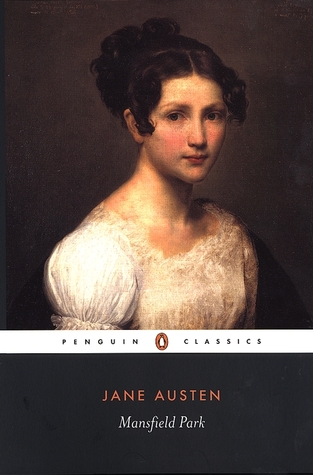
Mansfield Park by Jane Austen (re-read)

Mansfield Park is the story of Fanny Price who, at the age of ten, goes to live with her uncle and aunt, Sir Thomas and Lady Bertram. For Fanny, who has spent her early years in Portsmouth as part of a large working-class family, the Bertrams’ estate, Mansfield Park, is like a different world. While Fanny is grateful for the new opportunities she’s been given, she is made to feel inferior and insignificant by her cousins, Maria and Julia, and another aunt, Mrs Norris (surely one of the nastiest characters in any Austen novel). Only her cousin Edmund offers her any real kindness and friendship, and as the years go by Fanny begins to fall in love with him, although she doesn’t admit it and everyone, including Edmund, is unaware of it. And when Mary Crawford and her brother Henry come to stay at the nearby parsonage, Fanny’s peaceful life at Mansfield Park is suddenly thrown into turmoil.

I first attempted to read Mansfield Park when I was fifteen, immediately after finishing Pride and Prejudice, which I had loved. Compared to Pride and Prejudice I found this one very dry and boring, and gave up after a couple of chapters. Returning to it ten years later, I managed to read it through to the end but still didn’t like it very much. My recent re-read has been an entirely different experience and this time I found that I really enjoyed it!

Fanny Price is a shy, quiet person and seems to be Jane Austen’s least popular heroine, but I’ve never really had a problem with her personality. Not everyone can be witty and lively after all, and since arriving at Mansfield Park Fanny has constantly been reminded that she will never be equal to her cousins and treated almost like a servant, so it’s not surprising that she doesn’t have the confidence of some of the other Austen heroines. I would agree that she’s maybe not the most interesting of characters to read about, and I suppose I can understand why other readers might prefer Mary Crawford, but I personally don’t mind Fanny. I do think she has an inner strength and complexity which wasn’t really apparent to me the first time I read the book but which I could appreciate more this time – one of the reasons I think re-reads are so worthwhile!

I still didn’t like Edmund though, apart from at the beginning when he seems to be the only person who genuinely cares about Fanny. Without him her early days at Mansfield Park would have been a lot more miserable, but later in the book, particularly after the arrival of the Crawfords, he starts to really annoy me.

While Mansfield Park is never going to be my favourite Jane Austen novel, I’m glad I’ve given it another chance. If you’re new to Austen, though, I don’t think I would recommend starting with this one.

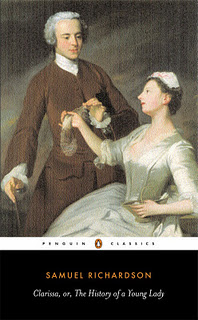
Clarissa Group Read: My thoughts so far

Throughout 2012 I’m taking part in the group read of Samuel Richardson’s Clarissa, hosted by JoAnn of Lakeside Musing and Terri of Tip of the Iceberg. I probably won’t be posting an update every month but I thought it would be a good idea to at least post at the beginning, at the end and a few times in between.

For those of you not familiar with Clarissa, the book was published in 1748 and has over 1500 pages. The story is told in the form of 537 letters, the first being dated 10th January and the last 18th December. The idea of reading Clarissa over an entire year is so that the letters can be read on or close to the dates mentioned in the book.

January’s letters form a series of correspondence between Clarissa Harlowe and her best friend Anna Howe. In the first letter we learn that Clarissa and her family are involved in some kind of scandal and Anna wants her friend to tell her the truth about what has happened. Clarissa then replies to Anna with an account of the events that followed her family’s introduction to Mr Lovelace. At first Mr Lovelace had been interested in Clarissa’s sister, Arabella, before turning his attentions to Clarissa herself. It seems that Clarissa’s entire family disapprove of Lovelace, particularly after her brother James gets into a fight with him and is wounded. In the last of the January letters Clarissa has been given permission to visit Anna and stay with her for a few days.

I love the concept of reading each letter on the correct date, but I’ll admit I haven’t been sticking exactly to the schedule. I’m concerned that although January and February have a manageable number of letters (6 in January and 5 in February) some of the other months have a lot more to read (61 letters in March, for example). I don’t want to fall behind later in the year so I’ve been reading slightly ahead of schedule to make sure that doesn’t happen. I know this isn’t quite the idea of the group read but I think it’s the only way I’m going to have time to read the whole book before the end of December.

As I didn’t already have a copy of Clarissa I considered buying the paperback for the readalong, but in the end I downloaded the Kindle edition of the book, which is divided into 9 volumes. There are a couple of advantages to this, I think. I know from my experience of reading other books with 1000+ pages that they can be physically difficult to hold, so at least I don’t have that problem with the ebook version. And it also seems less daunting somehow to be reading 9 separate shorter volumes instead of one thick book.

I was expecting Clarissa to be a difficult book to understand as I haven’t read a lot of 18th century literature, but I actually haven’t had too much of a problem with the language. I wouldn’t describe it as an easy read and I certainly haven’t understood every word, as there are some that are no longer in use or that had different meanings in the 18th century, but I’m trying not to worry about that as long as I can still follow what’s happening. I’m enjoying the story so far and looking forward to continuing with it throughout the rest of the year!

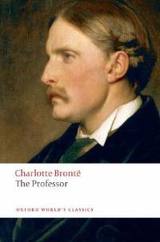
The Professor by Charlotte Brontë

The Professor was Charlotte Brontë’s first novel. She was unable to find a publisher for it during her lifetime and it was eventually published posthumously in 1857. Like Jane Eyre and Villette, this book is written in the first person, but with one difference – the narrator is a man. This is interesting as it shows us Charlotte’s views on how a man would think and behave and what his feelings towards women might be.

The narrator’s name is William Crimsworth, and at the beginning of the novel he is starting a new job as a clerk, working for his brother Edward, a rich mill-owner. However, William finds Edward impossible to get along with – he’s cruel and cold-hearted and treats William badly. Finding himself out of work again, William takes the advice of another businessman, Mr Hunsden, and goes to Belgium to teach English at a boys’ school in Brussels. Here he becomes involved with two very different women: one is Zoraide Reuter, the headmistress of the neighbouring girls’ school, and the other is a poor friendless student-teacher, Frances Henri.

This is the third book I’ve read by Charlotte Brontë. I first read Jane Eyre when I was a teenager and it immediately became one of my favourite books, but I didn’t begin to explore her other work until just last year, when I read Villette. Villette, like this book, is set at a school in Brussels and in many ways is a very similar story to The Professor, but with a female narrator and a more complex, layered plot. In both The Professor and Villette, Charlotte was able to draw on her own personal experience of teaching and studying in Brussels. This is obvious both in her descriptions of the city and in the way she could write so knowledgeably about education and the relationship between teachers and pupils.

What I love about Charlotte Brontë’s writing, as I mentioned in my earlier post on the author, is the way she writes about feelings and emotions. In The Professor she perfectly captures the loneliness and isolation a man might feel on arriving in an unfamiliar country with no money and without a friend in the world.

William is not as sympathetic a character as he should be though, due to Charlotte Brontë expressing some of her own views and prejudices through his narration. There’s a lot of racism and anti-Catholicism throughout this story, particularly when William is describing the girls in the school, making assumptions about them based on their nationality and considering them inferior to Protestant English girls. I’m sure it’s not a coincidence that the scheming, manipulative Zoraide Reuter is Catholic, while the quiet, honest Frances is Protestant (and half-English). Even allowing for the fact that the book was written in the 19th century, some of these passages were uncomfortable to read. And because I could never really warm to William’s character, I didn’t find this book as moving as I might have done otherwise.

Brontë also includes a lot of French dialogue in this novel, which it is assumed that the reader can understand. Some editions of the book provide translations in the notes, but the French is not translated in the original text and it can be frustrating to feel that you might be missing out on something essential to the plot. Also, the constant references to ‘physiognomy’ started to really irritate me (physiognomy is the concept of judging a person’s character based on their appearance). The word seemed to appear on almost every page, whenever William met someone new!

I know I’m probably giving the impression that I didn’t enjoy this book, but that’s not true. Charlotte Brontë’s writing is beautiful and for that reason alone I would say this book is definitely worth reading. Just don’t choose this one as a first introduction to Charlotte’s work – my recommendation would be to start with Jane Eyre and then move on to Villette before deciding whether to try The Professor. I can’t comment on her other book, Shirley, as I still haven’t read that one – maybe later in the year!

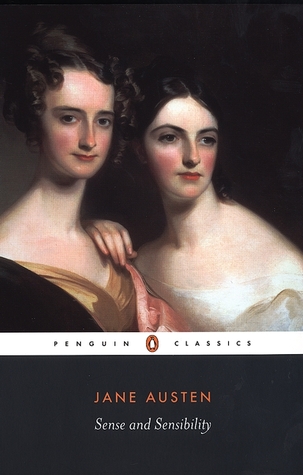
Sense and Sensibility by Jane Austen

Sense and Sensibility was the only one of Jane Austen’s major novels I hadn’t read and when I saw that Yvann of Reading Fuelled by Tea was hosting a readalong for Advent with Austen it seemed like a good opportunity to read it. Unfortunately I struggled to keep up with the weekly readalong schedule due to lack of time earlier in the month, but I managed to catch up this week and finish the book. Now that I’ve read it, Sense and Sensibility is not my favourite Austen novel (that would definitely be Persuasion) but not my least favourite either.

For those of you who haven’t read it yet, this is the story of two sisters, Elinor and Marianne Dashwood (there is a third sister, Margaret, but she doesn’t have a significant part in the plot). Elinor and Marianne have entirely different personalities and temperaments, representing the ‘sense’ and ‘sensibility’ of the title. While Elinor is the more calm and practical of the two, Marianne is passionate and emotional. After their father’s death, their half-brother John inherits the family estate and the girls and their mother go to live in a small country cottage in Devonshire belonging to their relations, the Middletons.

Marianne soon falls in love with Mr Willoughby, a man she meets soon after moving to their new home. When Willoughby suddenly leaves for London, Marianne is left devastated. She’s certain that he still loves her, but does he? The man Elinor loves is Edward Ferrars, her sister-in-law’s brother, but there are several obstacles preventing them from marrying, including the disapproval of Edward’s mother and also a previous relationship of Edward’s. There’s also a third man, Colonel Brandon, who becomes a friend of the Dashwoods – but which sister is he interested in and will she ever be able to love him in return?

During the story both sisters experience disappointment and heartbreak, and it’s interesting to see how differently they cope with their feelings. Elinor is more reserved and tries to keep her emotions to herself, while Marianne makes no effort to hide how she is feeling. And that is really the major theme of the novel: a comparison between two extreme reactions to a similar situation. Is it better to wear your heart on your sleeve or to suffer in silence? Is one type of behaviour right and the other wrong? The answer, I think, is to find a balance between the two.

I liked both of the Dashwood sisters, though I found Elinor easier to identify with because I’m definitely more of an Elinor myself than a Marianne. Marianne annoyed me a lot during the first few chapters of the book, but my feelings about her changed as the book went on. I did like the fact that she had such strong opinions about things and that she was prepared to speak her mind when she believed it was necessary. I loved Elinor and admired her quiet self-control, though she did frustrate me at times too, because I don’t think it’s necessarily always a good thing to be so reserved that nobody can tell how you feel.

Other than the Dashwoods, there were a good variety of secondary characters. There were some that I liked (Mrs Jennings, who irritated me at first but I warmed to her later as she was one of the few women Marianne and Elinor met who seemed to genuinely like and care about them) and some that I disliked (I thought Lucy Steele and her sister were vile!) and some who gave Austen a chance to have some fun, e.g. Charlotte and Mr Palmer. The story also has lots of examples of Austen’s famous irony and satire. I’ll admit that when I read some of her other books in the past I didn’t always appreciate all the subtleties of her wit, but with this book I did and some of the dialogue and observations were very clever and amusing.

As this was the first time I’ve read Sense and Sensibility, I liked the way Austen kept me wondering what was going to happen. I suspected there would be a happy ending for Marianne and Elinor, but I couldn’t see exactly how things were going to work out for them or which men they would end up with. Austen does put a few twists into the last few chapters of the novel and I liked the way Elinor’s story was resolved, but I’m not sure I was very happy with how Marianne’s ended.

Now that I’ve read all six of her major novels I’m looking forward to exploring Austen’s other work and also reading the novels again so I can pick up on some of the details I probably missed the first time!

Have you read Sense and Sensibility? Are you a Marianne or an Elinor?

The Phantom of the Opera by Gaston Leroux

Gaston Leroux’s novel The Phantom of the Opera has been adapted for stage and screen so many times, many of us will be familiar with the story without ever having read the book. But whether you’ve seen any of the adaptations or not, you can expect the novel to be different in many ways and it’s an entertaining read in its own right. Although I won’t be adding it to my list of all-time favourite classics, I did enjoy it and had fun reading it.

The novel was first published in English in 1911, having previously been serialised in a French newspaper during 1909 and 1910. For those of you who don’t know the plot, the story takes place in the Paris Opera House, which is apparently haunted by a ghost. When Raoul, the Vicomte de Chagny, falls in love with Christine Daaé, a singer at the Opera House, he discovers that he has a rival for Christine’s love: the Opera Ghost himself.

In the prologue, Leroux tells us that this is a true story and that he has carried out extensive research, interviewing some of the characters and studying the archives of the National Academy of Music.

The Opera ghost really existed. He was not, as was long believed, a creature of the imagination of the artists, the superstition of the managers, or a product of the absurd and impressionable brains of the young ladies of the ballet, their mothers, the box-keepers, the cloak-room attendants or the concierge. Yes, he existed in flesh and blood, although he assumed the complete appearance of a real phantom; that is to say, of a spectral shade.

But whether or not you believe that the ghost was real, the opera house was definitely based on a real place, designed by the architect Charles Garnier in the 1860s. Almost the entire story is set inside the opera house, which becomes a whole world in itself complete with an underground lake, a maze of tunnels and even a torture chamber. It was a fascinating setting to read about and in a way, the building is the most important character in the book, providing a lot of the novel’s atmosphere and suspense.

Although the book is presented as if it was a factual account, the writing is never dry. In fact, it’s the opposite: it’s filled with passion and emotion. It’s also very melodramatic and over the top, which made it quite funny at times (though I wasn’t always sure if it was supposed to be!) but what the book lacks in quality of prose is made up for in the storytelling and exciting plot. I didn’t love The Phantom of the Opera, but it kept me entertained and I’m glad to have finally read it.

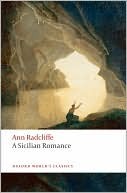
Classics Circuit: A Sicilian Romance by Ann Radcliffe

A Sicilian Romance is a gothic novel first published more than two hundred years ago, in 1790. Set in the late sixteenth century, it’s the story of two sisters, Julia and Emilia, the daughters of the fifth marquis of Mazzini. After the death of the girls’ mother, the marquis marries again and as his second wife prefers to spend her time in Naples, he leaves his daughters living alone in his ancient castle in Sicily with only the servants for company. When their father returns to the island and informs Julia that he has arranged a marriage for her, she rebels against his choice of husband, putting her life in danger. Meanwhile several of the castle’s inhabitants report hearing strange noises and seeing mysterious lights shining in an abandoned part of the building. Is the castle haunted?

This is not the first Ann Radcliffe novel I’ve read; I had previously enjoyed both The Mysteries of Udolpho and The Italian, so when I saw that the theme of the latest Classics Circuit tour was the early gothic novel, I decided to try another Radcliffe book. This one was shorter and less satisfying than the other two I’ve read, but in a lot of ways it was very similar. All of her books are perfect examples of gothic literature and have everything you would expect from a gothic novel: An old castle with crumbling staircases and dark, dusty chambers, locked doors, family secrets, lonely monasteries, bandits, shipwrecks, dungeons and underground tunnels, thunder and lightning, and almost anything else you can think of.

I’ve found that reading early gothic novels requires a different approach to normal. You need to be prepared for lots of melodrama and it’s necessary to completely suspend disbelief because in reality nobody would ever find themselves in the situations Radcliffe’s characters find themselves in. I hope not anyway! The characters also tend not to be as well developed as you would expect in a more modern novel and are usually portrayed as either completely good or completely evil. A Sicilian Romance features two beautiful heroines, a brave, handsome nobleman, and a wicked stepmother, among other stereotypes. The storyline is predictable and relies heavily on coincidences, last-minute escapes and other typical plot devices found in this type of book. It’s almost impossible to take these books seriously, but if you can accept them for what they are, they can be fun to read.

I should also mention that there are some beautifully written descriptions of the Sicilian scenery (although there’s not as much descriptive writing as in The Mysteries of Udolpho, which made this book easier to read and much faster-paced). I enjoyed this book but I think The Italian is still my favourite Radcliffe novel.

Visit the Classics Circuit blog to discover more early gothic literature.