The Professor by Charlotte Brontë

The Professor was Charlotte Brontë’s first novel. She was unable to find a publisher for it during her lifetime and it was eventually published posthumously in 1857. Like Jane Eyre and Villette, this book is written in the first person, but with one difference – the narrator is a man. This is interesting as it shows us Charlotte’s views on how a man would think and behave and what his feelings towards women might be.

The narrator’s name is William Crimsworth, and at the beginning of the novel he is starting a new job as a clerk, working for his brother Edward, a rich mill-owner. However, William finds Edward impossible to get along with – he’s cruel and cold-hearted and treats William badly. Finding himself out of work again, William takes the advice of another businessman, Mr Hunsden, and goes to Belgium to teach English at a boys’ school in Brussels. Here he becomes involved with two very different women: one is Zoraide Reuter, the headmistress of the neighbouring girls’ school, and the other is a poor friendless student-teacher, Frances Henri.

This is the third book I’ve read by Charlotte Brontë. I first read Jane Eyre when I was a teenager and it immediately became one of my favourite books, but I didn’t begin to explore her other work until just last year, when I read Villette. Villette, like this book, is set at a school in Brussels and in many ways is a very similar story to The Professor, but with a female narrator and a more complex, layered plot. In both The Professor and Villette, Charlotte was able to draw on her own personal experience of teaching and studying in Brussels. This is obvious both in her descriptions of the city and in the way she could write so knowledgeably about education and the relationship between teachers and pupils.

What I love about Charlotte Brontë’s writing, as I mentioned in my earlier post on the author, is the way she writes about feelings and emotions. In The Professor she perfectly captures the loneliness and isolation a man might feel on arriving in an unfamiliar country with no money and without a friend in the world.

William is not as sympathetic a character as he should be though, due to Charlotte Brontë expressing some of her own views and prejudices through his narration. There’s a lot of racism and anti-Catholicism throughout this story, particularly when William is describing the girls in the school, making assumptions about them based on their nationality and considering them inferior to Protestant English girls. I’m sure it’s not a coincidence that the scheming, manipulative Zoraide Reuter is Catholic, while the quiet, honest Frances is Protestant (and half-English). Even allowing for the fact that the book was written in the 19th century, some of these passages were uncomfortable to read. And because I could never really warm to William’s character, I didn’t find this book as moving as I might have done otherwise.

Brontë also includes a lot of French dialogue in this novel, which it is assumed that the reader can understand. Some editions of the book provide translations in the notes, but the French is not translated in the original text and it can be frustrating to feel that you might be missing out on something essential to the plot. Also, the constant references to ‘physiognomy’ started to really irritate me (physiognomy is the concept of judging a person’s character based on their appearance). The word seemed to appear on almost every page, whenever William met someone new!

I know I’m probably giving the impression that I didn’t enjoy this book, but that’s not true. Charlotte Brontë’s writing is beautiful and for that reason alone I would say this book is definitely worth reading. Just don’t choose this one as a first introduction to Charlotte’s work – my recommendation would be to start with Jane Eyre and then move on to Villette before deciding whether to try The Professor. I can’t comment on her other book, Shirley, as I still haven’t read that one – maybe later in the year!

Sense and Sensibility by Jane Austen

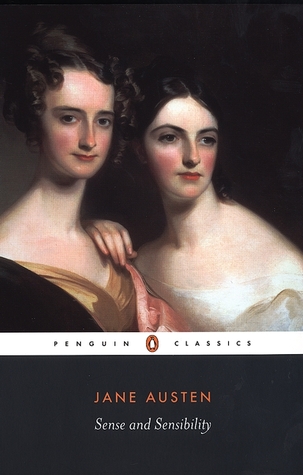
Sense and Sensibility was the only one of Jane Austen’s major novels I hadn’t read and when I saw that Yvann of Reading Fuelled by Tea was hosting a readalong for Advent with Austen it seemed like a good opportunity to read it. Unfortunately I struggled to keep up with the weekly readalong schedule due to lack of time earlier in the month, but I managed to catch up this week and finish the book. Now that I’ve read it, Sense and Sensibility is not my favourite Austen novel (that would definitely be Persuasion) but not my least favourite either.

For those of you who haven’t read it yet, this is the story of two sisters, Elinor and Marianne Dashwood (there is a third sister, Margaret, but she doesn’t have a significant part in the plot). Elinor and Marianne have entirely different personalities and temperaments, representing the ‘sense’ and ‘sensibility’ of the title. While Elinor is the more calm and practical of the two, Marianne is passionate and emotional. After their father’s death, their half-brother John inherits the family estate and the girls and their mother go to live in a small country cottage in Devonshire belonging to their relations, the Middletons.

Marianne soon falls in love with Mr Willoughby, a man she meets soon after moving to their new home. When Willoughby suddenly leaves for London, Marianne is left devastated. She’s certain that he still loves her, but does he? The man Elinor loves is Edward Ferrars, her sister-in-law’s brother, but there are several obstacles preventing them from marrying, including the disapproval of Edward’s mother and also a previous relationship of Edward’s. There’s also a third man, Colonel Brandon, who becomes a friend of the Dashwoods – but which sister is he interested in and will she ever be able to love him in return?

During the story both sisters experience disappointment and heartbreak, and it’s interesting to see how differently they cope with their feelings. Elinor is more reserved and tries to keep her emotions to herself, while Marianne makes no effort to hide how she is feeling. And that is really the major theme of the novel: a comparison between two extreme reactions to a similar situation. Is it better to wear your heart on your sleeve or to suffer in silence? Is one type of behaviour right and the other wrong? The answer, I think, is to find a balance between the two.

I liked both of the Dashwood sisters, though I found Elinor easier to identify with because I’m definitely more of an Elinor myself than a Marianne. Marianne annoyed me a lot during the first few chapters of the book, but my feelings about her changed as the book went on. I did like the fact that she had such strong opinions about things and that she was prepared to speak her mind when she believed it was necessary. I loved Elinor and admired her quiet self-control, though she did frustrate me at times too, because I don’t think it’s necessarily always a good thing to be so reserved that nobody can tell how you feel.

Other than the Dashwoods, there were a good variety of secondary characters. There were some that I liked (Mrs Jennings, who irritated me at first but I warmed to her later as she was one of the few women Marianne and Elinor met who seemed to genuinely like and care about them) and some that I disliked (I thought Lucy Steele and her sister were vile!) and some who gave Austen a chance to have some fun, e.g. Charlotte and Mr Palmer. The story also has lots of examples of Austen’s famous irony and satire. I’ll admit that when I read some of her other books in the past I didn’t always appreciate all the subtleties of her wit, but with this book I did and some of the dialogue and observations were very clever and amusing.

As this was the first time I’ve read Sense and Sensibility, I liked the way Austen kept me wondering what was going to happen. I suspected there would be a happy ending for Marianne and Elinor, but I couldn’t see exactly how things were going to work out for them or which men they would end up with. Austen does put a few twists into the last few chapters of the novel and I liked the way Elinor’s story was resolved, but I’m not sure I was very happy with how Marianne’s ended.

Now that I’ve read all six of her major novels I’m looking forward to exploring Austen’s other work and also reading the novels again so I can pick up on some of the details I probably missed the first time!

Have you read Sense and Sensibility? Are you a Marianne or an Elinor?

The Phantom of the Opera by Gaston Leroux

Gaston Leroux’s novel The Phantom of the Opera has been adapted for stage and screen so many times, many of us will be familiar with the story without ever having read the book. But whether you’ve seen any of the adaptations or not, you can expect the novel to be different in many ways and it’s an entertaining read in its own right. Although I won’t be adding it to my list of all-time favourite classics, I did enjoy it and had fun reading it.

The novel was first published in English in 1911, having previously been serialised in a French newspaper during 1909 and 1910. For those of you who don’t know the plot, the story takes place in the Paris Opera House, which is apparently haunted by a ghost. When Raoul, the Vicomte de Chagny, falls in love with Christine Daaé, a singer at the Opera House, he discovers that he has a rival for Christine’s love: the Opera Ghost himself.

In the prologue, Leroux tells us that this is a true story and that he has carried out extensive research, interviewing some of the characters and studying the archives of the National Academy of Music.

The Opera ghost really existed. He was not, as was long believed, a creature of the imagination of the artists, the superstition of the managers, or a product of the absurd and impressionable brains of the young ladies of the ballet, their mothers, the box-keepers, the cloak-room attendants or the concierge. Yes, he existed in flesh and blood, although he assumed the complete appearance of a real phantom; that is to say, of a spectral shade.

But whether or not you believe that the ghost was real, the opera house was definitely based on a real place, designed by the architect Charles Garnier in the 1860s. Almost the entire story is set inside the opera house, which becomes a whole world in itself complete with an underground lake, a maze of tunnels and even a torture chamber. It was a fascinating setting to read about and in a way, the building is the most important character in the book, providing a lot of the novel’s atmosphere and suspense.

Although the book is presented as if it was a factual account, the writing is never dry. In fact, it’s the opposite: it’s filled with passion and emotion. It’s also very melodramatic and over the top, which made it quite funny at times (though I wasn’t always sure if it was supposed to be!) but what the book lacks in quality of prose is made up for in the storytelling and exciting plot. I didn’t love The Phantom of the Opera, but it kept me entertained and I’m glad to have finally read it.

Classics Circuit: A Sicilian Romance by Ann Radcliffe

A Sicilian Romance is a gothic novel first published more than two hundred years ago, in 1790. Set in the late sixteenth century, it’s the story of two sisters, Julia and Emilia, the daughters of the fifth marquis of Mazzini. After the death of the girls’ mother, the marquis marries again and as his second wife prefers to spend her time in Naples, he leaves his daughters living alone in his ancient castle in Sicily with only the servants for company. When their father returns to the island and informs Julia that he has arranged a marriage for her, she rebels against his choice of husband, putting her life in danger. Meanwhile several of the castle’s inhabitants report hearing strange noises and seeing mysterious lights shining in an abandoned part of the building. Is the castle haunted?

This is not the first Ann Radcliffe novel I’ve read; I had previously enjoyed both The Mysteries of Udolpho and The Italian, so when I saw that the theme of the latest Classics Circuit tour was the early gothic novel, I decided to try another Radcliffe book. This one was shorter and less satisfying than the other two I’ve read, but in a lot of ways it was very similar. All of her books are perfect examples of gothic literature and have everything you would expect from a gothic novel: An old castle with crumbling staircases and dark, dusty chambers, locked doors, family secrets, lonely monasteries, bandits, shipwrecks, dungeons and underground tunnels, thunder and lightning, and almost anything else you can think of.

I’ve found that reading early gothic novels requires a different approach to normal. You need to be prepared for lots of melodrama and it’s necessary to completely suspend disbelief because in reality nobody would ever find themselves in the situations Radcliffe’s characters find themselves in. I hope not anyway! The characters also tend not to be as well developed as you would expect in a more modern novel and are usually portrayed as either completely good or completely evil. A Sicilian Romance features two beautiful heroines, a brave, handsome nobleman, and a wicked stepmother, among other stereotypes. The storyline is predictable and relies heavily on coincidences, last-minute escapes and other typical plot devices found in this type of book. It’s almost impossible to take these books seriously, but if you can accept them for what they are, they can be fun to read.

I should also mention that there are some beautifully written descriptions of the Sicilian scenery (although there’s not as much descriptive writing as in The Mysteries of Udolpho, which made this book easier to read and much faster-paced). I enjoyed this book but I think The Italian is still my favourite Radcliffe novel.

Visit the Classics Circuit blog to discover more early gothic literature.

Under the Greenwood Tree by Thomas Hardy

Under the Greenwood Tree, set in the small village of Mellstock in Thomas Hardy’s fictional Wessex, is both a love story and a nostalgic study into the disappearance of old traditions and a move towards a more modern way of life. The book is divided into five sections, one for each of the four seasons of the year plus a final concluding section. The story begins in the winter, when we meet a group of villagers who play stringed instruments in the church choir. There’s a new vicar in Mellstock, the Reverend Maybold, and he has plans to replace the traditional choir with a new mechanical church organ. The organ will be played by another newcomer to the village, a pretty young schoolteacher whose name is Fancy Day.

The musicians are upset when they learn that they are going to be replaced, but one of them, Dick Dewy, finds himself falling in love with Fancy Day. However, unknown to Dick he has several rivals for Fancy’s love, including a rich local farmer and even the Reverend Maybold himself. The story of Dick and Fancy’s romance is played out over the course of a year, against a backdrop of the changing seasons and the changing landscape of Mellstock.

Hardy’s novels have a reputation for being bleak and depressing, but I can promise you that this one is neither. It’s actually quite an uplifting, optimistic story with an (almost) happy ending – very different from the other three Hardy books I’ve read (Tess of the d’Urbervilles, Jude the Obscure and A Pair of Blue Eyes). It doesn’t have the depth and complexity of Tess or Jude and to be honest, I do personally prefer Hardy’s tragedies, but I enjoyed this one too and it did make a nice change from the darker books I’ve been reading recently. The strengths of Under the Greenwood Tree are its gentle humour and its portrayal of life in 19th century rural England. As usual with Hardy, his pastoral descriptions are beautifully written and I love the way he paints four different portraits of country life appropriate to each season of the year, from singing carols and making cider in the winter to gathering nuts and collecting honey from beehives in the autumn.

Where the book was less successful, in my opinion, was with the characters of Dick Dewy and Fancy Day, because they just weren’t strong enough or interesting enough for me to really care about their romance. Fancy was actually quite an advanced and ‘modern’ character for the time and place, being well-educated and independent. However, she’s depicted here as being very silly and shallow and I felt that we never got to understand her properly. Dick was easier to like but his character wasn’t given a lot of depth either. I do think Hardy captured the naiveté of their relationship perfectly, but I would have preferred to have read more about the rest of the village community, with the love story pushed further into the background. Apparently Hardy had originally wanted to call the book “The Mellstock Quire” and it did seem to me that he was maybe more comfortable with that aspect of the book.

Although I’ve only read a few of Thomas Hardy’s novels he’s quickly becoming one of my favourite Victorian authors. I hope to read all of his books eventually, but I wish I’d left Under the Greenwood Tree until later as it’s turned out to be the first one I haven’t loved. There were a lot of things I liked about it, but it didn’t have the same emotional impact on me that the others had and it’s not a book I would want to read again and again.

Uncle Silas by Sheridan Le Fanu

Until now my only previous experience of the 19th century Irish author Joseph Sheridan Le Fanu was the short story, Laura Silver Bell, which I read for Mel U’s Irish Short Story Week in March. I was keen to see what I would think of one of Le Fanu’s full-length novels and decided to read Uncle Silas for the R.I.P challenge.

Uncle Silas is an 1864 novel which seems to incorporate almost every aspect of the Victorian sensation/gothic novel you can think of: gloomy, eerie mansions, graveyards, laudanum addiction, an evil governess, locked rooms and locked cabinets, poison, family secrets. I had high hopes for the book as it sounded like exactly the type of classic I usually enjoy, and after a slow start it didn’t disappoint.

Our heroine (and the narrator of the story) is Maud Ruthyn who lives with her father at Knowl, their family estate. Maud is fascinated by a portrait of her Uncle Silas which hangs on one of the walls inside the house – she has never met her uncle before and is intrigued by hints of scandal in his past. When Mr Ruthyn decides to find a governess for his daughter, the sinister Madame de la Rougierre comes to live at Knowl and a chain of events begins which will finally bring Maud into contact with her mysterious Uncle Silas.

And that’s really all I can tell you about the plot without beginning to give too much away! I had managed to avoid reading any big spoilers so I never had any idea what was coming next, and I think that was the best way to approach this book.

It did take me a while to really get into the story. It was fun and entertaining from the beginning and I was never actually bored with it, but it seemed to take such a long time before anything really happened. It wasn’t until about one hundred and fifty pages into the book that the pace began to pick up and then I could appreciate why Le Fanu had taken his time building the suspense and slowly creating a mood of menace and foreboding. It was a very atmospheric and creepy story (particularly any scene featuring Madame de la Rougierre, who must be one of the most horrible, grotesque villains in literature), though I didn’t find it as scary as I had expected to.

Maud may not be the strongest of female characters but she felt real and believable to me. Although she could be brave when she needed to be, she was young and naïve and I felt genuinely worried for her as she found herself becoming increasingly isolated, not sure who she could and couldn’t trust. And for me, this was where the story could be described as frightening: the complete lack of control Maud had over her own destiny and the way she was forced to depend on people who may not have had her best interests at heart.

If you enjoyed The Woman in White by Wilkie Collins then I think there’s a good chance you’ll like this book too. It doesn’t have as many surprising twists and turns as The Woman in White but it is a similar type of book, though with a much darker and more gothic feel. I think it’s a shame Le Fanu isn’t as widely read as other Victorian authors, as his work is definitely worth reading. I hope you’ll decide to give this book a try if you haven’t already.

Framley Parsonage by Anthony Trollope

Framley Parsonage is the fourth novel in Anthony Trollope’s Chronicles of Barsetshire series. I’ve been slowly working my way through these books during the last year and in my opinion this one is neither the best nor the worst of the four I’ve read so far.

A common question asked by people new to Trollope is whether this series needs to be read in the correct order. Well, I don’t think it’s necessary at all and I’m sure this book could be enjoyed as a first introduction to Trollope, but personally I would recommend beginning with The Warden and reading each book in the series in turn. Framley Parsonage draws together a lot of characters from the first three books, including the Grantly and Proudie families from Barchester Towers and the Thornes and Greshams from Doctor Thorne, as well as some that I hadn’t expected to meet again, including one of my personal favourites, Miss Dunstable. I’m glad I chose to read the series in order because it’s nice to be able to recognise references to people, places and events and to feel that I’m getting to know the whole Barsetshire community.

Framley Parsonage consists of two main storylines. In the first, we follow Mark Robarts, the vicar of Framley. Mark became vicar at a younger age than would normally be expected, due to the influence of his friend, Lord Lufton, and his mother, Lady Lufton of Framley Court. He is still very ambitious and to Lady Lufton’s dismay he begins to mix with unscrupulous politicians whom he believes can help him further his career. When one of these politicians, Nathaniel Sowerby, persuades him to sign his name to a note for five hundred pounds, Mark finds himself getting deeper and deeper into debt – which is not the way a respectable clergyman should behave!

The second storyline involves Mark’s sister, Lucy Robarts, who comes to live at Framley Parsonage following the death of their father. Lucy falls in love with Lord Lufton, who soon proposes to her. However, Lucy is aware that Lord Lufton’s mother does not consider her a suitable wife for her son, so she vows not to marry him until she wins Lady Lufton’s approval – even though it means sacrificing her own happiness.

I found this book harder to get into than the previous three that I’ve read – it seemed to have a very slow start and didn’t really pick up until the character of Lucy Robarts made her first appearance. But as with all Trollope’s novels, once I did get into the story I became completely absorbed in the moral dramas and dilemmas taking place. Based on the first three Barsetshire books, I had a strong suspicion that all of Mark’s and Lucy’s problems would be resolved by the end, and yet this didn’t stop me from enjoying the book and wondering exactly how those problems would be resolved. As usual, Trollope’s characters feel completely believable with understandable motives and emotions. We can have sympathy with Mark Robarts because he is not a bad person – just young and naïve. And even when a character is cast as one of the villains of the book, such as Mr Sowerby, Trollope still asks us to remember that they do have some good qualities.

Although Anthony Trollope is not my favourite Victorian author (that would be either Wilkie Collins or Thomas Hardy) he does have a wonderful warm and observant writing style all of his own and if you haven’t tried one of his books yet then I highly recommend spending some time in Barsetshire soon.