The New Magdalen by Wilkie Collins

Wilkie Collins is one of my favourite Victorian authors, but I feel that I haven’t featured him very often on my blog – probably because I read so many of his books pre-blog, including all of his most famous ones (and I don’t re-read very often these days). Even so, there are still some that I haven’t read yet and I was intrigued when I noticed a few years ago that The New Magdalen was being reprinted by Persephone Books, as they’re a publisher associated more with women authors (although there are a small number of Persephones by male authors as well). It has taken me a while to get round to reading it, so I decided to put it on my 20 Books of Summer list to make sure it didn’t linger on my TBR any longer.

First published in 1873, the novel opens during the Franco-Prussian War in a small cottage in France where Mercy Merrick is working as a Red Cross nurse. As the Germany army draws closer, Mercy has taken shelter in the cottage to nurse some wounded French soldiers and has been joined by another young woman, Grace Roseberry. Grace is on her way to England following the death of her father in Rome; she has spent most of her life in Canada and doesn’t know anybody in England, but she is carrying a letter of introduction from her father to a Lady Janet Roy, a wealthy woman whom she hopes will employ her as a lady’s companion. Grace shares this information with Mercy, who in turn tells Grace her own story – that she is a ‘fallen woman’ who has had a difficult past, eventually ending up in a women’s refuge before volunteering as a nurse.

As the two women talk, the cottage suddenly comes under fire from the advancing army and receives a direct hit from a shell. Grace is badly wounded and is declared dead by a French surgeon. Finding herself alone with Grace’s lifeless body, it occurs to Mercy that she could take Grace’s papers, dress herself in Grace’s clothes and present herself to Lady Janet Roy under the name Grace Roseberry. Desperate to escape from her own troubled past and start a new life, Mercy is unable to resist the temptation and goes through with the plan. It proves to be a huge success and soon Mercy is living as Lady Janet’s adopted daughter and even receives a marriage proposal. Before the marriage can take place, however, Mercy makes a shocking discovery – it seems that the real Grace Roseberry may still be alive and looking for revenge!

Wilkie Collins was known for his sensation novels, a genre that takes elements of Gothic melodrama and places them in an ordinary, often domestic setting. His books typically feature family secrets, disputed inheritances, intercepted letters, stolen jewels, mistaken identities and amazing coincidences. The New Magdalen is less sensational than some of his others, but still falls firmly into the genre so you can expect a very entertaining novel. I’ve always found Collins’ writing to be the most readable of all the Victorians and that, in addition to this being a relatively short book for a 19th century classic, makes it a gripping and surprisingly quick read.

I can see why Persephone chose to add this book to their collection as Collins does write such strong and sympathetic female characters and with Mercy’s story he highlights some of the injustices women faced in Victorian society (and in some ways still do today). I think my favourite Collins novels will always be The Woman in White and Armadale, but this is still a great book and would probably be a good introduction to his work if you didn’t want to commit to a longer one.

This is book 2/20 of my 20 Books of Summer 2023 and book 40/50 from my second Classics Club list.

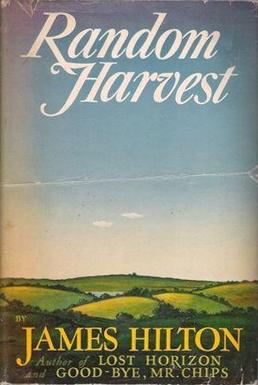
Random Harvest by James Hilton

“Sometimes I have a feeling of being — if it isn’t too absurd to say such a thing — of being half somebody else. Some casual little thing — a tune or a scent or a name in a newspaper or a look of something or somebody will remind me, just for a second — and yet I haven’t time to get any grip of what it does remind me of — it’s a sort of wisp of memory that can’t be trapped before it fades away…”

After enjoying Lost Horizon and Goodbye, Mr Chips, I decided that the next James Hilton book I read would be his 1941 novel Random Harvest. I knew very little about it except that it was very popular at the time it was published and that the film starring Greer Garson and Ronald Colman is one of my mother’s favourites. I haven’t seen it, but I think reading the book first was the right decision anyway, for reasons I’ll explain later.

The novel opens in 1937 with our narrator, Mr Harrison, falling into conversation with a stranger, Charles Rainier, whom he meets on a train to London. Rainier is now a successful businessman and politician, but he confesses to Harrison that since returning from fighting in World War I twenty years ago a whole chunk of memory has been lost to him. He remembers being injured in the trenches of France in 1917 and he remembers waking up in Liverpool one day in 1919, but can recall nothing at all of what happened in between – a period of two years which are now a complete blank to him.

When the train arrives at the station, the two men go their separate ways, but their paths soon cross again and Rainier offers Harrison a job as his secretary. As they get to know each other better, Rainier tells his new friend the story of his life since that day in Liverpool and gradually his earlier memories begin to return, with surprising results.

This book wasn’t quite what I’d expected; I thought it was going to be more of a romance, but although it does have a very moving love story at its heart, there’s much more to Random Harvest than that. It can be considered an anti-war novel, with it’s theme of loss that runs through the story from beginning to end – not just the obvious loss of memory, but also lost opportunities, lost or broken relationships, lost innocence and, on a wider scale, a way of life that has been lost forever as the world moves on from one war and heads straight for another:

It all depended whether one were tired or eager after the strain. Most of us were both — tired of the war and everything connected with it, eager to push ahead into something new. We soon stopped hating the Germans, and just as soon we began to laugh at the idea of anyone caring enough about the horrid past to ask us that famous question on the recruiting posters — ‘What did you do in the Great War?’ But even the most cynical of us couldn’t see ahead to a time when the only logical answer to that question would be another one — ‘WHICH Great War?’

The book has an unusual structure, divided into five long sections with no chapter breaks and moving backwards and forwards in time, piecing together Rainier’s memories as they begin to flood back. However, it’s always easy enough to follow what’s happening. The plot never becomes confusing and the story is structured the way it is for a good reason, allowing Hilton to obscure whole episodes in Rainier’s life from the reader and also from Rainier himself until it’s the right time to reveal them. And when the final revelation comes, right at the end of the book, I was taken completely by surprise as I hadn’t seen it coming at all. Apparently the film is structured differently, with the truth obvious from the beginning instead of being saved for the end, which is why I’m so glad I’ve read the book first and could experience everything as Hilton intended it.

This is a great book, possibly even better than Lost Horizon, and I’ll definitely be looking for more by James Hilton.

This is book 39/50 read from my second Classics Club list.

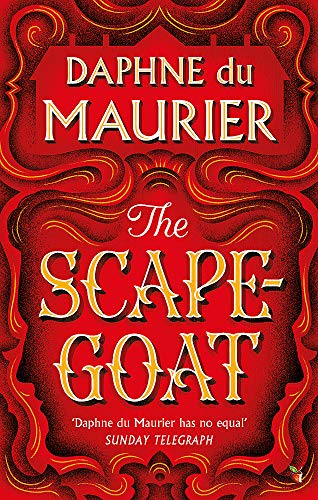
The Scapegoat by Daphne du Maurier (re-read) – #DDMReadingWeek

This week HeavenAli is hosting another of her Daphne du Maurier Reading Weeks, assisted by Liz who is collecting the links this year. As you may know, du Maurier is one of my favourite authors; I have now read all of her novels and short story collections at least once and some of her non-fiction (I attempted to rank them all in this post, just for fun). For this year’s Reading Week I’ve decided to re-read her 1957 novel The Scapegoat, which is one I particularly loved when I first read it back in 2011 (here’s my original review). I’ve wanted to read it again ever since, not just because I enjoyed it so much, but also because I formed a theory about what was actually happening in the book and I was curious to see whether I would feel the same way on a second read. I’ll discuss this later in this post, but don’t worry – I’ll include a spoiler warning for those of you who haven’t read the book yet.

The novel opens in Le Mans where our narrator, John, an English academic, is on holiday. When he meets a man who looks and sounds just like him at the station, he feels an instant connection with him and after spending the evening drinking and talking, he accompanies the other man back to his hotel room. He learns that his new friend is a French count, Jean de Gué, and that they have something else in common – they are both depressed and dissatisfied with life, John because he is lonely and has no family, Jean because he has a large family, all of whom are causing him problems. As the night wears on, John falls into a drunken stupor and when he wakes up the next day his companion has disappeared, taking all of John’s clothes and possessions with him and leaving his own in their place.

When Jean’s chauffeur arrives, ready to drive him home to his château in the French countryside, John begins to protest, explaining that there has been a mistake – but then, on an impulse, he decides to take this opportunity to leave his old life behind for a while and continue to impersonate Jean de Gué. On reaching Jean’s château, John finds that nobody suspects he is an impostor and he is able to take Jean’s place within the family. He also begins to understand why Jean had said his family life was so difficult – there are all sorts of tensions and conflicts between various members of the family and to make things worse, the de Gué glassworks is facing financial ruin. It’s up to John to put things right, if he can.

I enjoyed this read of The Scapegoat as much as my first. If you take everything at face value, of course, it requires a huge suspension of disbelief. Not only do John and Jean look completely identical, so much so that not even Jean’s mother, wife or daughter guess the truth, but they also sound exactly the same (and John’s French is so fluent that nobody suspects a thing). Is this likely? Of course not, but it provides du Maurier with her starting point for this fascinating novel and it’s perfectly possible to just accept the plot for what it is and enjoy the story. After all, it’s no more ridiculous than the book that apparently inspired this one – Anthony Hope’s The Prisoner of Zenda. And as always with a du Maurier novel, you can expect beautiful descriptions, a strong sense of place and interesting, if not necessarily very likeable, characters.

*My Scapegoat theory (includes spoilers)*

When I first read this book in 2011, I found myself beginning to wonder – what if John and Jean weren’t doubles after all? What if there was only one man, with multiple personalities (now known as dissociative identity disorder)? It makes so much more sense to me that Jean, feeling that he has made a mess of his life, has created a new identity to deal with the problems he has caused for himself. At the end of the book, when everything has been resolved, he has no further need of John and although it’s not clear exactly how much Jean has learned and how he will manage his relationships and business affairs in the future, he feels that he can now cope on his own. He tells John that he has emptied John’s bank account, sold his flat and furniture in London and resigned John’s position as university lecturer – in other words, destroyed John altogether, because John never really existed and is no longer necessary.

After finishing the book on that first occasion, I remember looking at other reviews and being surprised that almost nobody else had mentioned that any of this had occurred to them too. I accepted that I must have misunderstood the whole book; however, the Daphne du Maurier website quotes a letter written by Daphne herself regarding The Scapegoat which seems to support my interpretation. Her reference to ‘that man’s nature’ doesn’t really make sense to me if there were actually two separate men in the book.

“Every one of us has his, or her, dark side. Which is to overcome the other? This is the purpose of the book. And it ends, as you know, with the problem unsolved, except that the suggestion there, when I finished it, was that the two sides of that man’s nature had to fuse together to give birth to a third, well balanced.”

On reading the book for a second time, I have been paying closer attention and looking for subtle clues and hints. There are just three main obstacles in the way of my theory. First, there’s Jean’s dog, César, who is hostile towards John and the only member of the household who seems to sense that something is wrong. However, when Jean and John meet up again at the end of the book, Jean explains that John hasn’t been whistling to César in the correct way and this is why he hasn’t been obeying his commands. Also, during a scene in a hospital, we are told that Jean is blood group O and John is blood group A – but as it’s John himself who tells us this I don’t think it can be taken as conclusive evidence of anything. The only thing I can’t manage to explain away is that when Jean calls the château to inform John that he’s coming home, it’s a servant who answers the phone and tells John that someone wants to speak to him. If it wasn’t for this one moment, I would have been nearly convinced that I was right!

I did find plenty of things to support my theory, including the fact that, when speaking to Jean’s family for the first time, John finds that the ‘tu‘ form of French comes naturally to him, although he’s never used it before; the way John muses that Jean’s ‘inner substance was part of my nature, part of my secret self’; and in particular, the whole conversation he has with Jean’s mistress, Béla, in Chapter 12.

‘You said something a while ago about taking stock of oneself,’ I said. ‘Perhaps that’s just what I’ve been doing, over a period of time, and it came to a head that evening in Le Mans. The self I knew had failed. The only way to escape responsibility for failure was to become someone else. Let another personality take charge.’

‘The other Jean de Gué,’ she said, ‘the one who’s been hidden for so long beneath the surface gaiety and charm, I’ve often wondered if he existed. If he’s going to emerge, he’d better do so now. Time’s getting on.’

What do you think?

*End of spoilers*

Overall, after finishing my second read of the book, I think probably the way everyone else has interpreted it is the correct way, but du Maurier does like to be ambiguous and I enjoyed looking below the surface and dissecting the different layers! It really is a fascinating novel and still one of my favourites by du Maurier. Now I just need to find time to revisit some of her others!
Rogue Male by Geoffrey Household

Geoffrey Household’s 1939 novel, Rogue Male, was the book selected for me in the recent Classics Club Spin. Not knowing much about it, I had added it to my Classics Club list after seeing it included in The Guardian’s Top 10 novels of the 1930s. It sounded very like The Thirty-Nine Steps by John Buchan, which I thought was fun, if a bit repetitive, but while there are definitely some similarities, I found Rogue Male a more satisfying book.

The novel opens in 1938 just after our narrator has been caught aiming a gun at the dictator of an unspecified European country. Despite insisting that he wasn’t planning to pull the trigger and was just enjoying the thrill of ‘hunting the biggest game on earth’, the narrator is tortured and thrown over a cliff, where he is left to die. Somehow, he survives and manages to make his way back to London. On his arrival, he discovers that agents of the dictator he’d tried to shoot have followed him to England. Staying in London is obviously now out of the question, so he heads for the Dorset countryside where he is sure his pursuers will never be able to find him.

The identity of the protagonist’s target is kept carefully hidden, with very few clues throughout the novel, but it’s not difficult to guess who it was supposed to be and Household later confirmed that it was Hitler. As the book was published just before the start of World War II, it’s easy to see why he decided to be vague about it. His reasons for also leaving the narrator unnamed are less clear, but it does add an extra layer of mystery to the novel; while the narrator hides himself from the enemy agents, he also reveals very little of himself to the reader, leaving us wondering who he really is and what his true motives were for carrying out the assassination attempt.

For such a short book (around 200 pages), there’s a lot of plot packed between its covers and the tension builds as we wait to see whether he can continue to evade his pursuers. There’s a sinister villain, Major Quive-Smith who, like everything and everyone else in the book, is shrouded in mystery: we don’t know his nationality, his background or who he represents – all we do know is that he’s determined to force a confession from the narrator that the British government was behind the assassination attempt, something the narrator continues to deny even while his real motives are slow to emerge. Yet although I did enjoy the book, I still felt that there was something missing. The vagueness of it all, and the guarded and secretive nature of the protagonist, made it difficult for me to care what happened to him on an emotional level and this meant I found the story slightly less thrilling than I would have liked.

This book was adapted for film in 1941, under the title Man Hunt, and again as a BBC adaptation, Rogue Male, in 1976. The BBC version stars Peter O’Toole, with Alastair Sim as the Earl (a character who doesn’t appear in the book). It’s on YouTube and definitely worth watching. I’ve also discovered there’s a sequel to this novel called Rogue Justice, published much later in 1982, which is more open about the target being Hitler. I’m not sure if I want to read that one as the reviews aren’t very positive, but it seems Household was quite a prolific author, with more than twenty books published for adults and young adults, so I’ll see if any of his others appeal.

This is book 37/50 read from my second Classics Club list.

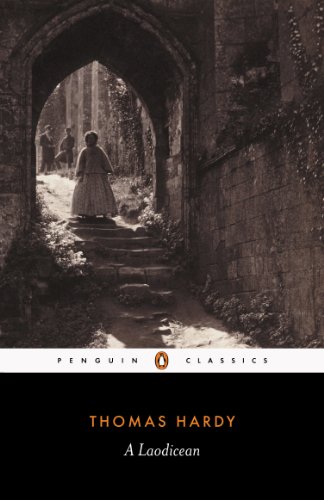
A Laodicean by Thomas Hardy

First published in Harper’s New Monthly Magazine in 1880-81, A Laodicean; or, The Castle of the De Stancys: A Story of To-Day is one of Thomas Hardy’s lesser known novels and one that I very much enjoyed.

Architect George Somerset is exploring the countryside near the village of Sleeping-Green one evening when he stumbles upon a castle. He learns that this is Stancy Castle, the ancestral home of the De Stancy family which has recently been purchased by the wealthy railway contractor, John Power. Mr Power has since died, leaving the castle to his daughter, Paula, who is planning to carry out extensive renovations on the ancient building. When Paula is introduced to Somerset she considers commissioning him to do the work on the castle, but before the restoration even begins Somerset finds himself falling in love with her.

It seems that Somerset has a rival for Paula’s love, however – Captain De Stancy, an impoverished descendant of the aristocratic family who once owned the castle. The Captain’s son, William Dare, has seen a chance to get his hands on some of the Power fortune and is determined that his father must marry Paula, no matter what.

Paula herself is the Laodicean of the title, described by the local minister as ‘lukewarm, and neither cold nor hot’, like the people of the church of Laodicea in the Bible. Throughout the novel she vacillates between Somerset and De Stancy, attracted to both of them in different ways and unwilling to fully commit to one or the other. This reflects the way she feels about society in general. As an industrialist’s daughter who has installed a telegraph wire and a new clock at Stancy Castle, Paula represents science and progress but at the same time she likes the idea of marrying into an aristocratic family and becoming a De Stancy. The clash between tradition and a new way of life is one of the recurring themes that comes up again and again in Hardy’s novels.

Although Paula irritated me with her inability to make up her mind and give either man a definite answer, I found Somerset’s infatuation with her quite annoying as well – I wanted him to notice Paula’s friend, Charlotte, who I think would have been a much better choice for him! Irritating characters aside, I found the story very entertaining, mainly because of the machinations of William Dare, who will stop at nothing to ensure Paula chooses his father. He uses forged telegrams, fake photographs and all sorts of other devious tricks to try to get what he wants and this makes the book more of a pageturner than I’d expected at first.

A Laodicean doesn’t really have the pastoral feel of most of Hardy’s other novels; in fact, most of the second half is set in Europe where the various sets of characters wander around the casinos of Monte Carlo, the spas of Baden and the busy streets and squares of Strasbourg. Things do become a bit far-fetched in this section, with lots of coincidental meetings, but I enjoyed reading something different from Hardy after so many books set in his Wessex countryside.

Although this hasn’t become one of my favourite Hardy novels, it’s still a very good one. I think I only have three more of them to read, as well as some of his short story collections. Have you read this one? What did you think?

This is book 36/50 from my second Classics Club list.

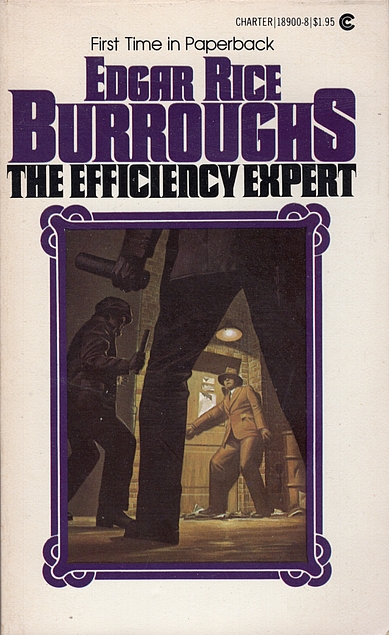
The Efficiency Expert by Edgar Rice Burroughs

Edgar Rice Burroughs is not an author I’ve ever considered reading; neither his Tarzan series nor his John Carter of Mars books have ever appealed and I hadn’t thought to look into what else he had written. The Efficiency Expert was suggested by one of my blog readers (thank you, Cheryl!) and it proved to be an excellent recommendation. The book was published in 1921 and seems to be one of only a few novels Burroughs wrote about ordinary people leading ordinary lives.

Jimmy Torrance is in his final year at university when he discovers that, having devoted his time to football, baseball and boxing instead of his studies, he is now in danger of failing his course. After working hard for the rest of the semester, he manages to get his diploma and ‘would have graduated at the head of his class had the list been turned upside down’. Unimpressed, his father orders him to come home before he can acquire any more debt, but Jimmy heads for Chicago instead, determined to get a good job and make his father proud of him.

Arriving in Chicago, Jimmy begins to look for work but soon finds that his college education counts for nothing without any experience. Forced to accept that nobody is going to employ him as an office boy, let alone the general manager’s position he had hoped for, he embarks on a series of increasingly embarrassing jobs including selling ladies’ hosiery in a department store and working as a waiter in a disreputable nightclub. Eventually, just as he reaches his lowest ebb, he is offered the position of ‘efficiency expert’ in a factory. Things seem to be looking up at last – but when he notices a discrepancy in the company’s accounts, he must decide whether to act and risk losing the only good job he’s ever had.

The first half of the book is entertaining and quite amusing as Jimmy stumbles from one disastrous job to another, while repeatedly encountering two young women who are mystified to find him serving at tables one day and driving a milk wagon the next. Jimmy is very naïve when he first arrives in Chicago, assuming that as a graduate he will be able to walk straight into any job, and his story will resonate with other young people who have had to work their way up from the bottom. I admired him for not asking his rich family and friends for help, which would have made things easier for him, but it’s this same sense of pride and integrity that results in him losing or leaving job after job.

Jimmy makes two new friends in Chicago – a pickpocket and safe-breaker known as the Lizard, and Little Eva, a prostitute he meets during his nightclub job – both of whom become better people due to their association with Jimmy. There’s a clear message here that decent people can be found in all walks of life and nobody is beyond redemption if they are only given a chance. The more privileged characters in the book (or some of them anyway) are not shown in such a good light! There’s a romantic element to the story too, with Jimmy having three possible love interests. The one he ends up with is neither the one I’d hoped for nor the one I’d expected, but at least that means the book isn’t completely predictable!

After Jimmy starts working as an efficiency expert, the story takes a different turn and the book becomes more of a thriller than the light comedy it had seemed at the beginning. It’s exciting for a while, but I thought it fell apart slightly at the end, with characters who had become inconvenient to the plot being too easily disposed of and loose ends tied up too neatly. Still, this book was fun to read and although I’m still not drawn to Tarzan or the science fiction novels, I’m pleased to have found an Edgar Rice Burroughs book that I did want to read and did enjoy.

If you have trouble finding a copy of this book, it’s available through Project Gutenberg.

Wild Strawberries by Angela Thirkell

Wild Strawberries is the second book in Angela Thirkell’s Barsetshire series and the book chosen for me in the last Classics Club Spin. I had mixed feelings about the first book, High Rising, which I read nearly two years ago, but still wanted to try this one as I knew it was about a different set of characters and I thought I might get on better with it.

Published in 1934, this book introduces us to the Leslie family who live at Rushwater, their estate in West Barsetshire. The family consists of Henry Leslie and his absentminded wife, Lady Emily, their two sons John and David, and their daughter Agnes, who is married to Robert Graham and has three young children. There was also another son, the eldest, who died in the Great War, and his sixteen-year-old son Martin is now the heir to Rushwater and lives with his grandparents. As the novel opens, Robert Graham has gone to South America on business so Agnes and the children are spending the summer with the Leslies and so is a niece of Robert’s, Mary Preston.

This probably all sounds straightforward enough to you, but for some reason it took me ages to remember who was who and I wished I had drawn a family tree at the beginning! Anyway, once I started to settle into the story and get to know the characters, I found it quite enjoyable. The plot mainly revolves around Mary Preston and the question of which of the Leslie men she’ll marry – David or John. David, the younger brother, is charming but selfish and thoughtless (he promises to bring Mary the ‘wild strawberries’ of the title, then forgets them), while John is quiet, kind and considerate. I knew which of them I wanted her to choose but Thirkell keeps us in suspense until the end of the book!

There’s also a subplot involving a French family, the Boulles, who move into the vicarage for the summer. Keen for Martin to improve his French, the Leslies arrange for him to study with the Boulles’ children, but instead he becomes involved in a plot to restore the French monarchy. Meanwhile, the lovely but irritating Agnes spends the entire book fussing over her children, and Mr Holt, an acquaintance of Lady Emily’s who talks about nothing but gardens and his titled friends, keeps imposing himself on the family, oblivious to the fact that nobody wants him there.

I enjoyed this book once I got into it; although it doesn’t have much more substance than High Rising, I found it funnier and can see now why people praise Thirkell for her humour and wit. There are also touches of poignancy when the Leslies remember their lost son, killed in the war, and when John, who is a widower, grieves for Gay, his late wife. Some of the characters, such as Mr Holt and the Boulles, are clearly there for comedy purposes, but the family themselves, annoying as some of them were, felt realistic to me. I liked John and Martin, while I found Mary’s infatuation with David, who treats her carelessly, frustrating but all too believable. I should mention, though, that there are a few instances of racism, mainly in the first half of the book, that even though I’m used to it in books of this era, I found more jarring than I normally would.

I still haven’t been completely won over by Angela Thirkell but I liked this better than the first book and will probably continue with the series at some point. However, the third book is about Tony, the teenage boy from High Rising whom I found almost unbearable, so I don’t know what I’ll think of that one!

This is book 35/50 read from my second Classics Club list.