Review: Tess of the D’Urbervilles by Thomas Hardy

Tess Durbeyfield’s life changes forever when her father learns that he is descended from the noble D’Urbervilles. After discovering that he has some wealthy D’Urberville relatives living nearby, Tess is sent to visit them in an attempt to improve the family’s fortunes. While there she is taken advantage of by Alec D’Urberville and returns to her parents pregnant. A few years later when she falls in love with Angel Clare, the parson’s son, she is forced to decide whether to trust Angel with the truth about her past…

It seems that people either love or hate Tess of the D’Urbervilles. Among those who hate it the main reasons for disliking it appear to be that the book was too dark and depressing, or that Tess was too passive and weak. Although I can understand these complaints, I personally fall into the group of readers who loved the book. I don’t have a problem with a story being tragic, melodramatic or depressing as long as it’s well-written. And Hardy’s writing is beautiful. With other books I am often tempted to skim through pages of descriptions of trees, fields, sunrises etc, but Hardy’s portrayal of nature and the English countryside is so poetic I wanted to read every word. Be prepared, though – you will learn more than you ever wanted to know about milking cows, threshing wheat and slicing turnips!

It’s true that Tess doesn’t stand up for herself enough – there were plenty of times when I wanted to scream at her – but I mostly felt sorry for her. She was young (sixteen I think at the start of the book), innocent, naive, and didn’t have the best family life, with a father who was often drunk.  It seemed that everything that could go wrong for her did go wrong. More than poor Tess, it was Alec d’Urberville and Angel Clare who both really infuriated me – and I actually thought Angel was worse than Alec in some respects.

The injustice of a society with different sets of rules for men and women, Christianity vs pagan symbolism, the Industrial Revolution, and the class system of Victorian England are some of the interesting topics this book covers. The only thing I didn’t like about the book was the ending – the final chapters just didn’t seem to fit with the rest of the novel.

So, if you haven’t read this book yet give it a try – you might hate it…but you might just love it like I did.

Highly Recommended

Genre: Classics/Pages: 464/Published:BBC Books (Random House)/Year: 2008 (originally published 1891)/Source: Library book
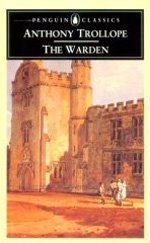
Review: The Warden by Anthony Trollope

Being a lover of Victorian fiction, I have wanted to read something by Anthony Trollope for a long time but didn’t know which of his books to begin with. I’ve heard a lot about The Way We Live Now and Can You Forgive Her? but I decided to go with The Warden because it’s relatively short and I thought that if I wasn’t enjoying it I’d be more likely to finish a book with 200 pages than one with 800. Luckily, this wasn’t a problem – I enjoyed the book and wouldn’t have minded if it had been longer.

In the year 1434 John Hiram established a hospital (or almshouse) in the town of Barchester where for centuries to come, twelve elderly, infirm men could live under the care of a warden. At the time when the story takes place, Septimus Harding is the current warden and whilst the amount of money given to the old men has barely changed at all over time, the warden’s income has increased to eight hundred pounds a year. When reformer John Bold decides to investigate, Harding finds himself facing a moral dilemma.

The book really made me stop and think, because none of the characters seemed to be either completely in the wrong or completely in the right.  Although it was clearly unfair that Mr. Harding was receiving so much money, I sympathised with him because as soon as the unfairness of his position was brought to his attention he became determined to do the right thing.  As for the other main characters – John Bold and Harding’s son-in-law Archdeacon Grantly – although they are on opposite sides of the debate and have very different opinions regarding the warden’s situation, Trollope presents them both as well-intentioned people with normal human flaws.  The female characters don’t play a very big role in this book, but I loved the relationship between Mr. Harding and his daughter Eleanor.

I really liked Trollope’s writing style which is elegant, insightful and witty in a gentle way.  There are a few chapters where he departs from the main storyline to spend several pages talking about politics or the media but this is a common trait of Victorian writers.  Although it was slow moving in places, Trollope managed to keep me interested from beginning to end.  I’m sure some of his other books will be better, but this one was good enough to make me want to read more of his work.

Recommended

Publisher: Penguin Classics/Year: 1984 (first published 1855)/Pages: 240/Source: My own copy bought used

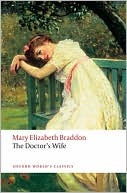
Review: The Doctor’s Wife by Mary Elizabeth Braddon

Isabel Sleaford lives in a dream world filled with characters from novels by Dickens, Scott and Thackeray. She longs to break away from her boring existence as a children’s governess and live the exciting life of one of the heroines in her favourite books. When parish doctor George Gilbert proposes to her, she accepts but quickly finds that her marriage isn’t providing the drama and adventure she’s been dreaming of. George is a good man, but he’s practical, down to earth – and boring, at least in Isabel’s opinion. After meeting Roland Lansdell, the squire of Mordred Priory, she becomes even more discontented. Roland is romantic, poetic and imaginative – in other words, he’s everything that George isn’t…

This is the second Mary Elizabeth Braddon book I’ve read – the first was the book that she’s best known for today, the sensation novel Lady Audley’s Secret. Apparently The Doctor’s Wife was Braddon’s attempt at writing a more serious, literary novel, with a plot inspired by Gustave Flaubert’s Madame Bovary. The Doctor’s Wife is not very ‘sensational’ – apart from maybe the final few chapters – and although it’s interesting and compelling in a different way, if you’re expecting something similar to Lady Audley you might be slightly disappointed. At one point in the book, Braddon even tells us “this is not a sensation novel!”

The focus of The Doctor’s Wife is the development of Isabel Gilbert from a sentimental girl with her head permanently in the clouds into a sensible and mature woman. I didn’t like Isabel much at all, though I’m not really sure if I was supposed to. Throughout most of the book she was just so silly and immature – wishing that she would catch a terrible illness or some other tragedy would befall her, just so she could have some excitement in her life – although as several of the other characters pointed out, she wasn’t a bad person, just childish and foolish. It was sad that her own romantic notions and ideals were preventing her from having any chance of happiness.

I thought some of the minor characters were much more interesting and I would have liked them to have played a bigger part in the story. I particularly loved Sigismund Smith, who was a friend of both George and Isabel, and a ‘sensation author’ – probably a parody of Mary Elizabeth Braddon herself. Sigismund (whose real name is Sam) is a writer of ‘penny numbers’ – cheap, serialised adventure stories. His enthusiasm for his work and his unusual methods of researching his novels provide most of the humour in the book.

Due to Isabel’s reading, almost every page contains allusions to characters and events from various novels, plays and poems – most of which I haven’t read – so I found myself constantly having to turn to the notes at the back of the book (until I decided I could follow the story well enough without understanding all the references to Edith Dombey and Ernest Maltravers).

Overall, this was another great book from Mary Elizabeth Braddon, although not quite what I was expecting.

Highly Recommended

Genre: Classics/Pages: 431/Publisher: Oxford University Press/Year: 2008 – originally published 1864/Source: My own copy purchased new

Review: The Castle of Otranto by Horace Walpole

When I first opened this book I was confronted by page after page of almost continuous text with virtually no paragraph breaks and no quotation marks or any way of marking when one person stops speaking and the next begins. This made it difficult to follow the dialogue but otherwise the story is easy enough to understand considering it was published in 1764.

Manfred, the Prince of Otranto, has arranged a marriage between his fifteen year old son Conrad and the princess Isabella. However, on the day of the wedding Conrad is found crushed to death in the courtyard beneath an enormous black feathered helmet which appears to have fallen from the sky. As his son is obviously now in no position to go ahead with the wedding, Manfred decides to marry Isabella himself, but Isabella has other ideas…cue a never-ending chain of misunderstandings, coincidences and mayhem.

The Castle of Otranto is historically important because it was the first gothic novel – complete with haunted castles, underground tunnels, damsels in distress, knights, ghosts and paintings that move – but don’t expect a piece of great literature. In places the plot is so ridiculous and the writing so melodramatic that it’s actually hilarious.

The Castle of Otranto is funny and entertaining – and very short – but I can’t imagine ever wanting to read it again. For a better introduction to gothic fiction I would recommend The Mysteries of Udolpho by Ann Radcliffe, which is a longer book but much better written.

Genre: Gothic Fiction/Pages: 176/Publisher: Oxford World’s Classics/Year: 1998 – originally published 1764/Source: My own copy bought new

Review: The Tenant of Wildfell Hall by Anne Bronte

Although Emily Bronte’s Wuthering Heights and Charlotte Bronte’s Jane Eyre have always been two of my favourite Victorian classics, this is the first time I’ve read anything by the youngest Bronte sister, Anne. I feel a bit guilty that it has taken me so long to get round to reading one of Anne’s books, especially as I enjoyed it almost as much as the other two books I’ve just mentioned.

Anne’s writing style is not the same as Charlotte’s or Emily’s – there’s less dramatic romanticism and poetic imagery, although she still writes with a lot of passion. She has quite a sharp style that is probably more similar to Jane Austen than to either of her sisters.

I won’t go into the plot in too much detail but The Tenant of Wildfell Hall is the story of Helen Huntingdon, a young woman who leaves her alcoholic husband and goes into hiding with her five year-old son, Arthur. Not long after arriving at Wildfell Hall she meets local farmer, Gilbert Markham, who falls in love with her. When Gilbert questions her about the rumours circulating about her in the village, she allows him to read her diary in which she had recorded the details of her unhappy marriage.

The book has an interesting structure – it’s told partly in the form of letters from Gilbert Markham to his brother-in-law Jack Halford, and partly as extracts from Helen Huntingdon’s diary. I loved the first section from Gilbert’s point of view, describing the arrival of the mysterious woman at Wildfell Hall with everyone wondering who she was and where she came from. The story probably wouldn’t have worked had it not been set in the 19th century. Today there’s nothing unusual in a single mother living alone with her little boy, but in 1828 when The Tenant of Wildfell Hall takes place, it makes her the target of gossip and scandal.

When Helen’s diary began it took me a while to get used to the change of voice and the change of pace but it soon developed into the most powerful section of the book. I didn’t particularly like Helen as I thought she was just a little bit too saintly and perfect, but she was a very strong person who defied convention to do what she thought was best for herself and her child. Her diary entries are filled with descriptions of some really despicable characters and describe scenes of drunkenness, violence, verbal and physical abuse, and adultery, which I can imagine readers in the 19th century would have been shocked by. Apparently after Anne’s death, re-publication of The Tenant of Wildfell Hall was prevented by Charlotte, who considered the choice of subject to be a big mistake. However, I would have no hesitation recommending this book to anyone who has enjoyed Emily and Charlotte’s work, as well as those of you who have never read any other Bronte books.

Note: This book counts towards the Women Unbound Reading Challenge because it portrays a woman who has the strength to leave her abusive husband and build a new life, working as an artist to support herself and her son – almost unheard of in the 19th century.

Highly Recommended

Genre: Classics/Page: 401/Publisher: Wordsworth Classics/Year: 1996 – first published 1848/Source: My own copy bought new

Review: A Christmas Carol by Charles Dickens

“Men’s courses will foreshadow certain ends, to which, if perservered in, they must lead,” said Scrooge. “But if the courses be departed from, the ends will change…”

A Christmas Carol is the one classic that almost everyone knows, even if they’ve never read the book. It’s the story of an old, money-obsessed miser called Ebenezer Scrooge who is given the chance of redemption one Christmas Eve when he is visited by the ghost of his deceased business partner, Jacob Marley. Marley warns Scrooge that unless he changes his ways, he will end up like Marley himself, doomed to wander the earth bound by heavy chains of his own making. During the night Scrooge is visited by three more spirits – the Ghosts of Christmas Past, Christmas Present and Christmas Yet to Come – who help him to understand that there are more important things in life than money: things such as generosity, compassion and kindness. The scenes Scrooge witnesses that Christmas Eve are to change his life forever and transform him into a different person.

A Christmas Carol is shorter and easier to read than most of Dickens’ other books and really is suitable for people of all ages. I loved it as a child and after re-reading it this week for the first time in years, I loved it as an adult too. No matter how many movies, cartoons or TV adaptations you may have seen, it’s still worth reading the book for the richness and humour of Dickens’ writing and for his wonderful descriptions and imagery. For example when describing the location of Scrooge’s home, hidden away in a gloomy yard, he says:

 “…one could scarcely help fancying it must have run there when it was a young house, playing at hide-and-seek with other houses, and have forgotten the way out again”.

There are great lines like this one throughout the entire book. I also loved his portrayal of a Victorian Christmas in 19th century London.

Although some readers might find it too sentimental at times, it’s easy to see why this book has become a timeless classic, as it is everything a good Christmas story should be – heartwarming, inspirational and with an important message for us all.

Recommended

Genre: Classics/Pages: 147/Publisher: Chancellor Press/Year: 1985 (originally published 1843)/Illustrations by Arthur Rackham/Source: My own copy

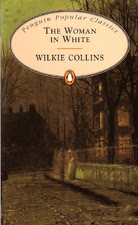
Review: The Woman in White by Wilkie Collins

There, in the middle of the broad bright high-road – there, as if it had that moment sprung out of the earth or dropped from the heaven – stood the figure of a solitary Woman, dressed from head to foot in white garments, her face bent in grave inquiry on mine, her hand pointing to the dark cloud over London, as I faced her.

I first read The Woman in White in 2006 – it was the first Wilkie Collins book I ever read and the one that turned me into a huge fan of his work. I just wish I had discovered him sooner!

The Woman in White was the most popular book of the 1860s; when it was originally serialised in Charles Dickens’ periodical All The Year Round large crowds gathered outside the newspaper offices every time the latest edition went on sale; you could buy Woman in White perfume, bonnets and shawls and dance the Woman in White waltz…and all of this was 150 years before Harry Potter!

So what is it about? I won’t go into the plot in too much detail, as I don’t want to spoil the fun for those of you who haven’t read it yet. The story begins with drawing master Walter Hartright’s meeting on a lonely London road with a mysterious woman dressed all in white who has escaped from an Asylum. The next day Walter takes up a teaching position at Limmeridge House in Cumberland where he finds that one of his students, Laura Fairlie, bears a striking resemblance to the woman in white…

The novel follows an epistolary style, meaning it is narrated by several different characters in turn, sometimes in the form of journal entries or letters. I love the way Collins gives each of his narrators a unique ‘voice’ – he really makes the characters come alive. Another thing I love about Wilkie Collins’ writing is his sense of humour…some of the scenes involving Laura’s hypochondriac uncle Mr Fairlie are hilarious!

Marian Halcombe, Laura Fairlie’s sister, is one of my favourite female characters in literature. Contrary to the usual portrayal of 19th century women, she is a brave, intelligent, courageous person who on several occasions puts herself in danger in order to protect her sister Laura. Another great character is Count Fosco. One of the most unusual and memorable villains I’ve ever encountered in any book, he’s an old, fat, opera-loving Italian completely devoted to his pet canaries and white mice. I remember being surprised when I first read the description of Fosco, as he wasn’t what I had been expecting at all!

The Woman in White is an example of the genre known as sensation fiction – including elements such as forgery, identity theft and insanity. Although it was written in the 19th century it’s as exciting and gripping as a modern day thriller – even when reading the book for the second time and knowing what was going to happen! It’s a long book (569 pages in my Penguin Popular Classics version) but there’s enough tension and suspense to keep the reader interested right through to the end.

There are some classics that are a struggle to read but you persevere with them simply because they’re classics and you feel as if you should. The Woman in White does not fall into that category – yes, it’s a classic but it’s also one of the most readable and enjoyable books I’ve ever read.

If you liked this book I would recommend you read The Moonstone, Armadale or No Name next. As I mentioned at the start of this review, I am a big fan of Wilkie Collins so you can expect to see more of my reviews of his work coming soon!

Highly Recommended

Genre: Classics – Sensation Fiction/Pages: 576 pages/Publisher: Penguin Popular Classics/Year: Originally published 1859/Source: Purchased new from Amazon.co.uk

This review is part of my Great Books series.