Deadly Duo by Margery Allingham

Deadly Duo (also published as Take Two at Bedtime) is a 1949 collection of two novellas by Margery Allingham, neither of which feature her famous detective, Albert Campion. I’ve discovered over the years that I tend to prefer Allingham’s stories without Campion to the ones with him, so I thought I would probably enjoy this book – and I was right, although I found one of the novellas much stronger than the other.

The first of the two novellas is Wanted: Someone Innocent. Twenty-year-old Gillian Brayton is attending a school reunion when she is approached by an older woman, Rita Fayre, whom she barely remembers from her school days. To her surprise, Rita greets her like a close friend and offers her a job in her household. Gillian has been completely alone in the world since the death of her beloved uncle and is struggling financially, so despite her misgivings she finds herself accepting. On arriving at Rita’s house, she learns that her job will involve taking care of Rita’s husband, who was injured in the war – but why do all the other servants seem so suspicious of Gillian? Is there another reason for Rita’s invitation?

I really enjoyed this story and thought it could easily have been developed into a longer novel. Allingham creates a lot of suspense and atmosphere and although we see everything through the eyes of Gillian, who is rather naive and gullible – the ‘someone innocent’ of the title – it’s obvious to the reader from early on that she is going to be used as a pawn in a crime. I guessed some of the solution but not all of it and anyway, part of the fun was in getting to know the various members of the household, as well as the police officer, Superintendent McNaught, who is brought in to investigate. McNaught is a character I particularly liked; I’m sure he could have been the star of his own series!

The second novella, Last Act, is the longer of the two and it didn’t interest me as much as the first. It’s written from the point of view of Margot Robert, a young French actress who has fallen in love with Denis, one of the grandsons of her guardian, Mathilde Zoffany (known as Zoff). Unfortunately for Margot, Zoff doesn’t like or trust her grandson and has accused him of trying to kill her. When Zoff is indeed found dead under unusual circumstances, suspicion naturally falls upon Denis – but there are other people in the house who all have motives for wanting her dead.

This story has a more complex plot than the other one and a larger cast of characters, but it didn’t have the same atmospheric feel to it and I felt that the characters were less well developed. I disliked almost all of them, particularly Zoff, who was so unpleasant I couldn’t understand why everyone seemed to be in thrall to her. The solution is clever and quite surprising, but as I didn’t really care how or why Zoff had died, the revelation was less impactful than it probably should have been. Still, these two novellas together made a light, quick and entertaining read!

The Undetective by Bruce Graeme – #ReadIndies

It’s good to see so many forgotten Golden Age crime authors being brought back into print by various publishers. Bruce Graeme (Graham Montague Jeffries) is another I had never heard of until my eye was caught by the bright and colourful cover of this recent reissue of The Undetective. Graeme appears to have been very prolific, particularly during the 1930s and 40s, but this is a later novel from 1962. It’s a real gem and I highly recommend it to classic crime fans! Along with several of Graeme’s others, it’s published by Moonstone Press, which makes it a perfect choice for Karen and Lizzy’s #ReadIndies month.

Our narrator, Iain Carter, has abandoned a career in law to become a crime writer, but is finding it less profitable than he expected. Luckily, his brother-in-law, Edward, happens to be a police detective who is often indiscreet when discussing his work with his family, and Iain decides to use Edward’s inside knowledge as the basis for a new series of books. He creates a superintendent character based on Edward’s boss, whom he portrays as a bumbling idiot incapable of solving any crimes – more of an ‘undetective’ than a detective!

In order to avoid getting Edward into trouble, Iain publishes under a pseudonym – John Ky. Lowell – and goes to great lengths to ensure that nobody can ever trace Lowell back to him. The new series proves to be a huge success and everything is going well for Iain…until a man is found murdered and it emerges that the main suspect is John Ky. Lowell! Can Iain divert suspicion away from his alter ego without making himself a target?

I found this an entertaining read from beginning to end. As an author himself and a founding member of the Crime Writers’ Association, Graeme pokes fun at the publishing industry and his fellow CWA members, namedropping people like John Creasey, Christianna Brand and Julian Symons (who writes a bad review of one of Iain Carter’s books). He also offers some interesting insights into the world of publishing, the royalties an author could expect in 1962, and the reasons for writing under a pseudonym. The schemes Carter comes up with for trying to hide Lowell’s true identity are ingenious!

Although a murder does take place, this is not really a conventional murder mystery, and it’s not a police procedural either as we only hear about the police investigations and theories from Iain’s perspective, due to his friendship with Edward. Iain is not really interested in trying to solve the mystery – he just wants to make sure that neither he nor the non-existent Lowell can be connected with it. With the help of his wife, Susan, he begins planting false clues and red herrings to try to lead the police in the wrong direction and part of the fun is in wondering how long this can go on before he eventually makes a mistake and gets caught out!

I enjoyed this book so much I’m definitely planning to read more by Bruce Graeme, as well as maybe trying some of the other authors available from the same publisher.

Moonstone Press is a member of the Independent Publishers Guild and focuses on “detective, crime and humorous fiction published before 1965”.

Fear Stalks the Village by Ethel Lina White

The village was beautiful. It was enfolded in a hollow of the Downs, and wrapped up snugly — first, in a floral shawl of gardens, and then, in a great green shawl of fields. Lilies and lavender grew in abundance. Bees clustered over sweet-scented herbs with the hum of a myriad spinning-wheels.

With its Tudor cottages and cobbled streets, the village depicted in Ethel Lina White’s 1932 novel seems at first sight to be an idyllic place to live. There’s no poverty or unemployment, an endless round of tea parties and tennis games, and once settled there, people find that they never want to leave. Joan Brook is a relative newcomer to the village, having arrived to take up a position as companion to Lady d’Arcy, and she has already fallen under its spell.

When a novelist friend from London comes to visit, she entertains herself and Joan by imagining the secret scandals taking place behind closed doors. Perhaps the village doctor is poisoning his wife, she says, and the saintly Miss Asprey is bullying her companion; the Rector is leading a double life, and Miss Julia Corner, President of the local Temperance Society, is a secret drinker. The visit is a brief one and the friend soon returns to London, but when the inhabitants of the village begin to receive anonymous poison pen letters, it seems that the scenarios she had imagined were not so far from the truth after all.

Fear Stalks the Village is an unusual crime novel; although there are several deaths, it is not a murder mystery and the plot revolves entirely around finding out who is writing the spiteful letters threatening to expose the private lives of the villagers. Other reviews compare it to The Moving Finger by Agatha Christie, but as I haven’t read that one yet it reminded me most of Henrietta Clandon’s Good by Stealth. There’s lots of witty, satirical humour and a large cast of strongly drawn characters, all of whom appear at first to be happy, well-adjusted people…until the letters begin to arrive. The question the novel raises is whether the cracks have always been there beneath the surface or whether they have been created by the letters and the suspicion and anxiety they cause.

The mystery is quite a clever one, with some red herrings to throw us off the track, and I didn’t guess who was sending the letters. However, it took me a while to get into this book as the pace is quite slow and, despite the title, I didn’t feel that there was any real sense of fear or menace. Still, this is the second book I’ve read by Ethel Lina White, the first being The Wheel Spins (the book on which Alfred Hitchcock’s The Lady Vanishes is based) and I think it’s my favourite of the two – probably because with the other book I couldn’t help comparing it unfavourably to the film, which I love! I would be happy to try more of her books so let me know if there are any you would recommend.

The Spendthrift and the Swallow by Ambrose Parry

I loved the first four novels in Ambrose Parry’s Raven and Fisher mystery series and although there doesn’t currently seem to be any news of a fifth, I was pleased to come across this digital short story available free for Kindle. It fits into the series chronologically between the third and fourth books but if you come to it late, as I did, it doesn’t matter at all as it works as a standalone story.

Ambrose Parry is a pseudonym used by the crime author Chris Brookmyre and his wife Dr Marisa Haetzman, a consultant anaesthetist. Marisa’s knowledge is crucial to the series, which is set against the backdrop of the medical world of 19th century Edinburgh. Our two main characters are Dr Will Raven, assistant to the renowned Scottish obstetrician Dr James Simpson, and Sarah Fisher, who also assists at Simpson’s clinic but is struggling to find a way to achieve her own dream of becoming a doctor. Each book in the series features a mystery to be solved, as well as details of Victorian medical procedures and treatments.

The Spendthrift and the Swallow is only 52 pages long, including a preview for Voices of the Dead, and can easily be read in about twenty minutes. The story is set in January 1853 and we follow Will and Sarah as they investigate the death of one of Dr Simpson’s patients, Cora Carlton, the wife of an entrepreneur. The circumstances of Cora’s sudden death could raise questions over the doctor’s medical abilities, so Will and Sarah hope to uncover the truth quickly enough to save his reputation. Meanwhile, Simpson has begun experimenting with the increasingly popular science of mesmerism and places a loud and difficult patient under hypnosis with startling results. I was interested to read in the author’s note at the end of the book that both of these incidents were based on real historical cases.

If you’re new to the Raven and Fisher books, reading this story first wouldn’t be a problem as it doesn’t really spoil anything from the main series and it’s a satisfying mystery in its own right. However, it’s too short for any character development or any background information to help you understand the relationship between Sarah and Will and what has happened to them up to this point. My recommendation is to start with the first full-length novel, The Way of all Flesh. For existing Parry readers, though, this is an entertaining little book and provides an introduction to the mesmerism storyline that will play such a big part in Voices of the Dead.

Book 3/50 for the Historical Fiction Reading Challenge 2024

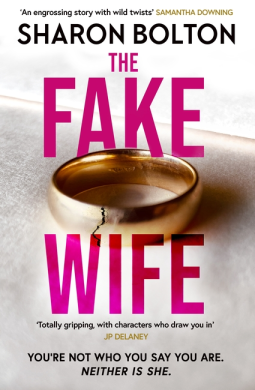
The Fake Wife by Sharon Bolton

I very rarely choose to pick up a contemporary crime novel, but I’m always happy to make an exception for Sharon Bolton. I think I’ve read all of her novels but one and have loved nearly all of them, so I had high hopes for her newest book, The Fake Wife, published last month.

The novel begins on a snowy evening just before Christmas when Olive Anderson, on her way home from a business trip, is staying at a hotel in Hexham, Northumberland. She has managed to get a table in the busy hotel restaurant, but when she enters the dining room she is surprised to see another woman sitting in her place. With no other tables available, Olive agrees to dine with the stranger, but is even more surprised when the woman tells the waiter that she and Olive are a married couple. For some reason even Olive can’t explain, she finds herself going along with the story and accompanying her ‘wife’ back to her hotel room after the meal.

PC Garry Mizon has twice tried and failed to qualify as a detective and has had to settle for a job with the traffic police, patrolling the roads at night and in bad weather. When politician Michael Anderson reports his wife, Olive, missing, Garry is ordered to accompany DS Lexy Thomas to interview him. Believing Olive may have had an accident on the country roads after leaving her hotel, Garry and Lexy head out into the snow to see if they can track her down. Olive, however, isn’t the first woman connected with Michael Anderson who has gone missing and to get to the truth behind her disappearance, Garry and Lexy will need to delve into the politician’s past and the story of his first wife, Eloise.

When I first started to read The Fake Wife, I wasn’t at all sure that I was going to like this particular Bolton novel. Those opening scenes in the hotel seemed ridiculously contrived – Olive’s reaction to having a strange woman stealing her table then pretending to be her wife certainly wasn’t the way I would have reacted! – and as I read on, other parts of the plot felt very implausible as well. It was also clear from early on that there was going to be a lot more sexual content in this book than you normally get from Bolton, something which I don’t really enjoy. Somewhere after the first few chapters, however, I became immersed in the story and then it didn’t really matter how far-fetched the beginning had been. I’m glad I didn’t abandon it, because otherwise I would have missed out on all the twists and turns of the plot as the novel headed towards its conclusion – and I wouldn’t have got to know Garry Mizon.

Garry is a wonderfully endearing character, one of my favourites in all of Sharon Bolton’s books. He’s one of those people who always try their best, yet nothing ever seems to go right for them, as we see at the beginning of the book when he makes a catastrophic and embarrassing mistake during a raid. Having proved yet again his unsuitableness for detective work, he is only asked to drive Lexy to the Andersons’ because nobody else is available, but as the investigation begins to unfold, we quickly discover that he is much more intelligent and resourceful than his superiors think he is – as well as being a genuinely nice person. He and Lexy make a great team and I would love to meet them again in a future book, although I suspect this is probably just going to be a standalone.

This book isn’t a favourite by Bolton, then, but the characters made it worthwhile. It’s also the perfect novel to read at this time of year, as so much of it is set outdoors in the snow. I’ll look forward to her next book, but meanwhile I really need to find time to go back and read Blood Harvest, which I think is the only one I still haven’t read!

Thanks to Orion for providing a copy of this book for review via NetGalley.

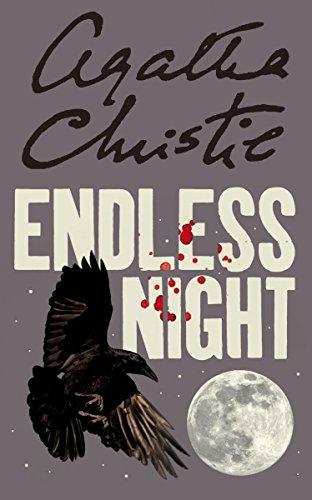
Endless Night by Agatha Christie

There are still a few weeks left in this year’s Read Christie 2023 challenge, but plans for Read Christie 2024 have already been announced! You can find out more and register for full details on the Agatha Christie website here. You don’t need to commit to reading a book every month – I just join in with any that appeal to me or that I haven’t read before.

Back to the 2023 challenge and the prompt for November is a motive: greed. Endless Night, the suggested title for this month, was first published in 1967 and is a standalone novel, not featuring Poirot, Miss Marple or any of Christie’s other famous detectives. It’s also one of only a small number of her novels to be written in the first person (apart from some of the Poirots, which are narrated by Captain Hastings). In fact, it’s really not a typical Christie novel in any way, but I still enjoyed it and apparently it was one of Agatha’s own favourites.

Many of Christie’s novels have titles inspired by nursery rhymes, poems or other works of literature. This one is taken from William Blake’s Auguries of Innocence:

“Every Night and every Morn
Some to Misery are born.
Every Morn and every Night
Some are born to Sweet Delight.
Some are born to Sweet Delight,
Some are born to Endless Night.”

Michael Rogers, our narrator, is an attractive, charming young man but one who has been jumping from one job to another with no real aim in life. When he stumbles upon an old house called The Towers – or ‘Gipsy’s Acre’ as it is known locally – and sees that it’s for sale, he dreams of buying it and settling down there, if only he could afford it. As luck would have it, he meets and falls in love with Ellie, a young American heiress, and soon the two are married and have bought the property, knocking down the old house to build a new one designed by their architect friend, Rudolf Santonix.

Unfortunately, it seems that Michael and Ellie are not destined to be happy in their new home. Gipsy’s Acre has a bad reputation and they are told by an old fortune teller, Esther Lee, that the land is cursed. As Mrs Lee continues to appear, issuing more warnings, Michael wonders whether there really is a curse or if the old woman is trying to drive them away. Then there’s Ellie’s friend and companion, Greta Andersen, who moves in with them when Ellie injures her ankle. Ellie is very close to Greta, but Michael complains that she’s too controlling and has too much influence over his wife.

Christie continues to build tension and suspense in this way until a murder eventually takes place, late in the book. With no detective to investigate the crime and with only Michael’s impression of the other characters to base our opinions on, it’s a difficult mystery to solve. I was convinced I knew who the murderer was, but I wasn’t even close and was completely taken by surprise when the truth was revealed. Although I’m not planning to do it at the moment, I think it would be fascinating to read it again and see how I managed to miss the clues entirely.

I don’t think this ranks as one of my absolute favourites by Christie because I did find it a bit slow in the middle, but that unexpected ending made up for it. I also think it’s one of the most atmospheric of her books, with a real sense of unease and foreboding. I’m not sure yet whether I’ll be able to fit next month’s Read Christie book into my December reading, but I’m definitely signing up again for 2024!

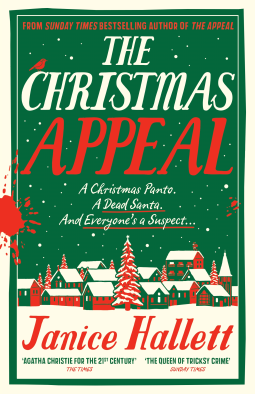
The Christmas Appeal by Janice Hallett – #NovNov23

In this new novella, published just in time for Christmas, Janice Hallett returns to the world of her earlier novel, The Appeal. Once again, newly qualified lawyers Femi and Charlotte are sent a folder of documents and are challenged by their former mentor, the now retired Roderick Tanner, to read through them all and solve the mystery they contain. And once again, the mystery unfolds in the town of Lower Lockwood where the amateur theatrical group known as The Fairway Players are preparing to stage another play, with the aim of raising money for the church roof appeal. This time, it’s that great British tradition, the Christmas pantomime! This year’s choice is Jack and the Beanstalk and rehearsals are about to begin.

Sarah-Jane MacDonald, the fundraising expert from The Appeal, and her husband Kevin have now been elected as co-chairs of The Fairway Players, a move that not everybody is happy with – particularly not Celia Halliday, who believes that she should be the one running the group. Celia is determined to do whatever it takes to prevent Jack and the Beanstalk from being a success, but it seems that the pantomime is already destined to be a disaster and anything that can go wrong will go wrong. What has happened to the young couple who auditioned for parts and have never been seen or heard from since? Is it true that the giant beanstalk Sarah-Jane wants to use as a prop is made of deadly asbestos? Is it really a good idea to use a script written in the 1970s? And whose is the dead body that appears on the night of the performance?

Like The Appeal, this book is written entirely in the form of emails, texts, WhatsApp messages and other types of media. If you’ve read the first book you’ll already be familiar with many of the characters which will make things easier to follow, but if not I don’t think it will be too much of a problem as this one should also work as a standalone. The format of the book allows the different personalities of the characters to shine through very strongly, from bossy Sarah-Jane to snobbish Celia, so you should be able to get to know them quickly.

I found this a more light-hearted book than The Appeal, with lots of humorous misunderstandings and funny moments (I particularly loved Kevin attempting to buy ‘sweets’ to hand out to the children on performance night and accidentally purchasing something completely different instead). I felt that Hallett was trying to make this an entertaining festive read rather than a more serious crime novel, which does mean that the actual mystery is quite weak. The solution relies heavily on information that is only revealed by Tanner at the end of the book and I think it would be almost impossible to solve otherwise. As Tanner already knows all the answers, he doesn’t really need Charlotte and Femi’s assistance and there’s a sense that he has set them this task simply as a problem-solving exercise and to see what they will do with what they’ve learned.

Despite the mystery not being very strong, I enjoyed this book for the characters, the humour and the insights into staging a Christmas pantomime. Hallett’s next novel, The Examiner, out next year, seems to be unrelated to this one, but I wonder whether she’ll return to the Fairway Players in the future for another book.

Thanks to Viper for providing a copy of this book for review via NetGalley.