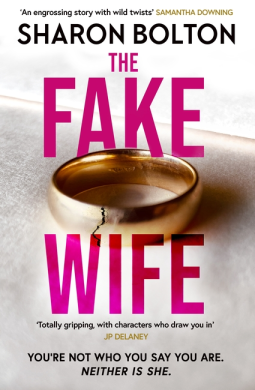
The Fake Wife by Sharon Bolton

I very rarely choose to pick up a contemporary crime novel, but I’m always happy to make an exception for Sharon Bolton. I think I’ve read all of her novels but one and have loved nearly all of them, so I had high hopes for her newest book, The Fake Wife, published last month.

The novel begins on a snowy evening just before Christmas when Olive Anderson, on her way home from a business trip, is staying at a hotel in Hexham, Northumberland. She has managed to get a table in the busy hotel restaurant, but when she enters the dining room she is surprised to see another woman sitting in her place. With no other tables available, Olive agrees to dine with the stranger, but is even more surprised when the woman tells the waiter that she and Olive are a married couple. For some reason even Olive can’t explain, she finds herself going along with the story and accompanying her ‘wife’ back to her hotel room after the meal.

PC Garry Mizon has twice tried and failed to qualify as a detective and has had to settle for a job with the traffic police, patrolling the roads at night and in bad weather. When politician Michael Anderson reports his wife, Olive, missing, Garry is ordered to accompany DS Lexy Thomas to interview him. Believing Olive may have had an accident on the country roads after leaving her hotel, Garry and Lexy head out into the snow to see if they can track her down. Olive, however, isn’t the first woman connected with Michael Anderson who has gone missing and to get to the truth behind her disappearance, Garry and Lexy will need to delve into the politician’s past and the story of his first wife, Eloise.

When I first started to read The Fake Wife, I wasn’t at all sure that I was going to like this particular Bolton novel. Those opening scenes in the hotel seemed ridiculously contrived – Olive’s reaction to having a strange woman stealing her table then pretending to be her wife certainly wasn’t the way I would have reacted! – and as I read on, other parts of the plot felt very implausible as well. It was also clear from early on that there was going to be a lot more sexual content in this book than you normally get from Bolton, something which I don’t really enjoy. Somewhere after the first few chapters, however, I became immersed in the story and then it didn’t really matter how far-fetched the beginning had been. I’m glad I didn’t abandon it, because otherwise I would have missed out on all the twists and turns of the plot as the novel headed towards its conclusion – and I wouldn’t have got to know Garry Mizon.

Garry is a wonderfully endearing character, one of my favourites in all of Sharon Bolton’s books. He’s one of those people who always try their best, yet nothing ever seems to go right for them, as we see at the beginning of the book when he makes a catastrophic and embarrassing mistake during a raid. Having proved yet again his unsuitableness for detective work, he is only asked to drive Lexy to the Andersons’ because nobody else is available, but as the investigation begins to unfold, we quickly discover that he is much more intelligent and resourceful than his superiors think he is – as well as being a genuinely nice person. He and Lexy make a great team and I would love to meet them again in a future book, although I suspect this is probably just going to be a standalone.

This book isn’t a favourite by Bolton, then, but the characters made it worthwhile. It’s also the perfect novel to read at this time of year, as so much of it is set outdoors in the snow. I’ll look forward to her next book, but meanwhile I really need to find time to go back and read Blood Harvest, which I think is the only one I still haven’t read!

Thanks to Orion for providing a copy of this book for review via NetGalley.

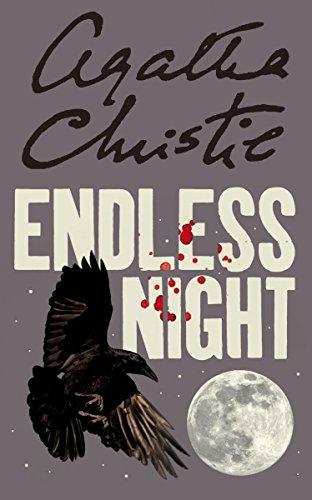
Endless Night by Agatha Christie

There are still a few weeks left in this year’s Read Christie 2023 challenge, but plans for Read Christie 2024 have already been announced! You can find out more and register for full details on the Agatha Christie website here. You don’t need to commit to reading a book every month – I just join in with any that appeal to me or that I haven’t read before.

Back to the 2023 challenge and the prompt for November is a motive: greed. Endless Night, the suggested title for this month, was first published in 1967 and is a standalone novel, not featuring Poirot, Miss Marple or any of Christie’s other famous detectives. It’s also one of only a small number of her novels to be written in the first person (apart from some of the Poirots, which are narrated by Captain Hastings). In fact, it’s really not a typical Christie novel in any way, but I still enjoyed it and apparently it was one of Agatha’s own favourites.

Many of Christie’s novels have titles inspired by nursery rhymes, poems or other works of literature. This one is taken from William Blake’s Auguries of Innocence:

“Every Night and every Morn
Some to Misery are born.
Every Morn and every Night
Some are born to Sweet Delight.
Some are born to Sweet Delight,
Some are born to Endless Night.”

Michael Rogers, our narrator, is an attractive, charming young man but one who has been jumping from one job to another with no real aim in life. When he stumbles upon an old house called The Towers – or ‘Gipsy’s Acre’ as it is known locally – and sees that it’s for sale, he dreams of buying it and settling down there, if only he could afford it. As luck would have it, he meets and falls in love with Ellie, a young American heiress, and soon the two are married and have bought the property, knocking down the old house to build a new one designed by their architect friend, Rudolf Santonix.

Unfortunately, it seems that Michael and Ellie are not destined to be happy in their new home. Gipsy’s Acre has a bad reputation and they are told by an old fortune teller, Esther Lee, that the land is cursed. As Mrs Lee continues to appear, issuing more warnings, Michael wonders whether there really is a curse or if the old woman is trying to drive them away. Then there’s Ellie’s friend and companion, Greta Andersen, who moves in with them when Ellie injures her ankle. Ellie is very close to Greta, but Michael complains that she’s too controlling and has too much influence over his wife.

Christie continues to build tension and suspense in this way until a murder eventually takes place, late in the book. With no detective to investigate the crime and with only Michael’s impression of the other characters to base our opinions on, it’s a difficult mystery to solve. I was convinced I knew who the murderer was, but I wasn’t even close and was completely taken by surprise when the truth was revealed. Although I’m not planning to do it at the moment, I think it would be fascinating to read it again and see how I managed to miss the clues entirely.

I don’t think this ranks as one of my absolute favourites by Christie because I did find it a bit slow in the middle, but that unexpected ending made up for it. I also think it’s one of the most atmospheric of her books, with a real sense of unease and foreboding. I’m not sure yet whether I’ll be able to fit next month’s Read Christie book into my December reading, but I’m definitely signing up again for 2024!

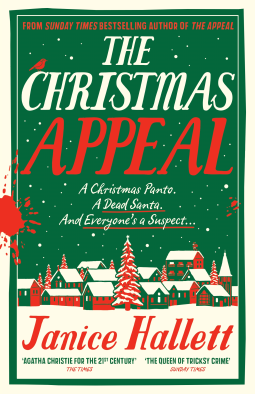
The Christmas Appeal by Janice Hallett – #NovNov23

In this new novella, published just in time for Christmas, Janice Hallett returns to the world of her earlier novel, The Appeal. Once again, newly qualified lawyers Femi and Charlotte are sent a folder of documents and are challenged by their former mentor, the now retired Roderick Tanner, to read through them all and solve the mystery they contain. And once again, the mystery unfolds in the town of Lower Lockwood where the amateur theatrical group known as The Fairway Players are preparing to stage another play, with the aim of raising money for the church roof appeal. This time, it’s that great British tradition, the Christmas pantomime! This year’s choice is Jack and the Beanstalk and rehearsals are about to begin.

Sarah-Jane MacDonald, the fundraising expert from The Appeal, and her husband Kevin have now been elected as co-chairs of The Fairway Players, a move that not everybody is happy with – particularly not Celia Halliday, who believes that she should be the one running the group. Celia is determined to do whatever it takes to prevent Jack and the Beanstalk from being a success, but it seems that the pantomime is already destined to be a disaster and anything that can go wrong will go wrong. What has happened to the young couple who auditioned for parts and have never been seen or heard from since? Is it true that the giant beanstalk Sarah-Jane wants to use as a prop is made of deadly asbestos? Is it really a good idea to use a script written in the 1970s? And whose is the dead body that appears on the night of the performance?

Like The Appeal, this book is written entirely in the form of emails, texts, WhatsApp messages and other types of media. If you’ve read the first book you’ll already be familiar with many of the characters which will make things easier to follow, but if not I don’t think it will be too much of a problem as this one should also work as a standalone. The format of the book allows the different personalities of the characters to shine through very strongly, from bossy Sarah-Jane to snobbish Celia, so you should be able to get to know them quickly.

I found this a more light-hearted book than The Appeal, with lots of humorous misunderstandings and funny moments (I particularly loved Kevin attempting to buy ‘sweets’ to hand out to the children on performance night and accidentally purchasing something completely different instead). I felt that Hallett was trying to make this an entertaining festive read rather than a more serious crime novel, which does mean that the actual mystery is quite weak. The solution relies heavily on information that is only revealed by Tanner at the end of the book and I think it would be almost impossible to solve otherwise. As Tanner already knows all the answers, he doesn’t really need Charlotte and Femi’s assistance and there’s a sense that he has set them this task simply as a problem-solving exercise and to see what they will do with what they’ve learned.

Despite the mystery not being very strong, I enjoyed this book for the characters, the humour and the insights into staging a Christmas pantomime. Hallett’s next novel, The Examiner, out next year, seems to be unrelated to this one, but I wonder whether she’ll return to the Fairway Players in the future for another book.

Thanks to Viper for providing a copy of this book for review via NetGalley.

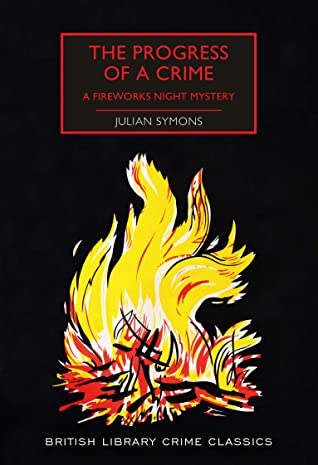
The Progress of a Crime by Julian Symons

Remember, remember, the Fifth of November,
Gunpowder, treason and plot,
I see no reason why gunpowder treason,
Should ever be forgot

It’s the fifth of November today, so no better time to review one of my recent reads, Julian Symons’ The Progress of a Crime, first published in 1960 and subtitled A Fireworks Night Mystery. For those not in the UK or familiar with British culture, this is the night when people traditionally light bonfires and set off fireworks to mark the anniversary of when Guy Fawkes was caught preparing to blow up Parliament with gunpowder in 1605. The Progress of a Crime, the first book I’ve read by Julian Symons, deals with a murder committed at a Bonfire Night celebration.

Hugh Bennett, reporter with the Gazette, has been covering a news story in the village of Far Wether on November the fifth and decides to stay on to watch the lighting of the bonfire on the village green. However, he witnesses more than just a fire that evening when a gang of youths arrive and begin throwing fireworks and causing a disturbance. Things escalate and a man is stabbed to death, but although there are many witnesses, in the darkness nobody is able to say with any certainty which of the boys was the culprit.

All of the group are arrested and questioned, but two quickly emerge as the most likely suspects: the leader, Jack ‘King’ Garney, and his most faithful friend, Leslie Gardner. There’s enough evidence to bring the two to trial and Hugh Bennett is drawn into the investigations due to both his role as a local journalist and as a witness to the crime. Hugh has his own opinions on what happened in Far Wether that night, but when he begins to fall in love with Jill Gardner, Leslie’s sister, things become more complicated.

The Progress of a Crime is an interesting portrayal of society in the early 1960s, but will probably disappoint anyone looking for a more conventional mystery novel. There’s very little suspense and not much actual ‘detecting’ as there are only really two suspects and we know who they are from the beginning. The most exciting part of the book comes in the second half when Garney and Gardner stand trial and we are given some insights into the preparations for the court case, the cross examining of the witnesses and the tensions between family members as they worry over what will happen in court.

According to Martin Edwards’ introduction, Symons took his inspiration for this novel from a real crime, and the book as a whole does feel realistic and gritty. It explores a range of topics including the causes and consequences of juvenile crime, the methods of extracting information used by the police, and the role of the press in reporting on the investigations and maybe even influencing the outcome. This British Library Crime Classics edition also features a short story by Symons, The Tigers of Subtopia, which has obviously been selected for inclusion because it covers similar themes. I can’t really say that I enjoyed either the novel or the short story as I found them quite bleak and depressing, with some very unlikeable characters, but they are interesting from a social history perspective and I would be happy to read some of Symons’ other books.

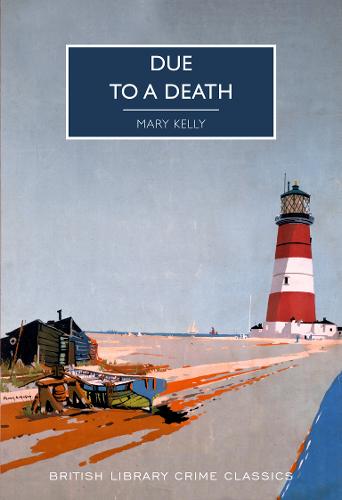
Due to a Death by Mary Kelly – #1962Club

This week Karen of Kaggsy’s Bookish Ramblings and Simon of Stuck in a Book are hosting another of their club weeks, where we all read and write about books published in the same year. This time, the year is 1962 and what a great year for publishing it has turned out to be! There were lots of tempting books to choose from, but I decided to start with one from the British Library Crime Classics series by an author who is new to me: Mary Kelly.

Due to a Death is a very different kind of BLCC book; it’s not really a detective novel, not really a thriller, not a country house or locked room mystery – not even much of a mystery at all. Although there is an element of crime, I would describe this more as a character study and an exploration of the lives of women in a small community in the early 1960s.

Our narrator, Agnes, lives in Gunfleet, a fictional village in the marshlands of Kent. Agnes used to be a teacher but her marriage to Tom meant she was no longer expected to work. It’s not a very happy or satisfying marriage and Tom, who works in a museum, spends most of his free time with his friends, Ian (who is also his stepbrother) and Tubby. Agnes appears to have no friends of her own so Tubby, Ian, and their wives Carole and Helen (whom she doesn’t particularly get along with), form her entire social circle. When Hedley Nicholson, a newcomer to the village, joins their little group he seems to sense that Agnes is lonely and bored and begins to spend more and more time with her, teaching her to drive – something she hopes will provide independence and freedom.

In the opening chapter, we learn that the body of a young woman has been found in the marshes. The rest of the novel is then told in the form of a flashback as Agnes sits in a church, thinking back over the events of the summer. The identity of the dead woman and her connection with the other characters is slowly revealed, but the focus of the book is always on Agnes and her relationships with Hedley, Tom, Ian and Tubby. It’s an interesting study of how, despite living in a small, claustrophobic community where everybody knows everybody else’s business, it’s still possible to feel isolated and alone.

I was very impressed with this book and although it has a slow pace, I found it difficult to put down. However, everything about it is relentlessly bleak, from the desolate marshland setting to the dreary lives of the characters and the tragic motive behind the young woman’s death. I liked it but, as I’ve said, it’s not a typical crime novel, so be prepared!

I hope to have at least one more 1962 review for you later in the week. Meanwhile, here’s my list of other 1962 books previously read and reviewed on my blog.

The Appeal by Janice Hallett

I loved Janice Hallett’s most recent novels, The Twyford Code and The Mysterious Case of the Alperton Angels, so I was looking forward to going back and reading her first book, The Appeal. I know Hallett’s style is not one that works for all readers (to be honest, I’m very surprised that it works for me), but if you enjoyed either of those other two novels, I can almost guarantee that you’ll enjoy this one as well.

The Appeal begins in the small English town of Lower Lockwood where the members of an amateur dramatics society, The Fairway Players, are preparing for their upcoming production of All My Sons by Arthur Miller. The Players are led by Martin Hayward and his wife Helen, a couple who also own the local golf club and are highly respected within the community, as well as members of several other prominent Lockwood families. On the fringes of the group and desperate to be accepted into the Haywards’ social circle is Isabel Beck, a young nurse who convinces her new friends Sam and Kel Greenwood to join the Players.

Before the group even begin rehearsals, disaster strikes: Martin and Helen’s two-year-old granddaughter, Poppy, has developed a rare form of brain cancer which is unlikely to be cured with conventional chemotherapy. Poppy’s parents have placed all their hopes in a new experimental treatment which is not yet available in the UK. Determined to obtain this very expensive new drug from America, the Haywards and their friends launch a fundraising appeal, ‘A Cure for Poppy’. At first, everything seems to be going well, but when one of the Fairway Players is found murdered, questions are raised not just regarding the killer but the appeal itself. Does the doctor responsible for obtaining the new treatment really have Poppy’s best interests at heart? Why did Sam leave her last nursing position in Africa so suddenly? And who is the mystery donor who promised a large sum of money then changed his mind?

Roderick Tanner QC has set his two law students, Femi and Charlotte, the task of looking through the documents associated with the Lockwood case. Someone has already been sentenced for the murder, but Tanner believes they are innocent and he wants the students to confirm his opinion as he prepares to appeal the decision. The novel is presented entirely in the form of emails sent to and from the various characters involved in the case, as well as several WhatsApp discussions between Femi and Charlotte as they try to make sense of the evidence. As I’ve said, this is probably something you’ll either love or hate, but for me it’s very effective – I find that the short length of each email makes the book very immersive and compelling as it’s easy to think ‘I’ll just read one more!’ It also allows a lot of misdirection as every character could be considered an unreliable narrator; we can never be sure who they really are or how they really feel because all we see is the way they choose to present themselves in an email or on social media. Some suspension of disbelief is required, though, as most people aren’t sending constant emails to each other all day long!

The weakest aspect of The Appeal for me was actually the murder mystery. The murder doesn’t take place until late in the novel and then we learn that Tanner has been withholding information from us, which makes it very difficult to solve the mystery for ourselves. I also wasn’t sure why he wanted help from Charlotte and Femi, as he already seemed to know everything anyway. Apart from that, I enjoyed following the progress of the Poppy campaign and correctly guessed some of the twists in that storyline! There’s a large cast of characters to get to know, but I found that most of them had their own very distinctive personalities – from needy, eager to please Isabel to practical, no-nonsense professional fundraiser Sarah-Jane – so I had no problem keeping track of them all.

Of the three Janice Hallett books I’ve read, this is my least favourite, but it still kept me entertained from beginning to end. I’m looking forward to reading her new novella, The Christmas Appeal, coming in October!

Uncle Paul by Celia Fremlin

I know they say never to judge a book by its cover, but I have to confess, the cover is what made me want to read this book before I even knew what it was about! Luckily, the story lived up to the cover and you can expect to see Uncle Paul on my books of the year list in December, without a doubt.

First published in 1959, this is a recent reissue by Faber. It’s Celia Fremlin’s second novel but the first I’ve read and I was delighted to find that she wrote fifteen more. If any of them are even half as good as this one then I have some great reading ahead of me!

Uncle Paul is written from the perspective of Meg, the youngest of three sisters but in many ways the most mature. She is leading her own independent life in London with a job, a flat and a new boyfriend, Freddy, a pianist who is both charming and secretive. The novel opens with Meg receiving a telegram from her older sister Isabel, who is spending the summer holidays in a caravan at the seaside with her family. Isabel is concerned about their half-sister Mildred, who is twenty years older and helped to bring them up as children. Mildred has left her husband and come to stay at a nearby cottage – the same cottage where she spent her honeymoon with her first husband, Paul, fifteen years earlier.

Meg and Isabel had been very young at the time of Mildred’s marriage to Paul – they knew him as ‘Uncle Paul’ – but they remember the scandal that occurred when it emerged that he was guilty of both bigamy and attempted murder. Paul was given a long prison sentence after Mildred went to the police, but she is convinced that he has now been released and is coming to take his revenge. Believing that her sisters are panicking about nothing, Meg sets off for the coast intending to tell them to stop being foolish, but when she finds herself spending the night at Mildred’s cottage listening to footsteps moving around in the dark she begins to wonder whether Uncle Paul really has come back after all.

Uncle Paul is an excellent psychological thriller, but I think what I actually loved most about it was the setting – the portrayal of a typical British seaside holiday in the 1950s. Fremlin does a great job of bringing to life Isabel’s rickety caravan, trips to the beach and walks along the pier, the challenges of keeping children amused on a wet day and the friendships that inevitably begin to form with the other guests – in this case, the gallant old Captain Cockerill and a mother with her son, Cedric, an irritating little boy who thinks he knows everything (and often does). The characters are all very well drawn, even the minor ones like these, but I found the three sisters particularly interesting, with their very different personalities: the sensible, level-headed Meg who, despite being the youngest, is the one the others rely on to take control of every situation; the rich, dramatic and often irrational Mildred (her decision to stay on her own in an isolated cottage where she could easily be found by Paul being one example of her illogical behaviour); and the nervous, anxious Isabel, the sort of person who worries about anything and everything.

The psychological elements of the story are very well done, so that we can never be quite sure whether the strange occurrences and the noises in the middle of the night are real or just a figment of our characters’ imaginations. Even when one alarming incident is proven to have an innocent explanation, the suspense begins to build all over again, convincing us that this time Meg and her sisters really are in danger! Similarly, Fremlin creates enough mystery around the characters of Isabel’s husband and Meg’s boyfriend that neither we nor Isabel and Meg themselves know whether they really are who they claim to be.

Having been kept guessing all the way through this wonderful novel, I found the ending both unexpected and clever. Definitely one of my favourite books of the year so far and I can’t wait to try another one by Celia Fremlin.