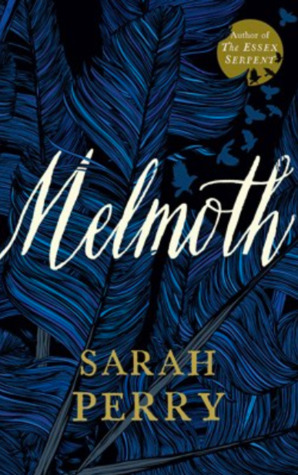
Melmoth by Sarah Perry

Having read Sarah Perry’s previous novel, The Essex Serpent, last year, I was looking forward to reading her new one, Melmoth. I read it in October, just before Halloween, and found it the perfect read for the time of year: dark, atmospheric and Gothic. It’s very different from The Essex Serpent, but with some similar ideas and themes.

At the centre of the novel is the legend of Melmoth the Witness, the woman who stood by Christ’s empty tomb and denied the Resurrection. As punishment for lying about what she had witnessed, she is condemned to wander the earth alone forever, dressed in black and with bare, bleeding feet, forced to bear witness instead to all of the cruelty and misery humans cause for one another. Desperate for some company in her exile, she appears to those who have lost hope and holds out her hand to them, urging them to join her in her wandering.

Helen Franklin, an Englishwoman who lives in Prague where she works as a translator, is fascinated by the tale of Melmoth. Her friend Karel, a Czech academic, has inherited a collection of papers which explore Melmoth’s story, and he passes these on to Helen. As she delves more deeply into the subject, she discovers more documents and journals giving different accounts of Melmoth from earlier times and from around the world. But the story of Melmoth could have a personal significance for Helen herself – because Helen is hiding a secret of her own, which could make her an ideal target for a mysterious woman in black.

Melmoth is a wonderfully atmospheric novel, partly because Prague is such a great setting which lends itself to strong, vivid descriptions, but I think Sarah Perry’s writing style also adds to the mood. Here is the opening paragraph in which we are introduced to Helen Franklin for the first time:

“Look! It is winter in Prague: night is rising in the mother of cities and over her thousand spires. Look down at the darkness around your feet, in all the lanes and alleys, as if it were a soft black dust swept there by a broom; look at the stone apostles on the old Charles Bridge, and at all the blue-eyed jackdaws on the shoulders of St John of Nepomuk. Look! She is coming over the bridge, head bent down to the whitening cobblestones: Helen Franklin, forty-two, neither short nor tall, her hair neither dark nor fair…”

The writing style and some of the devices the author uses, such as speaking directly to the reader, give it an almost timeless feel; although the main part of the novel is set in the modern day, there’s a sense that it could have taken place at any time in history – and of course, the Melmoth legend is a very old one. Through the stories-within-stories which emerge as we continue to read, we see how the influence of Melmoth has touched the lives of not just Helen Franklin, but many other characters throughout history, the most memorable being a boy who faces the horrors of the Holocaust. I enjoyed some of the stories while others interested me less and in the middle of the book I found my concentration wandering; the writing style, which works so well in other ways, creates a distance between the reader and the characters and I felt that I was watching them from afar rather than engaging with them as real people.

On the whole, I preferred The Essex Serpent, but I did love what this book had to say about forgiveness, atonement and loneliness. I’ve also been reminded of Charles Maturin’s 1820 novel, Melmoth the Wanderer, which it might be interesting to read and compare with this one.

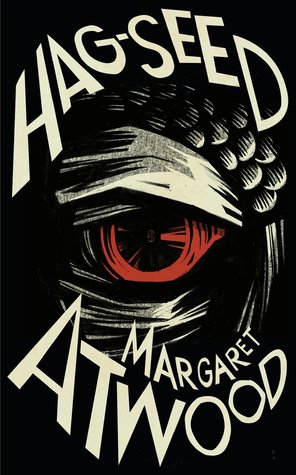
Hag-Seed by Margaret Atwood

This month I’ve been taking part in Nonfiction November, but it’s also Margaret Atwood Reading Month hosted by Naomi at Consumed by Ink and Marcie at BuriedInPrint. I was planning to read one of her longer books – The Blind Assassin or possibly Cat’s Eye, but I found myself running out of time towards the end of the month, so I decided on the much shorter Hag-Seed instead. This book is part of the Hogarth Shakespeare series of retellings of Shakespeare’s plays by modern authors.

Felix Phillips had a successful career as Artistic Director of the Makeshiweg Theatre Festival until his assistant, Tony, betrayed him and took his job. Forced to abandon his plans to stage a contemporary version of The Tempest – a play close to his heart, having recently lost his three-year-old daughter Miranda (who shared her name with Shakespeare’s heroine) – Felix drops out of public life and begins to plot his revenge. Under the name of Mr Duke, he applies for a position at Fletcher Correctional, helping to improve the literacy of the prisoners. Here he will have his chance to direct The Tempest after all, while making his enemies pay for what they have done.

The Tempest is a play that I know quite well, although I wish I’d found time to re-read it before starting Hag-Seed. I’m tempted to do that now, but I think reading them in the opposite order would have been more helpful! I enjoyed watching the prisoners as they study the play for the first time and try to interpret it in their own unique way (could Ariel have been an alien rather than a fairy? Would Shakepeare’s songs be improved by rewriting them as rap?) Personally, when it comes to adaptations of books and plays, I don’t usually like to see things being modernised or given ‘contemporary twists’, but even so it was good to see the Fletcher Correctional Players having so much fun and being so inventive.

Felix plays Prospero, the magician and rightful Duke of Milan, in the prisoners’ production, but he also fills the role of Prospero in the framing narrative. The prison represents the magical island to which Prospero is exiled, while Tony is clearly the equivalent of Prospero’s usurping brother, Antonio. Events in Felix’s life mirror events from The Tempest, coincidentally at the beginning, but then intentionally as he begins to orchestrate his plan for revenge. And of course, even as Felix controls and manipulates the other characters, we know that he is also a character and a prisoner, caught between the pages of Margaret Atwood’s novel, controlled and manipulated by Atwood herself.

Having some familiarity with the play does make it easier to understand and unravel the many layers of Hag-Seed, but if you’re not familiar with it, that shouldn’t be a problem as the whole story is told at various points in the novel, in various different ways (including a full summary at the end of the book). We can learn along with the prisoners as they try to identify the nine types of prison portrayed in the play and as they write an analysis of their chosen character and imagine how his or her story might continue after the play comes to an end. I particularly enjoyed the contributions made by Anne-Marie Greenland, the actress and dancer Felix brings in to play the part of Miranda.

As for the real Miranda – Felix’s daughter who died as a child – the novel is as much about Felix’s feelings for her and his inability to let things go and move on as it is about anything else. Without saying too much, I really liked the way that part of the story was resolved and the way the novel ended.

I must read some of those longer Atwood novels soon – and I would like to try another of the Hogarth Shakespeare books too.

Earth and High Heaven by Gwethalyn Graham – #1944Club

This week, Karen of Kaggsy’s Bookish Ramblings and Simon of Stuck in a Book are hosting another of their clubs for which bloggers read and write about books published in one particular year. This time the year is 1944 – an interesting one, as not only are there lots of intriguing books to choose from, but it’s also the first wartime year to be featured. I had a few options on my TBR and decided to start with this one, Gwethalyn Graham’s Earth and High Heaven, which has been reissued by Persephone.

The novel is set in Canada during World War II and, through the story of Erica Drake and Marc Reiser, explores some of the prejudices, inequalities and divisions which existed at that time. Erica is a twenty-eight-year-old journalist working for the Montreal Post, while Marc is a lawyer in his early thirties. The two are immediately drawn to each other when they meet at a cocktail party – it’s literally love at first sight and Erica is sure her parents will like him too. But when she attempts to introduce him to her father, Charles, she is horrified and embarrassed when Charles refuses to even look at Marc, let alone speak to him.

Erica struggles to understand her father’s reaction, but Marc is not at all surprised. The Reisers are a Jewish family whereas the Drakes are English-Canadians and these two groups – along with another major group in Montreal society, the French-Canadians – simply don’t mix with each other. However, Erica’s brother has recently married a French-Canadian and despite Charles Drake’s initial disapproval, he has accepted Tony and Madeleine’s relationship. Erica is sure that, in time, he will come to accept Marc too. To her disappointment and frustration, though, her parents don’t want to get to know Marc and aren’t interested in what he is like as a person – all that matters is that he is a Jew. Charles explains that he doesn’t want “a son-in-law who’ll be an embarrassment to our friends, a son-in-law who can’t be put up at my club and who can’t go with us to places where we’ve gone all our lives”.

Despite having grown up in Montreal, Erica has never given much thought to the level of division in society as it’s not something which has ever affected her directly. Marc, on the other hand, is under no illusions; he has been encountering attitudes like Charles Drake’s all his life and he knows exactly what he and Erica can expect if they get married. He tries to make Erica see what their lives would be like, but she is determined to stand by him no matter what.

Marc is very likeable from the beginning, which makes Charles’ attitude towards him all the more upsetting, while Erica is also easy to like and admire. Although we do see things occasionally from Marc’s point of view, it is through Erica’s eyes that most of the story unfolds and Erica who has the most to learn. Her relationship with her father is as much a part of the story as her relationship with Marc; she has always considered him a friend as well as a father and so it comes as a shock to her to find that he is so determined to oppose her wishes. At the same time, she becomes uncomfortably aware that she herself has prejudices of her own.

Earth and High Heaven is a fascinating novel; as so much of the story consists of various characters discussing their views on racism, prejudice and intolerance, it could easily have felt like nothing more than a polemic, but that never happens, which I think is largely due to the two main characters being so appealing and sympathetic. I cared about both of them from their first meeting in the opening chapter and I felt that the issues explored throughout the story arose naturally from the situations in which they found themselves.

This was a great read for the 1944 Club – and one which is still important and relevant today. I loved following Marc and Erica through all their ordeals, hoping and wondering whether they would find a way to be together in the end.

~

I should have another 1944 book to tell you about later in the week, but for now here are a few reviews I have previously posted of books published in that year:

Friday’s Child by Georgette Heyer
Cluny Brown by Margery Sharp
Dragonwyck by Anya Seton
Towards Zero by Agatha Christie
Good Evening, Mrs Craven: The Wartime Stories of Mollie Panter-Downes

Harriet by Elizabeth Jenkins: A book for the Persephone Readathon

Jessie at Dwell in Possibility is hosting another of her Persephone Readathons this week and as I am also taking part in this year’s R.I.P. Challenge, I decided to read a book that would count towards both. Harriet, first published in 1934, is based on a real life crime which took place in 1877 and is a much darker story than you would usually find between the dove-grey covers of a Persephone book.

Harriet Woodhouse, the thirty-three-year-old title character, is referred to in the novel as ‘a natural’ – someone whom, today, we would probably describe as having learning difficulties. Her use of language – both written and spoken – is sometimes not quite right, she can appear to be insensitive and she is often slow to understand what people really mean. Mrs Ogilvy, her mother, is very loving and protective towards her daughter and although Harriet still lives at home, she encourages her to be as independent as possible and to visit family and friends now and then. It is while visiting her cousins, the Hoppners, that Harriet is introduced to Lewis Oman. Lewis is the brother of Elizabeth Hoppner’s husband, Patrick, and it is through this family connection that Lewis has heard that Harriet is in possession of a small fortune and due to inherit more on the death of an aunt.

When Lewis asks Harriet to marry him, his motives are very obvious to the reader: he is only interested in her money and feels nothing for Harriet herself. Mrs Ogilvy is horrified, but as her daughter is an adult she finds that there is nothing she can do to prevent the marriage, especially as Harriet thinks Lewis is charming and wonderful and believes everything he tells her. The wedding goes ahead and, having achieved his goal, Lewis quickly tires of his new wife, sending her to live in the country with Elizabeth and Patrick.

From this point, the story becomes very disturbing with Harriet completely isolated and cut off from the people who love her and care about her. Her treatment at the hands of Lewis and Patrick, and Elizabeth and her younger sister Alice, is quite painful to read about, particularly as their acts of cruelty are rarely described explicitly – instead, we are left to draw our own conclusions from the hints we are given. It is not quite clear whether the Omans and Hoppners had set out to treat Harriet so horribly or whether they just see her as an inconvenience, not worth paying any attention to, and so the neglect happens almost by accident. Either way, it’s cruel and inhumane and the complete lack of compassion displayed by these four people is shocking.

Something that struck me while I was reading was that we never really get into Harriet’s head and never know what she is thinking or feeling. We see her only through the eyes of other people, as a nuisance to be ignored and kept out of the way, or in the case of Mrs Ogilvy, a beloved and vulnerable daughter whom she is powerless to help. The one person who could possibly have done something to help is Clara, the young maid who works for Elizabeth and Patrick – she knows something is not right, she knows Harriet is in danger, and yet still she does nothing. I found this very frustrating and I had to keep reminding myself that Clara was only a teenager, probably afraid of losing her job, and that Elizabeth Jenkins was constrained by the historical facts of the case – if somebody had intervened when I wanted them to, it could have changed the whole outcome of the story.

It was interesting after finishing the book to look up the details of the real Harriet and what happened to her – it seems that Elizabeth Jenkins has kept the same first names of the characters, but changed the surnames, while most of the other basic facts are correct. It doesn’t feel right to say that I enjoyed this book, but I did find it a fascinating and gripping read, as well as a very sad and harrowing one. Knowing that it is based on a true story makes it even more poignant.

This is my third book read for the R.I.P. XIII Challenge (category: suspense/thriller)

Are you taking part in the Persephone Readathon? What have you been reading?

Thunder on the Right by Mary Stewart

Mary Stewart is one of my favourite authors and when I saw that her birthday – today – was going to be celebrated in Jane at Beyond Eden Rock’s Birthday Book of Underappreciated Lady Authors, it seemed a good opportunity to pick up one of the few Stewart novels I still hadn’t read. I decided on Thunder on the Right, one of her earliest novels which was first published in 1957. I had seen a few reviews which suggested this wasn’t one of Mary Stewart’s better books, but I was pleased to find that I enjoyed it. It’s been a while since I read one of her romantic suspense novels, having taken a break from them to concentrate on her Arthurian series instead, and I’d forgotten how much fun they are.

The novel begins with Jennifer Silver, a young woman from England, arriving in the French Pyrenees to visit her cousin, Gillian Lamartine, who has written to her to say that she’s planning to enter a convent there. Waiting at Jennifer’s hotel in Gavarnie is Stephen Masefield, an old friend who may have become more than just a friend if it hadn’t been for the disapproval of Jennifer’s parents. She is unsettled by the unexpected meeting after an absence of two years, but pleased to see him again – especially as she is beginning to think that something terrible must have happened to Gillian.

Visiting the Convent of Notre-Dame-des-Orages the next day, Jennifer’s worst fears are confirmed when she is told that Gillian died after being injured in a car crash several weeks earlier and has been buried at the convent. Jennifer is devastated, but when she begins to ask questions of the nuns who nursed Gillian in her final days, she becomes convinced that something is not quite right. Is her cousin really dead? Jennifer has her doubts and, with Stephen’s help, she sets out to discover the truth.

Although Thunder on the Right hasn’t become a favourite Stewart novel, it’s as entertaining as any of her others and I flew through the pages, desperate to see whether Jennifer would find her cousin and what other secrets were being hidden in the convent. The early chapters, in which she encounters the sinister Spanish nun Doña Francisca and hears the details of Gillian’s alleged death, are wonderfully eerie and the tension builds slowly as Jennifer explores the chapels, courtyards and tunnels of the convent in search of clues. In the second half of the novel, though, things become very melodramatic – almost too fast-paced and too exciting, at the expense of atmosphere and character development.

There are other problems – the main villain is too obviously villainous to be convincing, while the romance between Jennifer and Stephen is less engaging than some of Stewart’s other romances, possibly because they already know each other before the story begins and then spend a relatively small amount of time together over the course of the novel. But the setting is wonderful, of course. A Mary Stewart novel wouldn’t be a Mary Stewart novel without lots of vivid and evocative descriptions and there are plenty of them here, as the search for Gillian is played out high in the mountains while the wind blows and the thunder crashes.

For the reasons I’ve mentioned, I would agree that this isn’t one of Mary Stewart’s very best books but it was still an enjoyable read. If you’re new to her suspense novels, I would recommend starting with Nine Coaches Waiting, Madam, Will You Talk? or This Rough Magic. Those are my favourites, along with the Merlin trilogy which begins with The Crystal Cave.

I am counting this book towards the R.I.P XIII Challenge (category: suspense).

The Love Letter by Lucinda Riley

I have been enjoying following Lucinda Riley’s Seven Sisters series over the last few years and am looking forward to starting the newest book, The Moon Sister, which is due to be published later this year. The Love Letter is not part of that series, though – it’s a reissue of one of her earlier novels, first published in 2000 as Seeing Double under the name of Lucinda Edmonds. As explained in the brief Author’s Note which opens the novel, Seeing Double was not a success on its original release, probably because of poor timing – it wasn’t long since the death of Princess Diana in 1997 and the plot involves a scandal within a fictional British royal family. Lucinda and her publisher obviously feel that enough time has now passed to give the book a second chance and a new look and title.

The Love Letter is set in 1996 and begins with young journalist Joanna Haslam reporting on the funeral of Sir James Harrison, one of the most famous actors of his generation, who has died at the age of ninety-five. The funeral is a star-studded affair, attended by celebrities including Harrison’s granddaughter Zoe, a successful actress in her own right, and his film-producer grandson Marcus. The service has only just begun when Rose, an elderly woman sitting beside Joanna, is suddenly taken ill. Joanna offers to accompany the old lady home in a taxi, unaware that by doing so she is taking the first step in a sequence of events that could destroy the British establishment. Within days Rose is dead, but not before sending Joanna a letter, the contents of which hold clues to a shocking secret that some very powerful people will stop at nothing to keep concealed.

This is a very different sort of book from Lucinda Riley…a combination of spy thriller, mystery and romance. I have to admit, I found the plot a bit far-fetched and not always very plausible, but it’s certainly a page-turner – it was difficult to stop reading until I had found out what the letter meant and what the secret was. I did manage to work some of it out for myself (especially as we are told in the Author’s Note before we even start reading that the story is going to involve members of the royal family), but not all of it, because new pieces of the puzzle are being revealed right up to the end of the novel. For a book with six hundred pages, it’s a quicker read than you might expect and a lot of fun to read too, with some surprising plot twists and characters who aren’t quite what they seem.

Unlike the Seven Sisters novels with their dual timeline stories, The Love Letter is set entirely in the modern day (although events from the past provide the answers to the mystery). Having said that, I suppose 1996 is not exactly the ‘modern day’ anymore and the absence of recent technology from the characters’ lives does set the story firmly in its time period. As for the implications for the royal family, I don’t think people would be too bothered by a novel like this today, but I can see why it might have been controversial on publication eighteen years ago.

I think one of Lucinda Riley’s strengths as a writer is in creating characters the reader can really care about and like – and there are several of those in this novel. I loved Joanna from the beginning; she’s such an ordinary, down-to-earth person with the sort of hopes, ambitions and problems that are easy to identify with. I also liked Zoe, who is embroiled in a secret and possibly dangerous love affair, and I became very fond of her brother Marcus too. The only one of the main characters I didn’t warm to was Simon, Joanna’s best friend, although I did have some sympathy with the internal conflicts he faced in trying to choose between his job and his friendships.

The developments towards the end of the book became a bit too dramatic for me, but I was happy with the final few twists which led to the conclusion I’d been hoping for. I’m looking forward to getting back to the Seven Sisters – I have a copy of The Moon Sister which I’m planning to read soon – but The Love Letter made an interesting change.

Thanks to Pan Macmillan for providing a copy of this book for review.

Post of Honour by RF Delderfield

Post of Honour is the second book in RF Delderfield’s A Horseman Riding By trilogy which begins with Long Summer Day, one of my favourite reads of last year. For me, this second novel is not as good as the first, but still very readable.

As this book and the first one were originally published in 1966 as one very long volume, Post of Honour picks up the story just after Long Summer Day ends in 1911, dropping us straight back into the daily lives of the people of the Sorrel Valley. A few years go by with small dramas taking place – weddings, funerals, births, deaths, new friendships being formed and new romances beginning to blossom. And then, in 1914, war breaks out in Europe and life in the Valley will never be the same again.

Although I had allowed a whole year to pass between finishing the first book and picking up this one, I found that I had no problem remembering the characters and storylines. It was lovely to be reacquainted with old friends like the former street-urchin Ikey Palfrey, the wild, untameable Hazel Potter, suffragette Grace Lovell and, of course, our hero Paul Craddock, the squire of Shallowford. The first part of the book is devoted to the First World War, showing us how these characters and many others are affected, either directly or indirectly. One of the Valley men becomes a conscientious objector while others fight in the trenches and those left at home wait for news of their loved ones. It would be unrealistic for all of our much-loved characters to return from war unscathed – so, inevitably, there are some deaths and the next section of the novel looks at how the inhabitants of Shallowford and the Sorrel Valley recover from their losses and try to move on over the next two decades.

This book covers a much longer time span than the previous one and this, in addition to the number of deaths during the wartime chapters, means the introduction of lots of new characters from the second and third generations. One of the things I remember loving about Long Summer Day was the way Delderfield brought each character, even the minor ones, fully to life. However, I don’t think he does that quite as successfully in Post of Honour and I felt that many of the new characters were little more than names on the page. With the exceptions of two of Paul’s children – Simon and Mary – and Ikey’s son, the strangely named Rumble Patrick, I simply wasn’t very interested in any of the others.

By the end of the book, another world war has begun, and I do want to see how Paul and his friends and family will fare. I will be reading the third book in the trilogy, The Green Gauntlet, but after that I’m looking forward to leaving the Sorrel Valley behind and trying some of Delderfield’s other novels – probably beginning with the one I already have on my shelf, Farewell the Tranquil Mind.

This is book 9/20 of my 20 Books of Summer.