Less Than Angels by Barbara Pym

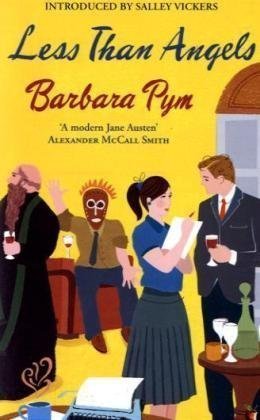
Less Than Angels I’ve never read anything by Barbara Pym until now, despite feeling sure that I would enjoy her books, so Barbara Pym Reading Week seemed a good time to start. Less than Angels is not a book that I’ve heard much about so I was worried that it might not be a good one to begin with, but it’s the only one I actually own so it made sense to read it first. Luckily I did enjoy it and it has left me wanting to read more of Pym’s books as soon as I can!

Less than Angels revolves around a group of anthropology students, their professors, families and neighbours. Catherine Oliphant is a writer of romantic fiction and articles for women’s magazines. Her boyfriend, Tom Mallow, is an anthropology student who has recently returned home from being ‘in the field’ in Africa and is now working on finishing his thesis. Despite having very different personalities and not really understanding each other’s work, Tom and Catherine seem to have settled into life together – until Tom meets Deirdre Swan, a younger student who is just beginning to study anthropology.

While the relationships between Tom, Catherine and Deirdre form the central thread of the novel, another storyline centres around money for research grants which the rich widow Minnie Foresight has promised to give to Professor Mainwaring’s department. Among the students hoping to receive these grants are Deirdre’s friends, Mark and Digby, who provide a lot of the book’s humour. We meet lots of other great characters too, including Deirdre’s mother, Mabel, and her unmarried Aunt Rhoda. And there’s also Alaric Lydgate, an eccentric anthropologist who lives next door and can often be seen wearing an African mask around the house (and secretly wishes he could wear it all the time).

My first impression after reading Chapter One was that I liked Barbara Pym’s writing but was completely overwhelmed by the number of characters we were introduced to in that first chapter and the way the viewpoints changed from one to another so rapidly. Fortunately, after a couple of chapters things settled down and we could concentrate on getting to know one character at a time.

I thought Catherine was a lovely person and although she and Deirdre could be seen as rivals, Catherine’s mature attitude to the whole situation made it easy for me to like Deirdre too. It was interesting to read the contrasting descriptions of Catherine’s solitary but independent life in London, and Deirdre’s life in a middle-class suburban household, living with her mother, brother and aunt. I thought it was funny when one of Deirdre’s fellow students, a Frenchman called Jean-Pierre, visits the family to study a typical English Sunday! I liked the idea that there’s as much for an anthropologist to study in English habits and traditions as there is in the customs of African tribes, and I was also interested in the comparison of the insights writers have into human life as opposed to the views anthropologists have.

I loved Mark and Digby too. One of my favourite scenes was the one where they take Miss Clovis and Miss Lydgate to a restaurant and spend the whole time worrying about the cost and trying to choose the cheapest things on the menu. I also liked the part where Professor Mainwaring invites four of the competing research grant applicants to his house in the countryside for the weekend. Near the end of the book, the story takes a more dramatic turn which I thought felt a bit out of place with the rest of the novel. Apart from this, I enjoyed Less than Angels and am excited about reading more of her books.

Barbara Pym Reading Week

And the Mountains Echoed by Khaled Hosseini

And the Mountains Echoed Having read both of Khaled Hosseini’s previous novels, The Kite Runner and A Thousand Splendid Suns, I was excited when I discovered that he had written a new book. It’s been a long time since A Thousand Splendid Suns but his third novel, And the Mountains Echoed, was worth waiting for. It’s a gentler book than the previous two and much less harrowing. I didn’t learn as much about life in Afghanistan as I did from the other two books and this one doesn’t go into much depth on the Soviet invasion or the horrifying events of the Taliban years, but it’s still a very powerful and emotional novel. It’s a story about families, about the relationships between brothers and sisters, parents and children, and husbands and wives.

In 1952, Saboor and his young children, Abdullah and Pari, set out on a journey from their small village in rural Afghanistan to the capital city of Kabul. The two children have a very close and loving relationship; Abdullah has taken on the role of a parent to his little sister since their mother died when Pari was a baby. They are happy to have the chance to spend some time together on the journey, but what they don’t know is that when they reach Kabul something is going to happen that will change both of their lives forever.

As the story moves through the generations and across continents, we also get to know a variety of other characters, all of whom are connected in one way or another to the family we met at the beginning of the book. These include Uncle Nabi, who leaves home to work for a rich family in Kabul, and his employer’s wife, Nila Wahdati, a poet. Then there’s Markos, a plastic surgeon from Greece who is working for a charity in Kabul, and Adel, son of a famous Afghan warlord who slowly discovers that his father may not be as heroic as he seems. A whole chapter is devoted to each character’s story, which made the novel feel almost like a collection of short stories. Some of them are more interesting than others, but they all share the same themes: the effects of years of conflict on a country and its people, and the suffering of families torn apart by war or poverty.

I found this book to be much wider in scope than either The Kite Runner or A Thousand Splendid Suns; it begins with one family in Afghanistan but over the course of the novel we are taken to America, Paris and the Greek Islands and meet a huge number of characters. This was not necessarily a good thing, though; sometimes I felt that the focus had moved too far away from the storylines I was most interested in and the novel started to lose some of its magic and become less compelling. One of my favourite chapters was actually the first one, in which Saboor tells Abdullah and Pari a fairytale about Baba Ayub, whose son is stolen away by a div (a type of monster). Ideas and metaphors introduced in this opening chapter run through the entire novel, which I thought was very clever.

Early in the book someone mentions that a story can be like a train – you can jump onboard anywhere but will get to the same destination eventually. That’s a good description of And the Mountains Echoed, as the story is not told in strict chronological order – as well as moving from one character to another, we also jumps backwards and forwards in time within each chapter – but when we do finally reach the end, everything comes together to bring the novel to a beautiful and moving conclusion.

Pictures at an Exhibition by Camilla Macpherson

Pictures at an Exhibition In 1942 the National Gallery in London launched its ‘Picture of the Month’ scheme. Each month one of the masterpieces that had been hidden away to protect them from bombing raids during the war would be brought out of storage and put on display. Daisy Milton, who is working in London as a typist, decides to go along every month to look at the paintings in the hope that it will give her something to look forward to and help her get through the days until the war is over. After each visit to the gallery she writes a letter to her friend Elizabeth in Canada, describing the painting and how it made her feel.

In the present day we meet Claire and her husband, Rob. When Rob’s grandmother, Elizabeth, dies she leaves him a box containing the letters she received from Daisy throughout the war. A recent tragedy has almost destroyed Claire and Rob’s marriage and Claire finds some comfort in reading Daisy’s letters and going to look at the paintings once a month just as Daisy did. As the months go by and Claire finds herself drawn into Daisy’s world she starts to see some parallels between Daisy’s life in the past and her own life in the present.

I enjoyed Pictures at an Exhibition, but although I was interested in both the wartime and modern day storylines I did prefer the wartime one because I found Daisy a much more appealing character than Claire. For a long time Claire annoyed me because she seemed so self-absorbed and unwilling to move on with her life. I had more sympathy for Rob, who came across as a kind, considerate husband who was doing his best to make their marriage work and starting to run out of patience. As Claire’s story unfolded I started to warm to her a bit more, but I would still rather have spent more time with Daisy.

My favourite thing about this novel was having the opportunity to learn about the paintings that were displayed in the National Gallery during the war. Each chapter of the book begins with a QR code that you can scan with your phone (if you have the right sort of phone) and it will take you directly to the painting, or you can look them up online yourself later if you prefer – they are all easy to find on the National Gallery website. Some were very famous paintings that I was already familiar with, such as The Arnolfini Portrait by Jan van Eyck and The Hay Wain by John Constable, but there were others I knew nothing about. It was a fascinating experience to view each of these paintings first through Daisy’s eyes and Claire’s, then to be able to look at them myself and see things in them that I might not have thought of otherwise.

Thanks to the author for sending me a review copy of this book.

The Unlikely Pilgrimage of Harold Fry by Rachel Joyce

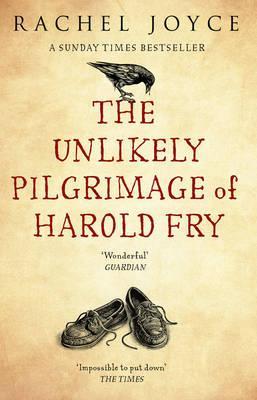
The Unlikely Pilgrimage of Harold Fry When I started reading The Unlikely Pilgrimage of Harold Fry it occurred to me how few contemporary novels I read these days. Most of the books I’ve read so far this year have been historical fiction, classics or ‘older’ books, so it was actually a refreshing change to read something written and set in the 21st century for once!

As the title suggests, this is the story of a man who embarks on an unlikely journey from one end of England to the other. His name is Harold Fry and his pilgrimage begins when he receives a letter from an old friend, Queenie Hennessey, who is writing to say goodbye because she has been diagnosed with terminal cancer. Harold writes a letter in reply but on his way to post it he becomes aware of the complete inadequacy of his words. And so Harold just keeps on walking…all the way to the hospice in Berwick-upon-Tweed, over five hundred miles away from his home in Devon.

Because it was such a spur of the moment decision, Harold is badly prepared for the walk. He’s wearing the wrong clothes and shoes, he doesn’t have a map and he has left his phone at home. With blistered feet and only a vague idea of the route he needs to take, Harold’s progress is slow but still he continues to put one foot in front of the other, convinced that his pilgrimage will help keep Queenie alive.

As Harold walks, he reflects on the things that have happened in his life, the choices – both good and bad – that he has made, and his relationships with his friends and family. In particular he thinks about what has gone wrong in his marriage to his wife, Maureen, and why he has always found it so difficult to connect with their son, David.

The plot may seem simple but there’s so much emotion and poignancy packed into every page. There’s a sense of mystery too, with lots of questions to be answered. We don’t know at first what exactly happened between Harold and Queenie. What did she do to help him all those years ago? Did they have a romantic relationship or were they just friends? We also don’t know what the problem is with David and why Harold has hardly spoken to him for years. And what was it that caused the rift in Harold and Maureen’s marriage? There are clues to all of these mysteries scattered throughout the story and we learn a little bit more in each chapter, with the truth slowly unfolding as Harold progresses on his journey.

As well as learning about Harold we also spend some time with Maureen, left at home on her own, and it was good to have some of the story told from a different perspective. It was interesting to see how Maureen reacted to her husband’s decision to walk to Berwick and how she tried to come to terms with it, torn between worry, frustration and an understanding that this was something Harold felt he had to do.

During his journey, Harold meets and talks to a variety of people from all walks of life – including a girl who makes him a burger, a Slovakian woman who gives him a room for the night, an American oncologist who explains cancer to him – and most of these are very supportive when they hear about Harold’s mission. Not all of them really understand what he is trying to do, but there’s always the feeling that their lives have been altered in some way by their encounter with Harold. Later his walk starts to attract publicity and Harold finds that he has become a celebrity. He is joined en route by a number of other people, some who have good intentions but others who are walking for the wrong reasons. When the other walkers began to join Harold it felt as if the original purpose of the pilgrimage had been lost, along with the simply beauty of Harold’s walk, and around this point in the book I started to lose interest. But I kept reading because I cared about Harold and Maureen and wanted to know how things would resolve for each of them. And I was rewarded with some wonderful chapters at the end of the book, filled with revelations about Harold, Maureen, Queenie and David.

I didn’t love this book as much as so many other people seem to have done, but I did still enjoy getting to know Harold Fry!

I received a copy of this book from the publisher via Netgalley

Three nurses, a ghost and a computer genius

The Nightingale Girls by Donna Douglas / For One More Tomorrow by Elizabeth Bailey / Goodbye for Now by Laurie Frankel

Happy New Year! With a backlog of books read near the end of 2012 still to write about, I am starting 2013 with reviews of not just one book but three. Apologies in advance for the length of this post…I thought these were going to be mini-reviews but they turned out to be longer than I expected!
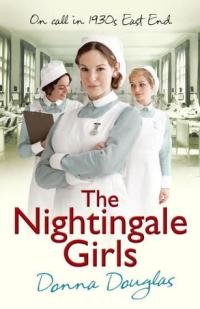
The Nightingale Girls The Nightingale Girls by Donna Douglas

The Nightingale Girls is set in the 1930s and follows the stories of three student nurses at one of London’s top teaching hospitals, the Nightingale.

Life is not easy for Dora Doyle, who comes from a poor, working class family from the East End of London. Dora sometimes feels out of place among the other, richer girls at the Nightingale and is struggling to find money to buy the books she needs, but she is determined to succeed, partly because she’s passionate about nursing but also because she’s desperate to get away from her abusive stepfather. The aristocratic Lady Amelia Benedict, known as Millie, is from a very different social background to Dora, with whom she shares a room. Millie wants to build a life for herself away from her luxurious home and glamorous friends, but as she is constantly finding herself in trouble and has already failed her preliminary training exams once, it’s going to be difficult to prove that she’s serious about her nursing. The third girl we meet is Helen Tremayne, a second year student. Her domineering mother is on the hospital’s board of trustees and her brother is a doctor, so expectations are high. Helen works hard, but has trouble making friends, especially as the other girls don’t trust her because of her mother.

At first it seems that Dora, Helen and Millie have nothing in common but as they get to know each other during their long, hard days at the Nightingale, a bond begins to form between the three of them. I didn’t feel I got to know Helen as well as the other two but I loved both Dora and Millie. Dora was completely inspirational and a perfect example of someone managing to fulfil her dreams through sheer determination and hard work. And the rebellious but warm-hearted Millie was so endearing. Through her story we see that money and possessions are not everything and that true happiness can come through doing something that we love. There are some great secondary characters too, including the spiteful and snobby but bitterly unhappy Lucy Lane, and the Doyles’ neighbour, Nick, who is desperately trying to make enough money to take his little brother to America. Dora’s grandmother, Nanna Winnie, was another favourite.

It was so interesting to see what was involved in being a trainee nurse in the 1930s. The book shows us the hardships of nursing, but there are also lots of moments of fun and humour, including one hilarious scene involving false teeth. As a historical novel, the setting of 1930s London is wonderful, whether we’re reading about the streets in the East End where the Doyle family live or an afternoon eating cakes and drinking tea at Lyons’ Corner House! The Nightingale Girls is the first in a series of novels about the Nightingale Hospital and I will look forward to reading the others.

Thanks to Random House for sending me a review copy of The Nightingale Girls
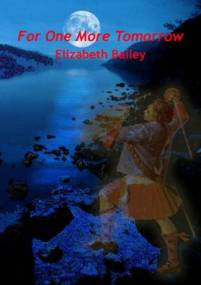
For One More Tomorrow For One More Tomorrow by Elizabeth Bailey

For One More Tomorrow, currently available as an ebook, tells the story of Sadie Grey, who is directing a production of Shakespeare’s play, Macbeth. Growing frustrated and disillusioned with some of the actors in the play and their inability to inject real passion into their roles, Sadie is stunned when she meets the ghost of Macbeth himself. Soon Mac, as Sadie calls him, seems to be invading her thoughts and taking over her life, and as her relationship with the ghost develops there are some surprises in store for both Sadie and the reader!

At first Sadie wonders whether Macbeth’s ghost has been produced from her own imagination – he looks and sounds exactly as she had pictured him in her mind, even wearing tartan like the characters in Sadie’s play despite the fact that she knows the real Macbeth would not have done so. And yet it seems that Mac does have an existence of his own outside of her imagination, and some sections of the story are seen from his point of view, as he roams the streets alone or watches rehearsals from the shadows at the side of the stage. Through his own thoughts and his conversations with Sadie, we see that he is not very pleased at the way the story of his life has been distorted by Shakespeare; he’s angry and hurt that his reputation has been damaged and history has been altered in the name of entertainment.

I haven’t read all of Shakespeare’s plays but I have read Macbeth more than once and it’s probably the play I’m most familiar with. I could sympathise with Sadie, who clearly has a real understanding and love of the play; she knows how she wants the actors and actresses to play their roles and it annoys her when they do not portray their characters as she wants to see them portrayed…especially Curtis, the man who is playing Macbeth. I did enjoy the parts of the book that deal with the rehearsals for the play and the problems Sadie encounters as director, but my favourite scenes were those in which Sadie is interacting with the ghost. For One More Tomorrow was an unusual and imaginative story and I’m sure the next time I read Macbeth I’ll remember Mac and how he felt about Shakespeare’s words.

Thanks to the author for sending me a review copy of this book
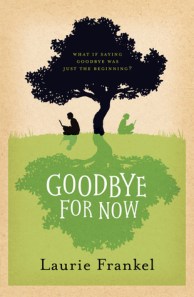
Goodbye for Now Goodbye for Now by Laurie Frankel

Sam Elling is a computer software engineer who works for an online dating company based in Seattle. Sam has created a new computer algorithm to help people find their perfect partner, but it proves to be too successful as people are meeting their soulmates too quickly and don’t need to use the dating agency anymore. As a result he loses his job but it’s not long before he comes up with another invention.

When Sam’s girlfriend Meredith loses her beloved grandmother, Livvie, she tells him she wishes she could speak to Livvie one more time. Wanting to help in any way he can, Sam creates a computer program based on the online presence Livvie has left behind, including emails, texts and videos. Meredith is shocked but overjoyed to discover that she can now continue to chat to Livvie and exchange emails just as she used to when her grandmother was alive. Soon Sam and Meredith decide to give other bereaved people the same opportunity to communicate with loved ones who are no longer with them, but they are not prepared for the number of moral issues they will have to face.

Different people have different ways of dealing with grief and what works for one person will not necessarily work for everyone. I can’t imagine ever wanting to use this type of technology myself and I tend to agree with the characters in the story who found the whole idea creepy and disturbing. However, I still thought it was fascinating to read about. There’s nothing paranormal involved and the software Sam invents sounds completely believable from a scientific point of view.

With death and grief forming such a big part of this book I had expected something very sad and emotional, but the story was actually not as moving as I had thought it might be. That could be because the main characters – Sam, Meredith, her cousin Dashiell and their clients – are all so ‘nice’ that I had difficulty believing in them as real people and didn’t manage to fully connect with them. What I did love about this novel was the number of thought-provoking questions it raises by showing us how the world reacts to Sam’s controversial new technology and telling the stories of the people who decide to use it.

Is chatting to a computer generated image of a friend or relative who has died really a good idea or is it better to let the grieving process take its natural course? Can social media actually be isolating rather than social? Are there things that our loved ones may have said or done online that we would be better off not knowing about? What about privacy? Nobody seemed to have any problems with allowing Sam to access their family member’s emails, blog, internet browsing history or Facebook and Twitter accounts, but I know I wouldn’t feel comfortable with that. Goodbye for Now may not have been a perfect novel but has left me musing on all of these questions and more.

Thanks to Headline for the review copy of Goodbye for Now
The Beacon by Susan Hill

The Beacon Until I read The Beacon last weekend, the only Susan Hill book I had read was one of her ghost stories, The Small Hand, which, for me, was probably not the best introduction to her work. I loved the atmosphere she created but I didn’t find it very original and was disappointed by it. The Beacon is a very different type of book. It’s not a ghost story – I would describe it as a family drama – but it’s still very dark and haunting and I enjoyed it much more than The Small Hand, so I wish I had started with this one instead.

The Beacon is the name of the Prime family’s farmhouse, located somewhere in the north of England. A dark, lonely path leads from the village up to The Beacon, high on a hill, and in stormy weather the house is battered by howling winds. May Prime, now fifty years old, has lived here for her entire life, apart from one year when she went away to university in London. May has never married and since her father’s death has been caring for her elderly mother, Bertha. When Bertha dies too, May is left alone to reflect on her own life and the lives of her brother, Colin, and sister, Berenice. There’s another brother too – his name is Frank – but May has not seen him for many years, since he betrayed his family and destroyed their childhood memories. Now that both of their parents are dead, will May and her siblings ever be able to forgive Frank for what he has done?

The Beacon is a short novella and can easily be read in an hour or two, but despite only being 160 pages long it’s a very powerful story. At first it appears to be just a simple tale of a farmer’s daughter, her family and friends and her experiences of university, but it soon becomes infused with a sense of mystery and suspense. From the beginning May gives us hints that her brother Frank has done something terrible – so bad that May and her other siblings don’t even want to tell him about their mother’s death – but we have to wait until halfway through the story before we find out exactly what it was that alienated him from the rest of the family. I wish I could tell you what he did, but the revelation is the pivotal point of the story and may not be as effective if you know what it is in advance!

As with The Small Hand, my favourite thing about this book was the atmosphere. It’s so bleak and unsettling, and there’s a real feeling of isolation, claustrophobia and loneliness. I thought the portrayal of May’s mental state and the terrors she experienced while trying to start a new life in London was particularly well done, as were her earlier memories of the joy she felt as a child learning to read and write. There’s less focus on the lives of Colin and Berenice, but Frank comes to the forefront of the story in the second half of the book and we learn more about his character and what may have caused him to behave the way he did.

Although The Beacon is one of those books where ‘nothing really happens’, I still found it surprisingly gripping. The ending is very ambiguous and made me question everything I had just read and wonder what was true and what wasn’t. It could be interpreted in several different ways and I was left with plenty to think about even after finishing the final sentence.

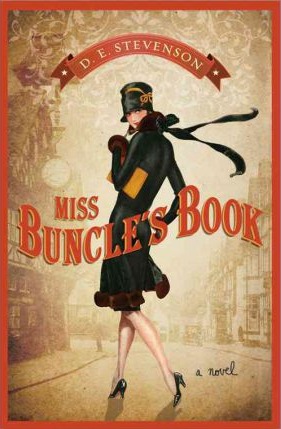
Miss Buncle’s Book by D.E. Stevenson

When Barbara Buncle finds herself short of money she dismisses the idea of keeping hens and decides to write a book instead. Not having much imagination she finds she can only write about people and places that she knows. Drawing her inspiration from her friends and neighbours in the village of Silverstream, she writes her first novel and has it published under the pseudonym of John Smith. When Disturber of the Peace turns out to be much more successful than Miss Buncle could ever have dreamed, it’s inevitable that the residents of Silverstream will eventually read it and recognise themselves within its pages. But how will they feel about the way they are represented in the book and what will happen if they discover who John Smith really is?

Delightful, charming, warm, cosy – those are the type of words I would use to describe Miss Buncle’s Book. Written in the 1930s, D.E. Stevenson captures perfectly the atmosphere of life in a small English village at that time – a place where everybody knows everybody else, where freshly baked breakfast rolls are delivered to the villagers every morning, where people meet for tea parties or musical evenings and gossip with the neighbours over the garden fence. The book is filled with a variety of interesting characters, all with their own quirks and eccentricities. Some of the most memorable include the formidable Mrs Featherstone Hogg, who is enraged by the unflattering way she is depicted in Miss Buncle’s book and leads the campaign against John Smith; Mr Hathaway the vicar and the scheming Vivian Greensleeves who has her eyes on his money; and the retired and lonely Colonel Weatherhead who faces a yearly battle with the Bishop.

Most of the inhabitants of Silverstream make an appearance in Disturber of the Peace and although Barbara Buncle takes the precaution of changing their names (Weatherhead becomes Waterfoot, for example, Miss King and Miss Pretty are renamed Miss Earle and Miss Darling, and Mr Fortnum becomes Mr Mason), she describes their personalities so accurately it’s not surprising that they were able to work out who the book was about! It was fun to see how they each reacted to discovering themselves in Miss Buncle’s story and having all their flaws exposed to the world.

I sent a copy of Miss Buncle’s Book to another blogger as a Secret Santa gift a couple of years ago because I thought it sounded wonderful, and when I saw that it was available through Netgalley I couldn’t wait to finally read it for myself. But although I did like it, I didn’t love it as much as I had hoped I would and as much as most other readers seem to have done. It was an enjoyable, relaxing read with lots of gentle humour and old-fashioned charm, but it lacked that special spark that would have lifted it from being a very good book to a great one. For me, this is a book that sounded better than it actually was, though I would still recommend it as a great way to escape from the stress of life for a while!

I received a review copy from Sourcebooks via Netgalley