Two from Mary Stewart: Rose Cottage and Touch Not the Cat

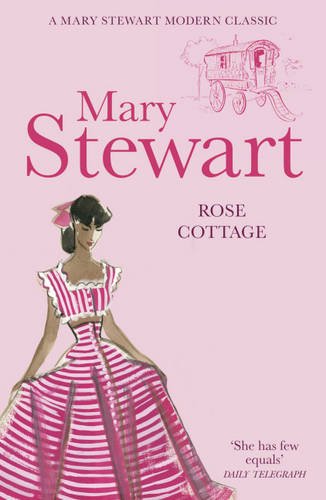
After reading the wonderful Nine Coaches Waiting last month, I was desperate to read more Mary Stewart novels. The one I picked up next, Rose Cottage, probably wasn’t the best choice to follow up such a great book as Nine Coaches Waiting, but I was limited by what was available in my library at the time.

Rose Cottage is set in 1947 at Todhall, a large estate in the north east of England, and is narrated by Kate Herrick. Kate grew up in a cottage on the estate and was raised by her grandmother, a servant working for Todhall’s owners, the Brandons. The end of World War II has brought many changes: Todhall is being converted into a hotel and Kate’s grandmother has moved to Scotland with the Brandon family, leaving Rose Cottage unoccupied. Kate, who has been left a widow following the war, agrees to spend a few days at the cottage, going through some private papers that her grandmother had left behind. When she arrives there, however, she discovers that someone else has been there before her – and as she begins to investigate, she starts to uncover some surprising secrets about her own past.

If I had to describe Rose Cottage in one word, I think that word would be ‘pleasant’. The setting is certainly very pleasant, with some lovely, vivid descriptions of the countryside, with birds singing in the trees and flowers blooming in the meadows. The characters are pleasant too. It would be difficult not to love Kate and in fact, almost all of the characters are very easy to like – there are no villains in this book. Sometimes, though, ‘pleasant’ isn’t enough for me. I did find Rose Cottage quite enjoyable but there was nothing very special or memorable about it. The plot was a simple one, and although there was just enough suspense to keep me interested until the end, it wasn’t hard to predict what was going to happen. If this had been my first experience of Mary Stewart I probably wouldn’t have wanted to read any more of her books, so if you’re new to her work I think it might be best to leave this one until you’ve read some of her other novels first.
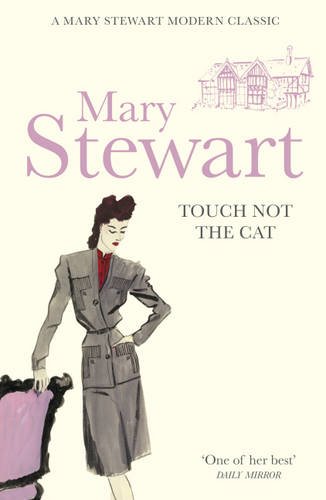
Since finishing Rose Cottage a couple of weeks ago I have now read a third Mary Stewart book, Touch Not the Cat, which was more to my taste and, in my opinion, a much better book. This story is set on another country estate in England – Ashley Court, complete with a moat and a maze. When Bryony Ashley’s father is involved in a fatal road accident in Bavaria, he lives long enough to leave her a cryptic message, warning her that she could be in danger. After his death Bryony returns to Ashley Court where she begins to investigate the meaning of his dying words. However, she also has another mystery to solve – for as long as she can remember, Bryony has had a secret ‘lover’ who she communicates with using telepathy. Her lover has never identified himself, but she suspects it must be one of her three cousins, Emory, James or Francis. Will she ever discover his true identity?

I really enjoyed this book. After a slow start the pace soon picked up and the story had the page turning qualities that Rose Cottage lacked. As the various threads of the story came together and secrets were revealed, things started to get quite exciting. The telepathy aspect of the story gave it a touch of the supernatural, but this was never overused and as a result it didn’t feel unbelievable. And it wasn’t immediately obvious to me who Bryony’s mysterious lover would be, so I was kept guessing for a while. I also liked the Romeo and Juliet references at the beginning of each chapter, which gave a hint as to what was going to happen in the pages that followed.

So, Rose Cottage and Touch Not the Cat – two books by the same author and two very different reading experiences for me!
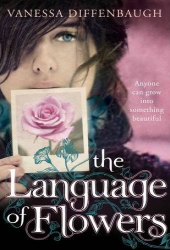
The Language of Flowers by Vanessa Diffenbaugh

Victoria Jones has spent the first eighteen years of her life being moved from one foster home and care home to another. On her eighteenth birthday she is released from the care system and sent out into the world with no qualifications and no skills other than her knowledge of flowers and what they mean. When Victoria is offered a job as a florist’s assistant she finally has a chance to turn her life around, but first she needs to confront a secret from her past.

Interspersed with this storyline, we are given flashbacks to an earlier period in Victoria’s life, when she was nine years old and living with one of her foster parents, Elizabeth. There are hints that something traumatic happened during this time, but we don’t find out what it was until near the end of the book. I liked the way the story was told in short, alternating chapters, divided almost equally between Victoria’s present and her past because structuring the novel in this way meant we could slowly piece together a vivid picture of Victoria and the moments that shaped her life. It also helped sustain some suspense and mystery throughout the book, making us wonder exactly what happened while Victoria was living with Elizabeth.

I did enjoy The Language of Flowers, but I think I would have enjoyed it a lot more if Victoria had been a character I had liked or could relate to in any way. I can appreciate that the author was trying to show the effects of a troubled childhood on a person’s emotions and social interactions, and I did sympathise with Victoria – I could see why she was so insecure and why she was afraid to get too close to anyone. I don’t really know anything about the US foster care system (or fostering in general) and while I’m sure the majority of foster parents genuinely want to give the child in their care a loving home, it’s sad to think there might really be children like Victoria who have had some bad experiences. So I could understand why Victoria behaved the way she did, but she continued to frustrate me throughout the entire book and I never quite managed to connect with her at all.

On a more positive note, I did love the ‘language of flowers’ aspect of the book. I really like the idea of people secretly communicating using flowers. I thought the ways in which Vanessa Diffenbaugh incorporated the flower meanings into the novel were cleverly done and as I have absolutely no knowledge of the subject myself, I appreciated the inclusion of Victoria’s Flower Dictionary at the back of the book!

For me, then, I think The Language of Flowers was a book where I liked the concept of the story better than the story itself. Don’t let me put you off reading it though, because I know not all readers will have the problem I had with Victoria – and apart from that, this was not a bad book at all.

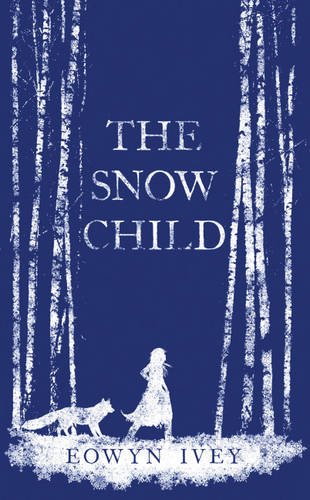
The Snow Child by Eowyn Ivey

Eowyn Ivey’s first novel, The Snow Child, is set in 1920s Alaska, where Mabel and her husband Jack are planning to start a new life. Mabel is still grieving for her still-born child and sees the move to Alaska as a chance to come to terms with the fact that she’s never going to be a mother. But things are proving to be a lot harder than she expected – clearing the land for farming is too much work for Jack, food is becoming scarce, and Mabel is beginning to feel lonely and desperate.

When the first snow of the winter arrives, Mabel and Jack decide to build a child from snow. By morning the snow child has gone and Jack catches a glimpse of a little girl running through the trees. But as Faina slowly becomes a part of Jack and Mabel’s lives, they begin to wonder: is she a real child or has she been created from two people’s hope and love?

If this story sounds familiar, that’s because it’s inspired by an old Russian fairy tale, Snegurochka, or The Snow Maiden. The story has been retold many times over the years but this book takes a fresh approach by combining the feel of a timeless fairy tale with the harsh realities of life as a homesteader in early 20th century Alaska.

The novel has a very small number of characters, which is to be expected considering that the area of Alaska in which Mabel and Jack lived was very sparsely populated. Something I thought the author managed to convey very well was the complete isolation Jack and Mabel experienced during their early days in Alaska and the many dangers they faced, including starvation, ‘cabin fever’, and the risks of injury or sickness in a place where even the closest town is too small to have a doctor.

Among the few other people we do meet are a neighbouring family, George and Esther Benson and their three sons. I particularly loved the character of Esther: a woman who knew what had to be done to survive in the wilderness and was prepared to do it. And as for Faina herself, I thought she was a fascinating character, mysterious and otherworldly but with a charm and vulnerability that made it easy to understand why a lonely middle-aged couple would welcome her into their lives.

But my favourite thing about The Snow Child is the stunning setting Eowyn Ivey has chosen for her story. Her knowledge and love of Alaska comes through in the beautifully written descriptions of the snowy landscapes, complete with frozen rivers, swirling snowflakes and icy mountain ridges. It’s all very atmospheric and the perfect backdrop for such an enchanting and magical story.

The Snow Child will be published in February 2012 and I can promise you it’s worth waiting for. It really is a lovely story and a very impressive debut novel from Eowyn Ivey.

Thanks to Headline for sending me a review copy of this book.

The Land of Green Ginger by Winifred Holtby

The Land of Green Ginger is the second Winifred Holtby book I’ve read, the first being South Riding, which I read (and loved) in February. This one was published a few years earlier than South Riding, in 1927.

It’s the story of a missionary’s daughter, Joanna Burton, who is born in South Africa but raised in England by her aunts. As a young woman, Joanna is a lively, high-spirited person who dreams of travelling and visiting faraway lands. Then during the First World War she falls in love with Teddy Leigh, a young man on his way to fight in the trenches in France, and they get married.

When Teddy returns from the war to their home in Yorkshire, he is in poor health and Joanna finds herself caring for an invalid husband, managing a farm, and trying to look after their two small children, Patricia and Pamela. Life is hard for Joanna and the only person she can rely on for help is their Hungarian lodger, Paul Szermai. But Joanna has never been popular with the neighbours and when people begin to gossip about her relationship with Szermai, things become even more challenging for the Leigh family.

There are some interesting subplots too, including the tale Paul Szermai shares with Joanna of his life in Hungary and other parts of Europe and how it was affected by war and communism. We also see the attitudes of the local people to the group of immigrant workers who have been employed in Joanna’s village and for whom Szermai is acting as interpreter. Holtby does a good job of portraying a small rural community who are suspicious of outsiders and of anything that might change their way of life.

Although I found Paul Szermai and Teddy Leigh difficult to like, Holtby still managed to make me feel some sympathy for all of her main characters: Szermai, because of his tragic history; Teddy, frustrated by the sickness that is keeping him confined to his bed; and of course, Joanna who has had to abandon all her earlier dreams and ambitions, yet still shows a lot of naivety and innocence. Joanna seems to be unaware of how she is perceived by other people and as a result she never quite manages to fit into life in a small village where everybody knows everybody else’s business.

So The Land of Green Ginger is a dark and emotional book, but the ending leaves us feeling more hopeful. It doesn’t have the same depth and scope as South Riding, but I really like Winifred Holtby’s writing and this is still a compelling story. And finally, I want to mention how much I love the covers of the new Virago editions of Holtby’s books!

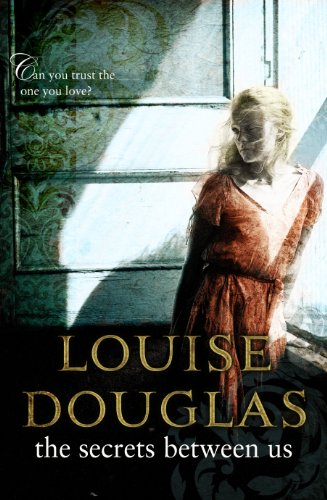
The Secrets Between Us by Louise Douglas

Suffering from the trauma of a stillborn baby and the end of her relationship with her boyfriend, Sarah agrees to accompany her sister and brother-in-law to Sicily for a holiday. Here she meets Alexander and his six-year-old son, Jamie, who are having problems of their own: Alexander’s wife, Genevieve, has left him and disappeared without trace. When Alex offers Sarah a job as housekeeper at his home in England, she agrees. Despite her family’s concerns, Sarah thinks it’s the right decision: she’s attracted to Alex, adores his little boy, and is desperate to make a fresh start and move on with her life.

But after joining Alex and Jamie at Avalon, their home in the village of Burrington Stoke in Somerset, Sarah begins to wonder exactly what happened to Genevieve. The missing woman’s family are convinced Alex knows more about the disappearance than he’s admitting to, but Sarah knows that can’t be true…or can it?

The Secrets Between Us was my final choice for the Transworld Book Group. Louise Douglas is not an author I’ve ever read before, so I didn’t know what to expect from this book, but I was immediately drawn to it when I saw that it had been compared to Rebecca by Daphne du Maurier, one of my favourite books. And there are definitely some similarities. Genevieve, like Rebecca, is described as beautiful, popular, talented and loved by everyone who knew her – and although she’s not there physically, she’s still a very strong presence and always at the heart of the story. The two books also share a gothic atmosphere and a sense of uneasiness and foreboding.

But this is also an excellent book in its own right. The author expertly keeps us guessing right to the end by adding some unexpected plot twists and ensuring that we can never be quite certain whether Alexander can be trusted or not. It’s also possible that Sarah, as the narrator, may not always be completely reliable. Some very strange and spooky things happen at Avalon and we are made to wonder whether they have supernatural causes or whether Sarah’s emotional state is making her see things that aren’t really there.

I did find it hard to believe that Sarah would agree to move in with a man she’d only met on a couple of brief occasions in Sicily, but at least this meant we were thrown into the action almost immediately, with only a short build-up. And Sarah is a narrator who is easy to like and to have sympathy for. I could really feel her fear and confusion as more and more facts about Genevieve were revealed, and her sense of growing isolation as the people of Burrington Stoke turned against her, believing that she and Alexander were trying to cover up the truth about Genevieve’s disappearance.

The Secrets Between Us is an excellent psychological thriller, with just the right amount of tension and suspense. Although Louise Douglas’ previous novels sound very different to this one, I really liked her writing and would be happy to try her other books at some point too.

I received a copy of this book from Transworld for review.

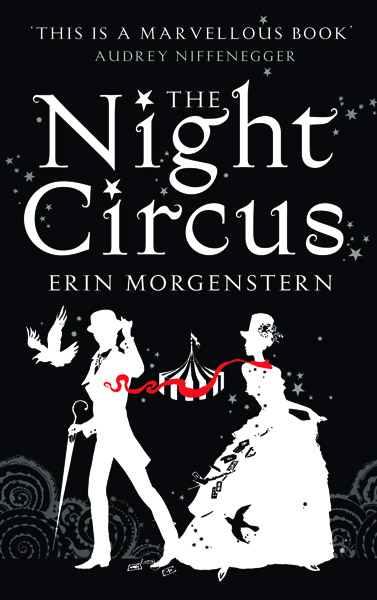
The Night Circus by Erin Morgenstern

I don’t usually pay much attention to hype, but I found I couldn’t ignore The Night Circus any longer. Judging by the number of glowing reviews this book has attracted, it has lived up to the hype for most people, but for me, although I did like it – loved it at times – I wasn’t quite as swept away by it as I had hoped to be. I’ll start by telling you what I loved about it and will then try to explain why not everything worked for me.

The Night Circus tells the story of Celia and Marco, two young magicians who have been selected by their mentors to take part in a very special contest. The rules of the competition are shrouded in mystery and even the two illusionists themselves aren’t sure what they have to do to win. And the venue for this magical battle? Le Cirque des Rêves, or the Circus of Dreams, one of the strongest, most vivid fictional worlds I’ve ever come across in a novel.

“The circus arrives without warning”, as we are told in the opening line of the novel. As it moves from town to town, it appears overnight and is “simply there, when yesterday it was not”. It really sounds amazing, more like a theme park than a traditional circus, and all the descriptions made me feel sorry that it doesn’t really exist! I know I’m not the only person who will have read this book wishing that they could visit the circus too and spend the night wandering from tent to tent, marvelling at all the spectacular attractions and performances. The setting is complemented with an authentic circus atmosphere complete with the smells of bonfire smoke and caramel, the taste of mulled cider, and a special black and white colour scheme. So much thought has gone into making the setting come to life, right down to the tiniest detail. What a great imagination Erin Morgenstern must have!

As it grows in popularity, the circus attracts a large group of followers who form a kind of fan club, calling themselves ‘rêveurs’. As we read the book we are encouraged to become rêveurs ourselves via a number of special chapters written in the second person, designed to make the reader feel they are actually there, inside the circus. I thought this aspect of the book was very effective and possibly the best use of second person narrative I’ve seen.

For me though, this book was all about the tone, the atmosphere and the descriptions of the circus, and there wasn’t much else beyond that. Outside the world of the circus there was no sense of time or place: the book is set in the late 19th and early 20th centuries, but it didn’t feel that way to me and I didn’t really notice anything to set the book in its time period. Maybe it was kept deliberately timeless – I don’t know, but I thought this was slightly disappointing as I do love a Victorian/turn of the century setting. The story develops slowly (sometimes too slowly for me), keeping the reader wondering about the true nature of the contest and what the outcome will be, but when I reached the end of the book I still wasn’t completely sure exactly what the point of the contest had been. Too many of my questions were left unanswered.

The biggest problem I had with this book, though, was the characters. When I think about my favourite books, the ones that I really loved and have kept on my shelves to read over and over again, they are the ones with strong characters, characters I can form an emotional connection with, who I can care about and understand. And that’s why, although I did like The Night Circus, I couldn’t love it. I didn’t think there was enough depth to the characters and even Celia and Marco never felt like real, fully developed people to me. Rather than being able to get inside their heads I felt I was watching them from a distance, though maybe the fact that most of the book was written in the third person present tense contributed to this. I did still enjoy this book and loved that wonderful circus setting, but if only the characters had been stronger it might have been one of my books of the year.

The Loving Spirit by Daphne du Maurier

If you’ve been following my blog for a while you’ll know that Daphne du Maurier is one of my favourite authors, so when I saw that Simon of Savidge Reads and Polly of Novel Insights were hosting a Discovering Daphne event throughout October I knew I’d have to read at least one du Maurier book this month. There are still plenty of her books that I haven’t read yet, but I decided I wanted to go back to the start of her career and read her first novel from 1931, The Loving Spirit.

The Loving Spirit is a family saga spanning four generations of the Coombe family. It begins in 1830 with the story of Janet Coombe, a passionate young woman who is forced to abandon her dreams of going to sea when she marries and settles down to start a family with her husband, a boat builder. We then move forward through the decades, ending one hundred years later in the 1930s. Along the way we meet Janet’s son, Joseph, her grandson, Christopher, and finally her great-granddaughter, Jennifer. The book is divided into four parts, one devoted to each of the main characters, but I won’t go into any plot details here as each story has its own set of dramas and surprises which I’ll leave you to discover for yourself.

Although this is a family story and doesn’t have the gothic feel of some of du Maurier’s other books, there are hints of the supernatural in the way the stories of the four Coombes are connected, particularly Janet’s and Joseph’s. The link between the four sections of the novel is the ‘loving spirit’ of Janet Coombe which seems to be watching over each successive generation. And this is probably a good place to mention the Emily Brontë poem, Self-Interrogation, which inspired the title of this novel:

“Alas! The countless links are strong
That bind us to our clay;
The loving spirit lingers long,
And would not pass away!”

Du Maurier had a real talent for giving her novels atmosphere and a strong sense of place, and this book is no exception. The Coombe family live in Plyn, a fictional shipbuilding town on the coast of Cornwall, and you can expect some beautiful, vivid descriptions of the Cornish coastline, the sea and Plyn itself. I’m really not a fan of books about boats and sailing, but luckily the actual seafaring action and terminology is kept to a minimum here. Instead, the focus is on the passion Janet, Joseph and other members of the Coombe family feel for the sea – and the ways in which sailing and the shipping industry become an intrinsic part of their lives.

There are some interesting supporting characters too, including one of my favourites, Jennifer’s grandmother. Du Maurier’s wonderful sense of humour comes through here in some of the dialogue in which the grandmother, who is starting to lose her hearing, constantly misinterprets what Jennifer is saying. For this reason, and also because Jennifer was the character who felt the most real to me, this final section of the novel was probably my favourite.

The Loving Spirit is not one of the better du Maurier novels I’ve read, but as a debut novel published when she was only twenty-four years old I did still find it quite impressive. It’s interesting to be able to compare it with her later novels and see how her writing developed throughout her career.