The Secret Lives of Baba Segi’s Wives by Lola Shoneyin

Baba Segi is a Nigerian businessman with four wives: Iya Segi, Iya Tope, Iya Femi and Bolanle (each named after their first born child, apart from Bolanle who has not had children). Bolanle is Baba Segi’s newest wife and the only one who is a university graduate. Baba Segi is very proud that a woman with a degree has chosen to join his household, but he is growing concerned about the fact that she has not yet conceived a child – after all, he has already had seven children with his other wives, so what is the problem with Bolanle?

This novel by Lola Shoneyin shows us what it is like to be part of a polygamous marriage and how Baba Segi’s wives feel about it. There are chapters narrated by all four wives and also Baba Segi himself, giving us a range of different perspectives and insights. These alternating narratives allow us to explore the complex relationships between the four women and their husband. As the title suggests, the wives all have secrets in their pasts and not everything is quite as it seems on the surface.

The position of each wife within the family, as well as her personal background, seems to determine the way she reacts to the arrival of Bolanle. The first and third wives, Iya Segi and Iya Femi, are very cruel and hostile towards her, but through their own narratives we gradually learn more about them and why they behave the way they do. They are suspicious of her education; they are jealous because with each new wife the amount of time they can spend with Baba Segi is decreased – and of course, with each new addition to the family, there’s a greater chance of their secrets being discovered.

I found it confusing that we weren’t always told who was narrating each chapter. If the characters had all been given distinct voices of their own I would have had no difficulty working out who was speaking, but they just weren’t distinctive enough for me – I thought Iya Segi and Iya Femi in particular sounded very similar. Sometimes I was halfway through a chapter before it became obvious who the narrator was. I can see why the author decided to write from different perspectives, but something as simple as stating the narrator’s name at the start of each chapter would have avoided any confusion.

Although it deals with some serious subjects, The Secret Lives of Baba Segi’s Wives is written in a very light, humorous style and I’m sure this book would be enjoyed by a wide range of readers. And yet, while I did find it an interesting and entertaining read, I think I would prefer to read a more serious novel on this topic. This was a good book rather than a great one, I think – or maybe I was just in the wrong mood for it.
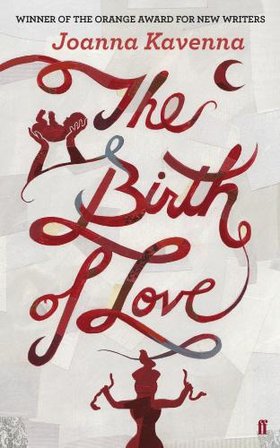
The Birth of Love by Joanna Kavenna

The Birth of Love is a book about childbirth and motherhood. Before I go any further I should point out that I am not a mother myself and was uncertain as to whether or not I should read this book. But after seeing some positive reviews by other readers, not all of them mothers, I decided to give it a try.

The novel consists of four separate storylines, one set in the past, two in the present day, and one in the future, covering a wide range of different aspects of pregnancy and childbirth. At first there doesn’t appear to be much of a connection between the four, but eventually the links become clear.

We begin in 19th century Vienna, where Ignaz Semmelweis has been forced into an asylum. He is convinced that, as a doctor, he is responsible for the murder of hundreds of mothers and is tortured by nightmares and visions of blood and death. In 2009, we meet Michael Stone, an author who has written a book about Semmelweis. And also in 2009, Brigid Hayes is pregnant with her second child and planning a home birth. The final thread of the story takes place in the year 2153 and is in the form of an interview with a prisoner known only as Prisoner 730004. A woman has given birth, something which is no longer allowed, and her friends have been arrested and questioned.

This all sounded very interesting, so I’m sorry to have to say that this book wasn’t really a success with me at all! I found it very difficult to connect with any of the characters, though I suspect that if I had given birth myself I would have felt more empathy with Brigid. But I don’t think that was the only problem. I expected to at least be interested in the historical sections but I struggled with those too. I didn’t want to give up on the book though, because I wanted to find out how the four stories were related and how the author would bring them all together at the end.

I did enjoy the futuristic storyline at first, with its vision of a dystopian future where strict birth control regulations have been introduced to deal with overpopulation, where even the use of words like “mother” and “child” have been banned. If that could be considered a believable picture of the world 150 years into the future, then it’s very frightening to think about. After a while, though, I started to get bored with the interview format and repetitive questions and answers, which was disappointing because these parts of the book could potentially have been my favourites.

On a more positive note, I did like Joanna Kavenna’s writing and I was impressed by the way she created a different style and atmosphere for each section of the book, appropriate to the time period in which it was set. I would be happy to try other books by Kavenna, but this one just wasn’t right for me.

The Swimmer by Roma Tearne

The Swimmer is a beautifully written novel by Roma Tearne set in the small English town of Orford in Suffolk. It’s the story of Ria, a forty-three-year-old poet, and Ben, a young refugee from Sri Lanka.

Ria is a single woman who lives alone in Eel House, a cottage which once belonged to her uncle. She’s quite happy to be there on her own; if she needs company there’s Eric, an older man from the neighbouring farm, and her brother and his family visit occasionally too – although these visits aren’t entirely welcome. Sometimes, though, life can be lonely for Ria. After a few failed relationships in the past she’s almost given up hope of finding someone to love…until she discovers Ben swimming in the river behind her house.

Ben, a Tamil refugee, left Sri Lanka to escape from the violence there. His asylum application has not yet been processed and so he’s living and working in Britain as an illegal immigrant. Although he’s eighteen years younger than Ria and from an entirely different background, the two begin to fall in love.

I really liked the first section of this book and enjoyed watching Ria and Ben’s relationship slowly develop. I thought the rest of the novel would continue in the same way, but then something happened which I wasn’t prepared for. The plot started to go in another direction, there was a new narrator to get used to, and I felt as if I was reading a completely different book to the one I had been expecting. This wasn’t necessarily a bad thing, though; the second part of the book was interesting, moving and relevant and the narrator was a more passionate person than Ria.

The third, and shortest, section of the book also switches narrator and again took me by surprise. Although I found the third narrator difficult to like, I thought seeing things from this person’s point of view helped to pull the story together and set up a perfect ending to the book.

I was impressed by Roma Tearne’s wonderfully descriptive writing and the way she portrayed the hot summer days in Orford and the Suffolk landscape with its marshlands and rivers. I particularly liked the references to the eels in the rivers which migrate from the Sargasso Sea (‘swimmers’, like Ben). But at times there was too much description, too much detail, which made the story move at a very slow pace.

I was pleased to find that I enjoyed this book because before I started it I wasn’t sure if it would be for me. I can imagine that if you’ve read a lot of other novels about immigration and refugees you might find this book unoriginal and contrived, but I haven’t read much fiction on this subject so The Swimmer did leave me with a few things to think about.

The Obscure Logic of the Heart by Priya Basil

The Obscure Logic of the Heart is the story of Anil Mayur and Lina Merali who meet as students and fall in love. The problem is, Anil’s family are Sikhs and Lina’s are Muslims. It seems that almost everyone disapproves of their relationship: Anil’s parents are prepared to support their son but make it clear they’re not happy, Lina’s parents refuse to even consider allowing her to marry a non-Muslim, and Anil’s best friend Merc also has his own reasons for trying to split them up. And when Lina, who is beginning a career in the UN, starts to suspect that Anil’s father may be involved in illegal arms trading, she faces a battle not just with her parents but with her conscience too.

Interspersed with the main storyline are letters written by a woman to a man during the 1960s. At first this was confusing and I had no idea who or what I was reading about. Eventually, though, everything became clear and when I went back to re-read the letters again they made much more sense.

It took me a while to really get into this book, but as the author threw more and more obstacles into the way of Lina and Anil’s love, I became desperate to see how things would work out for them and whether they could overcome all their differences. Lina’s indecisiveness irritated me at times, but I could understand the difficulties and conflicting emotions she faced in trying to please both Anil and her parents. I thought Priya Basil did an excellent job of showing us the situation from a number of different perspectives so that at various points of the book we could sympathise in turn with Lina, Anil and both sets of parents. I particularly liked the parts told from the viewpoint of Shareef and Iman Merali, which helped me see why they were so reluctant to approve of their daughter’s relationship with Anil.

The variety of settings in which Priya Basil sets her story is another interesting aspect of the book. Anil’s family live in Nairobi, the capital of Kenya, Lina’s family are from Birmingham in England, and there are other chapters set in London, New York and various parts of Sudan. I also found Lina’s work for the UN fascinating to read about. It gave the author a chance to incorporate lots of different political and human rights issues into the novel, including the illegal arms trade, the corruption of governments, guns and violence, poverty in Africa, and how people viewed Islam following the 9/11 attacks. There’s such a lot going on in this book; it’s much more than just a simple love story.

This is my second book for the Transworld Book Group reading challenge. It’s also the first book I’ve read by Priya Basil and I’m pleased to be able to say that I enjoyed my first experience of her work.

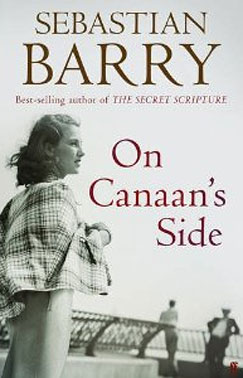
On Canaan’s Side by Sebastian Barry

“Bill is gone. What is the sound of an eighty-nine-year-old heart breaking? It might not be much more than silence, and certainly a small slight sound.”

When this year’s Man Booker Prize longlist was announced at the end of July, one of the titles that I was most looking forward to reading was this one, On Canaan’s Side. I read The Secret Scripture last year and fell in love with Sebastian Barry’s beautiful, poetic writing style. There are some similarities between The Secret Scripture and On Canaan’s Side, the most obvious one being the idea of an old woman looking back on her life, but the stories are different enough to make this book a good read too.

On Canaan’s Side is narrated by Lilly, a retired cook. At the beginning of the book she is eighty-nine years old and has just lost her beloved grandson, Bill, who has committed suicide after returning from fighting in the Gulf War. As Lilly mourns for her grandson, she begins to remember all the things that have happened in her life and over the next seventeen days she shares her memories with us.

Canaan, in the Bible, is the ‘promised land’ and the title On Canaan’s Side represents the idea that many Irish people had that America was a place where they would be safe and happy. Lilly’s story begins during her childhood in Ireland as the daughter of the superintendent of the Dublin police. She is forced to run away to America when both she and her boyfriend, Tadg Bere, find themselves the target of an IRA death sentence. However, Lilly soon discovers that even there, on ‘Canaan’s Side’, she and Tadg are still in danger. The following decades are filled with tragedy and sorrow. Lilly’s story is unbearably sad and yet her voice never becomes self-pitying; she stays a strong and resilient character until the day when her ‘eighty-nine year-old heart’ finally breaks.

At first I thought I wasn’t going to enjoy this book because the first chapter was very ‘stream-of-consciousness’ and it seemed as if it was going to be one of those novels where nothing really happens. But when I got further into the book and the story began to take shape I didn’t want to stop reading. I mentioned at the start of this post how beautifully written The Secret Scripture was and I thought Sebastian Barry’s writing was possibly even more beautiful in this book. I usually prefer books with more plot but the way Barry uses language and imagery is so stunning and mesmerising, the slow pace of the story didn’t bother me.

And it’s really not true that nothing happens: there’s murder, rape and suicide, for a start. Other themes include war (both World Wars, Vietnam and the Gulf War) and how it’s possible to survive a war physically but not mentally; identity and how sometimes we can live with people for years without really knowing who they are; important events in Irish and American history; racial tensions; love and loss.

I loved this book and although it was slow to begin with, I was soon swept away by the quality of Barry’s writing and the atmosphere his words convey. I haven’t read his previous books Annie Dunne and A Long, Long Way but as they are about Lilly’s sister and brother I really should read them soon.

Princes in the Land by Joanna Cannan

This is one Persephone book I had never heard anything about, so I picked it up and started reading without having any idea what to expect. I didn’t know who Joanna Cannan was until I read the biographical information on the cover and saw that she was the mother of Christine, Josephine and Diana Pullein-Thompson, three authors who were famous for their horse and pony stories. I remember reading some of the Pullein-Thompsons’ books as a child, so this made me more curious about reading Princes in the Land.

This novel has very little plot but like most Persephone books it raises a lot of interesting issues including marriage, parent/child relationships and class differences. The book itself is well-written and I liked the setting and the time period, but unfortunately this is the first Persephone I’ve read that I didn’t enjoy much at all.

Princes in the Land, published in 1938, is the story of Patricia Crispin and her experiences of being a wife and mother. We first meet Patricia as a child, shortly after her father has been killed in the Boer War. Patricia and her sister Angela are being taken by their mother to live with their grandfather, Lord Waveney, at his mansion in the countryside. While Angela is the quieter and better behaved of the two girls, Lord Waveney takes a special liking to the red-haired, freckled Patricia, who is more courageous and shares his love of horses.

Several years pass and Patricia marries Hugh Lindsay, a student from a poor background, much to the disgust of her mother who wanted Patricia to marry someone of her own class. Patricia and Hugh have three children, August, Giles and Nicola – and as they grow older they begin to disappoint Patricia as much as she had disappointed her own mother.

The biggest problem I had with this book was the characters. I don’t always need to like the characters to be able to enjoy a book, but in this case I think it would have made a big difference if there had been just one person I had been able to identify with and care about. Patricia and her mother both seemed to be complete snobs. Patricia’s attitude towards her daughter-in-law, Gwen, is particularly nasty and based purely on the fact that she thinks Gwen’s family are ‘common’. I don’t mind reading about snobbish characters if they are written with a touch of humour or satire, as in Jane Austen novels for example, but that wasn’t the case here. Patricia seems to think her attitude is perfectly acceptable and I felt that we, as the readers, were expected to agree with her.

The portrayals of marriage and parenthood were very cynical. The sad thing is that I really liked Patricia when she was a child at the very beginning of the book but as the years went by she changed into a person even she herself didn’t appear to be comfortable with. It’s tragic that despite devoting her life to her children, they barely seemed to know or understand each other at all. None of them really did anything bad and were children who Patricia could have been proud of, but because they failed to meet her expectations she ended up feeling disappointed in them and dissatisfied with her own life.

I’m sure a lot of people would enjoy reading Princes in the Land much more than I did, so please don’t let me put you off reading it. It was an interesting book, worthy of being a Persephone title and I can’t fault the writing either, but the amount of snobbery and class-obsession was just too much for me.

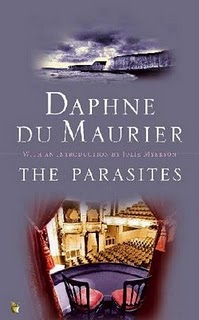
The Parasites by Daphne du Maurier

After reading the first few chapters of Daphne du Maurier’s The Parasites I had a feeling I wasn’t going to enjoy this book. I was finding the story very difficult to get into and I didn’t like any of the characters. But because Du Maurier is one of my favourite authors I decided I didn’t want to give up on the book just yet…and guess what? I ended up loving it! I should have known Daphne wouldn’t let me down.

The Parasites is a study into the lives of the Delaney family: Mama, a famous dancer, and Pappy, a successful singer, and their three children, Maria, Niall and Celia. The story begins one day in the 1940s when Niall and Celia, now adults, are spending the weekend at the home of Maria and her husband, Charles. It’s Charles, losing his temper with them, who refers to the three siblings as ‘parasites’…

“You always have been and you always will be. Nothing can change you. You are doubly, triply parasitic; first, because you’ve traded ever since childhood on that seed of talent you had the luck to inherit from your fantastic forebears; secondly, because you’ve none of you done a stroke of ordinary honest work in your lives, but batten upon us, the fool public who allow you to exist; and thirdly, because you prey upon each other, the three of you, living in a world of fantasy which you have created for yourselves and which bears no relation to anything in heaven or on earth.”

He then leaves the house in a rage, and Maria, Niall and Celia are left alone to wonder what his words meant and if it’s true that they really are ‘parasites’. Through a series of flashbacks and memories, the Delaneys spend the rest of the novel looking back at their childhoods and the things that turned them into the adults they are today.

One of the striking things about this book was the lack of one distinct narrator. Sometimes the three siblings seem to be narrating together, all speaking with one single voice, which was very unusual. It’s difficult to explain, but if you read the book you’ll see what I mean! As I read, I couldn’t help thinking that Maria, Niall and Celia must represent three different sides to Daphne du Maurier’s own personality; she writes so convincingly about all three characters and really gets inside their heads. And of course, her own father was the actor Gerald du Maurier and her mother the actress Muriel Beaumont, so she would have known what it was like to be the child of famous parents and could bring some of her personal experiences into this novel.

Maria, who becomes a famous actress, and Niall, who finds success as a songwriter, are stepbrother and stepsister and have a very strong bond. In her introduction to the book, Julie Myerson compares Maria and Niall with Cathy and Heathcliff from Wuthering Heights. I don’t think this would have occurred to me, but after it was pointed out I could definitely see the parallels.

Celia is half-sister to the other two, sharing a mother with Niall and a father with Maria. Although she also has a strong bond with them both, Celia often feels left behind. Despite her own talent for drawing and writing, she puts other people before herself and stays at home while her brother and sister go off to pursue their dreams. Of the three main characters in the book Celia was the only one who I liked and understood; some of the chapters where she takes a central role are very moving. I really disliked both Maria and Niall, who seemed to me to be very selfish characters who only ever thought about themselves. I found it difficult to feel any sympathy for either of them.

The Parasites may sound like a very serious novel, but there’s actually a good balance of drama and comedy. Some of the scenes are quite funny – in one of my favourite chapters, the Delaney family visit Charles and his parents at their country estate for the first time after Maria’s wedding and completely embarrass themselves! It was nice to see du Maurier’s sense of humour really shining through in this novel.

There are other du Maurier books that I’ve enjoyed more than this one, but after a slow start The Parasites turned out to be much better than I expected. It reminded me a lot of I’ll Never Be Young Again, one of her earlier novels, which was also very character-driven and personal. If you prefer her gothic, suspense-filled novels you may be disappointed, but if you want to try a different type of du Maurier book then hopefully you’ll enjoy this one as much as I did.