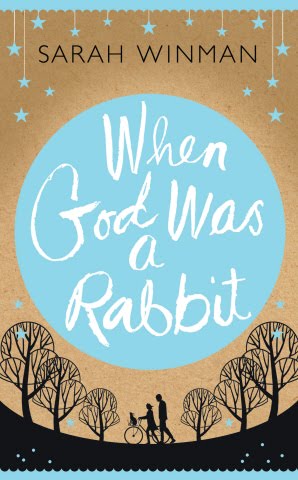
When God Was a Rabbit by Sarah Winman

When God was a Rabbit is the story of Eleanor Maud Portman (known as Elly) and is divided into two parts. In the first part, Elly tells us about her childhood growing up in England in the 1970s and introduces us to some of the important people in her life, including her older brother, Joe, her best friend, Jenny Penny – and a pet rabbit called God. We then jump forward fifteen years and rejoin Elly as an adult in the 1990s. Over the years the family experience more than their fair share of dramas and disasters, though there are some good times too. I don’t want to go into too much detail about what happens to them, but the Portmans’ lives are affected by murder, illness, kidnapping, child abuse and terrorism, to name just a few of the tragic events covered in the book.

I enjoyed When God was a Rabbit but I did think it had a few flaws. I often complain that books are too slow for me but if anything, the pace of this one was too fast. I felt that some of the things that happened to Elly and her family deserved to be explored in more depth, but instead the story moved quickly on to a new topic and a new tragedy – it was hard to believe that so many things could possibly happen to one family. I can appreciate that this is fiction and doesn’t have to be realistic, but I was still overwhelmed by the sheer amount of issues the book touches on.

I’m younger than Elly but a lot of the things from her childhood felt familiar to me too. I think for people of a certain age (especially those born around the time Elly was, in 1968) this is a book that could be enjoyed almost as much for the nostalgia and the memories as for the plot. Elly’s personal story is set against a backdrop of historical events including the Queen’s Silver Jubilee in 1977, John Lennon’s death in 1980 and the 9/11 tragedy in 2001. These events and others all affected Elly, either directly or indirectly, and again this is where I felt Sarah Winman was trying to pack too much into one novel.

I don’t want to sound too negative though, because I really was impressed by When God was a Rabbit. I loved the first half of the book and although the second half didn’t have the same feel of magic and innocence, I still found it compelling. I wanted to read on and find out what had happened in the intervening years and how the story would end for Elly, Joe, Jenny Penny and the others. Despite the whimsical title and cover, this book deals with some heavy themes and beneath the charm and humour there’s also a lot of sadness and poignancy. I often had tears in my eyes while I was reading but there were an equal number of scenes that made me smile (especially the school nativity play!). And although I had mixed feelings about this book, I thought the good points outweighed the bad. I would advise you to try it for yourself and see what you think!

The Flight of the Falcon by Daphne du Maurier

Having read most of Daphne du Maurier’s more popular books I’m now slowly working through her lesser known novels (though I’m saving Frenchman’s Creek for last as I’m expecting to love that one and want to have something to look forward to). Published in the 1960s, The Flight of the Falcon was one of her final novels and although I didn’t think it was one of her best, I did still enjoy it. If you’re new to du Maurier I would recommend reading some of her other books first, but this one is definitely worth reading too.

Our narrator, Armino Fabbio, works for Sunshine Tours and at the beginning of the book he is showing a group of British and American tourists the sights of Rome. By chance he becomes indirectly involved in the murder of an elderly peasant woman, who he believes he recognises as his childhood nurse, Marta. Deciding to visit Ruffano, the town of his birth, in an attempt to find out what had happened to Marta, Armino begins to uncover some shocking family secrets.

After Armino’s arrival in Ruffano (which is based on the real Italian city of Urbino), the story begins to revolve around the city’s university and the rivalry between the Arts students and the Commerce & Economics students. The battle between these two groups reaches its climax during the preparations for a festival re-enacting the final moments of the city’s fifteenth-century ruler, the evil Duke Claudio – also known as The Falcon.

As I think I’ve said every time I’ve written about a du Maurier book, one of the things I love most about her writing is the atmosphere she creates. In The Flight of the Falcon she succeeds in making Ruffano, with its medieval streets, historic churches and ducal palace, seem beautiful and picturesque but claustrophobic and forbidding at the same time. Whether she’s writing about Cornwall, Italy, France or any other part of the world, her settings always feel vivid and real.

Not everything about this book worked for me, though. I found I didn’t really care about the university politics and rival student groups, which formed such a big part of the plot. I was much more interested in Armino’s personal story. Armino himself is not the strongest of characters, but I was fascinated by his relationship with his elder brother, Aldo. And I hadn’t realised how many of du Maurier’s novels have male narrators! My Cousin Rachel, The Scapegoat, The House on the Strand, I’ll Never Be Young Again and now this one. Are there any others?

In October, Simon from Savidge Reads and Polly of Novel Insights are hosting a ‘Discovering Daphne’ season, so if you still haven’t read any of Daphne’s books that could be a good time to start.

Possession by A.S. Byatt

Possession is a literary mystery which follows two academics, Roland Michell and Maud Bailey, who are studying the lives of two fictional Victorian poets, Randolph Henry Ash and Christabel LaMotte respectively. When they discover new evidence that suggests the two poets knew each other and may even have been lovers, Roland and Maud begin working together to uncover the truth. Woven into the story are letters, poems, fairy tales and journal entries, all of which feel like authentic Victorian documents. The significance of these is not always immediately obvious but as Maud and Roland continue to find new clues regarding Ash and LaMotte, things slowly begin to make sense.

Possession is one of those books I feel I should have read long before now but never have, partly because I was afraid it might be too clever and intellectual for me. Now that I’ve finally read it I’m glad I got over my fear of it and decided to give it a try, because it wasn’t quite as difficult to read as I thought it would be and in fact was a very rewarding and enjoyable read. I did find it hard to get into at first and almost gave up a few times throughout the first 200 pages, but somewhere in the middle of the book I found myself becoming completely absorbed in the story and didn’t want to put it down.

I’m not a lover of poetry and was tempted to skip some of the longer poems, but although I did try to read them all I know I didn’t pick up on all the little references and metaphors they contained. I would need to read the whole book again to pick up on everything I missed the first time, but I found it such a challenge to read once I don’t think I’ll want to read it again, at least not in the near future.

I enjoyed following Maud and Roland on their physical journey, first around the North Yorkshire coast and then to Brittany, retracing the steps of Ash and LaMotte. This book made me wish I was also on the trail of an important literary mystery – I think it would be fascinating. It’s intriguing to think that an important part of someone’s life can become lost in the mists of time, and when rediscovered can completely change the way we think about them and their work.

As the book progressed, I had a better understanding of what the title ‘possession’ could mean and the various ways in which it could be interpreted. There’s the obvious interpretation of two people in love, but there’s also an intellectual possession – the possession of information, secrets and ideas. Then there are the physical possessions of the letters and writings, and the dispute over who should actually ‘possess’ them. There’s possession in a spiritual, ghostly sense. And the way we become possessed with the desire for knowledge and the wish to ‘possess’ our subject.

There are so many layers to this book that I would need to write a post twice as long as this one to be able to mention everything. There’s feminist symbolism, natural history, legends and mythology, the Victorian fascination with seances and spiritualists. And in addition to all this, Byatt creates an entire history for both Randolph Henry Ash and Christabel LaMotte, to the extent where they feel as if they could really have existed, as if they were real Victorian poets. I can’t imagine how much work must go into writing a novel like this; it’s very, very impressive and I can understand why it won the Booker Prize in 1990.

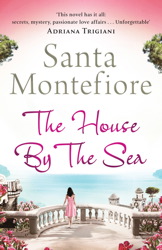
The House by the Sea by Santa Montefiore

The House by the Sea is the first book I’ve read by Santa Montefiore. The novel consists of two alternating stories, one set in present day England and the other in Italy several decades earlier. The Italian storyline begins in 1966 with Floriana, a ten-year-old girl who lives with her drunken father in a small village in Tuscany. Looking over the crumbling wall of a beautiful villa by the sea, Floriana comes face to face with seventeen-year-old Dante, whose parents own the house. Floriana dreams of one day marrying Dante and escaping from her lonely, miserable life but unfortunately things don’t go exactly as she planned.

In 2009 we meet Marina, a woman in her fifties who runs a hotel on the Devon coast. The hotel is in financial difficulties and in an attempt to save her struggling business, Marina advertises for an ‘artist-in-residence’ to spend the summer at the hotel teaching guests to paint. And so Rafa Santoro, an artist from Argentina, arrives in Devon and proves to be a big success – particularly with Marina’s stepdaughter, Clementine. But as Clementine begins to fall in love with Rafa, she starts to suspect that he may be hiding something.

What is Rafa’s secret? And what is the link between Floriana’s story and Marina’s? At first I had no idea; I couldn’t understand how the two could be connected. Eventually, though, the answers to these questions started to become clear – and there were a few other interesting sub-plots which also kept me guessing. I found myself completely engaged with both threads of the book. We spend quite a lot of time in each period before switching back to the other one, long enough to really get to know the characters and become absorbed in their lives. All of the characters were interesting to read about, even Clementine, who spent most of the book being completely annoying and irritating.

I thought Montefiore did a wonderful job of bringing two such different locations to life. The Devon chapters, with descriptions of cream teas, fishing trips and the office where Clementine works, have a very ‘English’ feel, while the Tuscan sections conjure up the sights and sounds of Italy. I loved both, though the Italian one felt particularly vivid and magical.

I really enjoyed this book and would be happy to read more books by Santa Montefiore, definitely. With mystery, romance, beautiful settings and well-developed characters, The House by the Sea proved to be a perfect summer read!

I received a copy of this book for review from Simon & Schuster

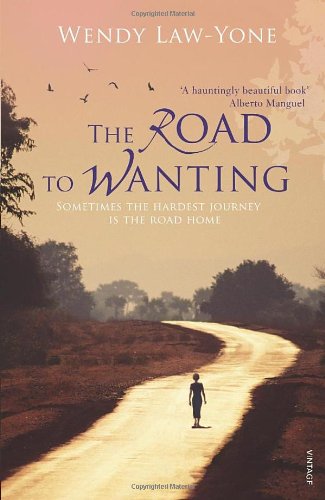
The Road to Wanting by Wendy Law-Yone

In a hotel room in Wanting, a town on the borders of China and Burma, Na Ga is about to commit suicide. But when she’s interrupted by the hotel receptionist who tells her that her companion, Mr Jiang, has killed himself, Na Ga decides not to die just yet. Staying on alone in the hotel, she looks back on the circumstances that have led her to Wanting and begins to consider what she wants from her future.

Wendy Law-Yone instantly grabbed my attention with this fascinating and intriguing opening. The first chapter alone raised so many questions. Who is Na Ga and what is she doing in Wanting? What terrible things had happened in her life to cause her to want to kill herself? We do find out the answers to these questions, but only very slowly as Na Ga’s tragic story gradually unfolds.

We learn that Na Ga was born into Burma’s Wild Lu tribe and sold into slavery by her parents. From there, things go from bad to worse until she eventually ends up in Bangkok with her American lover, Will, who arranges for her to travel back to the village of her birth. The only problem is that Na Ga isn’t sure if she wants to go or not…and after years of conflict and unrest in Burma she doesn’t even know if her village still exists.

As you will have guessed, this is quite a bleak story but thankfully it’s not entirely without humour and lightness. Some of the lighter moments are provided by the character of Minzu, the happy, kind-hearted sixteen-year-old receptionist at the hotel in Wanting. Minzu is one of the few people who offers Na Ga genuine friendship and she brings a glimmer of hope and optimism to an otherwise harrowing story.

Na Ga herself could be a frustrating character at times, failing to take control of her own destiny and seeming to just accept all the bad things that happened to her, but I could see that much of her personality had been shaped by the abuse and neglect she was forced to endure over the years. She’d never had the freedom to choose what she wanted to do with her life. But while I did have a lot of sympathy for Na Ga, I was left feeling that I never really got to know her. I think the structure of the novel, interspersing the present day storyline with glimpses of Na Ga’s past, may have prevented me from becoming as fully absorbed in her story as I would have liked.

The Road to Wanting left me feeling saddened and angered. Some of the things that Na Ga experiences and witnesses are shocking and by the end of the novel I could understand what had driven her to consider suicide. The lack of connection I felt with Na Ga as a character is the only negative thing I can say about this excellent book.

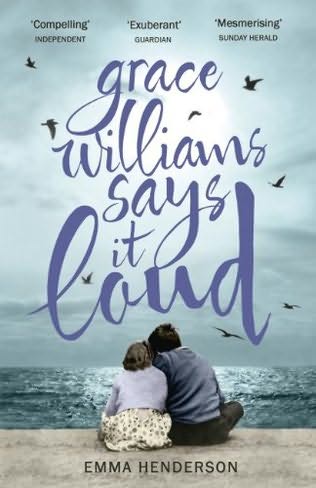
Grace Williams Says It Loud by Emma Henderson

This moving and thought-provoking novel by Emma Henderson introduces us to a girl called Grace Williams. Grace was born with severe disabilities and a childhood case of polio only makes things worse. When she is eleven years old, her parents send her to the Briar Mental Institute, a residential home for disabled people. Unfortunately it’s the 1950s, a less enlightened time than today, but Grace is lucky in that she does meet a few people at The Briar who can see past her disabilities and who offer her friendship and love. One of these is Daniel Smith, a boy who has problems of his own – he suffers from epilepsy and has also lost both of his arms in an accident. But although life at The Briar is not easy, Grace and Daniel form a relationship that helps to sustain them both.

Grace comes across as an observant, funny, loving young woman trapped by her own inability to communicate and her physical appearance, both of which lead to her being dismissed and shunned by society. But the fact that Grace’s narrative voice is so clear and articulate shows that she is not lacking in intelligence and awareness. She doesn’t have a problem understanding what other people are saying; she just finds it hard to express herself verbally, always responding in sentences of no more than two words (“me too” or “yes, please”). And yet because of her limited speech many people assume she’s not able to follow a conversation – and so they talk about her as if she wasn’t a human being with feelings, as if she wasn’t even there, which is all very sad.

Even sadder are the reactions of Grace’s family – the shame and frustration of her parents, the matter of fact way in which her little sister, Sarah, tells a friend that she has ‘two sisters but one of them doesn’t count’ (a scene which really broke my heart). Other bloggers have mentioned that Emma Henderson explained in her author’s note how this and other episodes of the story were based on her own memories and experiences of having a sister who, like Grace, spent many years in an institution. I’m disappointed that my copy of the book didn’t include this note from the author as I would have liked to have known about the inspiration behind the story.

The descriptions of the way the Briar residents were treated by their nurses and teachers are shocking. Although there were a few who did show some kindness and compassion, many of the others were cruel, unkind and displayed a complete lack of interest in even trying to understand the people they were supposed to be caring for. Unfortunately some went even further, abusing their positions of authority and taking advantage of the vulnerable people under their care. As you can imagine, some parts of the book are emotionally quite difficult and uncomfortable to read, but I don’t want to give the impression that this is a bleak and depressing book because it’s really not. However hard things may be for Grace, there are still positive things in her life – the most important of these being her friendship with Daniel.

I really loved the character of Daniel: intelligent, caring, full of hope and optimism. And yet he does still have moments where everything becomes too much for him. He has a very sad and tragic story of his own, a story which moved me in a way that even Grace’s didn’t. Although Grace is the narrator and central character of the book, I never felt quite the same connection with her that I did with Daniel.

I can’t say I loved this book, but I’m glad I read it and I know it’s not a story that will be easily forgotten. I’m sure the things I’ve read will stay with me for years to come. So if you’d like to know what Grace Williams has to say, then pick up a copy of this book and find out.

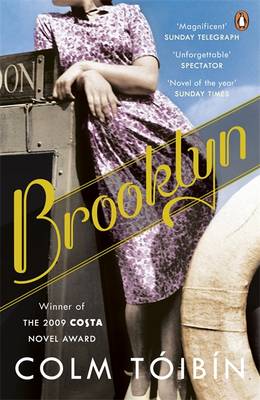
Brooklyn by Colm Tóibín

Brooklyn tells the story of Eilis Lacey, a young woman who lives in a small town in Ireland with her mother and sister. It’s the 1950s, only a few years after the end of World War II and it’s not easy to find a good job in a town like Enniscorthy. When Eilis is offered the chance to work and study in New York she leaves her family behind and prepares to start a new life in Brooklyn. After a traumatic journey across the Atlantic, we see how she settles into her new home and job, struggles with homesickness and makes new friends. But it’s during a trip home to Ireland that Eilis is faced with making the biggest decision of her life…

Brooklyn is a warm, gentle story with an old-fashioned charm. It’s not the most original book I’ve ever read and it’s not the most exciting or dramatic, but when I picked it up and started reading, I found it was just what I was in the mood for. Tóibín tells his story using simple language and a controlled, understated writing style and it was actually quite refreshing to read a book with such clear, direct prose and such a straightforward plot. The book was published in 2009 (and made the Booker Prize long list that year) but if I hadn’t been aware of that I could almost have believed it was written in Eilis’s own era because it does somehow have a very 1950s feel.

Eilis herself is a pleasant, likeable person. Looking at other reviews, many people have complained that she is too passive, allowing other people to run her life for her. I could accept her passivity as part of her quiet, innocent personality, though I agree that it didn’t make her a particularly strong or memorable character. I thought some of the minor characters were more interesting to read about – such as Georgina, the woman who befriends Eilis on her nightmare ocean crossing, or Miss Kelly, who runs the local shop in Enniscorthy where Eilis used to work. We stay with Eilis’s perspective throughout the whole book which means we only get to see the other characters when they are interacting with her directly, but something Tóibín does very successfully is to explore the relationships between Eilis and the important people in her life.

The book does touch on some of the social issues of the time – we learn a little bit about Ireland’s economy, the Holocaust is briefly mentioned, and we get a glimpse of racism in 1950s New York when Eilis starts serving black customers at Bartocci’s department store. But although those issues and others are there in the background they don’t form a major part of the plot. Instead, the focus of Brooklyn is very much on Eilis and the things that affect her personally: her new job at Bartocci’s, studying bookkeeping at evening classes, making new friends and visiting her boyfriend. The reader is immersed completely in the small details of Eilis’s daily life, something which could easily have become very boring, but in Tóibín’s hands is fascinating and compelling.

I haven’t personally had the experience of living in another country and I’m not sure how I would feel about it, but there were still parts of Eilis’ story that resonated with me and that I could identify with. I loved Brooklyn – and I was happy with the way the book ended too!