The Road to Wanting by Wendy Law-Yone

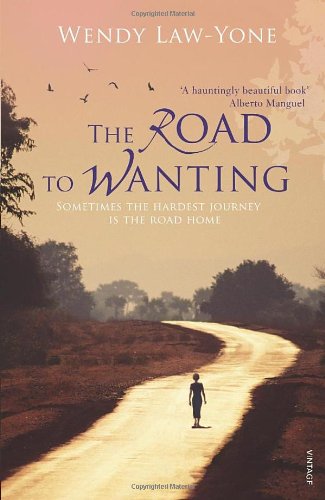
In a hotel room in Wanting, a town on the borders of China and Burma, Na Ga is about to commit suicide. But when she’s interrupted by the hotel receptionist who tells her that her companion, Mr Jiang, has killed himself, Na Ga decides not to die just yet. Staying on alone in the hotel, she looks back on the circumstances that have led her to Wanting and begins to consider what she wants from her future.

Wendy Law-Yone instantly grabbed my attention with this fascinating and intriguing opening. The first chapter alone raised so many questions. Who is Na Ga and what is she doing in Wanting? What terrible things had happened in her life to cause her to want to kill herself? We do find out the answers to these questions, but only very slowly as Na Ga’s tragic story gradually unfolds.

We learn that Na Ga was born into Burma’s Wild Lu tribe and sold into slavery by her parents. From there, things go from bad to worse until she eventually ends up in Bangkok with her American lover, Will, who arranges for her to travel back to the village of her birth. The only problem is that Na Ga isn’t sure if she wants to go or not…and after years of conflict and unrest in Burma she doesn’t even know if her village still exists.

As you will have guessed, this is quite a bleak story but thankfully it’s not entirely without humour and lightness. Some of the lighter moments are provided by the character of Minzu, the happy, kind-hearted sixteen-year-old receptionist at the hotel in Wanting. Minzu is one of the few people who offers Na Ga genuine friendship and she brings a glimmer of hope and optimism to an otherwise harrowing story.

Na Ga herself could be a frustrating character at times, failing to take control of her own destiny and seeming to just accept all the bad things that happened to her, but I could see that much of her personality had been shaped by the abuse and neglect she was forced to endure over the years. She’d never had the freedom to choose what she wanted to do with her life. But while I did have a lot of sympathy for Na Ga, I was left feeling that I never really got to know her. I think the structure of the novel, interspersing the present day storyline with glimpses of Na Ga’s past, may have prevented me from becoming as fully absorbed in her story as I would have liked.

The Road to Wanting left me feeling saddened and angered. Some of the things that Na Ga experiences and witnesses are shocking and by the end of the novel I could understand what had driven her to consider suicide. The lack of connection I felt with Na Ga as a character is the only negative thing I can say about this excellent book.

Grace Williams Says It Loud by Emma Henderson

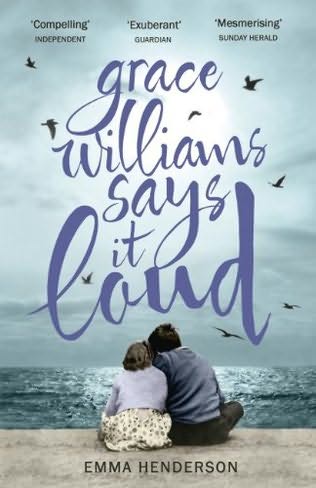
This moving and thought-provoking novel by Emma Henderson introduces us to a girl called Grace Williams. Grace was born with severe disabilities and a childhood case of polio only makes things worse. When she is eleven years old, her parents send her to the Briar Mental Institute, a residential home for disabled people. Unfortunately it’s the 1950s, a less enlightened time than today, but Grace is lucky in that she does meet a few people at The Briar who can see past her disabilities and who offer her friendship and love. One of these is Daniel Smith, a boy who has problems of his own – he suffers from epilepsy and has also lost both of his arms in an accident. But although life at The Briar is not easy, Grace and Daniel form a relationship that helps to sustain them both.

Grace comes across as an observant, funny, loving young woman trapped by her own inability to communicate and her physical appearance, both of which lead to her being dismissed and shunned by society. But the fact that Grace’s narrative voice is so clear and articulate shows that she is not lacking in intelligence and awareness. She doesn’t have a problem understanding what other people are saying; she just finds it hard to express herself verbally, always responding in sentences of no more than two words (“me too” or “yes, please”). And yet because of her limited speech many people assume she’s not able to follow a conversation – and so they talk about her as if she wasn’t a human being with feelings, as if she wasn’t even there, which is all very sad.

Even sadder are the reactions of Grace’s family – the shame and frustration of her parents, the matter of fact way in which her little sister, Sarah, tells a friend that she has ‘two sisters but one of them doesn’t count’ (a scene which really broke my heart). Other bloggers have mentioned that Emma Henderson explained in her author’s note how this and other episodes of the story were based on her own memories and experiences of having a sister who, like Grace, spent many years in an institution. I’m disappointed that my copy of the book didn’t include this note from the author as I would have liked to have known about the inspiration behind the story.

The descriptions of the way the Briar residents were treated by their nurses and teachers are shocking. Although there were a few who did show some kindness and compassion, many of the others were cruel, unkind and displayed a complete lack of interest in even trying to understand the people they were supposed to be caring for. Unfortunately some went even further, abusing their positions of authority and taking advantage of the vulnerable people under their care. As you can imagine, some parts of the book are emotionally quite difficult and uncomfortable to read, but I don’t want to give the impression that this is a bleak and depressing book because it’s really not. However hard things may be for Grace, there are still positive things in her life – the most important of these being her friendship with Daniel.

I really loved the character of Daniel: intelligent, caring, full of hope and optimism. And yet he does still have moments where everything becomes too much for him. He has a very sad and tragic story of his own, a story which moved me in a way that even Grace’s didn’t. Although Grace is the narrator and central character of the book, I never felt quite the same connection with her that I did with Daniel.

I can’t say I loved this book, but I’m glad I read it and I know it’s not a story that will be easily forgotten. I’m sure the things I’ve read will stay with me for years to come. So if you’d like to know what Grace Williams has to say, then pick up a copy of this book and find out.

Brooklyn by Colm Tóibín

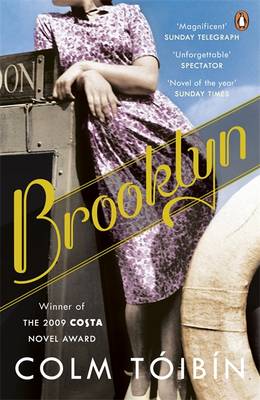
Brooklyn tells the story of Eilis Lacey, a young woman who lives in a small town in Ireland with her mother and sister. It’s the 1950s, only a few years after the end of World War II and it’s not easy to find a good job in a town like Enniscorthy. When Eilis is offered the chance to work and study in New York she leaves her family behind and prepares to start a new life in Brooklyn. After a traumatic journey across the Atlantic, we see how she settles into her new home and job, struggles with homesickness and makes new friends. But it’s during a trip home to Ireland that Eilis is faced with making the biggest decision of her life…

Brooklyn is a warm, gentle story with an old-fashioned charm. It’s not the most original book I’ve ever read and it’s not the most exciting or dramatic, but when I picked it up and started reading, I found it was just what I was in the mood for. Tóibín tells his story using simple language and a controlled, understated writing style and it was actually quite refreshing to read a book with such clear, direct prose and such a straightforward plot. The book was published in 2009 (and made the Booker Prize long list that year) but if I hadn’t been aware of that I could almost have believed it was written in Eilis’s own era because it does somehow have a very 1950s feel.

Eilis herself is a pleasant, likeable person. Looking at other reviews, many people have complained that she is too passive, allowing other people to run her life for her. I could accept her passivity as part of her quiet, innocent personality, though I agree that it didn’t make her a particularly strong or memorable character. I thought some of the minor characters were more interesting to read about – such as Georgina, the woman who befriends Eilis on her nightmare ocean crossing, or Miss Kelly, who runs the local shop in Enniscorthy where Eilis used to work. We stay with Eilis’s perspective throughout the whole book which means we only get to see the other characters when they are interacting with her directly, but something Tóibín does very successfully is to explore the relationships between Eilis and the important people in her life.

The book does touch on some of the social issues of the time – we learn a little bit about Ireland’s economy, the Holocaust is briefly mentioned, and we get a glimpse of racism in 1950s New York when Eilis starts serving black customers at Bartocci’s department store. But although those issues and others are there in the background they don’t form a major part of the plot. Instead, the focus of Brooklyn is very much on Eilis and the things that affect her personally: her new job at Bartocci’s, studying bookkeeping at evening classes, making new friends and visiting her boyfriend. The reader is immersed completely in the small details of Eilis’s daily life, something which could easily have become very boring, but in Tóibín’s hands is fascinating and compelling.

I haven’t personally had the experience of living in another country and I’m not sure how I would feel about it, but there were still parts of Eilis’ story that resonated with me and that I could identify with. I loved Brooklyn – and I was happy with the way the book ended too!

A Visit from the Goon Squad by Jennifer Egan

I’m not sure how to begin describing Jennifer Egan’s A Visit from the Goon Squad to you, but I’ll do my best! I’ll start by saying that it’s an original and imaginative novel which revolves around a large number of different characters, most of whom are involved in the music industry in some way (be it as musicians, producers, record label owners, publicists, or music lovers). The main theme of the book is time and Egan uses her characters to explore what happens to us as we age and how life doesn’t always turn out the way we hoped it would.

I don’t know exactly how many characters there were in this book, but it felt like hundreds! Two of the most important are Bennie Salazar, a record executive, and his assistant, Sasha. Most of the other characters are somehow connected to either Sasha or Bennie, whether directly or indirectly. We meet new people in almost every chapter and I found I needed to pay attention to every new name as even someone who seemed completely insignificant could reappear later in the book.

Each chapter is written in a distinct style and has its own unique feel. One chapter takes the form of a celebrity interview; another is presented as a PowerPoint slideshow. Some chapters have a first person narrator; others are told in the second or third person; we move from past tense to present tense, from one country to another and backwards and forwards in time. I don’t think I’ve ever seen an author incorporate so many different styles and ideas into one novel – which could be either a good thing or a bad thing depending on your personal preferences. If you like books that are adventurous, innovative and different, then you’re probably going to love A Visit from the Goon Squad. If not, you might find it all a little bit confusing and overwhelming like I did.

Many of the chapters seemed more like self-contained short stories than part of a novel and although each one is linked to the others in some way, I thought the book felt too disjointed. For me this made the experience of reading it quite uneven – there were some parts that I really enjoyed and some that just didn’t interest me at all. The air of experimentation, along with the PowerPoint presentation and the futuristic world portrayed in the final section, made the whole book feel very ‘modern’ and this is maybe another reason why it didn’t really work for me. I suppose I just prefer novels which have a more conventional structure, less jumping around in time and place, and a stronger plot.

A Visit from the Goon Squad sounded fascinating and I can see why a lot of people would love it – it’s a very unusual book which sparkles with originality and creativity – but it turned out not to be my type of book at all.

Great House by Nicole Krauss

I picked up Great House after it was named on the Orange Prize longlist in April and probably wouldn’t have thought about reading it otherwise. Based on what I had heard about the book before I started reading it I suspected I wouldn’t enjoy it, but I wanted to give it a try anyway. I liked the central concept of a number of different people being linked by an item of furniture (a desk) and was curious to see how this would work. Having read the book, though, it would be inaccurate to describe it as ‘a book about a desk’ – in fact, in several of the book’s eight sections the desk is barely mentioned at all.

The novel is made up of four separate stories, with two chapters devoted to each one. The first story is narrated by Nadia, an author living in New York, who receives a writing desk from a Chilean poet, Daniel Varsky. At the end of the first chapter we leave Nadia behind for a while and move to Israel, where we meet Aaron and learn about the difficult relationship he has with his son, Dov. Next the action switches to England and our third narrator, Arthur, who tells us about his wife, Lotte. Lotte, another writer, has a secret which is only revealed as she grows older and begins to suffer from Alzheimer’s. The fourth storyline involves Izzy and her relationship with Yoav and Leah Weisz, the son and daughter of a collector of antique furniture.

There are some themes that recur throughout most or all of these four narratives: authors, relationships between parents and children, loss and memories. All four storylines interested me but the one that I found the most engaging was Aaron’s. I thought his voice was the strongest of all the narrators; the others were not as easy to distinguish between.

Great House is a novel that requires a lot of patience and concentration. The ways in which the four stories are linked are not immediately obvious and you need to read the entire book to be able to fit the various pieces of the puzzle together. Although I didn’t enjoy it enough to want to read it again, it’s a book that would almost certainly benefit from a re-read. Even reading slowly and making a few notes as I went along there were still things that didn’t quite make sense to me, but I think if I started the book again with my knowledge of the later sections I should be able to pick up on little details in the earlier chapters that I’d missed the first time.

The quality of the writing is excellent; there were sentences that were so beautifully constructed that I had to go back and read them twice. It’s a clever book and definitely not an easy read, but one that leaves the reader with a lot to think about, and although the book wasn’t really to my taste it’s undeniably a very impressive novel.

Before I Go to Sleep by SJ Watson

Every morning Christine Lucas wakes up to find a strange man lying beside her in bed. Every morning she listens while he tells her that his name is Ben and he’s her husband. Every morning she discovers that she is suffering from amnesia and that she has no memory at all of most of her adult life.

Christine’s doctor advises her to keep a journal. If she records everything she learns each day, he says, perhaps it will help to bring her memories back and allow her to make sense of what has happened. Then one day Christine picks up her journal and sees that she has written the words DON’T TRUST BEN. But why shouldn’t she trust him? What is going on?

SJ Watson’s psychological thriller, Before I Go to Sleep, is one of the most gripping books I’ve read this year. My only regret is that I didn’t save it to read at the weekend when I would have fewer interruptions. Reading during the week I had to tear myself away from it to go to work or to bed. What makes the book so suspenseful is the uncertainty about what exactly is happening. With the entire story told from Christine’s perspective we don’t know any more than she does. It’s possible that Ben could be genuine – it’s also possible that everything he says is a lie. And what about Dr Nash? Could he also be lying to her? Christine doesn’t know and neither do we.

It’s hard to imagine anything worse than waking up each day, not knowing where you are (or even who you are), not able to recognise the man who says he’s your husband, having to learn everything about your life all over again. By losing her memory Christine has lost her whole identity. As she says to herself at one point in the novel, “What are we, if not an accumulation of our memories?” She was in such a horribly vulnerable situation and I felt afraid for her. The atmosphere throughout the book is very unsettling and although I had a few guesses, the ending still managed to shock me.

Without spoiling the story for you there’s nothing more to say other than to echo all the other glowing reviews out there and to tell you that in my opinion all the hype surrounding this book is justified!

I received a copy of this book from Transworld for review

Daphne by Justine Picardie

Justine Picardie’s novel Daphne features one of my favourite authors, Daphne du Maurier, as the main character. We first meet Daphne in 1957, an eventful time in her life. Having discovered that her husband has been having an affair, she throws herself into her current project: a biography of Branwell Brontë. Daphne is convinced that Branwell has been unfairly treated by literary historians. She believes that he may have been capable of writing a novel to rival Wuthering Heights or Jane Eyre and that he may even have been the author of some of the works attributed to his more famous sisters. As part of the research for her new biography Daphne begins corresponding with Alex Symington, a Brontë scholar who shares her views on Branwell. But Symington has some secrets in his past. Can he be trusted?

Another thread of the novel takes place in the present day and is narrated by a student who is busy writing her PhD thesis on Daphne and the Brontes. The story of the shy, naïve student and her difficult relationship with her older husband, Paul, is clearly supposed to mirror the story of Maxim de Winter and his young wife in du Maurier’s Rebecca. Paul even has a glamorous ex-wife, reminiscent of Rebecca herself.

Whenever I read a novel with multiple time frames I usually find that I’m more interested in the historical parts than in the modern day sections, but with Daphne I thought all three strands of the story were equally interesting. The chapters which deal with the characters of Daphne and Symington seemed to be well-researched and were very informative. We learn a lot about Daphne’s relationship with her father, the actor Gerald du Maurier. We are also shown how Daphne was feeling the pressures of being a famous author, how she felt haunted by the ghost of Rebecca and could only truly relax when she was at Menabilly, her Cornwall home. And Picardie explores the link between Daphne and the Llewelyn Davies brothers, particularly Peter, who was the inspiration for J.M. Barrie’s Peter Pan.

I should warn you that if you haven’t read any of Daphne du Maurier’s novels yet you may come across some spoilers, particularly for Rebecca, so you might want to read that one first. I would highly recommend reading Rebecca anyway – it’s a fantastic novel and one that I’ve read and loved several times. I thought Daphne lacked the magic of du Maurier’s own novels and I don’t feel the desire to read it again and again as I have with Rebecca, but it was still an enjoyable book. If you’re interested in du Maurier, the Brontes or literary mysteries with a gothic feel, I’d suggest giving Daphne a try.