Summer Reading Challenge: Second Hand Heart by Catherine Ryan Hyde

Vida is a nineteen year-old girl who suffers from a heart condition. She’s in hospital waiting for a transplant – time is running out, but before Vida can get a new heart, a potential donor needs to die. That donor turns out to be car crash victim Lorrie Buckner Bailey. When Lorrie’s grieving husband, Richard, decides to visit the girl who received his wife’s heart, Vida falls in love with him. But is it really Vida herself who loves Richard – or is it Lorrie’s heart?

I really enjoyed this book. It could easily have been a slushy, sentimental romance, but it manages to avoid that. Instead, it’s a fascinating and moving story which raises an interesting question: does cellular memory (where a transplanted organ retains the memories and characteristics of its previous owner) really exist?

The story is told in the first person, alternating between Vida and Richard. Vida’s section is in the form of a journal and she has a very intimate and conversational style, making her an engaging character. Through her journal entries we learn what it’s like to have spent your whole life preparing for death and the emotions that a person goes through on discovering that they now have a chance to live after all. After meeting Vida, Richard also begins to keep a journal and his story unfolds both through his diary entries and through his email correspondence with Vida and his mother-in-law Myra. I enjoyed watching the characters develop over the course of the book as Vida learns how to enjoy life for the first time and Richard learns how to move on with his own life following Lorrie’s death.

Although Vida and Richard are the characters we get to know best, I found the minor characters equally interesting – particularly Abigail, Vida’s worried, over-protective mother, and Esther, her elderly neighbour who survived life in a concentration camp during World War II.

The style of writing used in this book, with very simplistic or incomplete sentences, would usually irritate me – and it did at times – but it was actually perfectly suited to the story and helped give the impression that Vida and Richard were talking directly to the reader via their diaries. The writing style, together with the very short chapters, makes this a quick and easy read, despite it being quite a long book. There are some detailed descriptions of heart surgery but nothing too gory for those of you who are squeamish (Catherine Ryan Hyde says in her author’s note that she was given the rare opportunity to actually observe a heart operation whilst researching this book). Whether or not you believe in the theory of cellular memory Second Hand Heart is an interesting and thought provoking story.

I received a review copy of this book from Transworld Publishers as part of their Summer Reading Challenge.
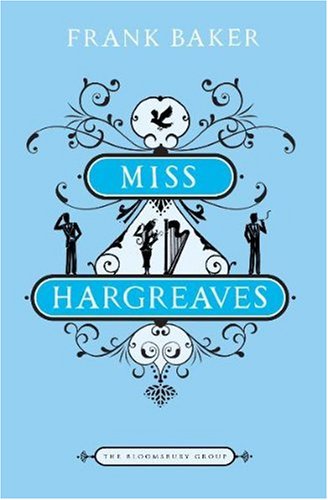
Review: Miss Hargreaves by Frank Baker

When I started to notice these Bloomsbury Group books appearing on other blogs, I knew I wouldn’t be able to resist reading them too. Not just because the covers are so pretty, but also because the stories all sound so intriguing! Miss Hargreaves (pronounced Hargrayves as we are told in the author’s note) was the one that appealed to me the most and the one I’d heard the most about – and it was the right choice because I loved it. It’s a charming tale about the power of imagination and how it can lead to an unusual and unlikely friendship.

“Henry,” I moaned, “she is exactly as I imagined.”
Limping slowly along the platform and chatting amiably to the porter, came – well, Miss Hargreaves. Quite obviously it couldn’t possibly be anyone else.

Norman Huntley has always allowed his imagination to run away with him. On a trip to Ireland with his friend Henry, they amuse themselves by inventing an imaginary eighty-three-year-old woman called Constance Hargreaves. They make Miss Hargreaves a poet and a musician; they give her a dog called Sarah and a cockatoo named Dr Pepusch – and Norman writes her a letter inviting her to stay at his home in Cornford, Buckinghamshire.

Never expecting her to accept his invitation (how could she – she doesn’t exist!) Norman is stunned when a little old lady arrives at the train station accompanied by a dog, a cockatoo, a harp – and even her own bath. It seems that Norman’s creation has come to life – and with even Henry convinced it’s all a practical joke, how will he explain Miss Hargreaves to his parents, his sister and his girlfriend Marjorie?

As the story continues, it gets more and more bizarre. I can safely say this is one of the most original and unusual books I’ve read for a long time! Miss Hargreaves is an unforgettable character – endearing and eccentric, yet ever so slightly sinister – and Norman is torn between a fatherly pride in his creation and frustration at the way she’s taking over his life. Somewhere in the middle of the novel, a gradual shift of power from Norman to Miss Hargreaves takes place, resulting in an almost Frankenstein-like situation where the creator begins to lose control of his creation. And yet Miss Hargreaves seems to be aware that there’s something different about her and that some kind of invisible bond exists between herself and Norman.

I was expecting the story to be funny and entertaining – and it is. However, there are also some very moving and poignant scenes, making the book a perfect mixture of dark and light.

There was only one aspect of this book that I could maybe have done without and that was the music. With Norman Huntley’s church organ, Cornelius Huntley’s violin and Miss Hargreaves’ harp, the musical elements of the book became a bit too much for me. However, I’m sure other readers will enjoy the organ playing scenes and they certainly add to the quirkiness and originality of the book.

Recommended

Pages: 317/The Bloomsbury Group/Year: 2009 (originally published 1940)/Source: My own copy

Review: Miss Ranskill Comes Home by Barbara Euphan Todd

Barbara Euphan Todd was best known as the children’s author who wrote the Worzel Gummidge series about a scarecrow who comes to life. Miss Ranskill Comes Home, first published in 1946, was her only adult novel.

Shortly before the start of World War II, Nona Ranskill was swept overboard whilst on a cruise and was washed up on a desert island. The only other inhabitant of the island is a man known as ‘the Carpenter’, who had also fallen overboard on an earlier occasion. At the beginning of the book, the Carpenter has died and we first meet Miss Ranskill as she’s digging his grave. Before his death however, he had managed to finish building a boat with which he had intended to sail himself and Miss Ranskill to safety. After burying the Carpenter, Miss Ranskill makes an attempt to escape from the island on her own. Luckily, before she becomes hopelessly lost at sea, she is rescued by the British Navy. Returning to England after almost four years, Miss Ranskill discovers that it’s not the England she left behind: in her absence, World War II has begun…

This may all sound very far-fetched, but Todd actually makes it seem believable. I thought the whole idea of someone being cut off from the world and returning home only to find themselves suddenly thrown into the middle of a war was absolutely fascinating. I particularly enjoyed the first half of the book which deals with the first few days of Miss Ranskill’s arrival in England, when everything feels strange and surreal. Even the English language seems different and full of unfamiliar words. When she tries to buy food she can’t understand why she’s asked for her ‘ration book’, or why she needs ‘coupons’ to purchase clothes. This leads to some very amusing situations but at the same time you can’t help but feel sorry for poor Miss Ranskill.

Although he’s dead before the story even begins, the strongest character in the book is the Carpenter. He is constantly in Miss Ranskill’s thoughts and his presence is there on almost every page in the form of flashbacks and memories. Although Miss Ranskill’s friends found it scandalous that she had spent four years in the company of a strange man – particularly a man they consider to be of a lower social standing – I think anyone who has read this book will agree that if we were stranded on a desert island, the Carpenter is exactly the type of person we would like to be stuck there with.

Makes it more homely-like, Miss Ranskill, see.
That had been one of his favourite expressions. He used it as he arranged stones round the smoky fire, and when he handed her a shell.
Saucer, see, Miss Ranskill. We mayn’t have cups, but we’ve plenty of saucers. Makes it more homely.

His optimism and words of wisdom had helped to sustain Miss Ranskill during her time on the island and continue to give her comfort on her return to wartime Britain. However, the years on the island and the company of the Carpenter have given her a new outlook on life and she finds it difficult to adjust. Unlike her friends and family who are all absorbed in their war work, Miss Ranskill feels detached from what’s going on and spends most of the book remembering the island and even feeling nostalgic about the fact that she had to eat fish for every meal and wear the same clothes for nearly four years! England may have changed, but Miss Ranskill has changed even more.

This book has the perfect blend of humour and poignancy and gives us an opportunity to explore World War II from a unique perspective. Recommended.

Pages: 328/Publisher: Persephone Books/Year: 2003 (originally published 1946)/Source: Library book

Review: Affinity by Sarah Waters

This is the story of two women, both prisoners in their own different ways and drawn together by a special bond – their ‘affinity’.

Margaret Prior is a single woman of twenty nine who, following the death of her father, begins visiting London’s Millbank Prison as a Lady Visitor. Lady Visitors were women who voluntarily visited prisoners with the aim of befriending them and giving them comfort during the time of their imprisonment. However, Margaret is in need of some friendship and comfort herself. From her very first visit, she finds herself strangely drawn to Selina Dawes, a young spiritualist imprisoned for assault after one of her spiritualism sessions goes badly wrong, leaving a woman dead and a girl traumatised.  Selina blames her ‘control spirit’, Peter Quick, for what happened, but is she telling the truth?

The book is told in the form of diary entries – Margaret’s longer sections being interspersed with Selina’s shorter ones. Margaret’s diary entries are very bleak and miserable, as she is trying to cope not only with the loss of her father, but also with her feelings for both Selina and her sister-in-law Helen, the expectations of her domineering mother, and the sense of being ‘left behind’ that she experiences when her younger sister gets married and leaves home. Although I found it difficult to like Margaret, I did have a lot of sympathy for her – she had been labelled a ‘spinster’ and was bound by the conventions of the time, preventing her from studying and leading the kind of life she wanted to lead.  I really wanted her to find happiness with Selina.

Selina’s sections of the story are very vague and confusing and I didn’t fully understand them until I went back and read them again after reaching the end of the book. Her entries chronicle the events leading up to the death of Mrs Brink at the seance, and allow us to watch the development of Selina’s spiritualist abilities and the first appearances of the spirit Peter Quick.  Throughout the story, the reader is made to wonder whether Selina really has the powers she claims to have or if Margaret is the victim of an elaborate hoax.

I enjoyed learning about life in a Victorian prison, as it’s not something I’ve read about in so much detail before. Waters does a wonderful job of conveying the oppressive atmosphere of Millbank, with its labyrinthine corridors and gloomy wards.

I haven’t read all of Sarah Waters’ books yet so I can’t really say where Affinity stands in comparison to her others, but I thought it was an excellent book – suspenseful, moving and with some passages that were genuinely spooky.

Recommended

Review: The Scapegoat by Daphne du Maurier

What would you do if you came face to face with yourself? That’s what happens to John, an Englishman on holiday in France, when he meets his exact double – a Frenchman called Jean de Gue.  John agrees to go for a drink with Jean but falls into a drunken stupor and wakes up in a hotel room to find that Jean has disappeared, taking John’s clothes and identity documents with him!

When Jean’s chauffeur arrives at the hotel, John is unable to convince him of what has happened – and ends up accompanying the chauffeur to Jean de Gue’s chateau, where the Frenchman’s unsuspecting family assume that he really is Jean de Gue.  Naturally, they expect him to continue running the family glass-making business and arranging shooting parties – things that John has absolutely no experience in.  Before long, it starts to become obvious that Jean is using John as a scapegoat; Jean’s family and business are both in a mess and he wants someone else to have to deal with them.

Throughout the book, I was forced to revise my opinions once or twice about what was really going on. If everything in the book is supposed to be taken literally, then we need to suspend belief at times: could two men really be so identical that even their mother, wife and daughter can’t tell the difference? There is also another way to interpret the story, one which goes deeper into the psychology of identity – I won’t say any more about that here, but if you have read the book this theory may have occurred to you too.

As usual, du Maurier’s writing is wonderfully atmospheric. She has a way of making you feel as though you’re actually there in the hotel room in Le Mans, the grounds of Jean de Gue’s estate in the French countryside and Bela’s antique shop in the town of Villars.

When John first arrives at the de Gue chateau, every member of the household is a stranger to him but we (and John) are given enough clues to gradually figure out who each person is and what their relationship is to Jean de Gue.  From the neglected pregnant wife and the hostile elder sister to the resentful younger brother and the religious ten-year-old daughter, every character is well-drawn and memorable.

Another thing I love about Daphne du Maurier’s writing is her ability to always keep the reader guessing right to the final page (and sometimes afterwards too).  This was a fascinating and unusual story, one of my favourite du Maurier books so far.

Highly recommended

Pages: 320/Publisher: Virago Press (Virago Modern Classics)/Year: 2004 (originally published 1957)/Source: Library book

Review: I’ll Never Be Young Again by Daphne du Maurier

I’ll Never Be Young Again was Daphne du Maurier’s second novel, written when she was only twenty three years old. It’s different from the other books of hers that I’ve read so far. It doesn’t have the suspense or the gothic feel of some of her other works – this is more of a psychological, character-driven book. It’s the story of Richard, a young man who has grown up in the shadow of his famous father, and his struggle to find his own identity. I’m not really a fan of ‘coming-of-age’ novels, but I’m glad I chose to read this one. It certainly seems to be one of her least well known novels –  and I was concerned that this might mean it wasn’t very good. Well, I can tell you that it is good and I enjoyed it a lot more than I was expecting to.

The book opens with Richard – or Dick as he prefers to call himself – standing on a bridge, preparing to jump. Immediately the reader is intrigued, wondering what has happened to drive him to suicide.  At the last minute Dick feels a hand on his shoulder – this is Jake, a complete stranger who saves his life and becomes his closest friend. The first half of the book follows the adventures of Dick and Jake as they leave England and sail to Scandinavia together in search of a new life. The second half is the story of Dick’s relationship with Hesta, a girl he meets in Paris.

The whole book is written in the first person from Dick’s perspective, which is significant as it was apparently the first time Daphne du Maurier wrote from a man’s point of view – and I thought she captured the male voice perfectly. The only problem I had was that I just didn’t like Dick very much. I found his immaturity and whining very irritating – although I understood that the point of the book was to follow his development from an insecure, selfish youth into a sensible, mature adult. Eventually he does begin to grow up and want different things out of life, but this comes too late in the book for me to be able to warm to him. However, the book is so well-written I could still enjoy it even with such an unsympathetic narrator. Her writing is absolutely beautiful and quite dreamlike, as she lets us get right inside Dick’s head and share his thoughts and emotions. There are also some vivid descriptions of the mountains and fjords of Norway and the other places that the characters visit, particularly Paris with its cafés and boulevards.

This would probably not be the best Daphne du Maurier book for a newcomer to begin with, but it’s a good choice for someone who wants to venture away from Rebecca and read one of her less popular novels. A word of warning, though – if you’re going to read the Virago Modern Classics edition, leave the introduction until last as it gives away the entire plot, including the ending (this is good advice with any book – I’ve learned from experience never to read the introduction first).

This is my first book for the Daphne du Maurier Challenge hosted by Chris at Book-a-rama. I wasn’t planning to take part in this challenge until I discovered my local library had almost all of her books. I’m looking forward to reading some more of her work during the next year, as there are still a lot of her books I haven’t read yet. This book also counts towards the 1930s challenge as it was a contemporary novel published in 1932 and set in 1930s Europe – and also the Typically British challenge.

Pages: 304/Publisher: Virago Press (Virago Modern Classics 515)/Year: 2005 (originally published 1932)/Source: Library book

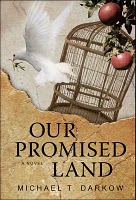
Review and Giveaway: Our Promised Land by Michael T. Darkow

Our Promised Land by Michael T. Darkow is a book about the Israeli-Palestinian conflict over the Holy Land. Keep reading for your chance to win a copy.

My review:

Our Promised Land follows the lives of two families, each on different sides of the Israeli-Palestinian conflict. The story begins during World War II when we see Ellie Liebowisc, who is a Jew, being herded onto a train with his mother and a group of other Jews from their town, having been told that they were going to be ‘resettled’ (‘resettlement’ being a euphemism for the concentration camp and gas chamber). However, Ellie is one of the lucky ones who survives the war and makes his way to the newly created Israel, determined that his people shouldn’t have suffered for nothing.

Next we are introduced to Yasif, a Palestinian boy whose family and neighbours are growing increasingly unhappy about the arrival of the Jews. Yasif is given the chance to go and study in America, but even there he can’t escape from what is going on – and a mysterious voice refuses to let him forget…

Before I started to read this book I thought I might have difficulty understanding it, as the Palestinian-Israeli situation is a subject I know very little about. However, I felt I came away from the book with a better knowledge of the origins of the conflict and why the people involved feel the way they do.

One of the things I really liked about the book was that it is told from both the Israeli and the Palestinian viewpoint, so that the reader is able to see things from two different perspectives. Whilst I was reading Ellie’s sections of the book I felt saddened and angered by the treatment the Jews had received and I could understand his feelings. The opening scenes when he and his mother arrived at the concentration camp were very moving and stayed in my mind even after finishing the book. On the other hand, during Yasif’s part of the story I could sympathise with the Palestinians. This was a good approach for a neutral reader like myself who has no personal involvement in the conflict. The only characters I didn’t sympathise with were those who unfortunately thought the way to solve things was through violence and terrorism.

The book has an unusual structure being told in a series of vignettes, or snapshots of particular moments, moods and ideas. This means it’s sometimes necessary for the story to jump forward in time quite abruptly, but overall I think it was an effective structure. The author also provides a time line at the front of the book to help clarify the historical background.

I would recommend this book to readers who want to learn more about the Israeli-Palestinian conflict.

Publisher: Synergy Books/Year: 2010/Pages: 192/Source: I received a review copy of this book from the author.

Giveaway (Open worldwide)

Would you like the chance to win a copy of Our Promised Land? Michael T. Darkow is kindly offering 5 copies of the book to readers of this blog.

To enter, all you need to do is leave a comment on this post, including a valid email address. Only one entry per person please.

This is an international giveaway and will end on Thursday April 29th.  Good luck!