Water by John Boyne – #NovNov23

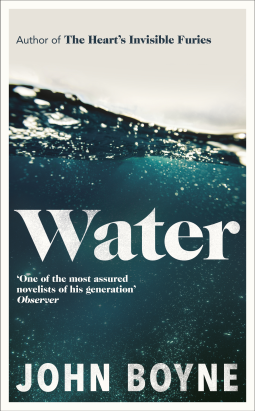
Water is the first in a planned quartet of novellas named after the four elements and linked by some shared characters and themes. I’ve enjoyed many of John Boyne’s longer novels so I was intrigued to see what he could do with a shorter format.

We begin with Vanessa Carvin arriving on an island off the coast of Ireland where she has rented a cottage in the hope of escaping from her past and starting a new life for herself. The first thing she does when she gets there is cut her hair and change her name to Willow, before settling into a quiet existence, going for walks, attending church and trying not to attract too much attention to herself.

The whole book is narrated by Willow and she reveals her secrets to the reader slowly, when she is ready to do so, but we know from the start that something has gone badly wrong with her marriage to Brendan Carvin, Director of the National Swimming Federation. Where is he now? What happened to their eldest daughter, Emma? Why is Willow estranged from her younger daughter, Rebecca, who refuses to answer her texts and keeps blocking Willow’s number? It takes a while for the truth to emerge but, once it does, it gives Boyne the opportunity to return to the themes he has explored in other books such as A History of Loneliness and All the Broken Places (Father Odran Yates, protagonist of the former, is even referred to once or twice as a friend of Brendan’s, strengthening the tie between the two books). These themes include the questions of whether we can be considered complicit in another person’s crimes just by choosing to look the other way when our instincts tells us something is wrong and whether there is always more we could and should have done.

Water is the title of the book, but that element is also worked into the novel in a variety of different ways. Not only is Willow’s husband a swimming coach, but the sea has a role to play in the fate of one of the other characters and Willow’s own name refers to a tree that grows by water. And of course, the island itself is surrounded by water, both physically and metaphorically separating Willow from her old life in Dublin. For such a short book (176 pages in the hardback edition) it’s a very powerful one. It deals with some difficult and uncomfortable topics but, as I’ve come to expect from Boyne, there are also some humorous moments to lighten the mood. I can’t wait to see how he tackles the other three elements; I’m already looking forward to the second book in the series, Earth, which is due in May 2024.

Thanks to Doubleday for providing a copy of this book for review via NetGalley.

Benighted by J.B. Priestley

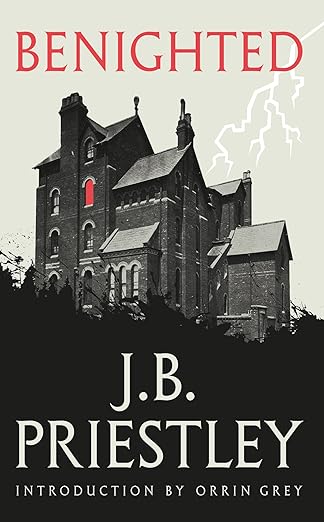
This is the first book I’ve read by J.B. Priestley and a great choice for this time of year. Published in 1927, it was filmed as The Old Dark House in 1935, although I don’t think I’ve seen it so can’t comment on how similar or different it is from the book.

The novel begins as married couple Philip and Margaret Waverton, accompanied by their friend Roger Penderel, get caught in a storm as they try to drive home through the Welsh countryside one night. The rain is torrential and with the roads starting to become impassable, they decide to seek shelter in an old, crumbling mansion, the only house they can see for miles around. It doesn’t look very inviting…

It was the house itself that was so quiet. Driving up like this, you expected a bustle, shadows hurrying across the blinds, curtains lifted, doors flung open. But so far this house hadn’t given the slightest sign in spite of its lighted windows. It seemed strangely turned in upon itself, showing nothing but a blank face in the night. You could hardly imagine that great front door ever being opened at all.

The door is eventually opened by a huge, silent butler and as the trio step inside their sense of unease continues to grow. The house is home to the Femms – the strange and nervous Horace and his fanatically religious sister, Rebecca. The Femms reluctantly allow them to stay for the night, but it quickly becomes obvious to the visitors that they’re unlikely to get much sleep in such an eerie, unwelcoming house. After a while, they are joined by two more people looking for shelter – Sir William Porterhouse, a wealthy businessman, and Gladys du Cane, a chorus girl. The rest of the novel describes the unpleasant, frightening experiences the five guests undergo during their night in the Femm household. It seems that there are other members of the Femm family who haven’t made an appearance yet – and when they do, the guests begin to wish they had stayed outside in the storm after all!

Benighted is a short, quick read and one that I enjoyed, with a few reservations. By the standards of modern horror novels it’s quite tame – I would describe it as creepy and unsettling rather than terrifying – but as a book from the 1920s, it has clearly had a huge influence on what Orrin Grey in the introduction describes as the ‘old dark house’ subgenre. There’s nothing supernatural going on in the novel; the creepiness comes entirely from the portrayal of the odd, sinister characters, the descriptions of the dark, desolate house and the mystery surrounding a locked door upstairs and what lies behind it. I was intrigued to learn that the Addams Family creator, Charles Addams, drew the illustrations for the opening sequence of a 1963 remake of The Old Dark House, because there are some unmistakable similarities between the Addams and Femm families!

Perhaps the real horrors being described in Benighted are the effects of the First World War, which ended less than ten years before the book was published. Priestley himself is quoted as saying that the novel’s characters are “forms of postwar pessimism pretending to be people”. This leads to some long passages in which Priestley explores the mental states of the characters and how they are affected by their night in the Femm house, most notably Roger Penderel who has experienced various traumas during the war, including the loss of his brother at the Battle of Passchendaele, and has been left disillusioned and cynical. These passages added depth to the novel, but at the same time I felt that they slowed down the pace of the plot and pulled me out of the story. In the end, this book didn’t quite work for me either as a horror novel or a psychological study, but it was still an interesting read and has definitely piqued my interest in reading more books by Priestley.

The Wolves of Willoughby Chase by Joan Aiken – #1962Club

I’ve read and enjoyed several of Joan Aiken’s adult novels over the last few years – my favourite so far is Castle Barebane – but until now I’ve never read the book for which she’s most famous, The Wolves of Willoughby Chase. It was first published in 1962, which makes it a perfect choice for this week’s 1962 Club hosted by Simon and Karen.

This is obviously a book aimed at younger readers and I’m sure I would have loved it if I’d read it as a child; however, I was pleased to find that it also has a lot to offer an adult reader. I’m definitely planning to continue with the next book in the series.

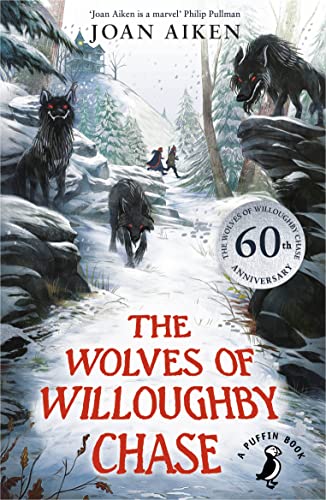
The Wolves of Willoughby Chase is set in England in an alternate history where the Stuarts are still on the throne in the 19th century. It’s 1832, early in the reign of King James III, and a tunnel between Dover and Calais has recently been completed, allowing the migration of a large number of wolves from Europe. In reality, of course, the Channel Tunnel wouldn’t open until 1994, so Joan Aiken really was ahead of her time – although obviously the idea had existed in theory for much longer! Other than the tunnel and the presence of wolves, the world described in this book doesn’t seem very different from the real world of 1832, but I’m assuming the alternate history element becomes more significant later in the series.

Being a children’s book, the story is told from the perspectives of two children – Bonnie and Sylvia Green. Sylvia, an orphan, lives in London with her elderly Aunt Jane, but at the beginning of the novel she travels north by train to Willoughby Chase to stay with her cousin Bonnie. Bonnie’s parents, Sir Willoughby and Lady Green, are going abroad for health reasons and have engaged a governess, Miss Letitia Slighcarp, to take care of the children while they are away.

Left alone with Miss Slighcarp, the girls discover that their new governess is not what she claims to be and has another motive for coming to Willoughby Chase. Soon Bonnie and Sylvia are sent off to a horrible school for orphans run by the cruel Gertrude Brisket. Hungry and miserable, they begin to plan a daring escape, but will they succeed – and if so, where will they go? Will their friend, Simon the goose-boy, be able to help them? And what exactly is Miss Slighcarp planning to do now that she is in full control of Willoughby Chase?

Now that I’ve read this book I can see why it is considered a children’s classic and has been so popular with generations of younger readers over the years. It has an exciting plot, child protagonists to relate to, kindly adult characters to love and villainous ones to hate, and an atmospheric setting with snowy, icy landscapes and packs of wolves roaming the countryside. Speaking of the wolves, they play a big part in two memorable scenes near the beginning of the book, but are barely mentioned after that as the human ‘wolves’ come to the forefront of the story instead. The influence of Victorian literature on Aiken’s writing is also very obvious, from the Dickensian names of the characters – Letitia Slighcarp, Josiah Grimshaw, Mr Gripe, Mr Wilderness – to the portrayal of Mrs Brisket’s school, surely inspired by Lowood School in Jane Eyre.

I thoroughly enjoyed this book and just wish I hadn’t come to it so late! I’m already looking forward to reading the second one in the series, Black Hearts in Battersea.

This is book 41/50 for the 2023 Historical Fiction Reading Challenge.

Wonder Cruise by Ursula Bloom

If you’re not lucky enough to be going on a cruise this summer, this 1934 novel by Ursula Bloom is the next best thing! It will give you the opportunity to visit Gibraltar, Marseille, Malta, Naples and Venice, all without leaving your own home. You’ll sail on the Allando in the company of Ann Clements, a thirty-five-year-old single woman who has never been abroad in her life…until now.

At the beginning of the novel, Ann is living in rented rooms in London and working as a secretary, having been left penniless after her father’s death. Her routine rarely changes – long days in a gloomy office, then home to do the ironing and sewing, with only two weeks by the sea with her controlling, bullying older brother Cuthbert to look forward to. She has almost given up hope of having any excitement in her life, until the day she wins a large sum of money in a sweepstake she didn’t even know she had entered. Ignoring Cuthbert’s advice to invest the money in a trust fund for his daughter, Ann decides to spend it on a Mediterranean cruise – and this one decision will change her life forever.

Even while she’s boarding the ship, Ann is having second thoughts. Is she really brave enough to travel alone? Has she brought the right clothes? Surely she’s too old and boring to be having an adventure like this! As the days go by, however, she finds herself doing things she had never imagined herself doing before and for the first time she begins to learn who she really is and what she wants out of life.

I enjoyed this book from beginning to end; Ann is an endearing character and it was lovely to watch her grow in confidence, start to think for herself and leave behind the shy, insecure woman who has grown up under her brother’s thumb. Having been convinced that she would remain a spinster to her dying day, she also meets several men on the cruise who make her wonder whether it’s not too late to fall in love after all. Yet I wouldn’t describe this book as a romance so much as a book about a woman discovering that romance is possible, if that makes sense!

I also loved the descriptions of the places Ann visits, particularly as I’ve been to some of them myself, as well as life on the ship itself, as Ann gets to know her fellow passengers. They are a real mixture of people and although Ann has some preconceived ideas (thanks to Cuthbert’s influence) regarding those who are ‘not her sort’, as part of her transformation she is exposed to new ways of thinking and starts to change her own views.

Wonder Cruise is the first novel I’ve read by Ursula Bloom, but it seems she was very prolific and wrote over 500 books under various pseudonyms, which got her into the Guinness Book of Records in the 1970s! If you’ve read any of them maybe you can help me decide which one I should try next.

This is book 6/20 of my 20 Books of Summer 2023

Piranesi by Susanna Clarke

I wish it hadn’t taken me so long to decide to read Piranesi. Although I loved Susanna Clarke’s Jonathan Strange and Mr Norrell, this one sounded very different and didn’t immediately appeal to me, but I did still intend to read it sooner rather than later. Now that I have, I think Jonathan Strange is still my favourite, but I enjoyed this book a lot more than I expected to.

Our narrator, Piranesi, lives in a place he calls ‘the House’, a vast, labyrinthine structure containing hundreds of interconnected halls and vestibules. The lower levels of the building are flooded and there is a complex system of tides that only Piranesi understands. The House is his entire world; he believes he has always lived there and can’t remember any other way of life. His only human contact comes twice a week when he meets a man he thinks of as ‘the Other’ and assists him in his quest to find the Great and Secret Knowledge. Apart from himself and the Other, Piranesi is only aware of thirteen more people who have ever existed in the world, all now skeletons resting in the niches and alcoves of the House.

Piranesi is quite content with his solitary existence, exploring the enormous halls and passageways, studying the impressive statues he finds there and recording his discoveries in a series of notebooks. Then one day, everything changes. Could there be a sixteenth person in the world – and if so, who are they and what do they want?

I’m not going to say any more about the plot than that, partly because it’s a story that I don’t want to spoil for anyone who hasn’t read it yet but also because I found the plot secondary to the setting and the sense of place. The atmosphere Clarke creates really is wonderful; from the first chapter I felt fully immersed in the majestic, watery world of Piranesi’s House, a world that is somehow simultaneously both vast and claustrophobic. The book was published during the first year of the pandemic in 2020 and I’m sure if I’d read it then the themes of solitude and a life cut off from the outside world would have resonated with me even more than they did now. It’s no coincidence that Piranesi was also the name of an 18th century Venetian architect and artist famous for his etchings of ‘Imaginary Prisons’ showing huge subterranean vaults complete with staircases, arches and towers.

Towards the end of the book, as we finally began to learn more about the House and how Piranesi and the Other came to be there, I felt that the story started to slightly lose its magic. I had loved the eerie, otherworldly feel of the first half of the book and was less interested in the revelations that came at the end. Still, Piranesi is a very impressive novel and one that I would probably have to read again to fully appreciate everything Susanna Clarke was trying to say.

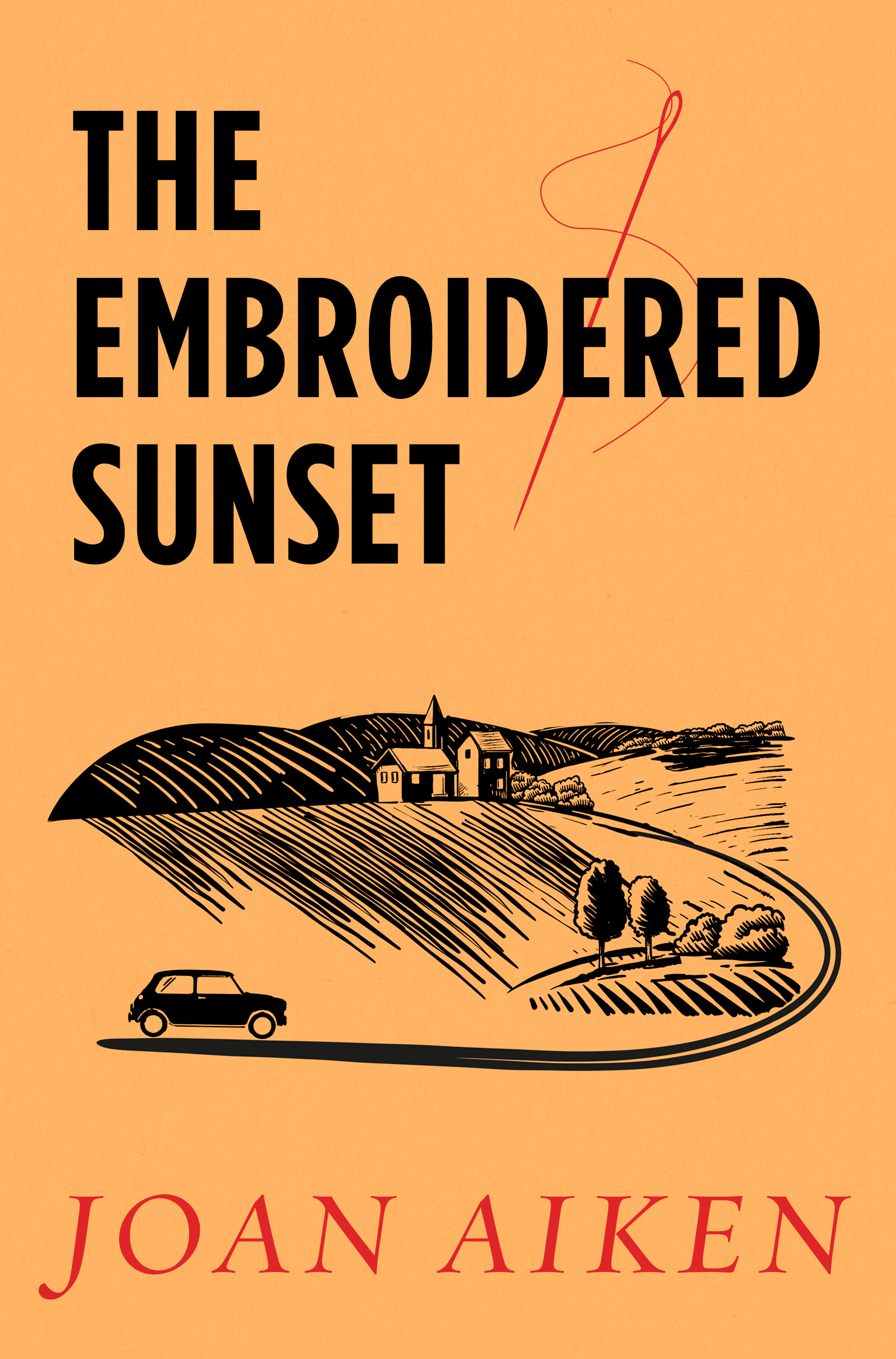
The Embroidered Sunset by Joan Aiken

This is the second of Joan Aiken’s contemporary suspense novels I’ve read; I enjoyed The Butterfly Picnic which I read last year, but I found the plot very bizarre and I was curious to see whether this one would be the same. Well, I can tell you that it’s maybe not quite as over-the-top, but it does come close!

First published in 1970, The Embroidered Sunset begins by introducing us to Lucy Culpepper, a young Englishwoman who has been raised in America by her Uncle Wilbie and Aunt Rose following her parents’ deaths. Lucy is a talented musician who dreams of being taught by the renowned pianist Max Benovek, but her hopes are shattered when Uncle Wilbie confesses that he has spent her inheritance and there’s no money left to pay a piano teacher.

Cleaning the attic later that day, Lucy discovers some beautiful embroidered biblical pictures, the work of Wilbie’s Aunt Fennel who lives in England and used to write regularly, but hasn’t been heard from for a long time. Reminded of the pictures, Wilbie comes up with a plan: if Lucy goes to England and obtains more of Aunt Fennel’s pictures, he will pay her a commission for each one she locates and she can spend the money on piano lessons. While there, she can also try to find Aunt Fennel herself – if the old lady is still alive, that is.

If The Butterfly Picnic felt like a homage to Mary Stewart, this one is packed with references to the Brontës. As well as being set in Yorkshire, there’s a Thrushcross Grange and a Wildfell Hall and even a Colonel Linton and a Cathy Earnshaw, while another character refers to Lucy as Lucy Snowe, the heroine of Villette. However, that’s where the Brontë similarities end; this book has a lively, contemporary feel (for 1970) and while there are some elements that could probably be described as Gothic – an abandoned house, an escaped prisoner, rainy weather – they are woven very lightly into the plot.

I really enjoyed the first half of the novel, with Lucy arriving in Aunt Fennel’s small Yorkshire village, getting to know the eccentric residents and searching for her missing relative. When Lucy does eventually find the old lady, she can’t even be sure whether she really is Aunt Fennel or somebody else, and Aiken keeps us questioning this for the entire book, in a way that I thought was very cleverly done. I felt that the plot lost its way slightly in the second half and the ending seemed to come out of nowhere, with a very surprising fate for one main character and a romance that certainly wasn’t resolved as I’d expected. Still, this is an entertaining novel and perfect escapism, if that’s what you’re looking for!

My favourite Aiken novel so far is still Castle Barebane, but I’ll continue to explore her other books and am hoping to read The Wolves of Willoughby Chase soon.

This is book 3/20 of my 20 Books of Summer 2023

Random Harvest by James Hilton

“Sometimes I have a feeling of being — if it isn’t too absurd to say such a thing — of being half somebody else. Some casual little thing — a tune or a scent or a name in a newspaper or a look of something or somebody will remind me, just for a second — and yet I haven’t time to get any grip of what it does remind me of — it’s a sort of wisp of memory that can’t be trapped before it fades away…”

After enjoying Lost Horizon and Goodbye, Mr Chips, I decided that the next James Hilton book I read would be his 1941 novel Random Harvest. I knew very little about it except that it was very popular at the time it was published and that the film starring Greer Garson and Ronald Colman is one of my mother’s favourites. I haven’t seen it, but I think reading the book first was the right decision anyway, for reasons I’ll explain later.

The novel opens in 1937 with our narrator, Mr Harrison, falling into conversation with a stranger, Charles Rainier, whom he meets on a train to London. Rainier is now a successful businessman and politician, but he confesses to Harrison that since returning from fighting in World War I twenty years ago a whole chunk of memory has been lost to him. He remembers being injured in the trenches of France in 1917 and he remembers waking up in Liverpool one day in 1919, but can recall nothing at all of what happened in between – a period of two years which are now a complete blank to him.

When the train arrives at the station, the two men go their separate ways, but their paths soon cross again and Rainier offers Harrison a job as his secretary. As they get to know each other better, Rainier tells his new friend the story of his life since that day in Liverpool and gradually his earlier memories begin to return, with surprising results.

This book wasn’t quite what I’d expected; I thought it was going to be more of a romance, but although it does have a very moving love story at its heart, there’s much more to Random Harvest than that. It can be considered an anti-war novel, with it’s theme of loss that runs through the story from beginning to end – not just the obvious loss of memory, but also lost opportunities, lost or broken relationships, lost innocence and, on a wider scale, a way of life that has been lost forever as the world moves on from one war and heads straight for another:

It all depended whether one were tired or eager after the strain. Most of us were both — tired of the war and everything connected with it, eager to push ahead into something new. We soon stopped hating the Germans, and just as soon we began to laugh at the idea of anyone caring enough about the horrid past to ask us that famous question on the recruiting posters — ‘What did you do in the Great War?’ But even the most cynical of us couldn’t see ahead to a time when the only logical answer to that question would be another one — ‘WHICH Great War?’

The book has an unusual structure, divided into five long sections with no chapter breaks and moving backwards and forwards in time, piecing together Rainier’s memories as they begin to flood back. However, it’s always easy enough to follow what’s happening. The plot never becomes confusing and the story is structured the way it is for a good reason, allowing Hilton to obscure whole episodes in Rainier’s life from the reader and also from Rainier himself until it’s the right time to reveal them. And when the final revelation comes, right at the end of the book, I was taken completely by surprise as I hadn’t seen it coming at all. Apparently the film is structured differently, with the truth obvious from the beginning instead of being saved for the end, which is why I’m so glad I’ve read the book first and could experience everything as Hilton intended it.

This is a great book, possibly even better than Lost Horizon, and I’ll definitely be looking for more by James Hilton.

This is book 39/50 read from my second Classics Club list.