Wonder Cruise by Ursula Bloom

If you’re not lucky enough to be going on a cruise this summer, this 1934 novel by Ursula Bloom is the next best thing! It will give you the opportunity to visit Gibraltar, Marseille, Malta, Naples and Venice, all without leaving your own home. You’ll sail on the Allando in the company of Ann Clements, a thirty-five-year-old single woman who has never been abroad in her life…until now.

At the beginning of the novel, Ann is living in rented rooms in London and working as a secretary, having been left penniless after her father’s death. Her routine rarely changes – long days in a gloomy office, then home to do the ironing and sewing, with only two weeks by the sea with her controlling, bullying older brother Cuthbert to look forward to. She has almost given up hope of having any excitement in her life, until the day she wins a large sum of money in a sweepstake she didn’t even know she had entered. Ignoring Cuthbert’s advice to invest the money in a trust fund for his daughter, Ann decides to spend it on a Mediterranean cruise – and this one decision will change her life forever.

Even while she’s boarding the ship, Ann is having second thoughts. Is she really brave enough to travel alone? Has she brought the right clothes? Surely she’s too old and boring to be having an adventure like this! As the days go by, however, she finds herself doing things she had never imagined herself doing before and for the first time she begins to learn who she really is and what she wants out of life.

I enjoyed this book from beginning to end; Ann is an endearing character and it was lovely to watch her grow in confidence, start to think for herself and leave behind the shy, insecure woman who has grown up under her brother’s thumb. Having been convinced that she would remain a spinster to her dying day, she also meets several men on the cruise who make her wonder whether it’s not too late to fall in love after all. Yet I wouldn’t describe this book as a romance so much as a book about a woman discovering that romance is possible, if that makes sense!

I also loved the descriptions of the places Ann visits, particularly as I’ve been to some of them myself, as well as life on the ship itself, as Ann gets to know her fellow passengers. They are a real mixture of people and although Ann has some preconceived ideas (thanks to Cuthbert’s influence) regarding those who are ‘not her sort’, as part of her transformation she is exposed to new ways of thinking and starts to change her own views.

Wonder Cruise is the first novel I’ve read by Ursula Bloom, but it seems she was very prolific and wrote over 500 books under various pseudonyms, which got her into the Guinness Book of Records in the 1970s! If you’ve read any of them maybe you can help me decide which one I should try next.

This is book 6/20 of my 20 Books of Summer 2023

Piranesi by Susanna Clarke

I wish it hadn’t taken me so long to decide to read Piranesi. Although I loved Susanna Clarke’s Jonathan Strange and Mr Norrell, this one sounded very different and didn’t immediately appeal to me, but I did still intend to read it sooner rather than later. Now that I have, I think Jonathan Strange is still my favourite, but I enjoyed this book a lot more than I expected to.

Our narrator, Piranesi, lives in a place he calls ‘the House’, a vast, labyrinthine structure containing hundreds of interconnected halls and vestibules. The lower levels of the building are flooded and there is a complex system of tides that only Piranesi understands. The House is his entire world; he believes he has always lived there and can’t remember any other way of life. His only human contact comes twice a week when he meets a man he thinks of as ‘the Other’ and assists him in his quest to find the Great and Secret Knowledge. Apart from himself and the Other, Piranesi is only aware of thirteen more people who have ever existed in the world, all now skeletons resting in the niches and alcoves of the House.

Piranesi is quite content with his solitary existence, exploring the enormous halls and passageways, studying the impressive statues he finds there and recording his discoveries in a series of notebooks. Then one day, everything changes. Could there be a sixteenth person in the world – and if so, who are they and what do they want?

I’m not going to say any more about the plot than that, partly because it’s a story that I don’t want to spoil for anyone who hasn’t read it yet but also because I found the plot secondary to the setting and the sense of place. The atmosphere Clarke creates really is wonderful; from the first chapter I felt fully immersed in the majestic, watery world of Piranesi’s House, a world that is somehow simultaneously both vast and claustrophobic. The book was published during the first year of the pandemic in 2020 and I’m sure if I’d read it then the themes of solitude and a life cut off from the outside world would have resonated with me even more than they did now. It’s no coincidence that Piranesi was also the name of an 18th century Venetian architect and artist famous for his etchings of ‘Imaginary Prisons’ showing huge subterranean vaults complete with staircases, arches and towers.

Towards the end of the book, as we finally began to learn more about the House and how Piranesi and the Other came to be there, I felt that the story started to slightly lose its magic. I had loved the eerie, otherworldly feel of the first half of the book and was less interested in the revelations that came at the end. Still, Piranesi is a very impressive novel and one that I would probably have to read again to fully appreciate everything Susanna Clarke was trying to say.

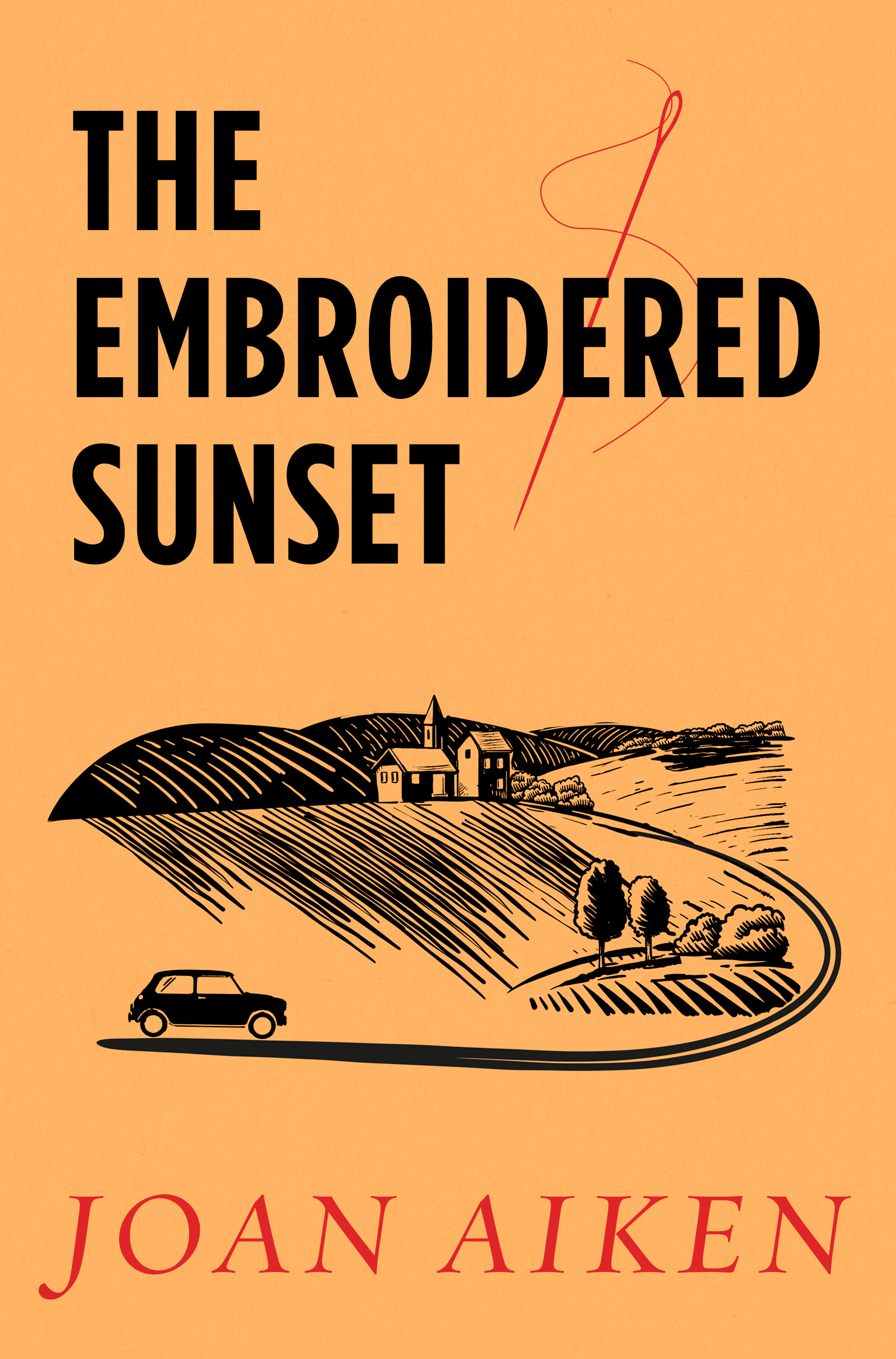
The Embroidered Sunset by Joan Aiken

This is the second of Joan Aiken’s contemporary suspense novels I’ve read; I enjoyed The Butterfly Picnic which I read last year, but I found the plot very bizarre and I was curious to see whether this one would be the same. Well, I can tell you that it’s maybe not quite as over-the-top, but it does come close!

First published in 1970, The Embroidered Sunset begins by introducing us to Lucy Culpepper, a young Englishwoman who has been raised in America by her Uncle Wilbie and Aunt Rose following her parents’ deaths. Lucy is a talented musician who dreams of being taught by the renowned pianist Max Benovek, but her hopes are shattered when Uncle Wilbie confesses that he has spent her inheritance and there’s no money left to pay a piano teacher.

Cleaning the attic later that day, Lucy discovers some beautiful embroidered biblical pictures, the work of Wilbie’s Aunt Fennel who lives in England and used to write regularly, but hasn’t been heard from for a long time. Reminded of the pictures, Wilbie comes up with a plan: if Lucy goes to England and obtains more of Aunt Fennel’s pictures, he will pay her a commission for each one she locates and she can spend the money on piano lessons. While there, she can also try to find Aunt Fennel herself – if the old lady is still alive, that is.

If The Butterfly Picnic felt like a homage to Mary Stewart, this one is packed with references to the Brontës. As well as being set in Yorkshire, there’s a Thrushcross Grange and a Wildfell Hall and even a Colonel Linton and a Cathy Earnshaw, while another character refers to Lucy as Lucy Snowe, the heroine of Villette. However, that’s where the Brontë similarities end; this book has a lively, contemporary feel (for 1970) and while there are some elements that could probably be described as Gothic – an abandoned house, an escaped prisoner, rainy weather – they are woven very lightly into the plot.

I really enjoyed the first half of the novel, with Lucy arriving in Aunt Fennel’s small Yorkshire village, getting to know the eccentric residents and searching for her missing relative. When Lucy does eventually find the old lady, she can’t even be sure whether she really is Aunt Fennel or somebody else, and Aiken keeps us questioning this for the entire book, in a way that I thought was very cleverly done. I felt that the plot lost its way slightly in the second half and the ending seemed to come out of nowhere, with a very surprising fate for one main character and a romance that certainly wasn’t resolved as I’d expected. Still, this is an entertaining novel and perfect escapism, if that’s what you’re looking for!

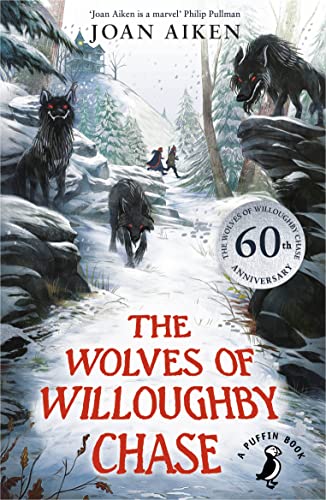
My favourite Aiken novel so far is still Castle Barebane, but I’ll continue to explore her other books and am hoping to read The Wolves of Willoughby Chase soon.

This is book 3/20 of my 20 Books of Summer 2023

Random Harvest by James Hilton

“Sometimes I have a feeling of being — if it isn’t too absurd to say such a thing — of being half somebody else. Some casual little thing — a tune or a scent or a name in a newspaper or a look of something or somebody will remind me, just for a second — and yet I haven’t time to get any grip of what it does remind me of — it’s a sort of wisp of memory that can’t be trapped before it fades away…”

After enjoying Lost Horizon and Goodbye, Mr Chips, I decided that the next James Hilton book I read would be his 1941 novel Random Harvest. I knew very little about it except that it was very popular at the time it was published and that the film starring Greer Garson and Ronald Colman is one of my mother’s favourites. I haven’t seen it, but I think reading the book first was the right decision anyway, for reasons I’ll explain later.

The novel opens in 1937 with our narrator, Mr Harrison, falling into conversation with a stranger, Charles Rainier, whom he meets on a train to London. Rainier is now a successful businessman and politician, but he confesses to Harrison that since returning from fighting in World War I twenty years ago a whole chunk of memory has been lost to him. He remembers being injured in the trenches of France in 1917 and he remembers waking up in Liverpool one day in 1919, but can recall nothing at all of what happened in between – a period of two years which are now a complete blank to him.

When the train arrives at the station, the two men go their separate ways, but their paths soon cross again and Rainier offers Harrison a job as his secretary. As they get to know each other better, Rainier tells his new friend the story of his life since that day in Liverpool and gradually his earlier memories begin to return, with surprising results.

This book wasn’t quite what I’d expected; I thought it was going to be more of a romance, but although it does have a very moving love story at its heart, there’s much more to Random Harvest than that. It can be considered an anti-war novel, with it’s theme of loss that runs through the story from beginning to end – not just the obvious loss of memory, but also lost opportunities, lost or broken relationships, lost innocence and, on a wider scale, a way of life that has been lost forever as the world moves on from one war and heads straight for another:

It all depended whether one were tired or eager after the strain. Most of us were both — tired of the war and everything connected with it, eager to push ahead into something new. We soon stopped hating the Germans, and just as soon we began to laugh at the idea of anyone caring enough about the horrid past to ask us that famous question on the recruiting posters — ‘What did you do in the Great War?’ But even the most cynical of us couldn’t see ahead to a time when the only logical answer to that question would be another one — ‘WHICH Great War?’

The book has an unusual structure, divided into five long sections with no chapter breaks and moving backwards and forwards in time, piecing together Rainier’s memories as they begin to flood back. However, it’s always easy enough to follow what’s happening. The plot never becomes confusing and the story is structured the way it is for a good reason, allowing Hilton to obscure whole episodes in Rainier’s life from the reader and also from Rainier himself until it’s the right time to reveal them. And when the final revelation comes, right at the end of the book, I was taken completely by surprise as I hadn’t seen it coming at all. Apparently the film is structured differently, with the truth obvious from the beginning instead of being saved for the end, which is why I’m so glad I’ve read the book first and could experience everything as Hilton intended it.

This is a great book, possibly even better than Lost Horizon, and I’ll definitely be looking for more by James Hilton.

This is book 39/50 read from my second Classics Club list.

Unfinished Portrait by Mary Westmacott

May’s theme for the Read Christie 2023 challenge is ‘betrayal’ and the suggested title this month is Unfinished Portrait, a 1934 novel which is one of six books Christie published under the pseudonym of Mary Westmacott. Although I haven’t managed to take part in the challenge every month so far this year, I was particularly keen to join in with this one as I’ve previously only read one Westmacott novel – Giant’s Bread – and have been looking forward to reading more of them ever since.

Unfinished Portrait begins by briefly introducing us to Larraby, a portrait painter who is visiting an unnamed island when he comes across a woman sitting alone in a garden. Sensing that something is wrong, Larraby engages her in conversation and discovers that he is correct – she is intending to commit suicide. Not wanting to leave her alone, he accompanies her back to her hotel and listens as she tells him the story of her life and explains the sequence of events that have put such desperate thoughts into her head.

The woman’s name is Celia – at least that’s what Larraby calls her, as he doesn’t know her real name – and her story forms the main part of the novel. A lot of time is spent on Celia’s sheltered childhood, growing up in the late Victorian period in a comfortable home with servants and a nanny until the family’s financial position is affected by the early death of Celia’s father. I only know the basics about Agatha Christie as a person, but apparently Unfinished Portrait is semi-autobiographical, drawing on her own childhood memories to create Celia’s tales of inventing imaginary friends, time spent abroad due to her father’s poor health, the close relationships she had with her mother and grandmother and her first attempts at writing books. Later, Celia finds herself trapped in an unhappy marriage to Dermot, a man who is insensitive, controlling and eventually unfaithful – which again is based on Agatha’s own marriage to Archie Christie. If I’d been more familiar with Christie’s own life I would have appreciated the autobiographical element of the book a lot more, which would probably have added to my enjoyment of it, but I still found Celia’s story compelling in its own right.

After finishing the book, I could see how it fits the challenge topic for this month, exploring the theme of betrayal from several different angles: Dermot betrays Celia with another woman, Celia herself betrays a previous lover, and later in life she feels she has betrayed her daughter. All of these betrayals combine to cause the deterioration in Celia’s mental state that leads to her feeling so unhappy the day she meets Larraby. It’s a sad and emotional story – even sadder knowing that it was how Christie felt about her own situation at that time. Of course, the book was published in the 1930s and so it’s an ‘unfinished portrait’, leaving a lot of things in Celia’s life (and Christie’s) unresolved and incomplete.

I found this book quite different from Giant’s Bread, the only other Westmacott book I’ve read, and I think I preferred that one overall. I’m definitely more of a Christie fan than a Westmacott fan, but these are still great books and I’m looking forward to reading the other four.

The Scapegoat by Daphne du Maurier (re-read) – #DDMReadingWeek

This week HeavenAli is hosting another of her Daphne du Maurier Reading Weeks, assisted by Liz who is collecting the links this year. As you may know, du Maurier is one of my favourite authors; I have now read all of her novels and short story collections at least once and some of her non-fiction (I attempted to rank them all in this post, just for fun). For this year’s Reading Week I’ve decided to re-read her 1957 novel The Scapegoat, which is one I particularly loved when I first read it back in 2011 (here’s my original review). I’ve wanted to read it again ever since, not just because I enjoyed it so much, but also because I formed a theory about what was actually happening in the book and I was curious to see whether I would feel the same way on a second read. I’ll discuss this later in this post, but don’t worry – I’ll include a spoiler warning for those of you who haven’t read the book yet.

The novel opens in Le Mans where our narrator, John, an English academic, is on holiday. When he meets a man who looks and sounds just like him at the station, he feels an instant connection with him and after spending the evening drinking and talking, he accompanies the other man back to his hotel room. He learns that his new friend is a French count, Jean de Gué, and that they have something else in common – they are both depressed and dissatisfied with life, John because he is lonely and has no family, Jean because he has a large family, all of whom are causing him problems. As the night wears on, John falls into a drunken stupor and when he wakes up the next day his companion has disappeared, taking all of John’s clothes and possessions with him and leaving his own in their place.

When Jean’s chauffeur arrives, ready to drive him home to his château in the French countryside, John begins to protest, explaining that there has been a mistake – but then, on an impulse, he decides to take this opportunity to leave his old life behind for a while and continue to impersonate Jean de Gué. On reaching Jean’s château, John finds that nobody suspects he is an impostor and he is able to take Jean’s place within the family. He also begins to understand why Jean had said his family life was so difficult – there are all sorts of tensions and conflicts between various members of the family and to make things worse, the de Gué glassworks is facing financial ruin. It’s up to John to put things right, if he can.

I enjoyed this read of The Scapegoat as much as my first. If you take everything at face value, of course, it requires a huge suspension of disbelief. Not only do John and Jean look completely identical, so much so that not even Jean’s mother, wife or daughter guess the truth, but they also sound exactly the same (and John’s French is so fluent that nobody suspects a thing). Is this likely? Of course not, but it provides du Maurier with her starting point for this fascinating novel and it’s perfectly possible to just accept the plot for what it is and enjoy the story. After all, it’s no more ridiculous than the book that apparently inspired this one – Anthony Hope’s The Prisoner of Zenda. And as always with a du Maurier novel, you can expect beautiful descriptions, a strong sense of place and interesting, if not necessarily very likeable, characters.

*My Scapegoat theory (includes spoilers)*

When I first read this book in 2011, I found myself beginning to wonder – what if John and Jean weren’t doubles after all? What if there was only one man, with multiple personalities (now known as dissociative identity disorder)? It makes so much more sense to me that Jean, feeling that he has made a mess of his life, has created a new identity to deal with the problems he has caused for himself. At the end of the book, when everything has been resolved, he has no further need of John and although it’s not clear exactly how much Jean has learned and how he will manage his relationships and business affairs in the future, he feels that he can now cope on his own. He tells John that he has emptied John’s bank account, sold his flat and furniture in London and resigned John’s position as university lecturer – in other words, destroyed John altogether, because John never really existed and is no longer necessary.

After finishing the book on that first occasion, I remember looking at other reviews and being surprised that almost nobody else had mentioned that any of this had occurred to them too. I accepted that I must have misunderstood the whole book; however, the Daphne du Maurier website quotes a letter written by Daphne herself regarding The Scapegoat which seems to support my interpretation. Her reference to ‘that man’s nature’ doesn’t really make sense to me if there were actually two separate men in the book.

“Every one of us has his, or her, dark side. Which is to overcome the other? This is the purpose of the book. And it ends, as you know, with the problem unsolved, except that the suggestion there, when I finished it, was that the two sides of that man’s nature had to fuse together to give birth to a third, well balanced.”

On reading the book for a second time, I have been paying closer attention and looking for subtle clues and hints. There are just three main obstacles in the way of my theory. First, there’s Jean’s dog, César, who is hostile towards John and the only member of the household who seems to sense that something is wrong. However, when Jean and John meet up again at the end of the book, Jean explains that John hasn’t been whistling to César in the correct way and this is why he hasn’t been obeying his commands. Also, during a scene in a hospital, we are told that Jean is blood group O and John is blood group A – but as it’s John himself who tells us this I don’t think it can be taken as conclusive evidence of anything. The only thing I can’t manage to explain away is that when Jean calls the château to inform John that he’s coming home, it’s a servant who answers the phone and tells John that someone wants to speak to him. If it wasn’t for this one moment, I would have been nearly convinced that I was right!

I did find plenty of things to support my theory, including the fact that, when speaking to Jean’s family for the first time, John finds that the ‘tu‘ form of French comes naturally to him, although he’s never used it before; the way John muses that Jean’s ‘inner substance was part of my nature, part of my secret self’; and in particular, the whole conversation he has with Jean’s mistress, Béla, in Chapter 12.

‘You said something a while ago about taking stock of oneself,’ I said. ‘Perhaps that’s just what I’ve been doing, over a period of time, and it came to a head that evening in Le Mans. The self I knew had failed. The only way to escape responsibility for failure was to become someone else. Let another personality take charge.’

‘The other Jean de Gué,’ she said, ‘the one who’s been hidden for so long beneath the surface gaiety and charm, I’ve often wondered if he existed. If he’s going to emerge, he’d better do so now. Time’s getting on.’

What do you think?

*End of spoilers*

Overall, after finishing my second read of the book, I think probably the way everyone else has interpreted it is the correct way, but du Maurier does like to be ambiguous and I enjoyed looking below the surface and dissecting the different layers! It really is a fascinating novel and still one of my favourites by du Maurier. Now I just need to find time to revisit some of her others!

The Bird in the Tree by Elizabeth Goudge – #1940Club

This week Karen of Kaggsy’s Bookish Ramblings and Simon of Stuck in a Book are hosting another of their very popular clubs in which we all read and write about books published in the same year. It’s 1940 Club this time and I’ve decided to start with a book by an author I already know and love – Elizabeth Goudge. The Bird in the Tree is the first in her trilogy of books about the Eliot family who live at Damerosehay, a house on the south coast of England.

It was the widowed Lucilla Eliot who had first chosen to make her home here, in this little shipbuilding village in Hampshire, but Damerosehay has now become a sanctuary for the whole family. As the novel opens, in the autumn of 1938, Lucilla’s son George has separated from his wife and their three young children have been sent to stay with their grandmother. Lucilla’s maid and beloved companion Ellen, her middle-aged daughter Margaret, and two very different dogs – Pooh-Bah and the Bastard – complete the household, while nearby lives Lucilla’s son, Hilary, the village parson.

At the beginning of the novel, the family are awaiting the arrival of another of Lucilla’s grandsons, twenty-five-year-old David. David’s father, Lucilla’s favourite son, died at the end of the Great War and he and his grandmother have always been very close. George’s children love David too and are excited about their cousin coming home to Damerosehay. However, David’s visit is destined to be an unhappy one this time. He has fallen in love with George’s ex-wife, Nadine – his aunt by marriage – and plans to marry her. David is dreading breaking the news to Lucilla, let alone his three little cousins, and knows he will be forced to choose between his feelings for Nadine and his love for his home and family.

Although this is a book for adults, Goudge writes about children with a lot of depth and understanding. In this book, we have nine-year-old Ben, gentle, sensitive, with a vivid imagination; his younger brother, the robust and mischievous Tommy, his complete opposite in every way; and five-year-old Caroline, a quiet, withdrawn child who sucks her thumb and wants only to feel loved by her mother. The adult characters are equally well drawn. I particularly liked Lucilla’s two unmarried children, Margaret and Hilary, dismissed by their mother for being a ‘dowdy frump’ and ‘stout and bald’, respectively, but who have both decided that even though their lives haven’t gone quite the way they had hoped, they’re going to make the best of things and find happiness wherever they can. Nadine is another character who interested me; she is also disapproved of by Lucilla for being too independent and worldly, but the two begin to find some common ground by the end of the book.

Goudge’s descriptive writing is always beautiful and in this novel she brings the fictional Hampshire village of Fairhaven to life with details of local customs, history and legends, basing it on the real village of Buckler’s Hard on the banks of the Beaulieu River. She makes the setting feel almost dreamlike, especially as there are a few elements of the story that are nearly, but not quite, supernatural. Several of the family members, including Lucilla, David, Ben and Caroline, have such a close affinity with Damerosehay and Fairhaven that they begin to experience visions and ghostly encounters, but these appear to be within their imaginations rather than real. There’s also a recurring motif of birds, particularly blue birds, which explains the novel’s title.

This novel, like Goudge’s others, feels very sentimental and quite dated, especially in its views on subjects like divorce and marriage, but I enjoyed it anyway. Towers in the Mist is still my favourite of her books – I loved the beautiful depiction of Elizabethan Oxford – but I’m looking forward to reading the other two books in this trilogy, The Herb of Grace and The Heart of the Family.