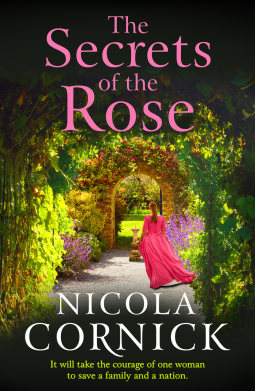
The Queen of Fives by Alex Hay

The Queen of Fives. They breathed the title with reverence on the docks, down the coastline. A lady with a hundred faces, a thousand voices, a million lives. She might spin into yours if you didn’t watch out…She played a glittering game: lifting a man’s fortune with five moves, in five days, before disappearing without a trace.

I enjoyed Alex Hay’s first novel, The Housekeepers, about a group of servants staging a heist during a ball in a grand London house. I hoped for something similar from his next book – and that’s what I got! If anything, this one is more complex, ambitious and inventive.

It’s 1898 and Quinn Le Blanc has five days to convince the Duke of Kendal to marry her and trick him out of his fortune. Why five days? Because Quinn is the ‘Queen of Fives’, the leader of a network of London con artists based at a house known as The Château who play by a specific set of rules. Their current game is called False Heiress and there are a number of steps that have to be carried out on each day of the con. The Château has been operating for generations and there have been many previous Queens. During Quinn’s eight-year reign, however, things have started going wrong: debts are mounting and the house is falling into disrepair. She desperately needs this latest scheme to be a success.

Quinn is assisted by Mr Silk, whose job is to serve the Queen and to guard the all-important Rulebook, which contains the instructions for the Château’s various games. But watching from the shadows is the mysterious Man in the Blue Silk Waistcoat – and also the equally mysterious Woman in the Cream Silk Gown – who will do whatever it takes to stop Quinn in her tracks.

As you can see, this is an unusual story based on an unusual premise and, to be honest, I was never fully convinced by it. I didn’t really understand why it was so important to complete the game within five days and to stick so rigidly to the Rulebook, when allowing more time or adapting the rules to fit unforeseen circumstances could have made it easier to win. Still, I managed to just suspend disbelief and go along with it! After a slow start, with time spent introducing the characters and the history of the Château, things gradually pick up pace and by the middle of the book I was gripped.

As with The Housekeepers, the reader is in the rare position of wanting the villains, in this case Quinn and her friends, to succeed. However, we also get to know the victims, the Duke of Kendal and his sister, Tor (short for Victoria). Tor is a single woman in her thirties who still lives with her brother and their stepmother and she is worried about losing her home should the Duke decide to marry. Tor is immediately suspicious of the woman who appears out of nowhere and introduces herself as Miss Quinta White, but the Duke himself seems unsuspecting. Later, we discover that he has reasons of his own for wanting to marry quickly, so Quinn’s attentions aren’t unwelcome to him – though, of course, he has no idea who she really is or what her plans are.

There are some great twists towards the end of the book and although in hindsight I feel I should probably have seen them coming, I didn’t and was taken by surprise. I think overall I preferred The Housekeepers, but both books are fun and I’m already looking forward to a third book by Alex Hay, whenever and whatever that may be.

Thanks to Headline for providing a copy of this book for review via NetGalley.

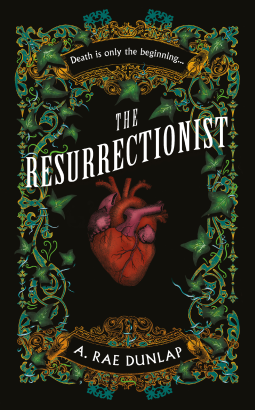
The Ghosts of Rome by Joseph O’Connor

The story of our Roman Escape Line has been characterised as a tale of courage. But it was always a story of friendship, first and last. The friends we knew and those we did not, some fleetingly encountered, others never at all. I am no sentimentalist, but I call it a love story.

This is the second book in Joseph O’Connor’s new trilogy inspired by the true story of the Rome Escape Line, a secret network that smuggled thousands of Jewish refugees and Allied soldiers out of Nazi-occupied Rome. The first novel, My Father’s House, introduces us to the work of the Escape Line who meet in the neutral Vatican under the guise of a choir to avoid the attentions of the Gestapo and focuses on one member in particular – Monsignor Hugh O’Flaherty, the Irish Catholic priest who is the leader of the network.

The Ghosts of Rome continues the story, beginning in February 1944, six months into the Nazi occupation. Although Hugh O’Flaherty is still part of the group, we see very little of him in this book as he steps into the background to let other characters’ stories be told. The main focus this time is the widowed Contessa Giovanna Landini, known as Jo, whose palazzo is commandeered by Gestapo officer Paul Hauptmann. Hitler isn’t satisfied with Hauptmann’s performance in Rome so far and he is under pressure to produce results. If he could obtain evidence of the Choir’s activities he’s sure that would help to improve his reputation with the Führer. Hauptmann hopes that the Contessa, whose house he is living in, will lead him to her fellow Escape Line members, but Jo is a resourceful woman and decides to take advantage of Hauptmann’s interest in her to try to protect herself and the Choir.

Another significant storyline revolves around a Polish airman who is shot down over Rome. Some members of the Escape Line want to help him, but others are more cautious. How can they be sure he is who he says he is? What if he betrays them? When it becomes obvious that he has life-threatening injuries and will die if not treated, they are faced with an important decision to make.

Of the two books, I think I preferred My Father’s House because it was more suspenseful, describing the countdown to a major mission on Christmas Eve, and because I found Hugh O’Flaherty such an interesting character. This is an excellent book as well, though, and I’m sure other readers will like it better than the first one. Although Jo Landini is at the forefront of the story, most of the characters we met in the previous book also reappear, including British Envoy Sir Francis D’Arcy Osborne, diplomat’s wife Delia Kiernan and escaped soldier Sam Derry. We also see a lot of Delia’s teenage daughter, Blon, who is angry when her mother leaves the Escape Line and insists on trying to take her place, which not everyone is happy about! These are all people who really existed, but O’Connor includes an author’s note to explain that the way they are portrayed in the book is just his interpretation and shouldn’t be relied on as fact.

If you haven’t read the previous novel, you’re probably wondering whether it’s necessary to have read it before starting this one. I would say it’s not really essential, but it would make it easier to follow what’s happening in this book. There are a lot of characters and O’Connor constantly switches between different perspectives throughout the novel, as well as inserting passages written in other styles – such as transcripts of (fictional) BBC interviews – which means you do need to pay attention otherwise it would be easy to lose track of things. As with My Father’s House, I was particularly interested in the insights we get into the mind of Paul Hauptmann – a very human villain, which just makes him all the more unsettling to read about. It’s the brave and tireless work of the Escape Line, however, that makes these novels so compelling; in this book, I loved the way they managed to hide hundreds of people inside a derelict old theatre right under the noses of the Gestapo.

This is a planned trilogy and although I can’t see any details of the third book yet, I know it will be something to look forward to!

Thanks to Harvill Secker for providing a copy of this book for review via NetGalley.
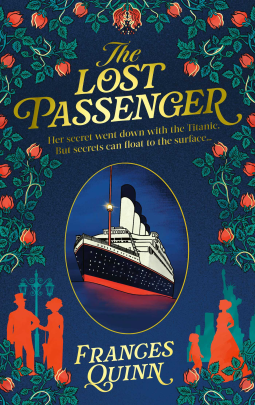
Absolutely and Forever by Rose Tremain

I’ve had mixed experiences with Rose Tremain’s books, enjoying some and struggling with others. Absolutely and Forever was shortlisted for last year’s Walter Scott Prize for Historical Fiction and as it’s a personal project of mine to try to read all of the shortlisted titles, I decided to read this one despite it not sounding particularly appealing to me. It’s a short book (under 200 pages), so at least it wouldn’t be too big a commitment if I didn’t like it.

Here’s how the book begins:

When I was fifteen, I told my mother that I was in love with a boy called Simon Hurst and she said to me, ‘Nobody falls in love at your age, Marianne. What they get are “crushes” on people. You’ve just manufactured a little crush on Simon’.

What Marianne Clifford has manufactured, however, is more than just a little crush. It’s an obsession. She knows she’s going to love Simon Hurst ‘absolutely and forever’ and at first it seems that he feels the same way about her – but when he leaves for Paris to study at the Sorbonne and never returns, Marianne’s heart is broken. As the years go by, Marianne tries to move on and build her own life, but she can never quite let go of her love for Simon and the dreams she once had.

The book is set in the 1950s and 1960s and Marianne narrates the story of her life during and after her relationship with Simon. A lot happens to her over the years – she attends secretarial college in London, has several jobs, gets married and makes new friends – but all the time she’s pining for Simon, which holds her back from finding happiness and contentment. It’s understandable that she would be upset for a while, but when she continues to grieve for years and years afterwards, it quickly becomes frustrating, particularly as it’s so one-sided and Simon clearly doesn’t care as much as she does. But Marianne herself is naïve, innocent and childlike, never really seeing the world as other people see it, so it’s maybe not surprising that she reacts the way she does. Although she grows from a teenager into an adult over the course of the book, she doesn’t develop very much as a person and the Marianne at the end is not a lot different from the Marianne at the beginning.

Although I didn’t dislike Marianne and found her story quite sad, it was Hugo, the man she marries, who had my sympathy. Hugo is completely devoted to Marianne and she does like him very much, but her feelings for Simon prevent her from loving anybody else. At least Marianne is lucky enough to have a close female friend in Petronella, a sensible, practical Scottish woman she’s known since their school days, and Petronella does her best to help her move on with her life, but ultimately she can’t control whether Marianne chooses to take her advice.

The time period the story covers is the period when Rose Tremain herself was a teenager and young adult and I’m sure she’ll have drawn on some of her own personal memories and experiences of that era. Having read her memoir, Rosie: Scenes from a Vanished Life, however, this novel seems to be only partly autobiographical – Marianne’s life follows a different course from Rose’s own, but there are also some similarities, such as Marianne’s desire to be an author (for much of the book she’s working on a novel narrated by an Argentinian horse).

As I’ve mentioned, Absolutely and Forever appeared on the Walter Scott Prize shortlist in 2024, but it didn’t win and I think I can see why. Although I found it quite an easy, enjoyable read (despite Marianne being a bit irritating), sometimes the more readable books aren’t the ones that win prizes and this one doesn’t really tackle important or topical issues like the others on the list. I have the final shortlisted title, The New Life by Tom Crewe, to read soon.

The Voyage Home by Pat Barker

This is the final novel in Pat Barker’s trilogy telling the stories of some of the women involved in the Trojan War. Books one and two, The Silence of the Girls and The Women of Troy, focus on Briseis, who was given to Achilles as a prize of war, although I was surprised by the number of male perspectives that are also included in those two books, considering the titles! In The Voyage Home, we leave Briseis behind to follow three other characters as the victorious Greeks return home from the war.

One of these is Cassandra, the Trojan princess and prophet who is cursed never to be believed. Like Briseis, Cassandra has become a war prize – in her case, she has been taken as a concubine by Agamemnon, King of Mycenae. Then there’s Ritsa, a Trojan slave and healer given the job of accompanying Cassandra on the journey to Mycenae and acting as her personal servant. Finally there’s Clytemnestra, Agamemnon’s wife, who is grimly preparing for her husband’s return. It’s been a decade since Agamemnon sacrificed their daughter Iphigenia to the gods in exchange for a wind to sail to Troy, but Clytemnestra has never forgiven him and is ready to take her revenge.

I enjoyed the first two books in this trilogy and I did like this one as well, but not quite as much. I’ve read several other novels about Clytemnestra and the events of the Oresteia recently (including Elektra by Jennifer Saint and Clytemnestra by Costanza Casati) and I felt that her sections of the novel didn’t offer me much that was new or different. Having said that, the way Barker portrays Clytemnestra’s emotions – her anger, bitterness and grief – was very well done. There are also some atmospheric scenes of ghostly children haunting the palace – although, oddly, chanting British nursery rhymes such as Oranges and Lemons, which pulled me right out of the Ancient Greek setting!

Of the main characters, Ritsa is probably the easiest to like and as a servant, of a lower social status than the others, she has an interesting perspective on the events that unfold. Cassandra is a fascinating, complex character in the unusual position of being both enslaved and the wife of the king. She has already predicted the deaths of herself and Agamemnon but due to the curse she is under, nobody takes her seriously. I would have liked more of the book to have been written from Cassandra’s point of view, but instead Barker concentrates on showing her through the eyes of the other women: Clytemnestra, who views her with suspicion (after all, Agamemnon was her husband first) and Ritsa, who initially resents Cassandra for not being her beloved friend Briseis, who has not accompanied them to Mycenae. Ritsa sees Cassandra as wild and deluded, but gradually starts to have more sympathy for her.

This is a satisfying end to the trilogy, although if you haven’t read the first two books I’m sure you could read this one as a standalone.

Thanks to Hamish Hamilton for providing a copy of this book for review via NetGalley.

The Ghost of Madison Avenue by Nancy Bilyeau

Christmas is always a good time to read ghost stories, I think! This one is even set in December – and is also a novella, which makes it a good choice if you’re looking for something quick to read over the Christmas holidays.

The story takes place in New York in December 1912. Helen O’Neill is part of an Irish-American family from the Bronx and since being widowed several years earlier she has been living with her two older brothers. Helen is determined not to be a financial burden on her family and has been working at the Metropolitan Museum of Art where she has proved to have a talent for restoration. She’s so good at it, in fact, that she catches the attention of the librarian Belle da Costa Greene, who entices her away from the museum with the offer of a job in the private library of the financier J.P. Morgan.

Starting work at the Morgan Library on Madison Avenue, Helen is captivated by the beautiful building with its thick bronze doors, marble rotunda and exquisite murals. But in the street outside, she sees something even more memorable – a young woman in old-fashioned dress, inappropriate for the cold winter weather, who suddenly disappears without trace. As the days go by, Helen has several more encounters with this strange girl whom only she seems able to see. Eventually, she begins to ask herself whether the girl could be a ghost and if so, is she trying to tell Helen something?

Even without the supernatural element, The Ghost of Madison Avenue is a fascinating piece of historical fiction. Morgan, of course, was a real person and his library on Madison Avenue can still be visited, but so was Belle da Costa Greene, a woman I’d never heard of but who seems to have led an interesting life. As I read, I kept thinking that she really deserved a novel of her own, then I discovered that at least two have already been written! They are The Personal Librarian by Marie Benedict and Victoria Christopher Murray and Belle Greene by Alexandra Lapierre.

As a ghost story, I thought the book was less successful. Not all ghost stories are scary (and not all need to be), but I didn’t find this one even a little bit eerie. It’s more of a story about Helen’s grief – she has never really come to terms with her husband’s death – and laying to rest the ghosts of her past so that she can finally move on with her life. I also found the book too short to be completely satisfying. A longer novel would have allowed Bilyeau to expand on some of the other topics she touched on, such as the aes sidhe of Irish mythology, and Helen’s relationship with her sister Bernadette, who has become a nun.

Still, I enjoyed this book and it didn’t take long to read! I’ve now read everything currently published by Nancy Bilyeau and will look forward to her next book in the Genevieve Planché series, hopefully coming next year.

Book 54 for the Historical Fiction Reading Challenge 2024

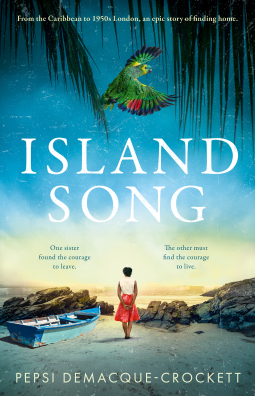
Gabriel’s Moon by William Boyd

William Boyd’s The Romantic was one of my books of the year in 2022, so I was excited about reading his new one, Gabriel’s Moon – although it did sound very different. Unlike The Romantic, which follows the entire life story of its hero, this book is a spy novel set over a much shorter period of time.

It’s 1960 and travel writer Gabriel Dax is visiting what is now the Democratic Republic of the Congo, where he has the opportunity to interview the new Prime Minister, Patrice Lumumba. During the conversation, which Gabriel captures on tape, Lumumba explains that he has enemies who want him dead and he provides the names of the three people he thinks are plotting to kill him. On his return home to London, Gabriel is convinced somebody has been inside his house in his absence and has been searching for something. It seems that somebody wants Gabriel’s tapes of the Lumumba interview – and their attempts to obtain them become more desperate once news emerges that Lumumba has been executed by a firing squad.

His accidental involvement in the Lumumba conspiracy brings Gabriel into contact with the mysterious Faith Green, an MI6 intelligence officer who sends him on a series of missions, the purpose of which Gabriel doesn’t fully understand. In a secondary storyline – which explains the title of the novel – Gabriel decides to consult a psychoanalyst, Dr Katerina Haas, in an attempt to get to the bottom of the mental health issues that have plagued him all his life, ever since his mother was killed in a house fire when he was six years old. The official cause of the fire was given as Gabriel’s night light, a candle inside a moon-shaped globe, but Gabriel’s memories of what actually happened that night are very different.

I enjoyed this book overall, but I found it a bit slow at times and, as a thriller, not particularly thrilling. There’s a lot of travel to various locations in Europe and Africa (all beautifully evoked), with a lot of sitting around in bars drinking and talking, but I never really felt that Gabriel was in much danger. Having said that, I was never bored and became fully drawn into the world of espionage, spies and double agents that Boyd creates, all set against a backdrop of the Cold War. I found it slightly unbelievable that the spies Gabriel meets all speak to him so openly, readily sharing secret information with him – but then, Gabriel doesn’t always know how to interpret that information and it’s his very innocence and gullibility that makes him so useful to Faith Green and MI6. As the story progresses, he eventually decides it’s time to stop being the self-described ‘useful idiot’ and try to take control of his own destiny.

Faith Green remains a bit of a shadowy, enigmatic character throughout the book and because I felt I never really got to know her, I became irritated by Gabriel’s obsessive infatuation with her, particularly as he already has a girlfriend, Lorraine – whom he looks down on because of her working-class background, while at the same time admitting that he’s only with her because he finds working-class women sexually attractive. Although I didn’t dislike Gabriel in general, some of his attitudes leave a lot to be desired!

One of the most interesting aspects of the novel for me was seeing Gabriel work through his hazy memories and his feelings of guilt about the tragic fire that took his mother’s life. Through his psychoanalysis sessions with Dr Haas, Gabriel is inspired to carry out his own investigations into the night of the fire and begins to uncover the truth. I thought this storyline worked well alongside the espionage one and gave us some more insights into Gabriel’s character.

Although Gabriel’s Moon works perfectly as a standalone, there were some loose threads left at the end that made me think this could be the first in a series – and I was pleased to find that William Boyd is indeed working on a second book. I’ll be looking out for it, but I also have lots of Boyd’s earlier novels still to read. I would be happy to hear your recommendations!

Thanks to Viking for providing a copy of this book for review via NetGalley.
Book 53 for the Historical Fiction Reading Challenge 2024

The Royal Rebel by Elizabeth Chadwick

This is the first of a planned pair of novels telling the story of Joan of Kent, cousin of King Edward III. Chadwick refers to her throughout the book as Jeanette because that was the name given to her by the King’s son, Edward (known as the Black Prince), who had it engraved on a silver cup. I’ll do the same in this review to avoid confusion.

The Royal Rebel opens in 1338 with Jeanette preparing to leave her family behind and travel overseas with the royal court for the first time. Jeanette is only twelve years old, so in the absence of her mother she is chaperoned by Katerine, Countess of Salisbury. During the journey to Antwerp, Jeanette is drawn to one of the King’s household knights, Thomas Holland, and once they reach their destination they find opportunities to spend time together away from the watchful eye of the Countess. They continue their relationship for more than a year until Jeanette becomes pregnant and they decide to marry in secret, knowing that they would be unlikely to get the consent of her family or the King.

Soon after the wedding, Jeanette loses the child and then Thomas leaves to go to war. In his absence, Jeanette is forced into marriage with William Montagu, her younger brother’s friend whom she has always disliked. William is the son and heir of the Earl of Salisbury and both Jeanette’s mother and the Countess of Salisbury see it as a wonderful match. Although Jeanette confesses that she is already married and can provide evidence, the two women refuse to acknowledge it and the Montagu marriage goes ahead anyway. The rest of the novel follows Thomas and Jeanette in their long battle to prove the legitimacy of their marriage so that they can live together as husband and wife at last.

I love Elizabeth Chadwick’s books but wasn’t sure I was going to like this one at first. Most of the first half of the novel is devoted to the romance between Jeanette and Thomas and not much else – and with this being the first of two books on Jeanette’s life, Chadwick takes her time in developing this part of the story. Eventually, though, things do get much more compelling as our hero and heroine become embroiled in their mission to have their marriage ruled valid by the Pope. Jeanette’s mother, Margaret Wake, and the Countess of Salisbury are very much the villains here as they destroy evidence, play politics behind the scenes and even imprison Jeanette to ensure nothing interferes with their plans (in reality, it seems unclear whether they were aware of Jeanette’s marriage to Thomas Holland before pushing her into a bigamous marriage with William Montagu).

William is depicted as weak and immature, unwilling to defy his mother and make decisions of his own, but I – and I think Jeanette as well – began to feel sorry for him as the novel progressed, because he was under the control of the Countess just as much as she was and was wasting years of his life trapped in a false marriage to someone who would never love him. Jeanette, on the other hand, is the ‘rebel’ of the title and although, like William, she’s constrained by society and her noble status, she knows what she wants out of life and is determined to find a way to get it, however long it takes. Her brother, John, sums up the situation perfectly:

‘Women, when they gather together in their sewing groups to gossip, arrange marriages for their relatives like stitching secret patterns on their embroideries. I envy you because you have chosen to sew your own colours and to walk away from it all, even at a great cost to yourself and others.’

Jeanette’s age, being barely in her teens at the time of her marriage to the older Thomas, will obviously be problematic to a modern audience so Chadwick chooses not to focus on it too much. Although she does tell us at the beginning how old Jeanette is, she doesn’t make a big thing of it and it’s easy to forget about the age difference as you read. This first novel only covers the early part of Jeanette’s life, ending in 1350, so anyone who knows this period of history will know that there’s a lot more to come in the second novel. There’s no news on its publication yet, but I’ll be looking out for it.

Thanks to Little, Brown Book Group UK for providing a copy of this book for review via NetGalley.
Book 52 for the Historical Fiction Reading Challenge 2024