The Ghost of Lily Painter by Caitlin Davies

When Annie Sweet and her daughter Molly move into their new home in the Holloway area of London, Annie becomes obsessed with researching the lives of the people who previously lived in the house. Looking at the 1901 census records she discovers a list of the former residents of 43 Stanley Road, including William George, a police inspector, and one of his lodgers, a young music hall star whose name was Lily Painter. As Annie begins to investigate Lily’s story, she uncovers a scandal involving two notorious ‘baby farmers’, Nurse Sach and Mrs Walters – and at the same time, she becomes aware of a ghostly presence at 43 Stanley Road.

The book has four different narrators: Annie Sweet in the present day, Lily Painter and Inspector William George in Edwardian London, and another character who narrates some later sections set during World War II. This could have become confusing, but it didn’t – it was actually very easy to follow what was going on and is an example of multiple time periods and narrators being handled perfectly! I found all the different threads of the story equally interesting and everything seemed relevant to the overall plot. And I appreciated the way the author had made an effort to change her writing style to suit the voice of each narrator: Inspector George’s journal has a formal feel, for example, while the wartime narrator uses a lot of slang. My only criticism is that the plot relies heavily on coincidences and the way in which all the parts of the story are brought together at the end is both predictable and hard to believe.

As well as being a great story, I was also able to learn something from this book. I didn’t know anything about baby farmers and had never heard of Amelia Sach and Annie Walters, but they were real people and you can read about their crimes online. Baby farmers were people who advertised for pregnant women, offering to care for them before and during the birth and to arrange for adoption of the child if necessary. Many of these mothers were desperate young women who knew they would be unable to keep their child for financial reasons or because it was illegitimate. Of course, the young mother had to pay the baby farmer for their services and while some baby farmers may have genuinely tried to find an adoptive home for the child, others would just take the money and murder the baby. As you can probably imagine, this is all very disturbing to read about and I did have tears in my eyes once or twice!

Finally, I should point out that although the book is called The Ghost of Lily Painter, and yes there is a ghost, this is not really a traditional ‘ghost story’. Although a few scenes were slightly creepy, I was never actually frightened so if you’re looking for something scary and chilling you might be disappointed. I would recommend this book to people who enjoy historical fiction set in the Edwardian period and World War II, and despite the baby farming storyline this is a light, entertaining read.

The Children’s Book by A.S. Byatt

Since The Children’s Book was published in 2009 I’ve picked it up a few times but have been put off by the length (over 600 pages of small print in the paperback edition) and also by the very mixed reviews. It seems that people have either loved this book or have found it almost impossible to get through. After I read my first A.S. Byatt book, Possession, earlier this year and found it easier to read than I had expected, I decided it was time I stopped feeling intimidated and tried this one too. I enjoyed it but now that I’ve read it I can understand why it might be a love it/hate it type of book. If you’re not interested in the historical and cultural events of the Victorian and Edwardian periods, if you don’t like reading fairy tales, if you prefer books with more action and less description, then this may not be the right book for you. It’s such a complex novel with so many layers I would find it impossible to write a summary of the plot, but I’ll do my best to give you an idea of what the book is about.

In The Children’s Book, Byatt tells the story of the Wellwood family and their friends and neighbours in the context of the larger social changes taking place in the world around them. As you can probably tell, despite the title, this is not a book for children. However, many of the characters are children at the beginning of the book and we watch them grow up over the years and begin to follow their own paths in life. As the children become adults they make some surprising discoveries and find that nothing is quite as it seems.

The book begins in the late Victorian period and ends just after World War I, so all kinds of important historical moments and events are covered, from the Exposition Universelle de Paris to the death of Queen Victoria and the Boer War. Some of the characters become involved with groups and movements such as the Fabians, anarchists and Suffragettes. There are also lots of descriptions of the Arts and Crafts movement, pottery and ceramics, puppet shows, summer crafts camps, making lanterns etc. And from the world of literature there are references to authors including Oscar Wilde, the Brothers Grimm, J.M. Barrie and Kenneth Grahame.

One of the main characters, Olive Wellwood, is a famous writer of fairy tales and she creates a special book for each of her children, Tom, Dorothy, Phyllis, Hedda and Florian. Inside each child’s book is a personalised story Olive has written for them. We are given the chance to read extracts from some of these stories and this was one of my favourite aspects of the novel. I know not everyone will be as enthusiastic about the fairy tales as I was, but I did really enjoy them.

In addition to the Wellwood family, there are literally dozens of other characters, each of them with an interesting story of his or her own. As the book progresses the relationships between the various characters become very complex and intricately linked. Considering the length and scope of the book, I think having a character list to refer to would have been very useful! Of all the characters in the novel, I think Dorothy Wellwood was my favourite. I was interested in her attempts to study medicine and become a doctor, something very rare and difficult for a woman at the beginning of the 20th century. In Dorothy and a couple of the other young female characters who also consider going to university, we see how women often felt that they had to make a choice between marriage and a career and couldn’t have both.

Something I probably haven’t made clear yet is how dark and moving this book is at times with its portrayal of the loss of childhood innocence and with the number of devastating family secrets that are revealed. A.S. Byatt has said that she wanted to explore the effects of writing children’s books on an author’s real children, and one of the saddest parts of the novel for me was the storyline involving Olive Wellwood’s eldest son, Tom. I won’t tell you what happens to him but I thought it was heartbreaking.

The only thing that disappointed me slightly was that towards the end it seemed as if Byatt was trying to squeeze as much as possible into the final pages of the novel. After the slow, steady pace of the rest of the book, I thought the ending was very rushed and the story seemed to disappear under an overwhelming amount of historical facts and dates. Apart from that, I loved this book.

Have you read The Children’s Book? What did you think of it?

Shanghai Girls by Lisa See

Shanghai Girls tells the story of two beautiful Chinese sisters, Pearl and May Chin, who are leading glamorous lives working as models in Shanghai. When their father gambles away all his money, he attempts to pay his debts by selling the girls to husbands who have come from America to look for Chinese wives. It’s 1937, however, and May and Pearl are modern women; they expect to make their own decisions and be allowed to choose their own husbands. Finding that this freedom has been taken away from them, they try to rebel against their arranged marriages, but are eventually forced to leave China behind and travel to Los Angeles to live with men they barely know. We then follow Pearl and May as they try to adapt to life in America, but find themselves facing a new set of challenges.

The story is set against a backdrop of the historical and political events taking place during the first half of the 20th century including the horrors of Japan’s invasion of China and later the rise of communism. Pearl and May’s story is very sad, with one tragedy followed by another, and only a few moments of happiness, so this is not always an easy book to read. There are also some plot twists and one or two big secrets, though it’s not too hard to guess what these are before they’re revealed. But above all, this is a story about the bond between two sisters.

Pearl, born in the Year of the Dragon, is very protective of her younger Sheep sister, May, who Pearl believes is their parents’ favourite. Throughout the story it’s obvious that May and Pearl love each other but there’s also a lot of jealousy and resentment – something more serious than normal sibling rivalry – that threatens to damage their relationship. I found I didn’t actually like either of them, though this didn’t stop me from enjoying the book (in fact the only character I really did like was Sam, Pearl’s husband). As the first-person narrator of the novel, Pearl was the sister I naturally tended to have more sympathy for. May seemed very selfish and shallow to me, but as I learned more about her I started to understand what caused her to behave the way she did and I saw that the relationship between the two sisters was more complex than I’d thought. Both characters had good points and bad points and I found both of them frustrating at times!

The only problem I had with this book was that the ending was not very satisfactory. It was obviously intended to be left on a cliffhanger so that you would have to read the sequel to find out what happens next. The sequel, Dreams of Joy, is out now and I’m hoping to start reading it soon, but I was still disappointed that this book didn’t have a proper ending.

This is the second of Lisa See’s historical fiction novels I’ve read. The first was Snow Flower and the Secret Fan, a story set in 19th century China, but I liked this one a lot more than Snow Flower. Have you read any of Lisa See’s books? Which ones have you enjoyed the most?

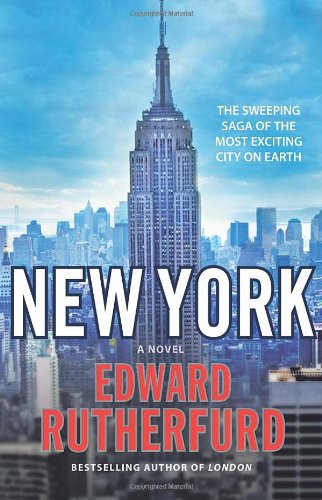
New York by Edward Rutherfurd

This historical fiction novel by Edward Rutherfurd looks at the fascinating story of New York City from its early years as a 17th century Dutch trading post through to the present day. Along the way we learn about some of the important events that have shaped the New York we know today, from wars, blizzards and stock market crashes to the 9/11 tragedy. Some real historical figures make brief appearances – including Peter Stuyvesant, George Washington, Benjamin Franklin, Abraham Lincoln and a few others – but the story is told through the lives of a fictional family, the Masters, who we follow down the generations.

I should start by saying that I’m a big fan of Edward Rutherfurd, having read all of his previous books (London, Sarum, The Forest, Dublin, Ireland Awakening and Russka). Each of Rutherfurd’s novels tells the story of a city or country over a period of hundreds of years and follows the lives of some of the families who lived there. His novels are all written in the same format and although they certainly won’t appeal to everybody I do think that if you read one of his books and enjoy it, there’s a good chance that you’ll enjoy at least some of his others.

This one, New York, is slightly different to the previous books in that it covers a much shorter period of time (from the 1600s to the present day, in comparison to Sarum, for example, which begins in the ice age and ends in the present day). This means that where in the previous novels it was sometimes necessary to skip forward by a few centuries, missing out several generations, New York is told as a more continuous narrative.

Another difference is that while Rutherfurd’s other books have told the stories of five or six main families, this one concentrates on one in particular: the Master family. I’m not sure I liked the way Rutherfurd chose to follow the Masters throughout the entire book. They were a family of merchants and bankers so their lives revolved around money, banking and the stock exchange, things I don’t find very interesting to read about. The book would have worked better for me if instead of spending so much time with the money-obsessed Masters, there had been more focus on some of the other families we meet: the Caruso family, who were Italian immigrants, the Jewish Adler family, the Irish O’Donnells, and the descendants of Quash the slave.

I also felt that the book was too uneven. I appreciate that when writing a novel like this one it must be very difficult to decide what to include and not to include, but I thought there were some parts that felt very rushed while others dragged on for too long. Also, I found the characters in the earlier chapters more engaging and well-developed. It almost seemed that the author himself had started to lose interest when he reached the 20th century and was making less effort to think of compelling storylines and characters for the later sections of the book.

I don’t want to sound too negative though, because I did think this was a good book and I learned a lot from it. I’m British, have never been to New York (though I would love to) and have never had the opportunity to study its history, so a lot of things mentioned in the novel were new to me. I knew little or nothing about some of the historical events such as the Draft Riots of 1863 and the Triangle Shirtwaist Factory fire of 1911, for example. I expect that if you’re a New Yorker you’ll take different things away from this book than I did (and maybe you’ll notice historical inaccuracies that I wasn’t aware of) but hopefully you’ll still be able to learn something new.

But although I did enjoy New York, it’s not one of Rutherfurd’s best novels in my opinion, for the reasons I’ve mentioned above. If you’re new to his books, Sarum (English history with a focus on the city of Salisbury and nearby Stonehenge) would be my personal recommendation as a good place to start, though it really depends on your own areas of interest. If you’d like to try some Russian history, I can also highly recommend Russka, and the two books about Ireland are excellent too. Oh, and one final thing I should say is that Rutherfurd’s novels are very long. This one has over 1,000 pages, though it hasn’t taken me as long to read it as I was expecting. I don’t see how the story of New York could possibly be told in any less than 1,000 pages, so I hope the length won’t put you off!

Have you read any of Edward Rutherfurd’s books? Which ones have you enjoyed?

The Queen’s Governess by Karen Harper

The Queen’s Governess is yet another historical fiction novel set during the Tudor period, but although the story is a familiar one it is told from a different perspective: that of Kat Ashley, the governess of Elizabeth I.

Born Katherine Champernowne, the daughter of a beekeeper from Devon, Kat comes to the attention of Thomas Cromwell who brings her to court to spy for him in the household of Anne Boleyn, Henry VIII’s second wife. When Anne finds herself on trial for treason, adultery and incest, Kat vows to take care of her daughter, the young Princess Elizabeth. Much more than just a governess, Kat becomes Elizabeth’s friend, advisor and mother figure. The fates of Kat and her beloved husband, John Ashley, become tied with the princess’s and they are forced to endure exile and imprisonment before Elizabeth is finally crowned.

So much has been written about the Tudor period that I’m sure it must be getting very difficult for historical fiction authors to find an original way to approach the subject. Anyone with even a vague knowledge of the Tudors will probably recognise many of the characters and events in this book. Elizabeth I, Henry VIII and all six of his wives are here, along with Thomas Cromwell, the Seymours, the Dudleys and Mary I. It’s the choice of Kat Ashley as narrator that helps to keep things new and interesting. I’m not sure if there have been any other novels about Kat, but this is certainly the first one I’ve ever been aware of and it made a refreshing change to read about a lesser-known historical figure from the period.

Telling the story from Kat’s perspective does have its disadvantages though. It seems that not much is actually known about her, and although she was obviously an important part of Elizabeth’s life she appears to have had very little direct influence on the course of history. The result of this is that for much of the book Kat is an observer, describing births, deaths, executions and other significant events of the Tudor court, rather than playing a major role in any of these historical moments.

However, I do think Karen Harper has done a good job in taking the known facts of Kat’s life and fleshing out her character, using her imagination and historical knowledge to fill in the gaps. The book includes an author’s note explaining how much is fact and how much is fiction, and it does seem that the novel has been well researched and that she has done her best to make it as accurate as possible, even down to the choice of spellings of people’s names.

While I was reading this book I kept thinking that it felt very similar to Philippa Gregory’s Tudor court novels and I’d have no hesitation in recommending The Queen’s Governess to Gregory fans, as well as to anyone interested in Tudor history in general. I’ll probably read more of Karen Harper’s work in the future.

Have you read any Tudor novels told from an unusual perspective?

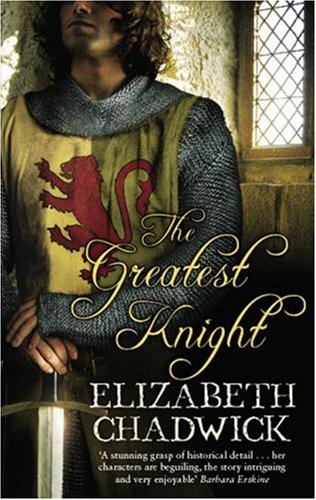
The Greatest Knight by Elizabeth Chadwick

When I read The Champion a couple of months ago and asked for recommendations of other Elizabeth Chadwick books, The Greatest Knight was mentioned, so I decided to make it the next Chadwick book I read. The Greatest Knight is historical fiction based on the life of William Marshal, one of the most important knights of the medieval period. Marshal has been largely forgotten today (I didn’t know anything about him at all before reading this book), but his story is one that deserves to be told.

William Marshal lived during the 12th and early 13th centuries and was described by the Archbishop of Canterbury, Stephen Langton, as “the greatest knight that ever lived”. Starting out as an inexperienced young knight, William comes to the attention of Eleanor of Aquitaine, and soon rises to a position of power and influence. As a friend of Eleanor’s, advisor to her husband Henry II and tutor to their son, Henry the Young King, William has an important part to play in the Plantagenet court. Keeping everybody happy in this time of shifting loyalties isn’t easy and he often finds himself in a very precarious position with some difficult decisions to make.

Elizabeth Chadwick’s version of William is a very engaging and likeable character. He’s brave, intelligent, loyal and chivalrous and despite living through dangerous and turbulent times, he manages to keep his honour and integrity intact. There were times when he seemed almost too perfect, though fortunately not quite to the extent where he became unrealistic. Assuming that the fictional Marshal is not too different to the real one, then he really did deserve the title of ‘the greatest knight’.

While The Champion took fictional characters and set them against a medieval backdrop, this book deals mainly with real historical figures and real historical events. Perhaps because of this, there’s less romance in this book and more history. William does have a mistress and then eventually a wife, but these relationships form just part of his story and many other aspects of his life and career are given equal attention. And a large amount of the book is devoted to the treachery, betrayal and political intrigues of the Plantagenets: Eleanor, her husband King Henry II, and their children – Henry, the Young King; Richard I (The Lionheart); Geoffrey and King John.

Chadwick’s note at the back of the book explains where she has tried to stick to the known facts and where she has had to use her own judgment and imagination to fill in the gaps. As always when I discuss historical fiction novels, I want to point out that I am not a serious historian and not an expert on this (or any other) period of history – therefore I can’t really comment on the historical accuracy. I read these books purely for enjoyment and in the hope of learning something new and The Greatest Knight fulfilled both of those criteria: it was very enjoyable and it was great to learn about a historical figure I previously knew nothing about and who lived through some of the most fascinating times in English history.

This book ends in the middle of Marshal’s life because, as the author explains, there was just far too much to fit into one novel, even after being selective and not attempting to cover every single event that happened to him. I’m looking forward to seeing how his story continues in the sequel, The Scarlet Lion.

The Lady of the Rivers by Philippa Gregory

The Lady of the Rivers is the third book in Philippa Gregory’s Cousins’ War series. This series is set during the Wars of the Roses, with a focus on some of the women who played an important role in this period of English history. The two previous novels, The White Queen and The Red Queen, told the stories of Elizabeth Woodville, wife of King Edward IV, and Margaret Beaufort, mother of King Henry VII. In The Lady of the Rivers it’s the turn of Jacquetta Woodville, Elizabeth’s mother.

Before beginning this book I knew almost nothing about Jacquetta (apart from what I learned about her in The White Queen) and it was good to have the chance to read a historical fiction novel about a woman who has so often been overlooked and forgotten. This novel follows Jacquetta throughout her life, beginning with her teenage years and moving on to her first marriage to the Duke of Bedford, an uncle of England’s King Henry VI. Left a widow at nineteen, Jacquetta marries again, for love this time, to one of the Duke’s squires, Richard Woodville. Over the following years, she becomes a close friend and advisor to Margaret of Anjou, the young wife of Henry VI, and is at the queen’s side during some of the most important moments of Henry’s reign.

Jacquetta’s family claim to have descended from the water goddess, Melusina, and supposedly have magical powers, including the ability to predict the future. For example, Jacquetta hears singing when someone in her family is about to die. As in The White Queen, magic is a major theme of this book. There are lots of references to alchemy, herbalism, tarot cards, and also to the ‘wheel of fortune’, which Jacquetta sees as a reminder that while it’s possible for a woman to rise to the very top, there’s an equal chance that she can fall to the very bottom.

I like the fact that the novels in this series are written from a woman’s perspective, with a focus on how women were treated in 15th century society and how difficult it could be for them to find a place for themselves in a world dominated by men. I also like the way the books take a very personal approach to history, showing how the historical events directly affect the characters and their lives. The present tense gives the feeling that you’re there with the narrator as events unfold, and the first person narration creates an intimate feel. Of the three books in the series so far, this one had the most likeable narrator and I’ve been left with a sense of unfairness at how Jacquetta has been ignored by history.

Finally, in case anyone is wondering where to begin with this series, I don’t think it’s necessary to read them in any particular order as they do all stand alone. In fact, this one, The Lady of the Rivers, despite being the most recently published book, is set before The White Queen so could be a logical place to start. According to Philippa Gregory, the next novel in the series is going to be about Anne and Isabel Neville, the daughters of the Earl of Warwick. I’m already looking forward to that one!

I received a review copy of this book from Simon & Schuster. I also received a copy of the non-fiction companion book to the series, The Women of the Cousins’ War, so you can expect to see my thoughts on that one soon too.