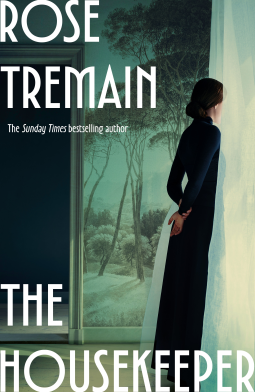
The Three Witches by Elena Collins

I’ve read other novels inspired by Shakespeare’s Macbeth, but this is the first one that has focused specifically on the characters of the three witches. Although Shakespeare’s witches aren’t thought to have been based on any individual people (he took the idea from Holinshed’s Chronicles which refers to the ‘Weird Sisters’ or ‘nymphs or fairies’), Elena Collins imagines them here as three young women growing up in 11th century Scotland. They are the daughters of Sidheag, a wise woman or healer, and their names are Isobel, Ysenda and Merraid.

In modern day Bristol, Ruthie Reed is attending an audition for a new documentary about Macbeth and the historical Mac Bethad mac Findláech, King of Alba (Scotland), on whom the play is based. Acting is all Ruthie has ever wanted to do, but her career seems to be going nowhere and she’s desperate for a decent role. When she’s offered the part of one of the three witches in the documentary, she hopes this is the opportunity she’s been waiting for and will lead to bigger things. On arriving at Forres in the north of Scotland, however, things don’t go quite according to plan. The cast and crew are plagued with bad luck and disaster – and then Ruthie herself starts to catch glimpses of a mysterious young woman who seems to provide a link between past and present.

Ruthie’s story alternates with the story of Isobel and her sisters, left alone in the world after their mother’s death. Isobel, the youngest, has inherited her skills with herbs and potions, as well as her ability to see the future in the flames of the fire, but in a world where women who are different are viewed with suspicion, these talents could be a curse rather than a blessing. When Isobel falls in love with Lulach, Mac Bethad’s stepson, she believes she has found the security she needs, but Lulach’s mother, Gruoch, has other ideas…

As with most dual time period novels, there was one narrative that I enjoyed more than the other, and in this case it was the historical one. I liked the way the focus was on the fictional characters of Isobel, Ysenda and Merraid and their daily lives in the village rather than on the real historical figures such as Mac Bethad and Gruoch, who appear only occasionally. It was easy to see where Isobel’s story was heading, particularly as we get a hint of it in the prologue, but that didn’t make it any less impactful. Although widespread witch trials and burnings peaked in Scotland in the 16th and 17th centuries, women were obviously being accused of witchcraft much earlier than that, so it’s not impossible that the historical Macbeth could have met women like Isobel and her two sisters – and this is something Ruthie and her friends in the modern day narrative begin to research, believing that the witches (both in the play and in history) deserve to be given more attention after centuries of being interpreted through the lens of misogyny.

I liked Ruthie and enjoyed following the filming of the documentary, but it did feel that her storyline was there mainly to add more context to the historical one and I didn’t become quite as invested in her chapters as I did in Isobel’s. The supernatural element of the book is well done – although it’s not a time travel or timeslip novel, there are moments where past and present seem to merge – but I wasn’t convinced that everyone else would have been so ready to believe Ruthie when she told them what she’d been experiencing! There’s also a romance for Ruthie which seemed to happen very suddenly and not with the person I’d expected it would be with.

Overall, I found this an interesting, engaging read. It’s the first I’ve read by Elena Collins, so I’m looking forward to reading some of her other books.

Thanks to Boldwood Books for providing a copy of this book for review via NetGalley.
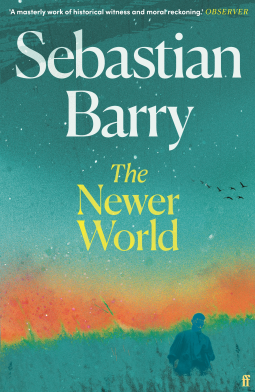
The Wandering Queen by Claire Heywood

Dido, Queen of Carthage, also known as Elissa, is a character who has always interested me, particularly since I had the chance to visit Carthage myself during a trip to Tunisia in 2004. The most famous depiction of Dido is obviously in Virgil’s epic poem, the Aeneid, but in this new retelling, Claire Heywood brings her to the forefront of the story and gives her a voice of her own.

The Wandering Queen begins in Tyre with the young Elissa being summoned by her father, the King of Tyre, who believes he is dying and is composing his will. Elissa has a close relationship with her father, who has instilled in her the qualities he considers important in a future queen – fairness, honesty and a desire to see justice done. His son, Pygmalion, Elissa’s half-brother, is still just a young child, so the king decrees that Elissa and Pygmalion will succeed him as joint rulers. Not everyone at court is pleased about that, however, and when the king dies and the will is read, Elissa is shocked to find that her name is not even mentioned – a new will has been forged and Pygmalion will rule alone.

At first, Elissa tries to guide her brother, but the influence of the men around him is too strong. As the years go by and both Elissa and her husband Zakarbaal find themselves targets of Pygmalion’s cruelty, Elissa decides that the only option left open to her is to flee Tyre altogether and start a new life somewhere else. The story of her time in Tyre alternates throughout the novel with the story of the older Elissa, now known as Dido, as she settles in Carthage and encounters a Trojan called Aeneas whose ship has been blown off course by a storm…

This is the first book I’ve read by Claire Heywood and I was very impressed. It’s well written and Heywood made me really care about the characters and connect with them on a personal level, something that doesn’t always happen when I read mythology retellings. I also liked the way she keeps this a very human story, not introducing supernatural elements or having gods and goddesses intervening and controlling Dido’s fate. It reminded me of Babylonia by Costanza Casati, which is written in a similar way and which I also enjoyed.

I think I would have preferred a chronological format, but having said that, the way the two storylines were intertwined worked well, with the use of Dido’s two names helping to distinguish between the young Elissa and the queen she would become. The portrayal of Aeneas is fair and balanced; he is shown as having some good qualities, which explains why Dido falls in love with him, but there are also signs from the beginning that their romance is probably doomed (such as Aeneas’s account of abandoning his wife, Creusa, during the fall of Troy, his growing sense of pride causing him to become increasingly dissatisfied with taking second place to Dido in the hierarchy of Carthage, and his talk of wanting to visit Italy).

There are two different endings to Dido’s story suggested by the two main sources, Virgil and Justinus, but the way Claire Heywood chooses to end her story here is not quite the same as either of those. I won’t say any more about that as I wouldn’t want to spoil it! In her author’s note, Heywood also explains some of the other choices she made in the book, including using the name Zakarbaal for Elissa’s husband rather than the usual Sychaeus or Acerbus and moving the setting back to the Late Bronze Age to make the timelines work.

I really enjoyed The Wandering Queen and will have to look for Claire Heywood’s previous two books. Also, if anyone can recommend any other retellings of Dido’s story, I would love to hear about them.

Thanks to Hodder & Stoughton for providing a copy of this book for review via NetGalley.

The House of Fallen Sisters by Louise Hare

Louise Hare has written several historical novels set in various periods, but this is the first one I’ve read. I’ll probably be looking for her others as I enjoyed this one – it has an interesting setting and an engaging heroine and it explores a little-known episode from British history.

It’s December 1765 and Sukey Maynard is running away from home – home being Mrs Macauley’s brothel in Covent Garden. It used to be her mother’s place of work, until she died when Sukey was very young, and since then Sukey has been cared for by Mrs Macauley and her family. Now that she’s fourteen, her virginity is about to be auctioned off to the highest bidder and she’s decided to flee rather than stay and go through with it. Before she gets very far, she encounters a young man who has been badly beaten and wounded, and she helps him reach a doctor, who agrees to treat him. However, this delay means that Sukey finds herself captured and taken back to Mrs Macauley.

The rest of the novel follows Sukey after she returns to the brothel and prepares to face whatever life has in store for her. At first her position is better than she expected as she catches the eye of a wealthy client whom she hopes will become her ‘keeper’, but what will she do if he changes his mind? The lives of Sukey and the other girls in Mrs Macauley’s establishment are difficult, uncertain and often unpleasant, but Hare shows us how even in the bleakest of circumstances, small acts of friendship and kindness can make a big difference. Although Sukey makes some enemies, she also makes some good friends and I enjoyed watching her various relationships develop.

There’s a mystery element to the story, which unfolds as young women begin to go missing, both from Mrs Macauley’s house and from the surrounding area, thought to have been lured away by a mysterious figure known only as the Piper. We find out what’s happening to the women earlier than I expected, but this allows Hare to take the story in some interesting directions as Sukey and her friends look for revenge.

Another subplot revolves around Jonathan Strong, the young man Sukey rescues after he is beaten almost to death. Strong really existed and his story is a fascinating one as he was a slave whose owner brought him to London from Barbados and he became the subject of an important legal case regarding slavery and the abolitionist movement in Britain. Sukey herself is mixed race, which gives her an added interest in his fate, and she and her friends try to help Jonathan in any way they can throughout the book. William Sharp, the doctor who treats him, and his brother Granville Sharp are also real people. This is the first time I’ve read a novel in which the Sharps and Jonathan Strong appear, so I found that aspect of the story fascinating.

Although I’ve read other novels about women in Sukey’s position (I highly recommend Michel Faber’s The Crimson Petal and the White and Elodie Harper’s The Wolf Den), the addition of the Jonathan Strong storyline made this one well worth reading as well. The book is published in the UK tomorrow, 12th February.

Thanks to HQ for providing a copy of this book for review via NetGalley.
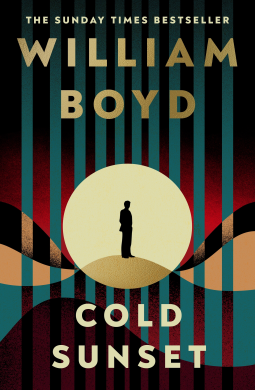
An Astronomer in Love by Antoine Laurain – #ReadIndies

Translated by Louise Rogers Lalaurie and Megan Jones

I’ve been aware of Antoine Laurain’s books for years but this is the first one I’ve read. It was originally published in French in 2022 as Les caprices d’un astre and is now available in an English translation from Pushkin Press. I’m counting it towards this year’s Read Indies month, hosted by Karen of Kaggsy’s Bookish Ramblings, which celebrates books published by independent publishers.

An Astronomer in Love is a dual timeline novel. One thread of the story is set in contemporary Paris, where divorced estate agent Xavier Lemercier has found an old telescope in a property he’s sold. He discovers that the telescope once belonged to the 18th century astronomer Guillaume Le Gentil, but he’s reluctant to give it to a museum and takes it home so he and his eleven-year-old son can use it to look at the night sky. Setting up the telescope on the terrace of his apartment, Xavier tests it out by looking at the nearby buildings – and is intrigued when he spots a woman on her balcony with what appears to be a zebra. Who is she and why would she have a zebra living in her apartment? Xavier is determined to find out!

In a second narrative which alternates with the first, we meet Guillaume Le Gentil as he sets out on a voyage to India in 1760, hoping to observe the transit of Venus across the face of the sun. Unfortunately, due to delays and bad weather, he misses the transit and decides to stay in that part of the world until the next one eight years later. The novel describes his adventures during this period and the people and wildlife he encounters.

Guillaume Le Gentil is a real historical figure and the expedition covered in the novel really happened. It was fascinating to read about his visits to Madagascar, the Philippines, Pondicherry and the Isle de France (now Mauritius), and his observations of creatures such as flying fish, giant tortoises, ring-tailed lemurs, and even dodos, which would be considered extinct just a few years later. I think Guillaume’s story would have been interesting enough to fill a whole book on its own, but I felt that I didn’t get the chance to know him on a personal level as much as I would have liked, because we kept having to leave him behind to return to Xavier in the modern day.

Xavier’s timeline is linked to Guillaume’s in several ways, the telescope being just one of them. Sometimes a word, phrase or thought, or a sighting of a particular bird or animal will lead seamlessly from one narrative to the other. It’s difficult to explain what I mean, but it’s cleverly done and works well. Although, as I’ve said, I would have been happy to stay with the historical timeline all the way through, Xavier’s story was also entertaining, apart from a strange episode involving terrorism that felt out of place. There’s a romance for both main characters too – and Venus, of course, is the goddess of love, so there’s some symbolism there, with the transit of Venus playing an important part in both threads of the novel.

Antoine Laurain’s other books all sound intriguing and I liked this one enough to want to try another one. If you’ve read any of them, which would you recommend?

Brigid by Kim Curran

I enjoyed Kim Curran’s previous book, The Morrigan, which told the story of the Irish goddess of war and fate, one of the supernatural race known as the Tuatha Dé Danann. Her new novel, Brigid, takes as its subject another figure from Ireland’s distant past: Saint Brigid of Kildare, a semi-mythical woman who may or may not have existed. The current thinking seems to be that she was a real person, an abbess who founded the abbey of Kildare, but has been given many of the attributes of the Celtic goddess, Brigid, who shares her name. Curran’s approach is to include both Brigids in the novel, with the goddess guiding and watching over her human namesake.

The human Brigid, born in the 5th century, is the daughter of an Irish chieftain and one of his slaves, whom he sells to a druid when she becomes pregnant. Brigid grows up in slavery in the druid’s household before being returned to her father, who attempts to arrange a marriage for her. When she gives away her father’s best sword to a beggar, the king hears about her kindness and grants Brigid her freedom. Determined not to be forced into marriage or to live a life controlled by men, Brigid sets off alone on a journey to find her mother. Along the way she makes several new friends, including Lommán the leper and Darlughdach the bard, with whom she later founds a small sanctuary for women, which expands over time into the large and powerful abbey of Kildare.

I had no prior knowledge of Brigid’s life before beginning this book, but it seems that Curran has incorporated many of the key events and characters traditionally associated with Brigid’s story. One of these characters is St Patrick, with whom Brigid clashes several times throughout the book. She resents Patrick because he has all the advantages of being a man in a male-dominated society and because his approach to converting people to Christianity is more forceful than hers. Brigid is happy to allow people to continue celebrating pagan gods and festivals alongside the new Christian religion rather than expecting an immediate conversion.

For a while, it seemed that the message of the book was “all men bad, all women good”, which is something that tends to annoy me because I think there are better, fairer ways to promote feminism. However, it turned out to be slightly more nuanced than that, as eventually some of Brigid’s own friends and followers become frustrated by her hatred of men and even Brigid herself has to accept that a life entirely without men is not possible and she’s going to have to learn to work with them whether she wants to or not. She can also be cruel, punishing people harshly for the smallest of things. As someone who would become a saint, I certainly didn’t find her very saintly in this depiction, but despite that she’s clearly someone who inspires love and loyalty from the women around her and that’s what makes her an interesting, if not always likeable, character to read about.

Whereas The Morrigan was a mythological retelling, with strong fantasy elements, this book is more grounded in reality. There’s still a small amount of magic, though, such as when Brigid performs her miracles – healing lepers, for example, or turning milk into butter. She’s assisted in this by the goddess Brigid, who occasionally appears to her in human form. However, I would describe this as much more of a historical fiction novel than a fantasy one, while The Morrigan was the other way round. They are both interesting books and it’s good to see an author tackling subjects that aren’t written about very often.

Thanks to Michael Joseph for providing a copy of this book for review via NetGalley.
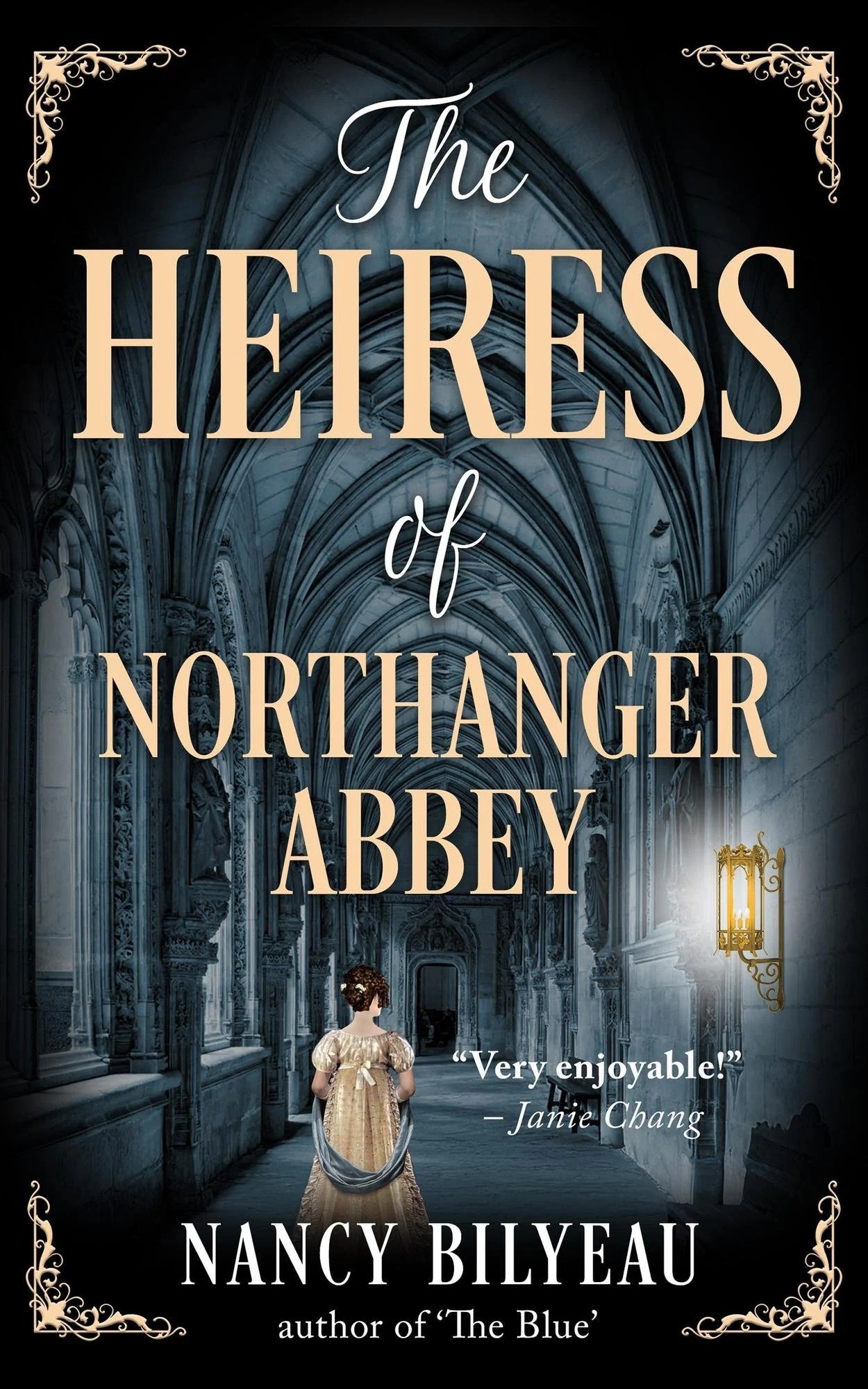
The Land in Winter by Andrew Miller

Andrew Miller’s The Land in Winter had a lot of success last year, being shortlisted for the Booker Prize and winning the Walter Scott Prize for Historical Fiction. It also appeared on a lot of people’s end of year ‘best of’ lists so I had high hopes for it, particularly as I’ve previously enjoyed two of his other books, Pure and Now We Shall Be Entirely Free.

The novel is set in the winter of 1963, one of the coldest winters on record in the UK. Beginning in late December 1962 and lasting until March, temperatures plummeted, blizzards blanketed most of the country in deep snow and rivers and lakes froze over. Against this backdrop, we see the stories of two married couples play out. Dr Eric Parry has recently moved to rural Somerset with his wife, Irene, who is pregnant. Eric is enjoying being a country doctor, but Irene is finding it hard to adapt; it’s so different from her life in London and she misses her sister, who has gone to live in America. Despite her pregnancy, she feels that she and Eric are growing apart – and she’s right to feel that way because, unknown to Irene, Eric is having an affair with one of his patients.

Bill and Rita Simmons, who live at a nearby farm, are also newly arrived in the countryside. To the disappointment of his wealthy father, who wanted him to join the family business, Bill has chosen to follow a very different path and become a dairy farmer. It’s proving to be more difficult than he expected, but he’s sure that with new ideas and investment, he’ll be able to turn things around. He just needs to convince the bank to lend him the money! His wife Rita, like Irene, is pregnant and, also like Irene, she feels lonely and out of place, so it’s probably not surprising that the two women quickly form a bond and a friendship begins to develop.

Apart from a long chapter in the middle of the book in which Irene hosts a Boxing Day party and several other key characters converge on the Parrys’ house, the main focus is on the two couples, their daily lives and the relationships between them. All four characters are believable and strongly drawn, but I think Rita is the one I found most interesting. Before marrying Bill, she had been a dancer in a Bristol nightclub, so the transition to life as a farmer’s wife in a small, quiet community is particularly difficult for her. She has started hearing voices in her head, a sign of her vulnerable, fragile mental state, but Bill isn’t able to give her the support she needs, feeling that he doesn’t truly know who his wife is and preferring to ignore her past.

Although I did enjoy following the stories of Eric and Irene, Rita and Bill, I felt that I was held at a distance for most of the book and never quite connected with the characters on an emotional level as much as I would have liked to. Maybe it was just me, or maybe it was a result of the bleak, frozen setting reflecting their troubled, isolated lives and the coldness of their marriages. Still, this is an impressive novel overall and despite not quite managing to love it I can see why it’s so highly regarded.

A Slow and Secret Poison by Carmella Lowkis

It’s 1925 and Vee Morgan is on her way to Harfold Manor in Wiltshire to take up the position of gardener. She knows she’s lucky to get the job; although she loves being outdoors and was a Land Girl on a farm during the war, she has no horticultural qualifications and no references, not to mention that women gardeners are not at all common and not exactly in high demand. After arriving at her new workplace, however, she learns that none of the local men wanted the job and are reluctant to come anywhere near Harfold Manor and its strange inhabitant, Lady Arabella Lascy.

Arabella, alone in the world apart from her estate manager and cousin, Maurice Reacher, believes she and her family have been cursed. First her parents died, then all four of her brothers, each within three years of the one before, leaving only Arabella to inherit the family estate. Now another three years have passed and Arabella is convinced that she will be the next victim. But are the Lascys really under a curse or is there a more human explanation for what has been happening?

A Slow and Secret Poison is the second novel by Carmella Lowkis; I had mixed feelings about her first, Spitting Gold, a retelling of a Charles Perrault fairy tale, but I found this one more enjoyable. Vee interested me from the beginning – she’s a very flawed heroine, as we discover as the story unfolds and secrets from her past come to light – but I liked her as a character and I thought her practical, no-nonsense personality provided a good counterpart to the reclusive, fanciful Arabella. I was intrigued to learn from the author’s note at the end of the book that the character of Arabella was inspired by Stephen Tennant, one of the Bright Young Things of the 1920s.

The book has a lot of Gothic elements: the crumbling old house and its eccentric owner, the supposed Lascy family curse, sightings of a mythical hare and, of course, the poisonings hinted at in the title. I was reminded very much of Laura Purcell’s books, although this one isn’t as dark as those. I did find some of the secrets and twists quite easy to predict and some parts of the plot felt a little bit implausible (particularly regarding property ownership, which becomes an important part of the story later on), but otherwise it was a quick, entertaining read.

Thanks to Doubleday for providing a copy of this book for review via NetGalley.