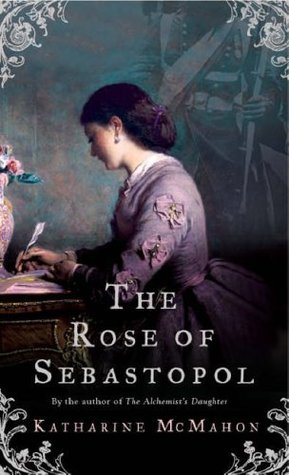
The Vanished Days by Susanna Kearsley

The Vanished Days, Susanna Kearsley’s latest book, is a prequel to The Winter Sea, which happens to be one of the few Kearsley novels I haven’t read yet! However, it didn’t matter at all as this is a completely separate story and works perfectly as a standalone.

The novel opens in 1707, the year of the Act of Union between Scotland and England. A few years earlier, Scotland had been involved in the unsuccessful Darien Scheme – an attempt to establish a colony on the Isthmus of Panama – and as part of the union settlement, England will pay compensation to those who had lost money due to the failed venture. When a young widow, Lily Aitcheson, comes forward to claim the wages owed to her husband Jamie Graeme, who was killed during the Darien expedition, Sergeant Adam Williamson is asked to investigate her claim. There is some doubt as to whether Lily and the man she insists was her husband were really married – and unless she can prove that their marriage was valid, she won’t be entitled to the money.

As Adam begins his investigation, searching for witnesses to the wedding or anyone who can say that it ever took place, he finds himself becoming more and more attracted to Lily. And, in chapters which alternate with the 1707 ones, we go back to 1683 and follow Lily through her childhood and the sequence of events that lead to her arriving in Edinburgh and claiming to be the widow of Jamie Graeme. Unlike most of Kearsley’s novels, which either involve some form of time travel or are set in two completely different time periods, one contemporary and one historical, this book is entirely historical, with the two threads of the story set just a few decades apart. There are none of the other supernatural elements that often appear in her novels either, so this one has a slightly different feel.

It was interesting to read about an aspect of Scottish history that doesn’t seem to get a lot of attention in fiction. Although I was aware of the Darien Scheme and some of the events leading to the Act of Union, I’m not sure if any of the historical novels I’ve read have actually covered this subject. Some real historical figures appear in The Vanished Days too and Kearsley explores some of the political and religious tensions building in Scotland during this time – a reminder that the Jacobite rebellions are on the horizon. The focus, though, is on Lily’s personal story, whether seen through her own eyes or those of Adam and the people he interviews who once knew her.

This is quite a long book and I found it a bit slow for a while in the middle, but I was rewarded by a great ending with an unexpected twist. It was something I hadn’t seen coming at all and the sort of thing that makes you want to read the whole book again to see if there were any clues. I won’t do that just yet, but I will definitely try to read The Winter Sea soon, along with the other two Kearsley novels I still haven’t read, The Shadowy Horses and Bellewether.

Thanks to Simon & Schuster UK for providing a copy of this book for review via NetGalley.

This is book 20/50 read for the Historical Fiction Reading Challenge 2022.
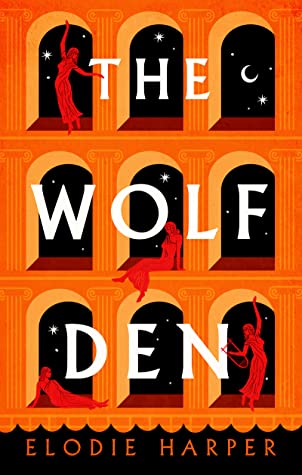
Theatre of Marvels by Lianne Dillsworth

When the audience take their seats at Crillick’s Variety Theatre looking forward to an evening of entertainment featuring the Great Amazonia, a ‘savage queen’ captured in Africa, little do they know the act is a fraud. The ‘Great Amazonia’ is actually Zillah, a young mixed-race Londoner who has never been to Africa in her life. Zillah can see nothing wrong with what she is doing; she enjoys being the headline act, she’s being paid for her work and she’s making some powerful new friends, among them Vincent, Viscount Woodward, who is setting her up as his mistress. It’s not until she meets Lucien Winters, an African merchant and former slave, that she begins to question her actions and wonder whether there is a better life she could be leading.

Then, her manager Marcus Crillick unveils a new act – the ‘Leopard Lady’ – and Zillah’s eyes are opened to the full extent of Crillick’s cruelty and the way she and others are being exploited for financial gain. When the Leopard Lady goes missing, Zillah becomes convinced that she is being held captive somewhere and sets out to search for her – a search that will take her across Victorian London, from the bustling dockyards to the slums of St Giles and the elegant parlours of the upper classes. Meanwhile Zillah must choose between Vincent and Lucien and decide how she wants her future to unfold.

I enjoyed Theatre of Marvels, although it did seem very similiar at first to Elizabeth Macneal’s Circus of Wonders, another novel about the exploitation of ‘circus attractions’. However, this one is written from a very different perspective, allowing Lianne Dillsworth to explore different themes such as racial and class inequality and slavery. The thousands of black and mixed race people who lived in Victorian London are often ignored in fiction set in that period, but Dillsworth gives them a voice here through the characters of Zillah, Lucien and others. Zillah is a particularly interesting heroine as she is clearly struggling with her identity throughout the novel, feeling that she doesn’t truly fit in with one community or the other and trying to decide who she is and what she wants.

Although I felt that some of the characters, particularly the villain Marcus Crillick and Zillah’s friend and rival Ellen, were too thinly drawn, there were others I found much more interesting. I was intrigued by Vincent Woodward, as there were times when I thought he must genuinely care about Zillah, but I doubted from the beginning that he would have the courage to defy convention and commit to a future with her. I could only see their relationship ending unhappily. On the other hand, Lucien seemed to have a deeper understanding of Zillah and much more personal integrity, yet I never really managed to warm to him. However, I thought I had predicted how the story would end and was taken by surprise because it wasn’t quite what I’d expected!

While I would have liked to have seen more of the Leopard Lady and to have heard some of her story from her own point of view, I did enjoy getting to know Zillah. This was an absorbing and surprisingly quick read and I’ll be looking out for more books from Lianne Dillsworth.

Theatre of Marvels is published in the UK on Thursday 28th April 2022. Thanks to Hutchinson Heinemann for providing a copy of this book for review via NetGalley.

This is book 19/50 read for the Historical Fiction Reading Challenge 2022.
This is also my contribution to Reading the Theatre 2022 hosted by Lory of Entering the Enchanted Castle.

The Eagle of the Ninth by Rosemary Sutcliff – #1954Club

The second book I’ve read for Karen and Simon’s 1954 Club this week is a children’s classic by Rosemary Sutcliff. This book has been on my TBR for years because, although I’ve enjoyed a few of Sutcliff’s other novels set in other time periods, the Roman period has never been a favourite of mine and I wasn’t sure whether I would love this book the way everyone else seems to have done. Of course, I needn’t have worried; The Eagle of the Ninth is a beautifully written novel with wonderfully vivid and colourful descriptions, a gripping plot inspired by historical fact, a very likeable young hero and even a touch of romance – what’s not to love?

The novel tells the story of Marcus Flavius Aquila, a young centurion posted at a fort in Roman Britain. When Marcus is badly injured during a battle, he is discharged from his duties and goes to stay with his uncle while he recuperates. Here he forms three new relationships, all of which will have an impact on his future life: the first is with Esca, a defeated gladiator Marcus purchases as a slave at the Saturnalia Games in order to save him from a worse fate; the second, with Cub, a tame wolf-cub adopted by the household as a pet; and finally, with Cottia, a young woman from the Iceni tribe who is being raised as a Roman, something she resents very much. Marcus also listens to tales of the Ninth Legion who, several years earlier, marched north to suppress a rising of the Caledonian tribes and disappeared into the mists of Northern Britain, never to be seen again.

The story of the missing Ninth Legion has special significance for Marcus because it was his father’s legion and his father was one of the men who vanished. When his injuries heal enough for him to be able to travel, Marcus decides to head north himself in the hope of learning more about the legion’s disappearance and of retrieving the eagle standard of the legion, which was also lost – and in the hands of Rome’s enemies could take on new symbolic meaning.

Esca is freed from slavery by Marcus, but the two have become good friends and he chooses to accompany Marcus on his journey. The second half of the novel follows their adventures as they travel beyond Hadrian’s Wall and further north into Caledonia. Although there is plenty of drama as they encounter hostile tribes and search for the lost eagle, I particularly enjoyed watching the changes in the relationship between Marcus and Esca as their bond grows stronger while at the same time their difference in status forms a barrier:

You could give a slave his freedom, but nothing could undo the fact that he had been a slave; and between him, a freed-man, and any freeman who had never been unfree, there would still be a difference. Wherever the Roman way of life held good, that difference would be there.

Sutcliff based this novel on the fact that the Legio IX Hispana (Ninth Legion) disappeared from historical records around the year 117 and at the time when she was writing, it was thought that the legion had probably been destroyed in what is now modern-day Scotland. Historians have other theories now, but the way Sutcliff depicts the loss of the legion in this book still feels believable to me. She was also inspired by the discovery of a wingless Roman eagle in Silchester.

I also loved her descriptions of the places Esca and Marcus see as they travel north through Roman Britain, like this one as they approach the mountain Ben Cruachan:

It was an evening coloured like a dove’s breast; a little wind feathered the shining water, and far out on the dreaming brightness many scattered islands seemed to float lightly as sleeping sea-birds. In the safe harbourage inshore, a few trading-vessels lay at anchor, the blue sails that had brought them from Hibernia furled as though they, too, were asleep. And to the north, brooding over the whole scene, rose Cruachan, sombre, cloaked in shadows, crested with mist; Cruachan, the shield-boss of the world.

The Eagle of the Ninth is a lovely novel and I never really felt that I was reading a book for children – I think it’s one of those books that can be enjoyed equally by readers of all ages. I know there are other books in the series following later generations of the Aquila family, but the only one I currently own is Sword at Sunset, which I’m hoping can be read out of order.

~

This is also book 18/50 read for the Historical Fiction Reading Challenge 2022.
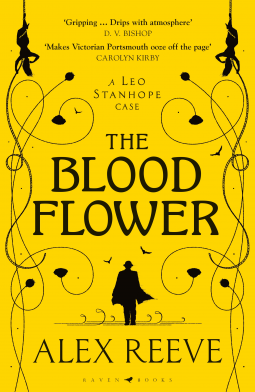
The Toll-Gate by Georgette Heyer – #1954Club

This is the first of two reviews I’ll be posting this week for Simon and Karen’s 1954 Club, one of their twice-yearly events where we all read and review books published in the same year. Georgette Heyer was such a prolific author I find there’s usually a book of hers to read for any year that is chosen! The Toll-Gate is her 1954 novel and one I hadn’t read before.

Like many of Heyer’s novels, this one is set in the Regency period. Our hero, the ‘overpoweringly-large’ Captain John Staple, has just returned from the Peninsular War and is finding it difficult to settle back into the monotony of civilian life. During a particularly tedious dinner party celebrating his cousin’s engagement, John decides to escape the next day and travel north to visit an old friend. Setting off alone on horseback, he becomes lost in the dark and rain and stumbles upon an isolated toll-gate somewhere in the Peak District. A frightened ten-year-old boy is collecting the tolls in the absence of his father, who has disappeared without explanation, so John decides to stay overnight to keep the boy company in the hope that his father will be back in the morning.

When the gatekeeper fails to return the next day, John finds himself helping to man the toll-gate for much longer than he’d expected, encountering highwaymen, thieves and Bow Street Runners. This is so much more exciting than one of cousin Saltash’s boring parties and John soon discovers that he’s in no hurry to leave, particularly when he meets Nell Stornaway, attractive, intelligent and, most importantly, tall – nearly as tall as John himself! Nell lives with her dying grandfather at nearby Kellands Manor and the old man’s heir has recently arrived, accompanied by a disreputable friend. But is it just the inheritance that has drawn them to Kellands or could they be mixed up in the disappearance of the gatekeeper?

Like The Quiet Gentleman, this is a Heyer novel where the focus is on the mystery rather than the romance. The romance is still there, but in a more understated way than usual. However, even though it’s love at first sight, it’s a romance I could believe in, because the hero and heroine seemed perfect for each other. I liked both of them – they are two of Heyer’s more sensible and mature characters, despite John’s love of adventure. And he certainly finds plenty of adventure when he chooses to spend the night at the toll-gate! The opening chapter set at Lord Saltash’s engagement party really doesn’t fit with the rest of the novel at all – it feels as though Heyer is setting up an Austen-style comedy of manners in that chapter, but once John sets out on his journey that aspect of the novel is abandoned and none of the characters we’ve met appear again. I was interested to learn that Heyer wrote the first chapter before deciding on the rest of the plot and had originally intended John’s family background to play a bigger part than it eventually did.

The dialogue is peppered with Heyer’s usual Regency slang, as well as the thieves’ cant used by characters such as Chirk the highwayman, and this adds colour and authenticity to the story. However, although I did enjoy this novel, it hasn’t become a favourite by Heyer; it seemed to lack her usual humour and I do tend to prefer her funnier books! Still, it was an entertaining read and a good choice for me for 1954 Club.

~

Other books from 1954 previously reviewed on my blog:

Jeeves and the Feudal Spirit by PG Wodehouse
Three Singles to Adventure by Gerald Durrell
Mary Anne by Daphne du Maurier

~

This is also book 17/50 read for the Historical Fiction Reading Challenge 2022.
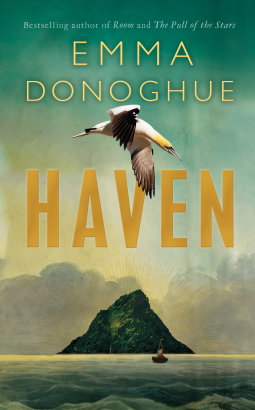
The Stone Rose by Carol McGrath

The Stone Rose is the final book in Carol McGrath’s She-Wolves Trilogy, but don’t worry if you haven’t read the first two – each one stands alone and tells the story (in fictional form) of a different medieval queen of England. In The Silken Rose we met Eleanor of Provence and in The Damask Rose Eleanor of Castile; now, in this latest novel, it’s the turn of Isabella of France. Isabella was the daughter of Philip IV of France and the wife of Edward II of England, but also a powerful and influential woman in her own right. The Stone Rose explores Isabella’s story both from her own perspective and through the eyes of Agnes, a female stonemason who designs Isabella’s tomb.

Isabella is only fifteen years old when the novel opens in 1311, and much as she tries to love her husband – at least at first – she is already becoming aware that Edward is perhaps not the best person to be ruling the country. He is too easily led by his favourites, particularly the handsome young Piers Gaveston, ignoring the advice of older, more experienced noblemen, and spends his time thatching roofs and digging ditches like a peasant rather than taking part in more courtly pursuits. Worse, he seems determined to send England into a series of battles with the Scots that nobody really has the heart for.

As the years go by, the pleasant and relatively harmless Piers is replaced by a new favourite, the scheming, ambitious Hugh Despenser the Younger, and Isabella begins to fear for her own position, especially when she starts to suspect that Edward loves Despenser more than he loves her. As tensions grow at court and across England, Isabella returns to France to visit her family – and here she meets Roger Mortimer, an English baron who has recently escaped from imprisonment in the Tower of London and shares her hatred of Hugh Despenser.

I won’t say much more about the plot, as if you’re familiar with the history you’ll already know what Isabella does next – and if you’re not, you’ll probably prefer to find out for yourself when you read the book. As far as I could tell, Carol McGrath sticks quite closely to the known facts, except where it’s necessary to use her imagination to help bring the characters to life and fill in gaps in the story or where there is some historical controversy, for example regarding the eventual fate of Edward II.

Despite Isabella’s “she-wolf” nickname (one which has also been applied to several other unpopular queens) I found her a sympathetic character here. It was sad to see her marriage gradually disintegrate as Edward spends more and more time with his favourites, falling completely under their power and refusing to listen to other points of view. I also found it interesting to read about Isabella’s interactions with the other women at court, particularly the three de Clare sisters, one of whom – Eleanor – is the wife of Hugh Despenser. Because of Isabella’s conflict with Eleanor’s husband, the two women can never be friends, but they are forced to spend long periods of time together over the years and their relationship, as you can imagine, is a very uncomfortable one.

The previous two books in this trilogy have each included a second protagonist, whose story unfolds alongside the queen’s and is given almost equal attention. In this third novel, that role falls to Agnes, the stonemason – a real historical figure who really did work on Isabella’s tomb. I was slightly disappointed that we don’t see very much of Agnes; there are only a few sections written from her point of view, with the focus very much on Isabella’s story. I understand, though, that Agnes only entered Isabella’s life in the 1350s and played no part in what came before, so maybe it would have been difficult to weave the two narratives together more closely. Still, The Stone Rose is a fascinating read and I enjoyed adding to my knowledge of Isabella, Edward II and Roger Mortimer. Now that the trilogy has come to an end I will have to try Carol McGrath’s earlier novels, while I’m waiting to see what she writes next!

Thanks to Headline for providing a copy of this book for review via NetGalley.

This post is part of the blog tour for The Stone Rose – you can see details of the other stops on the tour in the image below.

This is book 16/50 read for the Historical Fiction Reading Challenge 2022.

Traitor in the Ice by KJ Maitland

Traitor in the Ice is the second book in KJ Maitland’s new historical crime series set in the early 1600s during the reign of James I of England and VI of Scotland. The first, The Drowned City, introduces us to Daniel Pursglove as he searches for a mysterious Catholic conspirator known as Spero Pettingar in the aftermath of the failed Gunpowder Plot. That book is set in Bristol just after the devastating Bristol Channel Floods of 1607; Traitor in the Ice takes place the following winter – a particularly cold winter referred to as the Great Frost.

In these freezing, icy conditions a man has been found dead in the grounds of Battle Abbey in Sussex. The man was one of the King’s agents, sent to infiltrate the Montague household at Battle to try to root out those with Catholic sympathies. Lady Magdalen, Viscountess Montague is believed to be sheltering Catholic priests within the abbey walls, but the agent has been killed before having the chance to send his report to London. A replacement is needed, so Daniel Pursglove finds himself summoned by the King’s man, Charles FitzAlan, once more and sent to Battle to find evidence of treachery. He quickly discovers that almost everyone in the abbey has something to hide, but when more murders take place Daniel begins to wonder whether he is on the trail of the elusive Spero Pettingar at last.

One of the things I liked about the previous book in this series was the setting; I knew nothing about the Bristol floods and found the descriptions of the city in the aftermath quite eerie and otherworldly. The frozen landscapes of Sussex described in this second novel are equally atmospheric: the ‘withered brown bracken, each frond encased in its own ice-coffin’; the pink light of dawn ‘sending sparks of light shivering across the frost’. It’s the perfect setting for a murder mystery and Maitland weaves her usual mix of superstition and legend into the plot, adding to the sense of time and place. I was particularly intrigued by the practice of ‘night-creeping’, which Maitland explains in more detail in her very comprehensive author’s note at the end of the book.

I had hoped to learn more about Daniel Pursglove in this novel, but that doesn’t really happen and he is still very much a man of mystery by the final page. Although it’s not essential to have read the previous book first, I was pleased that I had as it meant I was familiar with at least some of Daniel’s background and wasn’t quite as confused as I might otherwise have been. I do like Daniel, though, and enjoyed following him through his investigations.

However, I had the same problem with this book that I had with the first one: there was just too much happening! The chapters set at Battle Abbey alternate with others set at court where through the eyes of two cousins, Richard and Oliver, we watch the rise to power of the King’s new favourite, Robert Carr. We also see Robert Cecil, Earl of Salisbury, working to maintain his own influence over King James, while in the streets and taverns of London violence is brewing between gangs of local youths and the Scottish courtiers who are newly arrived in the city. All of this is very interesting, but too much for one book on top of the murders and the Catholic conspiracies! With a tighter focus on just one or two threads of the plot, I think this would be a much stronger series. Anyway, I did enjoy this second novel overall and will be looking out for a third one.

Thanks to Headline for providing a copy of this book for review via NetGalley.

This is book 15/50 read for the Historical Fiction Reading Challenge 2022.
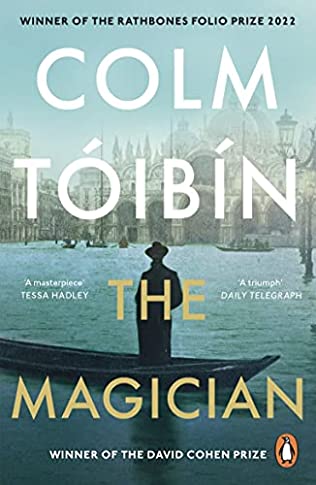
Mrs England by Stacey Halls

Mrs England is one of the books longlisted for the 2022 Walter Scott Prize for Historical Fiction. Although I hadn’t even heard of a lot of the titles on this year’s longlist, this particular book is one that I had been planning to read anyway. I enjoyed both of Stacey Halls’ previous novels, The Foundling and The Familiars, and was just waiting for the right moment to start reading this one.

The novel opens in 1904 with Ruby May, a trained children’s nurse from the prestigious Norland College, discovering that the family she works for are preparing to emigrate. Ruby is invited to accompany them, but turns down the opportunity, saying that she can’t be too far away from her younger sister and brothers. Instead, she finds a new position looking after the four children of Charles and Lilian England, a wealthy couple who own a cotton mill in the West Riding of Yorkshire.

On arriving at the Englands’ home, Hardcastle House, Ruby quickly senses that something is not right. Although Mr England is charming and friendly, Mrs England seems distant and withdrawn, showing very little interest in her children’s lives and leaving the running of the household to her husband. The other servants also make Ruby feel unwelcome, but she finds the four England children delightful and immerses herself in her work. As the days and weeks go by, Ruby becomes increasingly aware of the dark undercurrents within the household and wishes there was something she could do to help. However, there are mysteries lurking in Ruby’s own past and she has problems of her own to deal with. Why does she refuse to open letters from her father? Why is she so afraid of having her photograph taken? And what is the real reason for her reluctance to leave the country?

I think this is my favourite of the three books I’ve read by Stacey Halls. Although it’s quite a slow-paced novel, with most of the drama and revelations coming near the end, I was drawn completely into Ruby’s story from the beginning. As the novel’s narrator, Ruby is a genuinely nice person and I liked her immediately. It takes a long time for her back story to unfold and in the meantime I’d formed a few theories about what must have happened with her father – however, I wasn’t quite right! In her author’s note, Stacey Halls states that she based Ruby May’s story on a real person and incident that occurred in the late 19th century, but don’t be tempted to look at this until you’ve finished the book. The story that unfolds within the walls of Hardcastle House is even more intriguing and, again, I thought I knew what was going on only to find that, although I did guess some of it correctly, I was still missing some parts of the overall picture.

The descriptions of the Yorkshire scenery are very well done, particularly the parts of the book set in the Hardcastle Crags, as are the descriptions of the Englands’ cotton mill, the blacksmith’s forge and all the other locations Ruby and the children visit throughout the story. I also found it interesting to read about the Norland Nurses – the kind of training they received and the standards they were expected to conform to.

I enjoyed this book very much, but to be honest, I’m surprised it’s on the Walter Scott Prize longlist as it doesn’t seem quite as ‘literary’ as the books the judges usually go for. I hope it progresses to the shortlist next month, but we’ll have to wait and see.

This is book 14/50 read for the Historical Fiction Reading Challenge 2022.