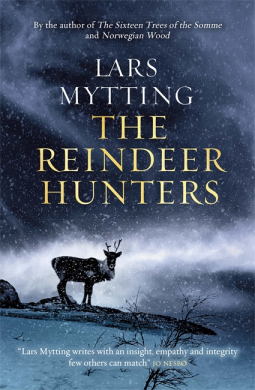
The Reindeer Hunters by Lars Mytting

Translated by Deborah Dawkin.

This is the second book in Norwegian author Lars Mytting’s Sister Bells trilogy. I loved the first, The Bell in the Lake, so was looking forward to visiting the village of Butangen again and finding out how the story would continue.

The Reindeer Hunters begins in 1903, more than twenty years after the events of the first novel. Kai Schweigaard, once a newcomer to Butangen, has settled into his role as village pastor, but is still haunted by memories of Astrid Hekne, the woman he had hoped to marry. He also feels guilt over his involvement in the removal of the two bells which once hung in the bell tower of the local church, commemorating Gunhild and Halfrid Hekne, the conjoined twin sisters who were two of Astrid’s ancestors. When Kai hears about a legendary tapestry woven by the sisters – the Hekne Weave – he sets out to search for it, hoping in some way to make amends for what happened in the past.

In the hills just outside Butangen, Astrid’s son Jehans is leading a lonely life, supporting himself through fishing and hunting, having withdrawn from the rest of the community. One day he finds himself in dispute with another hunter when they both claim to have shot the same reindeer, but this marks a turning point in Jehans’ life as he gets to know the other hunter, an Englishman called Victor Harrison, and an uneasy friendship begins to develop.

This, like the first book, is beautifully written and translated. The setting – a remote Norwegian village steeped in superstition and tradition – is vividly described, making this the kind of historical novel where you can become truly immersed in another time and place. Towards the end of the book, though, we see that scientific progress and new technology are finding their way even to Butangen in the form of electricity, improved travel and advances in dairy farming. Events in the wider world also touch the lives of our characters, including the dissolution of the Norway-Sweden union, the First World War and, finally, the flu pandemic of 1918:

There, on the church steps, Schweigaard had put all his accumulated knowledge into his advice. Mass was cancelled indefinitely. Auctions and public dances were best avoided. Folk ought not to visit other villages. They should maintain a distance from strangers. And always veer on the side of prudence.

I enjoyed reading about Kai Schweigaard’s daily life, his duties as pastor and his relationships with the other villagers and I was completely absorbed in his search for the Hekne Weave and what it might reveal. I was much less interested in the details of Jehans’ hunting and fishing expeditions and, later, Victor’s work as a pioneer of aviation, although other readers will probably find those things more enjoyable than I did! For this reason, I didn’t like this book as much as the first and every time the perspective switched to Jehans or Victor, I found myself wanting to return to the village and continue with Kai’s storyline. I did, however, come to love one of the new characters, Kristine, a young woman who doesn’t have an easy life but displays an inner strength and determination that I really admired.

I’ll be looking out for the final book in this trilogy and will be interested to see where the story will go next.

Thanks to Quercus Books, MacLehose Press for providing a copy of this book for review via NetGalley.

This is book 10/50 read for the Historical Fiction Reading Challenge 2022.

The Clockwork Girl by Anna Mazzola

The Clockwork Girl is Anna Mazzola’s third novel and, I think, her best so far. Not only is the cover beautiful, the setting is also wonderfully dark and atmospheric and the story is fascinating.

The year is 1750 and Madeleine Chastel, daughter of a Parisian brothel owner, is about to start a new job as a maid in the household of Dr Reinhart, a Swiss clockmaker. Madeleine is pleased to have an opportunity to escape from her mother’s clutches, but this particular job is not one she has chosen for herself – she has been forced to take it by the chief of police, who wants her to spy on Dr Reinhart and report back on any suspicious activities she witnesses. But although Madeleine soon becomes convinced that the police are correct and something strange is going on in the Reinhart household, she finds that she is growing fond of the clockmaker’s daughter, Veronique, and is reluctant to betray her new friend.

The novel is written from the perspectives of three different characters: Madeleine is one, Veronique is another and the third is Jeanne Poisson, better known as Madame de Pompadour, mistress of King Louis XV. I found the choice of narrators very effective as it means we are given insights into every level of Parisian society – the working class, the bourgeoisie or middle class, and the aristocracy. Our story takes place several decades before the French Revolution would begin, but you can see the foundations being laid here as tensions start to simmer. The various locations in which the novel is set are vividly described, with sharp contrasts between the dark, dirty streets where the poor people live in squalor and the luxury and opulence of the royal palaces of Versailles and the Louvre.

Although The Clockwork Girl is a work of fiction, it is inspired by several real historical events. First, the disappearance of children from the streets of Paris in 1750, a scandal known as ‘The Vanishing Children of Paris’. And secondly, the technological advances during the 18th century in the creation of automata – clockwork dolls, animals and other machines with moving parts. Anna Mazzola weaves both of these things into the plot and the result is an engaging and unusual novel that I thoroughly enjoyed reading.

If this book doesn’t appeal, you may prefer Anna Mazzola’s first book, The Unseeing, based on a true crime (the Edgware Road Murder) or The Story Keeper, a novel set on the Isle of Skye. I enjoyed both of them.

Thanks to Orion for providing a copy of this book for review via NetGalley.

This is book 9/50 read for the Historical Fiction Reading Challenge 2022.
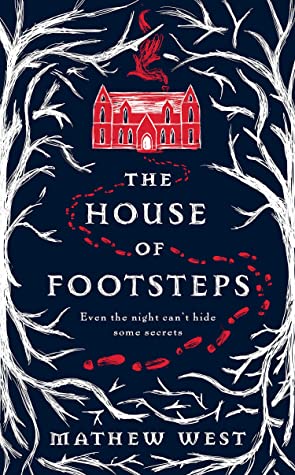
The House of Footsteps by Mathew West

“You make it sound like I’m on my way to Castle Dracula,” says Simon Christie, the narrator of Mathew West’s debut novel The House of Foosteps, after arriving in the remote village of Cobsfoot during a funeral procession and taking refuge in the nearest tavern where he asks for directions to Thistlecrook House – “a strange place, where the master takes dark, wild moods”. It’s 1923 and Simon has been sent by his auction house to evaluate a collection of rare artworks owned by the Mordrake family – and as he enters Thistlecrook House for the first time and makes the acquaintance of the reclusive, secretive Victor Mordrake, it was Dracula that continued to come to mind.

As I read on, I was reminded of other classic Gothic novels and ghost stories and each chapter seemed to raise more questions than it answered. Who is Amy, the beautiful young woman who sits curled up in a chair in the library every evening, begging Simon not to mention her presence to anyone else in the house? What really happened to Victor’s wife, said to have drowned in a frozen lake on the estate? What causes the dark shadows Simon can see under his bedroom door every night? And why does Victor, a vegetarian who can’t even bear having dead flowers in the house, have a whole collection of paintings depicting violent and macabre biblical scenes?

The answers to some of the novel’s many mysteries are revealed gradually as the story unfolds. Others are still unanswered at the end, leaving the reader to make up their own mind about what exactly was going on at Thistlecrook House. I do sometimes enjoy an ambiguous ending, but in this case I was disappointed that we weren’t given more clarity; I had been so intrigued by some of the strange happenings and really wanted to be given a proper explanation for them! However, I still thoroughly enjoyed reading this book – and until I reached that unsatisfactory ending, I had been going to say that it was one of my favourite reads of the year so far.

The novel has a wonderfully dark and sinister atmosphere and despite being set in the 1920s, the remote location – a rural village in the far north of England, close to the Scottish border – creates the feeling that the story could be taking place in a much earlier period. Although I was sometimes frustrated by Simon’s actions and choices, I was always completely absorbed in his story, wondering who could and could not be trusted and watching the boundaries blur between reality and fantasy. If you’ve enjoyed books like The Woman in Black or The Haunting of Hill House I would recommend giving The House of Footsteps a go.

This is book 8/50 read for the Historical Fiction Reading Challenge 2022.
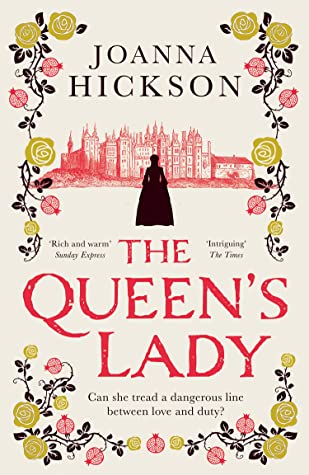
The Queen’s Lady by Joanna Hickson

Joanna Hickson’s new novel is a sequel to 2020’s The Lady of the Ravens and continues the story of Joan Vaux, lady-in-waiting to Elizabeth of York, wife of Henry VII. The ravens that formed such an important part of the first book appear less often here, but Joan still has a strong affinity for them and still believes firmly in the legend that should the ravens ever abandon the Tower of London, the kingdom will fall.

Joan’s position at court means that she witnesses – and is sometimes personally involved in – some of the key events of this period of history. The novel begins in 1502 with the death of Prince Arthur shortly after his marriage to Katharine of Aragon and it is up to Joan to try to comfort his grieving mother, Queen Elizabeth. When Elizabeth herself dies just a year later, Joan’s place at the Tudor court becomes more insecure, particularly when her husband Sir Richard Guildford is imprisoned on suspicion of treason. Eventually, with a new king on the throne – the young Henry VIII – Joan and her family begin to rise to royal favour again, but there’s more drama ahead both for Joan and for the Tudors.

I enjoyed The Lady of the Ravens, but I think this is the stronger of the two books. Although Joan was a real person, she’s one that I knew absolutely nothing about before reading these two novels and I found it fascinating to read about familiar events and people from a completely new perspective. I was particularly interested in the sections where Joan accompanies the two Tudor princesses – Margaret and Mary – to their respective marriages with the King of Scotland and King of France. The fact that Joan is chosen to carry out these important duties is proof of her high standing with the royal family and yet, at various times throughout the novel, we see how quickly this can change and how the King and Queen hold the fates of everyone around them in their hands.

As well as retelling the story of the end of Henry VII’s reign and the beginning of Henry VIII’s, the novel also explores Joan’s personal life: her marriage to Sir Richard Guildford and how she copes during the period of his imprisonment; her often difficult relationship with her son, Hal, who has been raised as a companion to Henry VIII; and her feelings for Anthony Poyntz, a much younger man who had once been like a son to her but is now becoming something more. As Joan is not a well-known historical figure, I had no idea how her story would play out, so was able to enjoy watching it unfold without knowing what was going to happen next.

I think this is my favourite of Joanna Hickson’s books (I’ve read them all apart from one, The Tudor Bride, the second of her two novels about Catherine of Valois). I’ll be interested to see which historical woman she chooses to write about next.

Thanks to HarperCollins for providing a copy of this book for review via NetGalley.

This is book 7/50 for the Historical Fiction Reading Challenge 2022.
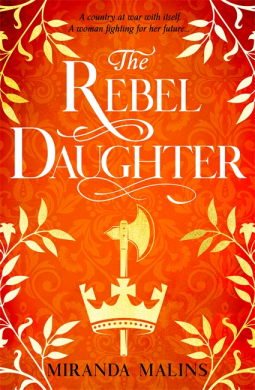
The Rebel Daughter by Miranda Malins

In The Rebel Daughter, Miranda Malins returns to the family at the heart of her previous novel, The Puritan Princess: the Cromwells. However, where The Puritan Princess told the story of Frances, Oliver Cromwell’s youngest daughter, in this second novel we get to know Bridget – or Biddy – the eldest of his four daughters.

In 1643, nineteen-year-old Bridget is living at home in Ely, Cambridgeshire with her mother and younger brothers and sisters while her father and eldest brother are away fighting in the civil war that is currently tearing England apart. Bridget longs to join the men in shaping the future of their country, and although she watches with envy as her younger sister Betty falls in love, she knows she wants more from life than just to be a wife and mother. When she receives a marriage proposal from General Henry Ireton, a fellow commander of her father’s in the Parliamentarian army, she decides to accept in the hope that this marriage will provide the opportunities she’s been hoping for.

The relationship between Bridget and Henry is not a passionate or romantic one, but they get on well together and Bridget is able to involve herself in politics, offering opinions and advice as the war begins to come to an end and her husband and father must decide what happens next. The majority of the novel is set during this period, when with the Royalists defeated, the question of what to do about the King arises and Parliament and the army split into opposing factions, each with their own views on this very important question.

Bridget’s position as a member of the Cromwell and Ireton families leads her to cross paths with other important historical figures of the period such as Thomas Fairfax, commander of the New Model Army, and his wife Anne, and political activist Elizabeth Lilburne and her husband John Lilburne, one of the leaders of the movement known as the Levellers. Bridget herself doesn’t have a large role to play in politics, but Oliver and Henry value her input and she feels she is able to have a small amount of influence on their decision-making.

As well as the political situation, the novel also explores the human cost of war. Bridget experiences this for herself with the deaths of her brother and cousin and later, on a wider scale, when she sees the devastation of besieged Colchester, filled with crumbling buildings, smoke-filled streets and starving children – and this is nothing compared to the horrors she witnesses when she crosses the Irish Sea to join Henry after his appointment as Lord Deputy of Ireland. I wished we had seen more of life away from Parliament and the constant wrangling over the fate of the King, which did get a bit tedious at times.

Of the two books, I think I preferred The Puritan Princess, but I did find this one interesting and am pleased to have had the chance to learn more about Bridget Cromwell. I wonder whether Miranda Malins will write about the other two Cromwell sisters, Elizabeth and Mary, or whether she’ll be moving onto a new subject for her next novel.

Thanks to Orion for providing a copy of this book for review via NetGalley.

This is book 6/50 read for the Historical Fiction Reading Challenge 2022.

The Leviathan by Rosie Andrews

I was drawn to this book, Rosie Andrews’ debut, by the title, the cover and the comparisons to other books I’ve read, such as The Essex Serpent, Once Upon a River and The Mermaid and Mrs Hancock – comparisons which for once turned out to be quite accurate!

It’s 1643 and Thomas Treadwater is on his way home to the family farmhouse in Norfolk. England is currently torn apart by civil war but Thomas has been summoned home from the fighting by his sixteen-year-old sister, Esther, who has accused a new servant of seducing their widowed father. Arriving back at the farm, Thomas finds the sheep dead in their field, with no visible signs of violence – and there are bigger shocks to come. Entering the house, he learns from Esther that their father has suffered a stroke and is dying, and the servant, Chrissa, has been arrested on suspicion of witchcraft.

What follows is a story which at first appears to be a tale of witch hunting in the 17th century, but eventually develops into something even darker and more unusual as Thomas discovers links with a shipwreck that occurred years earlier. The narrative moves back and forth between the 1640s and the year 1703, where Thomas is now living in ‘a place far from the sea’ and is trying to come to terms with what happened in the past and the impact it is still having on his life in the present.

I loved the first half of The Leviathan. The atmosphere is wonderful and the author creates an authentic sense of time and place through attention to detail and careful research. The pace is slow as characters are introduced and the scene is set, but I quickly became drawn into the story, intrigued by the mystery surrounding the ‘witch’ Chrissa Moore and the strange events at the Treadwater farm. There’s a real aura of mystery as Thomas begins to investigate, speaking to the witchfinder, the magistrate and the witch herself in an attempt to find out what is really going on.

In the second half of the book, the magical realism elements of the novel come to the forefront and the story then goes too far in that direction for my taste. The pace speeds up and things become more exciting, but the sinister, slowburning sense of foreboding that I loved in the earlier chapters was gone. I was still invested enough in this part of the book to read on to the end and I was interested to see that John Milton (author of Paradise Lost) makes some appearances as Thomas Treadwater’s former tutor and has some input into the unfolding of the story, taking it into the territory of biblical allegory. This is a novel with lots of layers, and although it wasn’t a complete success for me, I think other readers will love it much more than I did.

Thanks to Raven Books for providing a copy of this book for review via NetGalley.

This is book 5/50 read for the Historical Fiction Reading Challenge 2022.

I, Mona Lisa by Natasha Solomons

Many of us will, on a trip to Paris, have stood in the Louvre in front of Leonardo da Vinci’s Mona Lisa. We may also know some of the details of the painting’s history – its creation in Renaissance Italy, its theft from the Louvre in 1911. However, this new novel by Natasha Solomons adds a whole new dimension to the Mona Lisa story, taking us inside the mind of the painting itself and showing us the world through the eyes that look out from the portrait. Whether or not you enjoy this book will probably depend on whether you can accept that a painting is narrating the story. If you’re happy with that idea, then I think you’ll find I, Mona Lisa an interesting and entertaining read.

Most of the novel is set in 16th century Florence, during the period when Leonardo is working on his most famous masterpiece. From the painting’s own perspective, we get to know some real historical figures such as Lisa del Giocondo, the woman who sits for the portrait; Michelangelo and Raphael, da Vinci’s rivals; Niccolò Machiavelli, who approaches da Vinci with a scheme to divert the Arno River; and Salaì, a student in Leonardo’s workshop who is jealous of his master’s relationship with Mona Lisa. Although Mona is an inanimate object, she is portrayed in the novel as having the thoughts and feelings of a real woman, with an emotional attachment to her creator Leonardo.

When Leonardo eventually dies, leaving her vulnerable and unprotected, Mona embarks on the journey that will lead her to France. As the centuries go by, she spends time at the court of the Sun King in Fontainebleau and then at Versailles during the French Revolution, before finding her way to the Louvre where, as the 20th century dawns, she forms a new friendship with another great artist.

I, Mona Lisa is an unusual novel and a unique way of exploring some key moments in history. However, because so much time is spent in Renaissance Italy, the parts of the novel set in France feel more rushed and the characters less well developed. This was maybe the author’s intention, as Mona finds it difficult to bond with the people she meets after Leonardo’s death and makes it clear that her heart will always be in Florence, but it also meant that I felt less engaged with these sections of the book.

I do think that if you’re going to write a book about a painting with human emotions, the Mona Lisa is a perfect choice as it’s such a realistic and iconic portrait. The Mona of the novel is obviously very limited in what she can see and experience (and with whom she can communicate – just Leonardo and a handful of other painters and paintings), but Natasha Solomons does a great job of bringing Mona and her world to life. This is the third of her books I’ve read – the others are The Novel in the Viola and House of Gold. Three very different books, but I would recommend any or all of them.

Thanks to Hutchinson Heinemann for providing a copy of this book for review via NetGalley.

This is book 4/50 read for the Historical Fiction Reading Challenge 2022.