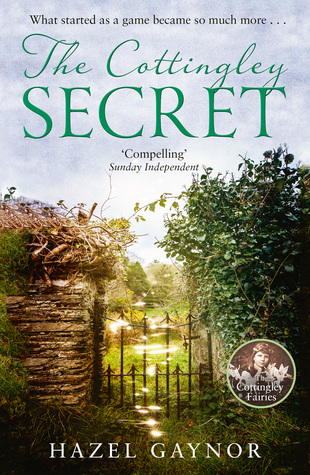
The Cottingley Secret by Hazel Gaynor

I was already aware of the Cottingley Fairies before reading this book; I remember watching a documentary years ago, as well as the 1997 film Fairy Tale. I knew that, early in the 20th century, a series of photographs appeared, taken by two young girls and allegedly showing fairies playing in the garden. Were the photographs real? Well, the girls managed to convince half the world that they were, including the famous author Sir Arthur Conan Doyle! In The Cottingley Secret, Hazel Gaynor gives a fictional account of the story of one of the girls, Frances Griffiths, and through her eyes we see how and why they take the photographs and the effect the incident has on the rest of their lives.

Frances’ story begins to unfold in 1917, when she and her mother return to England from South Africa because her father has gone to fight in the war. Arriving in the Yorkshire village of Cottingley, where they will stay with family, nine-year-old Frances gets to know her cousin, Elsie Wright, who is sixteen, and the two quickly become close friends. When Frances insists that she has seen fairies playing by the beck, or stream, at the bottom of their garden, she and Elsie decide to take photographs to prove that they exist. However, they are completely unprepared for the sensation they cause when the pictures are eventually made public.

One hundred years later, in 2017, Olivia Kavanagh is in Ireland where she has inherited her grandfather’s bookshop. Sorting through his things, she comes across an old manuscript and is fascinated by what it contains: the true story of the Cottingley Fairies, written by Frances Griffiths herself. As Olivia delves into Frances’ story, she discovers her own family connection to the village of Cottingley and begins to understand the appeal of believing in fairies!

I’ve mentioned in the past that I often have problems with dual timeframe novels, particularly where one period is much more interesting to read about than the other, but I’m pleased to say that I think The Cottingley Secret is one of the better examples of this type of book. Although I did find Frances’ narrative slightly more compelling, I liked Olivia too and enjoyed watching her discover the story of the fairies while also trying to bring new life to the ‘Something Old’ bookshop, coming to terms with her grandmother’s dementia and making some important decisions about her future.

I can’t talk too much about how Hazel Gaynor approaches the subject of the fairies and whether or not Frances’ sightings of them are genuine, because that would spoil the novel, but I do think she creates a convincing explanation for how the girls come to take the photographs while leaving just enough mystery in the story to raise some intriguing possibilities. You may also be wondering how so many people, ranging from photography experts to the author of Sherlock Holmes, were so ready to believe that the fairies were real, but remember that the photographs were published at a time when the world was just emerging from four years of war and it’s easier to see why people were desperate for some magic in their lives.

I have now read two of Hazel Gaynor’s books – this one and The Lighthouse Keeper’s Daughter, about Grace Darling – and have enjoyed both. I’m looking forward to reading more!
Book 7/50 read for the Historical Fiction Reading Challenge.
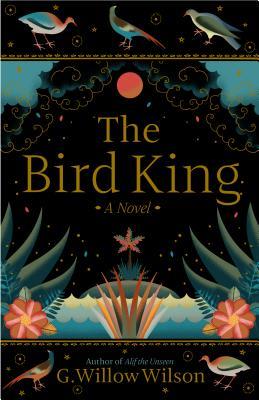
The Bird King by G Willow Wilson

In the 12th century poem The Conference of the Birds, the Persian poet Farid ud-Din Al Attar writes about a group of birds, left without a ruler, who set off on a long journey across the Dark Sea to the land of Qaf in search of their lost king. This legend forms the basis of G Willow Wilson’s The Bird King, an unusual novel which combines history, fantasy, myth and magical realism.

The novel is set in Al-Andalus in 1491, when Muslim-ruled Granada is besieged by the Christian forces of King Ferdinand and Queen Isabella. Our heroine, Fatima, is a Circassian slave in the harem of the Alhambra palace, where she serves as concubine to the Sultan and maid to his mother, Lady Aisha. Fatima’s only real friend in the palace is Hassan, the Sultan’s mapmaker, who possesses a very special skill: he is able to draw maps of places he has never visited and to change reality by adding doors and passages where none existed before.

When representatives of the Spanish Inquisition arrive in Granada on behalf of Queen Isabella, Hassan’s secret ability is revealed and he falls under suspicion as a sorcerer. With the help of Hassan’s magical maps and guided by Vikram, a shape-shifting jinn, Hassan and Fatima flee across Al-Andalus. Knowing that there is no longer a place for them in the world they have left behind, they dream of finding the fabled island of Qaf and the King of the Birds, whose story is starting to feel more and more relevant.

The Bird King is a novel which encompasses lots of fascinating ideas. I’m not sure whether I fully understood everything it was trying to say – the last few chapters feel particularly allegorical – but the central messages of friendship and faith, of tolerance and living together in harmony are clear. The author delivers these messages in a way that seems to arise naturally from the plot and the characters and doesn’t become too heavy-handed. I also loved the concept that the mysterious Qaf could be seen as another version of Avalon in Arthurian legend, or Antillia, the phantom island of Iberian myth, or Shambhala, the mythical kingdom in Tibetan Buddhism: different names, but with similar meanings to people of different cultures.

G. Willow Wilson’s writing is beautiful in places and the settings are vividly described, especially the Alhambra in the opening chapters, but something stopped me from enjoying this book as much as I’d hoped to – and I’m not really sure what it was. Perhaps it was because I found the balance between the fantasy and the historical aspects of the book too uneven; it starts off as an interesting depiction of the fall of Granada and the Inquisition, with only a small amount of magical realism, but by the end of the book the fantasy elements have become so strong that I felt I was reading a different book to the one I was reading at the beginning. Then, although I liked Fatima, I thought the other characters seemed slightly underdeveloped; Hassan’s special gift had the potential to be explored further and I also wanted to know more about Vikram the jinn and his role in the human world.

Still, this is an intriguing and entertaining novel and I would probably read more by G. Willow Wilson. Her previous novel, Alif the Unseen, doesn’t appeal to me but I will look out for any others she writes in the future.

Book 6/50 read for the Historical Fiction Reading Challenge.
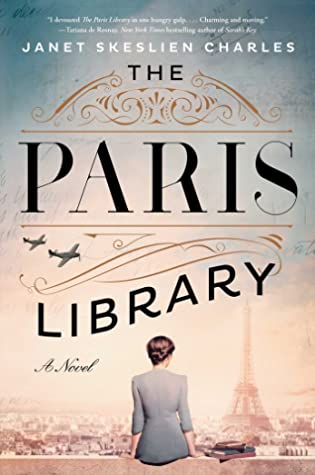
The Paris Library by Janet Skeslien Charles

One aspect of the Second World War that we don’t usually hear much about is the role of books and libraries, so I was immediately drawn to this new novel by Janet Skeslien Charles which tells the story of the American Library in Paris and the people who worked there during the Nazi occupation.

One of the novel’s two main narrators, twenty-year-old Odile, starts working at the library in 1939 at the beginning of the war. With her love of reading and obsession with learning the Dewey Decimal System, it’s Odile’s dream job and she quickly settles in, getting to know the other librarians and the people who come in to borrow books. Her happiness doesn’t last long, however, because soon the Germans cross the Maginot Line and enter Paris. With her twin brother Rémy fighting in the French army, these are difficult and worrying times for Odile, but her priority remains keeping the American Library and its collections safe from the Nazis and ensuring that those less fortunate can continue to find comfort in books.

Our second narrator is Lily, an unhappy twelve-year-old girl growing up in Froid, Montana in the 1980s. She has become intrigued by the reclusive elderly woman who lives next door and when she decides to interview her for a school project, we discover that the woman is Odile. As she gets to know Odile better and uncovers the sequence of events that brought her from Paris to Montana, Lily learns some important lessons that help her to deal with some of the problems in her own life.

There were many things to like about The Paris Library, yet I didn’t really enjoy the book as much as I’d been hoping to. The wartime story was fascinating, but I couldn’t help feeling that the 1980s one was unnecessary; dual timeline novels are very common these days and obviously a lot of people like them, but I often find that one of the two threads is a distraction from the other and adds very little to the novel as a whole. In this case, I felt that Lily’s could have been left out entirely without having much effect on the overall plot. Also, with Lily being such a young narrator, her story revolves around school, her relationships with boys and her best friend, and coming to terms with her widowed father marrying again; it makes the novel feel like YA fiction – which is fine, of course, but not what I was expecting.

I did find all the information on the American Library in Paris very interesting, especially when I discovered that some of the characters in those sections of the book were people who really existed, such as the library director, Dorothy Reeder, who refused to abandon the library when the war began and led the other librarians in a Resistance against the Nazis. I love the fact that the library managed to continue operating throughout the war, in one way or another, with the librarians providing reading material to soldiers and ensuring that books were delivered to Jewish members who were no longer able to visit the library in person.

The Paris Library is worth reading for the wartime storyline, the history and the many references to books I’ve read or would like to read, but if Janet Skeslien Charles had just concentrated on Odile’s story she would have had more space to develop the characters and relationships and I think that would have made it a stronger, more emotional novel.

Thanks to John Murray Press for providing a copy of this book for review via NetGalley.

Book 5/50 read for the Historical Fiction Reading Challenge.
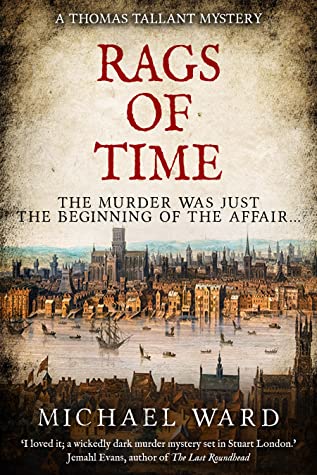
Rags of Time by Michael Ward

I love a good historical mystery, so I’m pleased to have had the opportunity to read Rags of Time, the first in a new series set in the 17th century during the final years of the reign of Charles I. Based on how much I enjoyed this book, I will certainly be looking out for the next one.

The story begins in 1639 with Tom Tallant, a young spice merchant, returning to London from India only to find that he has become implicated in a murder investigation. Wool merchant Sir Joseph Venell has been found dead in a meadow near his home in Kensington and it seems that Tom is the main suspect. Then another murder takes place, this time in the Tallant household, casting further suspicion on Tom. In order to clear his name, Tom must try to identify the real murderer – and for that he will need the help of Elizabeth Seymour, an intelligent and unusual young woman with an interest in astronomy and an addiction to gambling.

“The murder was just the beginning of the affair”, it says on the front cover of the book, and that is quite true because although Rags of Time at first appears to be a straightforward murder mystery, it soon becomes apparent that the murder is only one aspect of the story and for a while takes second place to an equally fascinating subplot involving a printing press and the distribution of seditious pamphlets. Remember that this is all taking place during an eventful and turbulent period of history, a time of tension between King and Parliament and unrest on the streets:

‘Each day and week we suffer treasonable talk on the street, attacks on our churches, seditious street-preachers, scandalous pamphlets on every corner and finally this…mutinous gangs of Apprentice Boys!’

I loved the recreation of 17th century London; there’s such a strong sense of time and place (without becoming overly descriptive) and with so much going on it’s the perfect backdrop for Tom’s adventures. Yet one of my favourite parts of the story relates to something taking place overseas – the ‘tulip mania’ sweeping Amsterdam in the 1630s and the notion of windhandel, or ‘trading in promises’.

As for the mystery itself, once everything starts to come together towards the end of the book, there are plenty of twists and turns and when the solution was revealed I was completely taken by surprise! I think there were probably a few clues but I didn’t pick up on them and didn’t guess either the culprit or how and why the murders were carried out. Although most of the focus of the novel is on Tom, I was pleased to see that Elizabeth also contributes to the solving of the mystery; I wasn’t sure I would like her at first and it took me a little while to warm to her, but I think she’s a character with a lot of potential, as is Tom himself. I hope to meet them both again soon!

Thanks to the author for providing a copy of this book for review.

Book 4/50 read for the Historical Fiction Reading Challenge.
The Queen’s Rival by Anne O’Brien

Having read six of Anne O’Brien’s previous novels, I thought I knew exactly what to expect from this one, but I was wrong. It couldn’t be more different! I’m not sure that every aspect of it really worked for me, but it’s nice to see authors trying something new now and then.

The Queen’s Rival is the story of Cecily Neville, Duchess of York, mother of Edward IV and Richard III. As a prominent member of the House of York, Cecily has an important role to play in the Wars of the Roses, yet she is often just a minor character in novels set during this period. Joanna Hickson’s Red Rose, White Rose is the only other book I’ve read which focuses specifically on Cecily, so I was keen to see how O’Brien would choose to tell her story.

The way O’Brien chooses to tell her story is through a series of letters sent between Cecily and various members of her family, as well as diary entries, prayers, recipes and articles from a (fictitious) newspaper called England’s Chronicle. From Cecily’s perspective we see all of the major events of the Wars of the Roses unfold – the attempts of her husband, the Duke of York, to claim the throne of England for himself; the events that lead to the defeat of Henry VI and to Cecily’s eldest son Edward becoming king; the controversy surrounding Edward’s marriage to Elizabeth Woodville; and finally, the end of Edward’s reign and the coronation of Cecily’s youngest son, Richard.

The epistolary format gives the story a feeling of immediacy and intimacy, especially where Cecily is exchanging letters with her sisters Anne and Katherine (both of whom also see their fortunes rise and fall several times throughout the novel). However, as all of the other O’Brien novels I’ve read have been written in ordinary prose, this change in style and structure was completely unexpected and, as I’ve said, not completely to my taste. I particularly disliked the excerpts from the Chronicle, which were written in the gossipy style of a modern tabloid newspaper, but I’m sure Anne O’Brien knew that newspapers in this form didn’t exist in the 15th century, so I do appreciate that it was intended as a bit of fun, as well as a way to provide information that might not otherwise have been available to Cecily.

Still, I did find the book entertaining overall. This is such a fascinating period of history with so much still open to debate, so many mysteries and controversies, that it never fails to interest me – although sadly, the novel ends just as Richard III is coming to the throne, so the mystery of the Princes in the Tower is not explored. Cecily herself comes across as an intelligent, politically astute woman who is loyal to her family, but without being blind to their faults. I did wonder about the title: was she a ‘rival’ to Margaret of Anjou, Henry VI’s queen, or Elizabeth Woodville, Edward IV’s queen? It could refer to either or both, I think.

Despite this probably being my least favourite Anne O’Brien book so far, I will still look forward to her next novel, The Royal Game, about the 15th century Paston family, which is due to be published later this year.

Book 3/50 read for the Historical Fiction Reading Challenge.
Islands of Mercy by Rose Tremain

I’ve found this a difficult book to write about because, although it is undoubtedly very well written and has a lot of the elements I would usually find interesting, for some reason I just didn’t like it very much and have struggled to explain why. It was particularly disappointing as I’ve enjoyed the other Rose Tremain books I’ve read – Restoration, Merivel and The Gustav Sonata – so I had high hopes for this one too.

Anyway, Islands of Mercy begins in 1865 in Bath, ‘a place where very many rich people assembled, to take the waters, or simply to take their leisure’. Jane Adeane is the twenty-four-year-old daughter of a renowned Bath surgeon and works with him as a nurse, gaining a reputation for herself as The Angel of the Baths. She has caught the eye of her father’s fellow doctor and business partner, Dr Valentine Ross, but his attentions are unwelcome to her and she decides to go to London for a while to stay with her Aunt Emmeline, an artist. Here she meets one of Emmeline’s friends, the beautiful Julietta Sims, and feels an instant attraction to her. Soon, Jane finds that she is falling in love with Julietta, and when she returns to Bath she must decide whether she wants the security that marriage to Dr Ross could give her or whether she would prefer to be free to pursue her relationship with Julietta.

Jane’s story alternates with that of Sir Ralph Savage, an eccentric Englishman who lives on the island of Borneo with his servant and lover, Leon, and calls himself ‘the Rajah of the South Sadong Territories’. Leon is an ambitious and resourceful young man who is always coming up with new money-making schemes, but he is also a jealous man and is not at all happy when Edmund Ross, a naturalist who has come to Borneo in search of new species, arrives on Sir Ralph’s estate.

Edmund is the younger brother of Valentine Ross and this provides a link between the two storylines – however, it is a very weak link and for most of the novel they seem like two completely different, unconnected stories. Borneo is certainly a fascinating and unusual setting, but I didn’t have any interest in Sir Ralph and Leon and felt that their chapters could probably have been left out entirely as they added very little to the overall plot of the novel. This made the whole experience of reading this book feel disjointed and every time the narrative switched to Borneo I couldn’t wait for it to return to Bath again.

Although I found Jane’s chapters much more compelling, I was disappointed by the character arc Valentine Ross goes through; I did have some sympathy for him at first after Jane’s initial rejection of him, but he quickly becomes so unpleasant and controlling that he feels like a stereotypical villain rather than a believably flawed character. I didn’t doubt Jane’s love for Julietta, so I don’t really think it was necessary to make Valentine so needlessly cruel and selfish – in fact, I think it would have been more interesting if Jane had faced a choice between the woman she loved and a man whom she at least liked.

There is a third thread to the novel that I haven’t mentioned yet and this follows the story of Clorinda Morrissey, a woman from Dublin who opens a tea shop in Bath, where she gets to know Jane and her father. Clorinda was the one character in the book I really liked and would have been happy to visit for a cup of tea and a cake! I wished we had spent more time with her rather than some of the other less engaging characters.

I will continue to read Rose Tremain’s books as it’s only this one so far that I haven’t enjoyed. Luckily there are plenty of her earlier novels left for me to explore.

Book 2/50 read for the Historical Fiction Reading Challenge.
The Land Beyond the Sea by Sharon Penman

The first book I have finished in 2021 is actually one that I started last summer, but as with many of the books I tried to read last year I found that I wasn’t in the right frame of mind for anything long and complex. And at almost 700 pages, this novel is certainly long – and with a plot dealing with the history and politics of Outremer, or the Kingdom of Jerusalem, it is certainly complex! As I’m finding it a lot easier to concentrate on reading now, I picked the book up again and have enjoyed immersing myself in it over the last week or two.

Jerusalem was captured by the Crusaders in 1099, at the end of the First Crusade, and the kingdom they established there became known as Outremer or ‘the land beyond the sea’. The Crusaders who stayed in Outremer and made it their home were mainly of French origin and Penman refers to them (and their descendants) as Franks or Poulains. The novel covers the period from 1172 to 1187, a period when the kingdom is becoming divided by disputes over the succession to the throne and when the Muslim Arabs (referred to as Saracens in the book), led by their sultan Saladin, are taking advantage of this to try to reclaim their lands.

With Outremer under threat from Saladin’s armies, strong leadership is more important than ever, but the young king of Jerusalem, Baldwin IV, has been forced to confront an unwelcome truth: he is suffering from leprosy and can expect an early and unpleasant end to his life. As rival Poulain lords begin plotting and scheming to become the influence behind the next king or queen, the Saracens advance further into Outremer, with their eye on Jerusalem itself…

The Land Beyond the Sea is a fascinating novel. I have read a lot about Europe in the medieval period, but not so much about other parts of the world. Apart from Elizabeth Chadwick’s Templar Silks, I can’t really think of anything else I’ve read that focuses entirely on the Holy Land and its people. As my knowledge of the subject was so limited, I didn’t always know how or when a character would die, or who they would marry, or what the outcome of a battle would be, which made a nice change from reading about the Tudors or the Wars of the Roses, where I usually have a good idea of what is going to happen next! It also meant that it wasn’t a particularly easy read; the number of characters introduced in the first half of the book was overwhelming, especially as so many of them were used as viewpoint characters, which made it difficult to really settle into the story. By the middle of the novel, though, I felt that I was getting to know some of them much better and they were starting to feel like real people rather than just names on the page and from this point on I really enjoyed the rest of the book.

Most of the novel is written from the perspective of the Franks, with a focus on three of them in particular: Baldwin, the ‘Leper King’, who is depicted as a courageous and intelligent young man determined to take care of his kingdom until his illness makes it impossible; William, Archbishop of Tyre, tutor to Baldwin, whose chronicle History of Deeds Done Beyond the Sea is one of our most important sources of information on the Kingdom of Jerusalem; and Balian d’Ibelin, one of the leading Poulain noblemen who, due to the respect he commands amongst the other lords and his marriage to the king’s stepmother Maria Comnena, often finds himself drawn into the kingdom’s military and political affairs. I’ve noticed that a few other readers have said they found Balian too good to be true, or even anachronistic, but I disagree – there are plenty of other characters in the book who are selfish, weak or untrustworthy, so why shouldn’t there also be one who is decent and honourable? Balian was the only character I fully connected with emotionally; I sympathised with him as he struggled with some very difficult decisions and shared his frustration at the behaviour of some of the other Franks whose inability to put the welfare of the kingdom before their own interests led Jerusalem towards disaster.

We do occasionally see things from the Saracen point of view, particularly when Balian crosses paths with Saladin and his brother al-Adil, and I think Penman does give a balanced portrayal of both sides in the conflict. Although for most of the book the Saracens are the ‘enemy’, whenever the perspective switches to their side we see that Saladin and al-Adil are more admirable than many of the Franks, are prepared to be reasonable in negotiations and to show compassion where necessary. My only complaint is that I would have liked to have spent more time with them instead of just a few pages here and there.

As with Sharon Penman’s other books, this one has clearly been very well researched and her afterword and author’s note are almost as interesting as the story itself. Apart from maybe two or three words and phrases out of a 700 page book, I didn’t have any problems with inappropriately modern language (and I’m usually the first to complain about that sort of thing). However, I didn’t love this one as much as some of her others such as The Sunne in Splendour or Falls the Shadow, which I think is down to finding the writing slightly dry in places and the lack of emotional impact until nearer the end. Still, I really enjoyed The Land Beyond the Sea and am determined to find time soon to read the final book in Penman’s Welsh Princes trilogy, The Reckoning, which has been waiting on my shelf for years!

Book 1/50 read for the Historical Fiction Reading Challenge.

Thanks to Pan Macmillan for providing a copy of this book for review via NetGalley.