Still Life by Sarah Winman

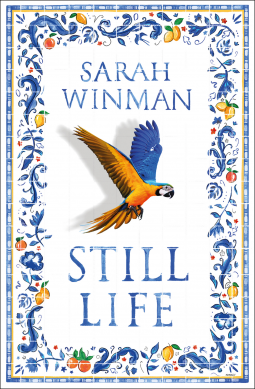
I picked up Sarah Winman’s new novel, Still Life, with vague memories of enjoying one of her earlier books, When God Was a Rabbit. That was ten years ago and although she has had two other books published since then, I never got round to reading either of them. The pretty cover of Still Life caught my eye and the Italian setting sounded appealing, so I thought I would give this one a try.

The novel opens in wartime Tuscany in 1944 with a chance meeting between two very different people: Evelyn Skinner, almost sixty-four years old, is an art historian who has come to Italy to try to salvage important works of art; Ulysses Temper is a young British soldier, formerly a globe-maker from London. As the Allies advance across Italy, a brief friendship forms between Evelyn and Ulysses before they are parted and return to their separate lives.

For most of the novel, we follow Ulysses and his friends, first back at home in London and later in Florence, where some of them decide to relocate after the war. There’s Ulysses’ ex-wife, the talented but troubled Peg and her young daughter, Alys; Col who runs the Stoat and Parrot pub and Pete the pianist; Old Cress, who talks to trees and has visions which have a habit of coming true; and a Shakespeare-quoting blue parrot called Claude. It took me a while to warm to these characters, but eventually I became quite fond of some of them, particularly Cress and Alys. None of them are perfect – they all have their flaws and all make mistakes – but they feel like real and believable human beings.

Evelyn, though, appears only occasionally after that opening scene and we have to wait almost until the end of the novel to hear her story – by which time I found I’d lost interest in her and would have preferred to continue reading about Ulysses and the others. Evelyn’s story, which should have been fascinating as it involved a meeting with EM Forster and a pre-war romance with an Italian maid, felt as if it had been squeezed into the end of the book as an afterthought and in my opinion would have worked better if it had unfolded gradually alongside the other storylines.

The novel is beautifully written, there are some lovely descriptions of Florence and the influence of Forster’s A Room With a View can be seen in several different ways throughout the story. With a timespan of several decades, Winman also writes about various historical events that take place during that period; for example, there’s a memorable section set during the devastating flood of the Arno river in 1966. Unfortunately, there was one thing I really disliked about Winman’s writing in this book – and that was the lack of speech marks. I’m never sure what authors are trying to achieve in leaving out basic punctuation. A more ‘literary’ style? A stream of consciousness feel? Whatever it is, it never works for me and I end up just finding it distracting and annoying.

Still Life wasn’t completely successful with me, then, but I did enjoy getting to know the characters and spending some time in Italy in virtual form, which is the closest I will get to a holiday abroad this year!

Thanks to 4th Estate for providing a copy of this book for review via NetGalley.

Book 28/50 read for the 2021 Historical Fiction Reading Challenge.
Book 1/20 of my 20 Books of Summer 2021

China by Edward Rutherfurd

I loved this! It’s been a long time since Edward Rutherfurd’s last novel was published (Paris in 2013), but China is so good I think it’s definitely been worth the wait. It’s slightly different from his earlier novels – all of which I have read and enjoyed – because whereas those previous books follow the history of a country, city or region over a period of many centuries, this one covers a much shorter period, telling the story of China in the 19th century. At nearly 800 pages, that decision to concentrate only on one century allows for more character development and more time spent exploring each historical event or incident in detail.

Beginning in 1839, the first few sections of the novel deal with the First Opium War, taking us through the complicated background to this conflict from the perspectives of several different characters: Shi-Rong, secretary to Commissioner Lin, the man responsible for trying to end the illegal import of opium into China; John Trader, a British merchant who has become involved in the opium trade to improve his financial situation so that he can marry the woman he loves; Nio, a Chinese pirate and opium smuggler; and John’s cousin Cecil Whiteparish, who is a missionary. This range of viewpoints helps to build a full picture of the events leading to the Opium Wars and what happens in the aftermath. These characters and their families appear again and again throughout the novel as the years go by and they are drawn into other key events such as the Taiping Rebellion and the Boxer Uprising.

In a novel of this length, it was inevitable that I would find some parts much more interesting than others – for example, the chapters involving Nio’s adopted sister Mei-Ling who makes the decision to have her little girl’s feet bound while her husband is in America working on the railroads were particularly compelling. However, my favourite sections of the book were those narrated by ‘Lacquer Nail’, a eunuch in the service of the Empress Dowager Cixi. I’m not sure whether it’s because Lacquer Nail is the only character whose story is told in the first person instead of third, but he really comes to life in a way that some of the others don’t. I could have read a whole book about his adventures alone.

Like all of Rutherfurd’s novels, this one is clearly the result of a huge amount of research; as well as the coverage of major political and military events, we are given lots of fascinating little snippets of information on Chinese folklore, crafts such as calligraphy and pottery, and the details of the tea ritual and other traditions. There are also some beautiful descriptions of the various locations in which the action takes place, including Guangzhou (Canton), Hong Kong, Macao and, in Beijing, the Forbidden City and the Summer Palace. I think anyone with even the slightest curiosity about China, its history, geography and people, will find a lot to interest them in this book – just be aware that it’s quite a commitment and will take a while to get through, even for the fastest of readers!

If China doesn’t appeal, I can highly recommend almost any of Edward Rutherfurd’s other books, particularly Sarum, Russka and his two novels about Ireland.

Thanks to Hodder & Stoughton for providing a copy of this book for review via NetGalley.

Book 27/50 read for the 2021 Historical Fiction Reading Challenge.
The Missing Sister by Lucinda Riley

The Missing Sister is the seventh book in the Seven Sisters series inspired by the mythology surrounding the star cluster known as the Pleiades or ‘the seven sisters’. Looking at other reviews of this book, it seems that a lot of people were expecting this to be the final book in the series and were disappointed to find that it’s not; it didn’t bother me as I’d seen Lucinda Riley’s announcement on Twitter regarding an eighth book, but if you weren’t already aware, it’s probably best to know before you start that you will need to wait another year for all of the series’ mysteries to finally be resolved.

The first six Seven Sisters novels each tell the story of one of the adopted daughters of a mysterious billionaire known as Pa Salt who dies at the beginning of the series, leaving the sisters some clues to help them trace their biological parents. The girls all grew up together at Atlantis, Pa Salt’s estate by Lake Geneva in Switzerland, but they were born in different countries and come from a diverse range of cultures and backgrounds. They are each named after one of the stars in the cluster – Maia, Alycone (Ally), Asterope (Star), Celaeno (CeCe), Taygete (Tiggy) and Electra D’Aplièse. There should have been a seventh sister, whose name would have been Merope, but only six girls were actually brought home to Atlantis by Pa Salt.

In this seventh volume, the D’Aplièse sisters have decided to find Merope and invite her to join them to mark the anniversary of Pa Salt’s death. However, the only clue they have to her identity is a picture of a star-shaped emerald ring. Their search will lead them first to a vineyard in New Zealand and then right across the world to a farmhouse in West Cork, Ireland, but I can’t really say too much about who and what they discover, as to do so would risk spoiling the story and I would prefer to allow other readers to enjoy the hunt for the missing sister without knowing too much in advance.

Although I think the previous six books could probably be read in any order, I would recommend saving this one until you’ve read the others and are already familiar with the D’Aplièse sisters and their stories. All six of them have important parts to play in this book and while some of the methods they use in trying to track down Merope are a bit far-fetched and not always very kind, it was nice to see all of the sisters getting involved (with some help from other characters from earlier in the series – I particularly enjoyed meeting Star’s eccentric friend Orlando again).

The search for Merope is set in the modern day, but as some possible clues to her identity and background emerge, we also spend some time in the past, particularly in Ireland in 1920 where we follow the story of Nuala Murphy, a young woman who has joined her country’s struggle for independence. I found the historical sections of the book fascinating and completely gripping, as well as educational. For example, I knew nothing about the work of Cumann na mBan, the Irish republican women’s association who played a part in the rebellion and the subsequent civil war of 1922. It isn’t clear at first how Nuala’s story will be connected to Merope’s, but things do start to come together later in the book.

As for the overall story arc of the seven sisters, this book has left me with more questions than I started with! I’ve been forming a few theories of my own, but will have to wait for the publication of Atlas: The Story of Pa Salt for everything to be revealed.

Thanks to Macmillan for providing a copy of this book for review

Book 26/50 read for the 2021 Historical Fiction Reading Challenge.

Edited 11th June 2021: I was so sorry to hear the sad news today that Lucinda Riley has died after a four-year battle with cancer. Maybe we will never get to know Pa Salt’s secrets now, but Lucinda has left a wonderful legacy of work behind for her fans to treasure and new readers to discover.

Circus of Wonders by Elizabeth Macneal

I enjoyed Elizabeth Macneal’s first novel, The Doll Factory, so was looking forward to reading her new one, Circus of Wonders.

Beginning in the year 1866, Circus of Wonders tells the story of Nell, a young woman who has always been made to feel like an outsider in her small village on the south coast of England. The unusual birthmarks which cover her skin set her apart from the rest of the community and although her brother does his best to protect her, Nell knows she will never fit in. When Jasper Jupiter’s travelling circus arrives in the village, Nell is horrified to learn that her father has sold her to Jasper, who is looking for a new ‘curiosity’ to draw in the crowds. Once she settles into her new life, however, she begins to think that joining Jasper’s show is the best thing that could have happened to her. Her performance as ‘the Queen of the Moon and Stars’ proves to be a huge success, but how will Jasper feel if she becomes a bigger star than he is himself?

Nell’s story alternates with chapters written from the perspectives of two other characters, Jasper and his brother Toby. There’s a strong bond between the brothers, but they are two very different men. Jasper is very much the leader, an ambitious and ruthless businessman who sees the exploitation of other people as his way to fame and fortune. Toby, who helps him to run the circus, is a gentle, compassionate man desperate to find a way out from his brother’s shadow, but still haunted by his experiences as a photographer in the recent Crimean War. As the novel progresses we learn more about all three main characters as each of them tries to find their place in the world.

Although this is not always a very comfortable book to read, I think Macneal handles a sensitive topic very well. Nell and the other ‘circus attractions’ are treated as commodities to be bought and sold by collectors and showmen, but they are all presented as fully developed characters who, despite their unusual appearances, are normal human beings like anyone else. I have read a few other novels that deal with the same subject, so I was pleased to come across references to Charles Stratton, who appears in The Autobiography of Mrs Tom Thumb by Melanie Benjamin and Julia Pastrana from Orphans of the Carnival by Carol Birch. Unlike Stratton and Pastrana, who both really existed, Nell is a fictional character but her story is no less moving and believable. I was also interested in the flashbacks to the Crimean War, where we gradually find out what really happened to Jasper and Toby, shaping them into the men they are when we meet them at the beginning of the novel.

Of Elizabeth Macneal’s two books, I think I preferred The Doll Factory, but I enjoyed both and will be looking out for whatever she writes next.

Thanks to Picador for providing a copy of this book for review via NetGalley.

Book 25/50 read for the 2021 Historical Fiction Reading Challenge.
The Rich Earth by Pamela Oldfield

The Rich Earth is the first in a series of four novels following the story of one English family, the Kendals, over the course of more than a hundred years. This particular book, first published in 1980, is set during the Wars of the Roses, one of my favourite periods of history, which is what drew me to it; however, the historical setting is little more than a backdrop as the Kendals spend most of their time on their country estate in rural Devon and only have occasional involvement with the political and military conflict unfolding elsewhere.

The main protagonist of The Rich Earth is Elizabeth Sheldyke who, as the novel opens in 1468, is being married off to Daniel Heron, a much older man who has made his fortune from the tin mines for which Devon is famous. During the journey to her new home and the future that awaits her, Elizabeth briefly meets John Kendal, a young man from Yorkshire who is on his way to London where he is going to be apprenticed to a goldsmith. Time passes and Elizabeth settles into her new life at Heron Manor until, after twelve years of marriage, Daniel dies, leaving her a widow. Shortly afterwards she is reunited with John Kendal who becomes her second husband, but although she loves John, it will be a difficult relationship marred by John’s feelings of inadequacy at living off his wife’s money and by their inability to produce the child and heir they desperately want.

I wasn’t very impressed with this book at first – it seemed like too much of a romance novel with nothing else going on – but it improved as I got further into it and more characters and storylines were introduced. As I’ve said, the Kendals and their neighbours are usually quite detached from events taking place on the battlefield or at court (as far as they are concerned, it makes little difference to them which king wins the war, as either way people like themselves will be taxed to pay for it). However, later in the book, during the Cornish rebellions of 1497, our characters are drawn into the Battle of Deptford Bridge, the siege of Exeter and the invasion by the pretender to the throne, Perkin Warbeck.

The central relationship at the heart of the book – between Elizabeth and John – was difficult to read at times; Pamela Oldfield doesn’t shy away from portraying the misogyny of the period, which includes domestic abuse and cruelty. I felt that Elizabeth was much more forgiving of John’s faults than I would have been, but I suppose that’s easy enough to say from a modern point of view. On the other hand, Elizabeth does value her independence, involving herself in the running of the Heron mines and making decisions on behalf of the estate and its people.

The second book in the Heron saga is This Ravished Land. I haven’t been left feeling desperate to read it immediately, but I haven’t ruled it out either and will keep it in mind for the future.

Book 24/50 read for the 2021 Historical Fiction Reading Challenge.
The Horseman by Tim Pears

Tim Pears’ The Horseman is the first in a trilogy of novels set in England’s West Country in the early 20th century. The final book, The Redeemed, was shortlisted for the Walter Scott Prize for Historical Fiction in 2020 and as some of you will know, working through the shortlists for that particular prize is one of my personal reading projects. As I don’t like to start a trilogy or series at the end, I decided to begin with The Horseman in the hope that I would like it enough to want to continue.

Starting in January 1911 and finishing in June 1912, the novel follows the daily life of young Leo Sercombe, the son of a carter who works on the estate of Lord Prideaux on the Devon-Somerset border. Leo has little interest in attending school, preferring to help his family with their work on the farm – and here he has gained a different kind of education: a knowledge of horses and an affinity with nature. Then one day, Leo meets Charlotte, Lord Prideaux’s daughter, and a friendship begins to form based on their shared love of horses.

There’s no doubt that The Horseman is a beautifully written novel, but I’m sorry to have to say that I didn’t enjoy it very much. I’m not necessarily the sort of reader who needs a very strong plot with lots of action on every page, but I do need at least a little bit of plot and this book didn’t seem to have any at all – just one description after another of various farming tasks. As the months go by and the seasons change we are given detailed accounts of grooming horses, gathering hay, ploughing fields, collecting eggs and anything else you can think of that takes place on a large country estate. I suppose it’s not quite true to say that absolutely nothing happens in the novel, because Leo is learning and growing all the time, but because there’s almost no conflict or drama in his life – until right at the very end of the book – I found it difficult to connect with him in any way.

Other reviews of this book are overwhelmingly positive and I can see why, as it’s a lovely, gentle portrayal of a rural community in a time gone forever; unfortunately, it just wasn’t the right book for me. This now leaves me with a dilemma as I had been expecting to go on to read the rest of the trilogy for my Walter Scott Prize project. Am I likely to enjoy the other two books any more than this one? I suspect not, so I might have to leave the 2020 shortlist incomplete.

Book 23/50 read for the 2021 Historical Fiction Reading Challenge.
The Royal Secret by Andrew Taylor

This is the fifth book in Andrew Taylor’s Marwood and Lovett series and one of my favourites so far. Set in England during the reign of Charles II, each book in the series works as a separate mystery novel, but if it’s possible for you to read them in order (starting with The Ashes of London) you will have the pleasure of getting to know James Marwood and Cat Lovett from the beginning and watching their relationship develop.

The Royal Secret opens in 1670 with two young women plotting a murder by witchcraft. Soon afterwards, their target, Mr Abbott, meets his death under unusual circumstances. The dead man had been a clerk working in the office of Lord Arlington, Secretary of State, and James Marwood, also a government clerk, is asked to investigate. Beginning with a visit to Abbott’s lodgings to look for some confidential files the man had taken home from Arlington’s office, Marwood is soon on the trail of the mysterious Dutch merchant Henryk Van Riebeeck – a trail which will lead him first to the notorious Blue Bush Tavern and then to the home of Mr Fanshawe, owner of a captive Barbary lion called Caliban.

Meanwhile, Cat Hakesby, formerly Lovett, has taken over her late husband’s architect firm and has been given a commission by the king himself to design a poultry house for his sister Minette. Another of Cat’s clients is Mr Fanshawe and through him she meets Van Riebeeck, a man to whom she finds herself drawn romantically. Although she is unaware of it at first, Cat quickly becomes entangled in the same mystery that Marwood is trying to investigate, but with a very different perspective on what is happening.

Those of you who have read the previous books in the series will be familiar with Cat and Marwood’s uneasy relationship and their obvious attraction to each other which they seem unable to acknowledge even to themselves. That continues in this one and is becoming frustrating, but I’m grateful that Andrew Taylor didn’t just give us an instant romance that was resolved by the end of the first book. It’s another reason to keep reading the series!

As usual with Taylor’s books, the story unfolds against a backdrop of real historical events. In fact, they are often more than just a backdrop and become a significant part of the plot. In this particular novel, there is a focus on the political intrigue between England, France and the Dutch Republic, as well as on the tensions in the marriage between Charles II’s sister Minette (Henrietta Anne) and the Duke of Orléans, the king of France’s brother. These storylines take our characters to Paris where Minette has summoned Cat to discuss the designs for the poultry house and to Dover where secret negotiations are underway. With so much going on, as well as the mystery to be solved, this was a difficult book to put down and I was sorry to come to the end. I hope there’s going to be a sixth adventure for Marwood and Lovett!

Thanks to HarperCollins UK for providing a copy of this book for review via NetGalley.

Book 22/50 read for the 2021 Historical Fiction Reading Challenge.